

Wet Crawl Space in Suwanee: What the Smell Is Telling You, and How It Gets Fixed
The musty smell upstairs, the cold floors, the humidity that never drops. One space under the house explains all three — and it’s very fixable.
“It smells like a basement in here, but we don’t have a basement.” That is close to word for word how a wet crawl space Suwanee call usually starts. Then comes the rest of it: the floors feel cold in the den, the air conditioner runs and runs, and somebody opened the little access door once and decided never to do that again.
Good news right away — we look at this constantly, and it is one of the more predictable problems we solve. So let’s take it apart slowly, because you should understand your own house before anyone hands you a number.
Why does a crawl space get wet in the first place?
Most of the time it isn’t a flood. It’s dirt. Under a lot of homes there’s bare Georgia clay, and clay holds water like a sponge holds water. That moisture rises as vapor all day long, every day, whether it rained this week or not.
Then the vents make it worse instead of better. Builders put those foundation vents in for a reason that made sense on paper — let outside air dry the space out. But in a Suwanee July, the outside air is warm and soaked. It hits cool ducts and cool framing, and it gives up its water right there on your floor joists.
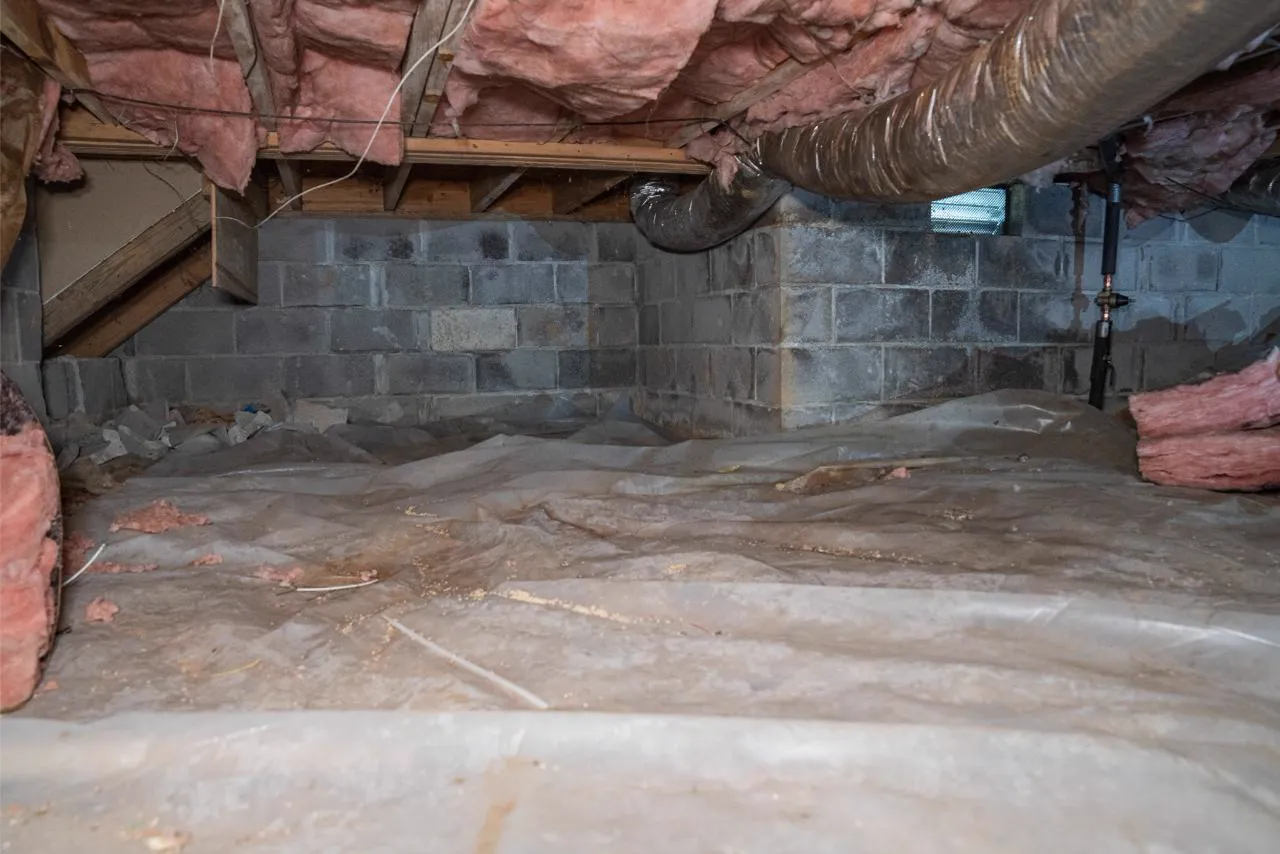
Here’s the number that matters. Wood starts supporting mold growth around 20% moisture content, and in a vented crawl space here in midsummer, framing gets there regularly. Nothing dramatic happens the day it does. Still, that’s the line where a damp space quietly becomes a growing one.
Why do you smell it in the living room?
Because your house breathes upward. Warm air rises and escapes through the attic, and something has to replace it, so the house pulls air in from the lowest point it can find. That’s the stack effect, and it means a big share of the air in your bedrooms started its trip under your floor.
So the musty smell isn’t drifting up by accident. It’s being pulled up by your own house, all day, like a very unhelpful straw. That’s also why candles and plug-ins never win that fight.
Worth knowing
Damp air is harder to cool than dry air, so a wet crawl space usually shows up on the power bill before it shows up anywhere else. Fix the moisture and the air conditioner stops working overtime.
There’s a comfort side too. Humid air makes floors feel cold, so people drop the thermostat, which makes the room clammy. The U.S. Department of Energy’s guide to insulation and moisture control explains that loop well.
Is yours mild, or is it more than that?
Fair question. You can get most of the way to an answer yourself with a flashlight and five minutes, and none of this is bad news — it just shows where you sit on the scale.
What to look for
- Musty smell only. Vapor is moving up, but nothing has gone visibly wrong yet. Mild, and the easiest stage to solve.
- Insulation sagging or on the ground. Batts soak up moisture, get heavy, and let go. Very common in homes built in the late nineties.
- White fuzzy bloom on the rim joist or subfloor. That’s mold finding wet wood. It’s treatable once the water source stops.
- Indoor humidity above 55% with the AC running. A cheap meter tells you this in a minute.
- Standing water or mud after storms. Time for someone to look. Bigger scope, same fix path.
What if you leave it alone? Nothing happens overnight, honestly. Moisture problems widen slowly instead — insulation keeps falling, humidity climbs, wood stays damp, and a small job turns into a slightly larger one. If you want the plain-English health side, the CDC’s page on mold and your home covers it without any drama.
Where does the difference between a patch and a fix show up?
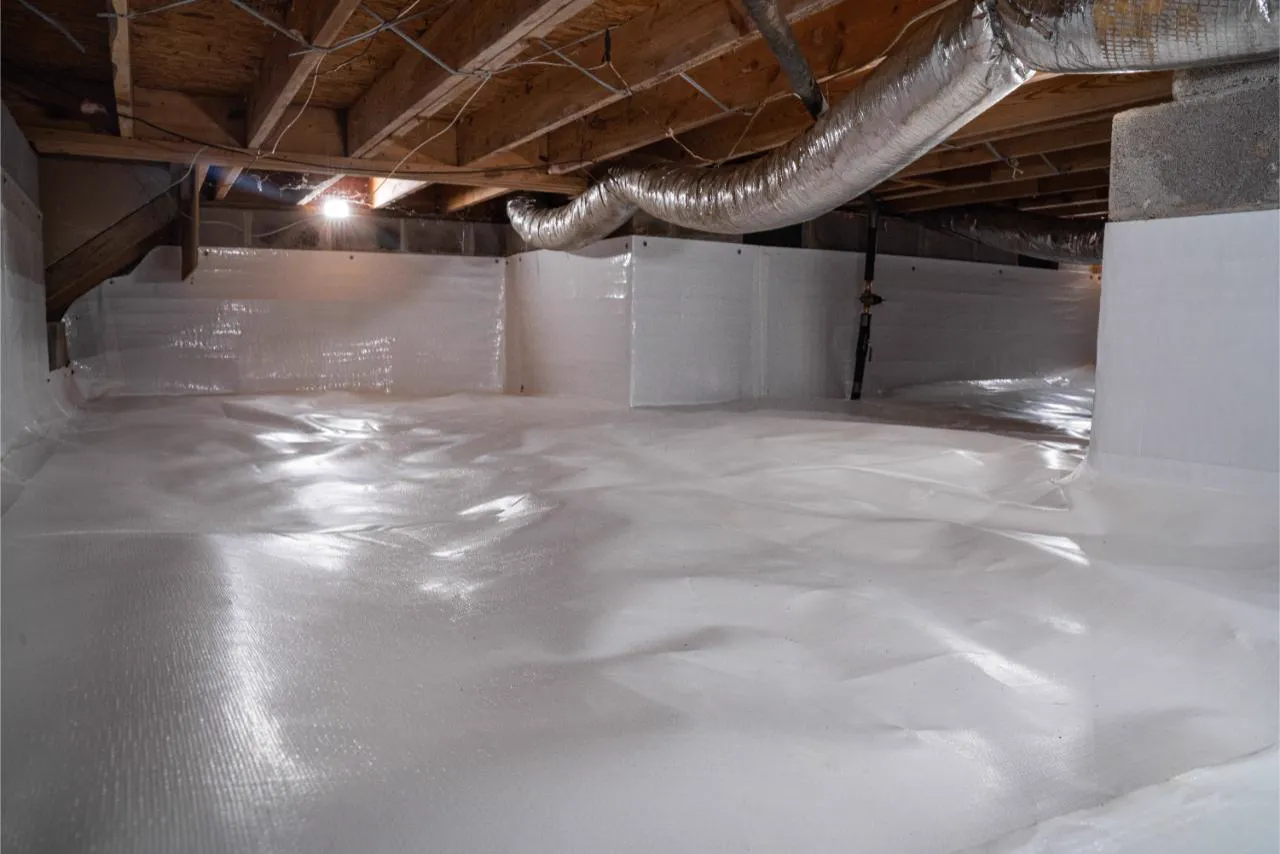
Right here, and it’s the most useful thing on this page. Almost every crawl space we visit has already been “handled” once. Somebody rolled thin plastic over the dirt, stapled the insulation back up, and set a dehumidifier in the middle.
That’s a patch. Thin sheeting tears the first time anyone crawls across it, it never gets sealed to the walls or piers, and vapor simply walks around the edges. Meanwhile the vents are still open, so the dehumidifier is politely trying to dry out all of Gwinnett County.
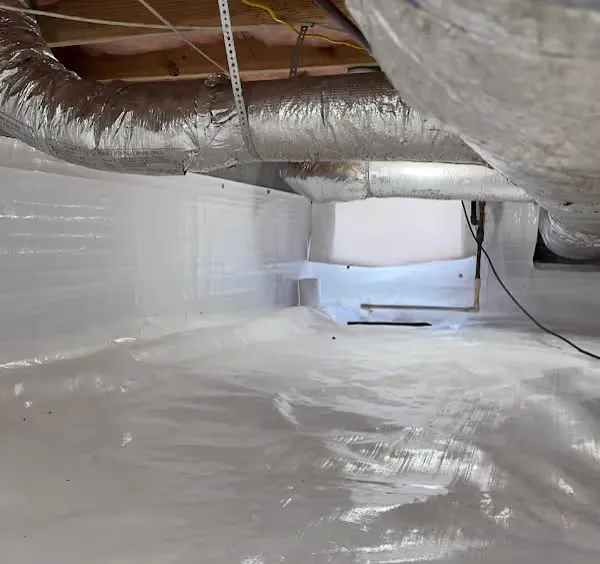
A real fix does four things in order: stop water from getting in, seal the ground and walls so vapor can’t rise, close the space off from outside air, and then control what’s left. Skip any one of those and you’re back where you started in a season or two. That sequence is exactly why crawl space repair done properly holds for decades instead of months.
A dehumidifier under a house with open vents isn’t a solution. It’s a very expensive way to lower the humidity of the entire neighborhood.
Suwanee makes this especially worth understanding. The city grew up in one fast wave in the late nineties and early two-thousands, so homes around Harvest Park and the older sections off McGinnis Ferry Road are all hitting their first real waterproofing failure at once. Neighbors compare notes, which is how we end up on the same street twice in a month.
So how does the repair actually work?
Simpler than most people expect. Nobody is rebuilding your house. Here’s the sequence we follow, plainly.
- Handle the water first. Downspouts, grading, and a drain with a sump if groundwater is showing up. Dry ground before liner, always.
- Clear out the failed material. Fallen batts, old torn plastic, debris. It goes in our truck, not your driveway.
- Treat the wood. Any mold on the rim joist or subfloor gets cleaned and treated once the moisture source is stopped.
- Install the liner. Heavy reinforced sheeting across the dirt, up the walls and piers, seams sealed and mechanically fastened.
- Seal the vents and rim. This is the step most patch jobs skip, and it’s the one that changes everything.
- Add insulation and a dehumidifier. Insulation moves to the walls, and a properly sized unit holds the space steady year-round.
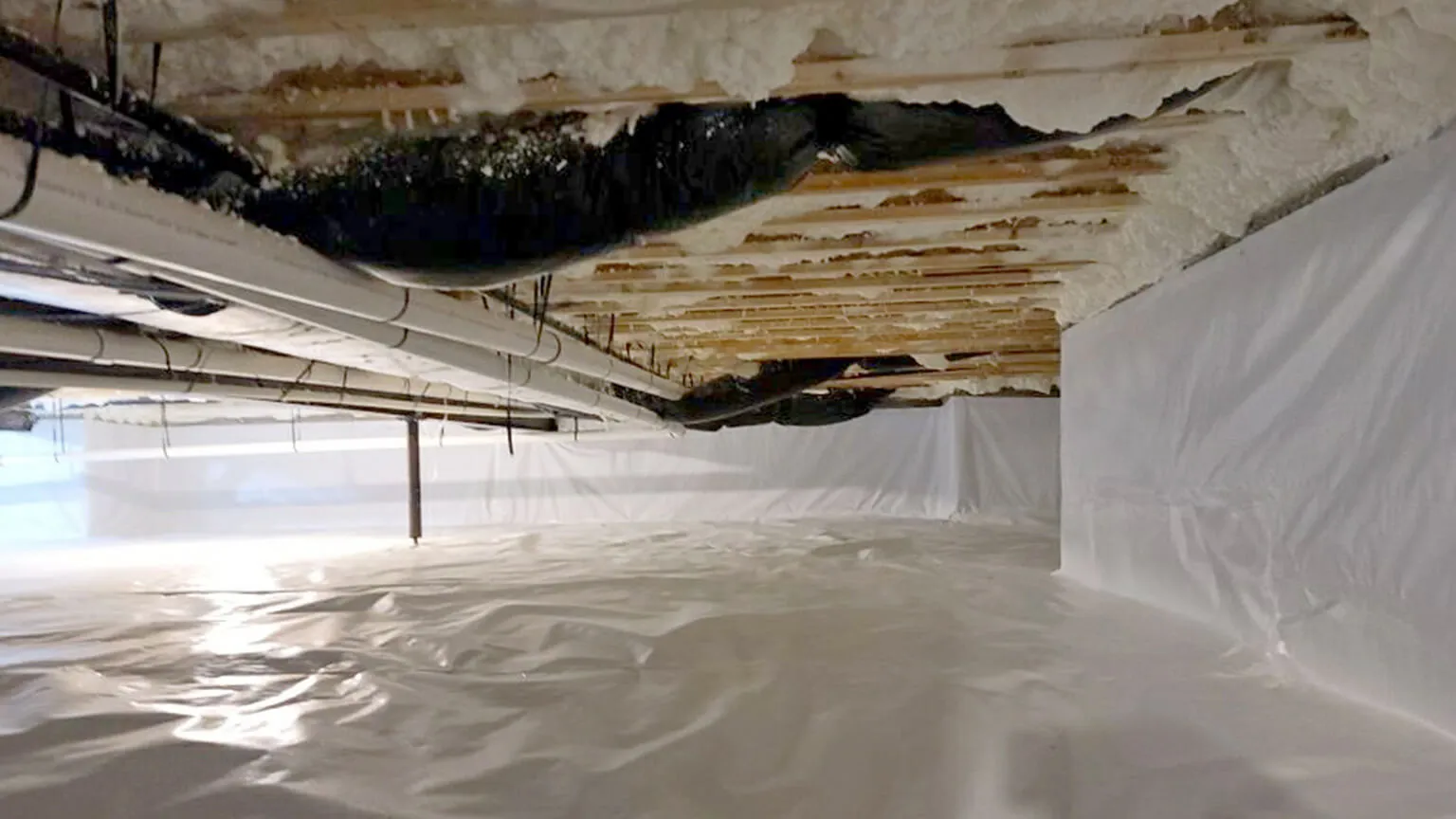
Most jobs run two to four working days. Pricing tracks square footage, height, how much water is involved, and whether drainage is needed, so our encapsulation cost breakdown walks through the real drivers if you’d rather see numbers before you call anyone.
The house that wasn’t what anyone expected
Want the story that changes how people think about this? A homeowner over near Laurel Springs called about a smell she was sure meant mold everywhere. She had already priced a full tear-out and made peace with a big number.
We walked the outside first, the way we always do. Her original sump pump had no battery backup, and it quit during the exact storm that knocked her power out that spring. Water sat for two days, soaked the dirt, and the space had been damp ever since.
The real answer was a new pump with a backup, a proper discharge line, and encapsulation on about half the footprint. Not the job she’d braced for, and thousands less. That’s why we look before we quote — and why we’d rather hand you the smaller answer when the smaller answer is the true one.
What should a good estimate include?
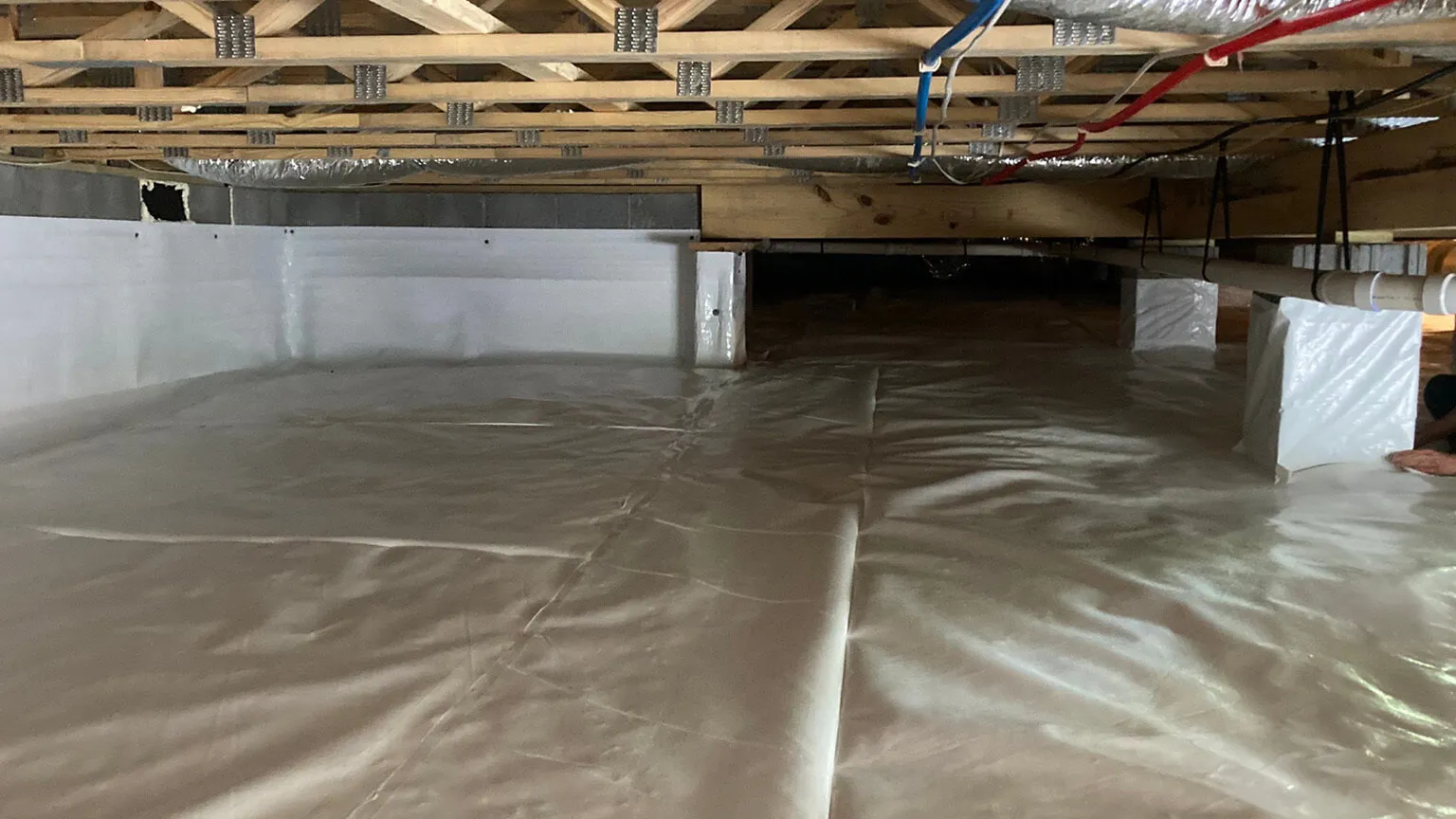
Four things, and any honest company hands them over without blinking. First, what they found outside. Second, the liner thickness and how far it runs up the walls. Third, how the vents and rim joist get sealed. Fourth, a warranty you can read in one sitting.
If a price shows up over the phone with no crawl-through, that’s a guess, and you’d be paying for it. Ask questions too. Homeowners in the North Gwinnett cluster ask plenty, and honestly, we like that.
Comparing across the metro is smart as well. Our Peachtree Corners wet crawlspace guide covers how older housing stock behaves differently, and if your home has a walkout instead, flooded basement repair is the page you actually want.
What does life look like once it’s dry?
Quieter, mostly. The smell fades within days, usually before the crew finishes. Floors stop feeling cold in winter, and the air conditioner stops fighting a losing battle every August.
A year in, you stop thinking about it entirely. One homeowner in The River Club told us she only remembers the project when she walks past the sealed access door on her way to the mailbox. Better yet, the space under there becomes usable — dry, bright, and clean enough to store holiday bins without a second thought.
Mostly, though, it’s the feeling of having spent money well. You didn’t buy a scented candle. You bought the last time you’ll ever deal with this.
Where we work around Suwanee
We’re based in Lawrenceville, about fifteen minutes south, so we’re up this way constantly — mornings near Suwanee Town Center Park, afternoons out toward Sims Lake Park. That includes Suwanee, Duluth, Buford, Sugar Hill, Johns Creek, Lawrenceville, Cumming, Peachtree Corners, Norcross, Snellville and the wider Gwinnett area. Homes built in that big late-nineties wave are normal work for us, not a surprise we charge extra to be surprised by.
Questions Suwanee homeowners ask us
If it’s wet, sagging, or on the ground, it comes out and leaves with us. Damp batts hold moisture against your joists and stop insulating anyway, so keeping them helps nobody. After the space is sealed, insulation goes on the walls instead of between the floor joists, which is where it actually does its job.
Not really, and here’s why. Thin sheeting tears the first time someone crawls over it, and it’s almost never sealed to the walls or piers, so vapor just travels around the edges. Real encapsulation uses heavy reinforced liner with sealed seams that runs up the walls, and that’s the part that makes it hold.
Three signs cover most cases: a musty smell upstairs, indoor humidity staying above 55% while the AC runs, and insulation hanging down when you look inside. Any one of those is worth a flashlight check. If you’d rather not crawl in yourself, we’ll do it and send you photos either way.
It means sealing the space so it becomes part of your house instead of part of the outdoors. We stop any water coming in, cover the dirt and walls with a heavy sealed liner, close off the vents and rim joist, then add insulation and humidity control. After that the air under your floor is clean, dry air.
It depends on square footage, how tall the space is, and whether drainage or a sump pump is part of the work. A straightforward seal on a small footprint sits at the low end, while a large space needing water management and a dehumidifier sits well above it. We measure, show you the drivers, and put the whole range in writing before you decide anything.
Let’s find out what your Suwanee crawl space really needs
We’ll crawl it, photograph it, and show you exactly where the moisture is coming from — then explain the fix in plain language. The inspection is free, the estimate is free, and nobody pressures you at the end of it.
(678) 914-5112Serving Suwanee and all of Metro Atlanta · $500 off projects over $3,500 · Live support 7am–8pm, 7 days a week