

What Is the Encapsulation Cost in Suwanee? A Step-by-Step Breakdown
The steps in order, what really moves the number, how long it takes, and the honest line where a weekend project stops being enough.
What’s the encapsulation cost Suwanee homeowners should actually plan for? For most houses around here it lands somewhere between the price of a nice HVAC replacement and the price of a small kitchen redo — a wide range, and the rest of this page explains exactly what slides you up or down inside it. No flat number over the phone, because anybody who gives you one hasn’t looked under your house yet.
Here’s the thing, though. That range isn’t a mystery, and it isn’t a haggle. Once you know the handful of items a crew is really pricing, you can read any estimate in town.
Why is this coming up now, all over Suwanee?
Because the city grew up in one fast wave. Late nineties, early two-thousands, whole neighborhoods went in at once — and those homes are all hitting their first real waterproofing failure at roughly the same time. We get calls from Laurel Springs and the Bear’s Best area in the same week, describing the same musty smell, and the houses are almost the same age.
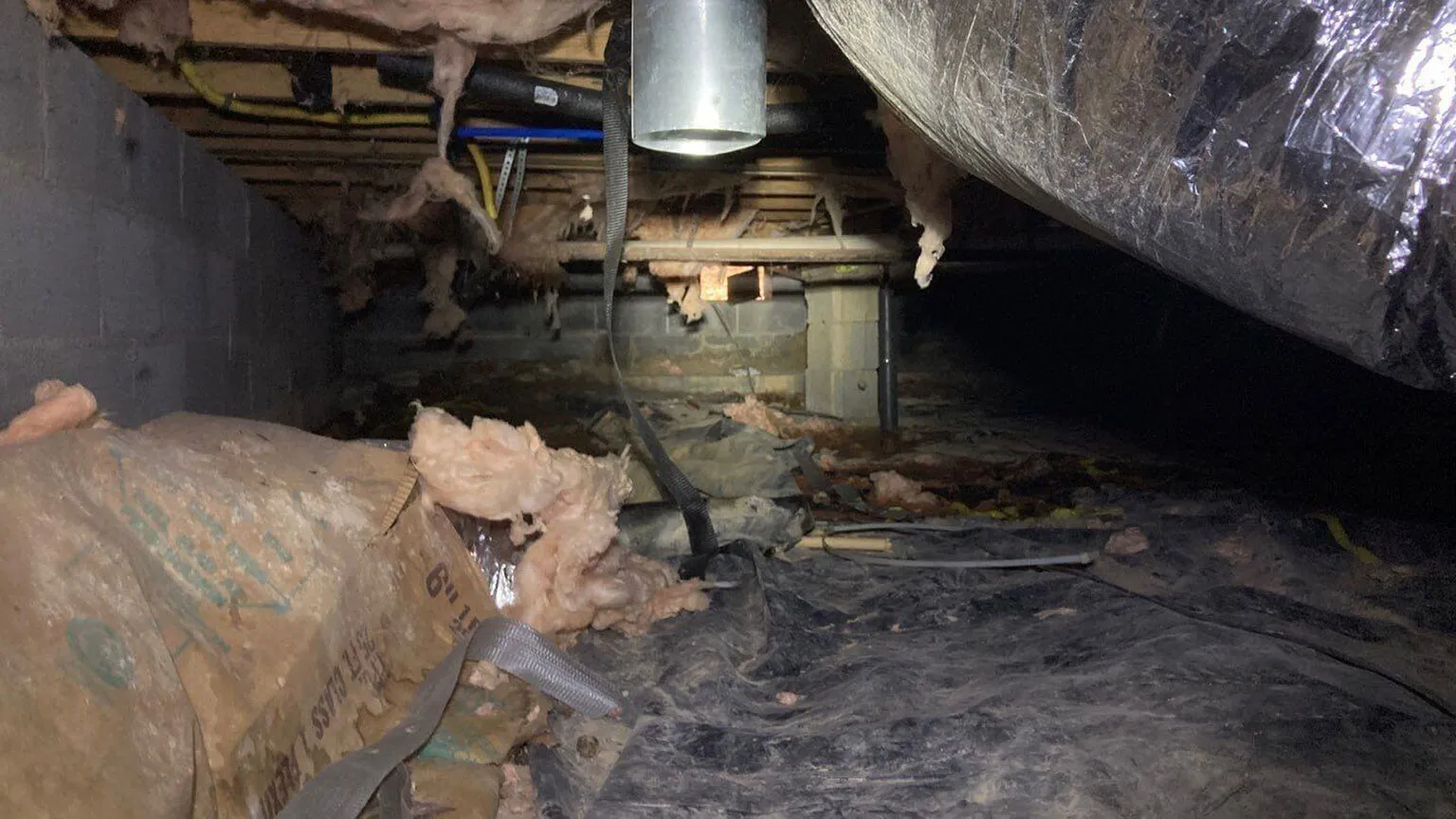
Good news? A damp crawl space is one of the most fixable things in a house. In most of what we see, a twenty-five-year-old vapor barrier has torn, the vents let humid air in all summer, and the insulation gave up and fell. That’s a maintenance story, not an emergency.
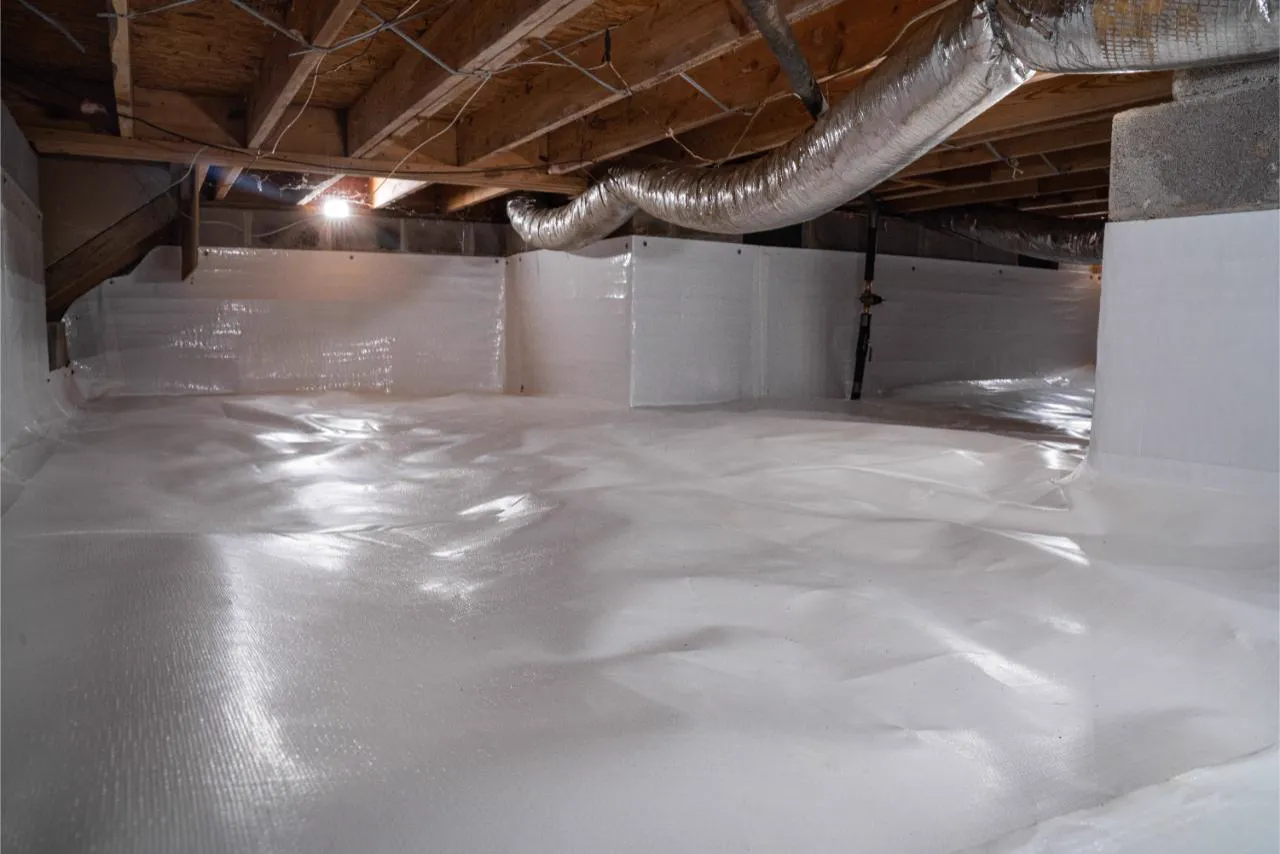
One fact worth parking in your head. Open foundation vents were required for decades, on the idea that outside air dries a crawl space out. But in a humid climate, warm air hits cool surfaces down there and does the opposite — it condenses. So on a muggy August afternoon, those vents are quietly watering your crawl space. The U.S. Department of Energy covers the moisture side of this well.
What does the job actually involve?
Every house is a little different, but the order almost never changes. Real encapsulation is a sequence, and skipping a step is exactly how a job goes wrong.
- Inspect and measure. Square footage, headroom, hatch size, moisture readings, and where water is getting in. This is also where we tell you if you even need the full system.
- Clear it out. Fallen insulation, torn plastic, construction scraps left there in 1999, and whatever the last owner stored down there. Sometimes that’s two hours; sometimes it’s most of a day.
- Solve the water first. If there’s standing water or a wet corner after rain, drainage goes in before anything else. A liner over a puddle is just a fancier puddle.
- Seal the vents. Each one gets closed and sealed so the humid outside air stops coming in.
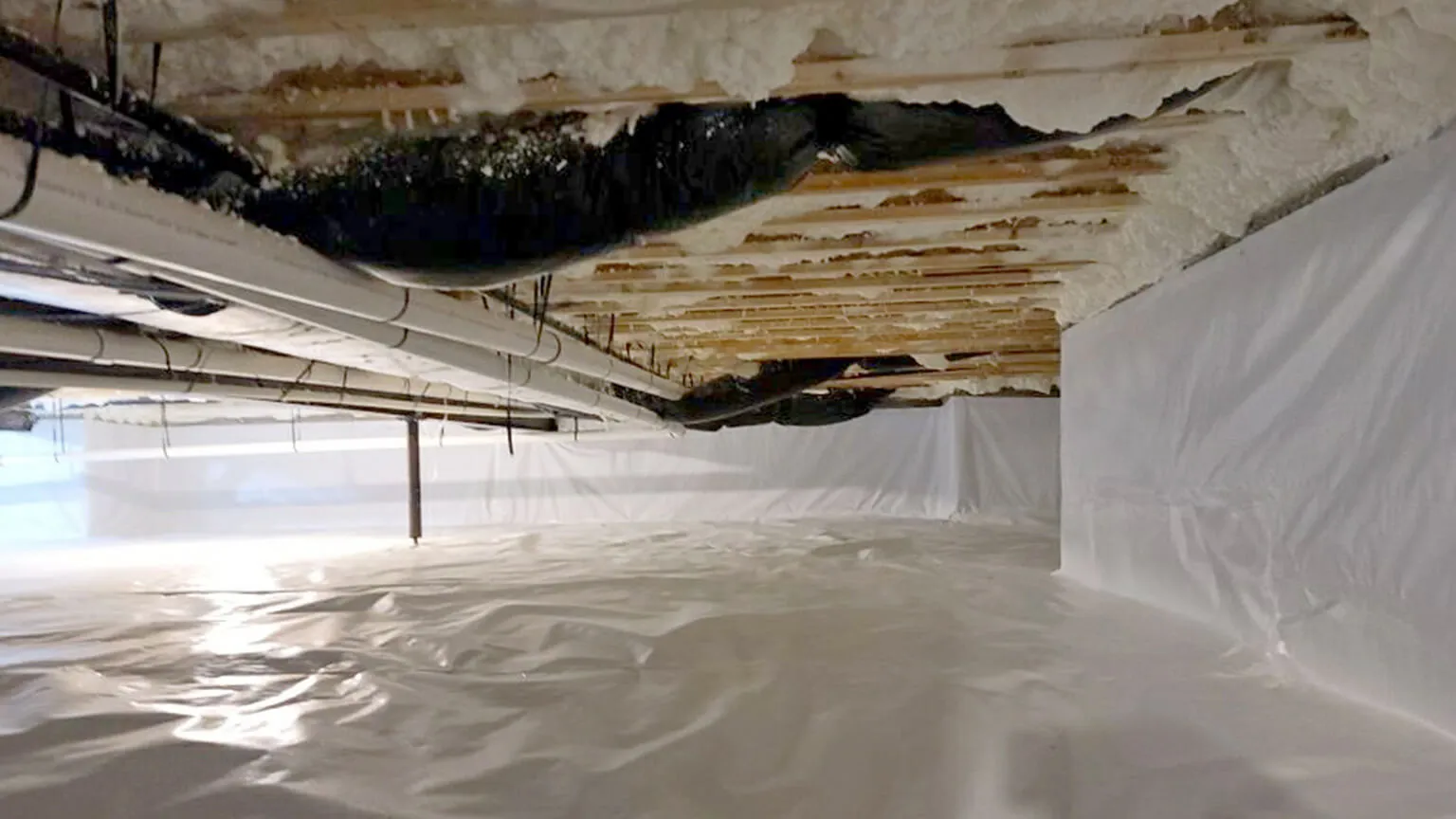
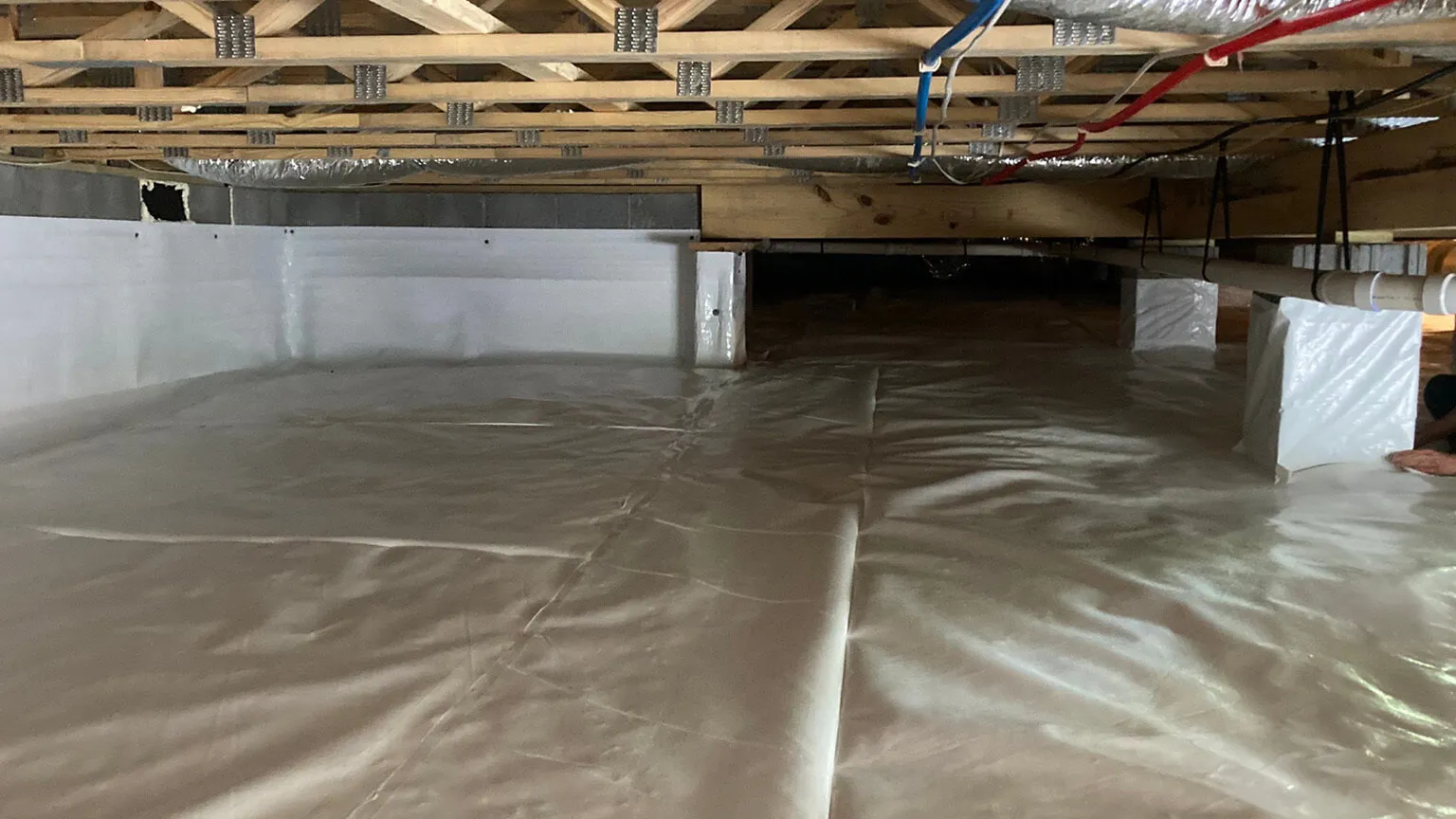
- Lay and seal the liner. Heavy reinforced sheeting across the whole floor, run up the walls, taped at every seam and fastened at the top. Piers get wrapped too.
- Handle the air. A sealed crawl space needs its moisture managed, which usually means a dedicated dehumidifier that drains on its own.
- Insulate and finish. Wall or subfloor insulation where it makes sense, ducts checked, hatch sealed, and photos handed to you.
Timeline on a typical Suwanee crawl space: two to four working days. Add a day when drainage and a sump go in, and another when there’s a lot to haul out. Rain rarely stops us, since the whole worksite is under your house.
Worth knowing
Plastic laid loose on the dirt is not encapsulation. It’s a vapor barrier — a real, useful, much cheaper product. A sealed system is walls, seams, vents and air. Two different jobs, two different prices, and any honest crew will tell you which one your house needs.
Why are two estimates thousands apart?
This next part is the reason. Two crews can walk the same house and hand you wildly different numbers, and usually neither is lying — they’ve scoped different work. Most encapsulation cost Suwanee estimates swing on the items below, biggest first.
What moves the number
- Square footage. The single largest factor, because liner and labor both scale with floor area.
- Headroom and access. A twenty-four-inch crawl costs more to work in than a four-foot one. Same materials, far slower going, and a small hatch means every roll gets fed through by hand.
- How much comes out first. Fallen insulation, old debris and torn plastic all have to be removed and hauled. That’s real hours before the real work starts.
- Standing water. If water pools down there, you need drainage and often a sump pump. This is the item most likely to separate a low bid from a complete one.
- Vent count. More vents, more sealing. Simple, but it adds up on a bigger footprint.
- Dehumidifier. Included or not? Ask directly. A quote without one can look thousands cheaper and leave the moisture problem half-solved.
- Insulation and ducts. Optional on some houses, worth every dollar on others.
So compare bids by scope, not by the number at the bottom. A homeowner near Olde Atlanta Club had two quotes thousands apart. One included drainage and a dehumidifier; the other was liner only. Side by side, the “expensive” one was the better deal.
Want to see how the pieces fit together before you call anyone? Our crawl space repair page shows the systems we install, and if you’re comparing across town, the Peachtree Corners encapsulation cost guide runs the same math on slightly older housing stock.
What can you honestly do yourself?
More than most contractors will admit. Some of the best crawl spaces we’ve walked into started with a homeowner, a headlamp, and a Saturday. If you like understanding your own house, here’s where your effort really pays off.
Real DIY wins
- Clear the junk out. Debris removal is the least technical part of the whole job, and doing it yourself trims real hours off a bid.
- Fix the outside first. Downspouts extended six to ten feet, and soil sloping away from the house. Sometimes that alone dries things out.
- Put a cheap hygrometer down there. Track the humidity for a month. That log tells us more than any single visit does.
- Photograph everything. Corners, piers, ductwork, the spot that smells worst. Ten minutes, and every estimate gets more accurate.
Now the other half, said with respect. Sealing a crawl space and then not managing the air is the mistake we get called out to fix most often. Because once you close the vents, the moisture already in the ground and wood has nowhere to go, and a sealed damp space can end up worse than a vented one. The EPA’s guide to mold and health explains why that matters, without selling you anything.
Seam sealing is the other one. Big-box plastic tears easily, so a seam that isn’t taped and fastened right opens up within a year. Drainage isn’t really a DIY item either, because a system set at the wrong depth looks perfect until the first hard spring storm.
Most articles stop at the price. But a price only means something once you know what it buys you five and ten years out.
What does the timeline look like afterward?
Week one. The smell goes first, and it goes fast — usually within a few days. Your dehumidifier runs hard at the start, then settles into short cycles as the space dries down. Floors above stop feeling cold in the corners.
Year one. You get through a full Georgia summer and a spring storm season with steady humidity readings. Plus most folks notice the HVAC not working as hard, since it’s no longer pulling air off damp ground. Better yet, you stop thinking about it at all.
Year ten. The liner is still doing its job, because sealed sheeting has nothing that wears out. Wood framing stays dry and stable. Your dehumidifier is the one part with a service life, much like a water heater.
How do you know it was done right?
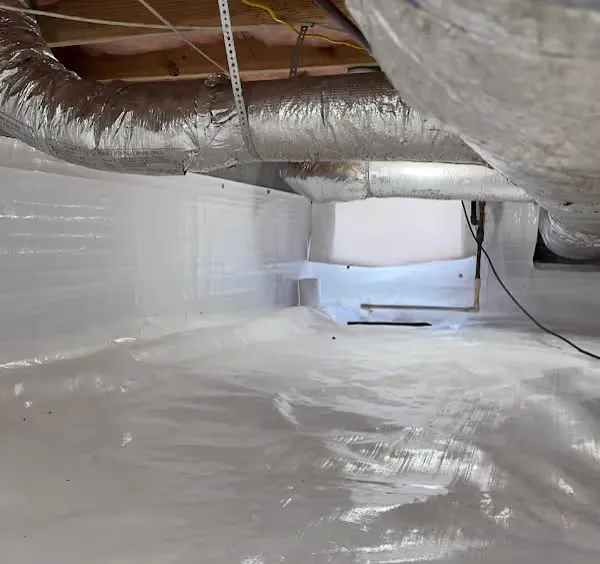
Ask for four things, and any honest crew hands them over. First, photos of the finished space, seams and corners included. Second, a humidity reading before and after. Third, the discharge point shown to you outside. Fourth, a written warranty you can read in one sitting.
Then stick your head in the hatch yourself. Liner should run up the walls and be fastened, not draped. Seams should be taped flat, and vents sealed rather than merely covered. If something looks off, say so before the final payment.
While you’re planning, it helps to know what else the house might need. Our guide to crawl space repair covers structural items like sagging joists and failed piers, and if your home has a walkout basement instead, flooded basement repair is the page you want.
How should you get ready?
Barely anything, honestly. Clear a path to the hatch, and move whatever is stored right inside it. We’ll need water, power, and a parking spot near that side of the house. On a tight lot off Lawrenceville-Suwanee Road, just mention it when you call so we bring the smaller truck.
Where we work around Suwanee
We’re based in Lawrenceville, about fifteen minutes south, so we’re in this area constantly — from the ball fields at George Pierce Park to the walking loop at Sims Lake Park. We serve Suwanee, Duluth, Buford, Sugar Hill, Johns Creek, Lawrenceville, Cumming, and the wider Gwinnett area. Same crews, same trucks, twenty-plus years of Georgia clay.
Questions Suwanee homeowners ask us
Trust your nose first — a musty smell in the hallway usually starts below the floor. Then look for fallen insulation, torn plastic, damp dirt, or cold floors in one room. If a hygrometer down there reads high for weeks at a time, that’s your answer, and a free inspection will confirm it.
It means sealing the crawl space off from the wet ground and the humid outside air. Heavy liner covers the dirt and runs up the walls, every seam gets taped, the vents get closed, and the air inside gets managed with a dehumidifier. Think of it as bringing that space inside the house.
It depends mostly on square footage, headroom, how much has to be hauled out, and whether drainage is needed. A small, tall, clean crawl space sits at the low end, while a large tight one with standing water sits at the top. We measure it, write it out, and the inspection and estimate are both free.
In our climate, almost always yes. Once the vents are sealed, moisture already in the soil and wood needs somewhere to go, and a dedicated unit handles it automatically. Ask any bid whether one is included, because that single line item explains a lot of price gaps.
Closed, as part of a sealed system. Open vents were the old standard, built on the idea that outside air dries things out. In a humid summer, though, that warm air hits cool surfaces and condenses instead — so sealing the vents and managing the air works far better here.
Let’s find out what your Suwanee crawl space actually needs
We’ll go under the house, measure it, take photos, and explain the fix in plain language — including the parts you don’t need. The inspection is free, the estimate is free, and nobody pressures you afterward.
(678) 914-5112Serving Suwanee and all of Metro Atlanta · $500 off projects over $3,500 · Live support 7am–8pm, 7 days a week