

Wet Crawlspace in Peachtree Corners: What’s Causing It, and How It Gets Fixed
That musty smell in the hallway usually starts four feet below your floor. Here’s the plain-English version of why — and what a real fix looks like.
Here’s a number that surprises almost everybody: a bare dirt crawl space can push somewhere between ten and twenty gallons of water — as invisible vapor — up into a house every single day. Not through a leak. Through the ground itself. That quiet, steady drip is the engine behind nearly every wet crawlspace Peachtree Corners homeowners end up searching for, and it explains why the smell reaches your hallway long before anyone sees standing water.
Good news right away, though: this is one of the most common things we look at, and it’s very fixable. So let’s take it apart slowly, because you deserve to understand your own house before anybody hands you a number.
Why does a dirt floor act like a faucet?
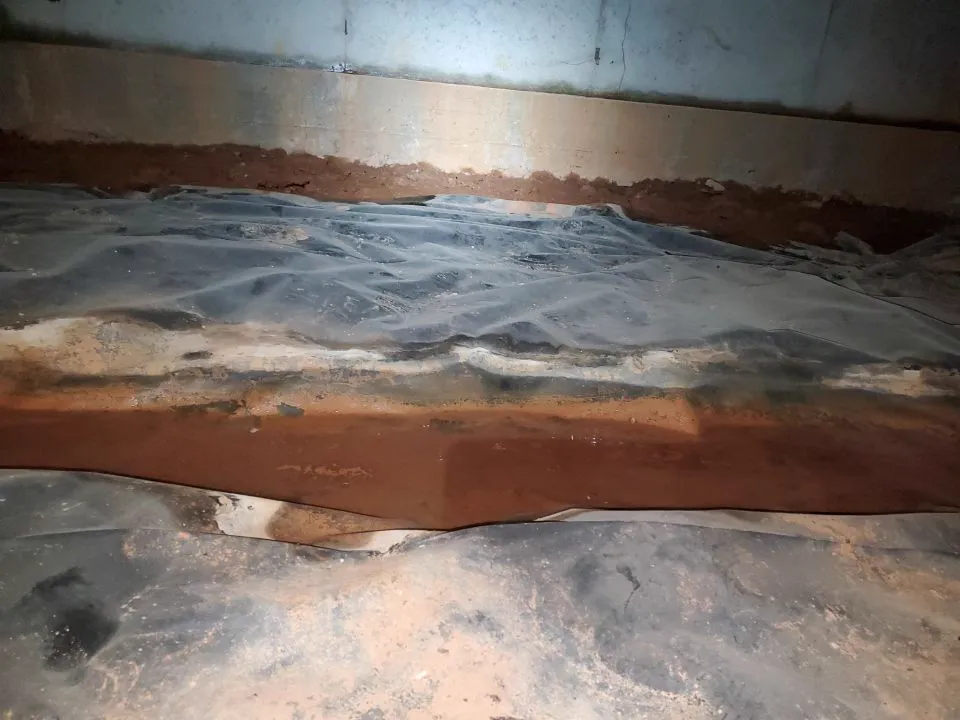
Soil is never truly dry. Red Georgia clay holds moisture the way a towel holds it after a shower, and that moisture doesn’t just sit still. It evaporates upward, all day, all night, in every season. Cover a patch of dirt with a sheet of plastic for an hour and you’ll see beads on the underside — that’s the whole story in miniature.
Now stretch that across the whole footprint of your house. The vapor rises, hits your cool floor framing, and settles there. That’s why crawl spaces feel clammy even when nothing ever flooded.
What is the house trying to tell you?
Most people don’t find this problem in the crawl space. They notice it upstairs and blame something else, so here’s what homeowners describe before anyone lifts an access door.
The everyday signs
- A musty smell that comes and goes. Strongest on humid mornings, faintest after a cold snap.
- Cold floors in winter. Insulation may be sagging or missing under those rooms.
- Indoor humidity that won’t drop. Even with the air conditioning working hard.
- Sticky doors and squeaky boards. Wood swells when it takes on moisture.
- A white or gray bloom on the rim joist. That’s mold beginning where the vapor lands first.
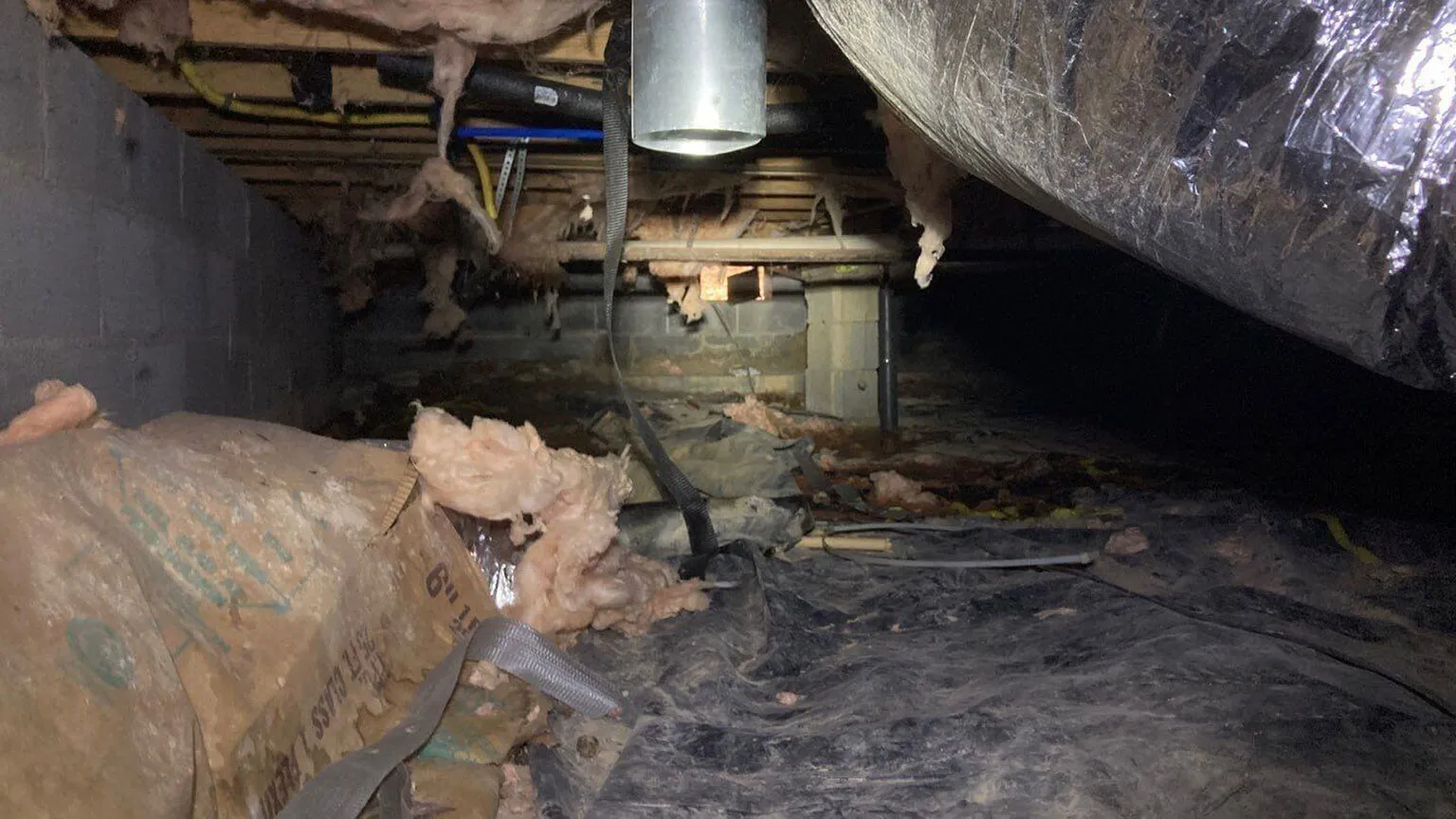
None of that means your house is in trouble. Moisture is simply winning a small argument down below, and small arguments are cheap to settle. A homeowner in Neely Farm blamed the family dog for the smell, but the culprit was insulation lying face-down in the dirt.
So where is the water actually coming from?
Three sources, usually working together. Ground vapor is the constant one. Second comes surface water — roof runoff, a downspout that ends at the wall, or a yard that gained an inch of mulch a year until it sloped back toward the house.
Third is the one nobody expects: your foundation vents. Open vents were required for decades, on the theory that outside air dries a crawl space out. In our climate, however, warm humid air rolling through those vents hits cool surfaces and condenses. The Department of Energy’s guidance on insulation and moisture control covers that same logic.
Peachtree Corners adds a twist. Homes here were mostly built before modern waterproofing was standard practice, so plenty never had a real system — they had a coat of tar and good intentions. On the older streets above the Chattahoochee bluffs, heavy tree canopy also keeps everything shaded and slow to dry. That’s why we’re out near Riverfield and River Station so often.
Worth knowing
Wood generally starts supporting mold growth once its moisture content climbs to around 20 percent. That’s a measurement, not a guess — and it’s the single most useful number in any crawl space.
Is yours mild, or is it more than that?
Fair question, and you can get most of the way there yourself with a flashlight. Nothing on this list is alarming. It simply shows where you sit on the scale.
Mild: dirt looks dry on top, plastic is loose or torn, and the smell only shows on muggy days. Medium: insulation sags, the rim joist has surface discoloration, and the air feels heavier than it does outside. Worth a call soon: standing water, mud that never firms up, or damp wood.
Even that last one isn’t an emergency. It’s a bigger scope, and still an ordinary job. Honestly, we see all three levels within a mile of each other off Jimmy Carter Boulevard.
What one question separates a real diagnosis from a guess?
Ready for the question that tells you everything? Ask whoever comes out: “What was the moisture content of the wood, and what was the relative humidity down there when you measured it?”
A real inspection produces two numbers. A meter reads the framing, and a hygrometer reads the air. If somebody quotes a full encapsulation without either number, that’s a pitch rather than a plan.
Those numbers set the scope. Wood at 12 percent needs a very different answer than wood at 22 percent, and air at 80 percent humidity tells us drying alone won’t hold. So the measurement decides the fix — not the other way around.
One more myth deserves retiring while we’re here. A sheet of hardware store plastic laid over the dirt is not a vapor barrier, because it isn’t sealed at the seams or attached to anything.
A vapor barrier only works if water can’t get around it. Loose plastic covers the middle of the floor and leaves every edge, pier and wall wide open — which is most of the surface area.
How does a wet crawl space actually get fixed?
Simpler than most people expect, and the order matters more than the materials. Here’s the sequence we follow.
- Handle the outside water first. Downspouts, grading, and yard drains. Sometimes half the fix lives above ground.
- Clear the space. Old plastic, fallen insulation, debris — all of it comes out in our truck, not yours.
- Manage any liquid water. A perimeter drain and a sump pump go in when the ground is genuinely wet, not by default.
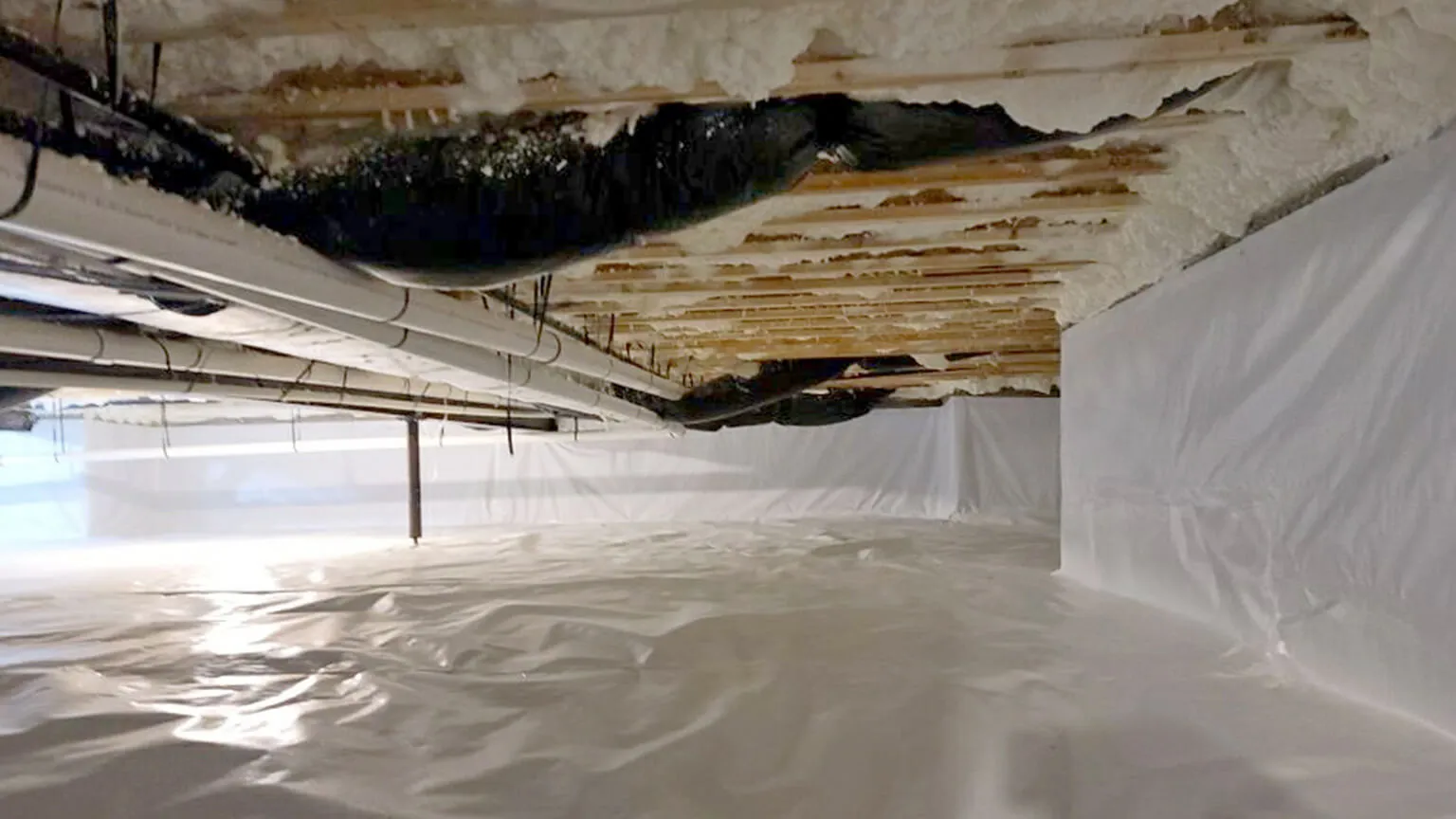
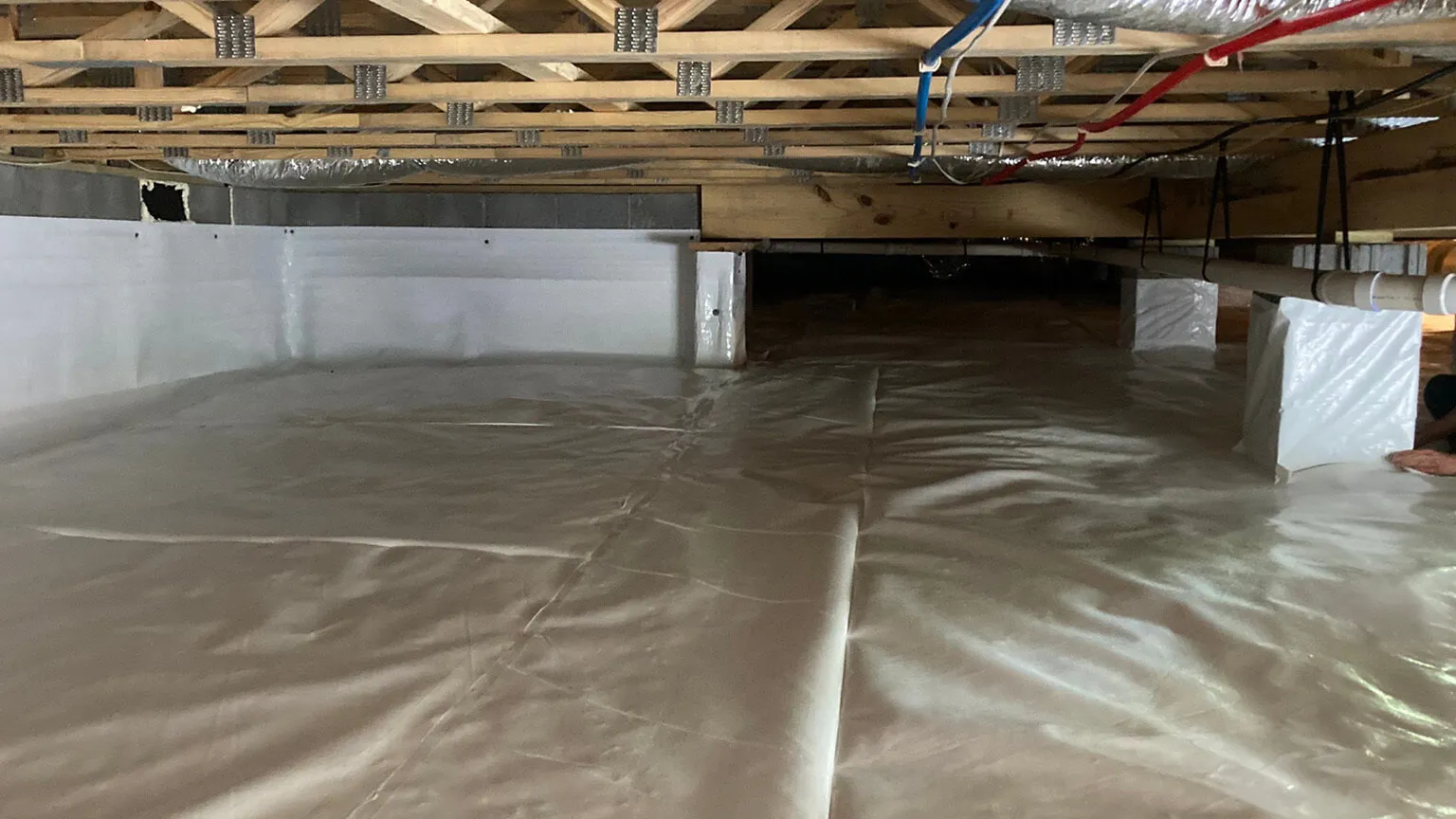
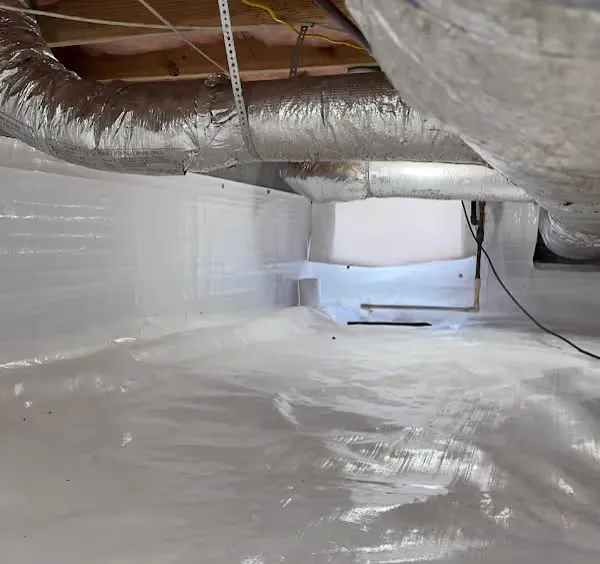
- Seal the ground and walls. A heavy liner runs across the dirt, up the stem walls, and around every pier, with the seams taped.
- Close the vents. Once the space is sealed, outside air stops delivering humidity through the wall.
- Condition what’s left. A dehumidifier sized for the space keeps the air steady year-round.
That package is what people mean by encapsulation. Most homes here take two to four working days, and cost tracks square footage, headroom, cleanout and drainage. Our encapsulation cost breakdown walks through those drivers, and the crawl space repair page shows what we install.
What does any of this have to do with the air upstairs?
More than most homeowners realize, and this is the part that changes the conversation. Air in a house doesn’t stay put. It rises, because warm air is lighter — builders call it the stack effect, and it runs all day whether your system is on or off.
As that air leaves through the attic, replacement air gets pulled in from the lowest point in the house. Guess which point that is. So a real share of what you breathe in the kitchen started its trip in the crawl space, which is why the smell arrives upstairs while the source sits below your floor.
That’s why we take a damp crawl space seriously even when nobody has stepped foot in it. Mold and moisture belong in the same conversation as indoor air, and the EPA’s overview of mold and health lays that out plainly. Once the space is sealed, that pathway closes.
Here’s the feeling people describe afterward: protected. Your family breathes air from a clean, dry, sealed space, and your floor system stops soaking up water it was never built to hold.
What changes once it’s done?
The smell goes first, usually within a week. Floors stop feeling cold in January, since the insulation is finally dry. Your air conditioner also gets an easier job, because dry air cools faster than damp air.
Better yet, the space becomes usable. A sealed crawl space is clean enough to walk through in regular clothes, so the holiday bins finally have somewhere to live.
Long term, the framing settles into the safe range and stays there. Plenty of the homes we’ve sealed near Town Center at Peachtree Corners have gone years without a follow-up call, and only the dehumidifier has a service life. If your house has a basement instead, our flooded basement guide covers that side. Comparing across town? The Dunwoody wet crawl space post shows how the same problem behaves a few miles west.
Where we work around Peachtree Corners
We’re based in Lawrenceville, roughly twenty minutes northeast, and we’re in this part of Gwinnett constantly — from The Forum on Peachtree Parkway out to the older streets above the river. That includes Peachtree Corners, Norcross, Duluth, Johns Creek, Dunwoody, Berkeley Lake, Sandy Springs, Suwanee, Lilburn and the wider Gwinnett area. Original 1970s and 1980s crawl spaces are ordinary work for us.
Questions Peachtree Corners homeowners ask us
Not really, and it’s the most common thing we pull out. Thin sheeting isn’t sealed at the seams, isn’t attached to the walls or piers, and tears as soon as anyone crawls over it. A true barrier is a heavy liner that covers the ground and the walls as one continuous surface, so moisture has nowhere to sneak around.
Start with your nose and your floors. A musty smell that comes and goes, cold rooms in winter, or indoor humidity that stays high are all early signals. If you can look down there safely, check whether the insulation is sagging and whether the wood looks stained — but the sure answer comes from a meter reading on the framing.
It means sealing the space off from the dirt and the outside air, then keeping the air inside it dry. A heavy liner covers the ground and runs up the walls, the vents get closed, and a dehumidifier holds humidity steady. Think of it as bringing the crawl space inside the house instead of leaving it outdoors.
It depends on square footage, headroom, how much old material has to come out, and whether drainage or a sump pump is part of the plan. A small, clean, dry space sits at the low end, while a large space needing cleanout and drainage lands well above it. We give you a written number after we measure, never over the phone.
In our climate, usually yes. Sealing stops new moisture from arriving, but a dehumidifier is what holds the air in a steady range through a humid Georgia summer. It should be sized for the space and drained to the outside, so nobody is emptying a bucket.
Let’s find out what your Peachtree Corners crawl space really needs
We’ll measure the wood, read the air, show you photos of what’s down there, and explain the fix in plain language. The inspection is free, the estimate is free, and nobody pressures you at the end of it.
(678) 914-5112Serving Peachtree Corners and all of Metro Atlanta · $500 off projects over $3,500 · Live support 7am–8pm, 7 days a week