

Wet Crawl Space in Duluth: What the Inspector Saw, and How It Gets Fixed
Musty smell upstairs. Cold floors in February. A report with one line that ruined your week. Here’s what it actually means.
You were three days from closing when the report landed. Buried under the roof notes and a loose deck rail sat one short line: elevated moisture, damaged vapor barrier, evidence of microbial growth. Suddenly a wet crawl space Duluth homeowners never think about became the only thing anybody wanted to talk about. So let’s translate that sentence into plain English, because it sounds far worse than it usually is.
Good news first. This is one of the most common findings on any Georgia home inspection, and it is very fixable. Better yet, the fix is predictable, and you can see it with your own eyes when it’s done.
What did the inspector actually see down there?
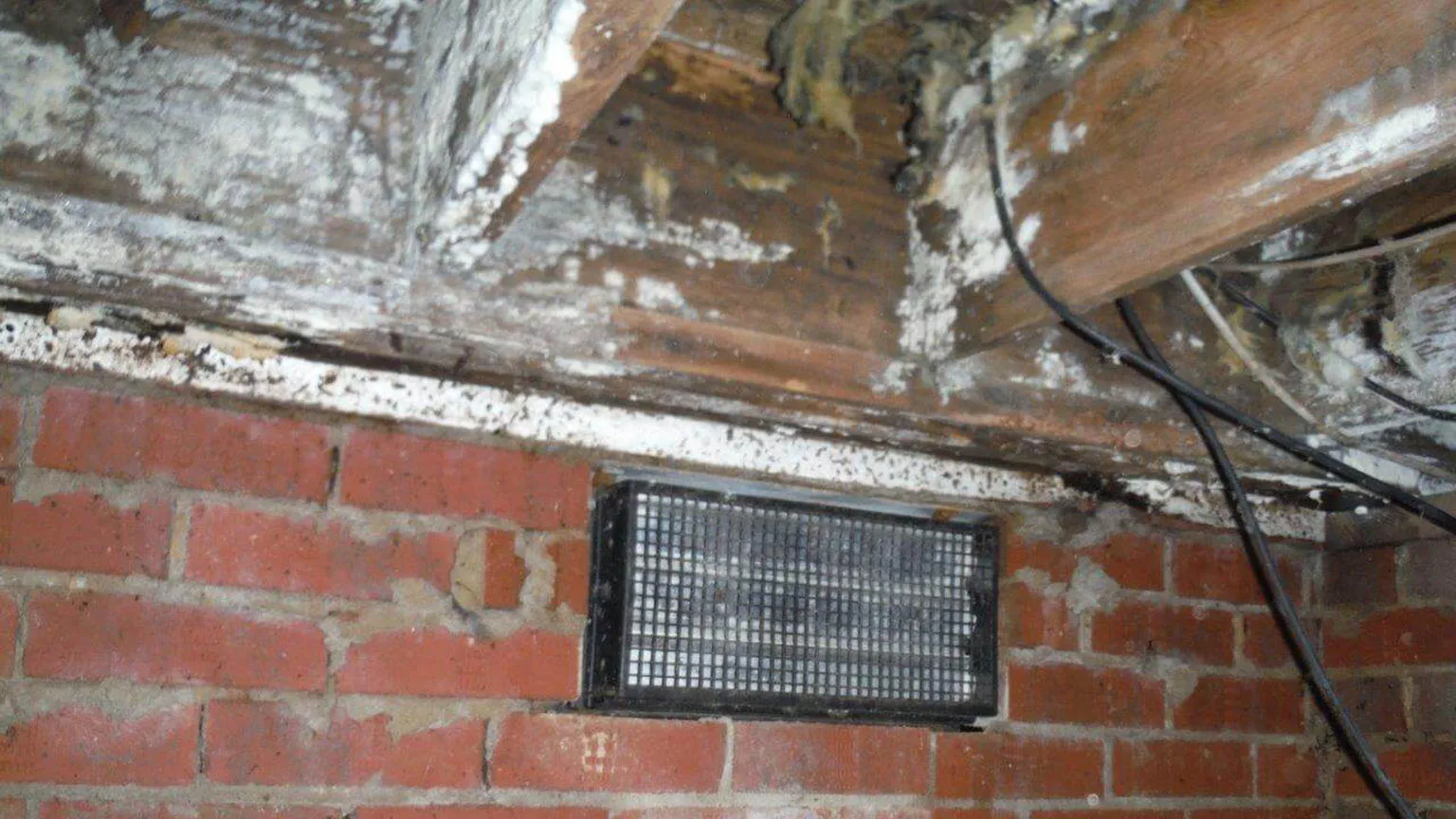
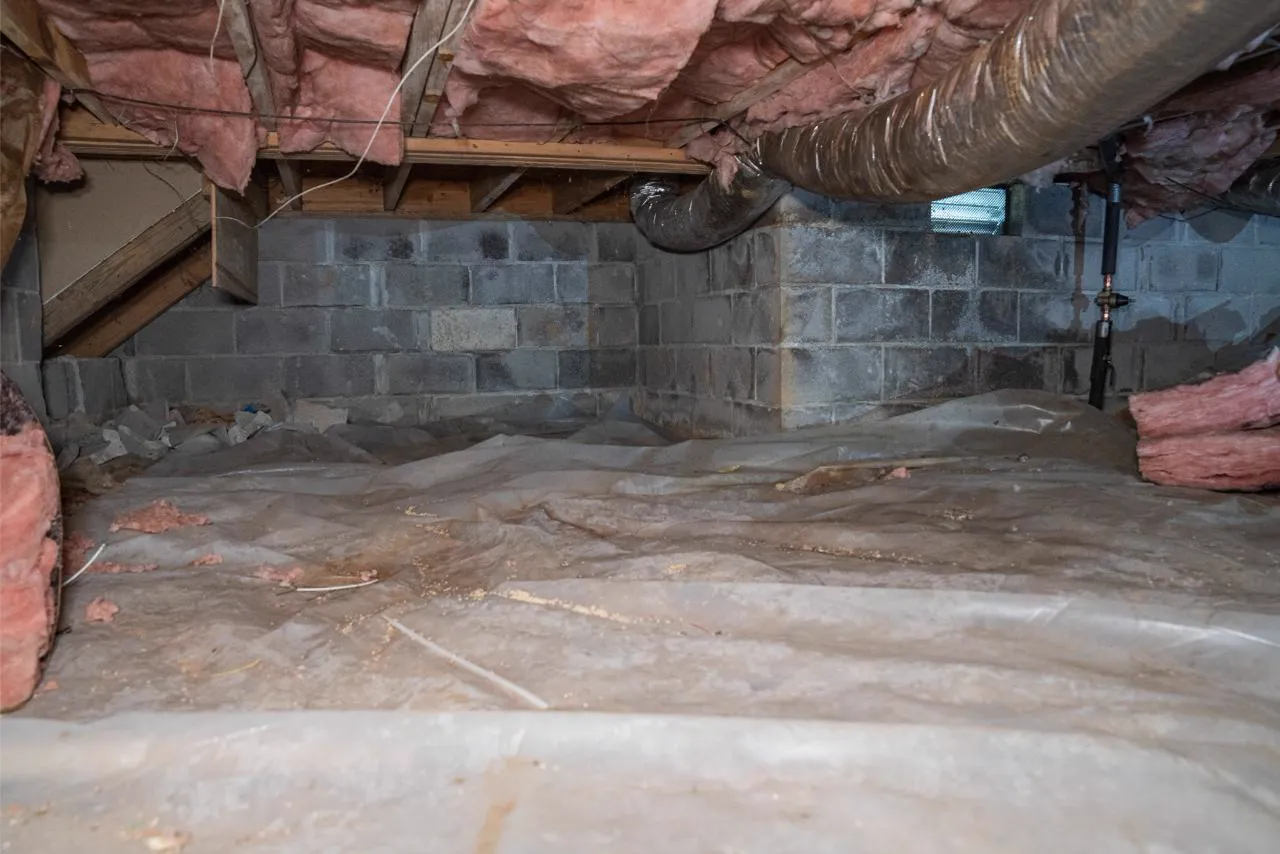
Usually three things. Torn plastic lying loose over bare dirt. Insulation sagging out of the floor joists like a tired blanket. And a white bloom on the rim joist where the wood meets the outside wall.
None of that means your house is falling apart. It means the crawl space has been humid for a while, and wood, dirt and damp air have been sharing a room with no supervision. Because these three signs travel together, spotting one usually means the others are close by.
Here’s the thing about downtown Duluth. Plenty of the older homes near the Town Green sit on crawl spaces built long before anyone treated the ground as part of the house. Newer subdivisions out toward Sugarloaf Country Club and St. Marlo Country Club mostly got full basements instead. So when we get a crawl space call in this city, we can usually guess the neighborhood before we hang up.
Where is the water even coming from?
Two places, and neither one is a leak in the usual sense. The first is the dirt. Bare Georgia clay gives off moisture all day long, and it never runs out, because groundwater keeps feeding it from below.
The second is your foundation vents. Old building code said to vent a crawl space so it could dry out. That works fine in a dry climate. In a Duluth August, though, you’re inviting eighty-degree soupy air into a space where the ground sits around sixty. Warm wet air hits a cool surface, and it drops its water right there on your framing.
Worth knowing
Wood starts supporting mold growth once its moisture content climbs to roughly twenty percent. Dry framing sits far below that. So the goal isn’t killing anything — it’s simply keeping the wood dry enough that nothing wants to live there.
Then there’s the outside water. Gutters that dump beside the wall, a yard raised an inch a year by mulch, or a 1990s foundation drain that silted up quietly. After a spring storm, all of it ends up under the house.

Is yours mild, or is it something more?
Fair question, and you can sort it out yourself in about ten minutes. Nothing on this list is alarming. It just shows where you sit on the scale.
Reading the signs
- Musty smell in the hallway, not the crawl space. Mild, and almost always a vapor problem rather than a water problem.
- Cold floors over one part of the house. Usually insulation that has fallen or soaked through.
- Indoor humidity that won’t drop below sixty percent. Your air conditioner is fighting the ground and losing.
- White or gray bloom on the subfloor. Evidence the wood has been damp for more than one season.
- Actual puddles after rain. Time to have someone look. Still very fixable, just a bigger scope.
What happens if you leave it? Nothing dramatic, honestly. Damp crawl spaces just get slowly worse — insulation keeps dropping, humidity keeps climbing, and framing that stays wet long enough eventually gets soft. The EPA’s plain-language page on mold and health covers the indoor-air side without selling you anything.
Real talk: what actually makes the repair last?
Here’s the part crews rush and homeowners never see. The liner seams. That’s it. That’s the whole ballgame.
Anyone can roll white plastic across dirt and take a photo. A liner that still works in ten years has every seam sealed, edges fastened to the foundation wall, and piers wrapped individually instead of cut around. Skip those details and you’ve built a very expensive picnic blanket.
The material doesn’t fail. The seams fail. So we’d rather spend an extra half day taping and fastening than come back in three years to explain why the smell returned.
Water control comes first, though. If groundwater still rises under the liner, you’ve simply trapped it, and now it has nowhere to go. That’s why we set drainage and a sump before the liner goes down whenever the space needs it. Stop the source, then protect the structure — in that order, every time.
One more thing to insist on: a dehumidifier sized for the space, with a real drain line. Not a hardware-store unit with a bucket somebody has to empty. Bucket units get forgotten by the second month, and then the room slides right back.
So how does the fix actually work?
Simpler than most people expect. Encapsulation means we turn the crawl space into a sealed, conditioned part of the house instead of a dirt basement with the windows open. Here’s the sequence, plainly.
- Handle the outside first. Downspouts, grading, buried drain lines. Sometimes half the fix lives in the yard.
- Clear the space. Old plastic, fallen insulation and debris come out. Wet framing gets treated and dried.
- Add drainage where it’s needed. Perforated pipe in clean stone, routed to a sump that discharges well away from the house.
- Seal the vents. Once the ground is covered, outside air stops being a helper and starts being the problem.
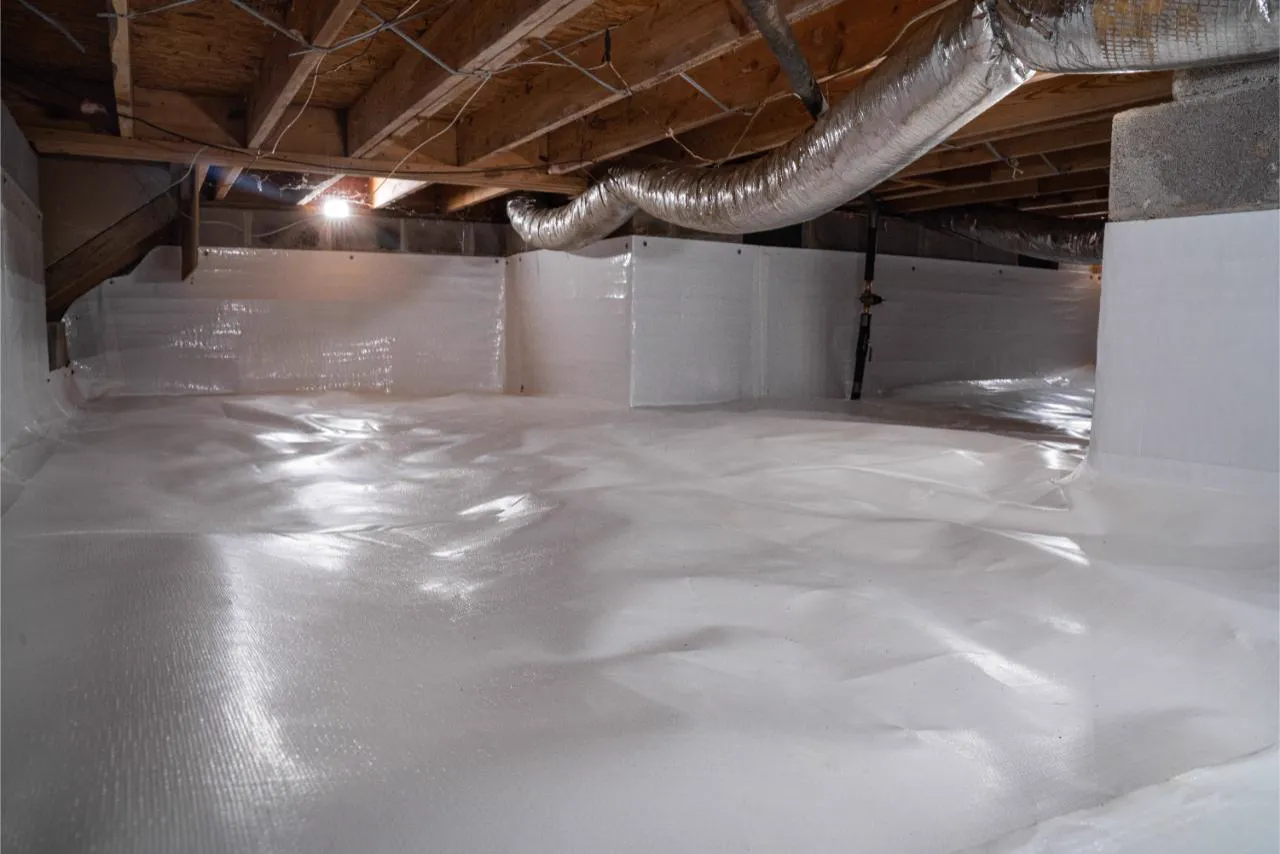
- Install the liner. Heavy white sheeting across the floor and up the walls, seams sealed, piers wrapped, edges fastened.
- Set the dehumidifier. Sized right, drained to daylight or the sump, and left running quietly.
Most Duluth crawl spaces take two to four working days. Pricing tracks square footage, headroom and whether drainage is part of it, so our encapsulation cost breakdown walks through the drivers if you want numbers before calling. The crawl space repair page shows exactly what we install and why.
Why does the rest of the house feel it?
Ready for the part almost nobody connects? Air in a house moves upward. Warm air rises and escapes near the roof, which pulls replacement air in from the lowest point — and the lowest point is your crawl space.
Building science research puts a large share of the air on your main floor as air that started under the house. In other words, whatever is happening down there is happening in your living room a few minutes later, just with better furniture. The CDC’s overview of mold in the home explains why damp indoor air is worth taking seriously.
That explains the symptoms people never link together. A guest room that always smells closed up. Allergies that get strange in August. Hardwood floors that cup one year and gap the next. Even a power bill that climbs while the thermostat stays put, since your system spends its day wringing water out of ground air.
We had a homeowner in one of the downtown Duluth townhomes near Parsons Alley who was certain something was wrong with her ductwork. Two techs had already been out. As it turned out, the ducts were fine — the air feeding them wasn’t. After encapsulation, the smell was gone inside a week.
What does life look like once it’s dry?
Quieter, and a little smug. The musty smell fades within days. Floors over that section stop feeling like a walk-in cooler in January. Your humidity settles into the low fifties and stays there, which is where a house is happiest.
A year later, you barely think about it. Then a friend mentions a strange smell in their hallway, and you get to be the person who knows exactly what it is. That’s the real payoff here — not just a dry crawl space, but the quiet pride of owning a house you actually take care of.
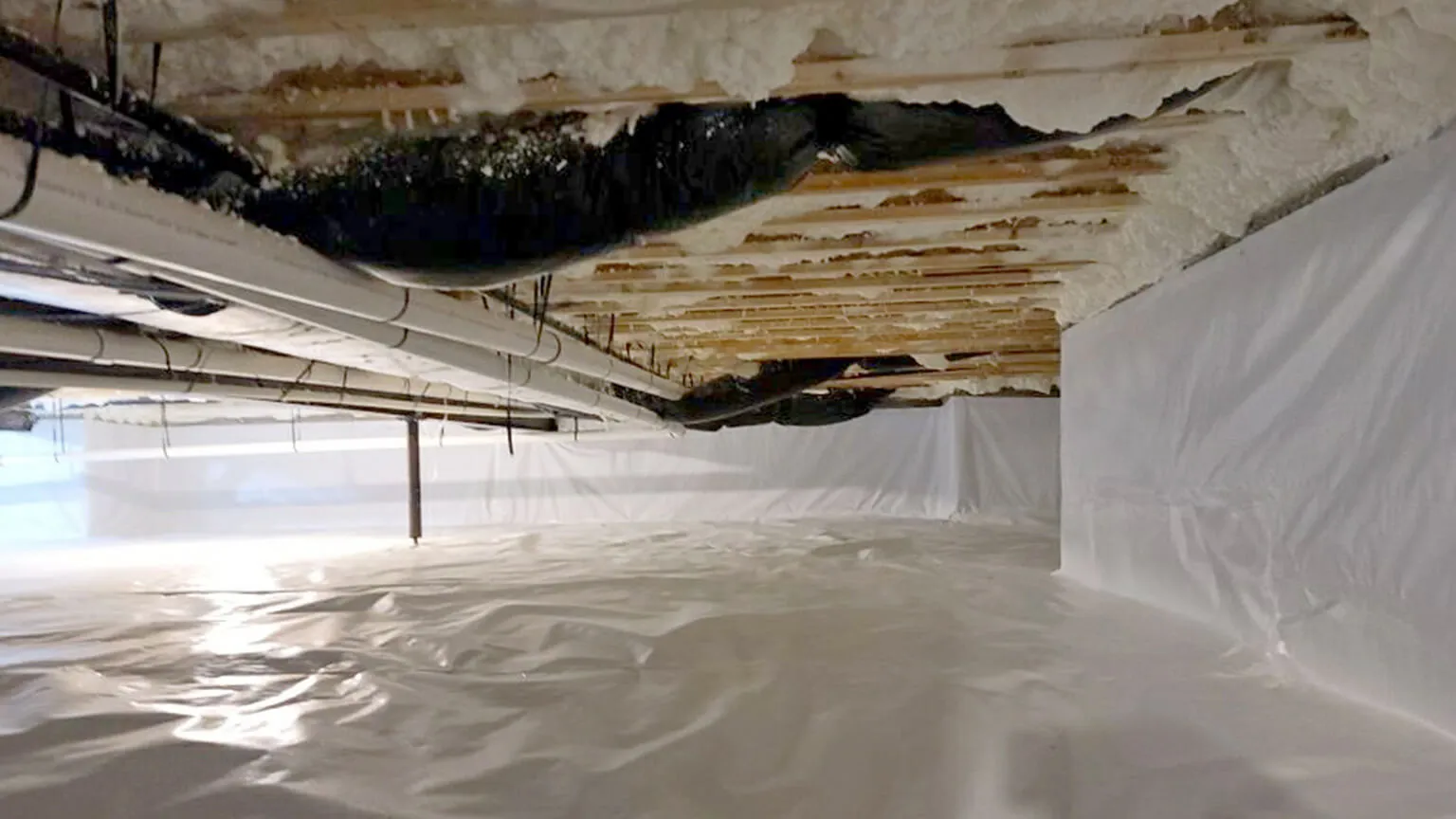
Storage becomes real storage, too. Plenty of homeowners along Sugarloaf Parkway keep holiday bins down there now without wrapping everything in garbage bags first. If your home has a basement instead, our flooded basement repair guide covers that side, and the Suwanee wet crawl space post explains how newer construction behaves differently.
Where we work around Duluth
We’re based in Lawrenceville, about fifteen minutes east, so we’re in this part of Gwinnett constantly. That includes Duluth, Johns Creek, Suwanee, Berkeley Lake, Peachtree Corners, Norcross, Lawrenceville, Sugar Hill, Buford, Snellville and the surrounding Gwinnett area. Older downtown crawl spaces with no vapor barrier are normal work for us, not a surprise we charge extra to be surprised by.
Questions Duluth homeowners ask us
Usually it helps, because your air conditioner stops working so hard to pull water out of the air. Most homeowners notice the difference more in comfort than on the bill, especially in late summer. We won’t promise you a number, though — savings depend on your system, your ductwork and how leaky the house is overall.
If it’s wet, sagging or falling, it comes out. Damp fiberglass holds water against the wood and stops insulating anyway, so leaving it does nobody any favors. Once the space is sealed and dry, we can insulate the walls or the subfloor properly, and that insulation actually stays put.
Not for a real fix. Thin sheeting tears the first time someone crawls across it, and loose plastic with open seams lets ground moisture right past. Encapsulation liner is much heavier, reinforced, sealed at every seam, and fastened to the walls so it stays a sealed system instead of a tarp.
Trust your nose and your feet first. A musty smell upstairs, cold floors over one section, or indoor humidity stuck above sixty percent are the everyday signs. If you can look inside, bare dirt, torn plastic, drooping insulation or white bloom on the wood all point the same direction, and a free inspection settles it either way.
We seal the crawl space off from the ground and the outside air, then keep it dry. That means covering the dirt and walls with heavy liner, sealing the seams and vents, adding drainage if water gets in, and running a dehumidifier. After that the space behaves like part of your house instead of a damp hole under it.
Let’s find out what your Duluth crawl space really needs
We’ll go under the house, take moisture readings, and show you photos of what’s actually down there — then explain the fix in plain language. The inspection is free, the estimate is free, and nobody pressures you at the end of it.
(678) 914-5112Serving Duluth and all of Metro Atlanta · $500 off projects over $3,500 · Live support 7am–8pm, 7 days a week