

Flooded Basement Repair in Duluth: What the Job Really Involves
Water on the slab, a pump that quit, and the plan that makes it stop for good.
Here’s a thing worth knowing before you call anybody: if your basement took on water last week, a house on your street almost certainly did too. That’s not bad luck. It’s how flooded basement repair Duluth homeowners need usually starts — with a whole block of homes built in the same years, on the same clay, with the same original drainage quietly aging out together.
So take a breath, because this one has a clear fix. We’ve done this work in Gwinnett for more than twenty years, and the water is coming from somewhere ordinary. Below is the honest version: the steps, the price drivers, and what’s in the contract.
Flooding or seepage — which one do you have?
Ask that first, because the answer changes the whole plan. Seepage is slow. You get a damp line along the bottom of the wall, maybe a musty smell, and a spot on the carpet that never really dries.
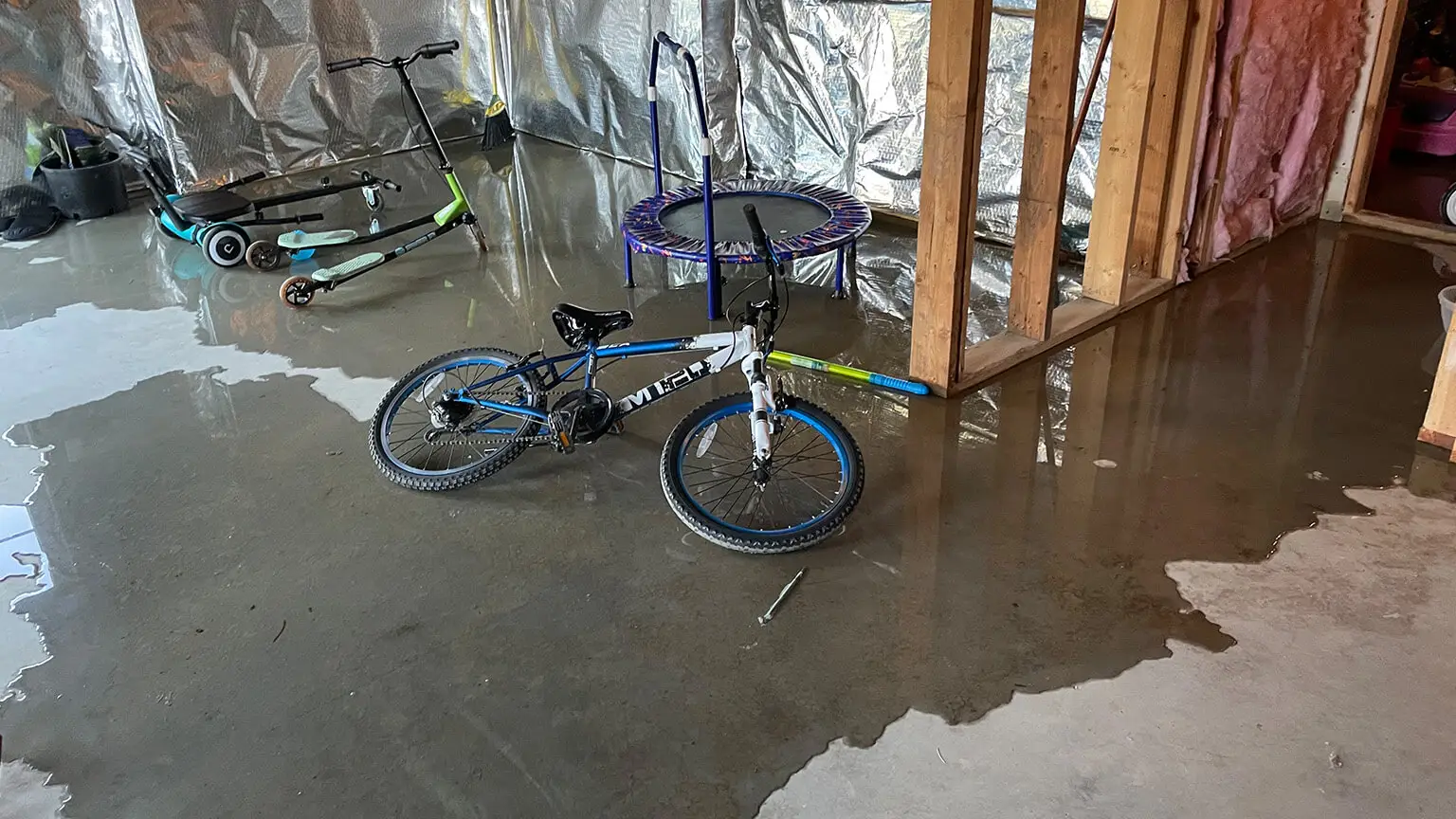
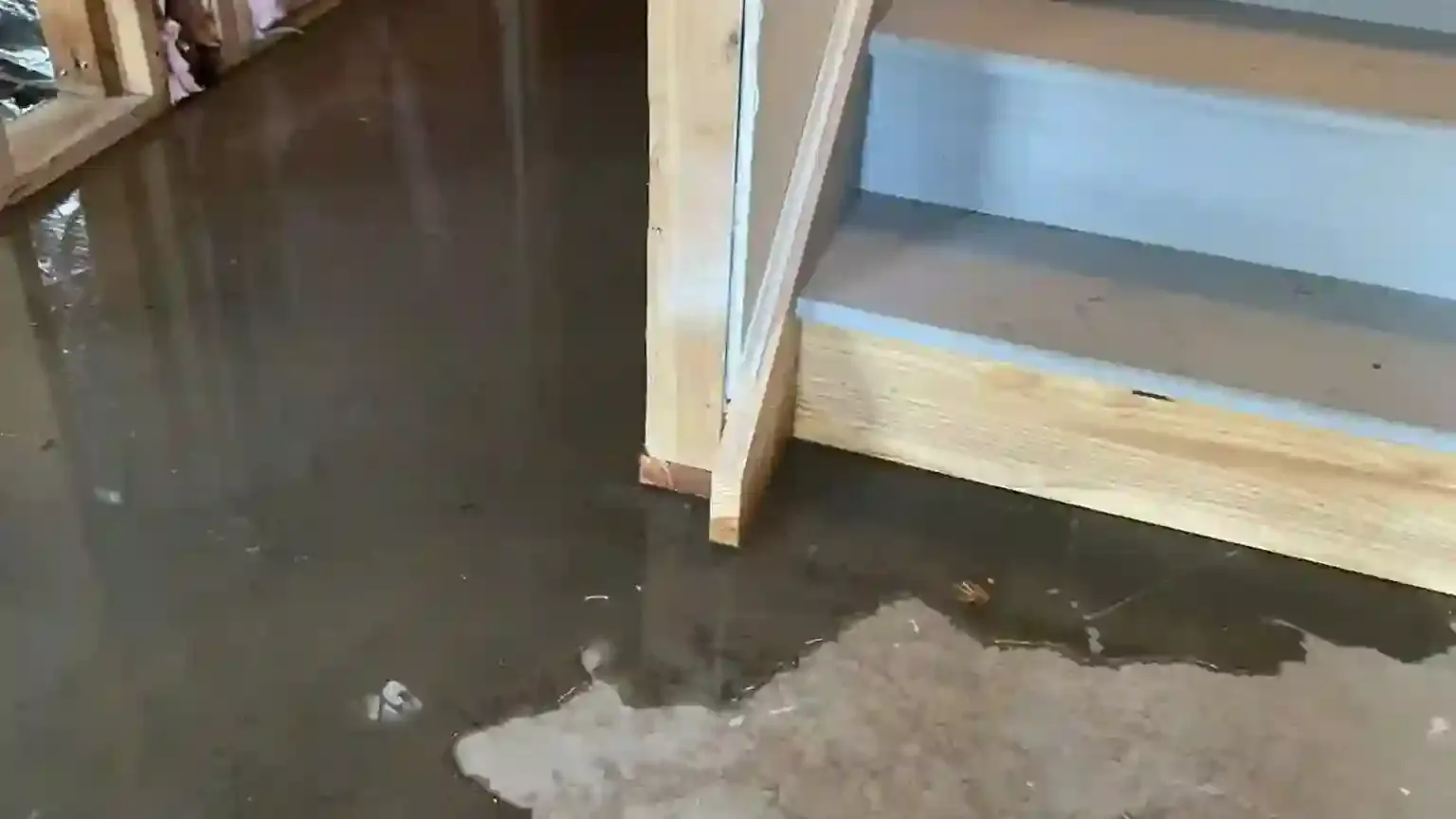
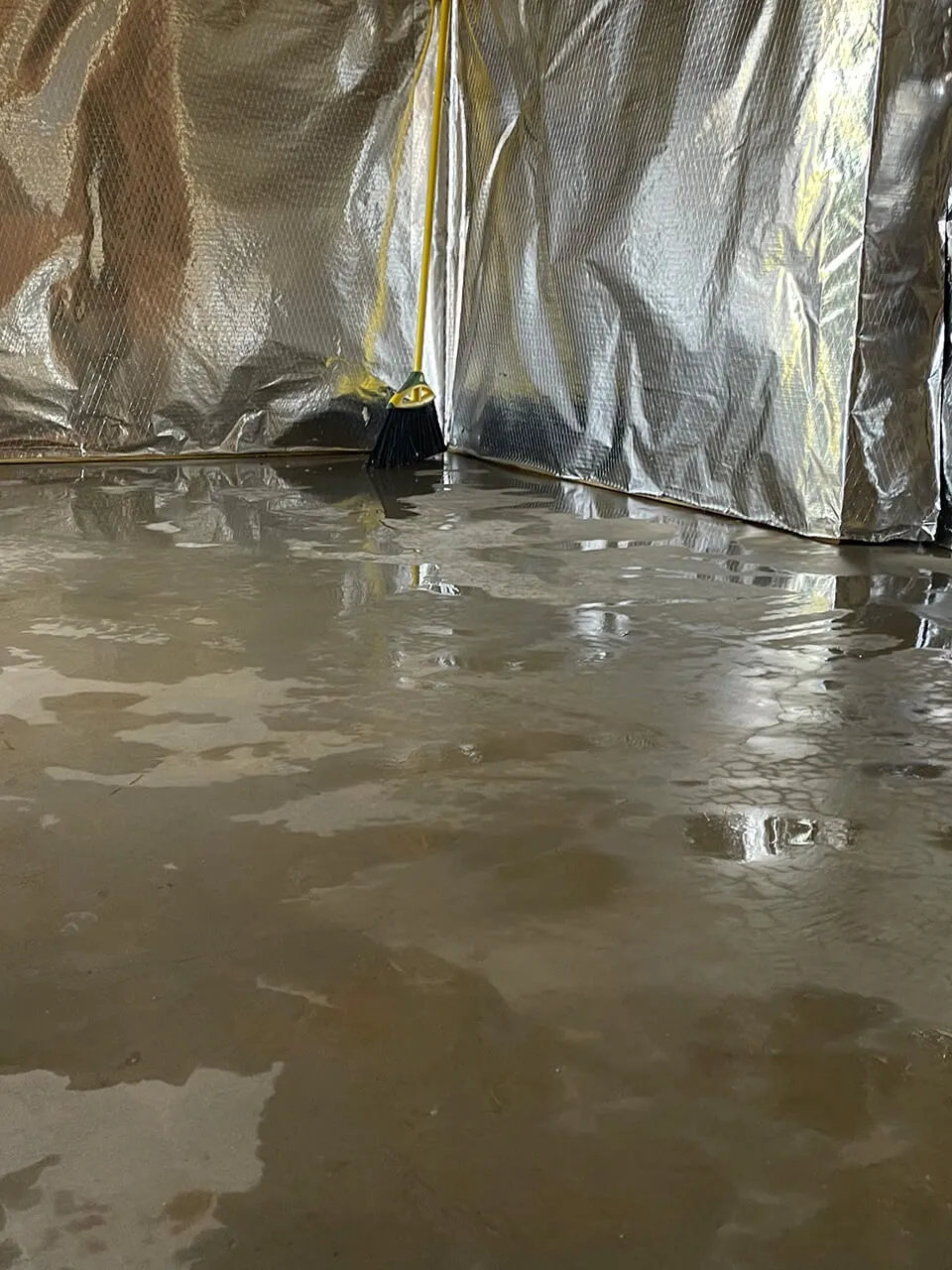
Flooding is bulk water. It arrives during or right after a storm, spreads across the slab, and usually means one of four things: pressure in the soil, a sump that quit, a blocked drain line, or a window well with nowhere to send what it catches. Good news? Every one has a known fix.

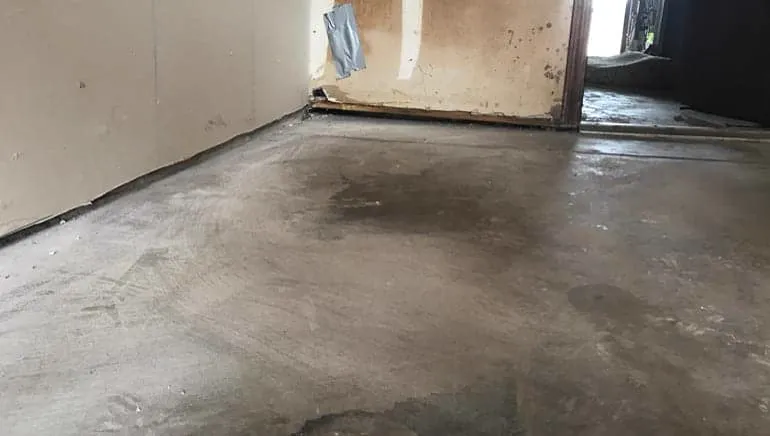
Where does it come in? Usually the cove joint — the seam where your wall meets the floor slab. People hunt for a crack, can’t find one, and feel like they’re missing something. They’re not. The cove joint isn’t damage. It’s a seam, and under pressure a seam is the easiest door in the house.
Safety first, plainly
If there’s standing water down there, don’t step in it while the power is on. Kill that circuit at the panel first, then go look. Thirty seconds, question settled.
Why does pressure build here? Georgia red clay holds water instead of draining it, so after two soaking days the soil around your foundation is a wet sponge pressed against the wall. On hollow block walls, water fills the cores and comes through low. That’s why flooding often shows up a day after the storm, when everyone’s already relaxed.
What happens when the crew shows up?
You can picture the whole job before a truck ever parks out front. Most of ours follow the same shape:
- Water out, fast. Standing water gets extracted, then wet organics — carpet, pad, damp drywall bottoms — come out, because those hold moisture long after the floor looks fine.
- Dry it properly. Air movers and a dehumidifier run until materials read dry, not until they feel dry. Mold can get going in roughly 24 to 48 hours, so speed matters.
- Find the source. We walk the outside first — grading, downspouts, window wells — then inside. Sometimes it’s a small problem in a big costume.
- Open a perimeter channel. A narrow strip of slab comes up along the walls that need it. Dusty, loud, usually a day or two.
- Set drainage below the slab. Perforated pipe in clean stone, below floor level, so water gets caught before it reaches your floor.
- Sump and discharge. Everything routes to a basin with a right-sized pump, a check valve, and a line that ends well away from the house — not beside the foundation, where it would come back for a second try.
- Close it up clean. Fresh concrete, wall liner where it belongs, site swept. We haul our mess out, since a pile of broken slab by your garage is not a finish.
A flooded basement isn’t a wall problem. It’s a water-management problem that happens to show up on your wall.
Can we back up a second?
Because there’s a question underneath the question. Most people call asking “how much to fix a flooded basement.” What they’re really asking is “how do I stop worrying every time the radar lights up.” Two different jobs, and only one ends when the concrete cures.
That matters here more than most places. Duluth basements are working basements — in-law suites, home offices, a parent’s bedroom. When one floods in this city, it isn’t holiday bins getting wet. It’s somebody’s room. Multi-generational households are common all along the Buford Highway (US-23) corridor, so a dry basement isn’t a nice-to-have. It’s square footage a family lives in.
So the real deliverable is confidence, which is why good flooded basement repair Duluth work fusses over the parts nobody photographs: pump sizing, a check valve, a discharge line that won’t silt up, a battery backup. Sump pumps fail in boring, predictable ways — power loss during the storm, a stuck float, undersized, no check valve, a plugged discharge. All preventable on install day.
One thing to check before you spend a dollar: your policy. Standard homeowners insurance commonly excludes groundwater seepage, and sump pump failure coverage is usually a separate rider you have to add on purpose. We’re not insurance people, so read your declarations page or call your agent — better to know now than mid-claim. For a neutral primer, FEMA’s building science library is a good half hour.
So what does flooded basement repair cost?
Straight answer: it depends on how much wall is involved and how hard it is to reach. Anyone quoting a flat number sight unseen is guessing, and you’d be paying for that guess. Here’s what we weigh instead.
What moves the number
- Linear feet. One wall is a very different job than a full perimeter. Biggest single factor.
- Access. An open basement is straightforward. A finished in-law suite means careful work before the real work starts.
- Pump and backup. A new basin, right-sized pump, check valve and battery backup add cost. They also run during the storm that knocks the power out.
- Damage already there. Extraction, tear-out and days of drying equipment are their own line item.
- What’s happening outside. Grading, downspouts, window well drains and a silted-up footing drain sometimes carry most of the blame. Smaller ticket, and we’ll tell you.
- Wall condition. Bowing or active cracks mean structural work comes first. Waterproofing over a moving wall is money spent twice.
Where does that land? A drainage correction with a new pump sits at the low end. A full perimeter system with backup power, drying and careful work around finished space sits at the high end, and a big walkout in a golf-course community runs more than a compact downtown basement. Most flooded basement repair Duluth projects fall between, and you get a written number with the scope spelled out before anyone touches concrete.
What’s included, and what isn’t?
Included: labor, materials, the concrete we replace, the pump system, hauling, cleanup and the warranty. Not included: rebuilding finished walls we had to open, replacing ruined flooring, and structural repair, which gets priced on its own. Better you hear that now than read it in fine print later.
The warranty covers the system we install and the walls we treat, it’s in writing before work starts, and it transfers when you sell. Ask us to explain it in one sentence. Our shop is about fifteen minutes away in Lawrenceville, so a year-six phone call reaches the same people who did the job.
Why does local matter beyond the warranty? Because we know this housing stock. Big walkouts in Sugarloaf Country Club behave differently than sloped lots in St. Marlo Country Club, and river-side homes around The River Club see seasonal groundwater most of the county never does. Older homes near Parsons Alley often have crawl spaces with no vapor barrier at all — a different fix, and a cheaper one.
How did it go for a house near downtown?
A homeowner on one of the older streets off downtown Duluth called us on a Monday, after a weekend of steady rain. Old house, partial basement, crawl space under the rest, about an inch of water across the slab. Their mother lived down there.
Here’s what we found. The original sump had a stuck float, so it never turned on. Water came up through the cove joint on two walls, and the crawl space side had bare dirt feeding humidity into everything. The plan: extraction and three days of drying, a perimeter channel on those two walls, a new basin with a right-sized pump, check valve and battery backup, a rerouted discharge, plus a vapor barrier in the crawl. Four days total.
They called in late July, after two days of tropical leftovers rolled through and half the lot at the Gas South District was underwater. The message was short: the pump ran, the floor stayed dry, Mom slept through it. That’s the real product — not pipe and stone, but a room that stays a room during a storm.
On drying speed, the CDC’s guidance on mold cleanup after flooding lays out the timeline better than we can. Get that part right and the rest is just construction.
Not sure which problem you have? Our breakdown of standing water basement causes covers the symptoms one by one, and every system we install is laid out on our basement waterproofing page. If the cracks bother you more than the water does, start with foundation repair. Got family a couple exits north asking the same questions? We cover Suwanee flooded basement repair too.
Where we work around Duluth
We’re based in Lawrenceville, so Duluth is about fifteen minutes out our door. We work throughout Johns Creek, Suwanee, Berkeley Lake, Peachtree Corners, Norcross, Sugar Hill, Lilburn and Snellville, plus the wider Gwinnett County area. If you’re anywhere along Peachtree Industrial or over toward Pleasant Hill, odds are good we’ve already been under a house on your street.
Questions Duluth homeowners ask us
Because the cove joint — the seam where wall meets slab — is the easiest opening in the house. It isn’t a crack or a defect, just a seam, so when wet clay presses water against the foundation it comes through there first. That’s exactly what below-slab drainage catches.
You can get very close, yes. A full drainage system with a right-sized pump, a check valve and a battery backup handles the storms that used to cause trouble. The pump is the one part with a service life, so plan on swapping it around the ten-year mark.
It depends on how many linear feet of wall are involved, whether you need a new sump, and how much finished space we work around. A drainage correction with a new pump is the low end; a full perimeter system with backup power and drying is the high end. You get a written number after we walk the house — never a flat price over the phone.
Still worth a look, because occasional flooding usually means the system holds up until a certain amount of rain, then it doesn’t. Often the fix is small — a discharge line, a window well drain, or grading that sends roof water away. We’ll tell you if that’s all you need.
For a small puddle caught early, sometimes. For real flooding, no — a fan moves air but doesn’t pull moisture out, and soaked pad or drywall stays wet inside. Get the water and wet material out first, then run a dehumidifier until things actually read dry.
Let’s find out where the water is getting into your Duluth basement
The inspection is free, the estimate is free, and nobody pressures you at the end. We’ll show you the entry point and what it takes to stop it — even if the answer is simpler and cheaper than you expected.
(678) 914-5112Serving Duluth and all of Metro Atlanta · $500 off projects over $3,500 · Live support 7am–8pm, 7 days a week