

Encapsulation Cost in Duluth: A Step-by-Step Breakdown
What each step does, what really moves the number, how long it takes, and the honest line where a weekend project runs out of road.
Here’s the physics, in one plain sentence: water moves from wet dirt into dry air, and your crawl space floor is a giant open pan of wet Georgia clay evaporating straight up into your house. That’s it. That’s the whole reason people start hunting for encapsulation cost Duluth numbers late at night, and the good news is that the fix is simple to understand.
Because the problem is a moisture path, the answer is a moisture barrier — a sealed system, not a sheet of plastic tossed on the ground. So let’s walk the entire thing together: every step, in order, plus what raises the price, what lowers it, and how to tell the work was done right.
Why does a vented crawl space get damp?
Because the vents were supposed to dry it out, and in Georgia they often do the opposite. Warm, soaked July air pushes through those openings, hits cooler framing underneath your floor, and gives up its moisture right there. Add the damp soil below, and you’ve got a small weather system living under your living room.
Wood starts supporting mold growth at around 20% moisture content. In a vented crawl space through a Georgia July, framing regularly gets there — which explains musty air, cupping hardwood, and a room above that never quite feels right. None of that means your house is in trouble, though. It means the air down there needs a different plan, and that plan has been around for decades. The CDC’s page on mold and your home covers the health side without selling you anything.

Duluth adds its own wrinkle. Older properties near downtown and the Parsons Alley blocks sit on crawl spaces, while the subdivisions further out mostly have basements. Plus the Chattahoochee wraps the north and west edge of town, so lots near The River Club and Rivermoore Park can carry seasonal high groundwater that pushes moisture up all spring.
Worth knowing
Plastic laid loose on the dirt and a sealed encapsulation system are two different products. One slows evaporation a little. The other closes the whole space off from the ground and the outside air. We’ll tell you plainly which one your house actually needs.
What happens, step by step?
Every crawl space is a little different, but the order almost never changes. Here’s the honest sequence, start to finish.
- Crawl it and measure it. We get down there with a light, measure the square footage, check headroom, and find the wet spots. That first hour decides everything else.
- Clear it out. Sagging fiberglass, torn plastic, and whatever the previous century left behind all come out first.
- Handle the water. If water actually pools, we set drainage and a sump before any liner goes in.
- Prep the floor. Sharp rock and debris get smoothed out so the liner sits flat and doesn’t get punctured on day one.
- Seal the vents. Those openings get closed, since letting humid outside air in is the original problem.
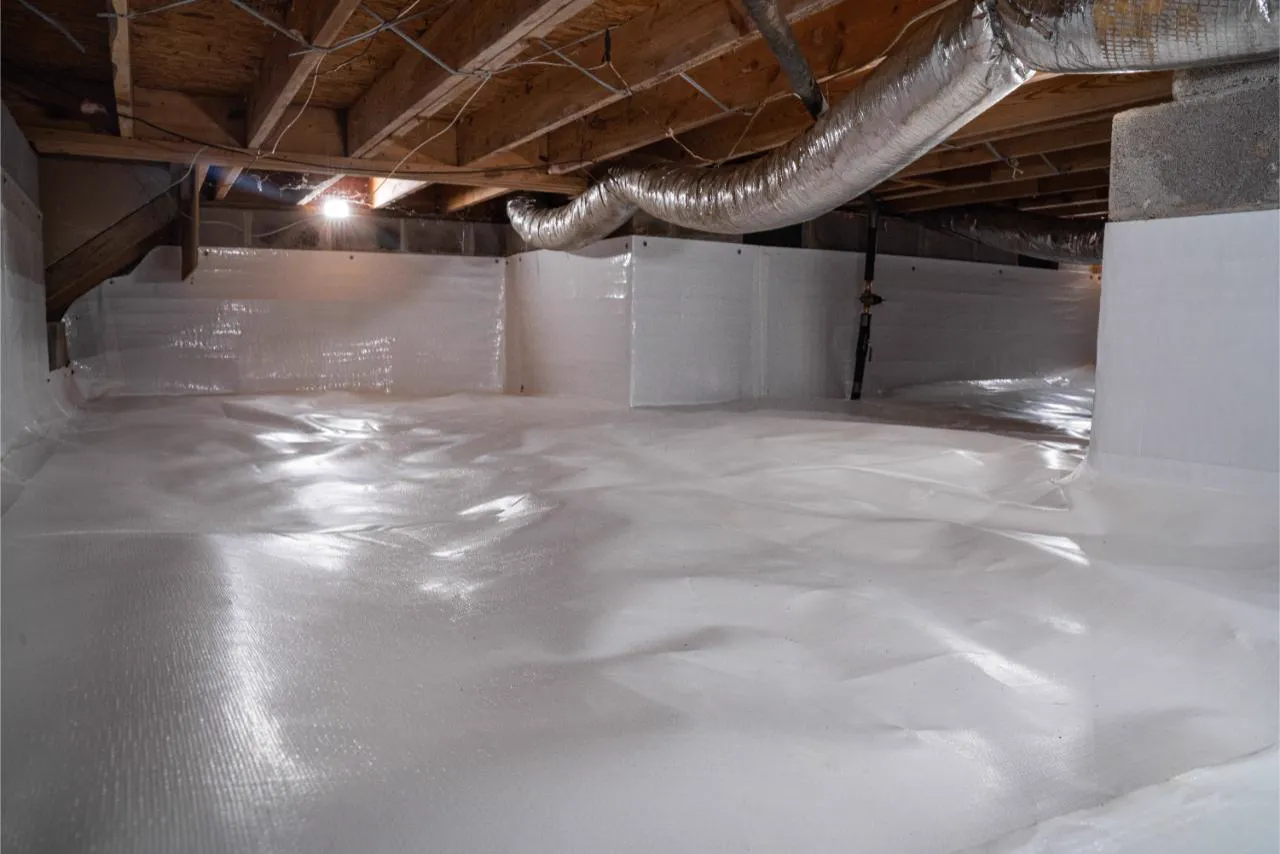
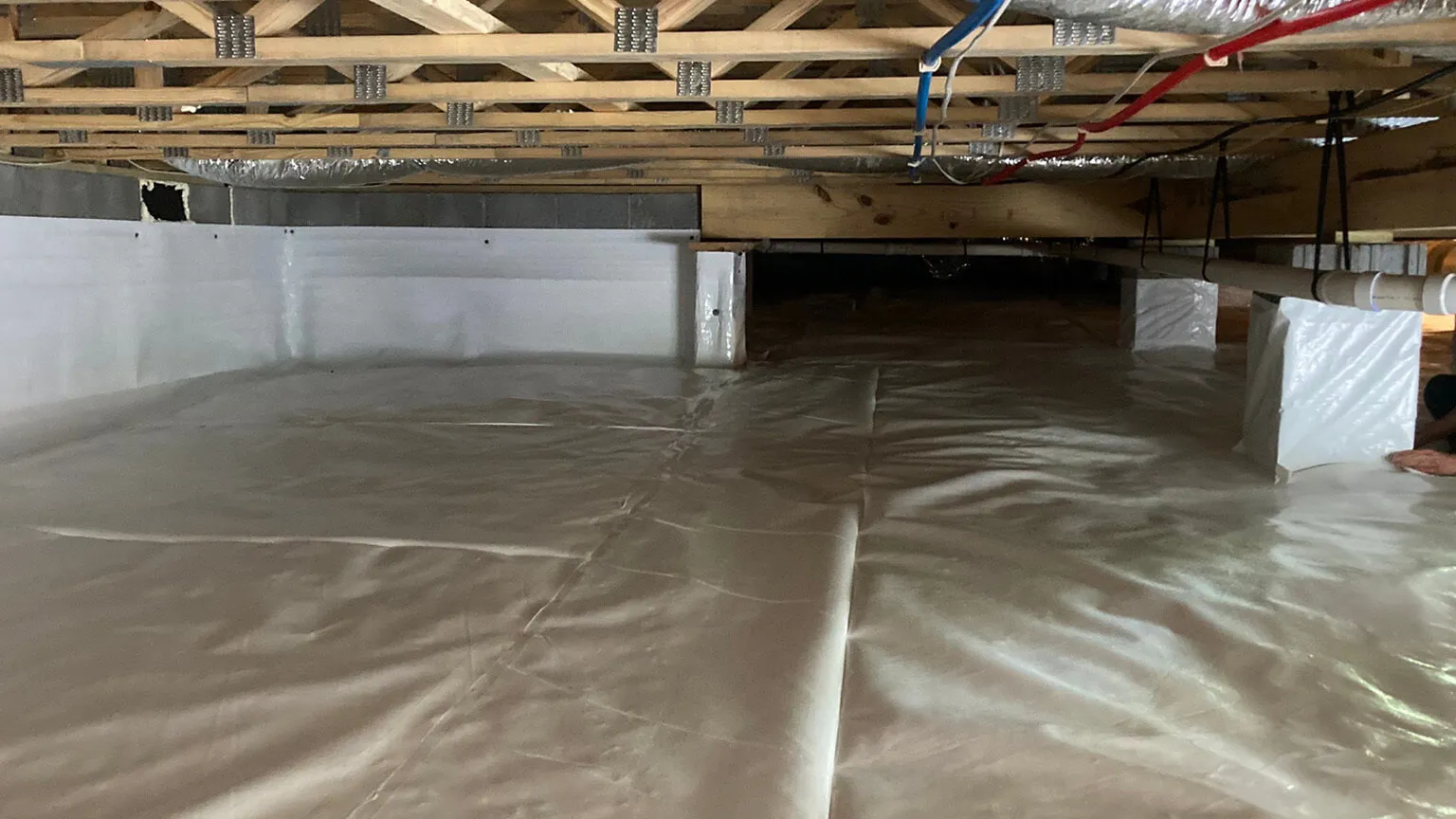
- Install the liner. Heavy sheeting goes across the floor, seams overlapped and taped, then runs up the stem walls and gets fastened near the top.
- Detail the piers and edges. Every pier gets wrapped and the perimeter gets sealed. That’s where a real system separates itself from a tarp.
- Set the dehumidifier. A properly sized unit with a drain line keeps humidity steady year-round.
- Walk it with you. Photos, the discharge point, and the paperwork — because you should see what you paid for.
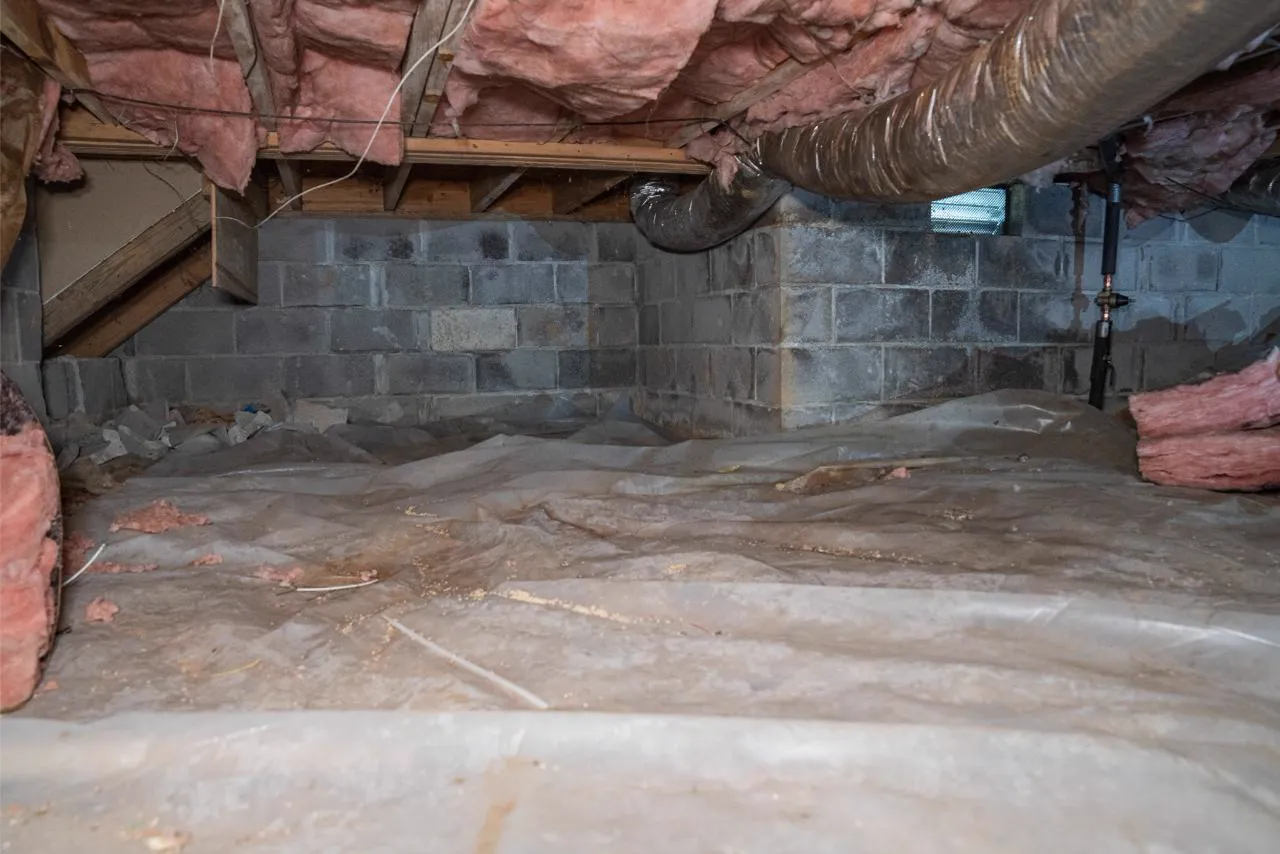
Timeline runs two to four working days for most Duluth homes. Add a day when there’s a lot of old insulation to haul out, and another when drainage and a sump join the scope. Tight access slows things down more than square footage does, honestly.
Flip it around for a second and look at this from the water’s point of view. Water isn’t attacking your house. It’s just following the easiest path from wet to dry — and encapsulation simply closes that path.
That shift changes what you’re buying. Water doesn’t care about your liner brand; it only cares whether a route still exists from damp soil into dry indoor air. Seal the ground, seal the vents, manage the air, and that route is gone.
What actually moves the number?
Short answer: size, headroom, and how much has to come out before anything goes in. Most encapsulation cost Duluth estimates swing on those three, so anybody quoting a flat price over the phone is guessing. Here’s the real list.
Price drivers, biggest first
- Square footage. Liner is priced by area, so a big footprint costs more. No surprise there.
- Headroom and access. A 24-inch crawl costs more to work in than a four-foot one, because everything takes longer on your belly.
- Cleanout volume. Old fiberglass and debris have to come out and go somewhere. More stuff, more hours.
- Standing water. If water pools, drainage and a sump get added — a real line item, not an upsell.
- Vents and wall condition. Rough block, tall stem walls, and lots of vents mean more sealing.
- Dehumidifier. Some quotes include one and some don’t, which is the most common reason two bids look wildly different.
- Extras. Subfloor insulation or a sump alarm can be added or skipped as you like.
A small, clean, tall crawl with no water lands at the low end. A wide, 24-inch space packed with soggy insulation and needing drainage sits at the top, and most encapsulation cost jobs land somewhere in between. After we crawl it, you get a written number with the scope spelled out line by line. If you’re comparing systems, our crawl space repair guide explains the options, the crawl space repair service page shows what we install, and the Suwanee encapsulation cost breakdown covers newer construction one town over.
So what can you honestly do yourself?
More than you’d think, and we’re not going to pretend otherwise. Some of the best crawl spaces we’ve seen started with a homeowner, a headlamp, and a stubborn afternoon. Here’s where your effort genuinely pays off.
Real DIY wins
- Extend the downspouts. Six to ten feet out beats a splash block every single time.
- Pull the grade back. Soil stacked against the foundation sends water toward you instead of away.
- Remove the sagging insulation. Wet fiberglass isn’t insulating anything anymore, so pulling it is a fair Saturday.
- Take notes. Which corner is wet, after which rain, and how fast it dries. That log helps us more than photos do.
Now the other side, said with respect. Hardware-store plastic laid loose over dirt is the classic weekend fix, and it does slow evaporation a little — but it isn’t sealed at the seams, the walls, or the piers, so humid air still gets in through the vents. Sealing vents without managing the air is its own trap, too. A closed space with nothing drying it can hold moisture rather than shed it, which is why the Department of Energy’s guidance on insulation and moisture control treats the barrier and the air as one system.
How does this go in a real Duluth house?
A homeowner on one of the older streets near downtown called us about a smell. Every time the air conditioning kicked on, the hallway smelled like a wet tent, and she’d already tried candles and a fan. Under the floor we found bare dirt, torn plastic from some previous decade, and fiberglass hanging like laundry.
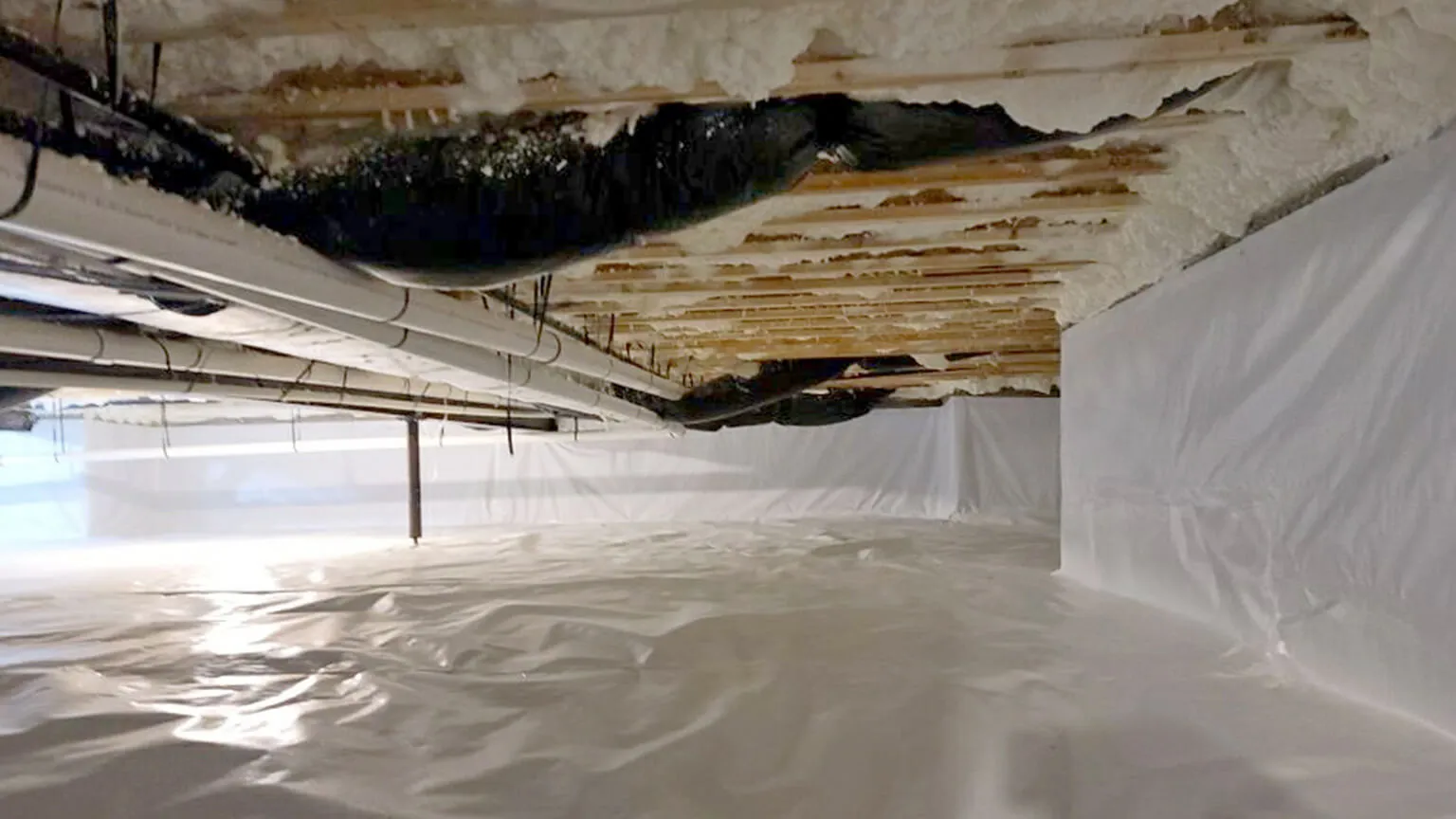
Good news arrived fast: nothing structural was wrong. So we hauled the old material out, sealed the vents, ran liner across the floor and up the stem walls, wrapped the piers, and set a dehumidifier with a drain line. Three days, start to finish.
She texted a week later to say the hallway smelled like nothing at all. That’s the goal, really — a house that stops reminding you it has a problem. Duluth homes are working homes, with in-law suites, offices, and kids’ rooms, so when the air under one goes bad, that isn’t storage getting musty. That’s somebody’s bedroom.
How do you know it was done right?
Ask for four things, and any honest crew will hand them over without blinking. First, photos of the liner at the seams and up the walls before anyone packs up. Second, the dehumidifier drain line traced to where it actually goes. Third, a warranty you can read in one sitting. Fourth, a plain explanation of why your crawl got the scope it got.
One more tell: a finished space should look bright and feel dry, not damp and dim. If your home has a full basement instead — common out toward St. Marlo Country Club and the golf-course sections off Buford Highway — then flooded basement repair is the conversation to have instead. Different system, same goal.
Where we work around Duluth
We’re based in Lawrenceville, roughly fifteen minutes away, so we’re in this part of Gwinnett constantly — some weeks it feels like we live closer to the Gas South District than to the shop. That includes Duluth, Johns Creek, Suwanee, Berkeley Lake, Peachtree Corners, Norcross, Lawrenceville, Sugar Hill, Buford, Dacula and Snellville.
Questions Duluth homeowners ask us
It helps a little, but it’s a different product than a sealed system. Loose plastic isn’t taped at the seams or run up the walls, so humid air still comes in through the vents and around the edges. If your crawl is dry and you just want less evaporation, it’s a fair start. For a musty smell that keeps coming back, it won’t get you there.
Trust your nose first, because a musty smell upstairs almost always starts below. Then look for insulation falling off the joists, damp or dark wood, cupping floors, or a room that feels clammy in summer. Any one of those is worth a look. None of them mean disaster.
It’s sealing the crawl space off from the wet ground and the outside air. Heavy liner covers the dirt and runs up the walls, the seams get taped, the piers get wrapped, and the vents get closed. After that a dehumidifier keeps the air steady, so the space stays dry instead of swinging with the weather.
It depends mostly on square footage, headroom, how much old material comes out, and whether drainage is needed. A small, tall, dry crawl sits at the low end, while a wide, low one with standing water sits at the top. We won’t publish a flat price, because that number would be wrong for most houses. The inspection and the written estimate are both free.
Almost always, yes. Sealing the space stops new moisture from coming in, but it doesn’t remove what’s already there or what drifts down from the house. A properly sized unit with a drain line handles that quietly. Ask whether one is included in any quote you compare, since that alone explains most price gaps.
Let’s find out what your Duluth crawl space actually needs
We’ll crawl it, show you photos of what’s down there, and explain the fix in plain language. No pressure at the end, and no mystery numbers. The inspection is free and so is the estimate.
(678) 914-5112Serving Duluth and all of Metro Atlanta · $500 off projects over $3,500 · Live support 7am–8pm, 7 days a week