

Wet Basement in Snellville: What’s Causing It, and What a Real Fix Looks Like
Every spring the same phone calls come in from the same streets. Here’s the plain-English reason, and why the last patch didn’t hold.
March rolls in, a storm parks over Gwinnett for two days, and the phone starts. Almost every wet basement Snellville call we take lands in that same stretch of early spring, because the red clay has been soaking since January and simply has nowhere left to put the next inch of rain. So the water goes sideways, toward the nearest hollow space. That’s usually your lower level.
Good news right at the top: this is one of the most common things we look at all year, and it is very fixable. Let’s slow down and take it apart, because you should understand your own house before anybody hands you a number.
Why does it always show up in spring?
Because the ground is already full. Winter rain saturates clay slowly, and clay holds it like a sponge that never gets wrung out. Then a spring storm arrives on top of that, so the soil around your foundation goes from damp to loaded in a single afternoon.
Loaded soil pushes. That pressure has a name — hydrostatic pressure — and it’s just the weight of wet dirt leaning on your walls and floor. If you like watching the pattern yourself, the National Weather Service office in Peachtree City posts the local outlooks worth bookmarking. After a while you’ll predict your own damp corner within a day.
Late summer does it too, when tropical leftovers stall over north Georgia. Either way, your basement isn’t broken — it’s simply outnumbered.
What’s actually moving through the wall?
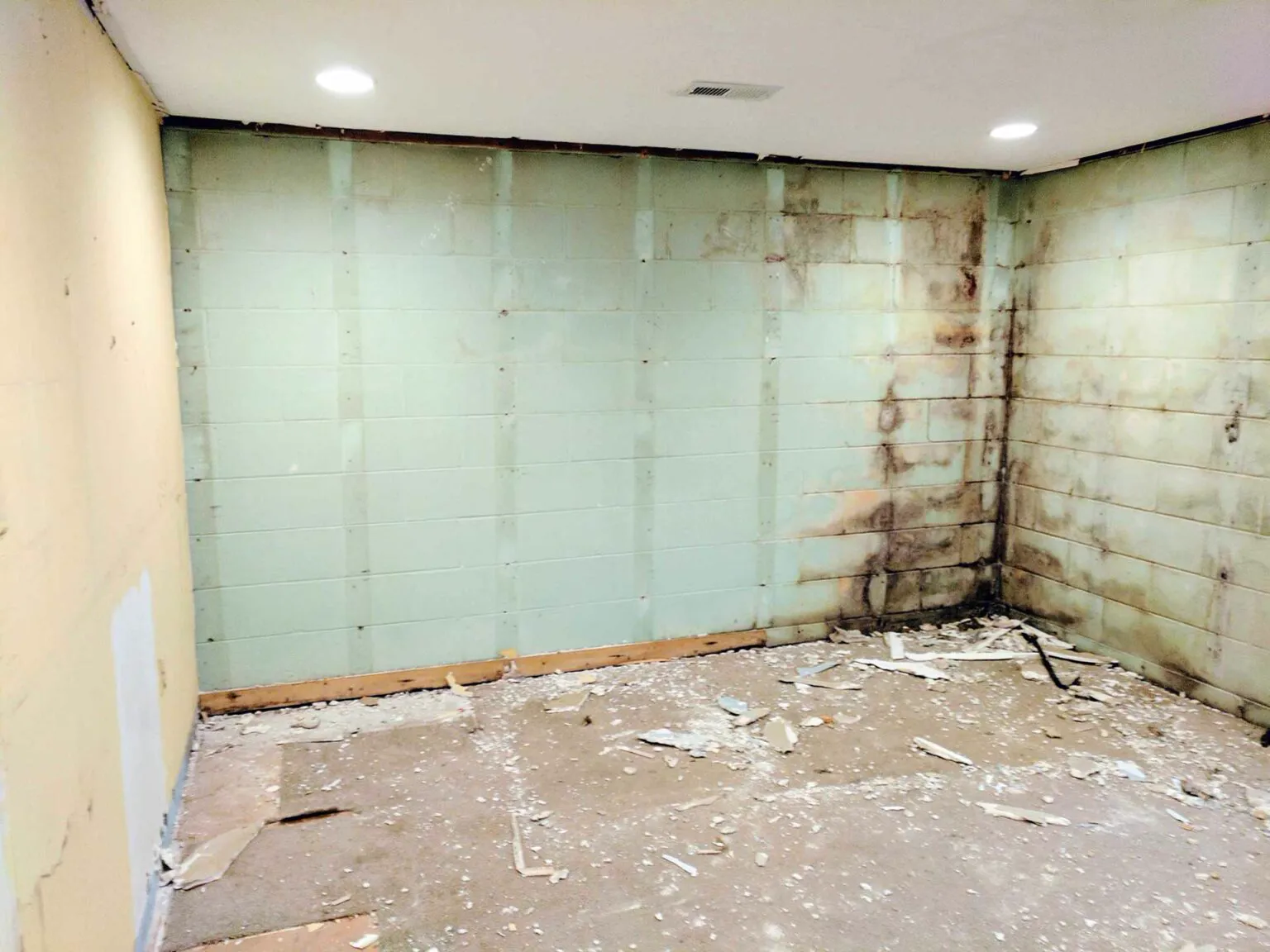
Here’s the part that surprises people. Concrete is porous. Water moves through solid, uncracked block by capillary action, which is why a wall can be genuinely wet without a single crack in it. Your foundation can be perfectly sound and still hand you a damp floor every March.
So if you’ve been hunting for the crack and can’t find one, you’re not missing anything. In fact, most of the walls we inspect around here are seeping rather than failing. The U.S. Geological Survey’s groundwater basics explains how water travels underground, and it reads easier than you’d expect.
Block foundations add one more wrinkle. Those cores are hollow, so they fill like a row of little tanks and then release water low, right where the wall meets the floor. That seam is called the cove joint, and it’s the number one entry point in this whole city.
Worth knowing
Seepage and structural movement are two separate conversations. We’ll tell you clearly which one you have — and when it’s only seepage, we say so out loud before anybody talks money.
Is yours mild, or is it more than that?
Fair question, and you can get most of the way to an answer yourself. None of this is bad news — it only shows where you sit on the scale.
Reading the signs
- Musty smell, no visible water. Moisture is arriving as vapor. Mild, and often solved outside.
- White chalky bloom on the block. That’s efflorescence — minerals left behind after water passed through.
- One damp corner after heavy rain. Very common, and usually a single downspout is doing it.
- Water tracking along the floor-and-wall seam. Pressure is winning at the cove joint, which points to drainage.
- Soft baseboards or a dark line up the drywall. Classic in a nineties finished basement. Fixable, bigger scope.
What if you just leave it? Nothing dramatic happens overnight, honestly. Moisture problems widen slowly instead — stored things get ruined, humidity climbs upstairs, and easy repairs turn into less easy ones. That’s the whole reason we’d rather look at it while it’s still a corner.
Before you call anyone, learn this one distinction
Ready for the thing that saves people the most money? There are two completely different kinds of wet, and they get fixed in completely different ways.
Seepage is water coming in from outside — through the block, through the cove joint, under the slab. Condensation is water already in your air, landing on cool surfaces. Warm humid June air hits a basement wall that’s sitting at sixty-five degrees, so it sweats, exactly like a glass of tea on the porch.
Why does it matter so much? Because a dehumidifier does nothing for seepage, and a drainage system is overkill for pure condensation. Plenty of split-levels in the Brookwood district neighborhoods have both at once, which is how a homeowner ends up buying two fixes and still feeling damp.
Here’s the quick test. Tape a square of foil tight to the wall for a couple of days. Moisture on the room side means condensation, while moisture behind it means water is coming through the block. Free, and it tells us where to start.
Most of the time the wall isn’t failing. Something outside is delivering more water than the ground can carry away — and that’s a much friendlier problem to own.
So how does it actually get fixed?
Simpler than most people expect. The old approach fought water at the wall with coatings and hydraulic cement, which is a raincoat on a submarine. Interior systems flip that around and collect water below the slab, then send it to a sump before it ever reaches your floor.
- Walk the outside first. Downspouts, grading, patios, buried drain lines. Sometimes the answer lives in the yard.
- Read the foundation. Block behaves differently than poured concrete, so hollow cores get weeped rather than patched.
- Open a narrow strip of slab. Only along the affected walls, and only for a day of noise.
- Set perforated pipe in clean stone, below floor level. Depth is the whole ballgame.
- Route it to a sump basin. The pump carries water well away, not back into the flower bed.
- Close it up. Fresh concrete, wall liner where it’s called for, and our mess in our truck.
Most systems in a Snellville split-level run two to four working days. Add a day when the space is finished, since paneling comes off first. Pricing follows scope more than anything, so our waterproofing cost breakdown walks through the drivers if you want numbers first. The basement waterproofing page shows exactly what gets installed.
The house that had been patched three times
Want the story that changes how people think about this? A homeowner over in Summit Chase called us in April about a lower-level family room that had smelled musty since roughly the Clinton administration. Two different guys had patched that wall over the years. Both patches held for about one season.
We pulled a section of paneling and found what we usually find. Behind it, the drywall was dark and soft twelve inches up, while the block above it was bone dry. Water was arriving at the cove joint and wicking upward into the paper facing, quietly, for two decades.
That’s the wet basement Snellville pattern in a nutshell. A lot of these basements were finished in the nineties, and the drywall has been sipping water ever since. The fix isn’t more drywall. It’s stopping the water first, then rebuilding with materials that don’t care if they get damp.
His job ran three days. Interior drainage along two walls, a sealed sump, wall liner behind new framing, plus a regraded strip outside where a patio had raised the soil above the block. He texted us that August, during a very wet week, to say the room finally smelled like a room.
What should a good estimate include?
A wet basement Snellville estimate should show four things, and any honest contractor hands them over without blinking. First, what they found outside and why they ruled it in or out. Second, the depth and route of the drainage, in writing. Third, where the water discharges. Fourth, a warranty you can read in one sitting.
If a price arrives over the phone with no walk-through, that’s a guess. Ask hard questions too. Homeowners near Ronald Reagan Parkway have usually been burned by a cheap patch already, so they ask sharp ones — and we prefer that.
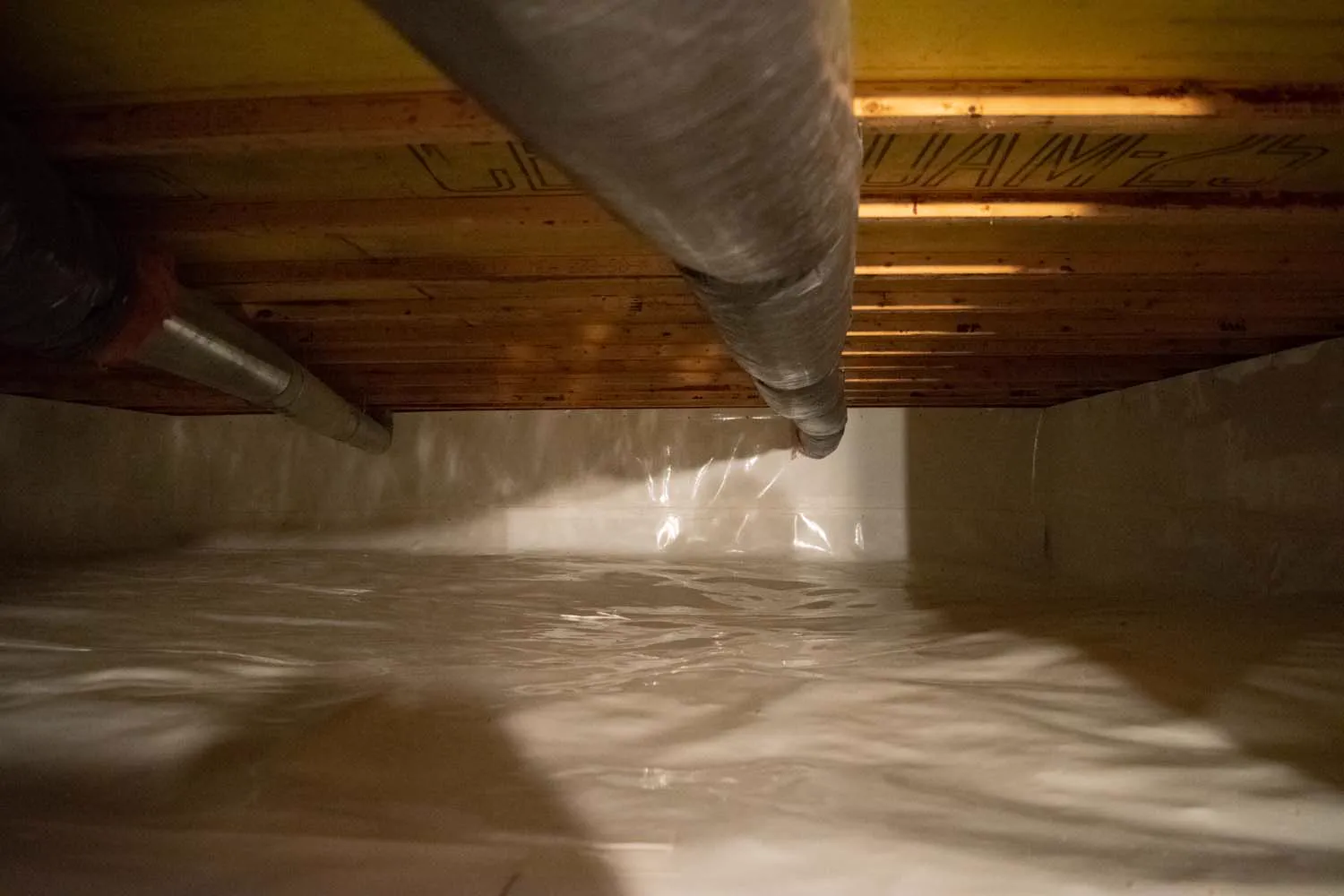
Some homes here sit on a crawl space instead, especially the ranches on the smaller lots. In that case crawl space encapsulation is the better system, and it solves the musty-air problem at the source. If you’re comparing notes across Gwinnett, our Buford wet basement guide covers how newer construction behaves differently.
What does life look like once it’s dry?
Quieter, mostly. The smell fades within days once the source is cut, and the sump cycles after storms, which is the system working rather than a problem. By the second weekend, people are carrying boxes back downstairs without thinking about it.
A year in, you stop checking after rain. One homeowner who coaches near Brookwood High School told us she’d forgotten she used to keep towels by the stairs. Ten years in, the pipe and stone below the slab still work, because nothing down there wears out.

Best of all, you get the square footage back. Lots on the Yellow River side of town stay wet longer, so those owners especially tend to write the lower level off for years. Then it’s dry, and suddenly there’s a guest room or a gym down there.
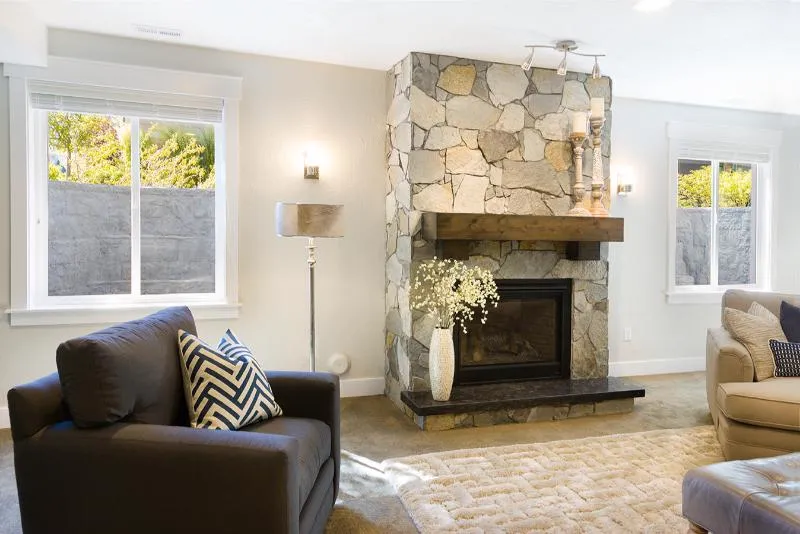
Even the newer Towne Center district infill homes call us. Newer construction seeps differently, though it’s the same clay doing the same thing.
Where we work around Snellville
We’re based in Lawrenceville, roughly fifteen minutes north, so Snellville is everyday territory for us. We also work throughout Grayson, Loganville, Lilburn, Stone Mountain, Tucker, Dacula, Centerville, Norcross and the wider Gwinnett area. Split-levels and block basements are normal work here, not a surprise.
Questions Snellville homeowners ask us
The drainage itself is built to last as long as the house, because pipe and clean stone below the slab have nothing to wear out. The pump is the part with a service life, so plan on replacing it somewhere around the ten-year mark. Everything else keeps working quietly in the background.
Yes, and you get it in writing before the crew starts rather than after they leave. Ask us to spell out what’s covered and for how long. If a warranty can’t be summed up in a sentence or two, it isn’t doing you much good.
Usually, yes. We open only the bottom section of wall and floor along the affected perimeter, then close it back up. Nineties finished spaces sometimes hide soft drywall behind the paneling, so we check that first — and if we find something, we show you before touching anything.
It helps in two ways. A dry, warrantied lower level removes a question buyers and inspectors always ask, and it makes that square footage usable again instead of storage-only. Around here, where finished basements are common, that second part tends to matter most.
Often within a few days, and faster when your schedule is flexible. Spring and late summer get busy for obvious reasons, so calling early in the week usually helps. The inspection and the estimate are both free either way.
Let’s find out what your Snellville basement really needs
We’ll walk the house with you, show you exactly where the water is getting in, and explain the fix in plain language — including why the last patch didn’t hold. The inspection and the estimate are free, and nobody pressures you afterward.
(678) 914-5112Serving Snellville and all of Metro Atlanta · $500 off projects over $3,500 · Live support 7am–8pm, 7 days a week