

Crawl Space Encapsulation Snellville: What It Costs and What You Actually Get
Come down the stairs with us. Here’s what we look at, what the work includes, what moves the number, and what the warranty covers.
Let’s take the tour together. When we pull that little door open and drop into a Snellville crawl space, we’re reading the house before our knees hit the dirt. That first look is where crawl space encapsulation Snellville quotes are really born, because everything in the price is sitting right there in the flashlight beam. Here’s what we look at, in order.
Good news up front: none of it is mysterious once somebody explains it, and nobody should need a translator for their own house.
What do we check in the first five minutes?
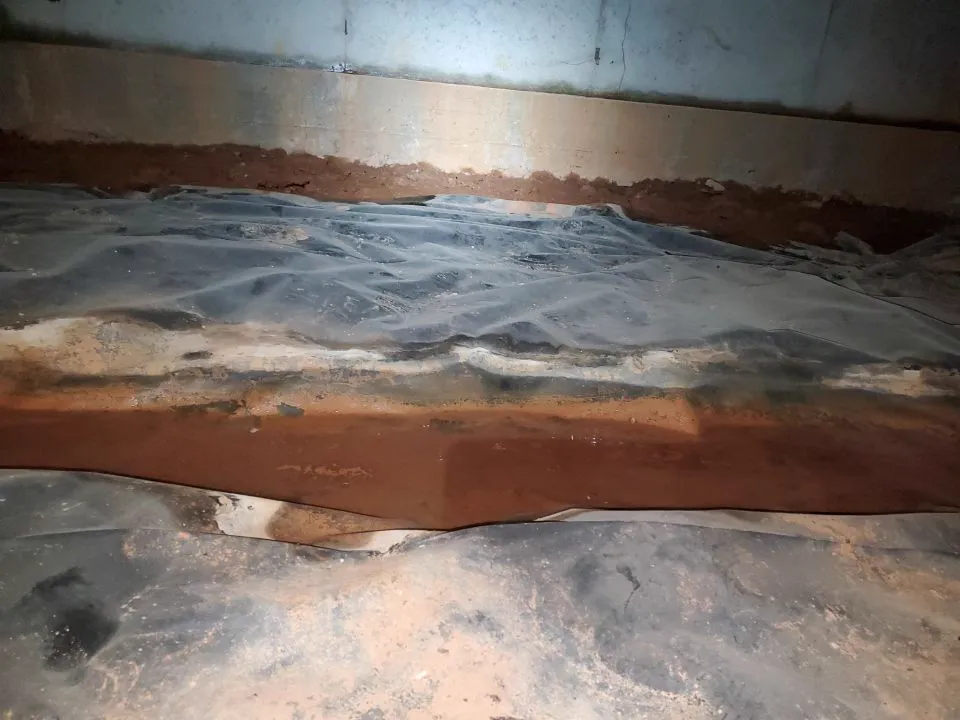
The dirt, first. Bare ground gives off moisture all day, so we check whether anything covers it and whether that covering is doing a thing. Loose black plastic laid down in 1993 counts as decoration, not protection.
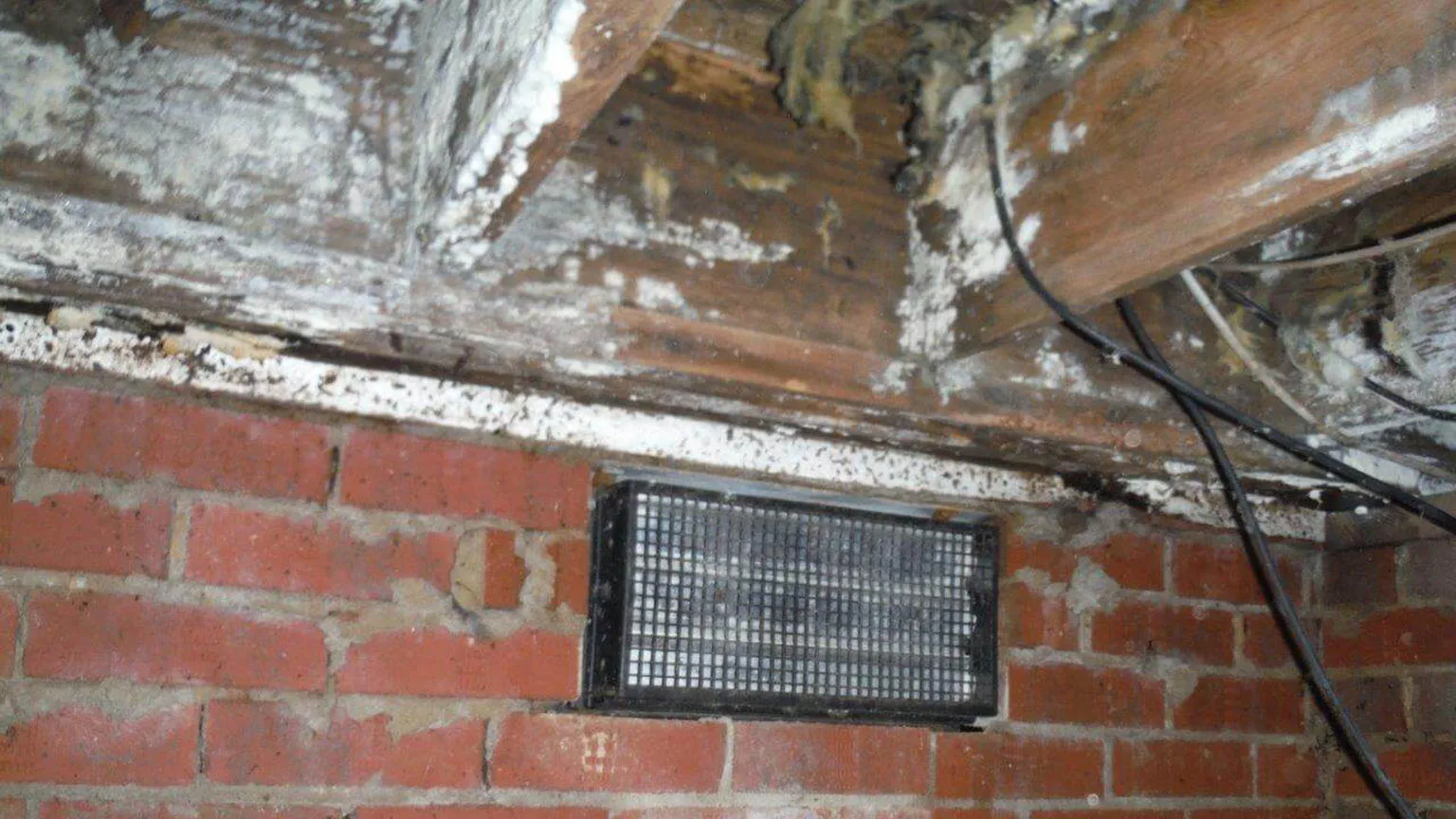
Then we read the wood. Moisture meter on the joists, the rim and the subfloor, front to back. Staining tells a story, and rusted duct straps tell a longer one, because metal doesn’t rust in a dry space. We check the insulation too — if batts are sagging, they got wet, got heavy, and quit.
Last, we look for water, not just damp. Lots draining toward the Yellow River and its feeder creeks carry more groundwater pressure than folks expect, and that changes the plan. Real talk: sealing a space that’s still taking on water only gives the water a nicer room. If that’s your house, our guide to a wet crawl space covers the order of operations.
So what is encapsulation, in plain words?
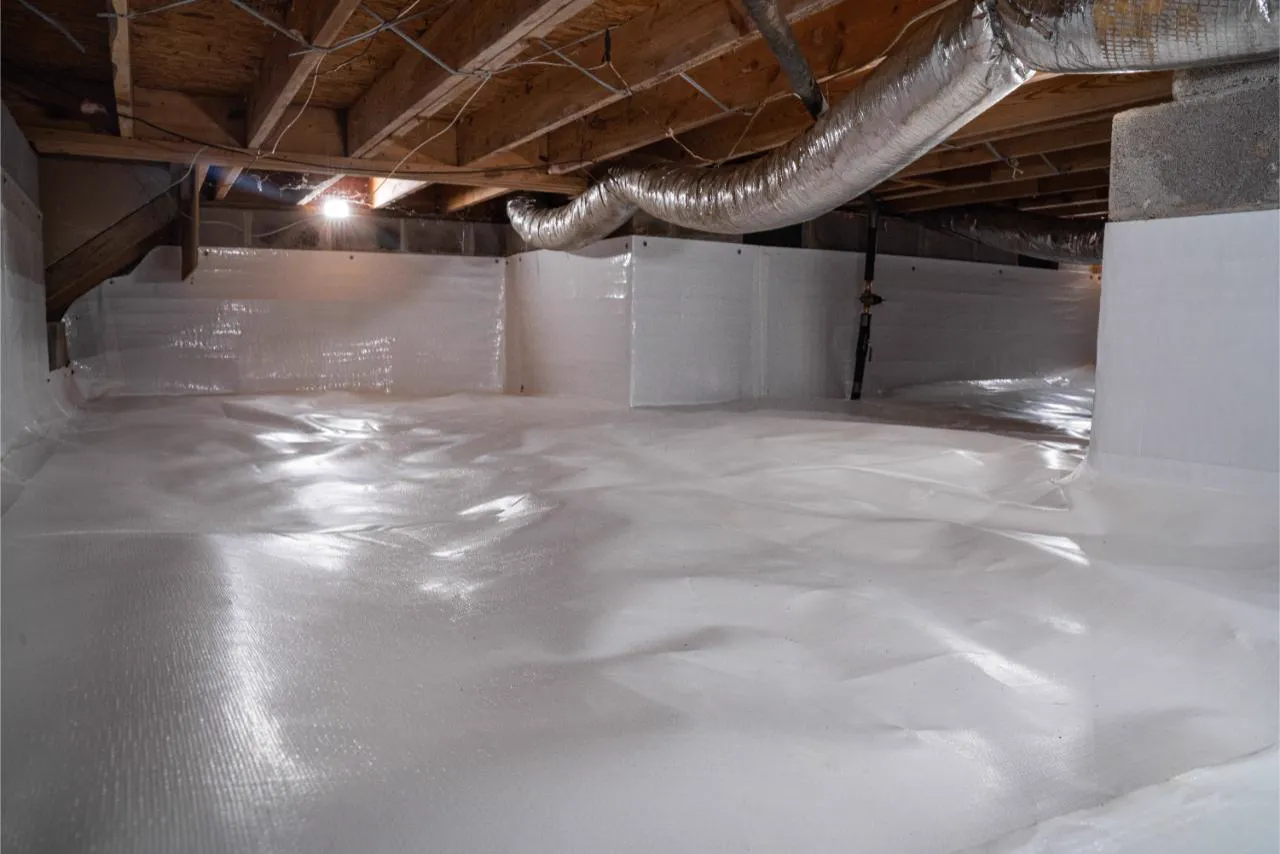
Picture a heavy white liner covering the whole floor, running up the foundation walls, and wrapped around every pier. Seams get overlapped and sealed, and the top edge gets fastened to the wall — so the dirt and the block stop feeding damp air into the space.
Then we close the vents and seal the access door, which makes the crawl space part of the house instead of part of the yard. Most homes also get a dehumidifier sized to the space, with a drain line that carries water off on its own. You never empty a bucket, which is good, because nobody ever remembers to.
Why does sealing beat venting here? Because our summers stay humid for months. Warm air rolls through an open vent, hits cool surfaces, and drops its moisture right there — same as a glass of sweet tea on the porch in July. Venting doesn’t dry a Georgia crawl space; it feeds it. The Department of Energy’s guidance on insulation and moisture control covers the science without selling anything.
What does a real job look like, day by day?
Day zero is the free inspection, and we crawl the whole space — not the first ten feet past the door. You get photos, moisture readings and a written scope. Nothing gets priced before we know what’s happening down there.
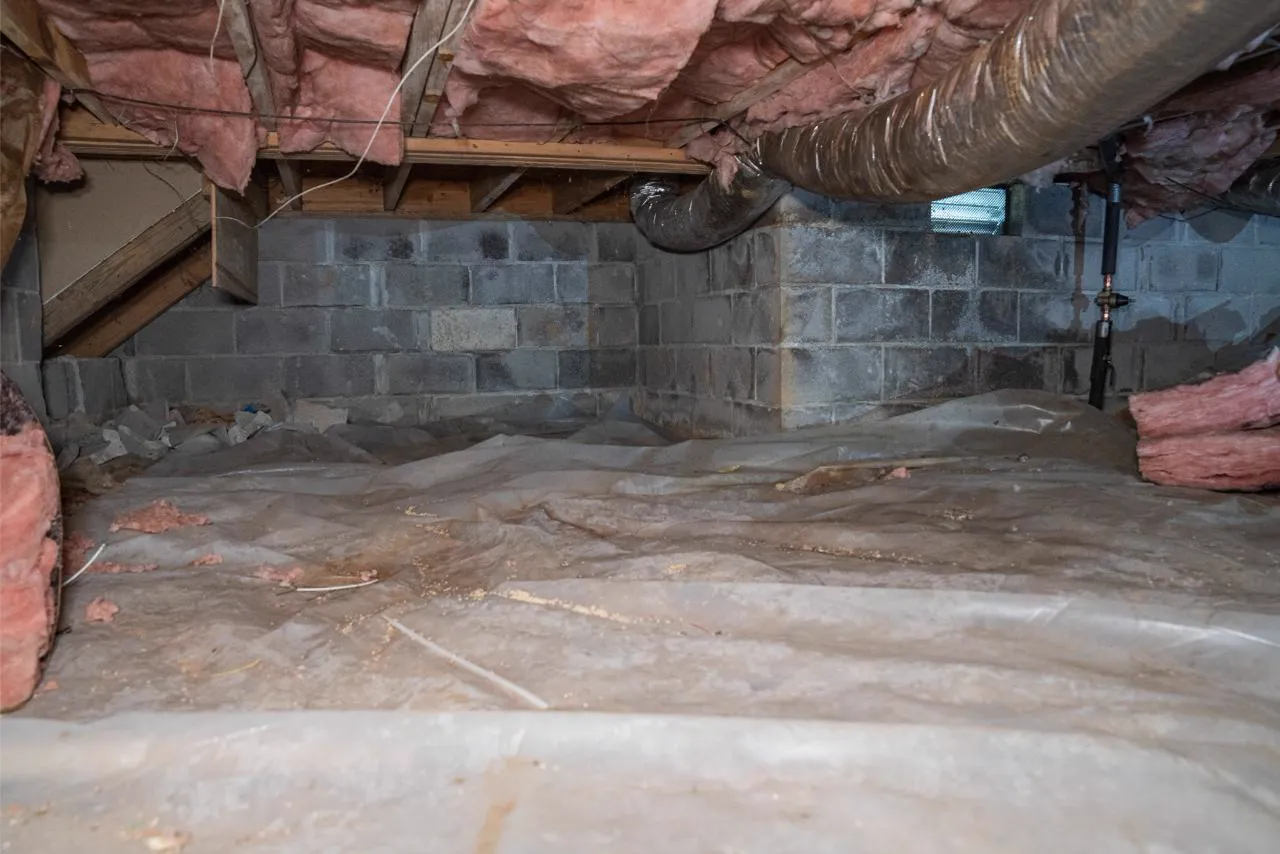
Cleanout comes next. Old batts get pulled, torn plastic and debris go out, and the grade gets smoothed so the liner lies flat. Drainage work happens at this stage too, because we don’t cover up a problem we haven’t solved yet.
After that, liner goes down, up the walls, and around the piers, sealed as it goes. Vents get closed, the door gets sealed, the dehumidifier gets set and drained. Most homes take two to four working days. A homeowner near Summit Chase told us the loudest part of the project was our radio, which we’ve chosen to take as a compliment.
Worth knowing
Encapsulation and drainage are two different conversations. Plenty of crawl spaces only need sealing and a dehumidifier. Others need water managed first. We’ll tell you which one you have before money comes up.
Why do two estimates land thousands apart?
Here’s the thing — this next part is the real reason two bids on the same house can differ by thousands. It usually isn’t greed, and it isn’t a discount. The two companies are quoting genuinely different jobs and calling them the same word.
The cheap version lays plastic on the dirt and stops. It looks tidy from the doorway, but moisture still rises around every edge and every pier, so the space keeps breathing damp air while the paperwork says “encapsulated.” The other version fastens the liner to the foundation wall, seals it there, wraps each pier, tapes every seam, and adds controlled drying. Think lid on a container versus napkin resting on top.
So ask one question of anybody bidding your job: “How do you attach the liner to the walls and the piers?” A real answer describes fasteners, sealant and overlap. A weak answer is a thickness number and nothing else. Thickness matters, sure — but a thick liner sealed to nothing is still sealed to nothing.
That gap matters more here than most places, since so much Snellville housing went up between the mid-seventies and the mid-nineties. Plenty of those lower levels were finished back then, and the drywall has been quietly wicking moisture ever since. The fix was never more drywall — it’s stopping the water first, then rebuilding once.

What actually moves the price?
Mostly three things: how big the space is, how tall it is, and how much has to come out first. We won’t publish one flat number, because a price that fits a tight 900-square-foot crawl would be wrong for a sprawling ranch. Still, you deserve to see the math.
Price drivers, biggest first
- Square footage. Liner, labor and crawling hours all scale with floor area. Biggest swing by far.
- Headroom and access. A duck-walk space costs less to work in than an eighteen-inch belly crawl. That’s real labor, not a surcharge.
- Cleanout. Fallen insulation, old plastic and forty years of debris have to leave first.
- Drainage needs. If groundwater shows up, a drain line and pump go in under the liner.
- Dehumidifier size. Bigger spaces need bigger units, plus a condensate line that goes somewhere sensible.
- Extras. Subfloor insulation, duct sealing and a new access door are common — but none are automatic.
Small, dry, easy-access spaces land at the low end. A large space with drainage, a pump and a commercial dehumidifier sits at the top, and most homes fall between. Either way, you get one written number with the scope beside it. Comparing across the county? Our Buford crawl space encapsulation page uses the same cost logic.
What’s included, what isn’t, and what’s the warranty?
Included: the inspection, the estimate, the diagnosis, the liner and all sealing, vent and door closure, the dehumidifier and its drain, haul-off of what we pull out, and photos of the finished work. Ask any contractor for those photos. Nobody honest minds.
Not included, usually: mold remediation, structural repair to damaged joists, HVAC replacement, and plumbing repairs we happen to find. We flag those during the walkthrough instead of mid-project, because surprises belong at birthday parties. Sagging framing becomes a crawl space repair conversation of its own, priced separately.
The warranty is plain English, short enough to read in one sitting, and it transfers to the next owner. That lands hard in the Brookwood cluster, where buyers ask sharp questions. One family in Havenwood handed ours straight to a buyer’s agent and went back to packing boxes.
Here’s the number that reframes the whole thing
Bare dirt under a typical Snellville ranch can give off more than ten gallons of water a day in vapor form. Not a leak. Not a flood. Just ground doing what ground does, every day, under your floor.
Now add the part most people never hear: air in a house travels upward, which builders call the stack effect. A large share of the air you breathe in your living room started in the crawl space. So that ten gallons doesn’t politely stay down there — it rides up into the hallway you walk through every morning.
That’s why a musty smell upstairs so often traces back to damp wood below. The good news is that this is very fixable. Seal the ground, control the humidity, and you cut the fuel — the EPA’s page on mold and health explains the moisture connection plainly if you want the background.
Picture the after. Warmer floors in February, a hallway that smells like nothing at all, and a space you’d actually store holiday bins in. More importantly, you finally know what’s happening under your own house — and you’re the one deciding what to do about it.
Why does hiring a local company matter here?
Because Snellville houses came up in waves, so whole streets age out on the same schedule. Original moisture barriers, block walls, grading — we’ve seen your house a dozen times over. Twenty-plus years around Metro Atlanta means we’re not guessing.
It also means we’re close. Our Lawrenceville shop sits about fifteen minutes north, and we run US-78, the Stone Mountain Highway, all week. We’re near Towne Center at Snellville constantly, so a follow-up isn’t a scheduling project. Same crews, same trucks, no subcontractor roulette.
Newer homes count too — the infill around the Towne Center district sits on the same red clay, and clay doesn’t care how new your framing is. If water is showing up lower in the house instead of under it, our guide to flooded basement repair covers that side.
Where we work around Snellville
We’re based in Lawrenceville and we’re in this corner of Gwinnett County most weeks. That covers Snellville, Grayson, Loganville, Lilburn, Stone Mountain, Tucker, Lawrenceville, Dacula, Centerville and Norcross, plus the wider Gwinnett area. Whether your lot sits on a rise or drops toward a creek, odds are we’ve worked on one just like it a few streets over.
Questions Snellville homeowners ask us
In our climate, closed. Open vents were standard for decades on the theory that outside air dries a crawl space, but humid Georgia air condenses on cool surfaces instead. Once the space is sealed and the humidity is controlled, closed vents are the whole point.
Usually it does, because air moves upward through a house and that odor often starts under the floor. Once the moisture feeding it is gone, the smell fades over the following weeks. If anything lingers, that tells us there’s a second source worth tracking down.
Most crawl spaces take two to four working days. Heavy cleanout adds a day, and drainage work adds another. You get the timeline in writing before we start, so you can plan around the driveway and the dogs.
Often it helps, though we won’t promise a number. Drier air is easier to cool, and ductwork in a sealed space doesn’t fight summer humidity all day. Most homeowners notice the comfort first and the bill second.
If it’s wet, sagging or falling, it comes out and gets hauled away. Wet batts hold moisture against the wood and stop insulating anyway, so leaving them helps nobody. Once the space is sealed and dry, some homes add new subfloor insulation — but that’s a separate choice, and we’ll tell you honestly whether yours needs it.
Let’s find out what your Snellville crawl space actually needs
We’ll crawl the whole space, take real moisture readings, show you photos, and explain the fix in plain language. The inspection is free, the estimate is free, and nobody pressures you at the end.
(678) 914-5112Serving Snellville and all of Metro Atlanta · $500 off projects over $3,500 · Live support 7am–8pm, 7 days a week