

Waterproofing Cost Snellville: A Step-by-Step Breakdown for Nineties Basements
What the work involves, what moves the number, how long it takes, and where a weekend project runs out of road.
Two homeowners have the same damp corner today. One handles it this spring. The other waits three years, and in that time the carpet pad sours, the baseboard swells, and a wall of nineties paneling has to come out with the water. Same starting problem, very different invoice — which is really why people start pricing out waterproofing cost Snellville numbers before the next storm rolls through.
Good news up front: you’re clearly not waiting, or you wouldn’t be reading this. So let’s walk the whole thing plainly — the steps, the timeline, what moves the price, and where do-it-yourself genuinely stops.
Why do Snellville basements do this?
Mostly it’s the age of the houses and the ground they sit on. This side of Gwinnett filled in hard between 1975 and 1995, so split-levels and ranches on block basements are everywhere, from Summit Chase to the quieter streets around Herrington. Those walls were built well. They just weren’t built with the drainage systems we install today.
Then there’s red clay. Clay swells when it gets wet, and swollen clay pushes hard against a block wall — that pressure has a name, hydrostatic pressure, and it moves water straight through masonry without any crack at all. Lots draining toward the Yellow River stay loaded longer after a storm. For a sense of how much rain lands here, the National Weather Service office in Peachtree City tracks it all year.
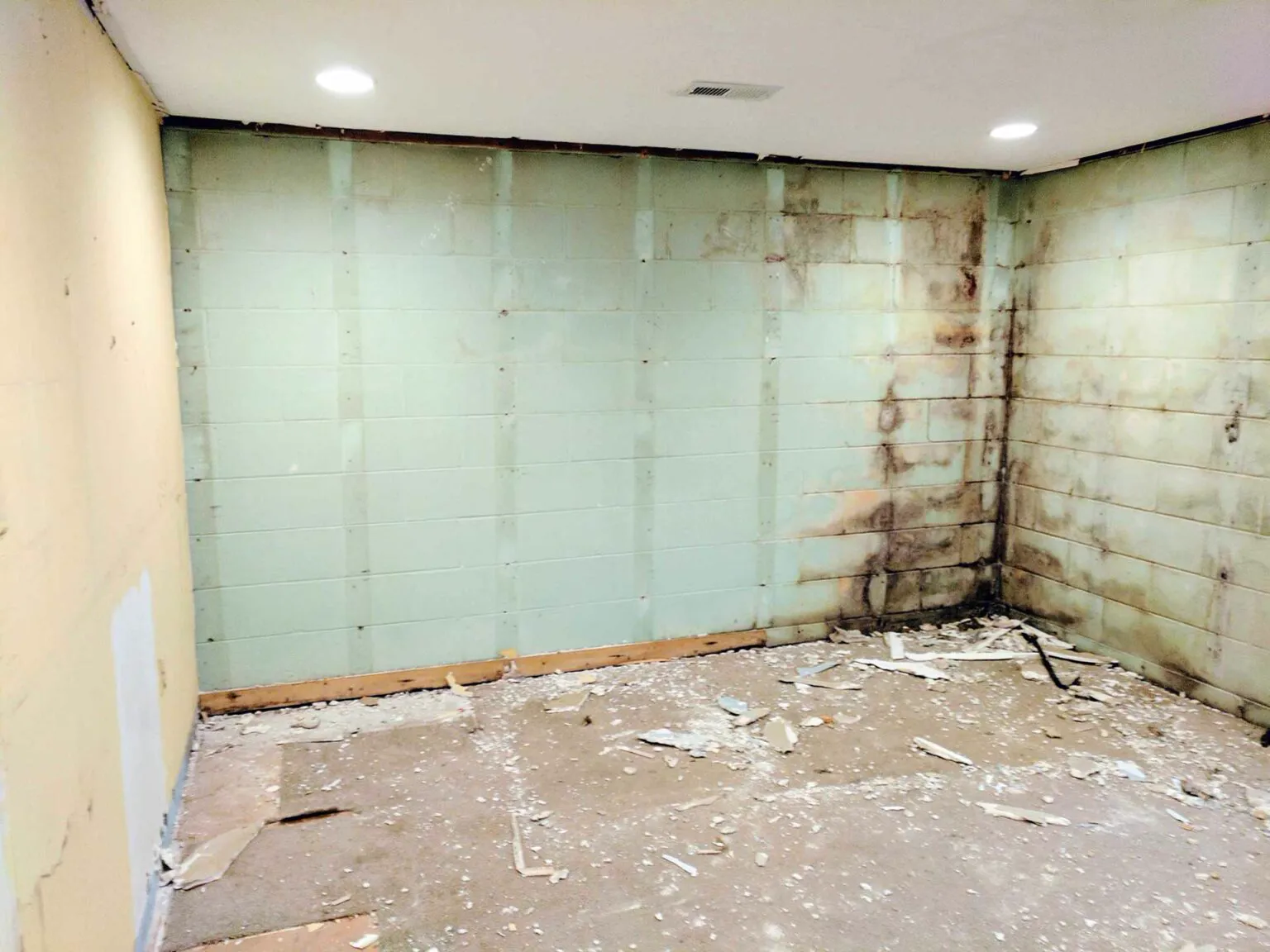
Here’s the thing about our local version of this problem. A lot of Snellville basements got finished in the nineties, and the drywall down there has been quietly wicking water ever since. Nobody saw it happen. The fix isn’t more drywall — it’s stopping the water, and then rebuilding once.
Worth knowing
The cove joint — the seam where your basement wall meets the floor slab — is the single most common water entry point in a Georgia home. It isn’t a defect. It’s just where two pours meet, and water is good at finding seams.
What does the job actually look like?
Every house is a little different, but the sequence almost never changes. Here’s the honest order of operations, start to finish.
- Find the source. We walk the outside first — downspouts, grading, that low spot by the driveway. Sometimes the whole fix lives in the yard, which makes for a much smaller invoice.
- Read the walls. Block behaves differently than poured concrete, so we check mortar joints, the cove joint and any horizontal cracking before anybody talks money.
- Write the scope. You get it on paper: what’s going in, where, and why that answer instead of another one.
- Open the perimeter. A narrow strip of slab comes up along the affected walls. It’s loud and dusty for a day, and then it isn’t.
- Set drainage below the floor. Perforated pipe in clean stone, placed lower than your slab, so water gets caught before it ever reaches the room.
- Route it to a sump. Water goes to a sealed basin, and the pump sends it well away from the house — not politely back to the flower bed for a second try.
- Close it up. Fresh concrete, wall liner where it’s called for, a dehumidifier if the air needs help, and our mess in our truck.
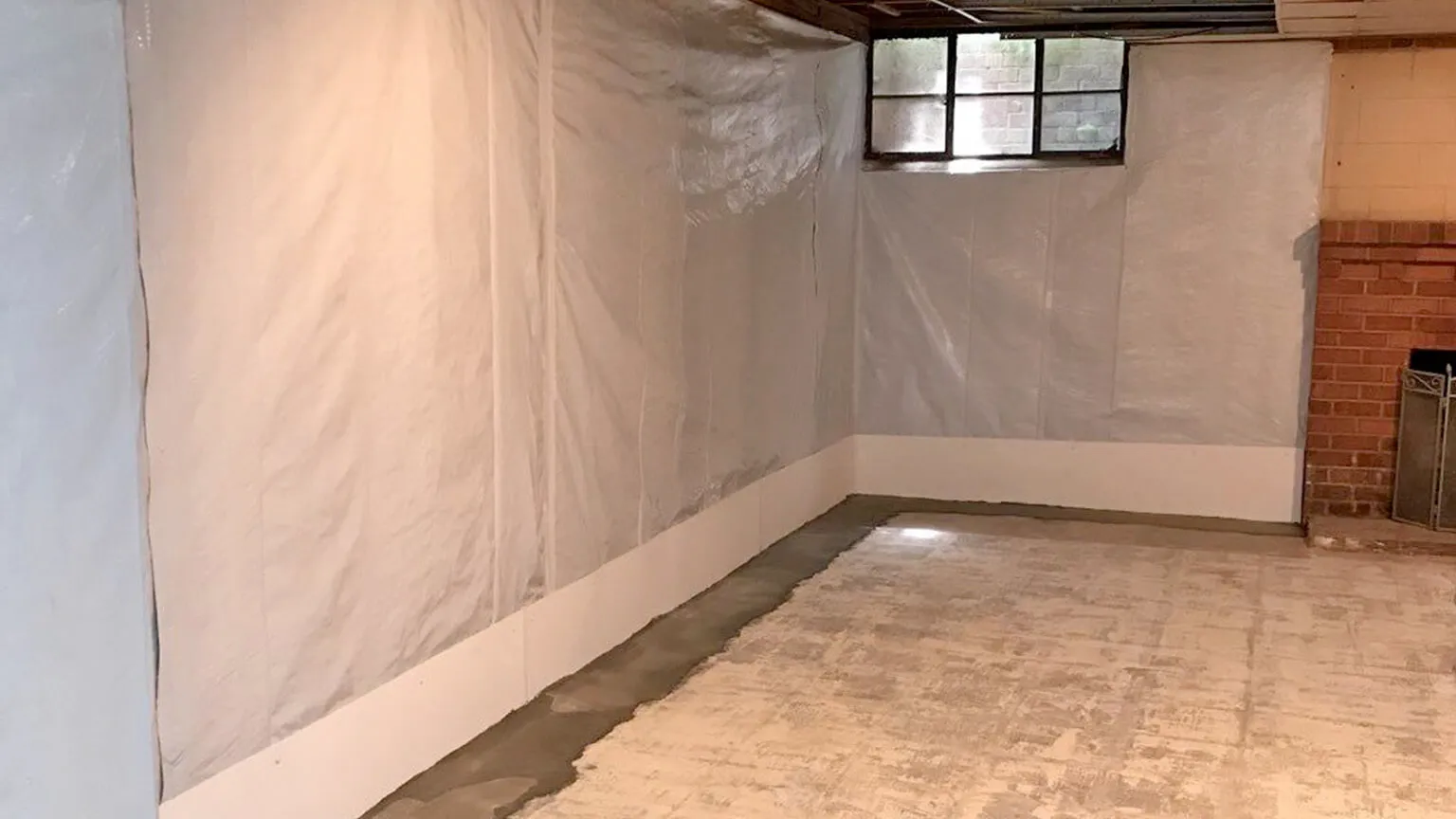
Timelines are shorter than most people expect. A typical interior system in a Snellville split-level runs two to four working days, plus a day when the basement is finished or exterior grading is part of the plan.
But here’s the part most companies skip when they explain this: the price you’re quoted depends far more on what already happened to your basement than on what your basement is.
What does a past repair change?
Plenty, and this is where Snellville differs from a newer subdivision. Homes here have been lived in a long time, so most basements we see have already had somebody take a swing at the problem. Usually that means hydraulic cement smeared into the cove joint.
That patch wasn’t a scam, to be fair. It just addressed the exit, not the source. Water under pressure doesn’t stop when you plug one hole — it moves over three feet and finds the next seam, which is why a homeowner near Havenwood can patch the same wall four times in six years. Good news? We route water to a drain now instead of arguing with it, so old patches simply stop mattering.
Waterproof paint hits the same wall, so to speak. A coating is a raincoat, and the pressure comes from behind it. Once water has somewhere better to go, though, the room stops being a project you avoid thinking about.
What DIY genuinely can do
- Extend your downspouts. Six to ten feet out beats a splash block every time. Cheap, fast, and it solves more damp basements than people believe.
- Pull the grade back. On a 1980s lot, decades of added beds have often built the yard up against the house.
- Keep gutters clear. Twice each fall, minimum. Otherwise the roof dumps everything at the foundation.
- Take notes. Which wall, after which kind of rain, and how fast it dries. That log tells us more than any photo could.
Now the honest limits. Sub-slab drainage, sump placement and discharge routing aren’t really DIY, and not because the tools are exotic. It’s because a system set at the wrong depth looks identical to a correct one right up until the first hard spring storm. Air quality matters too, and the EPA’s guide to moisture control explains that side of it without selling you anything.
So what actually moves the number?
Straight answer: how much wall is involved, and how hard it is to reach. Most waterproofing cost Snellville estimates swing on those two things before anything else enters the picture. Anybody quoting a flat price over the phone is guessing, so here’s what we really weigh.
Price drivers, biggest first
- Linear feet. One wet wall versus a full perimeter is the single largest swing in any estimate.
- Finished or unfinished. Framing, drywall and flooring have to come out cleanly and go back neatly. That’s real labor, not a surcharge.
- Access. A bar, built-ins or a tight side yard all mean careful work before the actual work.
- Sump and discharge. Some homes already have a serviceable basin. Many have none, or one that’s been quietly retiring since the Clinton administration.
- Wall condition. Horizontal cracking from clay pressure is a different conversation than seepage, and we’ll tell you which one you have.
- Outside work. Regrading, buried downspout lines, a drain across a slope. Sometimes this is the fix.
Small exterior corrections land at the low end. A full perimeter system with a new sump, wall liner and a finished basement to protect sits at the top, and most jobs land somewhere between. Either way, you get a written number with the scope spelled out before anyone picks up a tool. If you’d like to compare systems first, our rundown of waterproofing options puts them side by side, and the basement waterproofing page shows exactly what we install. Curious how pricing shifts up the interstate? The Buford waterproofing cost guide covers newer construction.
How should you get ready?
Not much, honestly. Clear about four feet along the walls we’re working on, and slide boxes toward the middle rather than hauling them to the garage. We’ll handle anything heavy. Pets do better upstairs while the saw runs, and that’s the whole list.
One small favor helps a lot: point out where water shows up first. Homeowners know their own house better than any moisture meter does.
Here’s the number that reframes all of this
One inch of rain falling on a 1,500-square-foot roof sheds roughly 935 gallons of water. That’s a single ordinary storm, on an ordinary Snellville ranch — and Georgia gives us that inch many times a year.
Once you see it that way, the topic changes shape. Your basement isn’t losing to a mystery. It’s a volume problem, and volume problems have engineering answers — which is why a properly set drain system works quietly for decades. It isn’t fighting the water. It’s giving it somewhere to go.
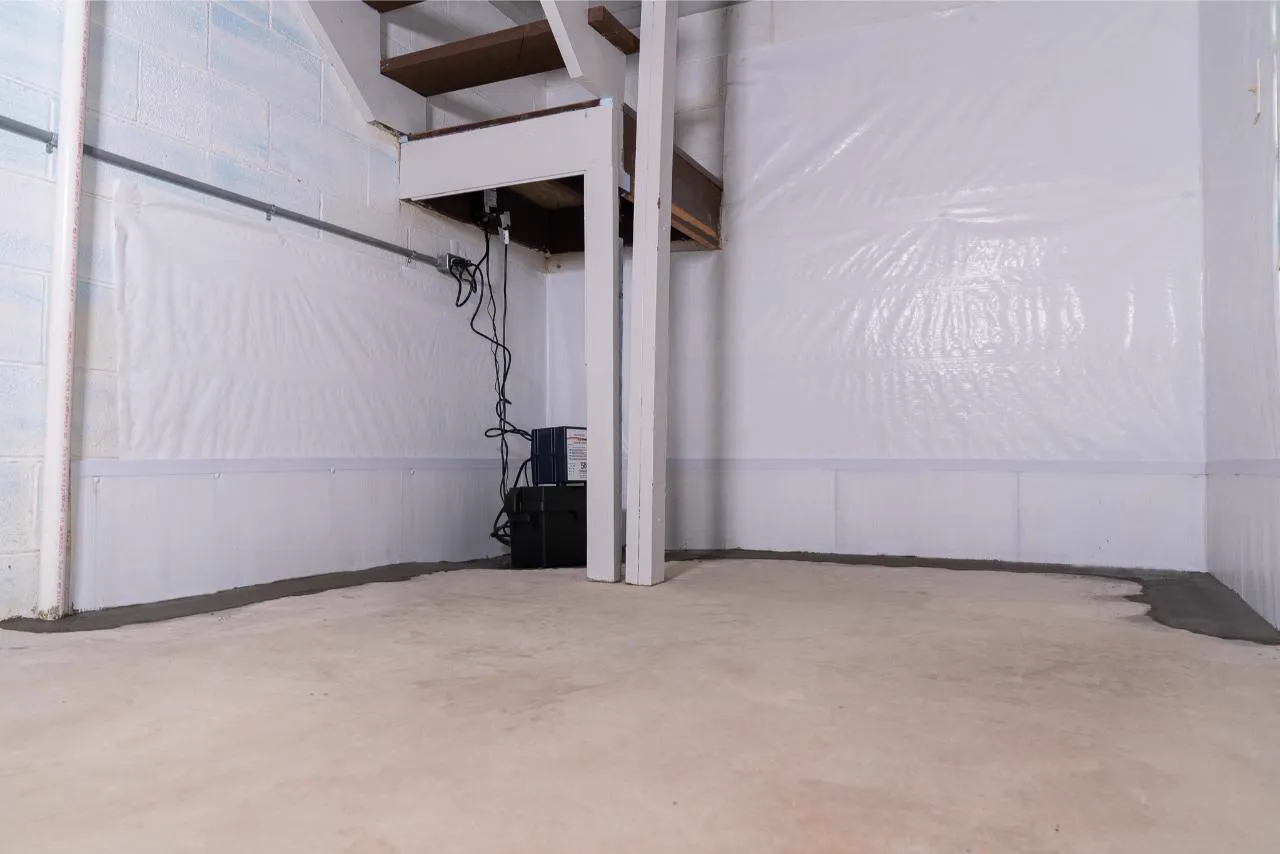
Picture the after. Week one, the sump cycles during a storm and you notice it working instead of worrying. By month three, the musty smell that used to greet you on the stairs is gone. A year on, the basement is a den or a gym — and your house is protected while you’re not even thinking about it.
How do you know it was done right?
Ask for four things, and any honest company will hand them over without blinking. First, photos of the stone bed and pipe before the concrete goes back. Second, the discharge point shown to you out in the yard. Third, a written warranty you can read in one sitting. Fourth, a plain explanation of why your walls got the treatment they got.
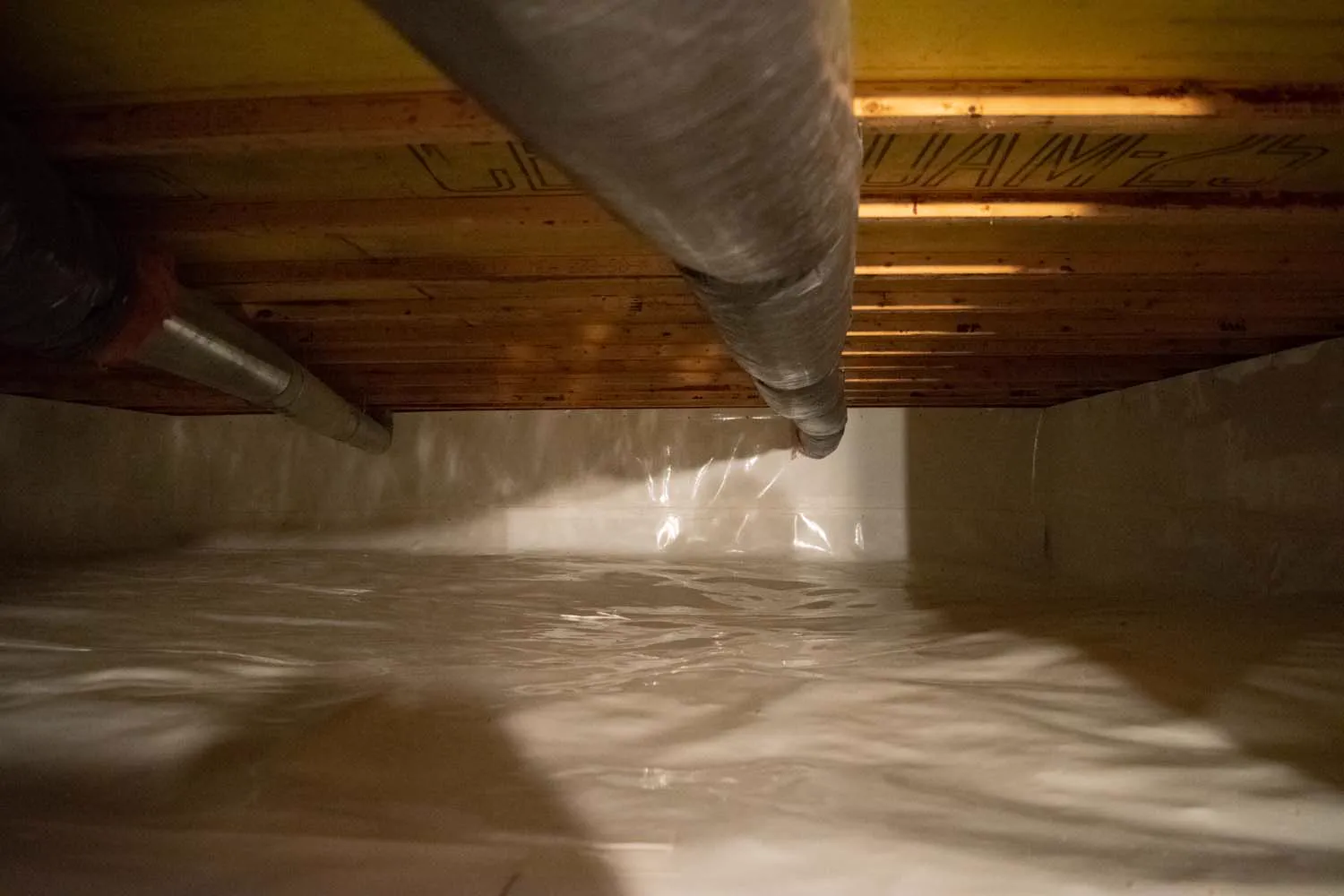
Also worth knowing: if your house sits on a crawl space instead of a full basement, which happens on plenty of older lots south of US-78, the right answer is often crawl space encapsulation rather than an interior drain system. Different system, same goal — dry air, solid house, and one less thing on your mind.
Where we work around Snellville
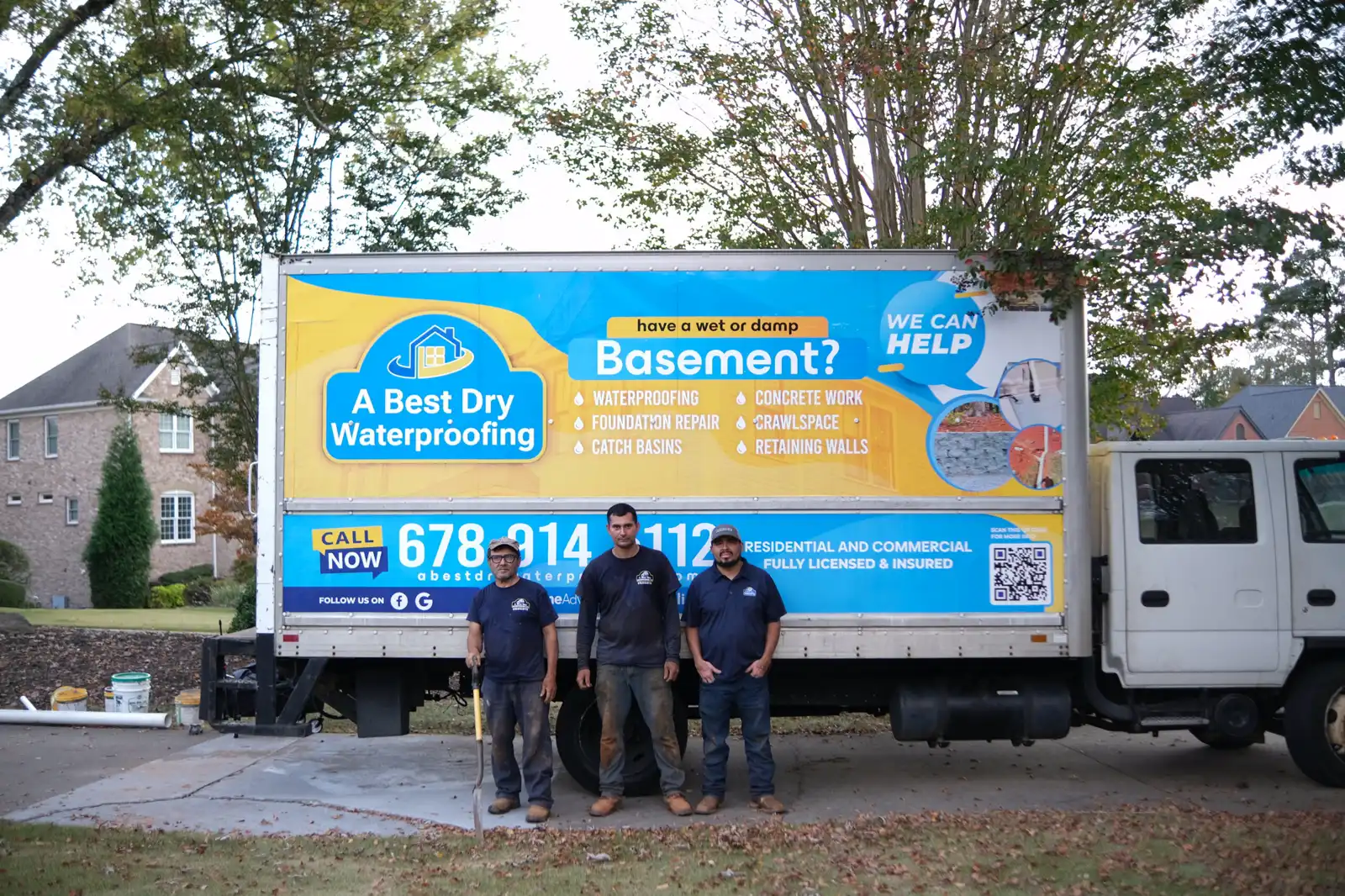
We’re based in Lawrenceville, about fifteen minutes north, so we’re down Highway 78 constantly — often with a truck already parked near Towne Center at Snellville. Along with Snellville, we serve Lawrenceville, Grayson, Loganville, Lilburn, Stone Mountain, Tucker, Snellville’s Brookwood-area streets, Centerville, Dacula and the wider Gwinnett County area. Whether you’re off Scenic Highway or tucked back near Briscoe Park, we know these foundations well.
Questions Snellville homeowners ask us
Usually, yes. We open only the lower section of wall and floor along the affected perimeter, then put everything back. Nineties paneling sometimes hides moisture behind it, so we check that early — and if we find something, we show you before we touch anything.
A dry, documented basement is a real asset at sale time, especially in a market full of 1980s homes where buyers ask pointed questions. Transferable warranty paperwork helps a lot. Beyond resale, you get usable square footage back, which is value you enjoy right now.
Often within a few days, and sooner right after a storm has moved through. Live support runs seven a.m. to eight p.m., seven days a week, so call whenever it suits you. Both the inspection and the estimate are free.
It depends mostly on how many linear feet of wall are involved and how much finished space we’re working around. Small exterior corrections sit at the low end, while a full perimeter system with a new sump sits at the top. We give you a written number after walking the house, never a guess over the phone.
Most interior systems run two to four working days. Finished basements add about a day for protecting and rebuilding, and exterior grading can add another. You’ll have a schedule in hand before we start, so nothing about the week surprises you.
Let’s find out what your Snellville basement actually needs
We’ll walk the house with you, show you exactly where water is getting in, and explain the fix in plain language. The inspection is free, the estimate is free, and nobody pressures you at the end of it.
(678) 914-5112Serving Snellville and all of Metro Atlanta · $500 off projects over $3,500 · Live support 7am–8pm, 7 days a week