

Wet Basement in Buford: What’s Causing It, and How It Gets Fixed
Start with a five-minute check you can do right now. Then we’ll walk through the cause, the honest scale of it, and the repair — no pressure at any point.
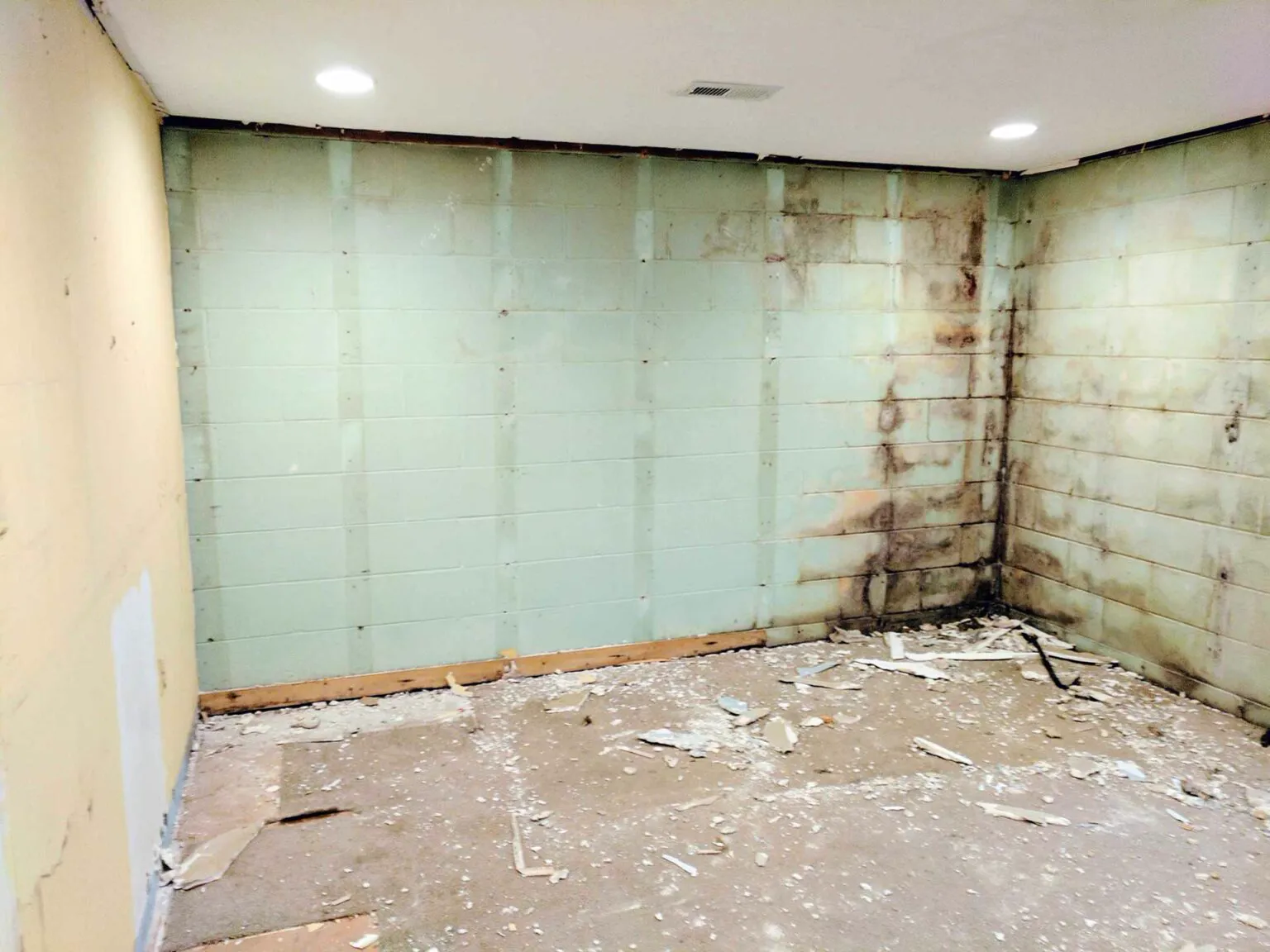
Before you read another word, go stand in your basement and look at one spot: the seam where the wall meets the floor. Follow it around the room slowly. If you see a dark line, a chalky white bloom, or a floor that’s darker in one corner than the rest, you’ve just found the answer to your wet basement Buford question in about five minutes. That seam has a name, and it’s the busiest doorway water uses in a Georgia home.
Good news right away, though. What you found is normal, it’s common all over town, and it’s very fixable. So let’s take it apart slowly, because you deserve to understand your own house before anybody hands you a number.
What exactly did you just find?
That seam is called the cove joint. It’s the single most common water entry point in a Georgia home, and it exists because your floor slab and your walls were poured at different times. The two never actually bond. As a result, there’s a hairline gap running the whole way around your basement, hiding in plain sight.
Most of the time nothing happens there. But once the soil outside gets loaded with water, that gap becomes the path of least resistance. Water never needs a dramatic crack — just a seam and a push, which is exactly what saturated red clay provides.
Here’s the Buford twist. Living near Lake Lanier is wonderful right up until the water table decides your basement is part of the lake. On lots close to the water, and on ground below Buford Dam, groundwater sits higher than most people expect. Your basement isn’t failing — it’s simply lower than the water around it, which is a much friendlier problem to own.
Why is the water pushing in at all?
Two words cover most of it: hydrostatic pressure. Red clay drinks up rain and swells, and swollen soil presses on everything it touches. Multiply that across a full wall and the force gets serious, even though nothing looks unusual from the yard.
Then there’s terrain, which Buford has plenty of. Grade changes are sharp around the lake and across the newer subdivisions, so uphill runoff often gathers at the back of a house and parks there. We see that constantly on the sloped lots out toward Hamilton Mill, where a big finished basement sits at the low end of a long backyard.
Worth knowing
Seepage and structural movement are two different conversations. We’ll tell you clearly which one you have — and if it’s only seepage, we’ll say so plainly, before anybody talks money.
Timing matters too. Our spring storms show up fast and heavy, so the ground goes from thirsty to soaked in a single afternoon. If you like watching that ahead of time, the National Weather Service Peachtree City office posts the local outlooks worth bookmarking.
Is yours mild, or is it more than that?
Fair question, and you can get most of the way to an answer yourself. None of this is bad news. It simply shows where you sit on the scale.
Reading the signs
- Musty smell, no water anywhere. Moisture is arriving as vapor. Mild, and often solved outside.
- White chalky bloom on the block. That’s efflorescence — minerals left behind after water passed through.
- One damp corner after a storm. Very common, and usually a single downspout is doing all of it.
- Water tracking along that floor and wall seam. Pressure is winning at the cove joint, so drainage is the answer.
- Standing water that sticks around for days. Time to have somebody look. Still fixable, just a bigger scope.
And if you leave it alone? Nothing dramatic happens overnight, honestly. Moisture problems just widen slowly — stored things get ruined, humidity climbs, and easy repairs stop being easy. The EPA’s guide to moisture control explains the indoor-air side clearly, without selling you anything.
One more pattern shows up here more than anywhere. Houses built between 1998 and 2008 are hitting their first waterproofing failure right about now, which surprises owners who’ve never had a drop. Nothing was done wrong. Builder-grade exterior coatings simply have a service life, and twenty-something Georgia springs is roughly it.
Where do homeowners get steered wrong?
Now here’s the part most articles skip, and it’s the reason we wrote this one. A lot of folks get pointed straight at the most expensive version of the fix before anyone has looked outside. That’s backwards, and it costs people real money.
Sealing paint is the first detour. It goes on white and cheerful, and it hides a stain beautifully for a season. But paint inside a wall is a raincoat on a submarine — the water still arrives, so it finds the next opening. Your wall isn’t the problem. Whatever delivers water to it is.
Most of the time the foundation isn’t failing. Something outside is delivering more water than the ground can carry away — and that’s a far better thing to be told.
The second detour is the full perimeter system quoted before anyone walked the yard. We had a homeowner over in the Bogan Road area, not far from Bogan Park, who’d already been priced for the whole basement. Outside, a buried downspout line had collapsed and was feeding one back corner every single rain. His real fix was a new discharge line and drainage along one wall.
Downtown is its own case. The homes around the Downtown Buford Historic District and the Main Street district are much older, with stone and block foundations built long before waterproofing was a trade. Nobody skipped a step there, because there wasn’t a step to skip. Those houses need a plan that respects old mortar instead of fighting it.

So how does it actually get fixed?
Simpler than most people picture. Instead of fighting water at the wall, an interior system collects it below the slab and sends it to a sump before it ever reaches your floor. Water always wins a shoving match, so we stop shoving and give it somewhere better to go. Here’s the sequence, plainly.
- Look outside first. Downspouts, grade, patios, buried lines. Sometimes the entire fix lives in the yard.
- Read the foundation. Poured concrete, block and old stone all get handled differently. Age changes the method, not the goal.
- Open a narrow strip of slab. Only along the affected walls, and only for a day of noise.
- Set perforated pipe in clean stone, below floor level. Depth is the whole ballgame.
- Route it to a sump basin. The pump carries water well away, not back into the flower bed for a second try.
- Close it up. Fresh concrete, wall liner where it’s called for, and our mess in our truck.
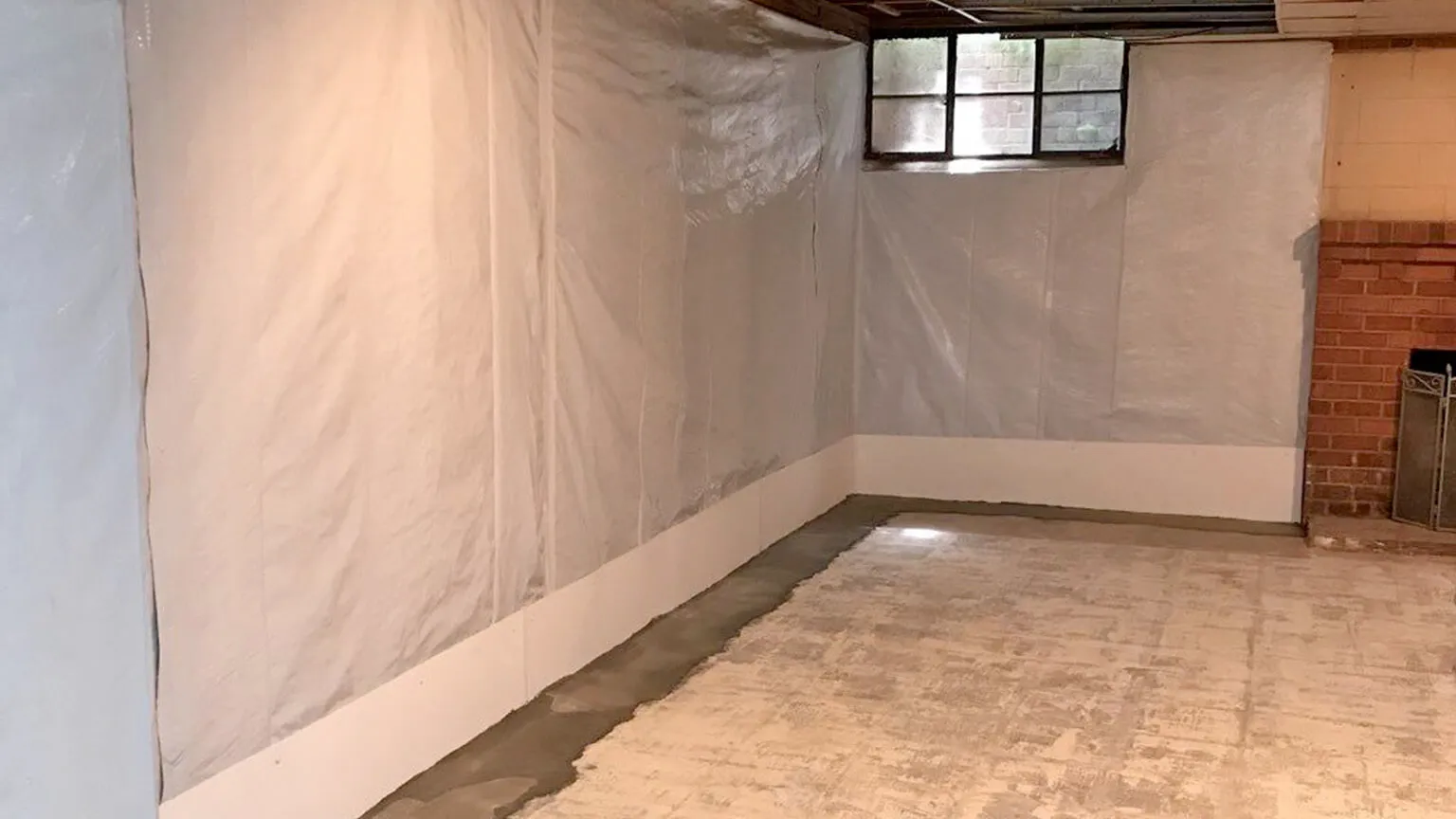
Most jobs run two to four working days. Add a day for a finished space, plus another if the scope covers more than one wall. Pricing follows scope more than anything else, so our waterproofing cost breakdown walks through the drivers if you’d like numbers before calling. The basement waterproofing page shows exactly what we install and why.
Ask any contractor for four things, too. What they found outside, the drainage depth and route in writing, where the water discharges, and a readable warranty. If a price arrives over the phone with no walk-through, that’s a guess — and you’d be paying for it.
What does the timeline look like after the fix?
Here’s the part people ask about most, and almost nobody writes down. Not the install week — the ten years after it.
Week one is quieter than you’d expect. The concrete cures, the musty smell fades within days, and your sump cycles after the first good rain. That cycling is the system working, by the way, not a warning. By the second weekend, most folks carry boxes back downstairs without thinking about it.
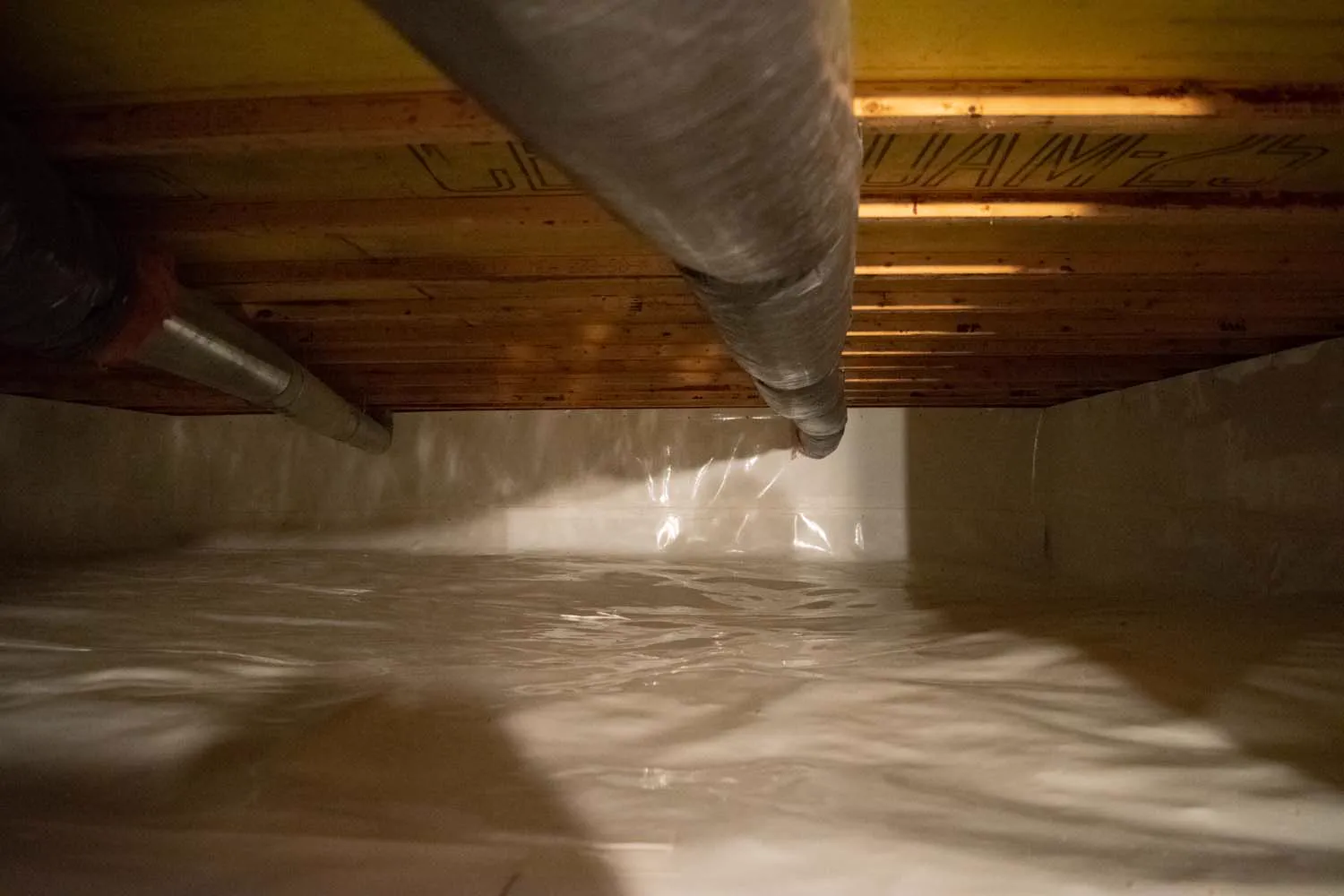
Year one is when the habit breaks. You stop walking downstairs after every storm to check. Spring arrives, the lake comes up, the storms roll through off I-85, and the floor stays dry through all of it. That’s usually the point where people finally finish the space they’ve been ignoring.
Year ten is the quiet payoff. Pipe and clean stone below a slab have nothing to wear out, so the drainage keeps doing its job in the background. Only the pump has a service life, similar to a water heater. Swap it when the time comes and the system carries on.

Not every home here has a full basement, either. Plenty of older properties downtown sit on crawl spaces instead, and for those crawl space encapsulation is usually the better system. Different approach, same goal. If you’re comparing across Gwinnett, our Grayson wet basement guide covers how a slightly different terrain behaves.
Where we work around Buford
We’re based in Lawrenceville, about twenty minutes south, and we’re up this way constantly. That includes Buford, Suwanee, Sugar Hill, Braselton, Flowery Branch, Dacula, Gainesville, Duluth, Lawrenceville and the wider Gwinnett and Hall Counties area. Lake-adjacent lots, big Hamilton Mill basements and century-old downtown foundations are all normal work for us — not a surprise we charge extra to be surprised by.
Questions Buford homeowners ask us
Yes, and you get it in writing before the work starts rather than after. Ask us to spell out what’s covered and for how long. If a warranty can’t be summed up in a sentence or two, it isn’t really doing you much good.
Usually, yes. We open only the bottom section of wall and floor along the affected perimeter, then put it back. Finished spaces sometimes hide moisture behind paneling, so we check that first — and if we find something, we’ll show you before we touch anything.
It certainly helps, because a documented system and a transferable warranty answer the question every buyer asks about a basement. More importantly, a dry basement is space you can actually finish and use. Around here that’s a big chunk of the house.
Usually within a few days, and often sooner outside of storm weeks. Live support runs seven a.m. to eight p.m., seven days a week, so you can reach a person rather than a voicemail box. The inspection and the estimate are both free.
It depends on how much wall is involved, how deep the drainage has to sit, and whether the space is finished. A single problem wall lands well under a full perimeter system, so we price after we look, never over the phone. We’ll also show you the smaller option whenever the smaller option is the honest one.
Let’s find out what your Buford basement really needs
We’ll walk the house with you, show you exactly where the water is getting in, and explain the fix in plain language — lake-corridor lots and old downtown foundations included. The inspection is free, the estimate is free, and nobody pressures you at the end of it.
(678) 914-5112Serving Buford and all of Metro Atlanta · $500 off projects over $3,500 · Live support 7am–8pm, 7 days a week