

Waterproofing Options in Peachtree Corners: How to Choose Between Interior and Exterior
Two real fixes, compared honestly — how each one works, what it takes, and which one we’d actually put on your house.
There’s a room in your house you quietly stopped using. Maybe the guest room downstairs, or the workshop, or the good half of the basement. Most people weighing waterproofing options Peachtree Corners homes need aren’t chasing a puddle — they’re trying to get a room back. So let’s talk about the two fixes that work, and which one belongs on your house.
Good news right up front: this is very fixable. There are really only two serious paths, and once you see how each one behaves, the choice gets easy. We’ll lay both out fairly, then tell you what we’d do.
Option A: what is interior drainage?
Interior drainage works from inside. We cut a narrow channel in the slab along the walls that leak, set perforated pipe in clean stone below floor level, and route it to a sump basin. Then the pump sends water well away from the house, so it can’t circle back.
Here’s the idea. We’re not blocking water — we’re giving it an easier road than the one through your floor. Water is lazy and stubborn at once, which is rough in a roommate but handy here.

What it costs depends on how much wall is involved and how hard it is to reach. One wall in an open basement sits at the low end, while a full perimeter with a new sump and a finished room to protect sits at the high end. Most jobs land in the middle, and you get a written number after we walk it — never a phone guess.
When does interior drainage win? When water shows up at the floor-to-wall seam, when there’s a deck or mature landscaping outside you’d rather not tear up, and when you want it done in days instead of weeks. That covers most of the homes we see here.
Option B: what is exterior waterproofing?
Exterior waterproofing goes after water before it touches your foundation. We excavate along the outside of the wall, clean it, apply a waterproof membrane, and install fresh footing drain in stone. After that, the soil goes back and the grading gets corrected.
It’s the more thorough fix, and we’ll say so plainly. Instead of managing water at the floor, you keep it off the wall entirely. That said, it’s a bigger operation, and your landscaping will have a rough week before it has a good one.
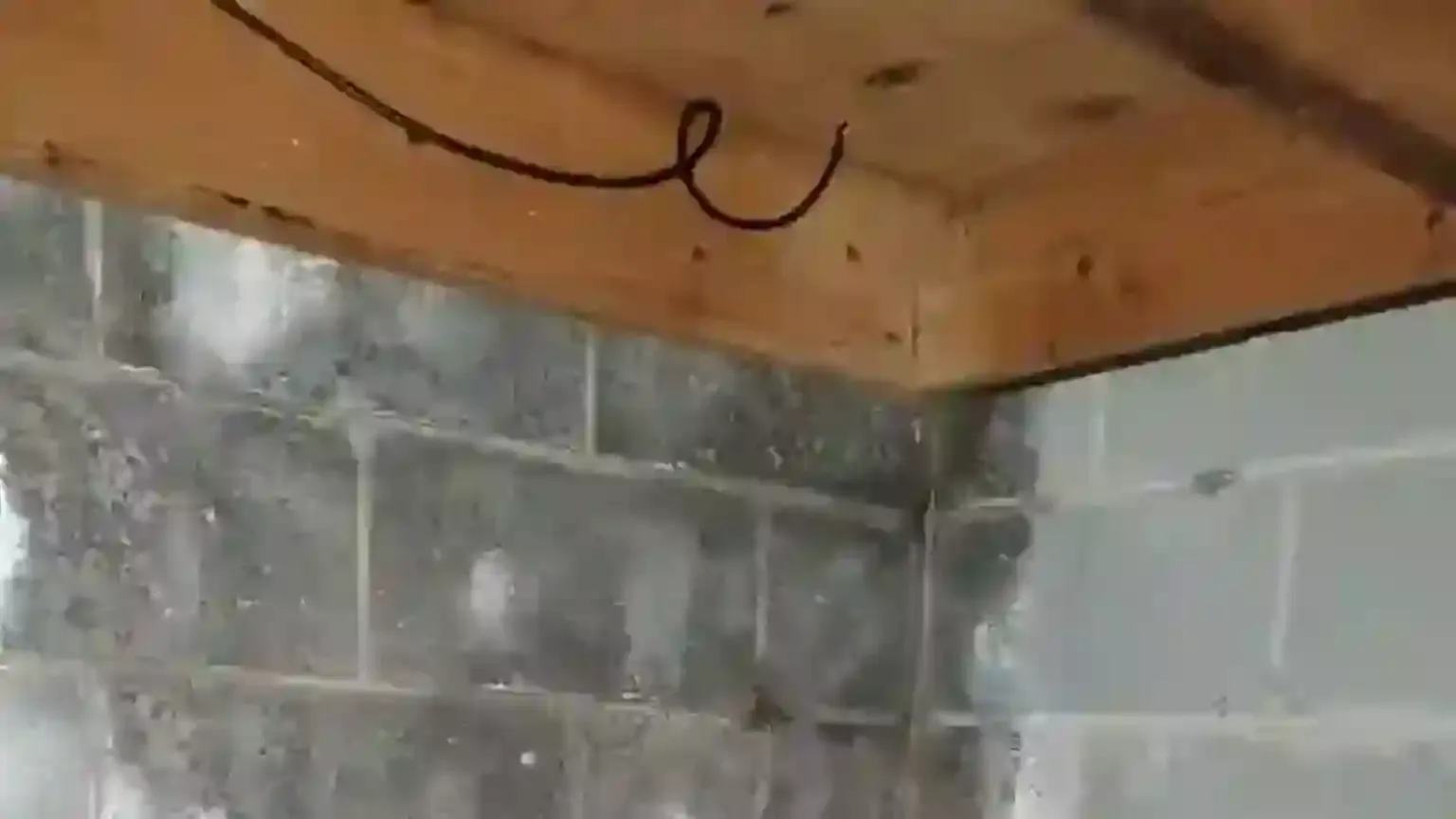
Cost runs higher than interior work on the same house, mostly because of dig depth and access. A walkout with a clear side yard is very different from a wall you reach past an A/C pad.
Exterior wins when the block wall is wet across its whole face, when the original drain tile is silted shut, or when you’re already redoing the yard. Timing matters more than people expect — if the patio is coming out this spring anyway, that’s the cheapest exterior job you’ll ever get.
So how do they compare, side by side?
Interior drainage
- Works from inside — patios, decks and landscaping stay put
- Usually one to three days on site
- Lower cost on most homes
- Manages water at the slab, with a sump doing the lifting
- Needs power and a pump you’ll service someday
- Best for seam leaks and finished-basement plans
Exterior waterproofing
- Stops water before it reaches the wall at all
- Bigger footprint — excavation, and a yard that needs recovery
- Higher cost, and access can swing it
- Membrane plus new footing drain, no pump required
- Fixes grading in the same trip
- Best for whole-wall seepage and dead drain tile
Notice that neither column says “the good one.” Both are real systems we warranty, so the wrong move is picking on price alone. Your house should decide it — the wall, the lot, and where water is actually getting in.
Now here’s where a lot of homeowners get steered wrong
Somebody will tell you exterior is always better because it’s “the real fix.” Then the next person swears interior is always better because it’s cheaper. Both are sales positions, not diagnoses, and anyone recommending before they’ve walked your lot is really recommending their own schedule.
The other steer we see is the coating pitch. Waterproof paint on a block wall looks like progress for a season, then the pressure behind it wins. And there’s real pressure back there — saturated red clay can push on a basement wall with thousands of pounds of force. That’s hydrostatic pressure, and it moves water straight through solid, uncracked concrete. A coating can’t argue with it. It’s a raincoat on a submarine.
Twenty years in, the thing that changed how we work is simple: we stopped trying to block water and started routing it. Then we pick the route that fits the house.
That’s also why we’ll put a warranty in writing. You can’t honestly warranty a coating, because it ages and the pressure never does. You can warranty a system built around how water behaves.
What decides it on a Peachtree Corners house?
Here’s where local matters more than usual. Peachtree Corners homes were mostly built before modern basement waterproofing was standard practice. Many of these houses never had a real system — they had a coat of tar and good intentions. That’s not a knock on the builders. It’s just where the trade was in 1978.
So we’re usually looking at hand-laid block walls holding back fifty years of clay, plus original drain tile that silted shut during a presidency you’d have to look up. Add the bluffs running toward the Chattahoochee and you get lots with real slope, which sends water at the house instead of away. Over in River Station and around Neely Farm, that slope is the whole story.

Four things move our recommendation on these homes:
The deciding factors
- Where the water shows up. Seam and floor leaks point interior. Wall-face seepage points exterior.
- What’s outside the wall. A patio, mature hardwoods, or a steep drop can make excavation impractical.
- Wall condition. If a block wall is bowing, structural work comes first either way.
- Your timeline. Resale inspections create real deadlines. When findings land two weeks before closing, interior work is usually the only path that finishes on time.
That last one comes up constantly. We had a homeowner near Wellington Lake with a signed contract and a moisture finding in the report. Exterior would have been fine on that house, but not in ten days. Interior drainage got it done, documented, and closed on schedule.
Our actual recommendation: for most basements in this city, interior drainage is the right call — it fits the slope, the finishing plans, and the timelines people are working with. We go exterior when the wall face is soaking through, when the grade needs correcting anyway, or when the yard is already coming apart for another project. Our basement waterproofing page lays out every system we install, and we compare the same choice for Dunwoody waterproofing options if you’re helping family one town over.
When would we tell you to skip the bigger job?
More often than you’d think. Maybe a third of the time the real problem is above ground — buried gutters, a downspout dumping four feet from the wall, or a yard drain that quit after last fall’s leaf drop. The canopy here is heavy, and it buries drains beautifully.
In that case we’ll tell you to fix the cheap thing first and watch it through one good spring storm. If you’ve got a crawl space instead of a basement, crawl encapsulation is usually the better answer. Turning down work you don’t need is how a waterproofing company earns the call you do need. You can check our rainfall record through the National Weather Service office covering this area.
One more thing: this is about the air upstairs
Here’s the part most homeowners never connect. Air in a house moves upward, and as warm air leaves through the top it pulls replacement air from the lowest point. So a share of what you breathe upstairs started in the basement. A damp basement is a whole-house humidity problem in disguise.
The good news is that one fix handles both. Once water is collected below the slab instead of evaporating off it, humidity downstairs drops and that musty smell at the bottom of the stairs leaves. The EPA’s guidance on moisture control is a good neutral read.
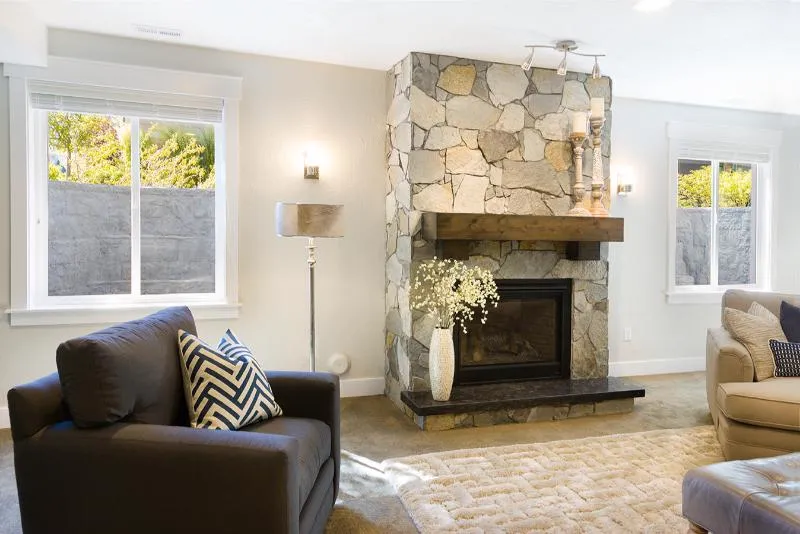
Then picture the other side of it. The floor stays dry through a hard spring storm. That room you stopped using becomes storage you trust, or a workshop, or a place the kids can be loud on a Saturday. Better yet, the next time the forecast turns ugly, you don’t think about it — you just notice a week later that you didn’t. That’s the real feeling here: my house is solid, and I take care of it.
Why hire somebody who works here?
Because we’ve spent over twenty years on these streets and have likely worked a house near yours. We know the 1970s block basements, and we know a home near The Forum on Peachtree Parkway behaves nothing like a newer build by Town Center at Peachtree Corners. Our trucks run this side of Jimmy Carter Boulevard constantly.
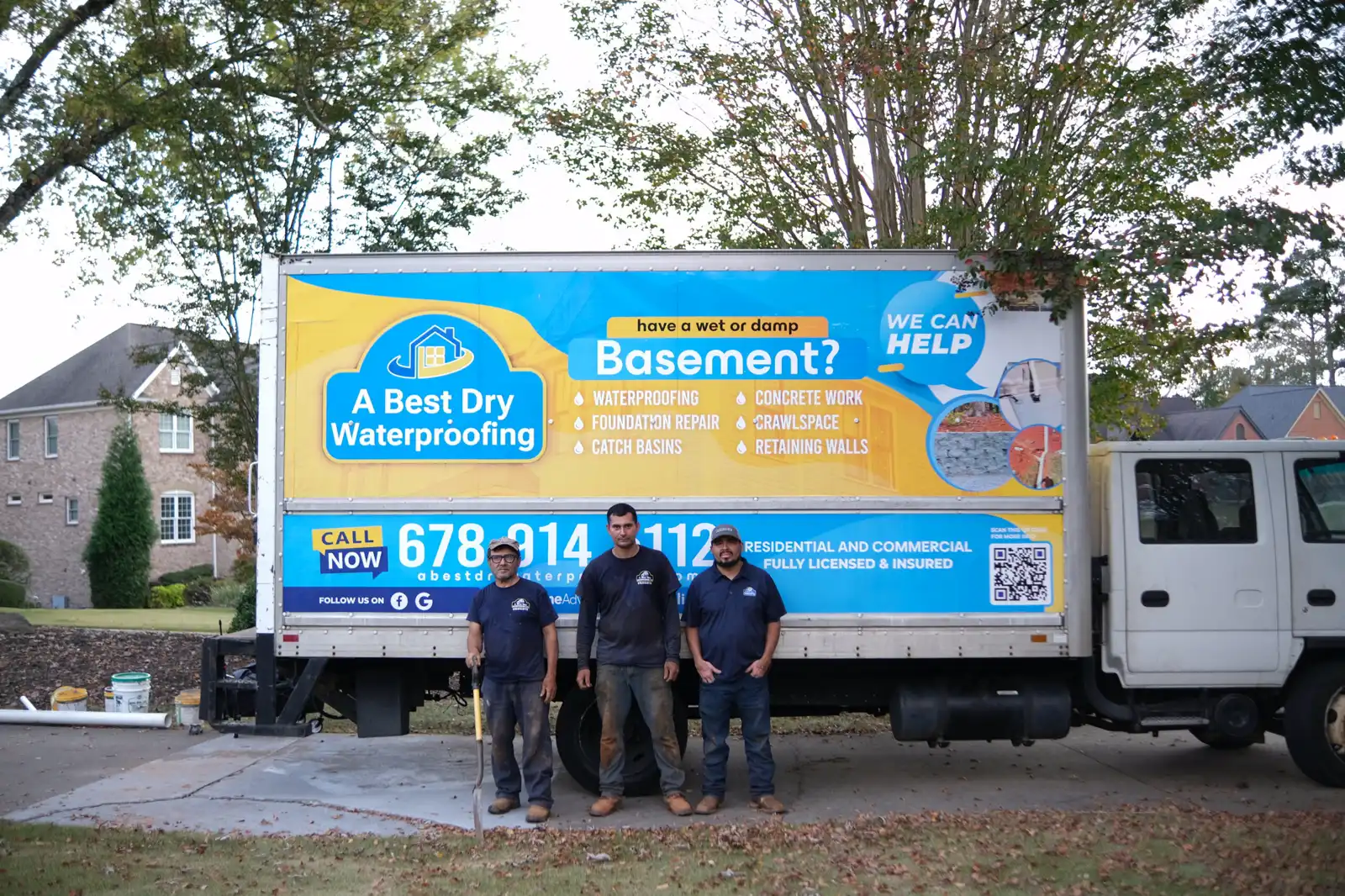
That history matters for a boring but important reason. A warranty is only as strong as the company behind it, so if something needs attention in year six, you’re calling the folks who did the work.
Where we work around Peachtree Corners
We’re based in Lawrenceville, about twenty minutes northeast of you, so we’re here often. Along with Peachtree Corners, we cover Norcross, Duluth, Johns Creek, Dunwoody, Berkeley Lake, Sandy Springs, Suwanee, Lilburn and Alpharetta, plus the rest of Gwinnett County. If you’re along the 141 corridor, odds are we’ve got a truck nearby already.
Questions Peachtree Corners homeowners ask us
Just the perimeter. We need about four feet of clear space along the walls we’re working on, so shelves and boxes slide toward the middle. You don’t have to empty the room, and we’ll help move the heavy stuff.
Sometimes, but they’re really two jobs. Drainage handles the water, while a crack that’s still moving needs its own repair first. We’ll tell you which situation you’re in during the inspection.
Neither is automatically better — it depends on where water enters and what sits outside the wall. Exterior stops water sooner, but it means excavating, and a patio or steep lot changes the math fast. Interior drainage is less disruptive and fits most homes here.
The drainage is built to last the life of the house, since it’s stone and pipe below the slab with nothing to wear out. Exterior membrane is the same story. The sump pump is the part with a service life, so plan on replacing one around the ten-year mark.
Yes, and you get it in writing before work starts, not after. Ask us to walk you through what’s covered in plain words — a warranty nobody can explain in one sentence isn’t worth much.
Let’s find out which option your house actually needs
The inspection is free, the estimate is free, and nobody leaves a hard sell behind. We’ll show you where water gets into your Peachtree Corners basement and tell you honestly if the simpler option will do the job.
(678) 914-5112Serving Peachtree Corners and all of Metro Atlanta · $500 off projects over $3,500 · Live support 7am–8pm, 7 days a week