

Hiring a Waterproofing Company in Peachtree Corners: What to Look For Before You Sign
How these homes are built, what a good crew does differently here, and the questions that tell you everything.
It was two in the morning, the rain was hammering the windows, and you were lying there doing math about the basement. If that was you, then you’re already halfway to hiring a waterproofing company Peachtree Corners homeowners actually recommend — because the hard part isn’t the water. The hard part is knowing who to call.
Good news, and we mean it: almost every basement we look at is fixable, and the fix is usually less dramatic than the 2 a.m. version in your head. So let’s skip the pitch. Here’s what makes homes here behave the way they do, and how to tell a solid plan from a shiny brochure.
Why are Peachtree Corners homes different?
Because of when they were built. Most of this city went up between the early 1970s and the mid 1990s, which makes it the oldest large body of really good housing stock in our northern service area. Those houses were built well. They just weren’t built with modern waterproofing, because in 1978 that wasn’t standard practice.
Many of these houses never had a real system. They had a coat of tar and good intentions.
Tar does work — for a while. But it’s a coating, and coatings age. After forty or fifty years in red clay, the tar gets brittle and the original drain tile silts shut, so water that used to be carried away now sits against the wall instead. That’s not a defect. That’s a service life ending, the same way a roof ends.
Then there’s the ground. Along the western edge of town the land drops toward the Chattahoochee in real bluffs, and the clay there has rock close to the surface. Water hits that rock, can’t sink, and travels sideways — often straight toward somebody’s foundation. Homes in Wellington Lake and on the older streets of Historic Peachtree Corners see this constantly. Over in Amberfield, we see more of the silted-drain-tile story, plus fifty-year-old hardwood roots working slowly on slabs.
Worth knowing
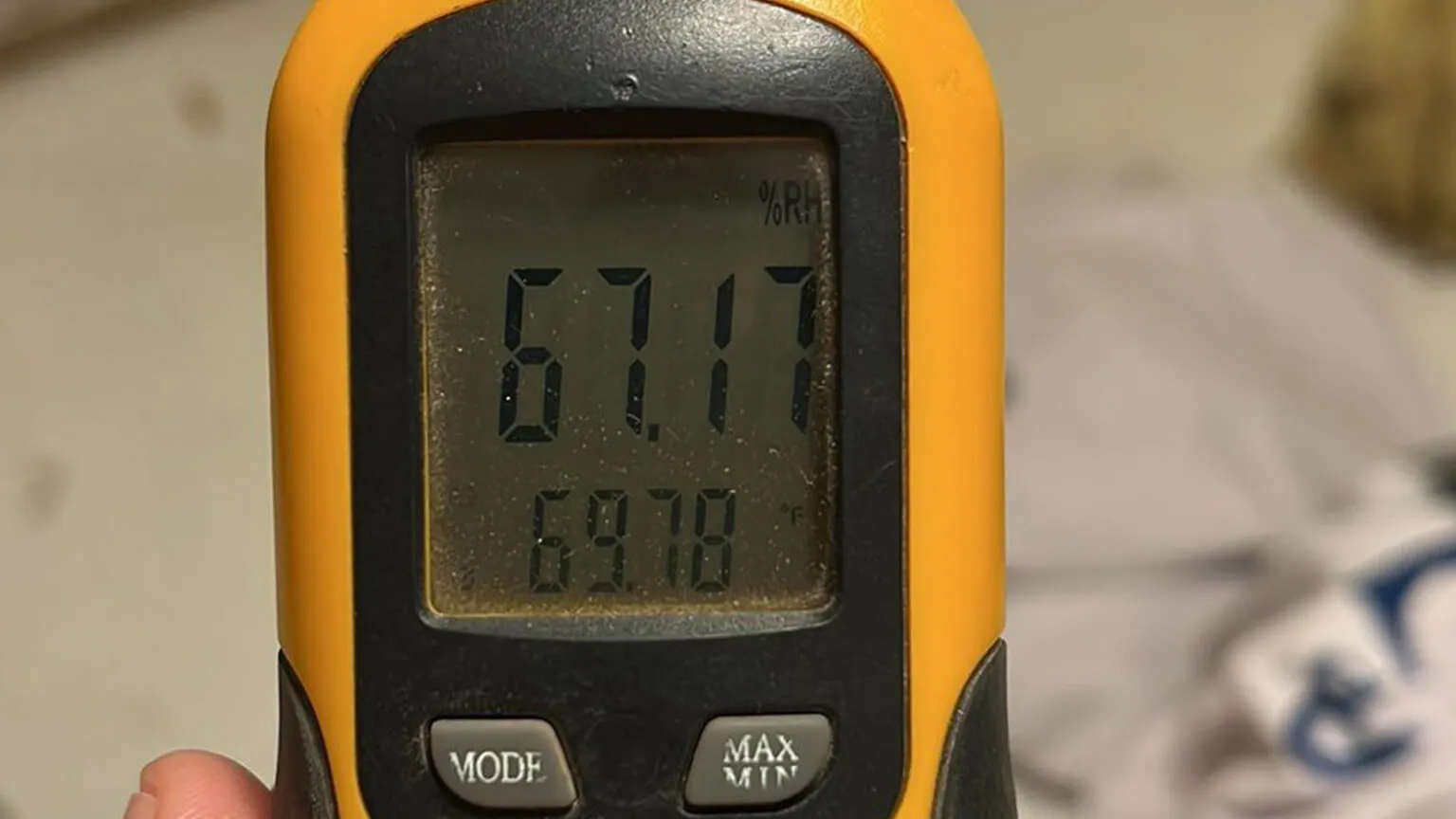
Concrete is porous. Water moves through solid, uncracked concrete by capillary action, which is exactly why a wall can be soaking wet without a single visible crack. If a company tells you there’s no problem because there’s no crack, keep shopping.
What should a good company do differently here?
Start outside. Any crew worth hiring here walks the yard before it walks the basement, because on sloped lots the answer is often uphill of the house. Grading, gutters, downspouts, buried yard drains packed with forty years of leaf litter — those get checked first. Sometimes that’s the whole fix, and a good company tells you so even though it’s a smaller invoice.
Second, they should treat block walls as block walls. Hand-laid block behaves differently than a poured wall, since every hollow core is its own little water tank. So the system has to drain those cores, not just the floor seam. Plenty of national outfits install the same package in every house they enter, and on a fifty-year-old basement near Holcomb Bridge Road that package can miss the water entirely.
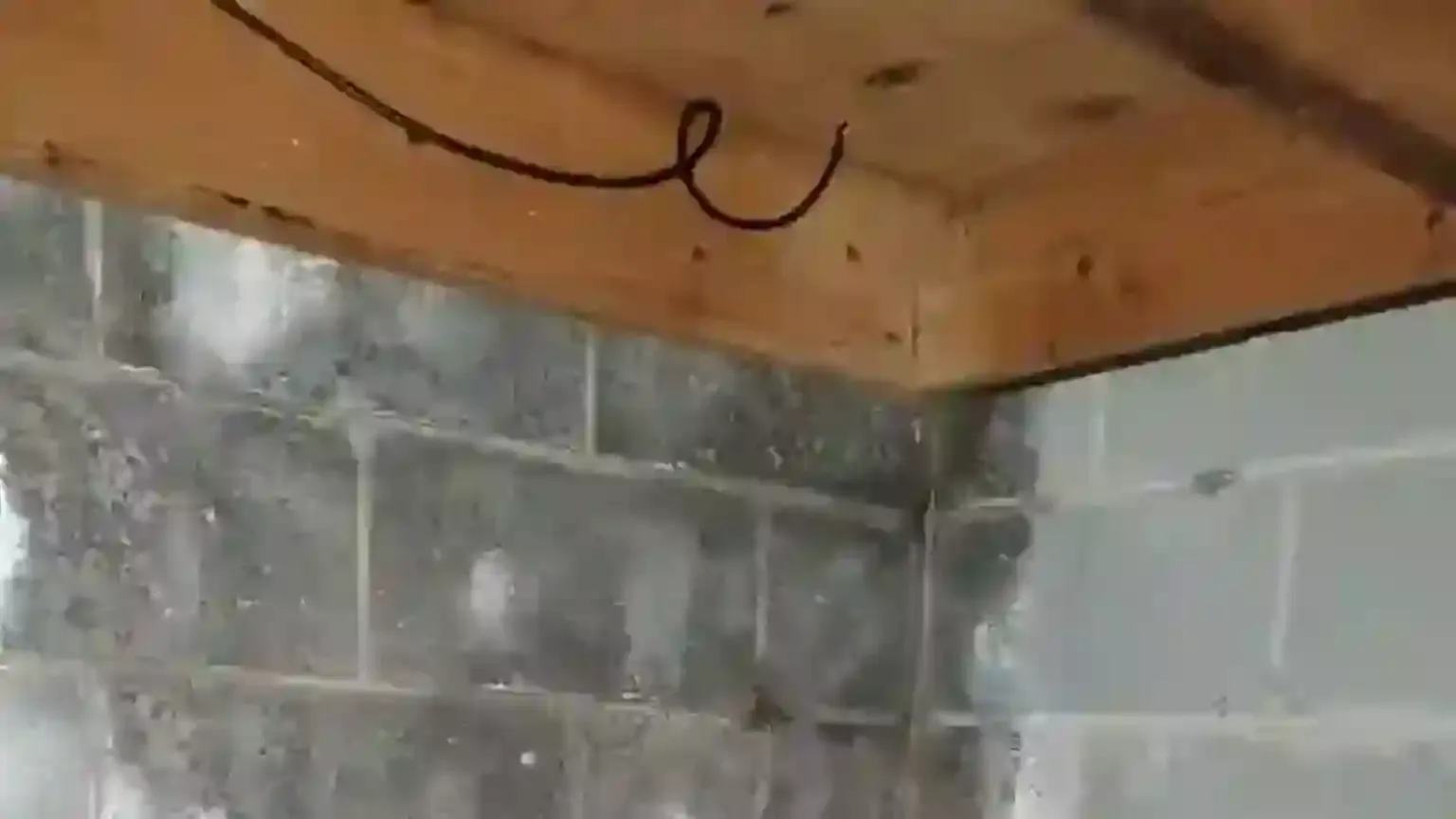
Third, they should route water instead of blocking it. We spent years trying to seal our way out of this, and water won every time, because pressure never quits and sealant always ages. Now we assume water is going to show up and build it an easier way out — perforated pipe in clean stone below the slab, carried to a sump, discharged well away from the house. Give water somewhere simple to go and it stops being creative about your floor.
The detail that sounds small and absolutely isn’t
Ask where the discharge line ends. Not “does it have a sump” — every proposal says that. Where does the water actually come out, how far from the house, and is it running downhill the whole way?
Here’s why that boring question matters. A sump pump moves a lot of water, and if the line dumps six feet from the foundation, that water soaks right back into the clay you just paid to protect. Then the pump picks it up again. You’ve built an expensive merry-go-round, and the only thing getting a workout is the motor.
On bluff lots the mistake goes the other way. A line run downhill without a check valve can siphon, or it can freeze at a low spot in January and back up. Neither shows on install day, which is exactly why it slips past homeowners. So we walk that line with you before we quote it, and we say out loud where the water will land.
Get that one detail right and the system quietly works for decades. Get it wrong and you’re calling somebody again in three years. It’s a fifteen-minute conversation worth more than any brochure.
How do you read an estimate?
Slowly, with one question in mind: does this describe my house? A real estimate names the walls, the linear footage, the trench depth, the pump model, and where the discharge ends. A weak one says “waterproofing system, basement” and a number.
What should be spelled out in writing
- Linear feet and which walls. One wall is a different job than a full perimeter, and it’s the biggest driver of price.
- Whether the block cores get drained. On 1970s block that isn’t optional, so it should be named.
- Pump, basin and backup. Model numbers, not adjectives. A battery backup runs during the storm that kills your power, which is the same storm that floods basements.
- Discharge distance and route. Feet from the foundation, and where it daylights.
- Exterior corrections. Grading, downspout extensions, clearing old yard drains.
- Cleanup and concrete restoration. Who patches the slab, and who hauls the spoil away.
- The warranty, in plain words. What’s covered, how long, and whether it transfers if you sell.
About price: anybody quoting a firm number over the phone is guessing, and you’d be paying for that guess. Small drainage corrections land at the low end, while a full perimeter with a new basin and backup pump sits at the high end. Most jobs here land between, and you should get a written scope rather than a “starting at.”
What should you ask, and what should worry you?
Five questions do most of the work. Ask how long they’ve worked in this city. Ask what they found outside before they came in. Then ask who performs the work — the company, or a subcontractor you meet on day one. Ask what happens if water returns in year six. And ask them to explain the warranty in one sentence.
The red flags are simple too. Pressure to sign today. A discount that expires when the visit does. Talk about collapse, which is a sales tool rather than a diagnosis. Also watch for anyone recommending waterproof paint as the main fix — it’s a fine product, but a coating can’t beat pressure. It’s a raincoat on a submarine.
One more: a company that won’t look at your crawl space. Plenty of the oldest streets here have crawl spaces instead of basements, and those usually need crawl encapsulation instead of interior drainage. If the only tool they own is a trench, everything looks like a trench.

What should you do every year once it’s fixed?
Here’s the part nobody hands you at the end of the job, and it takes about an hour a year. A system that gets ten minutes of attention each season will outlive the people who installed it. Set a reminder on your phone and run this list.
- Test the pump in early spring. Pour a five-gallon bucket into the basin and watch it cycle. If it hums but moves nothing, call before storm season.
- Clear the gutters twice each fall. The canopy here is heavy, so one cleaning usually isn’t enough.
- Walk the discharge line after a big rain. Check that water is exiting and the end hasn’t been buried by mulch.
- Check the grade at the foundation. Soil should fall away from the house, and clay settles over time.
- Replace the backup battery on schedule. Treat it like a smoke detector — cheap insurance for the one night you need it.
- Glance at the walls in July. Humid months tell the truth, so dry block in midsummer means the system is working.
That’s the whole list. Do it, and the forecast stops being a personal event. You get storage you trust, a workshop that stays usable, and a basement the kids can be loud in — plus you get to sleep through the next 2 a.m. downpour without doing math.
Why we might be the right fit
We’ve been at this over twenty years, most of it inside Gwinnett County, so we’ve almost certainly worked on a home built the same year as yours. Peachtree Corners is about twenty minutes from our shop, which means we’re near Town Center at Peachtree Corners or the Curiosity Lab corridor most weeks anyway.
That history matters for one unglamorous reason: a warranty is only as strong as the company behind it. If something needs a look in year seven, you’re calling the people who did the work, not a call center three states away. We’ll also tell you when the fix is smaller than you feared.
Still sorting out what you’re seeing down there? Our local guide to basement waterproofing walks through symptoms and repair options, and the systems we install are laid out in full. Comparing notes with family across the line? We cover the same ground for Dunwoody best basement waterproofing. For a neutral second opinion, the EPA’s guidance on moisture control is a worthwhile ten minutes, and the USGS explainer on groundwater shows why sloped lots behave the way they do.
Where we work around Peachtree Corners
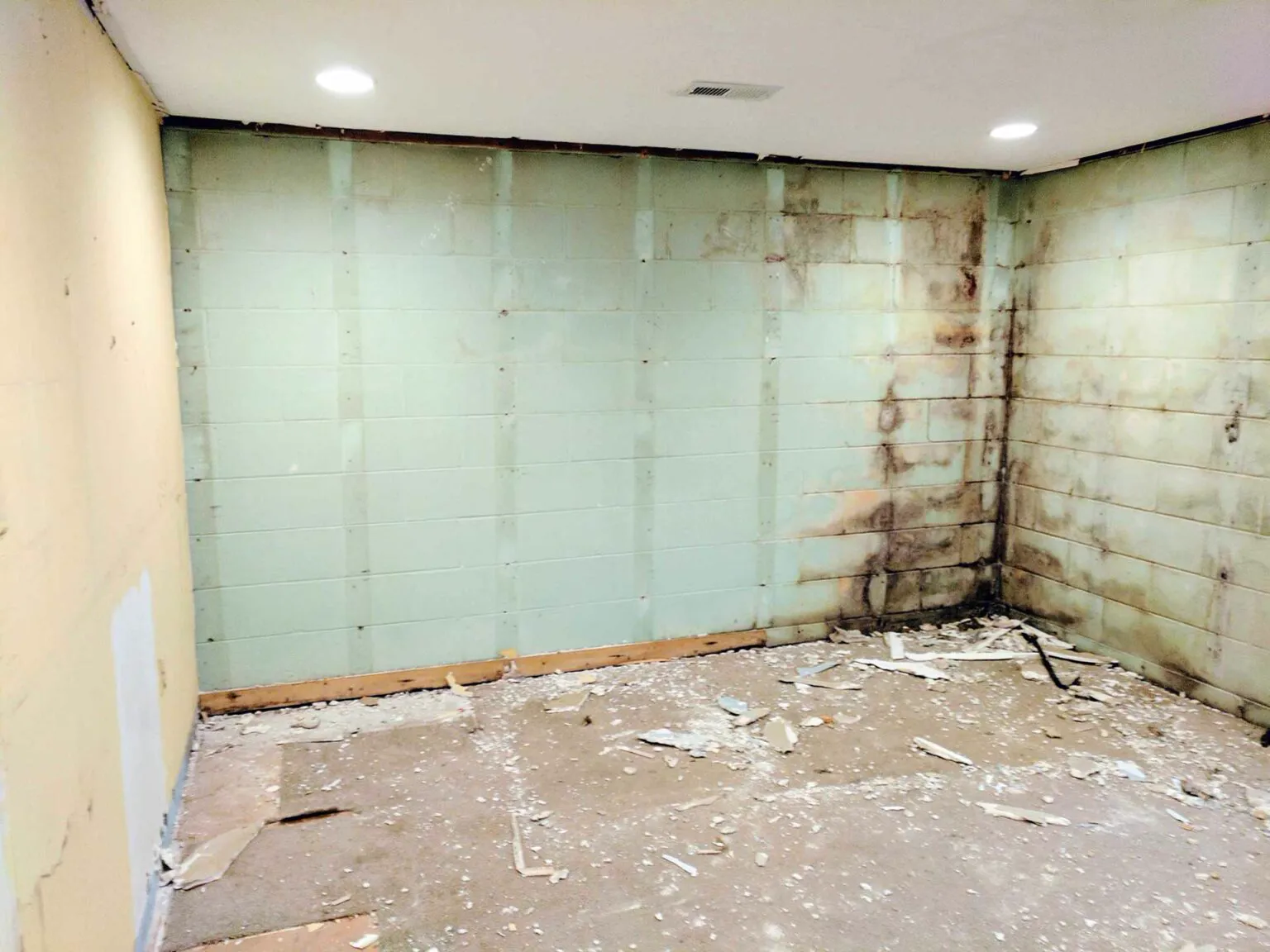
We’re based in Lawrenceville, so this side of the county is a short drive. We work throughout Peachtree Corners, Norcross, Duluth, Johns Creek, Dunwoody, Berkeley Lake, Sandy Springs, Suwanee, Lilburn and Alpharetta, along with the rest of Gwinnett County. If you’re anywhere between the Chattahoochee bluffs and Peachtree Parkway, we’ve probably got a truck nearby already.
Questions we get from this side of town
Neither one wins automatically. It depends on where water enters and what sits on the soil outside, so a deck, a patio or a steep bluff lot changes the answer fast. Exterior work stops water before it touches the wall, while interior drainage is less disruptive and fits most homes here.
The drainage is built to last the life of the house, since it’s stone and pipe below the slab with nothing to wear out. The pump is the part with a service life, so plan on replacing one near the ten-year mark, the same way you’d plan for a water heater.
Yes, and you get it in writing before the work starts rather than after. Ask what’s covered, how long it runs, and whether it transfers to a buyer if you sell. If a warranty can’t be summed up in one sentence, it isn’t doing much good.
Usually, yes. We open a narrow strip of drywall and flooring along the affected walls, do the work, then put it back — so the room comes apart at the edges instead of all over. It costs more than an open basement, but it beats gutting a space you already paid to finish.
It protects value first, because a documented dry basement removes the moisture findings that stall a sale. After that, a dry lower level is square footage you can finish and use. Buyers here read inspection reports closely, so a transferable warranty is a nice thing to hand them.
Let’s find out what’s really going on down there
The inspection is free, the estimate is free, and nobody pushes you at the end of it. We’ll show you where the water gets in, what it would take to stop it, and where the discharge is going — even if the answer turns out simpler than you expected.
(678) 914-5112Serving Peachtree Corners and all of Metro Atlanta · $500 off projects over $3,500 · Live support 7am–8pm, 7 days a week