

Waterproofing Options in Dunwoody: Which One Is Actually Right for Your Home
An honest side-by-side, plus the one we’d pick for a 1970s block basement.
Most people believe the expensive fix is the good fix. So when homeowners start comparing waterproofing options Dunwoody contractors offer, they assume digging up the yard must beat working inside, because it costs more and looks more serious. That’s the myth, and it isn’t right. The better option is simply the one that matches where your water is coming from — and on a lot of Dunwoody houses, that’s the cheaper one.
Good news, though: this one is easy to decide once somebody lays it out plainly. So here are two real options, both treated fairly, and then a straight recommendation instead of a shrug.
Option A: interior drainage — how does it work?
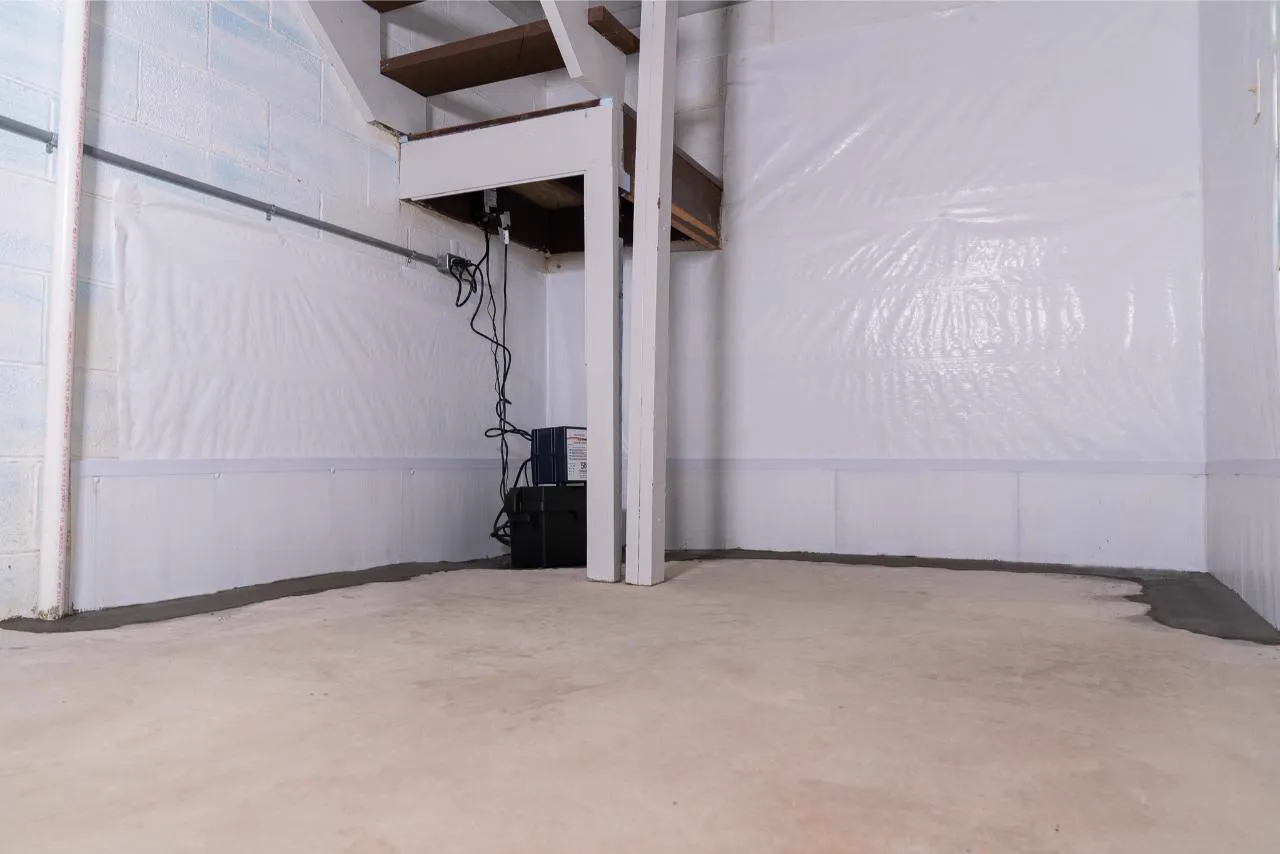
Think of it as giving water an easier exit than the one it’s using now. We cut a narrow channel in the slab around the inside perimeter, set perforated pipe in clean stone below floor level, and route it all to a sump basin. The pump then carries that water well away from the house.
Notice what we did not do. Nobody tried to block the water. Instead we assumed it’s coming and built a better path, because water is lazy and it always takes the easy road.
What does it cost? Less than the outside job, almost always, because the biggest expense in waterproofing is moving dirt. There’s no excavator and no landscaping to replace. Work happens in one room, and most homes are finished in a couple of days.
Where it wins: block basements, tight lots, finished landscaping against the house, and any basement where water shows at the floor-and-wall seam. Plus it works in February, while an exterior dig waits on the weather.
Option B: exterior waterproofing — what are you paying for?
Here the crew digs down along the outside of the foundation, all the way to the footing. The wall gets cleaned, then it gets a modern membrane and often a drainage board, and a new footing drain goes in at the bottom in clean stone. After that the trench is backfilled and the grade is rebuilt so water runs away from the house.
It’s a real fix and we install it. Water never touches the wall, so it never gets a chance to wick through the block at all. For a homeowner who wants the problem handled at the source, that’s genuinely satisfying.
But be honest about the trade. You’re paying for machines, labor hours, and everything that lived in that trench — shrubs, sod, sometimes a walkway. Access matters too, since a machine can’t reach a wall four feet from a property line.
Good news
Neither option means your foundation is failing. A wet basement and a structural problem are two different conversations, and most homes we look at are only in the first one. We’ll say plainly which one you’re in.
So how do they compare, side by side?
Here’s the same job, judged on what matters when you’re writing the check.
- Works inside — landscaping stays put
- Usually one to three days
- Lower cost, since no excavation
- Can be installed in any season
- Manages water after it reaches the wall
- Sump pump becomes part of the house
- Strong fit for 1960s–70s block basements
- Stops water before it touches the wall
- Longer job, weather dependent
- Higher cost — machines and restoration
- Needs room for equipment to reach the wall
- Rebuilds grading and the footing drain
- Often no pump needed at all
- Strong fit for walk-out and daylight walls
Notice that neither column is the “cheap” one and the “good” one. They solve the problem at different points in the water’s trip, so the right pick depends on where your water starts.
We stopped asking which system is better years ago. The useful question is where the water enters — answer that, and the system picks itself.
What decides it on a Dunwoody house?
Most advice online stops right at the comparison chart. It shouldn’t, because a chart doesn’t know your house — and Dunwoody houses have a personality. Dunwoody’s split-levels and ranches were built when “waterproofing” meant a spray coat of asphalt on the outside of a block wall. Fifty years of Georgia clay later, those walls are telling on themselves.
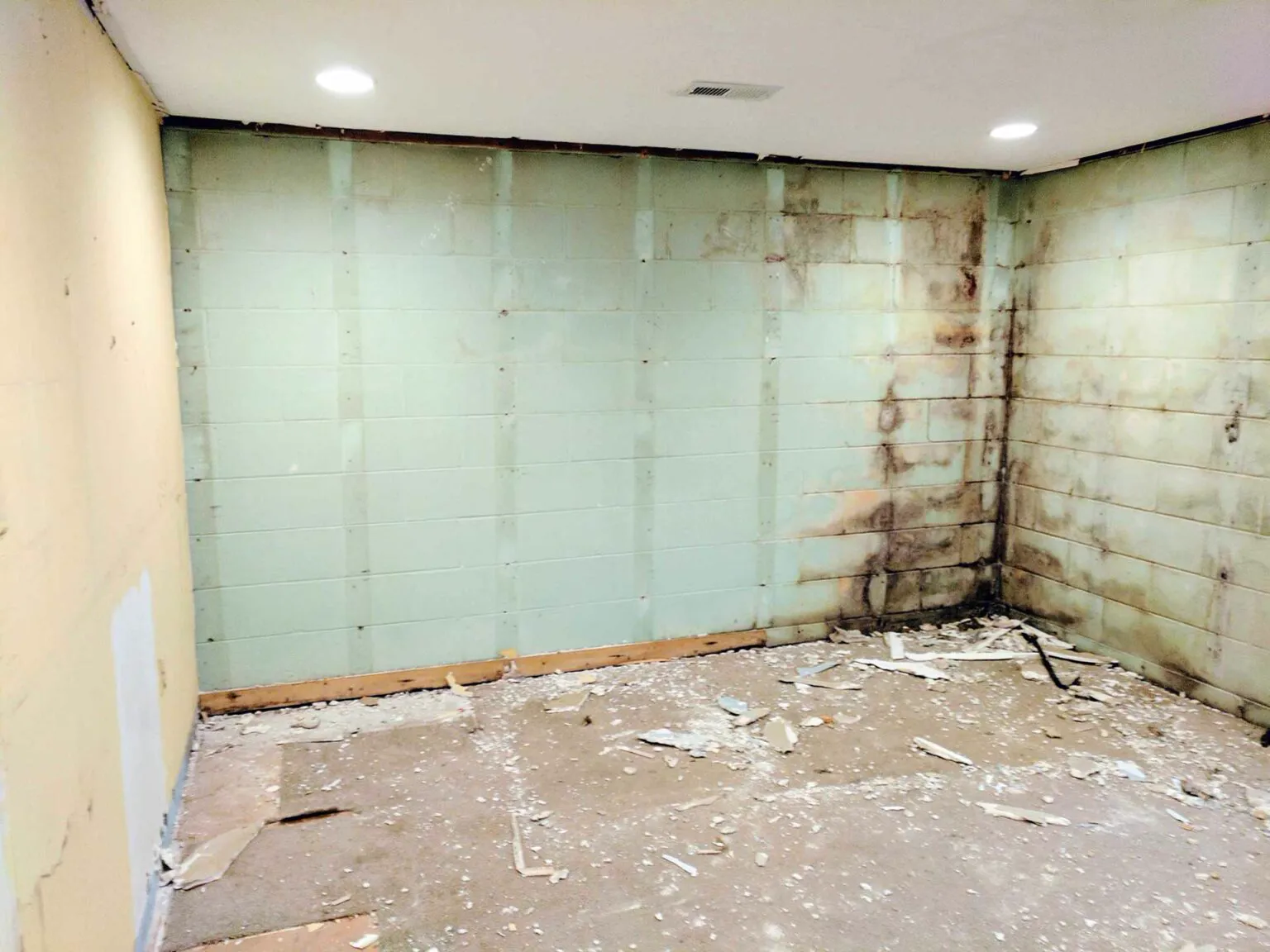
That fact changes the recommendation more than anything else. Asphalt coating was never a membrane, so on those homes water isn’t sneaking through one dramatic crack. It’s wicking through the block itself, slowly, across a wide area.
Which brings up something worth knowing: concrete is porous. Water moves through solid, uncracked concrete by capillary action, so a wall can be genuinely wet without a single visible crack. Most homeowners doubt that until they see a damp stripe on a wall they know is sound. The USGS explains how groundwater moves better than we can, and it’s a quick read.
Then there’s the terrain. Dunwoody is hilly, and plenty of homes sit below street grade with the basement cut into a slope. Over near Redfield, water arrives from uphill with real momentum. Meanwhile the teardown rebuilds throughout the city sit on fresh compacted fill, which behaves differently again.
Trees matter too, more than people expect. Those sixty-year-old oaks send roots straight through old footing drains, so a house can have “drainage” on paper that hasn’t drained in decades. When we scope a job near Brook Run Park, the canopy is one of the first things we look at.
Here’s the practical version. If your water shows at the floor seam, the wall is block, and the landscaping is worth keeping, interior drainage wins and it isn’t close. But if a walk-out or daylight wall takes water stacking against one section, exterior work earns its price.
Our actual recommendation
Want the short answer? Of all the waterproofing options Dunwoody homeowners get shown, we’d start a typical 1965–1985 block basement with interior drainage, paired with whatever outside corrections the inspection turns up — downspout extensions, regrading, a clogged area drain. That combination solves most of the wet basements we see here, at a fraction of a full dig.
We’d flip to exterior work when water is clearly coming from one high side, or when the wall is being excavated anyway. Both are honest answers. They’re just answers to different questions, and you deserve to know which question your house is asking.
When would we tell you to skip the bigger job?
More often than you’d guess. Roughly a third of the time the real problem is outside and simple — a downspout dumping two feet from the wall, a flower bed graded back toward the house, an area drain packed with oak leaves.
Those are small invoices, and we’d rather send a small one that works than a big one you didn’t need. Honestly, telling somebody “you don’t need us yet” is one of the better parts of the job.
Let’s put a real house on it. A homeowner in Dunwoody Club Forest called about a musty smell and a dark stripe on one basement wall, and somebody had already quoted them a full exterior dig. Their house was a 1972 split-level with block walls, sitting below the street off a side road near Ashford-Dunwoody Road.
When we walked the outside, two things stood out. The back downspouts ended right at the foundation, and the original footing drain had been crushed by a poplar root. So the wall wasn’t the villain — it was just the last thing between the house and water with nowhere else to go.
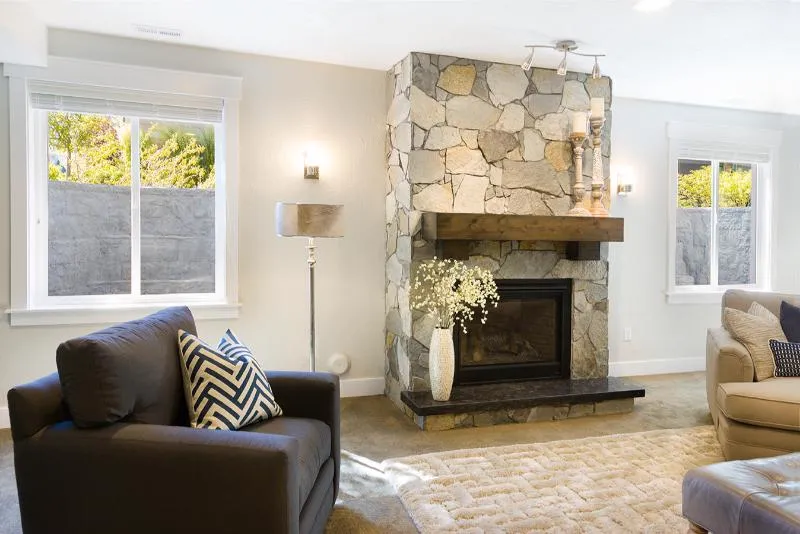
What we did was interior drainage on two walls, a new sump with battery backup, and an afternoon of outside corrections. No excavator, no lost landscaping, and the price landed well under the exterior quote they were holding. Two storm seasons later that basement is dry, and they finished it as a den.
That’s the feeling we’re really after. Not a pipe in a floor, but knowing you spent the right amount on the right fix. You keep the money you didn’t need to spend, and the next ugly forecast is just weather.
Why ask somebody local?
Because Dunwoody homeowners think long-term, and fairly so. You want to know the company will still be here in ten years to honor the warranty. We’ve worked across Metro Atlanta for over twenty years with the same crews, so if something needs attention in year six you’re calling us, not a call center three states away.
It also means we’ve likely worked a house shaped like yours. The block basements north of Perimeter Mall behave one way and the sloped lots behave another, and knowing that before we quote saves you money.
Still weighing the waterproofing options Dunwoody contractors have shown you? Our guide to the best basement waterproofing approaches goes deeper on system design, and the systems we install are laid out in full. If the damp is under the house instead of in it, crawl space encapsulation is usually the better call. Comparing notes with family across the river? We cover the same ground for Roswell waterproofing options. For a neutral second opinion, the EPA’s guide to moisture control is worth ten minutes.
Where we work around Dunwoody
We’re about thirty minutes up the road in Lawrenceville, so Dunwoody sits well inside our regular run. Along with Dunwoody, we work in Sandy Springs, Brookhaven, Peachtree Corners, Chamblee, Doraville and Norcross, plus Tucker, Duluth and the wider DeKalb area. If you’re over toward Dunwoody Village, we’re close by — and there’s often a truck nearby already.
Questions Dunwoody homeowners ask
Sometimes, but they’re really two jobs. Drainage handles the water, while a crack that’s actively moving needs its own repair first. Sealing a wall that’s still shifting only buys you a year, so we’ll tell you which situation you’re in during the inspection.
Neither is automatically better — it comes down to where water enters and what’s sitting on the soil outside. Interior drainage is less disruptive and fits most older Dunwoody block basements. Exterior work earns its price when water clearly stacks against one high side or the wall is being dug up anyway.
The drainage itself is built to last the life of the house, because it’s stone and pipe below the slab with nothing to wear out. The pump is the part with a service life. Plan on replacing one somewhere around the ten-year mark, the same way you’d plan for a water heater.
Yes, and you get it in writing before the work starts rather than after. Ask us to walk you through exactly what’s covered and for how long. A warranty nobody can explain in one sentence isn’t doing you much good.
Usually, yes. We need about four feet of clear working space along the affected walls, so some drywall or paneling comes off at the bottom and goes back after. It’s more careful work than an open basement, and we’ll show you exactly what has to move before you decide.
Let’s find out which option your Dunwoody home actually needs
The inspection is free, the estimate is free, and nobody pressures you afterward. We’ll show you where water is getting in, walk you through both options, and say honestly if the smaller fix is the right one.
(678) 914-5112Serving Dunwoody and all of Metro Atlanta · $500 off projects over $3,500 · Live support 7am–8pm, 7 days a week