

Encapsulation Cost Peachtree Corners: The Full Process, Step by Step
What the work involves, what moves the number, how long it takes, and where a roll of plastic stops being enough.
Somebody already tried. Under a lot of houses here, a roll of black plastic got unrolled across the dirt one Saturday, weighed down with bricks, and called done. Three years later the smell is back, the seams have curled, and the homeowner is looking up encapsulation cost Peachtree Corners numbers at midnight, wondering if that first try was money thrown away.
It wasn’t, honestly. Loose sheeting on dirt is simply a different product than a sealed system, and it’s worth knowing why before you spend anything else.
Why didn’t the plastic hold?
Because flat sheeting only covers part of the problem. Ground moisture rises all day, and loose plastic slows it in the middle while letting it walk around the edges. Meanwhile the open vents pull humid Georgia air in, so you’ve sealed the floor and left the doors wide open.
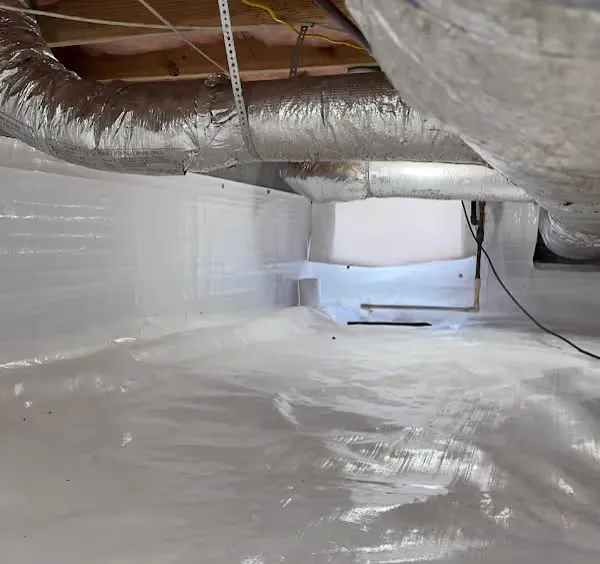
A true encapsulation works differently. The liner is reinforced, and it runs up the walls and around every pier, sealed and fastened instead of tucked. In other words, the crawl space becomes part of your house rather than a dirt basement with a tarp in it.
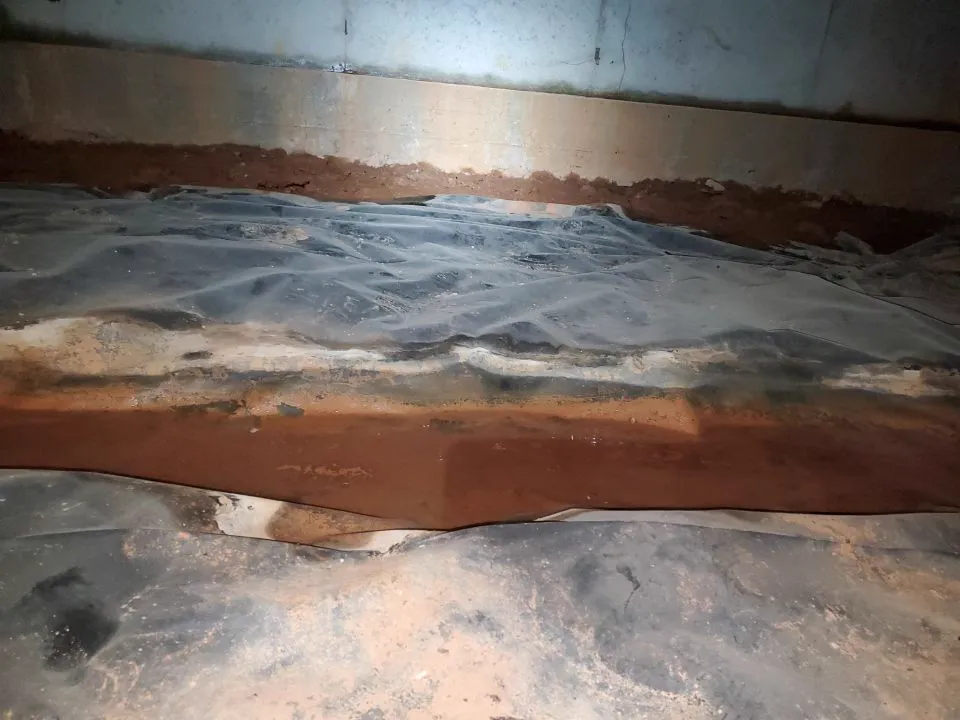
There’s a local wrinkle too. Most homes around Neely Farm and Historic Peachtree Corners went up before crawl space moisture was treated as a system at all. Many of these houses never had a real one — they had a coat of tar and good intentions.
Worth knowing
Damp air and standing water are two separate conversations. Plenty of crawl spaces need sealing only, no drainage at all. We’ll tell you which one you have before anybody talks money.
What does the job actually look like?
Every crawl space is different, but the order rarely changes. Here’s the honest sequence.
- Crawl it first. Somebody goes to the back corners, not three feet past the door. Headroom, moisture readings, pier condition and the wood above all get checked.
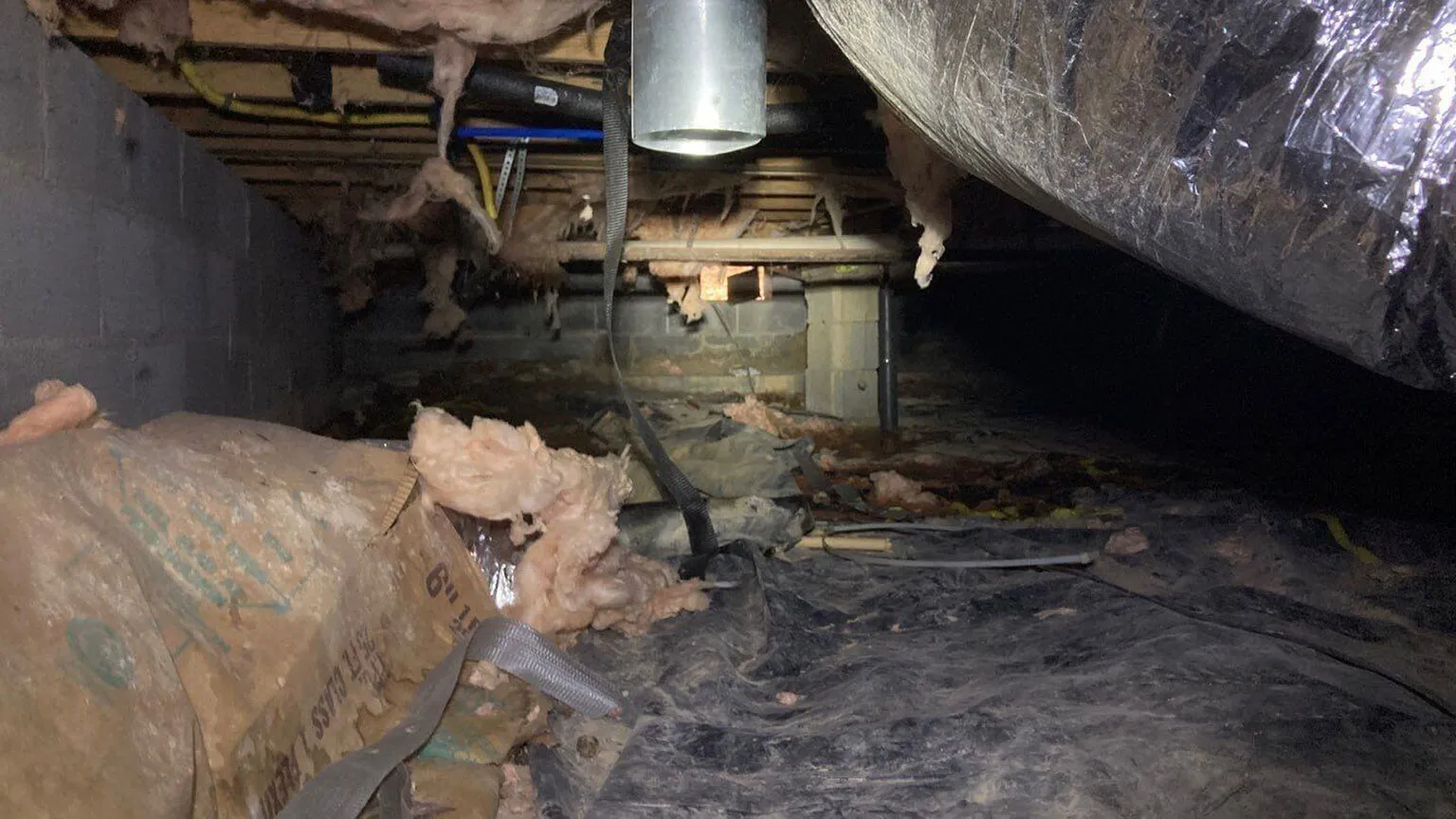
- Clear it out. Fallen insulation, torn sheeting and debris come out. This step surprises people, because it’s often the biggest chunk of labor.
- Handle the water. If the ground stays wet after rain, we set drainage in stone and route it to a sump basin. Dry crawl spaces skip this entirely.
- Grade and prep. Low spots get filled so the liner sits flat and nothing collects underneath.
- Seal the vents. Every foundation vent gets closed, since outside air is a main moisture source in our summers.
- Install the liner. Reinforced sheeting goes down, seams get taped, and the material runs up the stem walls and wraps each pier.
- Control the humidity. A sealed space still needs a way to stay dry, so a dehumidifier with a drain line usually goes in.
- Walk it with you. You get photos of the corners you’ll never crawl to, plus a plain explanation of what went in and why.
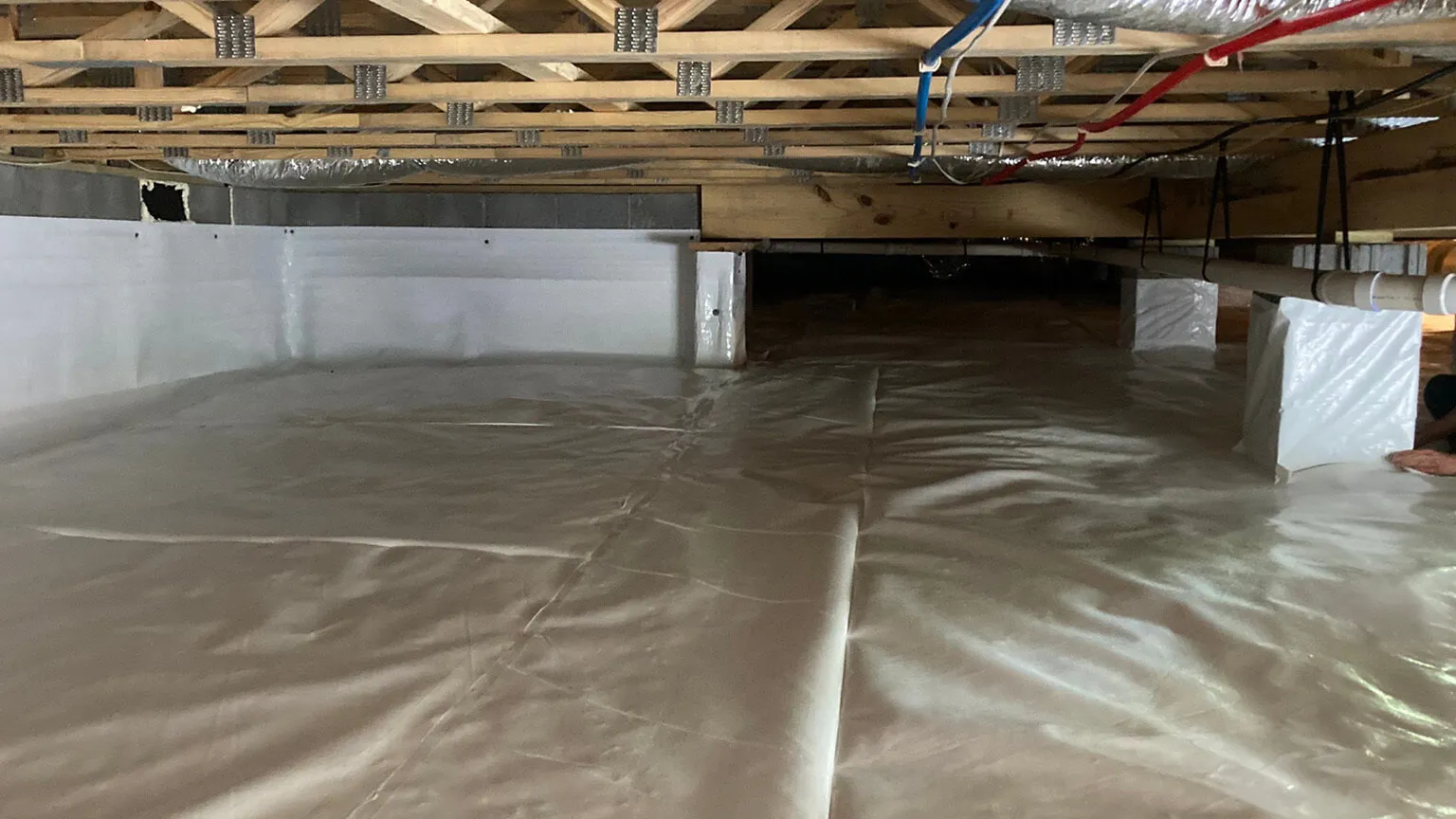
Timeline runs two to four working days for most homes here. Add a day when the cleanout is heavy, and another if drainage and a sump are in the scope.
Most guides stop right here, at the list of steps. That’s the easy half. The half that changes how your house feels is happening in the air above it.
So what’s the part nobody mentions?
Your crawl space is feeding your living room. Warm air rises and leaves through the upper floors, which pulls replacement air up from below. As a result, a real share of the air you breathe in the den started out down there. Contractors rarely bring this up, and it’s the best reason to do the job properly.
Once you know that, small mysteries make sense. That musty smell that shows up in July isn’t coming from the carpet. Cold floors in February, a sticky hallway, allergies that get worse indoors — all of it traces back down. Good news, though: this is very fixable.
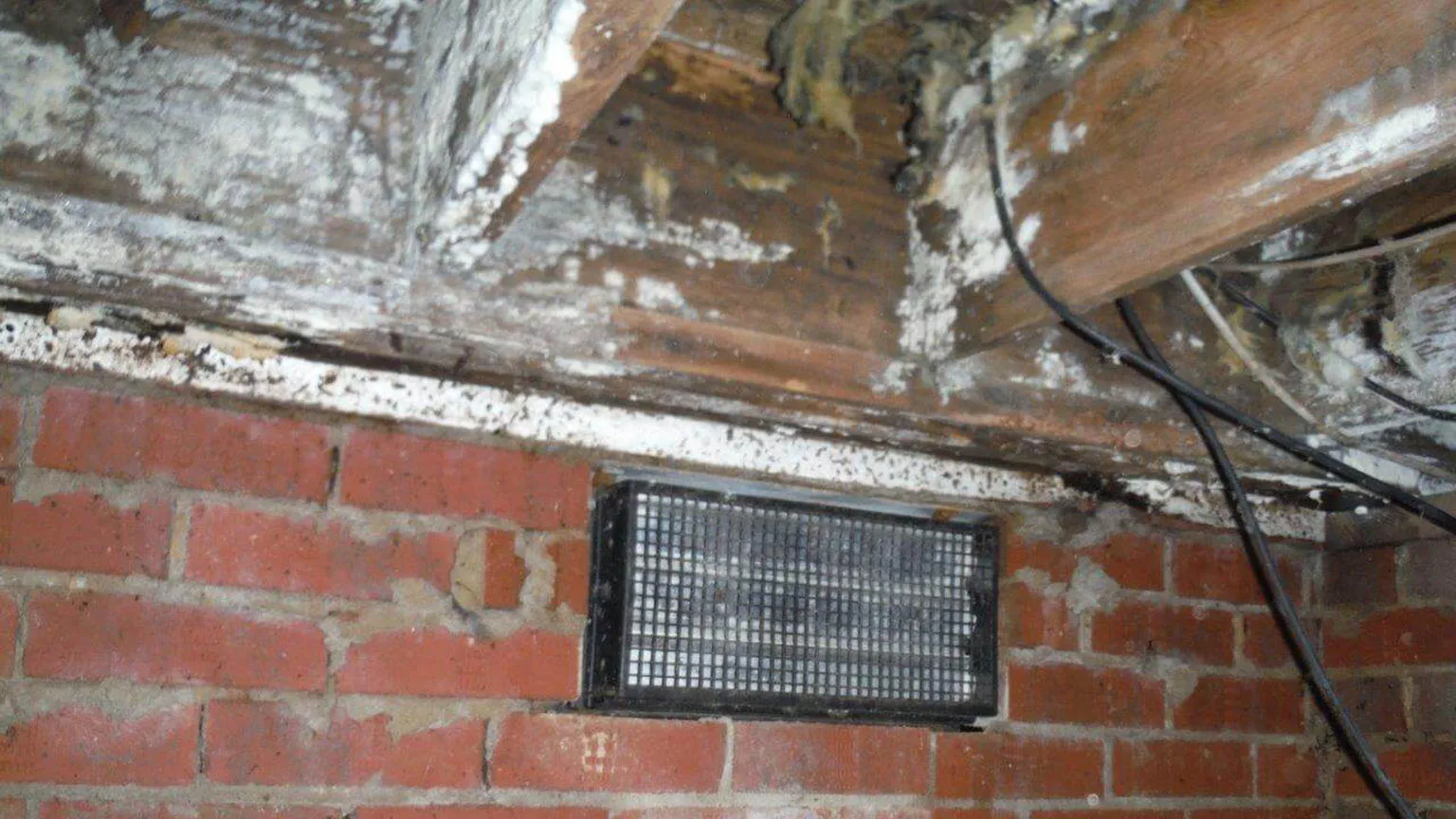
The health side is worth reading from someone who isn’t selling anything. Both the EPA’s page on mold and health and the CDC’s guide for homeowners say what we do: control the moisture and the rest largely takes care of itself.
There’s a resale angle too. Around here plenty of these jobs start with an inspection report and a closing date already on the calendar. Handling it before you list means you negotiate from a folder of photos instead of a repair credit.
What actually moves the number?
Straight answer: square footage and how hard the space is to work in. Anyone quoting a flat price over the phone is guessing, because a 24-inch crawl and a four-foot crawl are two different jobs under the same floor plan.
Price drivers, biggest first
- Square footage. More ground means more liner, more tape and more hours. This is the largest single swing.
- Headroom and access. Tight crawls slow everything down, and a small hatch behind a shrub means materials come in one armload at a time.
- Cleanout volume. Old insulation and debris have to come out first. On original 1970s homes that’s often heavier than people expect.
- Standing water. If the ground stays wet, drainage and a sump get added — the line item that makes the rest last.
- Number of piers. Each one gets wrapped by hand. Ten piers and thirty piers are not the same afternoon.
- Dehumidifier. Sizing depends on the space, and the drain has to go somewhere sensible.
Small, dry, walkable crawl spaces land at the low end. A large space with a heavy cleanout, drainage and a dehumidifier sits at the top, and most encapsulation cost Peachtree Corners jobs land between. After we walk the house you get a written number with the scope spelled out line by line.
Want to compare before you call anyone? Our guide to crawlspace repair covers sagging joists and failing piers, while the crawl space repair service page shows what we install. If your lower level also takes on water, read the flooded basement guide. Curious how pricing shifts one town over? The Dunwoody encapsulation cost breakdown covers similar housing stock.
What can you honestly do yourself?
More than you’d think, and we won’t pretend otherwise. Some of the driest crawl spaces we’ve seen got that way because a homeowner fixed the yard first. Here’s where your weekend genuinely pays off.
Real DIY wins
- Move the downspouts out. Six to ten feet away beats a splash block every time.
- Slope the dirt away. Pull beds and mulch back so water runs off instead of in.
- Clean gutters twice each fall. The canopy over Wellington Lake buries a gutter fast, and a clogged one dumps at the footing.
- Add a humidity gauge. A cheap one, read monthly. That log is worth more to us than any photo.
Now the other side, said with respect. Sealing a liner to walls and piers is hot, upside-down work, and a seam that peels in month four looks identical to a good one on install day. Drainage is the same story — depth is everything, and depth is invisible once the liner goes down.
Preparation on your end is light, thankfully. Clear a path to the access door, move anything stored at the opening, and plan on a truck in the driveway for a day or two. That’s the whole list.
What should you do every year afterward?
Here’s where most articles quit, and it’s the part that decides whether this lasts twenty years. A sealed crawl space is low maintenance, not no maintenance. Better yet, the routine takes about fifteen minutes a year.
Your once-a-year check
- Read the humidity. Steady is what you want. A slow climb usually means a dirty filter.
- Rinse that filter. Five minutes at the utility sink, and the unit works easier all year.
- Check the drain line. Pour a little water in and confirm it goes where it should.
- Test the sump, if you have one. Fill the basin until the float lifts, then watch it cycle off.
- Look at the liner near the door. That’s the one spot foot traffic scuffs. Tape is a cheap fix.
- Walk outside after a hard rain. Gutters, downspouts, grade. Same three things, every time.
Do that and the payoff is quiet. Floors stop feeling clammy in August, closets smell like nothing at all, and storage under the house becomes storage again. A homeowner near Town Center at Peachtree Corners told us the real change was that she stopped listening to the rain.
How do you know it was done right?
Ask for four things, and any honest crew hands them over without blinking. First, photos of the far corners and every pier wrap. Second, proof the vents were sealed, not just covered. Third, a written warranty short enough to read in one sitting. Fourth, a plain answer to why your space got drainage or why it didn’t.
One more tell: a good estimate explains what it excludes. We’ve worked under houses near Curiosity Lab and just off Holcomb Bridge Road, and no two scopes matched. Still, the reasoning should be something you can repeat over dinner.
Where we work around Peachtree Corners
We’re based in Lawrenceville, roughly twenty minutes northeast, so we’re in this corner of Gwinnett constantly. That includes Peachtree Corners, Norcross, Duluth, Johns Creek, Dunwoody, Berkeley Lake, Sandy Springs, Suwanee, Alpharetta and Lilburn. Whether your house sits on the Chattahoochee bluffs or a flat original street, we know these foundations.
Questions Peachtree Corners homeowners ask us
It means sealing the crawl space off from the wet ground and the outside air. A reinforced liner covers the dirt and runs up the walls and around the piers, and the vents get closed. After that, the space behaves like part of the house instead of the yard.
It depends mostly on square footage, headroom, how much old material comes out, and whether standing water means drainage and a sump are needed. A small dry crawl space is a modest job, while a large wet one is a much bigger one. We give you a written number after we’ve been under the house, and the inspection is free.
Usually yes, because sealing stops new moisture but doesn’t remove what’s already there. A properly sized unit with a drain line keeps humidity steady year round. Some tight, dry crawl spaces do fine without one, and we’ll say so rather than sell you a machine.
Closed and sealed, in our climate. Open vents were meant to dry the space out, but Georgia summer air is often more humid than the crawl space itself. Sealing them only works as part of a full system, though — closing vents over bare dirt makes things worse.
In most homes, yes, and often within the first couple of weeks. Air moves up from the crawl space, so cutting moisture at the source cuts the smell that rides along with it. If an odor lingers after the humidity settles, that points to a second source and we’ll help track it down.
Let’s find out what your Peachtree Corners crawl space actually needs
We’ll go all the way to the back corners, show you photos of what’s down there, and explain the fix in plain language. Inspection and estimate are both free, and nobody pressures you afterward.
(678) 914-5112Serving Peachtree Corners and all of Metro Atlanta · $500 off projects over $3,500 · Live support 7am–8pm, 7 days a week