

How to Choose the Best Basement Drainage Duluth Homeowners Actually Stay Dry With
What to ask, how to read a scope of work, and how to tell a real diagnosis from a sales pitch.
Picture two houses on the same street off Sugarloaf Parkway. Same builder, same year, same floor plan, same red clay under both. After a long March rain, one basement is bone dry and the other has a wet line creeping across the slab. Nothing about the houses explains it — but the ground around them does, and that’s really the whole story behind the best basement drainage Duluth homeowners can buy.
Good news? Once you know what makes the dry house dry, comparing companies gets easy. You stop shopping on price and start shopping on the plan.
So why does one house stay dry?
Usually it comes down to three small things nobody notices. The dry house has downspouts that carry roof water well past the foundation, a yard that slopes away from the wall, and a drain line under the slab that still moves water instead of holding it.
The wet house lost one of those three, often years ago. A downspout elbow cracked, or a flowerbed got built up an inch too high, or the original 1990s drain silted shut. Water is patient. It doesn’t need a dramatic failure — just one open door.
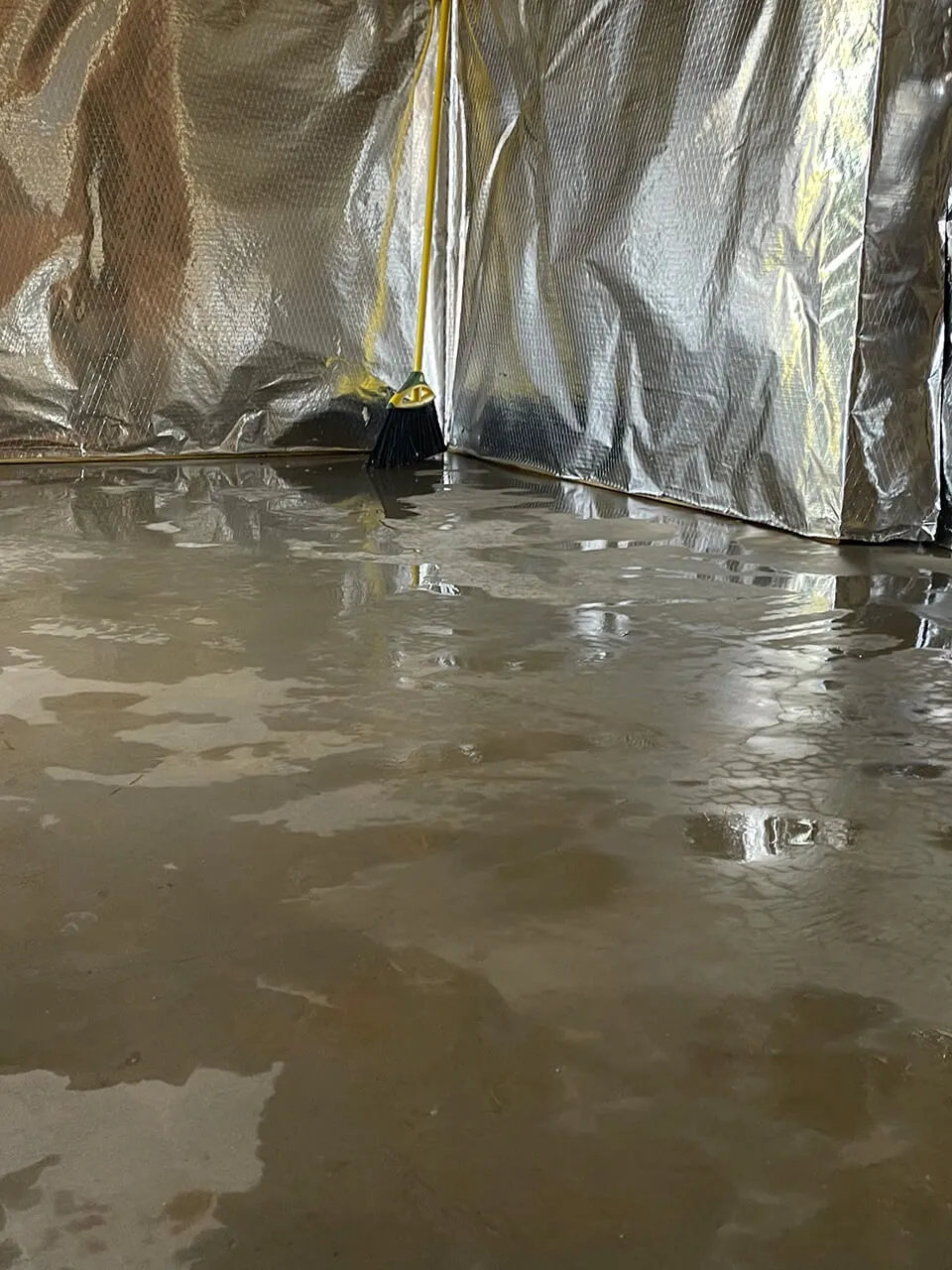
Here’s the encouraging part: doors can be closed. Drainage is the permanent half of a wet basement, because it deals with where the water goes rather than what the wall looks like.
What makes Duluth homes different?
Start with the dirt. Georgia red clay doesn’t drain, it holds — so after two days of rain, the soil packed against your foundation acts like a wet sponge leaning on the wall. That pressure has to go somewhere.
Then add the terrain. The Chattahoochee wraps the north and west edge of town, which gives us rolling lots, walkout basements, and pockets of sandy river-bottom soil where groundwater sits high. Homes along the Berkeley Lake edge deal with that regularly.
Timing matters too. Most of Duluth went up between about 1985 and 2005, so a whole city’s worth of original drainage hit middle age together. Those 1990s subdivision systems didn’t break — they silted up, one storm’s worth of sediment at a time. Your basement didn’t do anything wrong. It just turned thirty.
The local part that matters
Duluth basements are working basements — in-law suites, home offices, kids’ spaces. When one gets damp here, it’s not storage getting wet. It’s somebody’s bedroom. That’s why we treat the diagnosis so seriously.
Downtown is its own animal. The historic core near the Town Green and the Southeastern Railway Museum has older homes on crawl spaces, while the Downtown Duluth townhomes and the Parsons Alley district sit tight together with shared grading. Same city, three different water problems.
What are the actual drainage options?
There are three real routes, and a good company will tell you which one your house needs and why. First is an interior perimeter drain — a channel cut along the inside base of the wall, below slab level, feeding a sump pump that sends water out and away.
Second is an exterior footing drain, dug down alongside the foundation. It stops water before it touches the wall, so it’s excellent work — but a deck, a patio, or mature landscaping changes the math fast.
Third is the yard itself: regrading soil away from the house and extending downspouts far enough to matter. Not glamorous, and the cheapest of the three — yet in Duluth’s clay it fixes more basements than people believe. Sometimes the best answer costs less than you were bracing for.
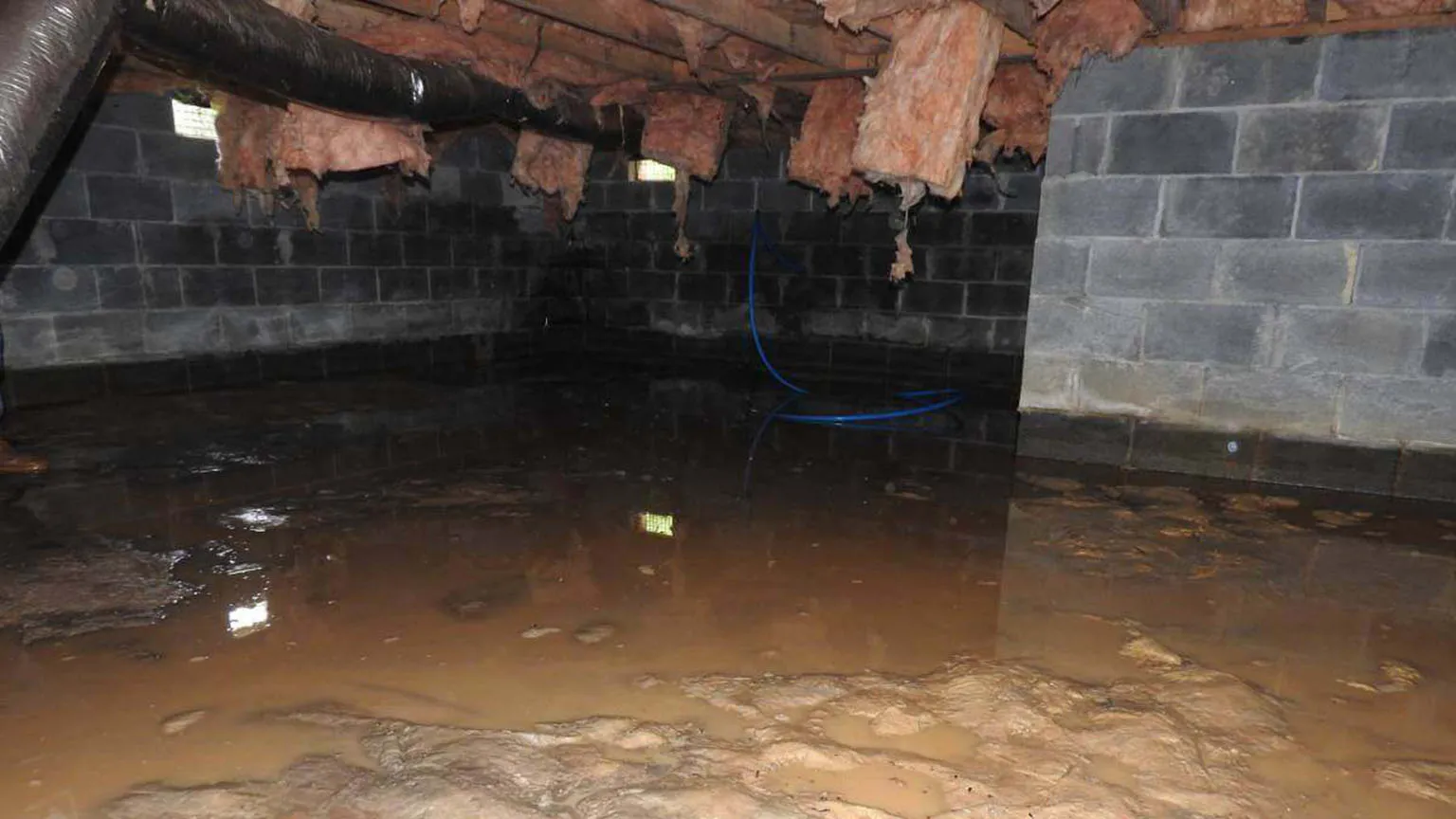
One note on coatings, since they come up in every comparison. Waterproof paint looks like progress on day one, but it doesn’t move water anywhere — and moving water is the entire job.
Now here’s a detail that sounds small and absolutely isn’t
Ask any crew where the cove joint is. That’s the seam where your basement wall meets the floor — a hairline gap left over from how the house was poured. Under pressure from saturated clay, water takes the path of least resistance, and that seam is it.
Which means the water on your floor usually didn’t come through the wall at all. It came up and in at the corner, right where nobody’s looking. That’s also why sealing a wall so often disappoints people: the seal is nowhere near the leak.
An interior perimeter drain relieves exactly that seam. It gives water an easier place to go than your slab, collects it below floor level, and hands it to the pump. Simple idea — and it’s why a good interior system holds up through a storm that used to ruin a weekend.
If a company can’t tell you where the water enters, they can’t tell you what it costs to stop.
While we’re on the pump — sump pumps fail in predictable ways, so ask about all of them. Power goes out mid-storm. Floats get stuck. The unit was undersized from day one. There’s no check valve, so water drains back down the pipe. Or the discharge clogs where it exits. A battery backup is a fair thing to ask for, and an honest crew will explain the trade-off instead of dodging it.
How do you read a drainage estimate?
Line by line, out loud if it helps. A real scope names the system, the linear feet, the depth, where the discharge ends, and what happens to the concrete afterward. A weak one says “drainage system” and gives a total. Duluth folks compare carefully, which we like, because specifics are how we win jobs.
Questions worth asking before you sign anything
- Where is the water getting in, and how do you know? A confident answer includes something they saw outside.
- Why this route instead of the cheaper one? They should be able to explain the choice in one sentence.
- How many linear feet, and why that section? Vague coverage always means a vague price.
- Does the channel sit below the slab? Below floor level is a system. At floor level is a gutter.
- Where does the discharge end up? Well away from the house — never back beside the foundation.
- What’s the pump’s backup plan? Battery backup, check valve, and a discharge you can inspect.
- Is the warranty transferable, and what voids it? Ask for it on paper, not out loud.
Red flags get easy after that. Watch for a firm price quoted over the phone before anyone has seen the house, or a discount that expires today, since real pricing doesn’t need a countdown. Also pause if the inspection never left the basement, if there are no measurements anywhere, or if every house on the block somehow needs the identical system.
Worth knowing before you compare bids: standard homeowners insurance typically excludes groundwater seepage, and sump pump failure coverage is usually a separate rider you add on purpose. So call your agent and ask. Better to learn that on a calm Tuesday.
On cost, we’ll be straight with you. Grading and downspout corrections land at the low end, while a full perimeter system with a new sump and battery backup in a finished basement sits at the high end. Linear feet, access and finished space move the number — and you get one written figure after we walk it, never a “starting at.”
The house that wasn’t what they thought
Want the inspection nobody saw coming? A homeowner near the Berkeley Lake edge called us certain the foundation was failing. There was water along one wall after every heavy rain, a hairline crack nearby, and two estimates for major structural work already sitting on the counter.
Then we walked the yard. A buried downspout line had collapsed at the elbow years earlier, so every storm quietly pushed roof water into the soil beside that corner. Meanwhile the original pump had been losing the race for a long time. The crack wasn’t the cause. It was just the only part anybody could see.
So the real fix came in smaller than both structural bids: repair the buried line, correct the grade, replace the pump with a backup, and run drainage along one wall instead of four. That’s the whole argument for source-first inspections — we’re after the right-sized job, not the biggest one.

Picture the after. A hard spring storm rolls through and the floor stays dry, the musty smell at the bottom of the stairs is gone, and the downstairs guest room is a guest room again. Better yet, you spent what the problem actually cost.
You don’t have to take our word for any of it, either. The CDC’s guidance on mold cleanup after a flood is a ten-minute read, and the National Weather Service flood safety pages explain how fast ground can saturate. Read both first, and you’ll know whether the person in your basement is explaining or performing.
Why we might be a good fit
We’re fifteen minutes away in Lawrenceville, and we’ve been at this over twenty years. Familiar housing stock means faster, better diagnoses — we know what the mid-90s subdivisions used, and how differently water behaves for the Downtown Duluth townhomes a few blocks from the Town Green.

Still figuring out what’s happening down there? Our guide to flooded basement repair covers the cleanup side step by step, and basement waterproofing lays out the systems we install in full detail. If cracks or settling are the bigger worry, start with foundation repair instead. Comparing notes with family one town north? We cover the same ground for Suwanee best basement drainage.
Where we work around Duluth
We’re in this area constantly, from the streets near McDaniel Farm Park to the river-side lots on the west edge of town. Beyond Duluth, we work in Johns Creek, Suwanee, Berkeley Lake, Peachtree Corners, Norcross, Lawrenceville, Sugar Hill, Buford and Snellville, plus the wider Gwinnett area. Odds are we already have a truck near you.
Questions Duluth homeowners ask us
Usually not, at least not the groundwater part. Standard policies typically exclude seepage that comes up through the soil, and sump pump failure coverage is normally a separate rider you add on purpose. Call your agent and ask which one you have, because it’s a five-minute question with a big answer.
Quickly — the first day or two is what matters most. Move what you can, get air moving, and run a dehumidifier if you have one. After that, the real goal is stopping the water from coming back, since drying the same room twice a year gets old fast.
Because of the cove joint, the seam where the wall meets the slab. Saturated clay pushes water toward the easiest opening, and that seam is easier than solid concrete. An interior perimeter drain relieves that exact spot, which is why it works when wall sealing doesn’t.
Yes, as long as the fix matches the entry point. Drainage handles water permanently because it controls where the water goes, rather than hiding where it lands. Plan on simple upkeep too — clean gutters, a clear discharge line, and a pump test once or twice a year.
It depends on the route the water takes. Regrading and downspout work sits at the low end, while a full interior perimeter system with a new sump and battery backup in a finished basement sits at the high end. Linear feet, access and finished space move the number, and you get one written figure with the scope spelled out.
Let’s find out where the water is really getting into your Duluth basement
The inspection is free, the estimate is free, and nobody pressures you at the end. We’ll show you the entry point, explain why we’d pick one drainage route over another, and tell you plainly when the answer is smaller than you expected.
(678) 914-5112Serving Duluth and all of Metro Atlanta · $500 off projects over $3,500 · Live support 7am–8pm, 7 days a week