

Foundation Repair Duluth Homeowners Can Plan For: Costs, Steps and Warranties
Two identical houses. One door that sticks. Here’s what separates them, and what fixing it really takes.
Two houses on the same street. Same builder, same year, same floor plan flipped. One of them has doors that shut clean and floors that feel flat under your socks. The other has an upstairs bedroom door that sticks every August, plus a thin crack climbing away from its corner. Same weather, same blueprint — so what’s different? The dirt. And that’s where foundation repair Duluth homeowners call us about almost always begins.
Good news right up front: this is measurable, it’s fixable, and it’s work we’ve done across Gwinnett for more than twenty years. By the bottom of this page you’ll know what the job involves, what moves the number, and what a fair written estimate looks like.
So what is foundation repair, in plain words?
It’s two jobs wearing one name. First, we get the weight of your house back onto soil that will actually hold it. Then we stop that soil from swinging back and forth underneath the footing. Skip the second half and you’ve bought yourself a very expensive pause.
Here’s the part almost nobody explains. Georgia red clay is what engineers call expansive, which is a polite way of saying it can’t sit still. It soaks up a wet spring and puffs up. Then a dry August pulls that water back out and it shrinks. Up, down, up, down, season after season, right under the edge of your foundation. Do that for twenty-five years and one corner eventually settles a bit farther than the rest.

Which means most settlement around metro Atlanta isn’t somebody’s mistake. Nobody cut a corner in 1997. The ground simply behaves like ground, and a house is a very heavy thing sitting on top of it.
Worth saying plainly
Not every crack is a problem, and not every problem is urgent. Plenty of the homes we look at need sealing and better drainage, nothing more. We’ll tell you that before anyone talks about piers.
How do you tell a serious crack from a boring one?
By its shape and direction, mostly. Concrete tells on itself if you know the handwriting. Here’s the short version we use on every inspection:
- Thin vertical cracks in a poured wall. Usually just curing shrinkage from the week the wall was poured. Common, and rarely about movement.
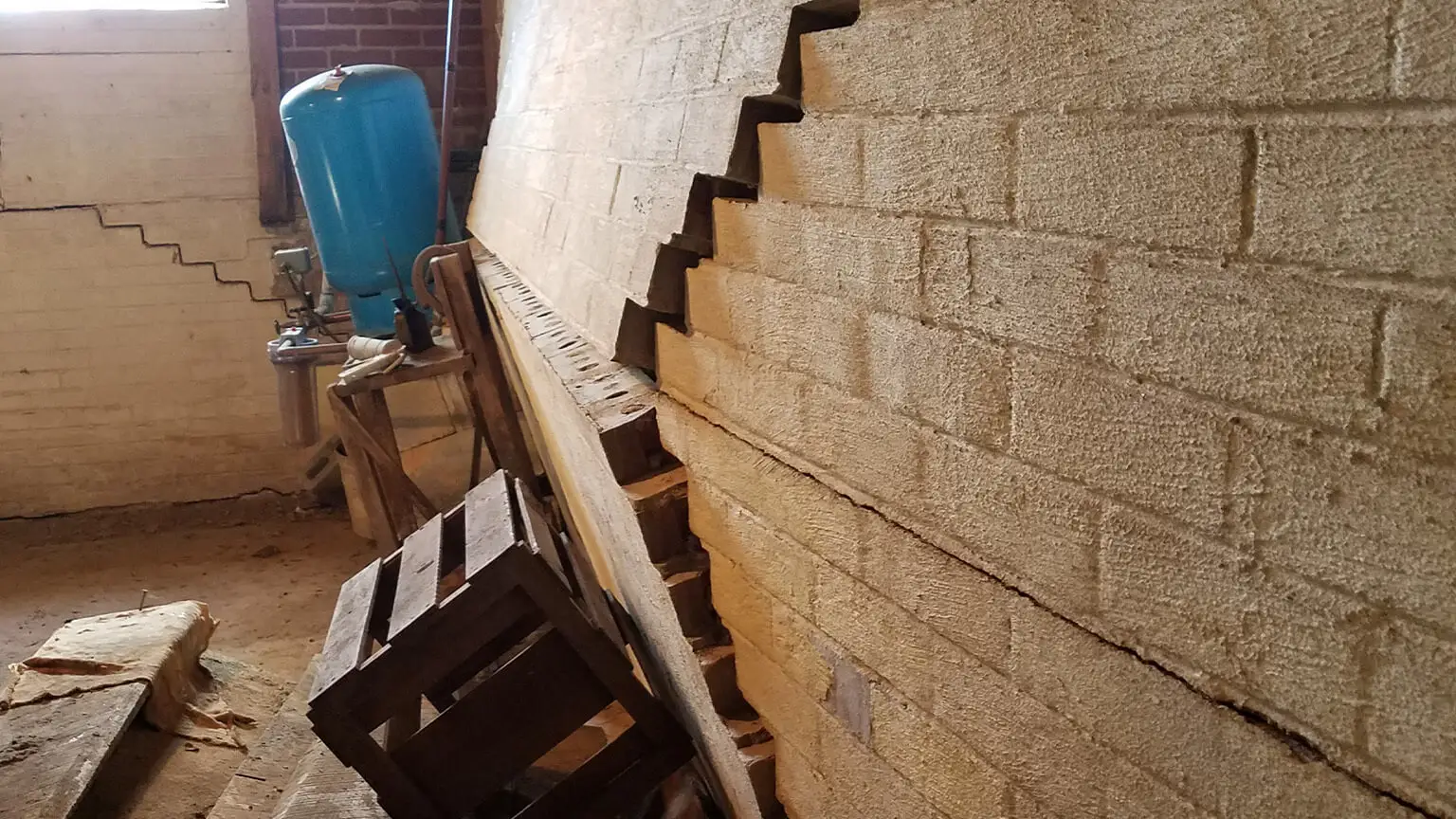
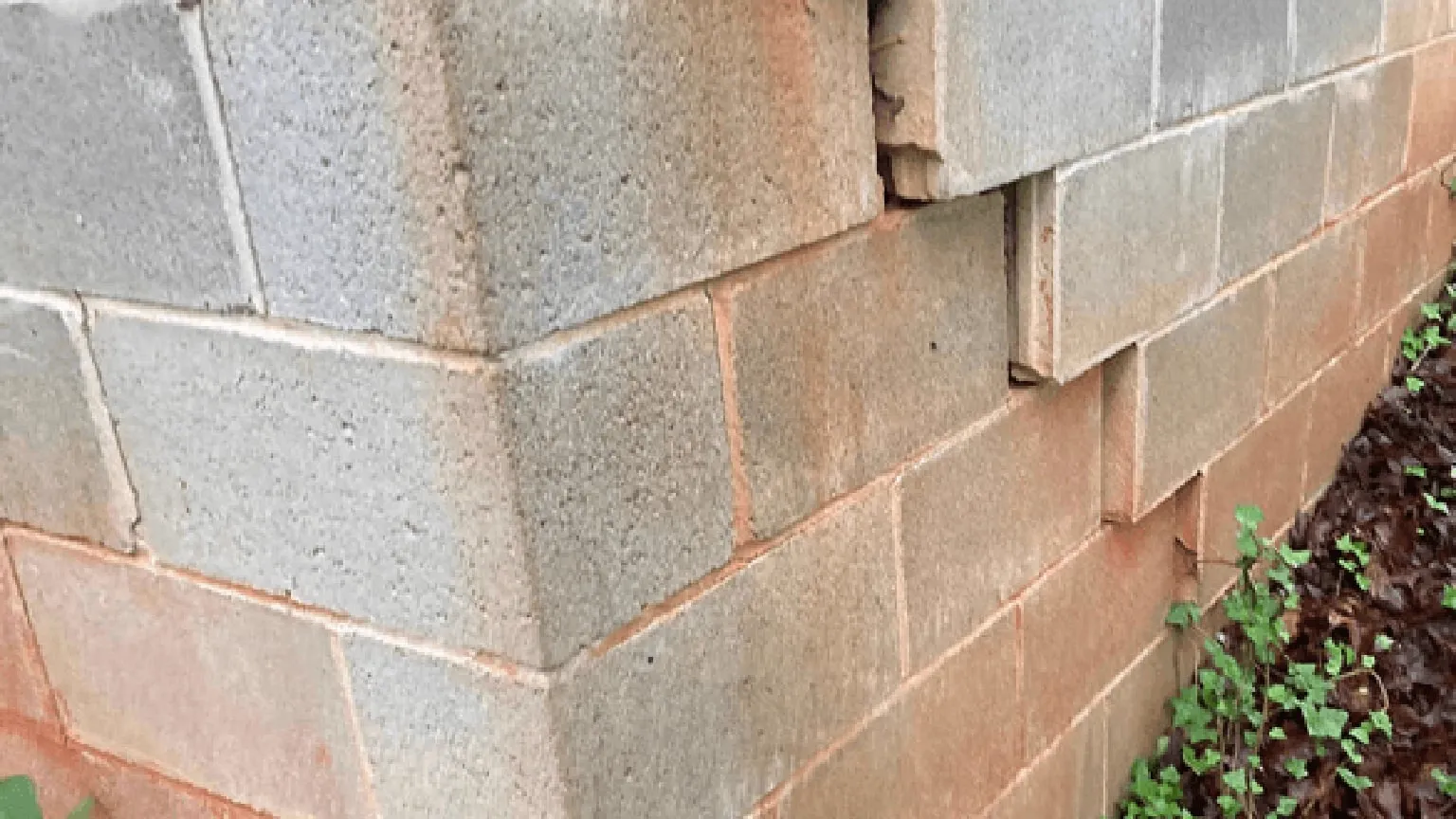
- Stair-step cracks following the mortar joints in block or brick. These point toward one part of the house settling more than another.
- A horizontal crack across a block wall. Different animal entirely — that’s soil pressure pushing sideways, not the house dropping.
- Diagonal cracks off window and door corners. Openings concentrate stress, so corners crack first when a frame goes slightly out of square.
And honestly, most people never notice a crack first. What they notice is a door. Doors and windows that suddenly stick, or a widening gap at the top of a door frame, are usually the earliest real symptom. After that come sloped floors, nail pops in the ceiling, and brick veneer starting to separate at a corner. If you’ve been sliding a shim under a rocking chair leg, your house has been talking to you.
Then there’s the test that costs nothing. Mark both ends of a crack with a pencil, write the date beside it, and measure the width. Check it again in three months, and again in six. A crack that hasn’t budged is dormant, so sealing may be the entire job. One that keeps opening is active, and active is what piers are for. That single habit has saved our customers more money than any coupon we’ve ever run.
Here’s the thing about Duluth houses specifically
Why does this city keep us so busy? Timing, mostly. Duluth went up in one long building wave, roughly 1985 through 2005, on rolling terrain that drops toward the river. That produced thousands of walkout and daylight basements cut into slopes — and a slope means fill dirt on the low side, which never compacts quite like undisturbed ground.
Soil changes fast here, too. The Chattahoochee wraps the northern and western edge, so lots out toward Rogers Bridge Park can hide sandy river-bottom pockets, while a lot a mile inland is straight red clay. We’ve seen both under a single house. If you’re curious what’s actually beneath your address, the USDA Web Soil Survey will map it for free in about ten minutes.
The other Duluth wrinkle is what’s inside those basements. Over in Rivermoore Park and Chattahoochee Run, and out through the golf-course streets, basements aren’t storage. They’re in-law suites, home offices, kids’ hangouts, guest rooms with real furniture. When the ground shifts under a finished space like that, you’re not looking at a cracked slab in an empty room. You’re looking at somebody’s bedroom.
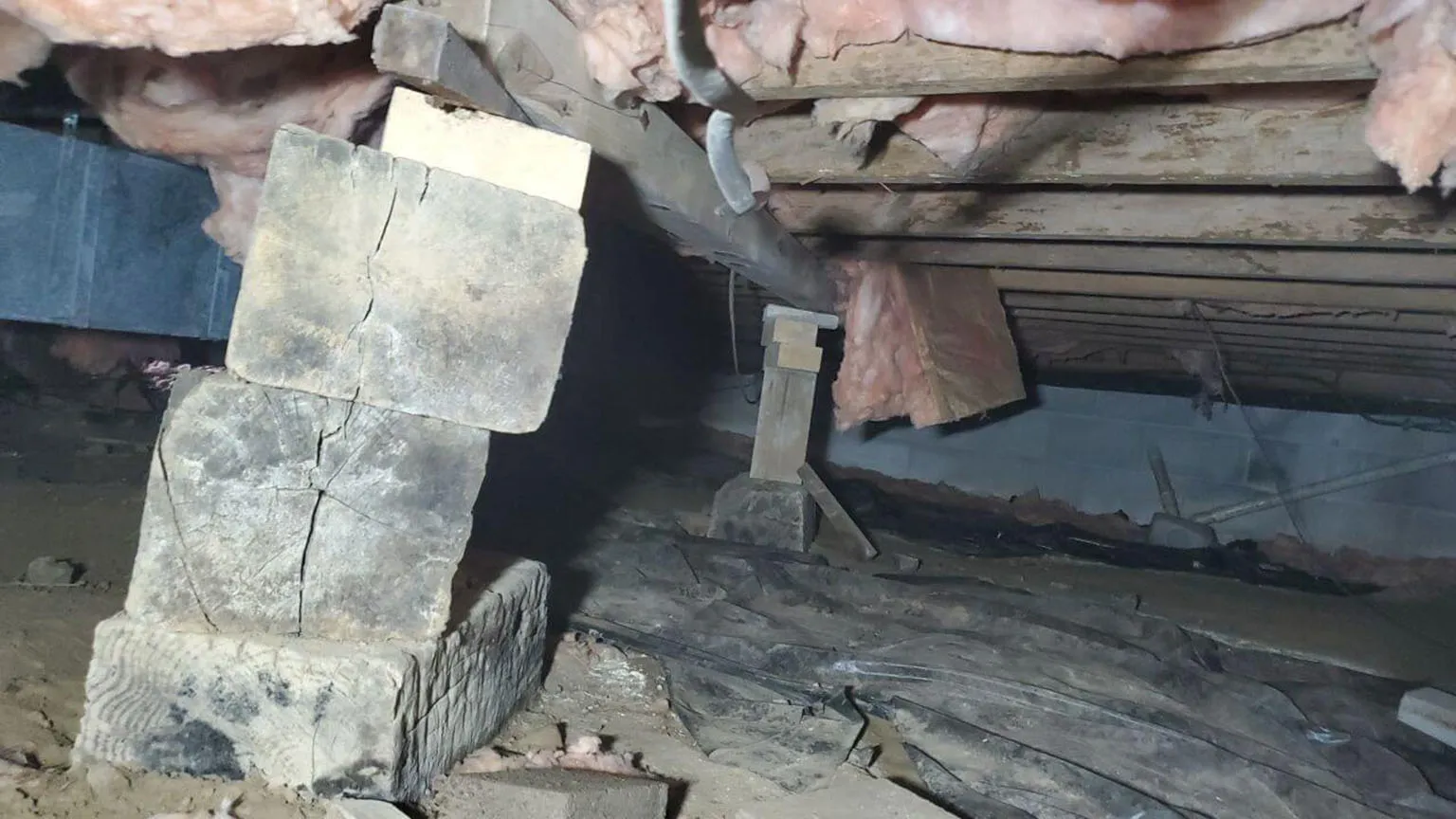
Older pockets have their own story. Around Howell Farms and the streets closer to McDaniel Farm Park and Pleasant Hill Road, we run into crawl spaces with original piers, thin footings, and drainage that silted up two decades ago. Same clay, different house, slightly different fix.
What does a real job look like, start to finish?
Most foundation repair Duluth projects follow the same shape, so you can picture the whole thing before a truck ever parks in your driveway:
- We diagnose before we price. Crack patterns inside and out, floor elevations, door frames, grading, downspouts. If it looks dormant, we’ll suggest watching it for a season instead of selling you something.
- We map the load. Pier spacing depends on what each section of wall carries. On bigger or complicated homes, a structural engineer gets involved — and we’d rather have one than not.
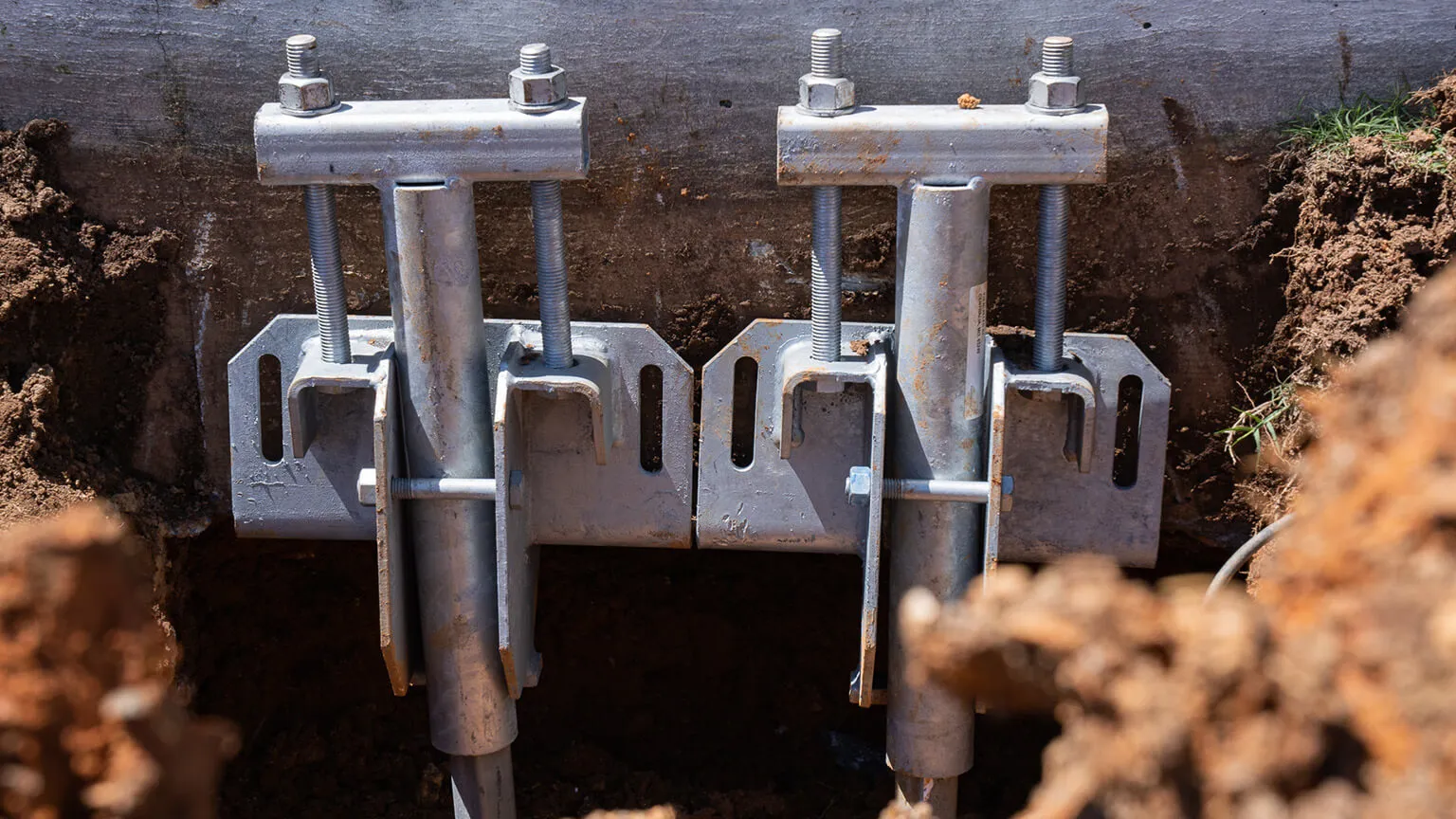
- We reach solid ground. Helical piers are screwed down to load-bearing soil and work well for lighter loads. Push piers use the weight of your house to drive steel down to refusal, which suits heavier masonry homes. Slabs and driveways sometimes just need polyurethane foam lifting instead.
- We stabilize, then decide about lift. Brackets transfer weight to the piers. Lifting is a separate conversation, and we’ll get to it in a second.
- We fix the water side. Grading, downspout extensions, drainage. Stable soil moisture is what keeps the clay from cycling again.
- We close up and clean up. Backfill, tamp, rake, haul everything out. Your yard shouldn’t look like a job site the week after.
Now, about lifting. Stabilizing means the movement stops — that’s the actual goal, and it’s what a warranty covers. Lifting attempts to bring the house back toward level, which is satisfying when it works. But it can’t always be done, and pushing too hard can open fresh cracks in drywall and brick. So we tell you honestly which parts we expect to recover and which we don’t. That conversation happens before you sign, never during the work.
What moves the price up or down?
Anybody who quotes a foundation over the phone is guessing, and you’d be paying for that guess. Real numbers come from the walk-through. Still, here’s exactly what we’re adding up while we’re out there:
The six things that set your number
- How many piers. Biggest factor by far. One settling corner is a different project than a whole rear wall.
- How deep we have to go. Competent soil might be twelve feet down on one lot and much deeper on a filled slope. Depth is steel, and steel is cost.
- Access. An open side yard is easy. A pier under a deck, a patio, or a tight zero-lot-line gap means hand work before the real work.
- Whether we attempt a lift. Stabilizing alone costs less. Lifting takes more time, more monitoring, and more care.
- Engineer involvement. Some homes need a design and a letter. That adds cost, and on a big house it’s money well spent.
- Drainage work. Often the smallest line item on the estimate and the one that protects everything above it.
In practice, a few piers on one accessible corner sits at the low end. A long run of deep piers on a filled slope, with a lift attempt and an engineer’s stamp, sits at the high end. Most of the foundation repair Duluth homeowners actually need lands somewhere between those two. Because of that spread, we hand you a written scope with pier count, depth target, and locations spelled out. Compare that line by line against any other bid.
What’s included: engineering coordination when it’s needed, piers and brackets, installation, backfill, cleanup and the warranty. What isn’t: drywall patching, repainting, replacing cracked tile, and landscape restoration beyond backfilling and raking. Better you know that now than find it in the fine print later.
What does the ground have to do with the air upstairs?
More than most people expect. Air in a house doesn’t sit still — it rises. Warm air escapes out the top, and replacement air gets pulled up from the lowest, dampest part of the building. That means a good share of what you breathe in your bedroom started its trip in the crawl space or basement.
So a foundation crack is rarely only a structure question. Open seams let humid soil air in, humidity climbs, and suddenly the finished basement smells like a basement no matter how many candles you light. In a multi-generational home — and Duluth has plenty — that’s the room where a parent or an adult kid sleeps. Sealing the structure and drying the soil around it usually clears the smell without anyone touching the HVAC.
That’s also why we treat drainage as part of the repair instead of an upsell. Stable moisture means stable clay, and stable clay means the piers never get tested again. Building codes exist for the same reason; if you like reading the why behind the how, the International Code Council publishes plain-language building safety resources.
What should the warranty actually say?
Ask one question and you’ll learn everything: what exactly is covered? There’s a real difference between a warranty on the pier itself, a warranty against further settlement at the repaired locations, and a warranty on a sealed crack. All three are legitimate. However, they are not the same promise, and the paperwork should make that obvious in a sentence.
Then ask whether it transfers when you sell. A transferable warranty turns an awkward disclosure into a selling point, since the buyer’s inspector sees documented work backed by a company that’s still around. Ours is written before we start, not handed over after.
Why does hiring local matter for this one?
Because a warranty is only as good as the phone number attached to it. Our shop is about fifteen minutes down the road in Lawrenceville, and the same crews have been working these subdivisions for two decades. If something needs a look in year seven, you’re calling the people who put the steel in the ground.
Local also means we know the housing stock street by street. Not sure yet whether you’re seeing real movement? Our guide to foundation settling walks through the early signs, and if it turns out to be a single crack, foundation crack repair may be the whole answer. Every method we install is laid out on our foundation repair service page. Comparing notes with family up the road? We cover the same ground for Suwanee foundation repair.
Where we work around Duluth
We’re based in Lawrenceville, so Duluth is a quick run for our trucks. We also work throughout Johns Creek, Suwanee, Berkeley Lake, Peachtree Corners, Norcross, Sugar Hill and Buford, plus the wider Gwinnett County area. If you’re anywhere off Pleasant Hill Road or over toward downtown Duluth, odds are good we’ve already been under a house near yours.
Questions Duluth homeowners ask us
Usually the opposite. Buyers and inspectors get nervous about movement nobody addressed, but documented repair with a transferable warranty answers the question for them. Keep the engineer’s report and the paperwork in a folder — that folder does a lot of work at closing.
Most pier projects run two to five days on site. Deeper soil, tight access or a lift attempt can stretch that, and we’ll give you a day count in writing beforehand. You stay in the house the whole time.
Sometimes, yes. If two separate areas are moving independently, we can stabilize the active one now and watch the other. But one continuous settling wall shouldn’t be split, since supporting half of it just moves the stress next door.
Yes, and you’ll have it in hand before work starts. Ask us to point at exactly what it covers — the pier, further settlement at those locations, or a sealed crack — plus whether it transfers when you sell. If a warranty can’t be explained in one sentence, keep asking.
Less than people picture. We dig at each pier location, not along the whole house, then backfill, tamp and rake when we’re done. Shrubs right against the foundation may need to be moved, so tell us which ones you’re attached to.
Let’s find out what’s really moving under your Duluth home
The inspection is free, the estimate is free, and nobody pressures you at the end. We’ll show you what we see, explain what it means, and tell you plainly if watching it another season is the smarter call.
(678) 914-5112Serving Duluth and all of Metro Atlanta · $500 off projects over $3,500 · Live support 7am–8pm, 7 days a week