

How to Choose the Best Basement Drainage Suwanee Homeowners Can Count On
Where the water really comes from, how to read a drainage scope, and the questions that sort a diagnosis from a sales pitch.
If you drew a map of every call we take for the best basement drainage Suwanee homeowners are shopping for, the pins would not scatter randomly. They cluster. Suwanee Station, the streets behind Harvest Park, the older sloped lots that drain toward Suwanee Creek — the same handful of areas, over and over.
So what do those pins have in common? Two things, mostly. They sit on ground that sheds water toward the house, and they were built in the same short window. That’s it. Once you see the pattern, the whole problem stops feeling mysterious.
Why does this keep happening in the same neighborhoods?
Suwanee grew up in one fast wave in the late nineties and early two-thousands. Whole streets went in within a year or two of each other, which means a whole city’s worth of original waterproofing is now hitting its first real failure at roughly the same time. Your neighbor’s wet corner isn’t a coincidence, and it isn’t anybody’s fault. The house just turned twenty-five.
Then there’s the dirt. This is classic Piedmont red clay, and clay is a sponge with commitment issues — it soaks up water, swells against the wall, and holds that moisture for days after the sky clears. Sandy soil drains and forgets. Red clay leans.
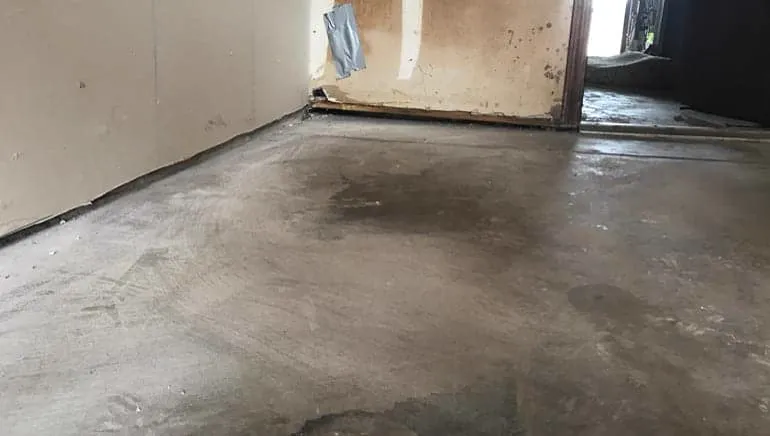
Add the terrain and you have the full picture. These rolling hills feed Suwanee Creek and eventually the Chattahoochee, so daylight and walkout basements are everywhere here. A walkout is wonderful for a playroom. It also means one wall of your house is buried against a slope that collects everything falling uphill of it.
Lots along the creek tributaries get one more layer: seasonal water. The ground stays saturated for a stretch each spring, so the basement floods on a schedule instead of by surprise. Good news there — a predictable problem is the easiest kind to solve permanently.
What are the actual ways to stop it?
Here’s the thing most homeowners never get told: drainage isn’t one product. It’s four different jobs that solve four different entry routes, and picking the right one is the entire game.
An interior perimeter drain is a channel cut into the slab edge that catches water at the cove joint — the seam where the wall meets the floor — and carries it to a sump. That joint is where most basements leak, because water under pressure in the soil takes the easiest opening it can find. Relieving that pressure is exactly what this system does.
An exterior footing drain works on the other side, intercepting water before it ever reaches the wall. It’s the more involved route, since it means digging along the foundation. When the wall itself is the problem, though, it’s the right call.
Regrading and downspout extensions are the unglamorous heroes. Soil settles over twenty-five years, and a yard that once sloped away can quietly tilt back toward the house. Meanwhile a downspout dumping roof water three feet from the foundation is feeding that clay all day.
Worth saying out loud
Sometimes the correct fix is the cheap one, and it’s outside. A company that tells you that is a company worth hiring.
The sump pump is the last link, and it fails in boring, predictable ways: power goes out mid-storm, the float sticks, the pump is undersized, the check valve is missing, or the discharge line is clogged. That’s why we bring up a battery backup on nearly every walkthrough. A pump that quits during the one storm it was bought for isn’t much of a pump.

Now, about the myth we hear on almost every estimate
Ready for the one we hear in nearly every basement? “We just need to seal the walls.” Homeowners say it, some crews sell it, and it sounds completely reasonable. But it’s the single most common reason a basement gets fixed twice.
Sealer is a coating on the inside face of a wall. Water in saturated clay pushes from the outside, and that pressure doesn’t care about paint. So the coating either lets moisture through or pops off, usually the following spring. It’s a raincoat on a submarine.
You can’t seal your way out of pressure. You have to give the water somewhere better to go.
Real drainage does the opposite of sealing. Instead of fighting the water, it collects it and moves it out — which is why a proper system keeps working through the wettest March we can throw at it. That’s the difference between a surface fix and a permanent one.
The flip side myth is just as common: “the whole perimeter has to be done.” Not always. We’ve walked plenty of homes near North Gwinnett High School where one wall was wet, one downspout was the reason, and a full-perimeter quote was sitting on the kitchen counter. If a company only sells one system, every house starts to look like a candidate for it.
How do you read a drainage estimate?
Slowly, and line by line. A strong scope tells you what’s installed, how many linear feet, where the water goes, and why that route was chosen over a cheaper one. A weak scope says “drainage system” and a number. Folks around here compare bids carefully and talk to each other constantly, so we’ve learned to write proposals that survive a neighborhood group thread.
Questions to ask before you sign anything
- Where is the water entering, and how did you determine that? A real answer includes something they saw outside.
- Did you walk the grading and the downspouts? If the inspection never left the basement, half the house went unexamined.
- How many linear feet, and why that section? Vague coverage produces a vague price.
- Does the drain sit below the slab? Below floor level is a system. At floor level is a gutter.
- Where does the discharge end up? It should run well away from the foundation, not loop back beside it.
- Is a battery backup included, and what size is the pump? Fair thing to ask, always.
- Why this route instead of the cheaper option? The answer tells you whether they diagnosed or defaulted.
- Is the warranty transferable, and what voids it? Ask for it on paper, not in conversation.
Red flags get simple after those questions. Watch for a firm price quoted over the phone before anyone has seen your house, or a discount that disappears at midnight, because honest pricing never needs a countdown. Be careful too when nobody measured anything, or when the crew doing the work turns out to be whoever’s free that week.
On cost, we’ll just be straight. Grading corrections and downspout work sit at the low end, a single-wall interior drain lands in the middle, and a full perimeter with a new sump and backup in a finished basement sits at the top. Linear feet, access, and how much finished space needs protecting are what move the number. After we walk it, you get one written figure — never a “starting at.”
What does this have to do with the air upstairs?
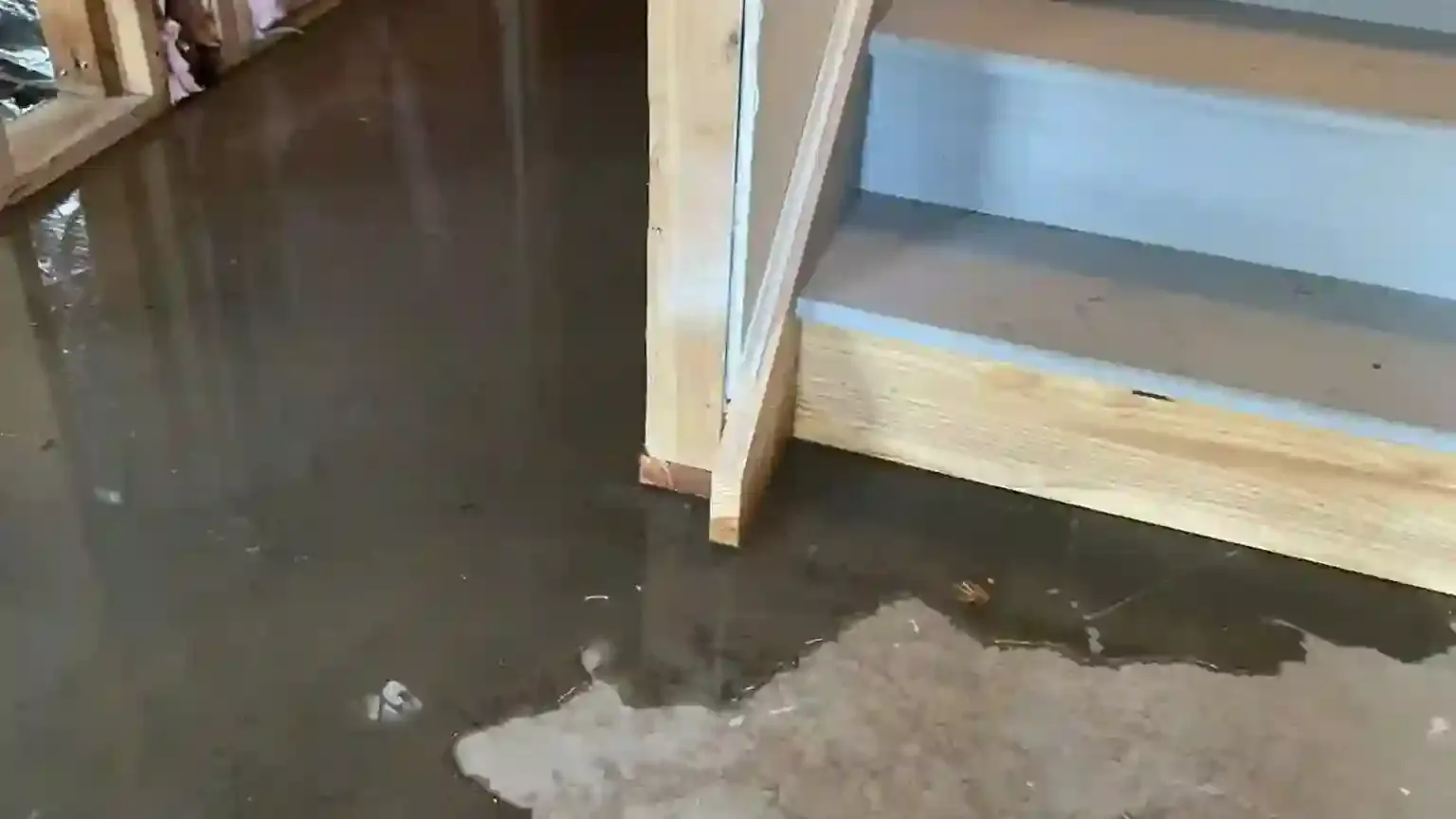
Here’s a part that surprises people. Your basement isn’t sealed off from the rest of the house — air moves up through it constantly, carrying whatever it picked up down there into your bedrooms and kitchen. So a damp basement is really a whole-house humidity question.
That’s also why speed matters after any flooding. Mold can begin growing on wet building materials within 24 to 48 hours, which means drying fast is worth more than almost anything else you do afterward. Don’t worry — this is manageable, and it’s exactly why we push drainage before cosmetics.
Once water is being collected and moved out, the humidity down there drops and stays down. A dehumidifier finally has a fair fight instead of running around the clock. The musty smell at the bottom of the stairs fades, and it doesn’t come back with the next storm.

Picture the after for a second. The kids’ stuff stays on the floor instead of on pallets, the space becomes a room you use rather than one you check on, and a hard spring storm is just weather again. More importantly, you understand your own house — where the water comes from, where it goes, and why. That’s the feeling we’re actually selling.
If you want to read up before your estimates, two solid sources: the National Weather Service flood safety guide and FEMA’s building science resources on protecting property from flooding. Twenty minutes with those and you’ll know whether the person in your basement is explaining or performing.
Why we might be the right fit
We’re about fifteen minutes south of you in Lawrenceville, and we’ve been doing this for more than twenty years. That means we’ve worked the sloped lots running toward McGinnis Ferry Road, the newer streets in the Town Center district, and plenty of the 1998-era basements in between. Familiar housing stock makes for faster, more honest diagnoses.

Timing helps too, so plan ahead if you can. Spring is our busiest stretch, while fall and winter are the calmest windows for exterior and grading work — the ground is workable and the schedule is open. Families heading to a Saturday at Suwanee Town Center Park in October are usually the ones who booked at the right time.
Still figuring out what’s happening down there? Our guide to flooded basement repair covers the emergency side, and the basement waterproofing systems we install are laid out step by step. If you’re also seeing cracks or settling, foundation repair is a separate conversation worth having. Comparing notes with family a few exits south? We cover the same ground in Peachtree Corners flood restoration.
Where we work around Suwanee
We’re on these streets constantly, from the walkouts in Suwanee Station to the newer homes near Harvest Park. Beyond Suwanee, we work in Duluth, Buford, Sugar Hill, Johns Creek, Lawrenceville, Cumming, Peachtree Corners, Norcross, Dacula and Braselton, plus the wider Gwinnett area. Odds are we already have a truck near you.
Questions Suwanee homeowners ask us
Fast — ideally within the first day. Mold can begin growing on wet building materials in about 24 to 48 hours, so moving air and pulling humidity right away makes a real difference. Get the water out, run fans and a dehumidifier, then sort out the permanent fix.
That’s usually the cove joint, the seam where the wall meets the slab. Saturated clay puts pressure under the floor, and that seam is the easiest opening available. An interior perimeter drain relieves exactly that pressure, which is why it’s the common answer here.
Yes, when the actual entry point gets addressed instead of covered up. Drainage collects the water and moves it away rather than trying to block it, so the fix holds through heavy seasons. The part that needs upkeep is small: check the pump and keep the discharge clear.
It depends on the route the water is taking. Grading and downspout corrections sit at the low end, a single-wall interior drain lands mid-range, and a full perimeter with a new sump and battery backup sits at the top. We walk the house first, then give you one written number with the scope spelled out.
That’s still worth looking at, though it often points to a smaller fix. Seasonal water on a creek-side lot or a single failing downspout can cause an annual pattern, and both are simple to correct. We’ll tell you honestly if the right answer is outside the house.
Let’s find out where the water is really coming from in your Suwanee basement
The inspection is free, the estimate is free, and nobody pressures you at the end. We’ll show you the entry point, explain why we’d choose one drainage route over another, and tell you plainly when the job is smaller than you expected.
(678) 914-5112Serving Suwanee and all of Metro Atlanta · $500 off projects over $3,500 · Live support 7am–8pm, 7 days a week