

How to Judge the Best Basement Drainage Alpharetta Companies Are Quoting You
Start with the finished result, then work backward to the scope, the questions, and the price.
Picture the finished job first. A clean white channel runs along the base of the wall, the slab is dry after a storm that dumped two inches overnight, and the room smells like a room again. That’s what the best basement drainage Alpharetta homeowners can buy looks like when it’s done — quiet, boring, permanent. So let’s work backward and figure out which estimate on your kitchen table gets you there.
Because here’s the thing: bids for this work rarely differ on price alone. They differ on what the company decided was wrong. One crew sees a wall, while another sees a gutter — same wet corner, and only one of them ends with the picture above.
What makes Alpharetta basements their own case?
Start with the dirt. This part of Fulton County sits on red clay over weathered granite, which drains slowly and holds water against a foundation wall long after the rain quits. That’s why a storm on Tuesday can show up on your floor Thursday. Clay isn’t a villain, though — the plan just has to account for water that lingers.
Then add the terrain. Rolling ground and the Big Creek floodplain gave us a city full of walkout basements cut into graded lots, so water on a slope goes wherever the grading tells it to. Grading set in 1996 has had thirty years to settle.
Now the timing, which explains more than anything else. Alpharetta’s boom-era subdivisions are now old enough that the original waterproofing has simply worn out — even on homes that look brand new from the street. Your basement didn’t fail because you did something wrong. It turned thirty, and so did its drainage.
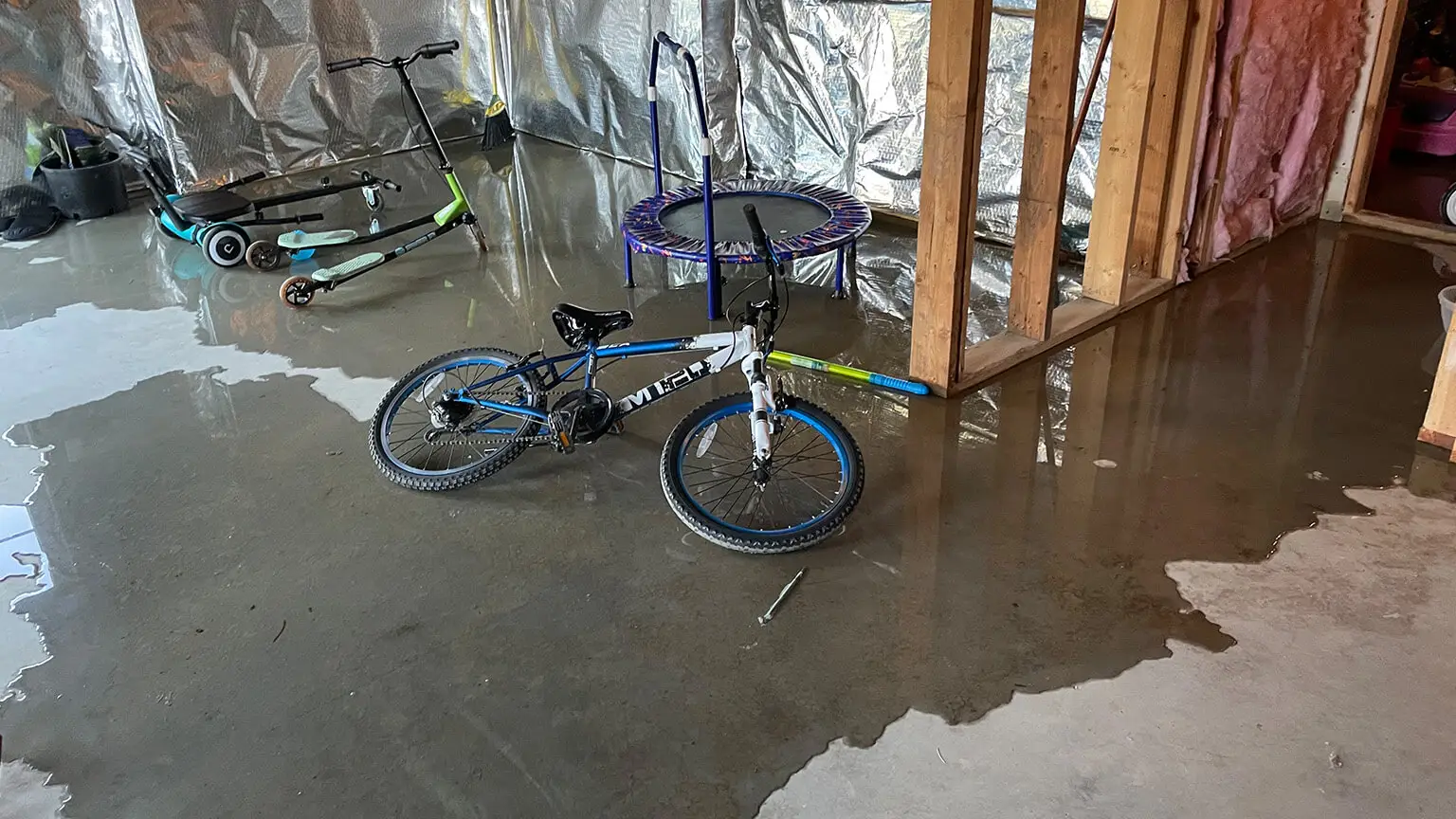
One more local wrinkle really matters. So many homes here have finished basement offices, because plenty of the people who commute along GA-400 to Northwinds office park now work half the week downstairs. Water in a bare basement is annoying. Water under a desk with a docking station on it is a different Tuesday entirely.
Where does the water actually get in?
Three routes, mostly. Knowing which one you have is the whole ballgame, and it’s the thing a good company nails down before writing a number.
The first is the cove joint — the seam where your wall meets the floor. Under pressure from saturated soil, water pushes up through that seam rather than through the wall face. An interior perimeter drain relieves exactly that, catching water below the slab and carrying it to a sump before it reaches your floor. Good news: that’s a one-to-three-day job in most homes.
The second route is the wall itself, through cracks or porous block. The third — honestly the most common — is surface water: roof runoff and yard grade delivering rain right to your foundation. A basement that floods “only in heavy rain” almost always has a surface water problem rather than a groundwater one, which is cheerful news, because that’s the cheaper fix.
Good news
Sometimes the correct repair is entirely outside the house — regrading a bed, extending two downspouts. A company worth hiring says so, even though it’s the smaller invoice.
Exterior footing drains are the fourth option, and they’re real work: excavation to the footing, new drain tile, membrane, backfill. On a lot with a patio or mature landscaping, that math changes fast, so we suggest the outside route only when the house genuinely calls for it.
But here’s the part most companies skip when they explain this
Ready for the piece that rarely makes a sales pitch? Drainage is a system, and every system has a weak link. Yours is almost always the pump.
Sump pumps don’t fail randomly. They fail in about five predictable ways, and they pick the worst moment to do it. Power goes out mid-storm. A float sticks. The pump is undersized for what the house sheds. There’s no check valve, so water drains back down the pipe. Or the discharge line clogs and the water has nowhere to go.
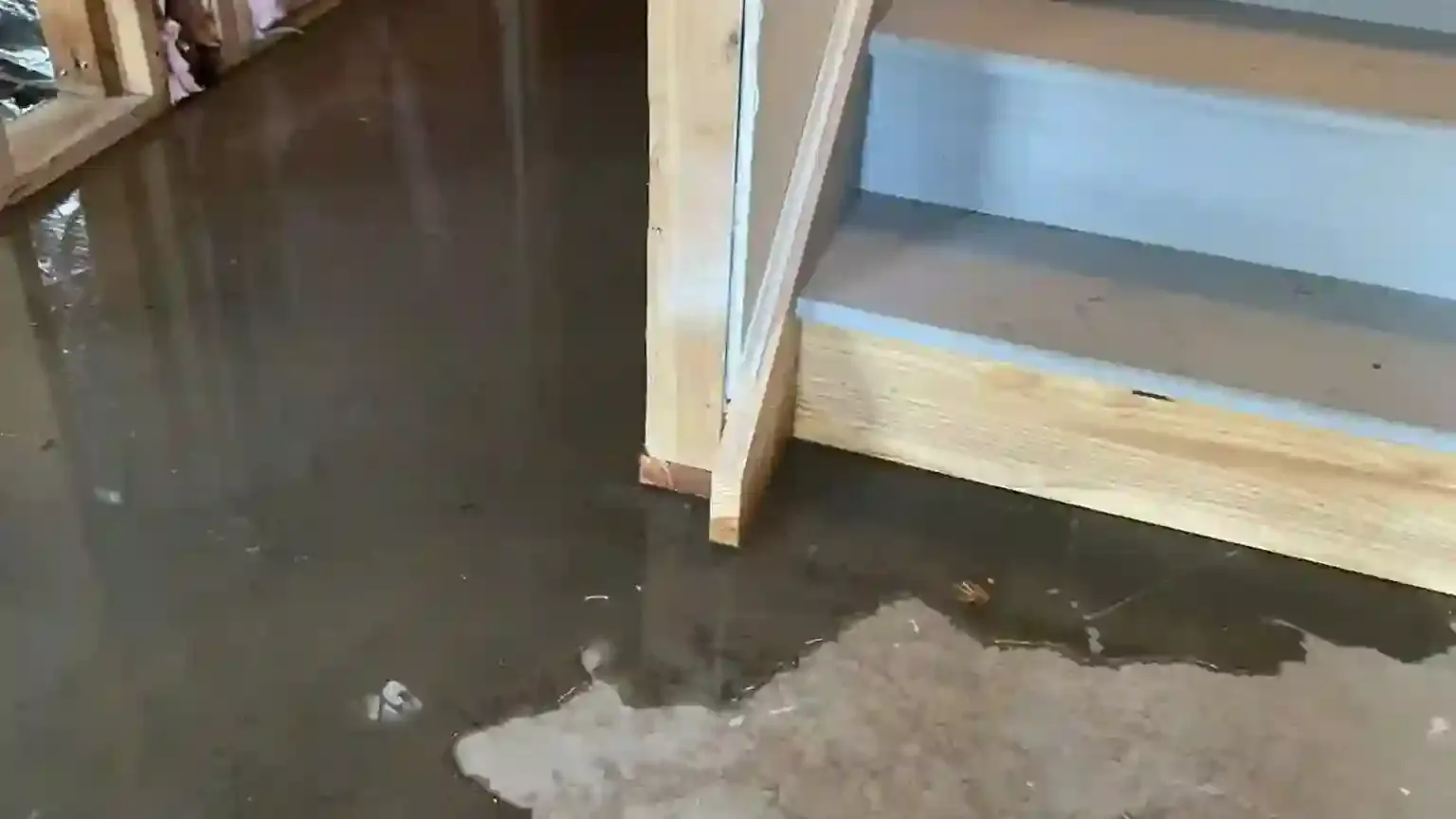
So ask about a battery backup. Since the storms that flood a basement are the same storms that knock out power, a pump with no backup is a fire alarm that needs Wi-Fi. Ask where the discharge line ends, too — well away from the house, not looping back into the soil you’re trying to dry out.
Picture that handled. The lights flicker during a spring storm, the backup kicks on, and you keep watching your show. That’s the real product — not a channel, but never thinking about the basement again.
How do you read a drainage estimate?
Line by line. A real scope says where the water enters and how they know, how many linear feet get treated, whether the drain sits below the slab, what pump goes in, and where the discharge ends. A weak one says “drainage system” and a total. That total is the least useful number on the page.
Ask these before you sign anything
- Where exactly is the water coming in? A confident answer includes something they saw in the yard.
- Why this route instead of the cheaper one? They should explain the choice in plain words.
- Does the drain sit below the slab? Above the slab isn’t drainage — it’s a gutter with good marketing.
- What pump, and is a backup available? Sizing should match your house, not a catalog.
- Where does the discharge line end? Far from the foundation, and not in a neighbor’s yard.
- Is the warranty transferable, and what voids it? Ask for it on paper.
- Who’s on the crew? Your own people, or whoever’s free that week?
Red flags get simple after that. Watch for a firm price quoted over the phone before anyone has seen the house, or a discount that expires tonight, because honest pricing never needs a stopwatch. Also pause if the inspection never went outside, if the scope carries no measurements, or if every house on the street somehow needs the identical system.
The compliment we’re proudest of isn’t “great work.” It’s “you talked us into the smaller job.”
On cost, we’ll be straight. Grading corrections sit at the low end, while a full perimeter drain with a new sump and backup under a finished basement sits at the high end. What moves the number is linear feet, access, and how much finished space we protect. After we walk it, you get one written figure with the scope spelled out — never a “starting at.”
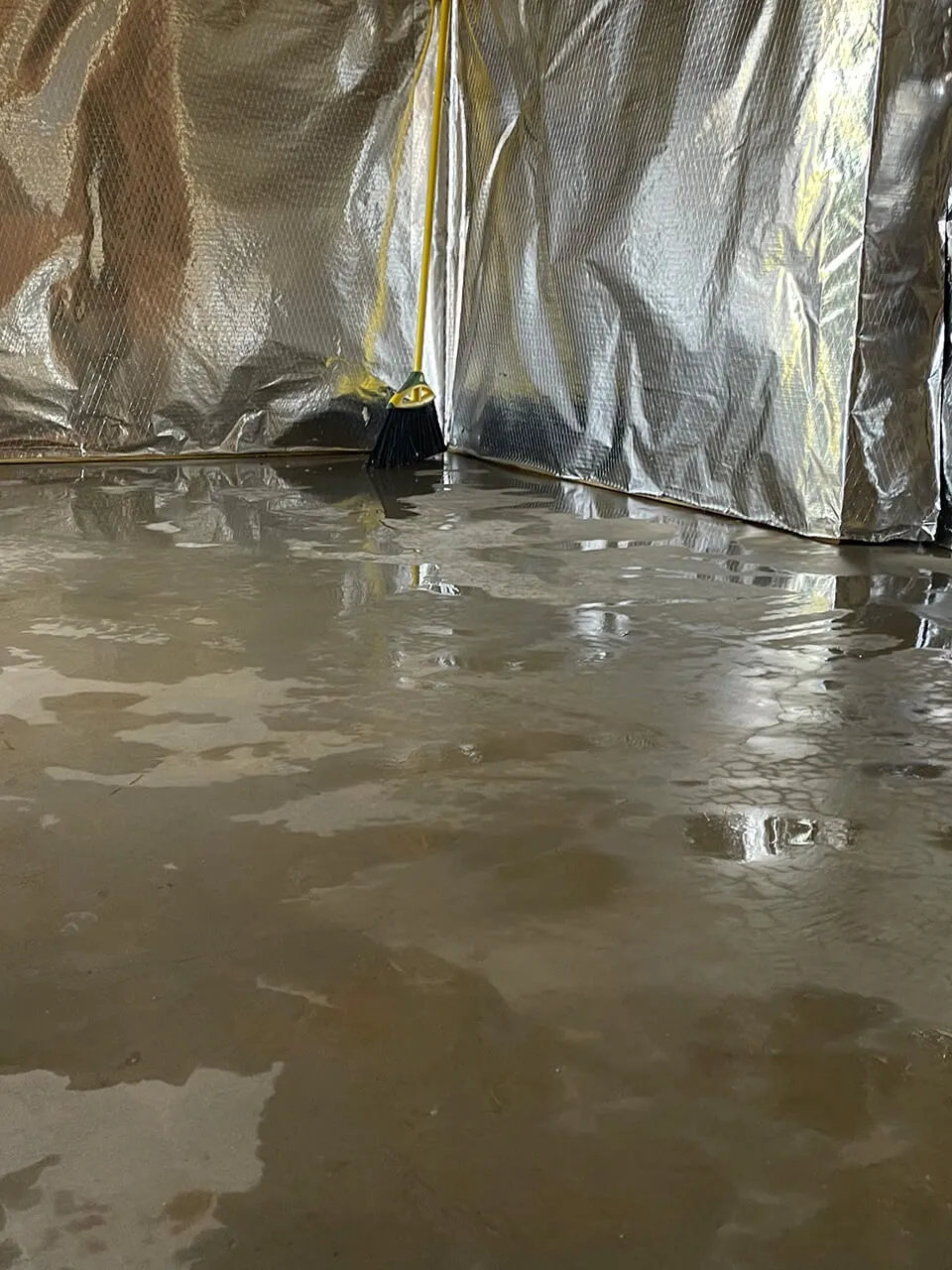
You don’t have to take a contractor’s word on any of this, either. FEMA’s building science guidance on protecting property from flooding covers the same principles in plain language. Skim it first, and you’ll hear who is explaining versus performing.
What does a good crew do differently here?
They go outside first. On a graded Alpharetta lot, the water on your floor often landed twenty feet uphill, so the best basement drainage Alpharetta crews start with gutters, downspout runs and bed grade — not a tape measure in the basement.
Housing type changes the answer too. Over in Academy Park, we’re usually looking at mature grading and tired original systems. Around the Avalon district townhomes and the Foundry at Roswell edge, the builds are newer, so it’s more often a shared downspout tie-in or a discharge line running the wrong way. Same city, different first question.
The other rooms nobody connects to it
Here’s what surprises people most. A drainage problem rarely stays in the basement, because a house shares its air. Damp air rises through the floor system and shows up as a musty first-floor closet, a hall that feels sticky in August, or hardwood near the stairs that cups a little each summer.
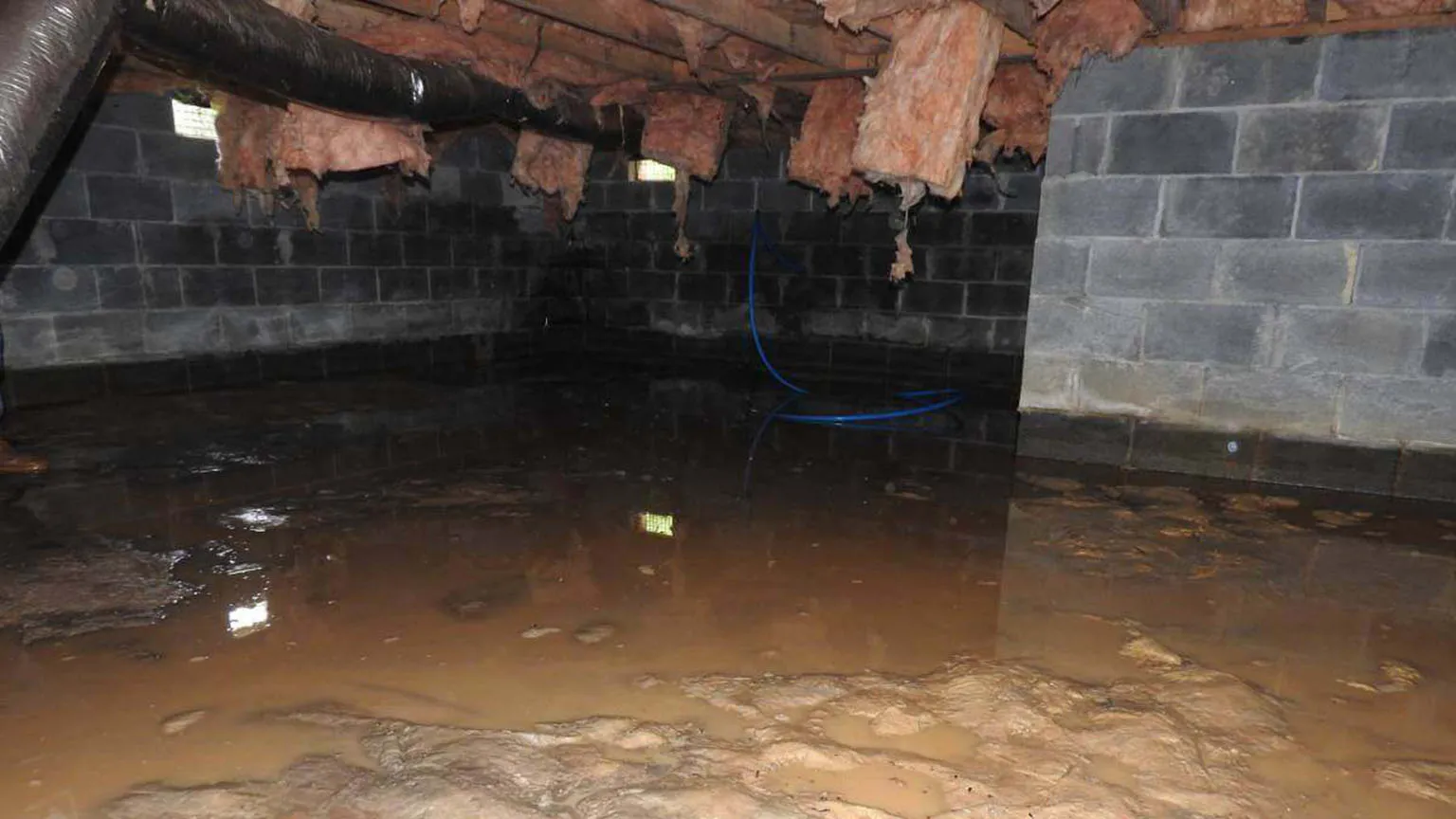
Your HVAC feels it too, since a system pulling humid air out of a wet lower level runs longer to cool the same house. Plenty of folks call us about a basement and mention, almost as an afterthought, that summer bills crept up. Because standing water plus time also invites mold, the CDC’s guidance on mold cleanup after flooding is worth a read while you compare bids.
Good news, though — fixing the source fixes all of it at once. Once the water stops arriving, the air dries, the smell leaves, and the rooms nobody suspected go back to normal. That’s the point: your family and your house looked after, not one wall patched.
Why we might be the right fit
We’re about twenty-five minutes east of you in Lawrenceville, and we’ve been at this over twenty years. If you want the best basement drainage Alpharetta has without a call center between you and your warranty, that’s us — same crews, same trucks, live people on the phone from 7 a.m. to 8 p.m., seven days a week.
We’re also happy to lose the bigger job. If your fix is grading and two downspout extensions, that’s what the estimate will say, and we’ll show you the photos that led us there. Homeowners who spend an evening near Avalon comparing three proposals tend to notice which one explains itself.

Want to go deeper first? Our guide to flooded basement repair walks through the first 48 hours, and the basement waterproofing systems we install are laid out step by step. If cracks or settling are part of your picture, start with foundation repair. Comparing notes with family across the county line? We cover the same ground on Duluth best basement drainage.
Where we work around Alpharetta
We’re up and down this side of GA-400 constantly, from older subdivision streets to newer infill near downtown. Beyond Alpharetta, we work in Milton, Johns Creek, Roswell, Cumming, Duluth, Sandy Springs, Suwanee and Peachtree Corners, plus the wider Fulton and north Gwinnett area.
Questions Alpharetta homeowners ask us
That pattern usually points to surface water rather than groundwater. Roof runoff and yard grade are delivering more rain to your foundation than the soil can move away. It’s good news, honestly, because outside corrections like regrading and downspout extensions are the cheaper end of this work.
It depends on where the water came from. Sudden failures like a burst pipe are often covered, while groundwater or surface water seeping in usually is not without separate flood coverage. Call your agent and ask about seepage and sump pump failure, since a small rider sometimes changes the answer.
Aim to have water removed and air moving within about a day or two. That’s the window where drywall, trim and flooring are most likely to come through fine. After that, moisture works its way into materials and the cleanup grows, so quick airflow is the cheapest step you can take.
That’s the cove joint, the seam where your wall meets the slab. Saturated soil pushes water up through that seam because it’s the easiest path, not through solid concrete. An interior perimeter drain sits below the slab and relieves exactly that pressure, which is why it’s such a common fix here.
Yes, when the fix matches the actual entry point and the system gets basic upkeep. Drainage handles the water route, while grading and downspouts keep the volume down in the first place. Test your pump a couple of times a year, keep the discharge line clear, and a dry basement stays dry.
Let’s find out what your Alpharetta basement actually needs
The inspection is free, the estimate is free, and nobody pressures you at the end. We’ll show you where the water is getting in, explain why we’d pick one route over another, and say plainly when the right answer is the smaller one.
(678) 914-5112Serving Alpharetta and all of Metro Atlanta · $500 off projects over $3,500 · Live support 7am–8pm, 7 days a week