

What Foundation Repair Alpharetta Homes Really Need — and What It Costs
The methods, the price drivers, and the warranty questions worth asking.
Start at the end, not the middle. The bedroom door clicks shut with one finger again. The stair-step crack outside is closed, patched and painted. Nothing shifts when the seasons turn. That ordinary, quiet house is what foundation repair Alpharetta homeowners are actually buying — the steel underground is just how you get there.
So let’s work backward from that picture. Good news first: this is common, it’s measurable, and the fix is known. We’ve done it around Metro Atlanta for more than twenty years, so nobody has to guess. Below is the honest version — methods, price drivers, warranty, and where we’d tell you to save money.
So what is this work, really?
Here’s the short answer. It’s soil work wearing a concrete costume. Your footings are perfectly good at their job — they just need something dependable to stand on.
Which brings us to Georgia red clay. Our clay is expansive, so it swells when it takes on water and shrinks back when it dries. A soaking April lifts it. A hot, dry August pulls it down again. Run that cycle under one corner of a house for thirty years and something eventually gives. If you like the science, the University of Georgia Extension keeps a plain-English library on how these soils behave.
Notice what that leaves out — a builder who did something wrong. Most settlement we see here isn’t a defect. It’s dirt being dirt on a slow schedule, which is oddly comforting, since nobody has to be at fault for this to be fixable. The repair itself does one thing: it moves your home’s weight off that moody clay and onto soil that ignores the weather.
Can you read a house by its cracks?
Mostly, yes — and the pattern tells us far more than the width does.
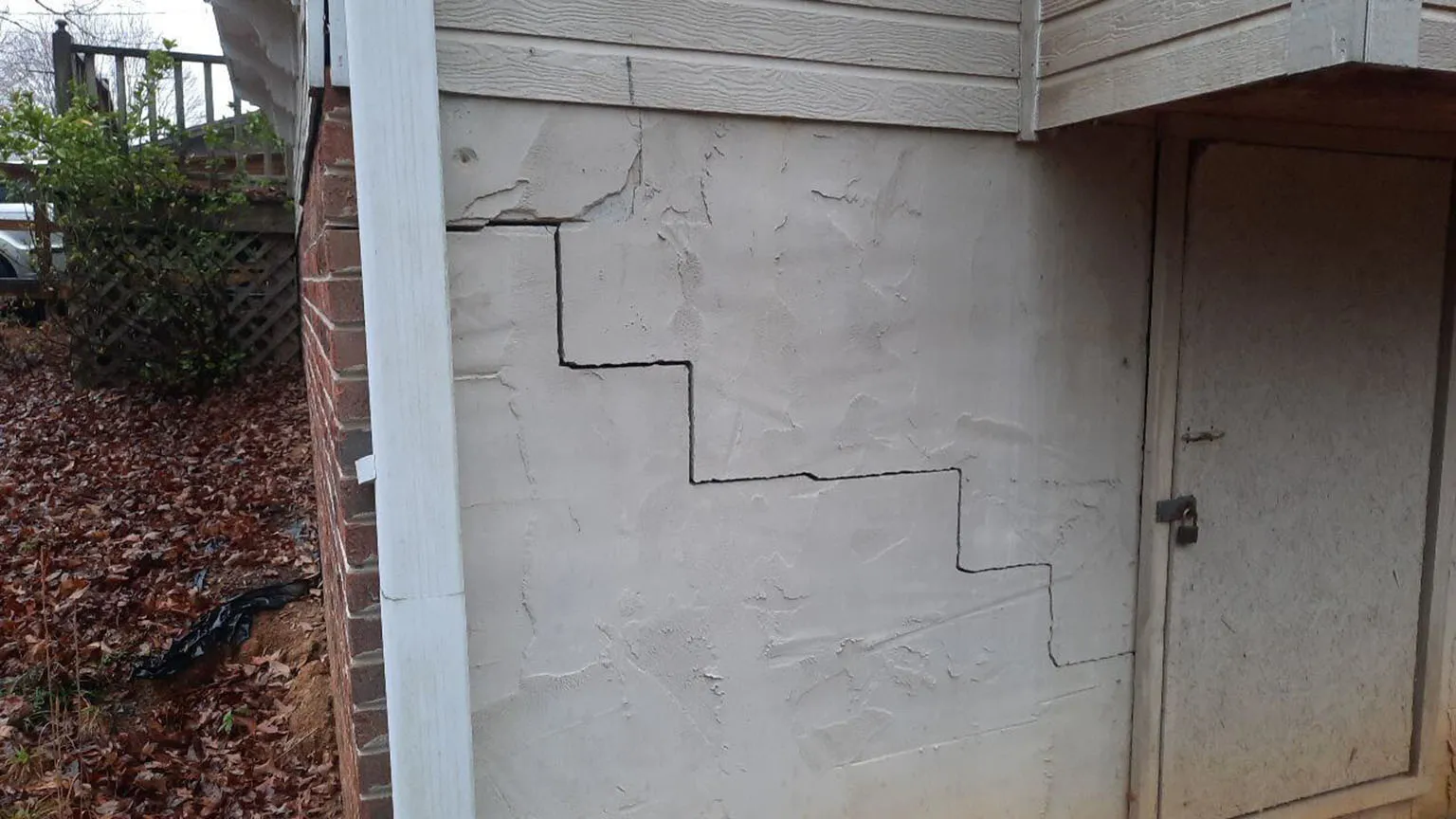
Thin vertical cracks in a poured wall are usually curing shrinkage. Concrete gives up water as it hardens and tightens a little, so hairlines from a home’s early years are often just an old scar. Stair-step cracks tracking the mortar joints in block or brick send a different signal. Those point to differential settlement, where one part of the house has dropped slightly more than the rest.
Then there’s the one people mix up most. A horizontal crack across a block wall isn’t settlement at all — it’s lateral pressure, soil pushing in from the side. Vertical usually means settling or shrinkage, while horizontal means push. Same wall, completely different repair, so the direction matters before anyone talks money.
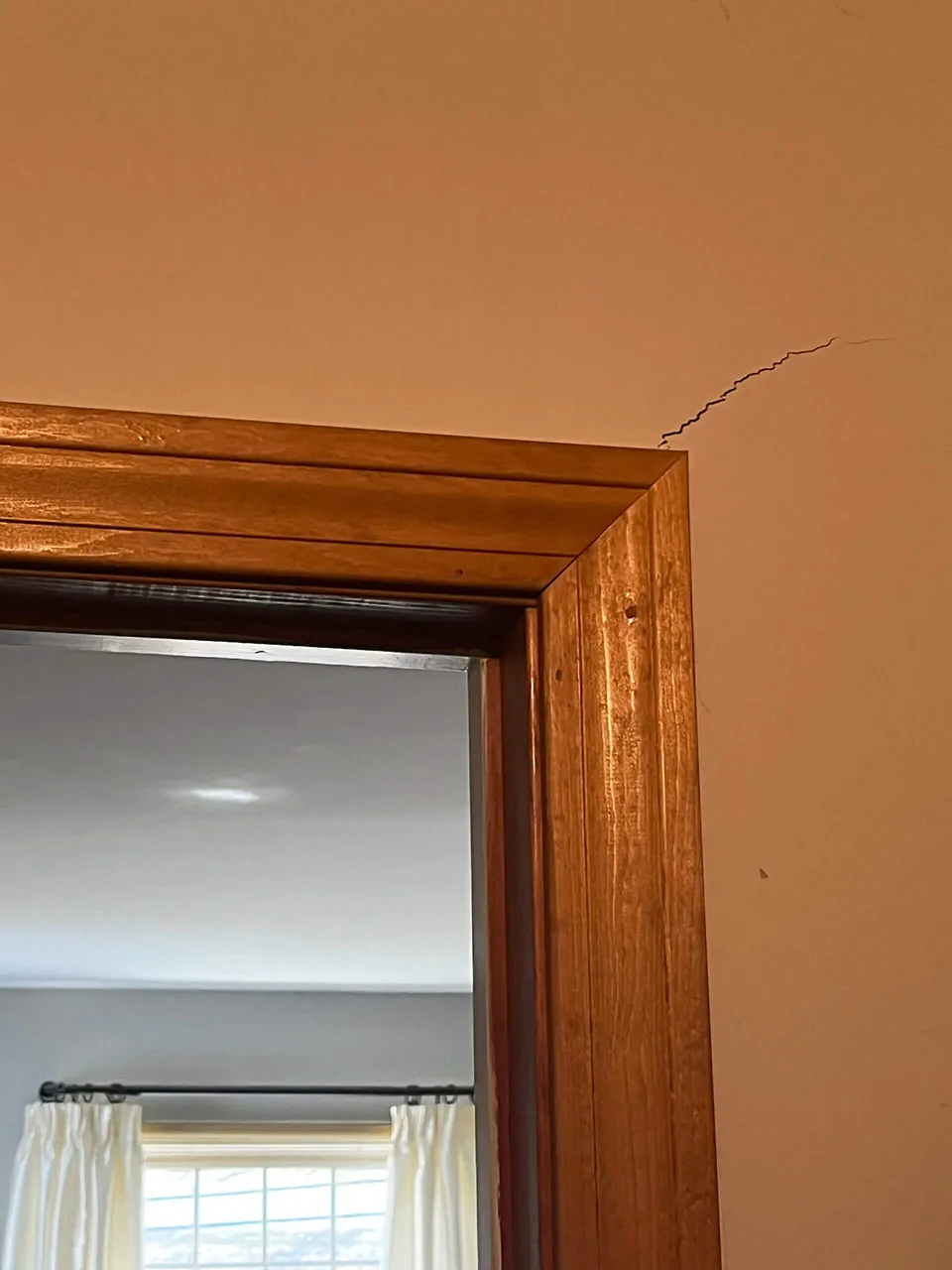
Diagonal cracks fanning from window and door corners are stress concentrations, because corners are where a wall is weakest. Inside, the tells get domestic: a door that sticks in one season, a wedge of daylight above a door frame, nail pops down a hallway, a floor your kid’s marble treats like a ramp. One of those means little. Three in the same corner is a pattern.
Let’s back up — there’s a question under your question
You came here asking what this costs. Underneath that sits a better one: is this house still moving?
That answer matters more than any line item. A crack that stopped moving years ago and one opening a hair every summer need different plans. So we don’t guess. We mark it, measure the width, date the mark, and look again across a few months — through a wet stretch and a dry one, because that’s when clay does its talking.
Steady width means a dormant crack, and plenty of those need nothing beyond a proper seal to keep water and bugs out. We’ll say so even though it’s the smaller invoice. A widening crack means active movement, and support is the honest answer there. Either way you know instead of wonder.
Real talk: not every crack is an emergency, and anyone saying otherwise on a first visit is selling. Most homes we see around Crabapple sit in the middle — one corner with a real story, plus a few cracks that are old news.
What are the actual repair methods?
Which fix goes where? It depends on the weight above and the soil below, and there are only a few main players.
The short menu
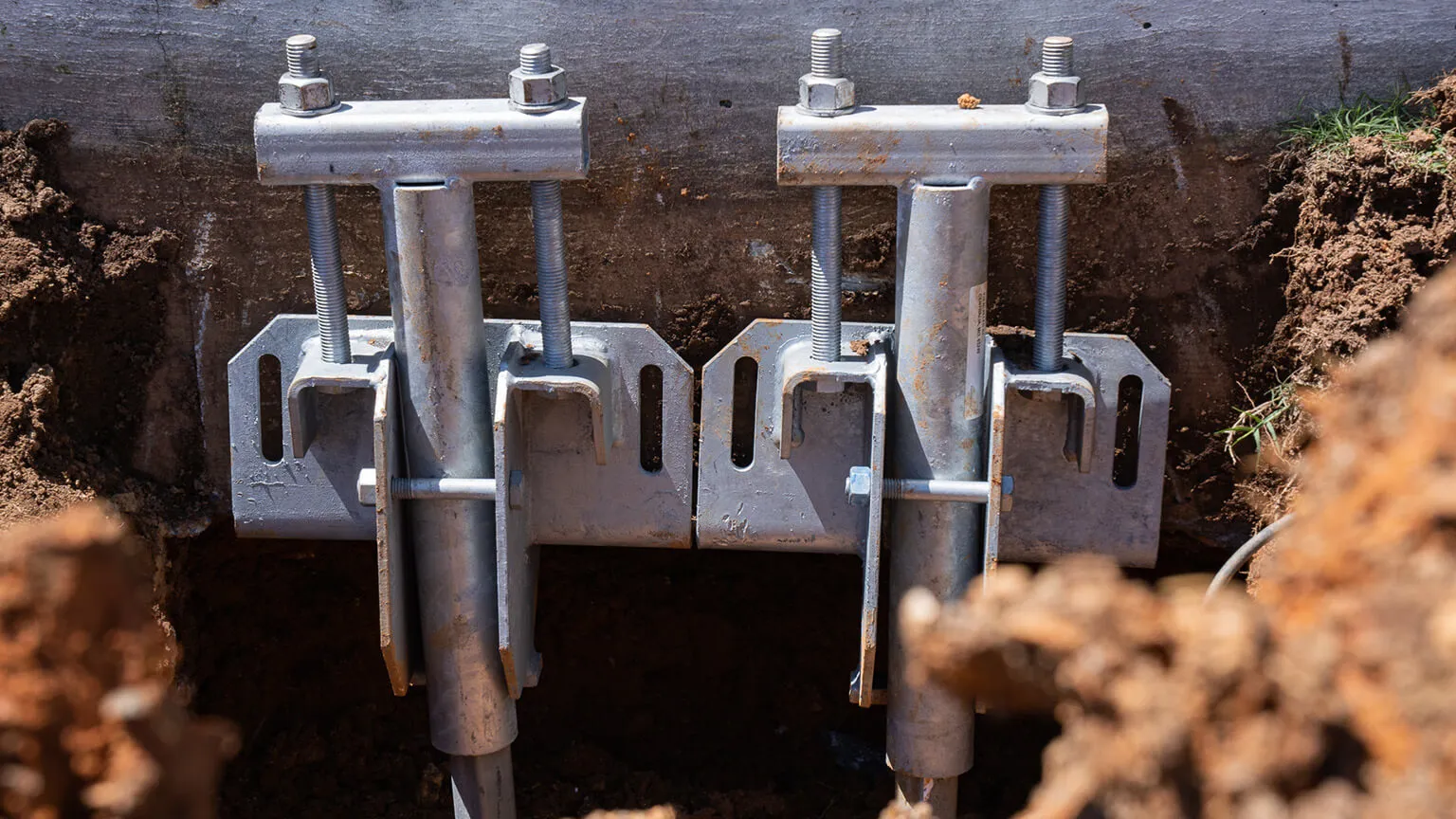
- Helical piers. A steel shaft with plates, turned down like a giant screw until torque says we’ve reached load-bearing soil. Good under lighter loads, porches and additions.
- Push (resistance) piers. Driven straight down using your house’s own weight until they hit refusal. These suit heavier homes and deeper soil.
- Slab piers. Same idea, sized for a slab home or a sunken interior section.
- Foam lifting. Small holes, expanding polyurethane, and a settled garage floor or driveway panel comes back up. Quick and tidy.
- Carbon fiber straps or steel beams. For a wall bowing under side pressure — stabilizing a wall, not lifting a house. Different problem, different tool.
- Drainage corrections. Regrading, longer downspout runs, a French drain. Steady soil moisture around the footing is what stops the clay cycling.
Two words are worth separating here: stabilize and lift. Stabilizing stops the movement, and that’s the part protecting your house. Lifting tries to bring the structure back toward level — sometimes we recover most of it, sometimes only part, and occasionally we recommend against chasing the last half inch, since forcing an older home up can open fresh cracks upstairs. Honest expectations beat a hero shot every time.
What does a real job look like, start to finish?
- The free inspection. We walk outside first — grading, downspouts, where roof water lands — then inside. We shoot floor elevations and read the crack patterns.
- A written plan. Pier count, locations, expected depth, what we’re doing about water, and a number. If an engineer belongs on your job, we say so.
- Access. Small excavations at each pier location, usually outside. Sod comes up carefully, because it’s going back.
- Install. Piers go down to competent soil or refusal, brackets transfer the load, and every pier gets logged with its depth and torque.
- Hold or lift. We make that call with you standing right there, not by ourselves.
- Backfill and cleanup. Holes closed, soil compacted, sod reset, drainage corrected, our mess hauled off.
So what does it cost?
How much? The work is priced by the pier, and pier count depends on your house — so a flat price sight unseen is a guess you’d end up paying for. Here’s what genuinely moves the number.
What drives the price up or down
- How many piers. The biggest factor by a mile. One settled corner is a modest job; a full wall line is not.
- Depth to good soil. Lots near the Big Creek floodplain often go deeper than higher ground up along Windward Parkway. More sections, more time.
- Access. A yard a machine can reach is straightforward. Hand-carrying equipment past a pool and mature landscaping is not.
- Stabilize or lift. Holding a house still costs less than attempting to bring it back toward level.
- Engineer involvement. Some lenders, HOAs and jobs want stamped drawings, and that’s a real line item.
- Drainage. Usually part of a lasting fix, and often the cheapest piece of the whole plan.
- Interior finishes. Working inside a finished basement means careful demo before the actual repair starts.
A small stabilization on one corner lands at the low end. A long pier line on a heavy brick home, deep soils, with a lift attempt and an engineer, sits at the top. Most jobs land between, and you get the pier count and a written scope before you decide anything. Curious what’s under your own lot? The USDA Web Soil Survey maps soil types by address for free — it won’t predict pier depth, but it’s a good ten minutes.
What’s included: labor, equipment, the piers themselves, backfill, cleanup and the warranty. What isn’t: the cosmetic work afterward — drywall patching, paint, tuckpointing brick, flooring. Those are real costs, so budget for them. Better you hear that from us now than read it in fine print later.
The house in Milton Park that wasn’t what anyone thought
Want proof that the obvious answer is often wrong? A homeowner over in Milton Park called about a stair-step crack on the side of the house. They already had a proposal for a full line of piers down that entire wall, and they were bracing for the number.

So we walked it. One corner had settled, no argument — but the floor elevations told a much smaller story than the proposal did. Movement was concentrated in roughly twelve feet of wall, not forty. Then we found the reason standing right beside it. A downspout had been dumping roof water two feet off that corner for decades, keeping one patch of clay soaked while the rest of the lot dried out on schedule. That corner had been living in a different season than the rest of the house.
The fix ran a handful of piers on the corner, a buried downspout line carrying water well past the drip edge, and a regrade. Not the whole wall. They’d braced for the biggest invoice of their year and left with a plan sized to the actual problem — and that’s the part we want you to have too.
What should you ask about the warranty?
Ask what’s covered, in those exact words. “Lifetime” by itself means very little.
Pin down three things. First, is the coverage on the pier, on settlement at that location, or on the crack? Those are three different promises. Second, does it transfer when you sell, because a transferable warranty is a genuine asset at closing. Third, who honors it — a warranty is only a promise from a company, so that company has to still be nearby in year eight to answer the phone.
Why does hiring local matter here?
Who should you call? Somebody who’ll still be twenty-five minutes away a decade from now.
We’re based in Lawrenceville, so our trucks sit about twenty-five minutes east of you, and the same crews show up every time. Plus we know this housing stock. Alpharetta’s boom-era subdivisions are now old enough that the original waterproofing and drainage have simply worn out, even on homes that look brand new from the street. That’s why so many mature 1990s block and poured walls are showing their first real cracks right about now.
We’ve worked the graded lots up in The Hills at Windward and the older streets around Crabapple, plus plenty of homes on the low side of the Big Creek Greenway where groundwater sits higher than the neighbors’. If your kids play ball at Wills Park on Saturday, odds are good we’ve been under a house on your street.
Still sorting out what you’re seeing? Our guide to foundation settling walks through the early signs, and if you’re chasing one crack, start with foundation crack repair. Every method we install is laid out on our foundation repair service page. Comparing notes with family a few exits east? We cover the same ground for Duluth foundation repair.
Where we work around Alpharetta
Alpharetta is a short run for us. We also work throughout Milton, Johns Creek, Roswell, Cumming, Duluth and Sandy Springs, plus Suwanee, Peachtree Corners, Norcross and Lawrenceville, and the wider Fulton County area. If you’re anywhere along the GA-400 corridor, we’ve likely got a truck nearby this week.
Questions Alpharetta homeowners ask us
A helical pier is a steel shaft with plates welded on, and we turn it into the ground like an oversized screw. The torque reading tells us when we’ve reached soil that can carry load, and then a bracket ties the pier to your footing so the weight transfers down past the clay. Because they’re turned instead of driven, they work especially well under lighter loads like porches and additions.
Documented, warrantied work usually helps, because buyers price an unknown higher than a known. Keep the pier log, any engineer letter and the transferable warranty in one folder and hand it over at closing. What makes buyers nervous is movement nobody ever addressed.
Most homes are one to three days on site. Deep soils, tight access or a longer pier line stretch that, while permits or an engineer can add a week or two on the front end before anyone digs. You’ll have a date range in writing before we start.
Often, yes. If one corner is moving and the rest of the house is quiet, we can repair that corner now and keep monitoring the rest. What we won’t do is split a single settled section in half, since a partly supported wall just finds a new place to move.
Yes, and you’ll have it in writing before work begins. Ask us whether it covers the pier, the settlement or the crack, and ask whether it transfers to the next owner. If a warranty can’t be explained in one sentence, it isn’t doing much for you.
Let’s find out what your Alpharetta home actually needs
The inspection is free, the estimate is free, and nobody pressures you at the end. We’ll show you what’s moving, what isn’t, and the right-sized plan — even when that’s smaller than you expected.
(678) 914-5112Serving Alpharetta and all of Metro Atlanta · $500 off projects over $3,500 · Live support 7am–8pm, 7 days a week