

Basement Drying Options Alpharetta Homeowners Are Weighing After a Wet Week
Rent the fans, or call a drying crew? Here’s how each one really works, and how we’d help you choose.
Let’s start with the physics, because it explains everything else. Water that reaches your basement floor doesn’t sit still and wait for you — it soaks sideways into anything soft it can find, and then it evaporates into the air, where it looks for the next cool surface to land on. That’s the whole story. Once you get that, the basement drying options Alpharetta homeowners are choosing between stop sounding like sales pitches and start making plain sense.
Good news up front: this is a fixable day, not a lost house. We say that after twenty-plus years of walking into wet basements around here, and honestly, most of them dry out fine.
Why does a small puddle turn into a big job?
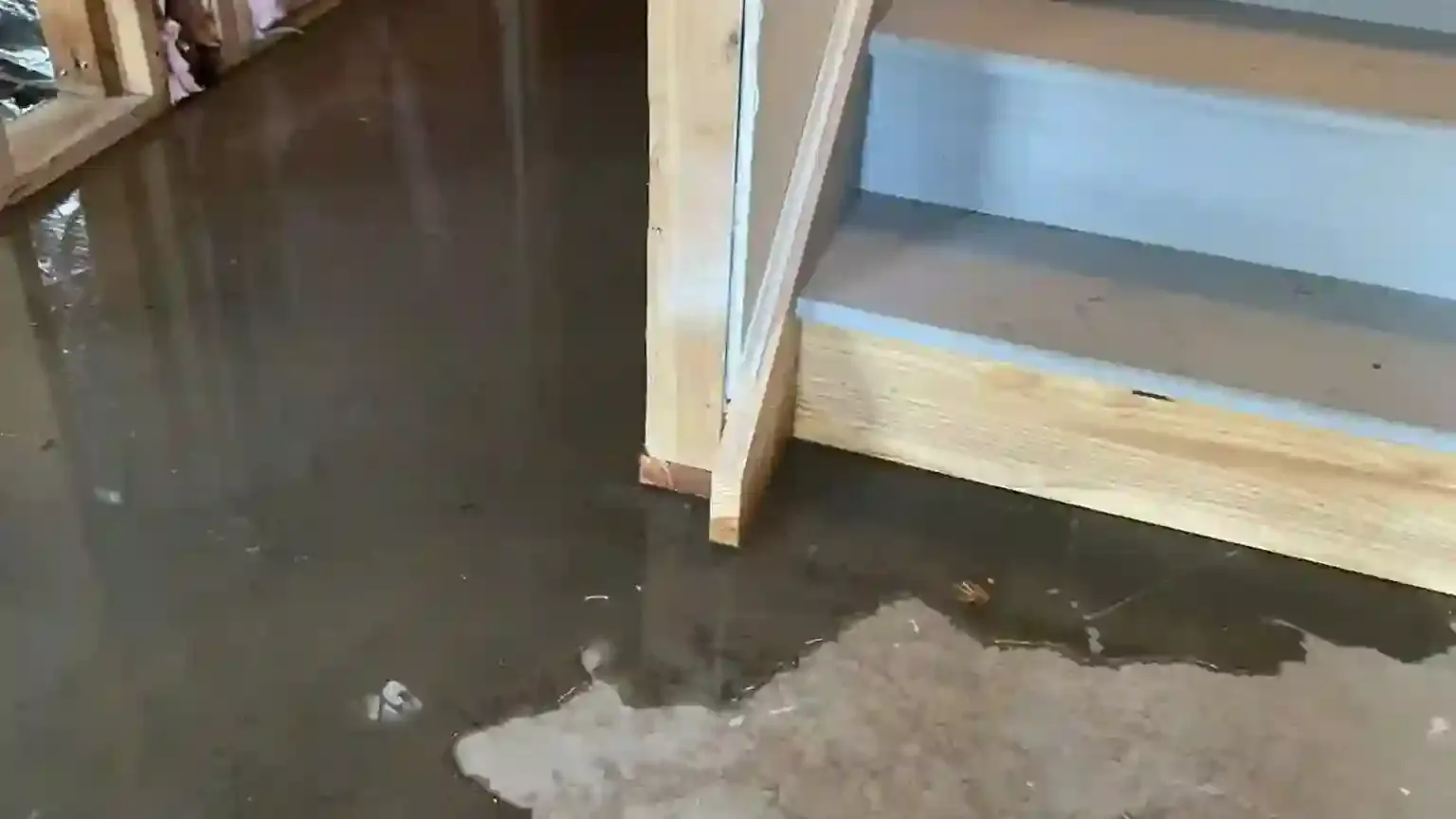
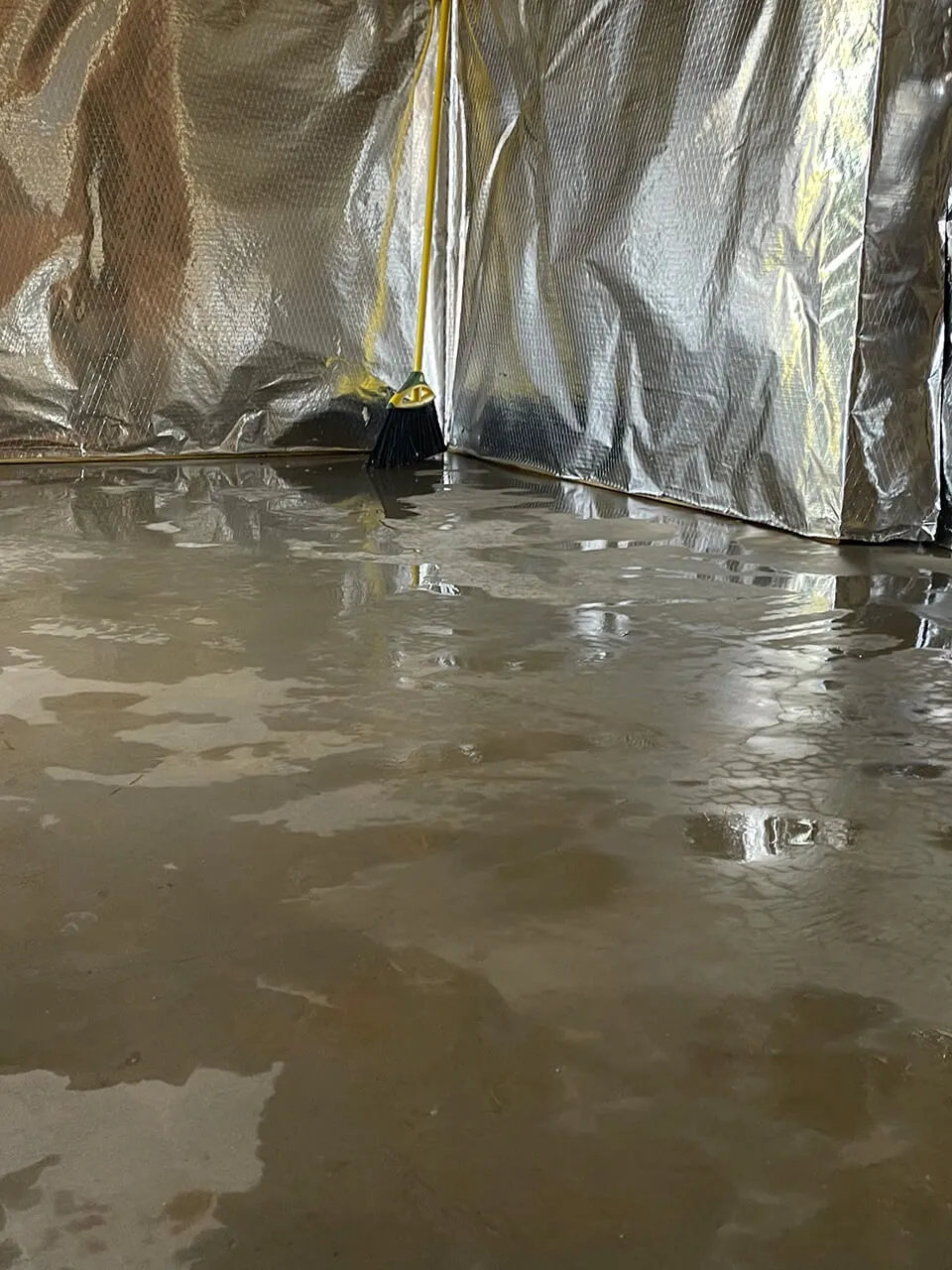
Because there’s more water down there than your eyes report. One inch of water across a 1,000-square-foot basement is more than 600 gallons. Picture a dozen bathtubs poured on the slab, and suddenly your shop vac’s five-gallon tank feels a little brave.
That’s not meant to worry you. It’s meant to explain why a floor can look dry by dinner and still be wet Thursday. The visible water leaves first, while the water that wicked into carpet pad, drywall bottoms and insulation quietly feeds humidity back into the room.
So the real job isn’t mopping. It’s pulling moisture out of materials, then out of the air, until readings come back to normal.

Before anything else
Never step into standing water while the power is on. Kill the circuit at the panel first, and if the panel itself is anywhere near the water, call the utility and wait outside. Everything else on this page can wait ten minutes.
Option A: what does DIY drying really look like?
Here’s the honest version, because plenty of homeowners do this and do it well. You kill the power, pull the standing water with a wet vac, get the wet stuff out of the room, then run a rental dehumidifier and box fans until things feel normal. Total cost is usually a rental fee, a few gallons of gas for the trips, and a weekend.
When it wins: small, clean water, caught fast, on an unfinished slab. A downspout backed up during a storm, an inch crossed the floor, and you found it that morning. Nothing organic got soaked, and there are no finished walls hiding the evidence.
What it costs: a rental dehumidifier and fans typically run a modest daily rate, and most rental yards near Haynes Bridge Road will set you up same day. Add a wet vac if you don’t own one.
The trade-off: household fans move air, but they don’t remove much water, and a consumer dehumidifier pulls a fraction of what a commercial unit does. Also, you’re going by feel, and feel is a poor moisture meter.
Option B: how does professional drying differ?
A drying crew is doing four things at once, and only one of them is obvious. First, extraction — a truck-mounted or portable unit pulls water out of the slab and out of carpet far faster than a shop vac. Second, demolition of the wet organics: carpet pad, the bottom band of drywall, and soaked wall insulation come out, because those hold water like a sponge.
Third, targeted air movement — air movers aimed along surfaces and into wall cavities, not at a puddle. Fourth, commercial dehumidification, sized to the room’s volume.
The part that actually separates the two options, though, is the meter. Readings get taken on day one and every day after, in the same spots, until the materials match a dry standard instead of a hunch. That’s the difference between “it feels dry” and “it is dry.”
When it wins: larger volumes, water that sat overnight or longer, finished basements, and anything that wasn’t clean rainwater. A sewer backup is never a DIY project — that’s a health call, not a comfort call.
What it costs: more than a rental. Price rides on square footage, how many days the equipment stays, and how much material has to come out.

What’s the one thing to understand before you call anyone?
Alright, this is the distinction that decides your whole plan, and almost nobody explains it before the estimates start arriving. There’s a difference between a wet surface and a wet cavity.
A wet surface is concrete, tile, or a bare block wall. Those release moisture into the room, so air movement and a dehumidifier genuinely finish the job. A wet cavity is the space behind finished drywall, where insulation and framing sit in the dark with no airflow at all.
Here’s the classic mistake we get called in behind: the floor dried, the room felt great, and three weeks later there’s a musty smell nobody can locate. The surface dried while the cavity stayed wet. Good news, though — it’s easy to check. Pop a small section of baseboard and look.
We had a homeowner over in Nesbit Ferry do exactly that with a screwdriver and a flashlight. Their floor was dry, their wall wasn’t, and that saved them from redoing the same room twice.
Speed beats horsepower. Mold can begin on wet organic material in roughly 24 to 48 hours, so a modest setup running Saturday morning does more good than a great setup running Tuesday.
One more piece of the distinction: where the water came from. Clean rainwater through a wall is one conversation. Water that came back up a drain line is a different one, and it changes what has to be removed rather than dried. The National Weather Service flood safety guidance is a solid plain-English read on that.
How do the two compare, straight across?
DIY drying
- Cheap — rental fee and your weekend
- You can start within the hour
- Fine for small, clean, freshly caught water
- Fans move air but remove little water
- No moisture readings, so no proof
- Can’t reach a closed wall cavity
Professional structural drying
- Real extraction, not tank-by-tank
- Wet organics get removed, not dried in place
- Commercial dehumidifiers sized to the room
- Daily meter readings to a dry standard
- Documentation your insurer will ask for
- Costs more, and it needs scheduling
Notice that neither column says “better.” The honest answer depends on four things: how much water, how long it sat, whether wet organic material is trapped behind finished walls, and whether it was clean rain or a backup.
So what would we tell you to do?
You asked for a recommendation, so here it is, without hedging. If your basement is finished, call a drying crew. Finished basements are everywhere in Alpharetta — half this city works from a lower level within a short drive of Northwinds office park — and finished space means cavities you can’t verify by hand.
Also call if the water sat more than a day, covered a large area, or came from anywhere other than the sky. Any one of those four factors tips it.
Now the part people don’t expect a waterproofing company to write down. Plenty of times, you don’t need us for the drying at all. Small puddle on bare concrete, caught the same morning, nothing soft in the room? Rent the dehumidifier, run it three or four days, and keep your money. We’ve said exactly that to folks in Academy Park more than once.
Here’s where we do want a look, though: figuring out why water came in. Drying handles this week. Finding the source handles the next ten years.
Around Hopewell Plantation and the older boom-era streets, the cause is usually simple and cheap — a downspout dumping beside the wall, or grading that settled since 1996. Alpharetta’s boom-era subdivisions are now old enough that the original waterproofing has simply worn out, even on homes that look brand new from the street. Lots near the Big Creek floodplain are a different story, since those genuinely sit in high groundwater, and there the answer is usually drainage and a properly sized sump.
What do the first week, first year and tenth year look like?
Knowing the shape of the next ten years is what makes this feel manageable, so let’s walk it forward.
- Days one to four. Extraction, wet materials out, equipment running. It’s loud, and readings drop a little each day.
- Day five to week two. Meters hit dry, gear comes out, rebuild starts if drywall came off. This is where the smell disappears — and stays gone, if the cavity was handled.
- Month one to three. Source work, if it’s needed. Gutters, extensions, grading, or interior drainage and a sump.
- Year one. You go through a full spring storm season and nothing happens. That’s the whole point.
- Years two through nine. Ten minutes twice a year: test the pump, clear the discharge, clean gutters, check that soil still falls away from the house.
- Year ten. Sump pumps have a service life, so that’s the piece to plan on replacing.
That’s the timeline. Not a decade of worry — a rough couple of weeks, then a habit you’ll forget you have. We’d rather you spend the weekend at Wills Park than babysitting a fan.
If you want to get ahead of the next one, FEMA’s building science resources on protecting property from flooding lay out simple, low-cost steps that hold up well on Georgia clay lots.

Why does hiring local matter for this one?
Because drying is a same-week problem, and that needs somebody who answers the phone. We’re in Lawrenceville, about twenty-five minutes east, with the same crews on the same trucks. So if a question comes up in year six, you’re calling the people who did the work.
Want to read further before you decide? Our page on the systems we install covers basement waterproofing in detail, and if the water keeps coming back, start with best basement drainage instead. Cracks or settling in the picture? That’s foundation repair, and it’s a separate conversation. Neighbors one town over can read the same breakdown of Duluth basement drying options.
Where we work around Alpharetta
We’re in Alpharetta constantly, from the Windward corridor down through downtown. We also serve Milton, Johns Creek, Roswell, Cumming, Duluth, Sandy Springs, Suwanee and Norcross, plus the wider Fulton area.
Questions Alpharetta homeowners ask us
On wet organic material like carpet pad, paper-faced drywall or insulation, growth can begin in roughly 24 to 48 hours. Bare concrete and block are far more forgiving, since there’s nothing there to feed on. That’s why we care more about how fast you start than how big the equipment is.
Shut the power off at the panel before you step in the water, and don’t go in at all if the panel is near it. After that, take photos for your records, then get soft items and stored boxes up and out. Water removal comes next, and it goes much faster once the room is clear.
Red clay drains slowly, so a long rain saturates the soil and it presses water against the wall until it finds a seam. Roof water makes it worse when downspouts empty close to the foundation. It’s usually a volume problem rather than a broken wall, which is good news for the repair.
Sometimes, and it depends on the source. Sudden failures like a burst pipe are often covered, while groundwater seeping through a wall usually isn’t unless you carry separate flood coverage. Call your agent early and keep dated photos plus daily moisture readings, because that documentation is what claims turn on.
Start the same day if you can, and aim to have materials at a dry reading within three to five days. Waiting a week doesn’t just extend the drying — it changes what has to be replaced. Even a rental dehumidifier running tonight is better than a perfect plan starting Wednesday.
Not sure which way to go? Let’s look at your Alpharetta basement together
The inspection is free, the estimate is free, and there’s no pressure at the end. We’ll check whether the walls are wet inside, tell you plainly if a rental dehumidifier is all you need, and show you where the water is getting in.
(678) 914-5112Serving Alpharetta and all of Metro Atlanta · $500 off projects over $3,500 · Live support 7am–8pm, 7 days a week