

Basement Drying Options Duluth Homeowners Have — Pro Equipment or Do It Yourself?
Both are real answers. Here’s how each one works, what decides it, and when we’d tell you to keep your money.
Can I dry my own basement, or do I need to call somebody? That’s the question, so here’s the answer up front: it depends on three things — how much water, how long it sat, and whether anything soft got soaked. When we talk through basement drying options Duluth homeowners are weighing, that’s the whole decision in one sentence. The rest of this post just shows you how to sort yourself into the right column.
And to be fair, plenty of folks really can handle this themselves. We’ll say exactly when.
Here’s why it matters more in this town than most. Duluth basements are working basements — in-law suites, home offices, kids’ spaces. When one gets damp here, it’s not storage getting wet. It’s somebody’s bedroom.
What comes before anything else?
Power. Before you take one step into standing water, go to the panel and kill the circuits that feed the basement. Water and live outlets don’t mix, and a floor outlet you forgot about is still an outlet. If the panel itself is down there, or you can’t reach it dry, call your electric provider and wait outside.
That’s the only hard rule in this whole article. Once the power’s off, you can think clearly about the rest.
Then check what kind of water it is. Clean rainwater through a wall is one situation, while a sewer backup is a completely different one — and that second one isn’t a DIY project no matter how handy you are. The CDC’s guidance on cleanup after flooding explains why in plain language.
Good news
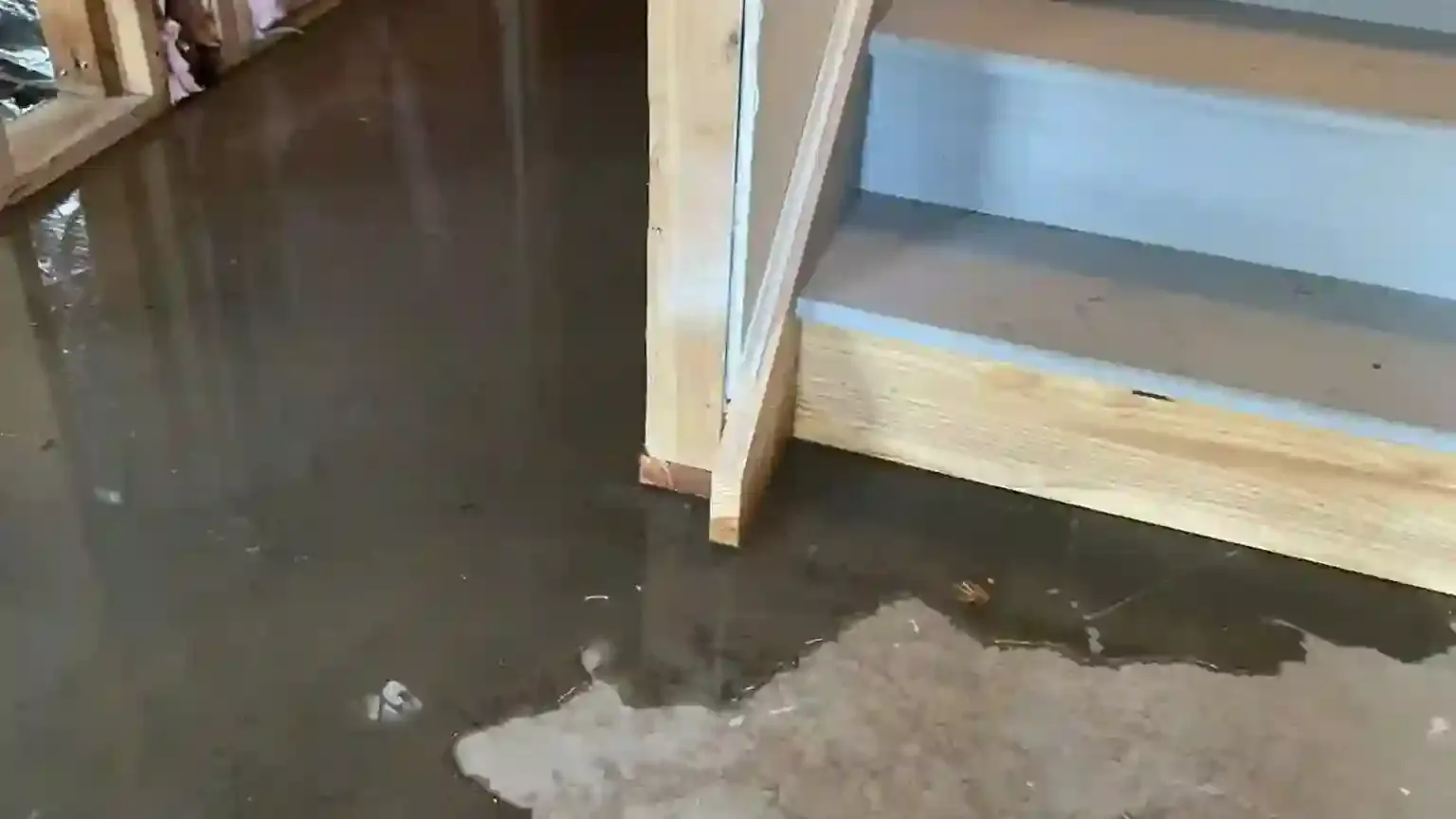
Most of the wet basements we see in Duluth are clean-water events from a storm. That’s the easy end of this. We’ll tell you straight if yours is the other kind.
Option A: what does professional drying actually involve?
People picture a truck full of fans. It’s really four steps, and only one of them is fans.
First comes extraction — pulling the standing water out with equipment that moves gallons a minute, not a shop vac’s few gallons at a time. After that, anything soft and soaked comes out: carpet pad, the bottom edge of drywall, wet insulation inside finished walls. Then air movers get aimed at surfaces on purpose, low and along the floor, so they push moisture off the material instead of just stirring the room. Last, a commercial dehumidifier pulls that moisture out of the air and dumps it down a drain.
The part that separates it from a rental setup is the meter. We take readings in the wood, the drywall and the slab, then come back until the numbers match a dry part of your house. Your hand is a lousy moisture meter, which is a shame, because it’s always with you.
When it wins: more than an inch or two of water, water that sat more than a day, or finished walls. Also any time the basement is somebody’s living space.
What it costs: it rides on square footage, how many days the equipment stays, and how much material has to come out. A small unfinished area sits at the low end, while a finished in-law suite with drywall removal sits much higher. You get the number in writing first.
Option B: what can you do with a shop vac and fans?
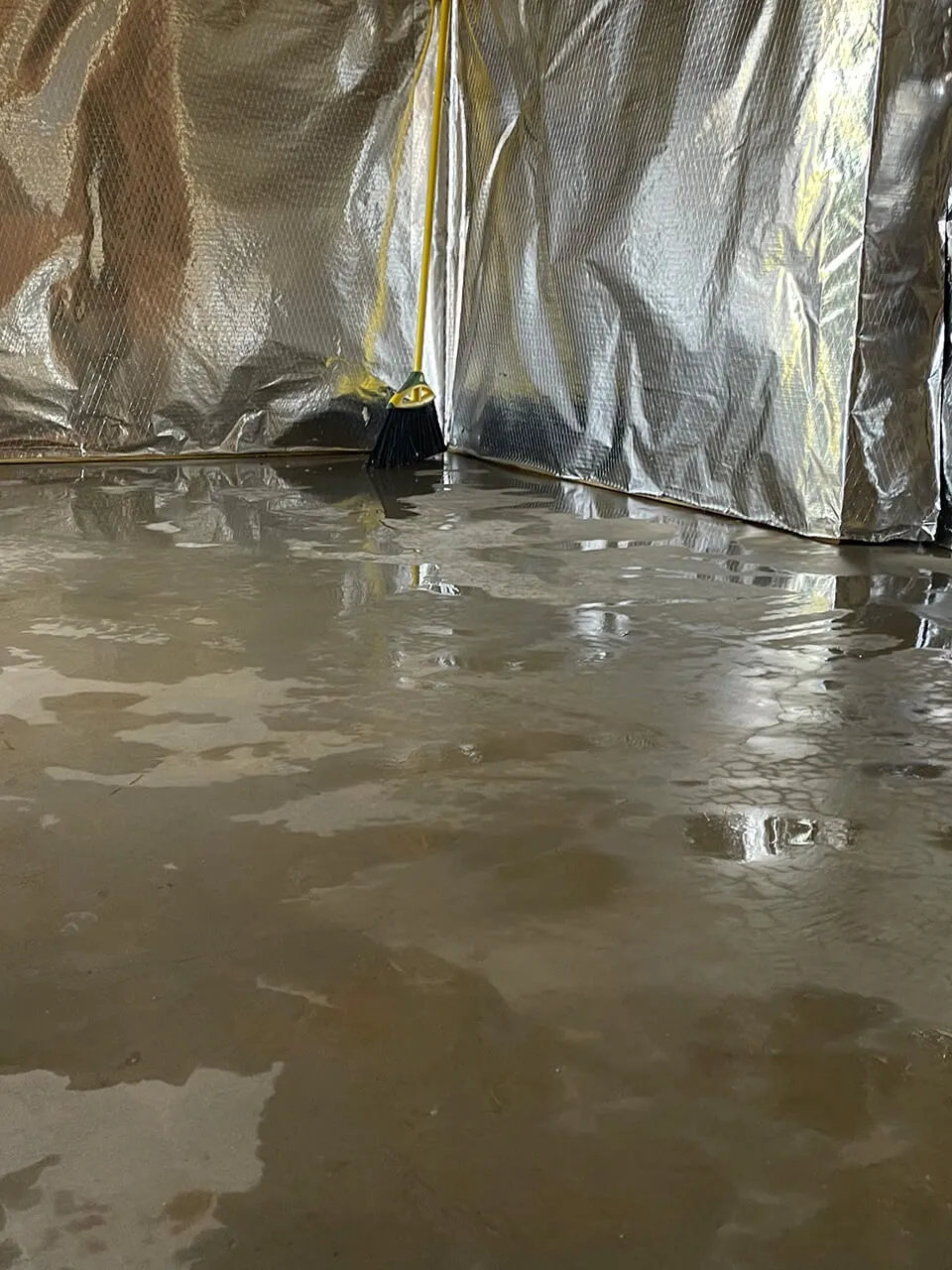
Quite a lot, honestly, and we’re not going to pretend otherwise. A wet/dry vac, three or four box fans and a rental dehumidifier from a hardware store is a legitimate drying setup for a small, quick, clean-water spill on a bare slab.
Here’s the order that works. Vacuum until the floor stops giving up water, then get everything up off the ground, including cardboard boxes, which soak like sponges. Set fans low and pointed along the wall base. Run the dehumidifier with the windows shut, because open windows in Georgia humidity just invite more moisture to the party. Keep it going for days, not hours.
When it wins: a thin layer of clean water, caught the same day, on an unfinished floor, with nothing soft involved. That’s a real scenario and it happens all the time near the Bunten Road corridor, where a clogged downspout sends a little sheet of rainwater under a door.
What it costs: a rental fee, a few days of electricity, and a weekend of your attention. Cheap, when it’s the right call.
The trade-off: home gear moves air well but removes water slowly, and it can’t see inside a wall. If moisture is hiding behind finished drywall, fans in the room won’t reach it.
How do they compare, straight across?
Professional structural drying
- Extraction that removes water fast
- Wet material comes out, not just dries
- Moisture readings prove when it’s done
- Reaches wall cavities and under flooring
- Right call for sewer water, every time
- Costs money you may not need to spend
Do it yourself
- Cheap and you can start tonight
- Fine for thin, clean, same-day water
- No appointment, no waiting
- Slower moisture removal per hour
- Can’t see behind finished walls
- Easy to stop too early and call it dry
Neither column says “better,” because neither one is. Both basement drying options Duluth homes need are just tools — one is simply a bigger tool than the other.
Where do homeowners get steered wrong?
Now here’s where a lot of people get pointed in the wrong direction, and it usually isn’t anybody being sneaky. It’s a habit.
The mistake is drying the surface while the cavity stays wet. The floor looks great, the room smells okay, and behind the baseboard the drywall’s bottom edge and the insulation are still soaked. Wet organic material is the whole ballgame — mold can begin growing on it in roughly 24 to 48 hours. That’s why speed beats horsepower. A modest setup running two hours after the water shows up will beat a monster setup running Thursday.
Good news, though: this is easy to avoid once you know it. Pull the baseboard, cut a couple of inches off the bottom of the drywall if it’s wet, and get the insulation out of that cavity. It feels like overkill until you see how fast a cavity dries once air can reach it.
There’s a second one worth naming. A basement that floods “only in heavy rain” almost always has a surface water problem, not a groundwater problem — and surface water is usually the cheaper fix. We’ve stood in basements over near Abbotts Bridge where the whole cause was a downspout dumping three feet from the wall. Drying that basement four times a year is expensive. Moving the water is not.
Twenty years in, the drying isn’t the hard part. Getting honest about why it got wet is. We’d rather fix a downspout for you than dry the same room every spring.

So which one would we pick for your house?
You wanted a recommendation on basement drying options Duluth houses actually call for, so here it is in plain terms.
Handle it yourself when all four are true: the water is clean, it’s under about an inch, you caught it within a day, and nothing soft or finished got wet. That’s a rental dehumidifier and a weekend. Call us if you want, but we’ll probably tell you the same thing over the phone and save you a visit.
Bring in professional drying when any one of these is true: the water sat overnight, it came up past the carpet pad, there’s finished drywall involved, or it was sewer water. That last one isn’t a judgment call at all. And if the wet room is a bedroom for a parent or an adult child — which describes a lot of houses around here — we’d take the moisture readings even if it looks fine. Multi-generational homes deserve the certainty.
Homeowners over on the Berkeley Lake edge hear the middle answer a lot, since those lots sit low and take on surface water more than groundwater. Half the time the real fix is outside the house entirely, and that’s a much smaller conversation than the one they braced for.

What should you do every year once it’s dry?
Here’s the list nobody hands you at the end of a job. Ten minutes twice a year keeps your basement boring, and boring is exactly what we’re selling.
- Test the sump pump in February. Pour a bucket into the basin and watch it kick on, because spring storms start in March.
- Clear the discharge line. A discharge buried under mulch or leaves turns a good system into yard art.
- Clean gutters in November. Fall leaf drop clogs catch basins around here and puts roof water right against the wall.
- Walk your downspouts. Each should carry water at least six feet out, since mowers knock extensions loose constantly.
- Check the grade after a dry spell. Clay shrinks and settles, so top up low spots with soil, not mulch.
- Watch your humidity. Keep the basement under about 55 percent in summer, and plumb the dehumidifier’s drain before vacation.
Do that and you’ll go years without thinking about the lower level. For the bigger-picture side — grading, drainage and how homes handle water — FEMA’s building science library is a solid free read.
Why does hiring local matter here?
Because we’re fifteen minutes up the road in Lawrenceville, and we’ve been in these subdivisions for years. We know the 1990s neighborhoods off Peachtree Industrial Boulevard where the original drainage has silted up, the walkout basements on the rolling lots near McDaniel Farm Park, and the older homes closer to the Southeastern Railway Museum that sit on crawl spaces with no vapor barrier. So we can usually name the likely cause before we open a single wall.
Want to read further first? Our page on the systems we install covers basement waterproofing in detail, and this guide on the best basement drainage setups explains where the water should go once it’s out. Neighbors one town north can read the same breakdown on Suwanee basement drying options. If you’re also seeing cracks or a sticking door, start with foundation repair instead.
Where we work around Duluth
We’re based in Lawrenceville, roughly fifteen minutes east, so we’re in Duluth almost every week. We also cover Johns Creek, Suwanee, Berkeley Lake, Peachtree Corners, Norcross, Sugar Hill, Buford, Lilburn and Snellville, plus the wider Gwinnett County area.
Questions Duluth homeowners ask us
Shut off power to the basement at the panel before you step in any standing water. After that, find where the water is coming in and stop it if you can, then start moving water out and getting soft items up off the floor. Take photos before you clean anything, since your insurer will want them.
That pattern usually points to surface water rather than groundwater. Roof runoff, a clogged downspout, or soil graded back toward the house sends rain straight to your foundation faster than the ground can take it. The good news is that surface water is normally the cheaper problem to fix.
Sometimes, and it depends on the source. A sudden failure like a burst pipe or a water heater is often covered, while groundwater seeping in through a wall usually is not without a separate flood or water-backup policy. Call your agent early and document everything with photos and receipts.
Start the same day if you can. Mold can begin growing on wet organic material like carpet pad, drywall and insulation in roughly 24 to 48 hours, so getting air moving early matters more than having the biggest equipment. Speed is the thing you control.
Water follows the easiest path, and the seam where the wall meets the slab is usually it. When saturated clay presses against the foundation, water gets pushed through that joint and appears at the floor edge. It looks alarming, but it is one of the most routine things we correct.
Let’s figure out what your Duluth basement actually needs
The inspection is free, the estimate is free, and there’s no pressure at the end. We’ll take moisture readings, show you where the water got in, and tell you honestly if this is a job you can handle yourself.
(678) 914-5112Serving Duluth and all of Metro Atlanta · $500 off projects over $3,500 · Live support 7am–8pm, 7 days a week