

Crawl Space Repair Snellville Homeowners Weigh: Full Encapsulation or Just a Vapor Barrier?
An honest side-by-side of the big fix and the smaller one — plus a real recommendation, including when we’d say skip the big one.
It started with a cardboard box. You picked it up to grab the Christmas lights, and the bottom sagged open like wet paper. Nothing spilled, and no pipe burst. Honestly, most crawl space repair Snellville calls start right there — with a soft box, not a flood.
Good news? A soggy box is early information, and early is the cheapest place to be. So let’s put the two real options side by side, then we’ll tell you which one we’d pick under your house.
Option A: what does full encapsulation actually do?
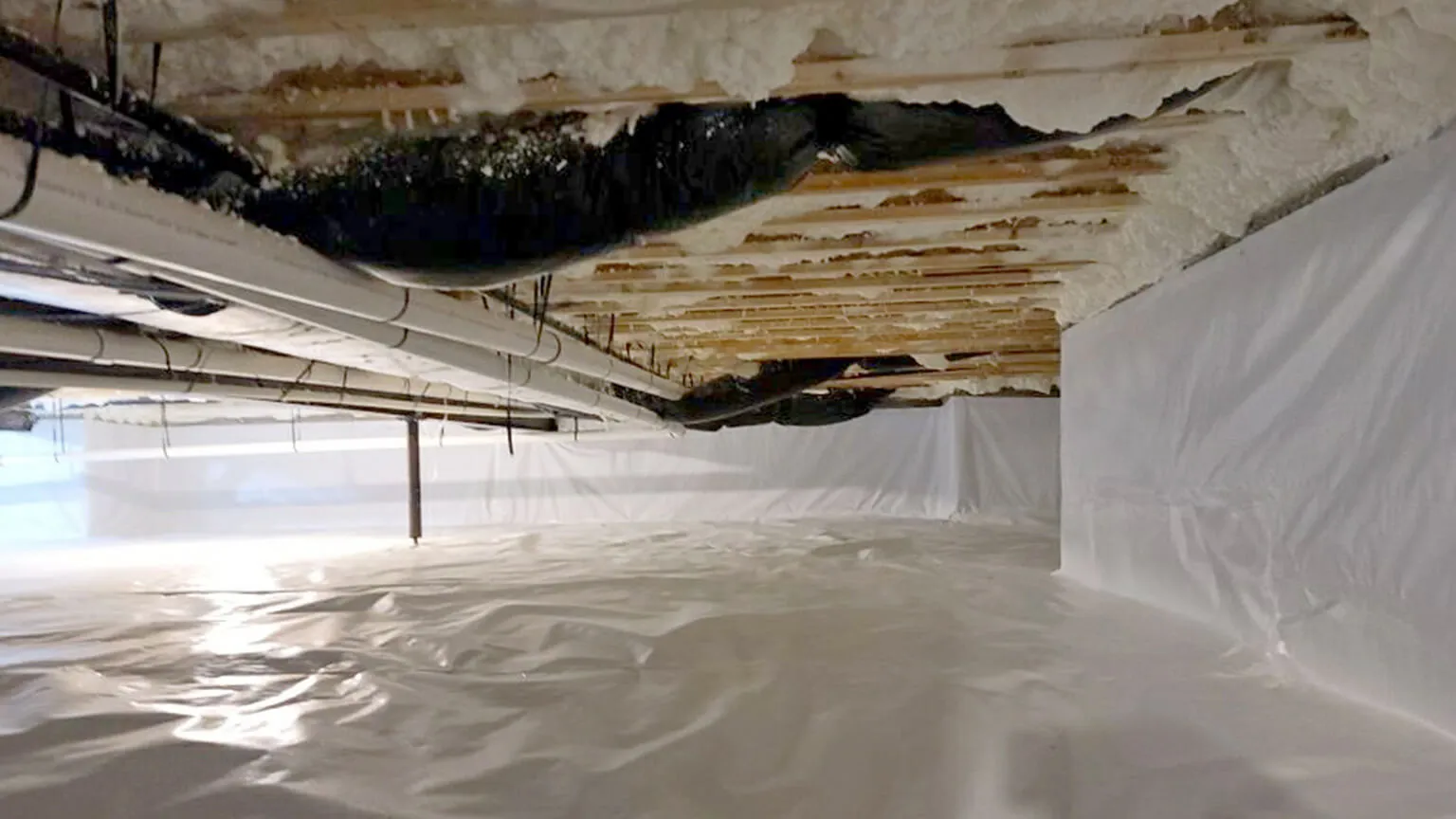
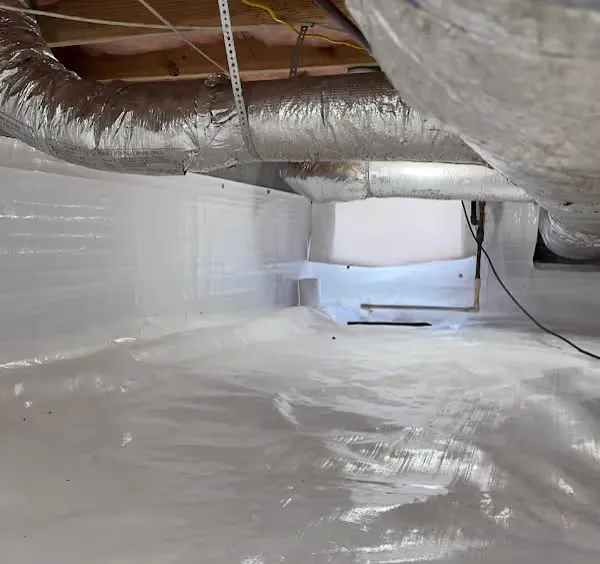
Think of it as moving the crawl space inside the house instead of leaving it outdoors. A heavy liner covers the dirt, runs up the block walls, and gets sealed in place. Seams are taped, piers are wrapped, and the vents get closed.
Here’s the detail that separates a real job from a cheap one. A true encapsulation uses a reinforced liner sealed to the walls and piers — not loose sheeting laid on the dirt. Loose plastic slides and tears, so you get the look of a fix without the fix.
After the liner, a dehumidifier usually goes in to hold humidity steady. It drains outside or to a small pump, because nobody wants to empty a bucket in a 28-inch crawl space.
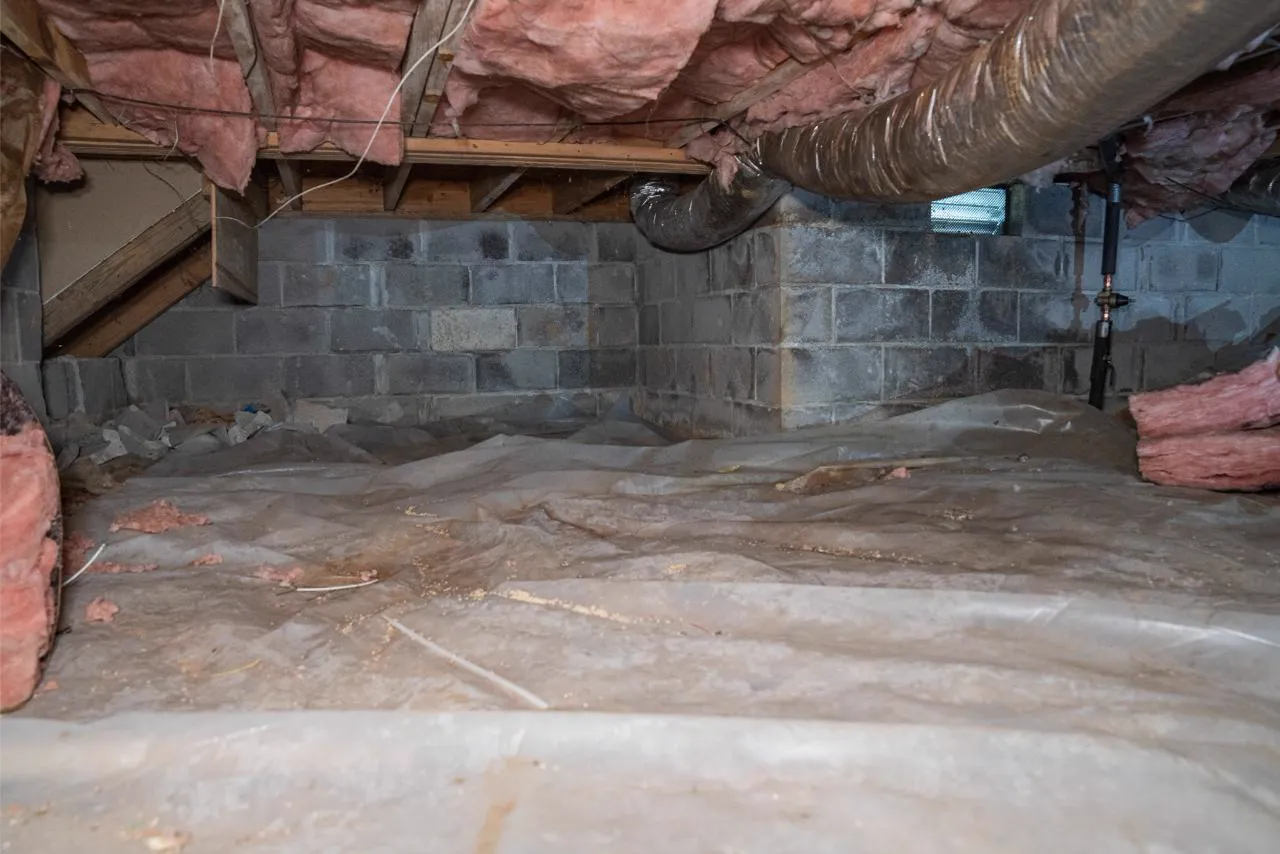
Why close the vents, though? Because in Georgia, warm August air hits cool crawl space surfaces and drops its moisture right there. That’s condensation, not drying, which is why a vented crawl space can feel damp during a dry spell.
Worth knowing
Encapsulation is a moisture system, not a drainage system. If water runs into the space during a storm, that source gets fixed first — otherwise you’ve built a very nice pond liner.
Option B: is a vapor barrier alone ever enough?
Yes. Sometimes it genuinely is, and we’d rather say that out loud than sell you something bigger. The lighter path is a proper floor barrier plus fixing whatever lets water in.
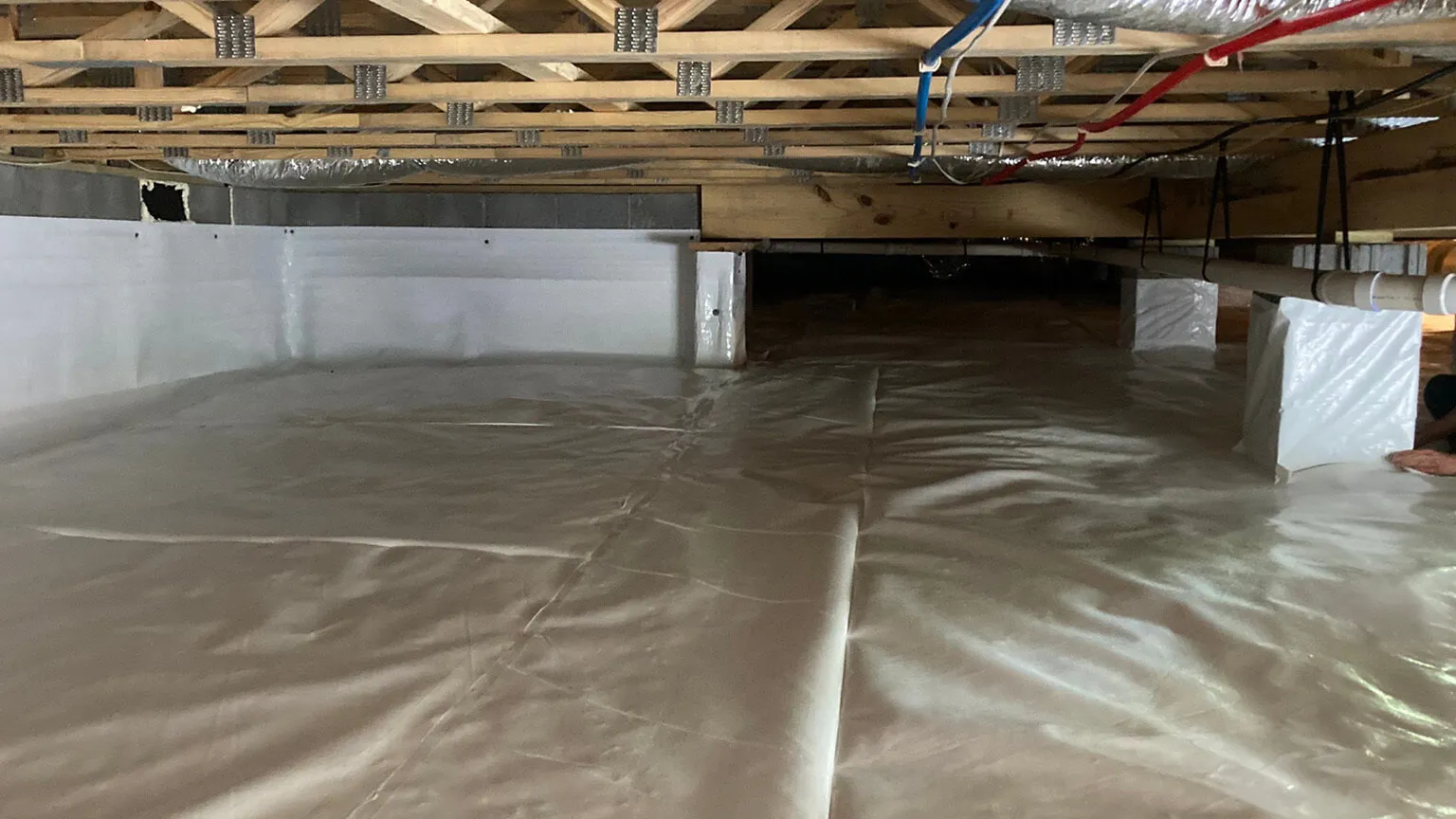
What does that look like in practice? A real barrier goes over the dirt — not the thin builder sheeting somebody tossed down in 1988 — overlapped, sealed, and carried up to the walls. Then we chase the water: gutters, downspouts, grading that slopes back toward the house, or a vent sitting below grade.
Drainage handles the rest. If groundwater rises into the space, a perimeter drain and a sump take care of it — our page on crawl space repair walks through those parts piece by piece.
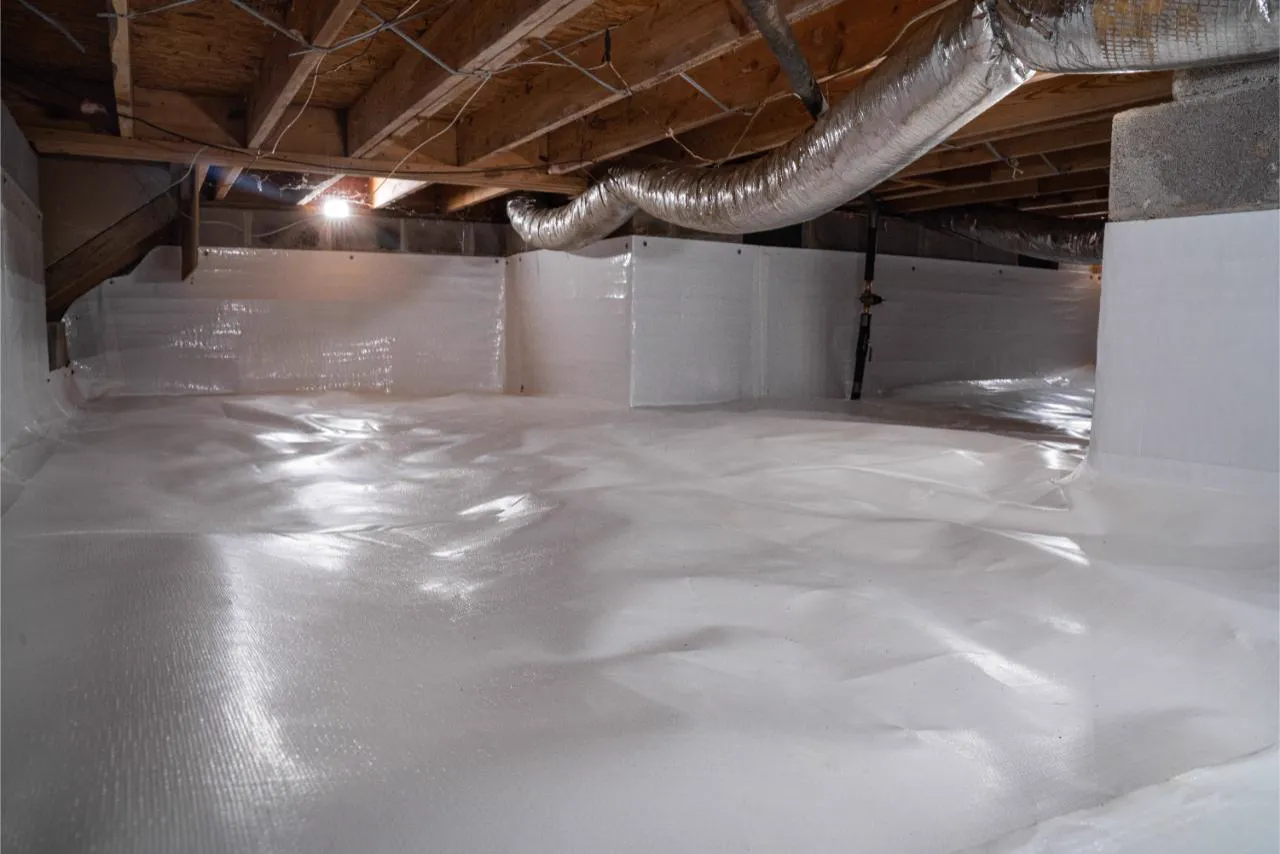
So why doesn’t every house stop at a barrier? Because plastic on the ground blocks moisture from the dirt, but does nothing about humid air pouring through open vents. On a shaded lot the ground stays cool, the air stays wet, and the numbers never settle. That’s when the bigger option earns its keep.
Here’s the thing about Snellville homes specifically
Ready for the part that changes this decision? Snellville got built in one long stretch between about 1975 and 1995, and that shows up under the floor in a specific way.
A lot of these lower levels were finished in the nineties, and the drywall has been quietly wicking water ever since. The fix isn’t more drywall — it’s stopping the water first. Same story under the split-levels, where a partly buried level sits against red clay and sweats all summer.
People here aren’t shopping for a crawl space. They’re finally dealing with something they’ve smelled for six years.
The other pattern we see constantly is water sneaking in at the cove joint, where the wall meets the floor. Homeowners in the Norris Lake area and along the streets off Lenora Church Road describe it the same way: dry all week, damp seam after a hard rain. Good news is that one’s predictable, and the repair is well understood.
Terrain matters too. The land rolls toward the Yellow River and Big Haynes Creek, so plenty of lots quietly take on runoff from the yard uphill. Neighbors in the Brookwood district neighborhoods compare notes at the Snellville Towne Green and realize they’re all having the same year.
Side by side, honestly
Enough theory. Here’s how the two crawl space repair Snellville approaches stack up once we’re down there with a light and a humidity meter.
Full encapsulation
- Reinforced liner sealed to the floor, walls and piers
- Vents closed, so humid summer air stays outside
- Usually includes a dehumidifier you can check on your phone
- Holds humidity steady year-round, not just after storms
- Costs more up front, and the dehumidifier draws power
- Makes the space clean enough for real storage
Vapor barrier and drainage
- Sealed barrier over the dirt, walls left open
- Water source gets corrected: gutters, grading, downspouts
- Often done in a day, sometimes two
- Costs noticeably less, with no equipment to run
- Won’t control humid air moving through open vents
- Plenty for dry, sunny, well-drained lots
Notice that neither column says “better.” Once we’ve walked your lot and read the numbers, one of them is usually obvious — and the other is a conversation you can skip.
What actually decides it?
Four things, mostly. They come up on nearly every inspection we run between Eastside Medical Center and the Brookwood cluster.
The deciding factors
- How much sun does the lot get? Shaded, wooded lots hold moisture far longer, and Stonecypher has plenty of tree cover.
- Is water entering, or is it just humid? Standing water is a drainage problem. A steady 70-percent reading is an air problem.
- Where does the ductwork run? Ducts or an air handler down there make sealed-and-conditioned the smarter call.
- How old is the equipment? Sump pumps installed with the house are pushing 30 years, and pumps don’t last forever.
That last one hits harder here than in most towns. Since so much of the city went up in the same two decades, a whole neighborhood’s worth of original moisture systems ages out on the same schedule.
The Department of Energy’s guide to insulation and moisture control covers the building-science side if you like source material. The EPA’s page on mold and health is the other one worth ten minutes.
So which one do we recommend?
For most homes here, full encapsulation — but only after the water source is handled. Red clay that holds water, shaded lots, ductwork under the floor, and finished rooms overhead all point the same way. On a split-level with the air handler down there, it isn’t close.
We recommend the lighter route when the space is dry, the lot drains well, and humidity behaves through a muggy August. A sealed barrier plus gutter and grading work does the job, and we’ll say so even though the invoice is smaller. Our guide to the best crawl space setups goes deeper there.
Sometimes we recommend neither today. If a downspout dumps right against the foundation, we’ll extend it and ask you to call after the next real storm. An afternoon of gutter work has rescued more crawl spaces than anybody admits. Curious how the same call goes a few exits north? Our Buford crawl space repair breakdown covers a different mix of lots.
The one that wasn’t what they thought
Want the inspection that surprised everybody? A homeowner called us sure the crawl space had a groundwater problem. Two companies had already quoted a full drainage system with a sump.
We crawled it. The dirt was dry six feet in from the wall, but soaked in one corner. That pattern doesn’t match groundwater, because groundwater comes up broadly, not in one wet stripe.
The real cause was a kitchen drain line, cracked at a joint, wetting one small area every time the dishwasher ran. A plumber fixed it in a morning. After that, we set a proper sealed barrier, closed two vents that sat below grade, and the humidity settled without a foot of drain pipe.
That’s why we inspect before we quote. Real talk: it’s easy to sell the big system to everyone, and more useful to tell you when you don’t need it. If your water is coming in at the wall instead, that’s a different repair — our page on flooded basement repair covers it.
Week one, year one, year ten
What does life look like afterward? Here’s the honest timeline.
Week one: the smell goes first. Humidity drops within a day or two, and by the weekend that hallway closet smells like nothing at all. Nothing is the goal.
Year one: the seasons stop showing up indoors. Floors hold their shape through August, doors latch the same in July as in January, and the HVAC quits fighting damp air. Better yet, the space turns into storage you’d trust with a cardboard box.
Year ten: the liner is still doing exactly what it did on day one, since there’s nothing down there to wear out. When you sell, a documented system and a transferable warranty quietly erase a question from the inspection report.
More importantly, a feeling sticks around. You stop wondering what’s under the floor, since you’ve seen it and it’s solid — and that’s what homeowners still mention years later, not the liner.
Why homeowners here hire us
Because you’ll get a written scope, proof of insurance, a warranty document, and photos of what we found before anything gets ordered. Plenty of folks here already paid somebody for a cement patch that didn’t hold, so we explain what’s causing the water and what the repair does about it.
Same crews, same trucks, every visit. Ask us anything on site, because the technical questions are our favorite part of the day.
Where we work around Snellville
We’re based in Lawrenceville, about fifteen minutes north, so we’re in this corner of Gwinnett constantly. That includes Snellville, Lawrenceville, Grayson, Loganville, Lilburn, Stone Mountain, Tucker, Centerville, Norcross and Duluth. Odds are we’ve been under a house near yours already.
Questions Snellville homeowners ask
Smell is the earliest sign, and it usually shows up weeks before anything visible. Also watch for insulation drooping from the joists, cupped floorboards, soft cardboard, or a musty upstairs closet. A cheap humidity meter left down there overnight tells you plenty.
It’s sealing the dirt floor and walls with a heavy reinforced liner, closing the vents, and adding a dehumidifier so the space stays dry all year. The crawl space becomes part of your house instead of a damp gap under it. Loose plastic on the ground isn’t the same thing.
It depends on square footage, headroom, and whether drainage work comes first. A barrier-only job sits at the low end, while a full sealed system with a dehumidifier sits at the high end. Anyone quoting a flat number by phone is guessing, so we measure and hand you a written scope.
If the vents are sealed, almost always yes, because the space still needs a way to shed moisture. On a dry, sunny lot with a barrier-only fix, you often don’t need one. We take readings across a humid stretch before recommending it either way.
Closed, if the space is sealed and has a way to manage humidity. Open vents made sense in older codes, but in a Georgia summer they invite warm wet air onto cool surfaces and create condensation. That said, don’t close vents on a bare-dirt crawl space, since that traps moisture with nowhere to go.
Let’s see what’s really under your Snellville home
The inspection is free, the estimate is free, and nobody pressures you after. We’ll take photos, show you the humidity readings, and tell you honestly if the smaller fix is the right one.
(678) 914-5112Serving Snellville and all of Metro Atlanta · $500 off projects over $3,500 · Live support 7am–8pm, 7 days a week