

Flooded Basement Repair in Snellville: The Real Scope, the Real Cost
What the job includes, what moves the number, and what you get in writing.
The line on the inspection report read “evidence of past water intrusion — lower level.” Eleven words, and suddenly the closing had a wrinkle in it. If that’s roughly where you’re standing right now, this plain-English guide to flooded basement repair Snellville homeowners are shopping for was written for you.
Here’s the good part up front. Water in a basement is a solvable problem, and it’s work we’ve done every week for more than twenty years. So let’s skip the sales voice and go straight to the job, the price drivers, and the warranty.
So what is flooded basement repair, exactly?
First, a distinction that matters more than almost anything else. Seepage is a damp wall, a musty smell, maybe a stain. Flooding is bulk water — actual puddles, actual inches. They look related, but they have different causes, so they get different fixes.
Bulk water almost always means one of four things: hydrostatic pressure in the soil, a sump pump that quit, a blocked drain line, or a window well with no working drain. Good news? Every one of those has a straightforward answer once somebody finds which one you’ve got.
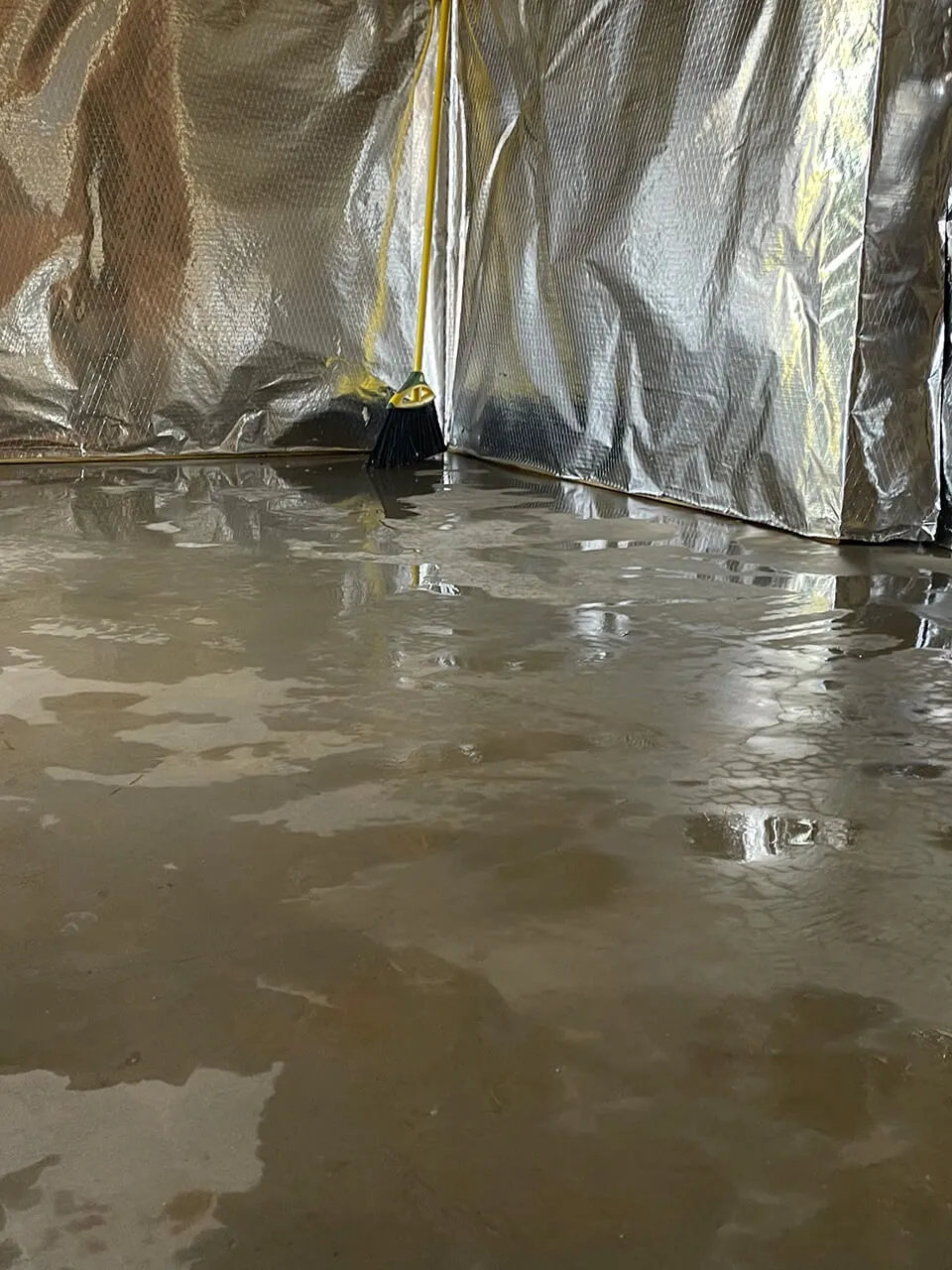
Now, where does it get in? Most often the cove joint — the seam where your basement wall meets the floor slab. People hunt for a crack and can’t find one, because a cove joint isn’t a crack. It’s a seam, built in on purpose, and under pressure it’s the path of least resistance.
Georgia red clay is the other half of the story. Clay holds water instead of draining it, so after a long soaking rain the soil around your foundation stays loaded. That pressure has to go somewhere, and on a block wall it pushes right through the hollow cores. Your basement shouldn’t have its own indoor pool, and it doesn’t have to.
Safety first, calmly
Never step into standing water while the power is on. Kill the circuit at the panel first, or call an electrician if the panel itself is down there.
What does a real job look like, start to finish?
Fair question, since “we’ll waterproof it” tells you nothing. A proper repair runs in a predictable order, so you can picture it before anyone parks a truck out front.
- Water out, fast. Standing water gets pumped and extracted the same day whenever we can get there.
- Wet organics out. Soaked carpet pad, wet drywall bottoms and ruined cardboard leave the building, because they hold water long after the floor looks dry.
- Dry it properly. Air movers and commercial dehumidifiers run until the materials read dry — not until the floor looks dry. Those are two different days.
- Find the source. We walk the grade, check downspouts, test the pump and scope the discharge line, then read the inside.
- Build the fix. Usually an interior perimeter channel, perforated pipe in clean stone set below the slab, routed to a sump that discharges well away from the house.
- Close it up. Fresh concrete over the channel, wall liner where it belongs, debris hauled off.
Why the push on drying? Because mold can start growing on wet building materials within about 24 to 48 hours. It’s just a clock, and it’s why we’d rather send a crew tonight than Thursday. The CDC’s guidance on mold cleanup after flooding lays out the same timeline.

And the sump pump? Pumps fail in predictable ways, which is oddly reassuring. Power drops during the same storm that brings the water, floats stick, undersized pumps fall behind, missing check valves let water drain back down, and discharge lines clog at the far end. Every one of those is a known problem with a known fix.
Ready for the part nobody mentions?
There’s usually a second problem running alongside the water, and it rarely shows up in a quote. It’s the wall — or more precisely, what’s stapled to it.
A lot of Snellville basements got finished in the nineties, back when the lower level became a rec room and nobody thought twice about it. Since then the drywall has been quietly wicking water up from the slab edge. The paint looks fine, but the bottom four inches are not fine.
So the fix isn’t more drywall. Instead, it’s stopping the water first, then rebuilding with materials that don’t drink. That’s the whole difference between flooded basement repair Snellville homeowners do once and the kind they do again in four years — and doing it once is a much better story to tell at a cookout.
Twenty years in, the pattern is always the same: the homes that flood twice are the homes where somebody treated the symptom and called it a repair.
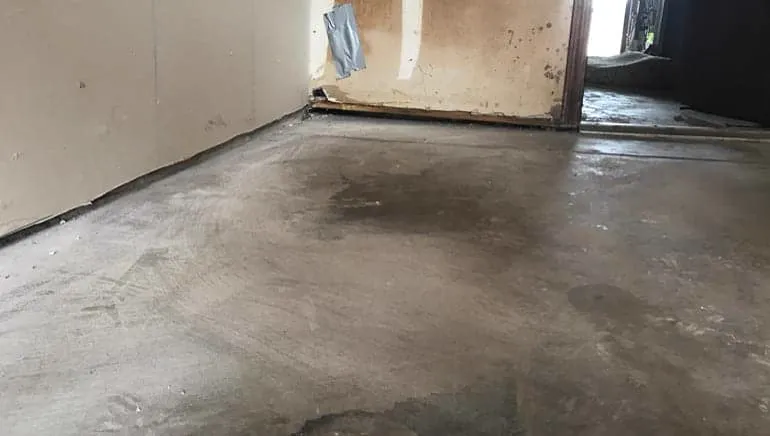
We see the same thing with hydraulic cement patches. Somebody smeared cement along the cove joint, it looked solved for a season, and then the water moved eight feet down the wall. Nothing got fixed — the pressure just found a new door. We ran into exactly that on a split-level near Ozora, where three patch jobs had been layered on across two owners.
What does it cost around here?
Straight answer: it depends on how much wall is involved and how hard that wall is to reach. Anybody handing you a flat number over the phone is guessing, and you’d be paying for the guess. Here’s what we weigh instead.
What moves the number up or down
- Linear feet. One wall versus a full perimeter is the biggest factor, by a wide margin.
- Access. An open basement is simple, while a finished one with built-ins takes careful demo first.
- Sump and backup. Plenty of homes here still run the original basin from 1994, with no battery backup at all.
- Emergency water removal. If we’re pumping and drying first, that’s its own line — equipment and days on site.
- Outside conditions. Grading, downspouts and a silted footing drain sometimes carry most of the blame, which is a smaller ticket.
- Wall condition. Horizontal cracks or bowing from clay pressure mean structural work leads.
Small drainage corrections and a pump swap land at the low end. A full perimeter system with a new sump, battery backup and careful work around finished space sits at the high end. Most flooded basement repair Snellville projects land in the middle, and after we walk the house you get a written number with the scope spelled out.
What’s included — and what isn’t?
Included: labor, materials, the concrete we replace, hauling, the sump work and the warranty. Not included: rebuilding finished walls we opened, replacing ruined flooring, contents cleaning, and structural repair, which is priced on its own. Better you hear that today than find it in fine print.
A quick word on insurance, since it comes up on every call. Standard homeowners policies commonly exclude surface flooding, and sump coverage is usually a separate endorsement you add on purpose. We can’t read your policy for you, so call your agent and ask both questions directly. FEMA’s building science resources on flood protection are a good neutral starting point too.
The warranty is where a company shows its hand. Ours comes in writing before work starts, covers the system we install, and is honored by the same crews who did the work. That last part is the whole argument for hiring local. Our shop sits about fifteen minutes north in Lawrenceville, so in year seven you’re calling people who are still here.

Local also means we know the housing stock. We’ve worked the sloped lots in Herrington, we know how original block walls behave in Kingsley Creek, and we’ve been up and down the streets off Scenic Highway. If you’re anywhere between Briscoe Park and Eastside Medical Center, odds are good we’ve already been under a house on your street.
Once it’s fixed, what should you do every year?
Here’s the list we hand every homeowner, because a good system still likes a little attention. Twenty minutes, once a year, and it’s the difference between a system that lasts and one that surprises you.
Your twenty-minute annual checkup
- Test the pump. Pour a bucket into the basin and watch it kick on, run, and shut off cleanly.
- Check the float. A stuck float is the most common failure we find, and the cheapest to prevent.
- Walk the discharge line. Confirm the far end is open, clear of mulch and pointed away from the house.
- Clean gutters, extend downspouts. Aim for water landing at least six feet out. This alone solves more problems than any product.
- Look at the grade. Soil should slope away from the foundation, and clay settles, so a little topsoil goes a long way.
- Peek in the window wells. If there’s a drain down there, make sure leaves aren’t sitting on it.
- Test the battery backup. Unplug the primary pump, confirm the backup picks up, then plug it back in.

Picture the after for a second. Two days of hard rain, and you don’t go downstairs to check. The guest room is a guest room, and the storage is just storage. When the next inspection report gets written on your house, that lower-level line says nothing at all — because you handled it properly, and you’ve got the paperwork to prove it.
Still sorting out which problem you actually have? Our guide to standing water basement issues covers the symptoms in detail, and every basement waterproofing system we install is laid out on our service page. If the walls are cracking or the floor is out of level, start with foundation repair instead. Comparing notes with family up north? We cover the same ground for Buford flooded basement repair.
Where we work around Snellville
We’re based in Lawrenceville, so Snellville is a quick run down the road. We work throughout Grayson, Loganville, Lilburn, Stone Mountain, Tucker, Dacula, Lawrenceville and Centerville, plus Norcross, Duluth and the wider Gwinnett area. If you’re near the Towne Center or out toward the Brookwood cluster, we’ve likely got a truck nearby.
Questions Snellville homeowners ask us
Faster than most people expect. Mold can begin growing on wet building materials within roughly 24 to 48 hours, so the goal is water out and air moving the same day. Get the wet carpet pad and soaked cardboard out first, because those hold moisture long after the slab looks dry.
Because it’s usually coming through the cove joint, the seam where the wall meets the slab. That seam isn’t a crack, so there’s nothing to patch. When wet clay puts pressure on the foundation, the joint is simply the easiest way in.
Yes, in the practical sense. You can’t stop rain, but you can give water an easier route than your basement with below-slab drainage and a sump that discharges well away from the house. The pipe and stone last the life of the home, while the pump is the part with a service life.
It depends mostly on how many linear feet of wall are involved and how much finished space we work around. A drainage correction with a new pump sits at the low end, and a full perimeter system with battery backup sits at the high end. We give you a written number with the scope spelled out after we walk the house, and the inspection is free.
That’s still worth looking at, because occasional flooding means the conditions are already there and just need the right storm. The upside is that these homes often need a smaller fix, since the cause tends to be one wall or one outside problem. We’ll tell you honestly if that’s your situation.
Let’s find out what’s really happening under your Snellville home
The inspection is free, the estimate is free, and nobody pressures you at the end. We’ll show you where the water gets in, what it takes to stop it, and what it’ll cost — even if the answer is simpler than you expected.
(678) 914-5112Serving Snellville and all of Metro Atlanta · $500 off projects over $3,500 · Live support 7am–8pm, 7 days a week