

Crawl Space Repair Buford Homeowners Weigh: Full Encapsulation or Just a Vapor Barrier?
Both options laid out fairly, the factors that decide it on a Buford lot, and a real recommendation — including when we’d tell you to skip the bigger fix.
How long has it been going on? Here’s the honest answer: on most crawl space repair Buford calls we take, the moisture has been working quietly for two or three years before anybody noticed a thing. Not a flood, not a bang — just a slow shift you finally catch on a humid Saturday.
Good news, though. Slow problems give you options, and you’ve still got all of them. So let’s put the two real choices side by side, then we’ll tell you which one we’d pick standing under your house with a flashlight.
Option A: what does full encapsulation actually do?
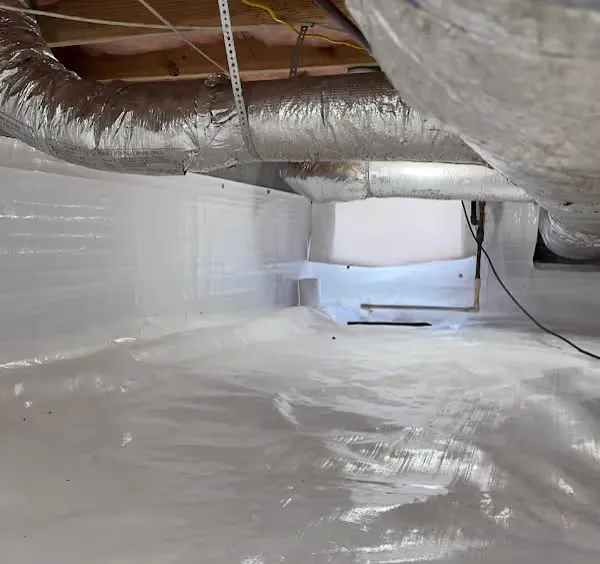
Think of it as moving your crawl space indoors. A heavy reinforced liner covers the dirt and runs up the block walls, where it gets sealed and fastened. Seams are taped, piers get wrapped, and the foundation vents are closed for good.
After that, a dehumidifier usually goes in to hold the humidity steady. It drains to the outside or to a pump, so nobody has to crawl 30 inches on their belly to empty a bucket. Nobody wants that chore, and that includes us.
Why close the vents? Because vents were required for decades on the idea that outside air dries a space out. In Georgia, warm July air hits cool crawl space surfaces and drops its moisture right there instead. That’s condensation, not drying, which is why a vented crawl space can feel damp in the middle of a dry spell.
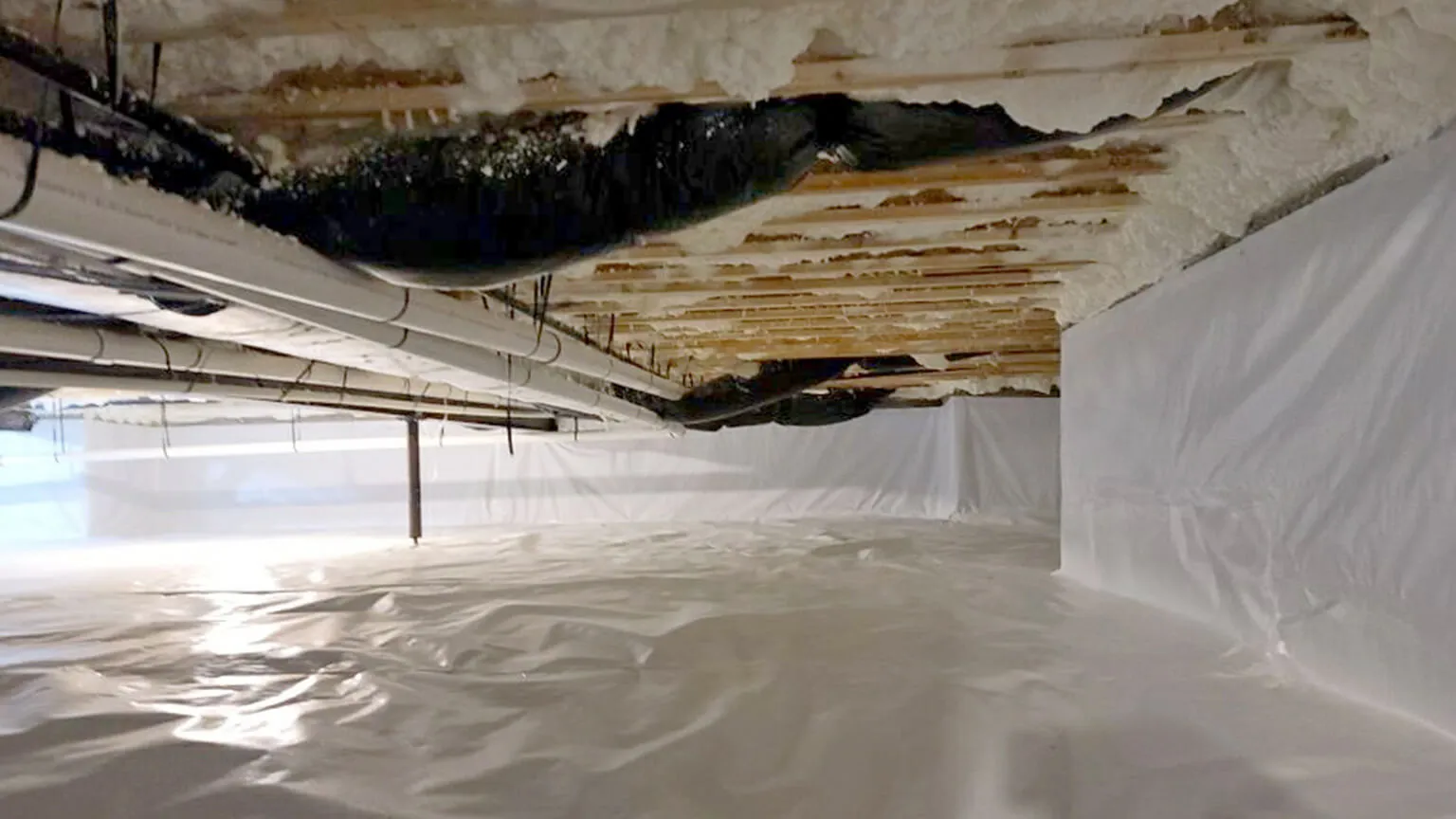
The result is a space you’d walk through in clean socks. A homeowner over in the Bogan Road area told us the hallway above hers stopped smelling within about a week, which is usually the first thing people report.
Worth knowing
Encapsulation is a moisture system, not a drainage system. If water actually runs into the space during a storm, that source gets fixed first — otherwise you’ve built a very nice pond liner.
Option B: is a vapor barrier alone ever enough?
Yes, and we’d rather say so than sell you something bigger. The lighter path is a proper floor barrier plus fixing whatever lets water in, and it works on more crawl spaces than the internet lets on.
What does that look like in practice? A real barrier goes over the dirt — not the thin sheeting a builder tossed down in 1999 — overlapped, sealed at the seams, and run up to the walls. Then we chase the water itself: gutters, downspout ends, grading that tips toward the house, or a vent sitting below grade.
Drainage handles the rest. If groundwater rises into the space, a perimeter drain and a sump take care of it, same as a basement system does. Our page on crawl space repair walks through each of those parts in plain language.
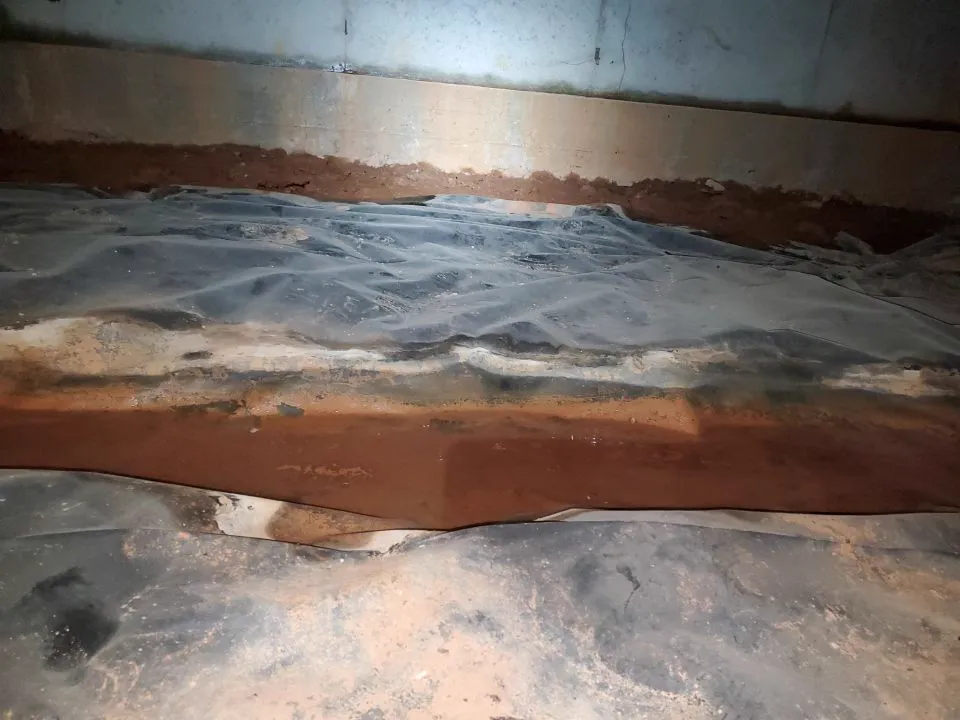
So why doesn’t every house stop there? Because a floor barrier blocks moisture from the dirt, but it does nothing about humid air pouring through open vents. On a shaded lot the ground stays cool, the air stays wet, and the meter never settles down. That’s the moment the bigger option starts earning its keep.
What happens after the crew leaves?
Nobody puts this part on an estimate, so here it is. The work takes a day or two, but the thing you actually bought is the six months that follow — and those look different depending on which route you pick.
With encapsulation, the change is fast and then it just stays. Humidity drops within a day or two, the smell fades over that first week, and after that the space quietly holds its numbers through August. There’s no seasonal drama, which is a strange thing to enjoy as much as people do.
With the lighter fix, the change is real but it’s more of a partnership. Your gutters have a job now. Downspouts need to stay extended, and the grading needs to keep doing what we set it up to do. That’s fine on the right lot — it’s just worth knowing before you choose.
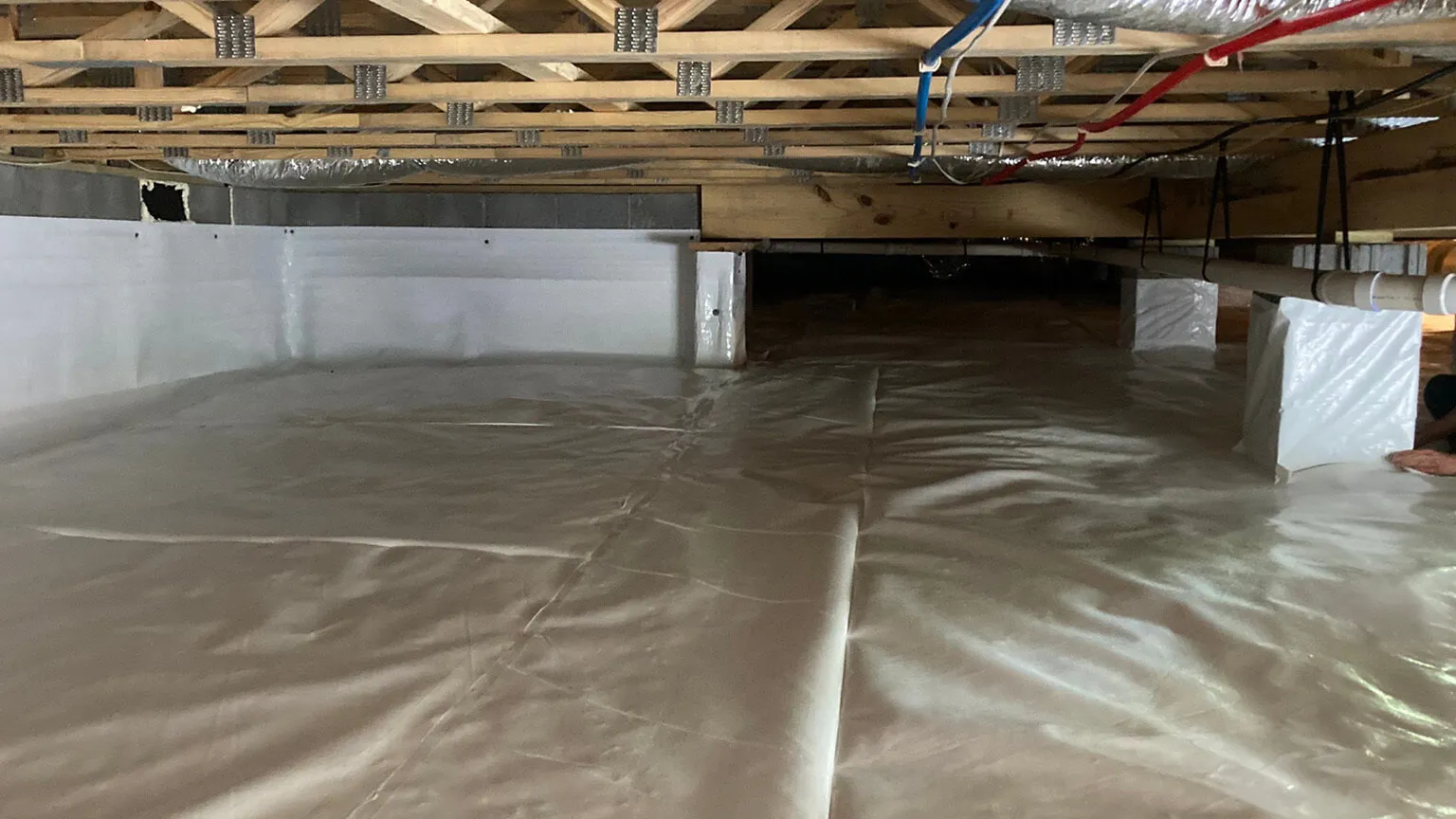
Maintenance is light either way. A dehumidifier wants a filter now and then, which puts it roughly on par with a coffee maker. Plus most units report to an app, so you can check your crawl space from the couch — a sentence nobody’s grandparents ever said.
Side by side, honestly
Enough theory. Here’s how the two approaches stack up when we’re down there with a light and a humidity meter.
Full encapsulation
- Heavy reinforced liner on the floor and up the walls
- Vents sealed, so humid summer air stays outside
- Usually includes a dehumidifier you can check on an app
- Holds humidity steady year-round, not only after rain
- Costs more up front, and the dehumidifier uses power
- Leaves the space clean enough for real storage
Vapor barrier and drainage
- Sealed floor barrier over the dirt, walls left open
- Water source gets fixed: gutters, grading, downspouts
- Often done in a day, sometimes two
- Costs noticeably less, with no equipment to run
- Won’t control humid air coming through open vents
- Plenty for dry, sunny, well-drained lots
Notice that neither column says “better.” Once we’ve walked your lot and read the numbers, one of these is usually obvious — and the other becomes a conversation we can skip entirely.
What decides it on a Buford house?
Where do you sit relative to the water? That’s the first question here, and it matters more in this city than in most. Living near Lake Lanier is wonderful right up until the water table decides your crawl space is part of the lake.
The deciding factors
- How close is the groundwater? Lots along the Lake Lanier corridor and below Buford Dam sit over genuinely high water, so drainage comes first every time.
- Is it water, or is it air? Standing water is a drainage problem. A steady 70-percent reading with dry dirt is an air problem.
- How much sun does the lot get? Shaded, wooded lots hold moisture for weeks longer than open ones.
- Where does the ductwork run? Ducts or an air handler down there push the answer toward sealed and conditioned.
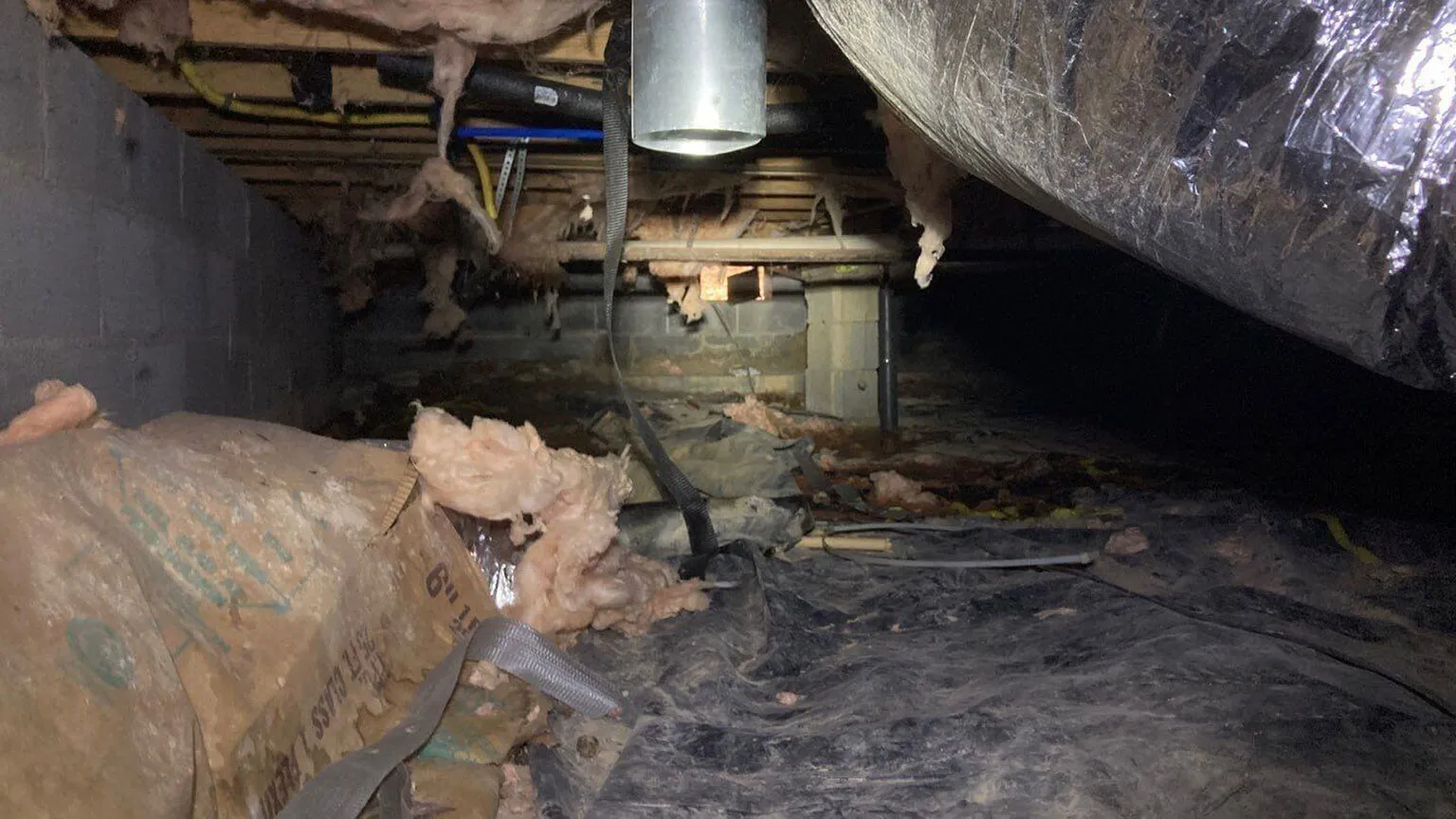
Age of the house plays in too. Much of Buford went up between 1995 and 2015, so a large batch of original moisture systems is aging out on roughly the same schedule. Meanwhile the older homes near Sardis often have block or stone foundations that never got waterproofed at all, because nobody did that back then.
Grade is the other big one. The land steps down hard in places, and a lot that sits below its neighbors is quietly handling their runoff. We see that pattern constantly in Mall of Georgia corridor neighborhoods, where a whole street can drain toward two unlucky houses. If your crawl space gets wet a day after the storm instead of during it, that’s the tell — and it’s the same story behind a flooded basement repair a few doors down.
So which one do we recommend?
For most homes we see off GA-20, we recommend full encapsulation — but only after the water source is handled. Red clay that holds water, shaded lots, ducts in the crawl space, and finished rooms overhead all point the same direction. On a house with the air handler down there, honestly, it isn’t a close call.
We recommend the lighter route when the space is dry, the lot drains well, and humidity behaves through a muggy stretch. In that case a good barrier plus gutter and grading work does the job, and we’ll tell you so even though the invoice is smaller. Our best crawl space guide goes deeper on what separates a solid barrier job from a cheap one.
Sometimes we recommend neither today. If a downspout is dumping right against the foundation, we’ll extend it and ask you to call us after the next real storm. An afternoon of gutter work has rescued more crawl spaces than any of us like to admit. Curious how the same visit plays out nearby? Our Grayson crawl space repair breakdown covers a slightly different mix of lots and soil.
The air upstairs is the real reason this matters
Ready for the part that reframes the whole decision? Your crawl space isn’t a separate room. It’s the bottom of a chimney, and the chimney is your house.
Air moves upward through a home — building scientists call it the stack effect. Warm air escapes near the roof, so replacement air gets pulled in from the lowest opening it can find. Building science research shows a large share of the air you breathe on the main floor started its trip down in the crawl space.
People think they’re fixing a dirt room under the house. They’re really fixing the air in the kids’ bedrooms.
Once you know that, a few household mysteries solve themselves. Hardwood cups along the seams in August, a closet upstairs smells like a basement, and doors stick in July but fit fine by Thanksgiving. The EPA’s guide on mold and health is worth ten minutes, and the CDC’s page on mold in the home covers the practical side.
This is all very fixable, though, and we handle it every single week. Dry the space and the air riding upstairs is dry too — which is the moment homeowners tell us they finally understand what’s been happening in their own house.
Why homeowners here hire us
You’ll get a written scope, proof of insurance, a warranty document, and photos of what we actually found — all before anything gets ordered. Buford folks tend to compare bids line by line, so we write proposals that hold up to that. We also coordinate exterior work with your HOA when the job touches grading or downspouts.
Same crews and same trucks, every visit. Ask us anything while we’re on site, since the technical questions are genuinely our favorite part of the day.
Where we work around Buford
We’re based in Lawrenceville, about twenty minutes south, so we’re up this way constantly. That includes Buford, Suwanee, Sugar Hill, Braselton, Flowery Branch, Dacula, Gainesville, Duluth, Lawrenceville and the wider Gwinnett and Hall Counties area. Odds are we’ve already been under a house near yours.
Questions Buford homeowners ask
It’s sealing the dirt floor and the walls with a heavy liner, closing the vents, and adding a dehumidifier so the space stays dry all year. In short, the crawl space becomes part of the house instead of a damp gap under it.
It depends on square footage, headroom, and whether drainage work has to happen first. A clean barrier-only job sits at the low end, while a full sealed system with a dehumidifier sits at the high end. Anyone quoting a flat number over the phone is guessing, so we measure first and hand you a written scope.
If the vents are sealed, almost always yes, because the space needs some way to shed moisture once outside air can’t move through it. On a dry, sunny lot with a barrier-only fix, you often don’t need one. We watch the readings across a humid stretch before recommending it either way.
Closed, but only as part of a sealed system with a way to control humidity. Closing vents on a bare dirt crawl space just traps moisture, so the liner and the dehumidifier have to come with it. Open vents in a Georgia summer bring in wet air that condenses on cool surfaces.
Usually yes, and usually within the first week or two. That smell rides up from below on the stack effect, so drying the source dries the air that follows it. If any odor lingers after that, it points to a second source we’d want to look at.
Let’s see what’s really under your Buford home
The inspection is free, the estimate is free, and nobody pressures you afterward. We’ll take photos, show you the humidity numbers, and tell you honestly if the smaller fix is the right call.
(678) 914-5112Serving Buford and all of Metro Atlanta · $500 off projects over $3,500 · Live support 7am–8pm, 7 days a week