

How to Hire the Best Crawl Space Snellville Company for Your Home
What makes these houses different, what belongs in a real quote, and the questions that separate a true fix from a fast one.
It usually starts with one line on a home inspection report. “Elevated moisture and deteriorated vapor barrier in crawl space.” The buyer’s agent circles it, the closing date gets nervous, and suddenly you’re searching for the best crawl space Snellville company at nine o’clock on a Tuesday night.
Good news, though. That line is one of the most common findings on any inspection in this town, and it’s very fixable. Better yet, once it’s handled properly it stays handled, and it shows up as a selling point on the next report instead of a bargaining chip.
Why does the report flag it so often?
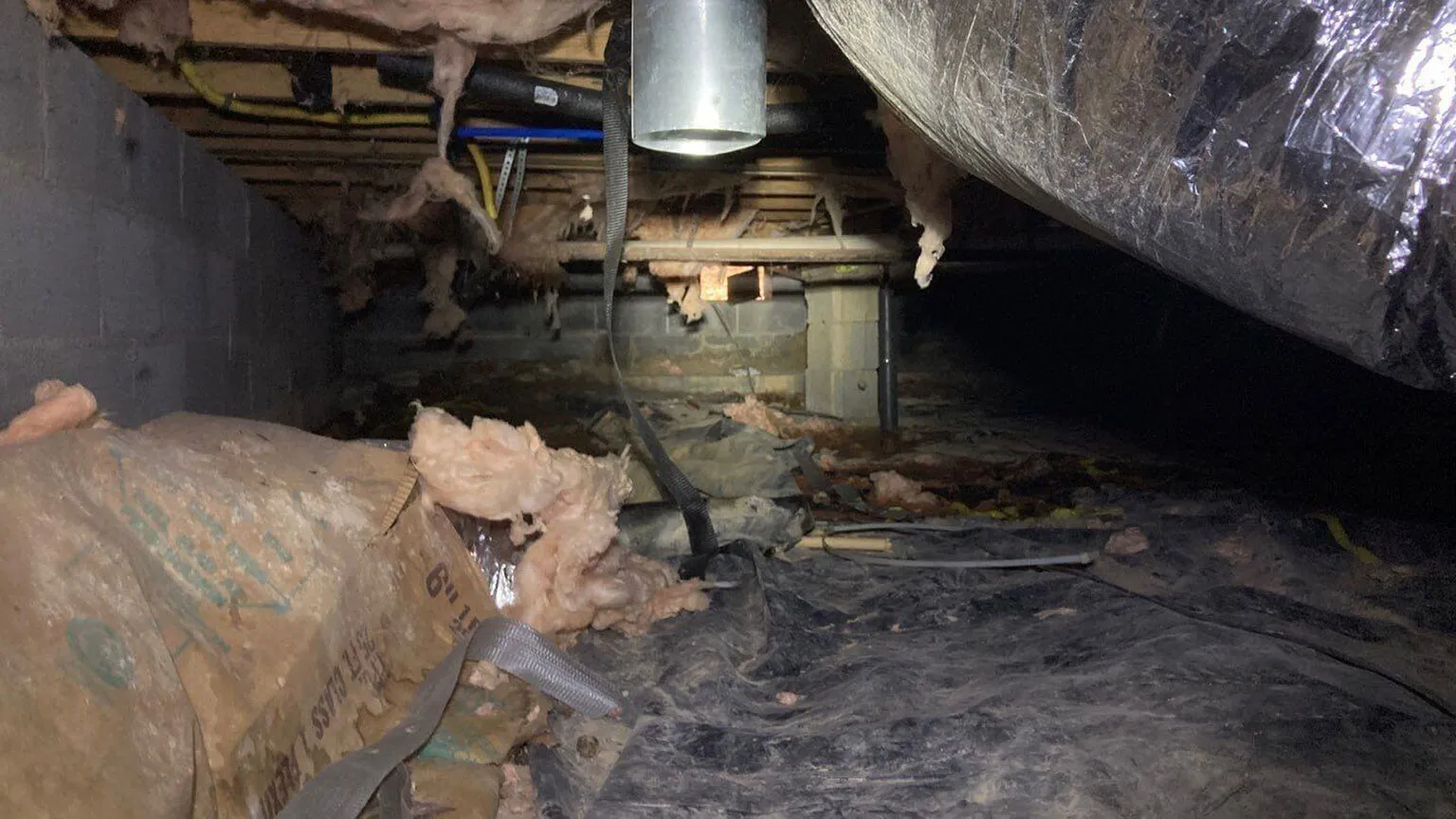
Because inspectors look for exactly what a humid Georgia summer does under a floor. They check torn plastic, sagging insulation, wood moisture and that smell. All four travel together, and they turn up in houses that are otherwise in great shape.
Here’s the thing, though. The report gives you a symptom, not a cause. It says the crawl space is wet. It doesn’t say whether that water came from the ground, the air, a gutter dumping at the corner, or all three. That difference decides what the fix costs and whether it lasts.
A crawl space isn’t a mystery. It’s a moisture reading with a source, and the source is always findable.
What do Snellville homes have in common?
Their age, mostly. A huge share of this city went up between 1975 and 1995, so a whole town’s worth of original moisture systems is aging out on the same schedule. That thin black plastic somebody rolled over the dirt back then has been torn by every service call since.
Then there’s the land. Snellville rolls, and that ground drains toward the Yellow River and Big Haynes Creek. Under all of it sits red clay, which swells when wet and shrinks when dry, so water travels sideways instead of soaking straight down. On a sloped lot it finds the low side of your house and parks there.
Split-levels are the local signature. That lower level sits partly below grade, so it sweats or seeps along the buried wall while the rest of the house feels fine. In the Brookwood district neighborhoods especially, we find homes with a bonus room over a crawl space and a den over a slab, which means one house can have two moisture stories at once.
One more local pattern worth naming. A lot of Snellville basements and lower levels were finished in the nineties, and the drywall has been quietly wicking water ever since. The fix isn’t more drywall. It’s stopping the water first, and that order matters more than any material on the quote.
What should a good company do differently here?
Start outside, for one. Gutters, downspouts and the grade against the foundation feed a lot of crawl space problems here, so a crew that never leaves the crawl door only sees half the picture. Ten minutes outside with a tape measure can shave real money off the inside work.
Second, check the whole footprint. On a split-level, the far corner under the low side is where the story usually lives, and it’s also the hardest crawl. If nobody went all the way back, nobody knows.
Third, treat water and humidity as two problems. Ground water needs drainage, while humid summer air needs a sealed, conditioned space. A company selling only one of those will fix half your house and honestly believe it finished.
Worth knowing
Air moves upward through a house on its own — building scientists call it the stack effect. Research shows a large share of the air you breathe on the main floor started down in the crawl space. That’s why a closet near the stairs can smell musty while the crawl door has been shut for years.
What one question tells you they actually diagnosed it?
Ask them this: “Where is the water coming from, and how do you know?”
A real answer sounds specific. It names a place and a reason. Something like, “the northeast corner reads wet, the grade slopes toward the house there, and that downspout discharges four feet from the wall.” That’s a diagnosis, and you can check every piece of it yourself.
A weak answer sounds like a product. “Crawl spaces are always wet, so we’ll encapsulate it.” Maybe that’s even the right work. Still, if they can’t tell you the source, they can’t promise you it stops, and you’re buying a cover rather than a cure.
This is where Snellville homeowners get burned, and plenty of you already have. Somebody smeared hydraulic cement on a crack, took a check, and the wall was wet again by the next spring storm. That’s not bad luck. Nobody ever asked where the water came from.
Good news, that’s easy to test. Ask every company the same question, then listen for a place instead of a pitch.
How do you read the estimate?
Line by line, asking one thing: does this describe my crawl space? A real scope names square footage, materials, equipment and a discharge point. A thin one says “encapsulate crawl space” and a number, so two quotes can look identical while selling completely different jobs.
What should be spelled out in writing
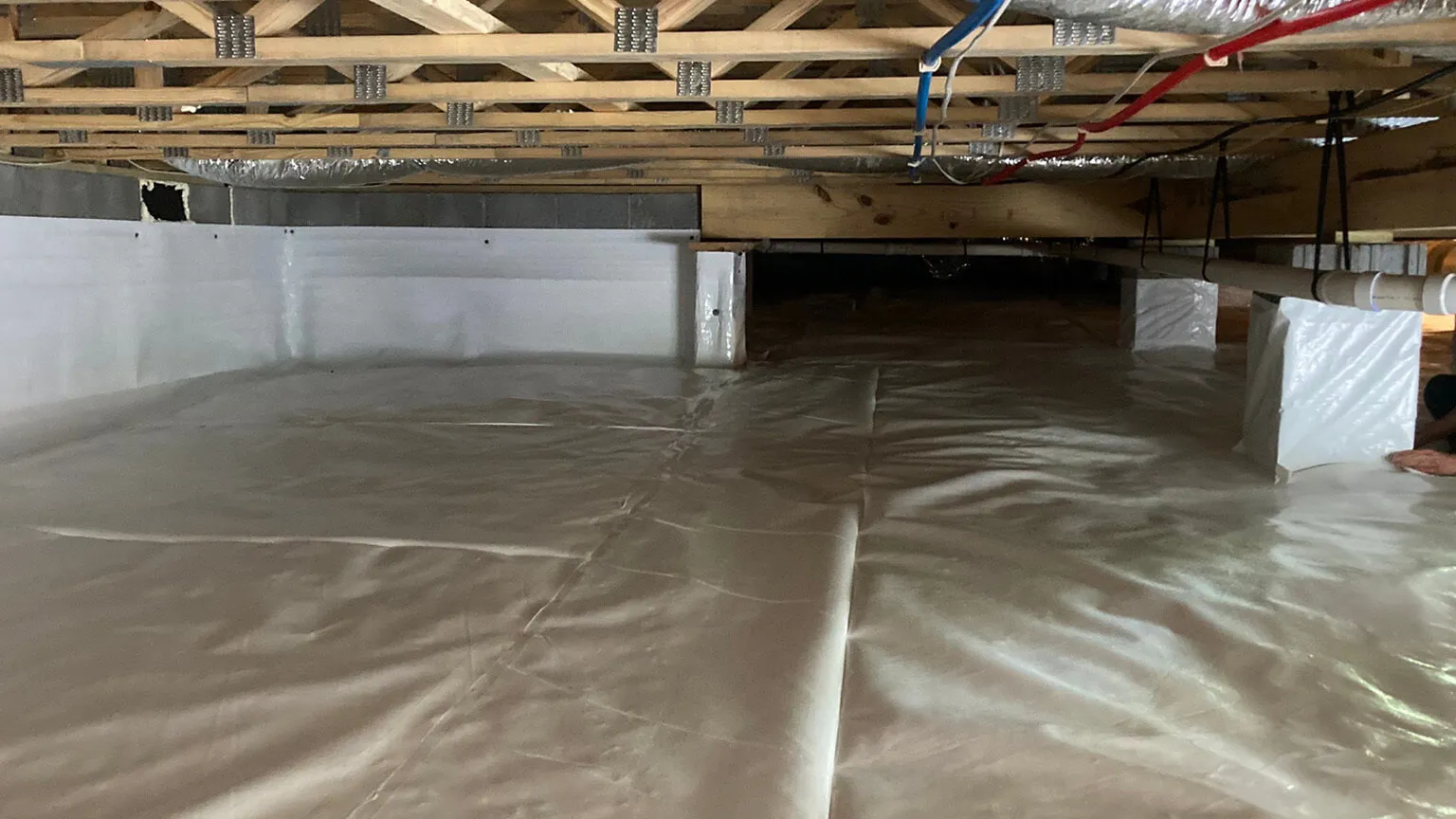
- Liner thickness, in mils. Reinforced liner takes knees, tools and years. A thin sheet tears on the first duct service call.
- Where the liner stops. Floor only, or sealed up the walls and around every pier. Big difference, same word on the quote.
- Water handled first. Interior drain, sump, basin and where the water actually goes once it leaves.
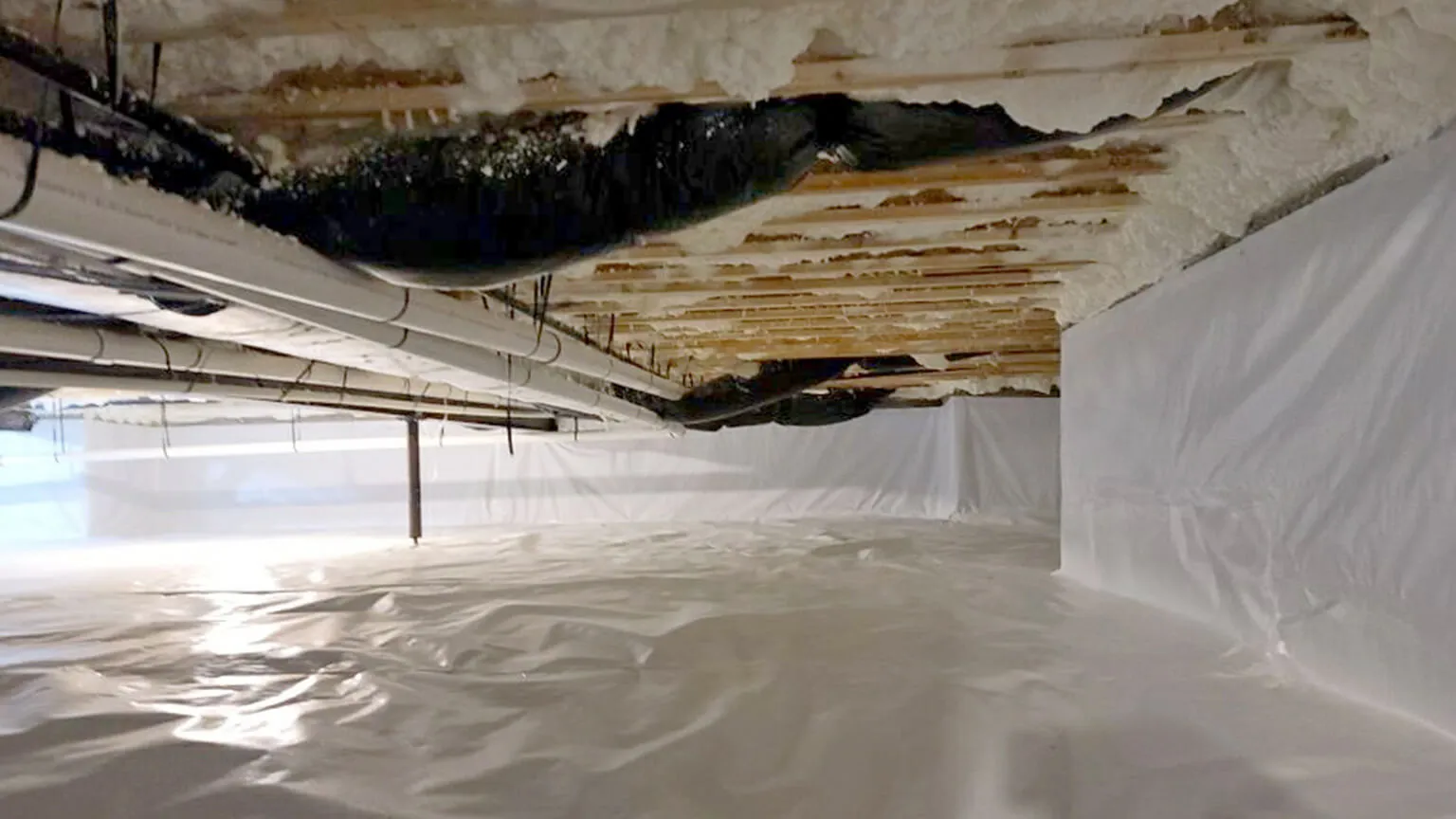
- Vent treatment. Sealed and insulated, or just covered from the outside with a grate.
- The dehumidifier. Capacity, and how it drains on its own. Sizing should match your square footage.
- Insulation plan. What comes out, what goes in, and where it lands once the vents are closed.
- Warranty in plain words. What’s covered, how long, and whether it transfers to a buyer.
About price. A firm number over the phone is a guess, and guesses get padded, so you’d be paying for the padding. Small dry spaces sit at the low end, while a big footprint with drainage and a sized dehumidifier sits well above that. Most jobs land in between, which is why we’d rather crawl it first.
What should you ask, and what should worry you?
Five questions do most of the sorting. Ask how the liner attaches to the walls and piers. Then ask the thickness in mils, whether vents get sealed or just covered, how the dehumidifier was sized, and whether the warranty transfers when you sell. Any company competing for the best crawl space Snellville work should answer all five without hedging.
Red flags are simpler than people expect. Pressure to sign today is one, and a discount that dies when the van pulls away is another. Talk about your home falling apart is a third, since a real inspector just shows you photos and lets them speak.
Watch for the crew that won’t go all the way in, too. Also pause on anyone who quotes without measuring. On the health side, both the EPA’s guidance on mold and health and the CDC’s overview of mold and your home land on the same practical point we do: control the moisture and the rest follows.
One local note. If your home sits in the Towne Center district infill or another pocket with an active HOA, exterior work like a discharge line should be coordinated before day one. A crew that knows to ask has worked in Snellville before.
What does it look like after?
Week one is mostly your nose. The musty note in the hallway fades, and homeowners tell us the house smells like nothing, which is the highest compliment a crawl space ever gets.
Year one is boring, and boring is the goal. Humidity holds steady through spring storms and August heat. Ducts stop running through a warm damp box, so the power bill settles down a little, and the space below becomes storage you’d actually use.
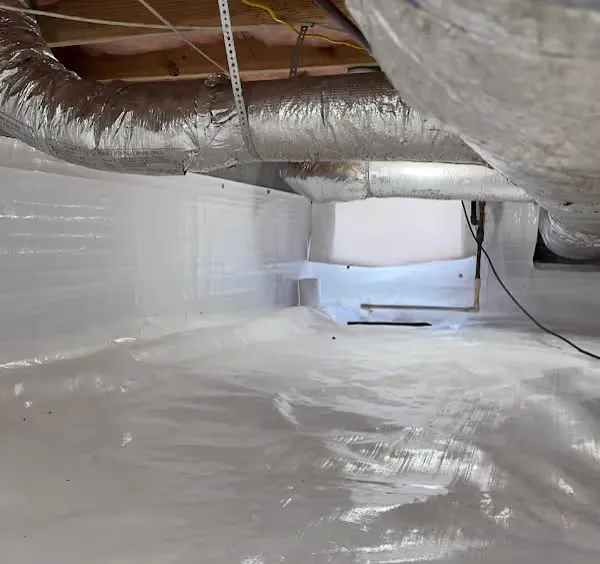
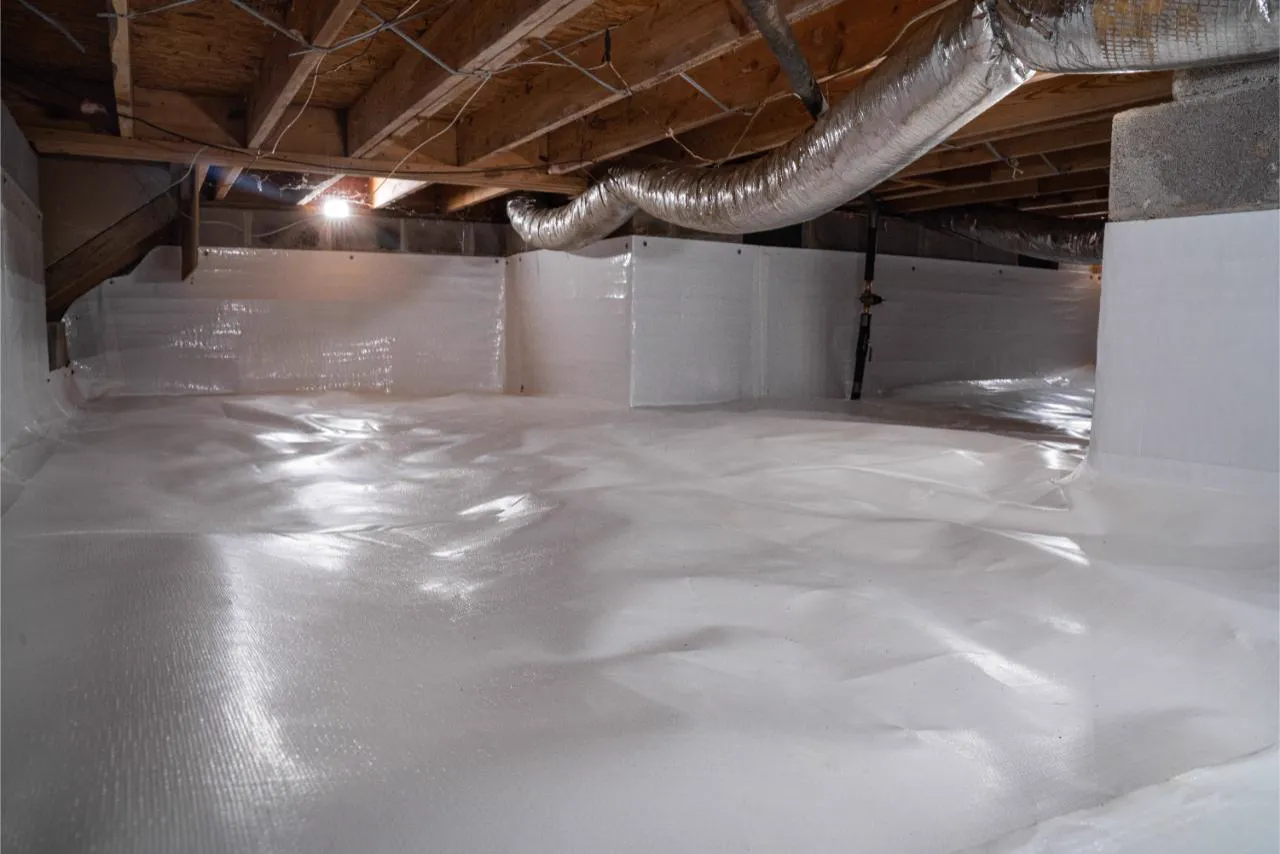
Year ten is where the pride shows up. The liner is still bright, the framing is dry, and when a buyer’s inspector opens that hatch, he writes one clean sentence instead of a paragraph. You take care of your house, and now there’s proof under the floor. That’s a good feeling to own.
Why we might be the right fit
We’ve been at this over twenty years, and Snellville sits about fifteen minutes south of our Lawrenceville shop. Between jobs off Ronald Reagan Parkway, older homes in Summit Chase, and houses a short walk from Snellville Towne Green, we’re in this city most weeks of the year. That’s the plain case for us being the best crawl space Snellville option on your list.
It matters for one reason: a warranty is only as good as the company behind it. If something needs a second look in year eight, you’re calling the same local crews who did the work. We’ll also tell you when the job is smaller than you feared.
Want to compare notes first? Our local guide to crawl space encapsulation walks through symptoms and options, and the full crawl space repair systems we install are laid out step by step. Homeowners up the road get the same breakdown for Buford best crawl space work. If the lower level worries you more, start with flooded basement repair, since cove-joint seepage after a long rain is the other thing we see all over the Brookwood High School side of town.
Where we work around Snellville
Our shop sits in Lawrenceville, so this stretch of the map is a short drive for our trucks. We work throughout Snellville, Grayson, Loganville, Lilburn, Stone Mountain, Tucker, Lawrenceville, Dacula and Centerville, plus the wider Gwinnett area. Anywhere along Highway 78 or Scenic Highway, we’ve usually got a crew nearby the same week.
Questions we get around town
It comes down to square footage, whether water has to be drained first, and the dehumidifier size. A small dry space lands at the low end, while a big footprint with drainage and a sump sits well above that. We give you a written scope after the inspection instead of a phone guess.
In Georgia, almost always. Once the vents are sealed, that air needs managing, so a unit sized to your square footage holds humidity steady through the whole year. It should also drain on its own, because nobody wants to remember a bucket.
Closed, once the space is properly sealed and conditioned. Open vents were the standard when these homes went up, but in a humid August they mostly invite wet air in to condense on cool wood. Sealing them only works as part of a full encapsulation, though, never on its own.
Usually yes, because that smell rides air moving up from below. After the moisture source is handled and any growth is cleaned, most homeowners notice a real difference within a week or two. If it hangs on, something else is still holding water and we’ll help you track it down.
Most Snellville crawl spaces take one to three days. Cleanout and old material removal is day one, then liner and sealing, then the dehumidifier and any insulation work. If drainage and a sump are part of the plan, add a day so the water side gets done right.
Let’s go look under your Snellville home
The inspection is free, the estimate is free, and nobody pressures you after. We’ll show you photos of what’s down there and tell you plainly if the answer is smaller than the report made it sound.
(678) 914-5112Serving Snellville and all of Metro Atlanta · $500 off projects over $3,500 · Live support 7am–8pm, 7 days a week