

Wet Crawl Space in Alpharetta: Is This Normal, and How Does It Get Fixed?
The musty smell. Those cold floors. The plastic on the dirt that somebody laid down years ago. Here’s what all of it actually means.
Is this normal? That’s the question almost everyone asks first, usually a little sheepishly, right after they describe a musty smell in the hallway or floors that stay cold in a heated house. So let’s answer it plainly: a wet crawl space Alpharetta homeowners are smelling is very common, and no, it isn’t something you have to live with. It’s also nothing to be embarrassed about, because almost nobody goes down there on purpose.
Good news right up front — this is one of the most fixable things in the whole house. Let’s take it apart slowly, so you understand what’s happening before anyone hands you a number.
What are you actually noticing?
Most people don’t start with water. They start with a smell near the stairs that fades, then returns after a rainy week. After that, other small things line up.
Cold floors in a room that’s plenty warm otherwise. Humidity that stays high even though the AC runs constantly. A little wood floor cupping near an exterior wall. None of those are dramatic alone, but together they point straight down.
Here’s the thing: the crawl space is the one room nobody inspects for twenty years. So you notice the side effects long before the cause.
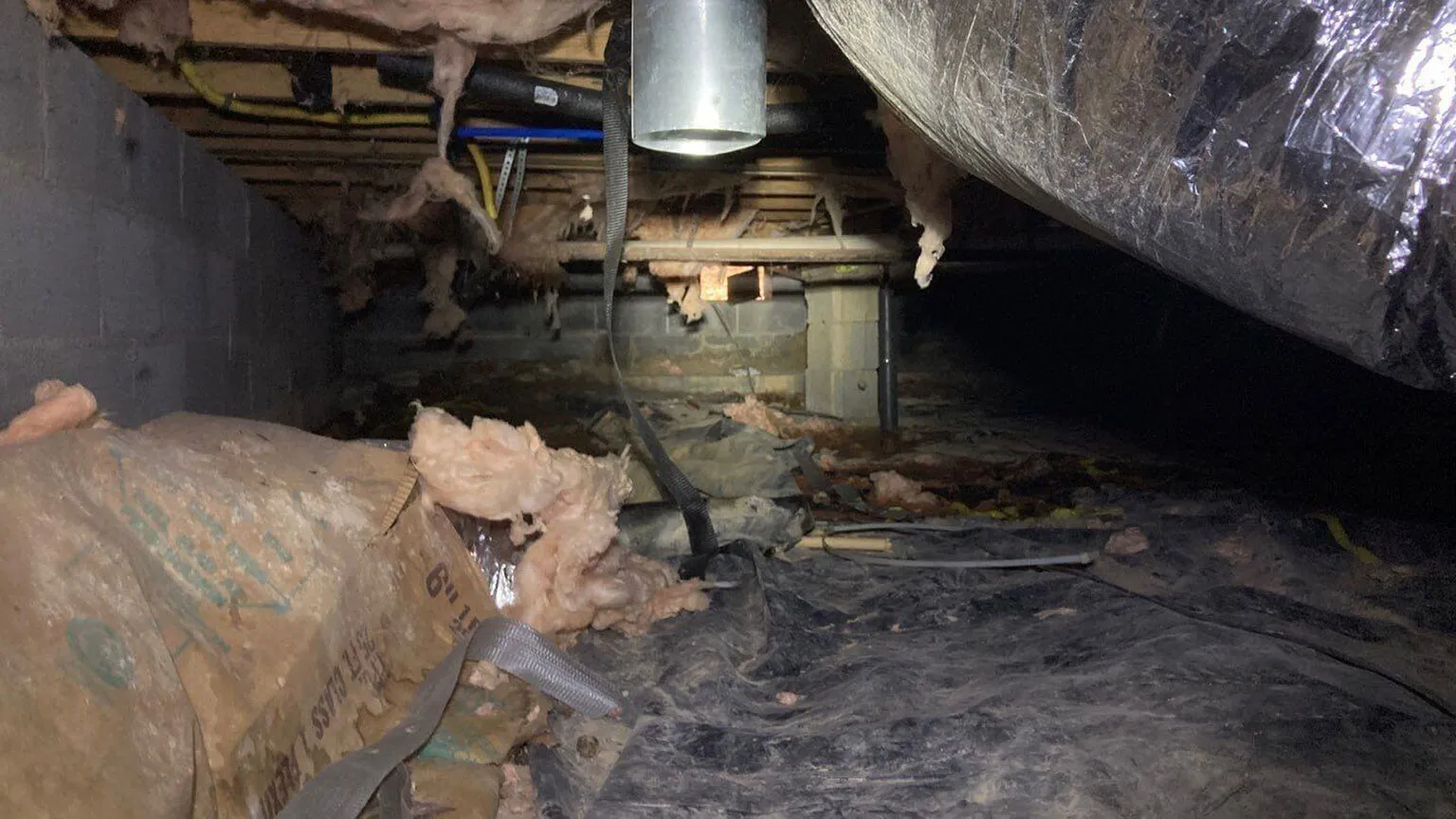
Why does crawl space air end up upstairs?
Because air in a house moves up, not sideways. Warm air rises and escapes near the roof, and something has to replace it, so the house pulls air in from the lowest point it can find. Builders call that the stack effect. In other words, your crawl space is the intake vent for your living room.
If that space is damp and open to bare dirt, the moisture and the smell ride right along with the air. So the musty hallway isn’t in your imagination, and it isn’t a candle problem.
Now add Georgia in July. Outside air is hot and heavy with moisture, and it pours through the foundation vents into a space that stays cool. Cool surfaces plus humid air equals condensation, every time. Your crawl space basically sweats like a glass of iced tea on a porch table.
Worth knowing
Wood starts supporting mold growth once its moisture content climbs to about twenty percent. A vented crawl space in a Georgia July can reach that on its own — no leak required, no flood required.
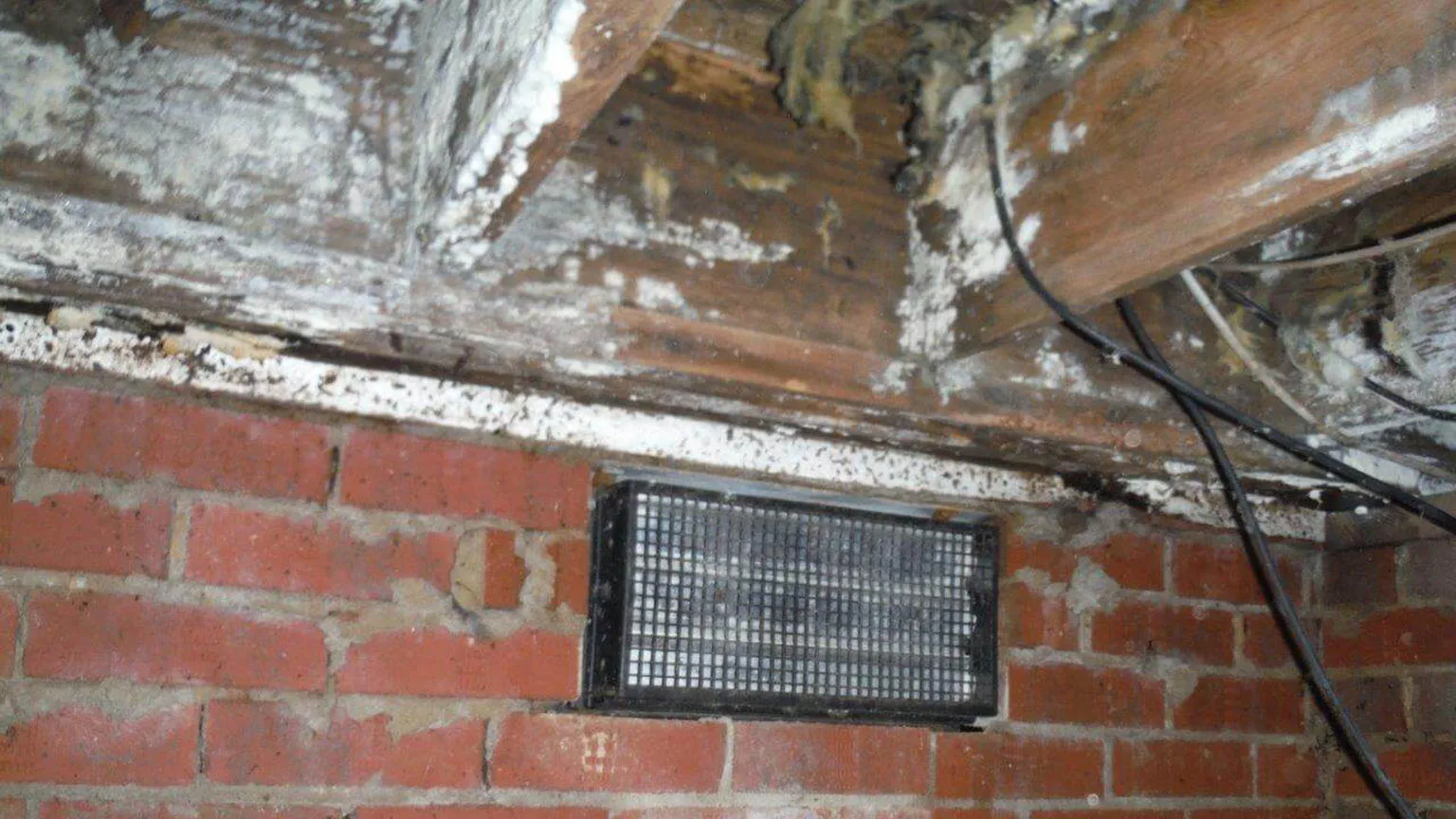
That’s the mechanism behind the white bloom people find on the rim joist and the underside of the subfloor. It isn’t a sign the house is falling apart. It’s a sign the air down there has been damp for a while, and the EPA’s overview of mold and health explains the indoor-air side clearly without trying to sell you anything.
Is yours mild, or is it more than that?
Fair question, and you can get most of the way to an answer yourself. Nothing on this list is alarming — it just shows where you sit on the scale.
Reading the signs
- Musty smell, dry dirt. Vapor is the issue, not standing water. Mild, and usually the simplest scenario.
- Insulation sagging or on the ground. It absorbed moisture and gave up. Common, and easy to correct.
- White fuzz on the rim joist or subfloor. Humidity has been high for a while. Still very fixable.
- Damp soil that never dries. Water is arriving from outside, so we check grading and downspouts first.
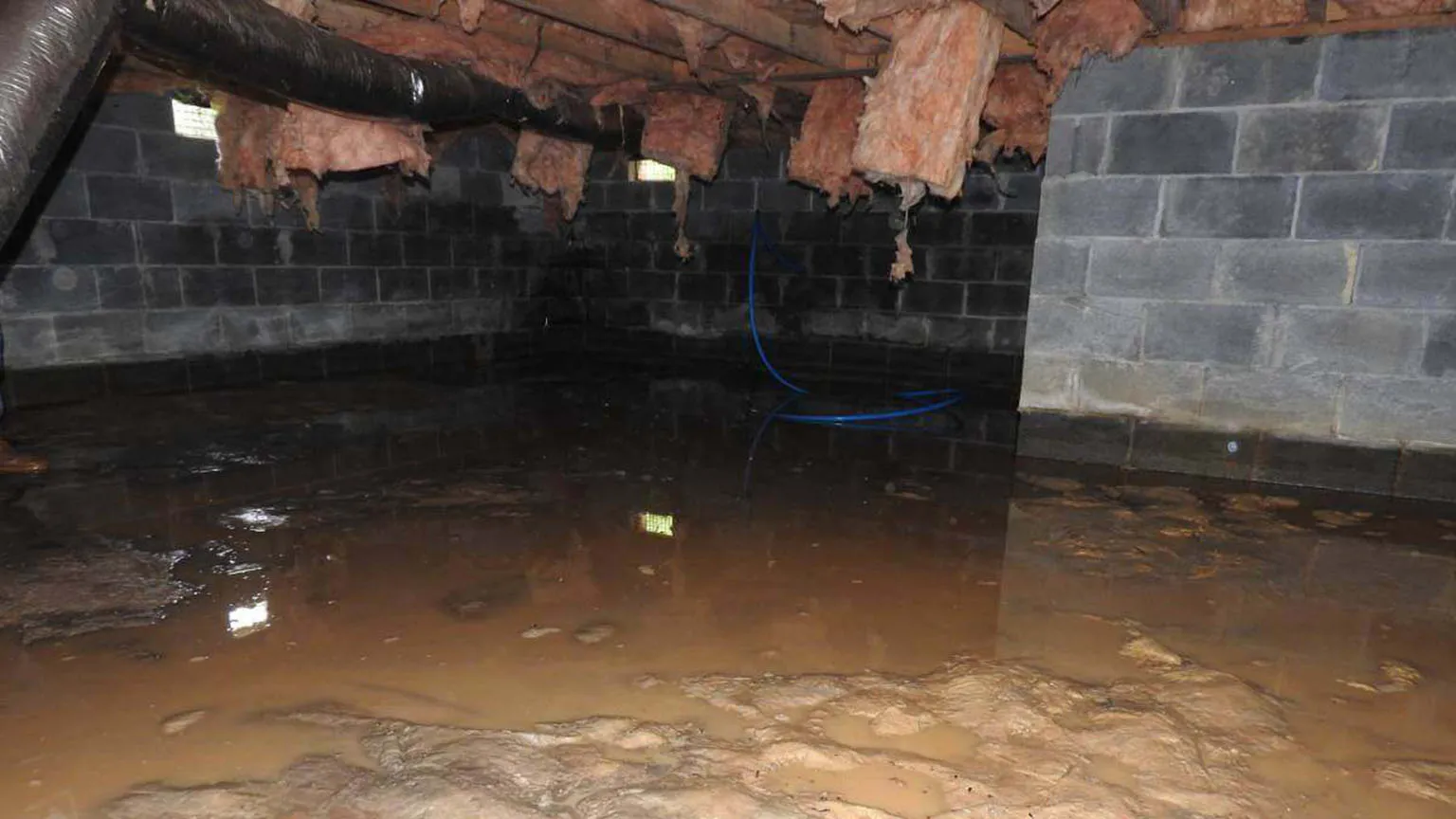
- Standing water after storms. Time to have someone look. Bigger scope, same idea.
What if you leave it? Honestly, nothing sudden. Damp crawl spaces move slowly — humidity stays high, floors feel cooler, and simple repairs get less simple. That’s why we’d rather look early, while the answer is still small.
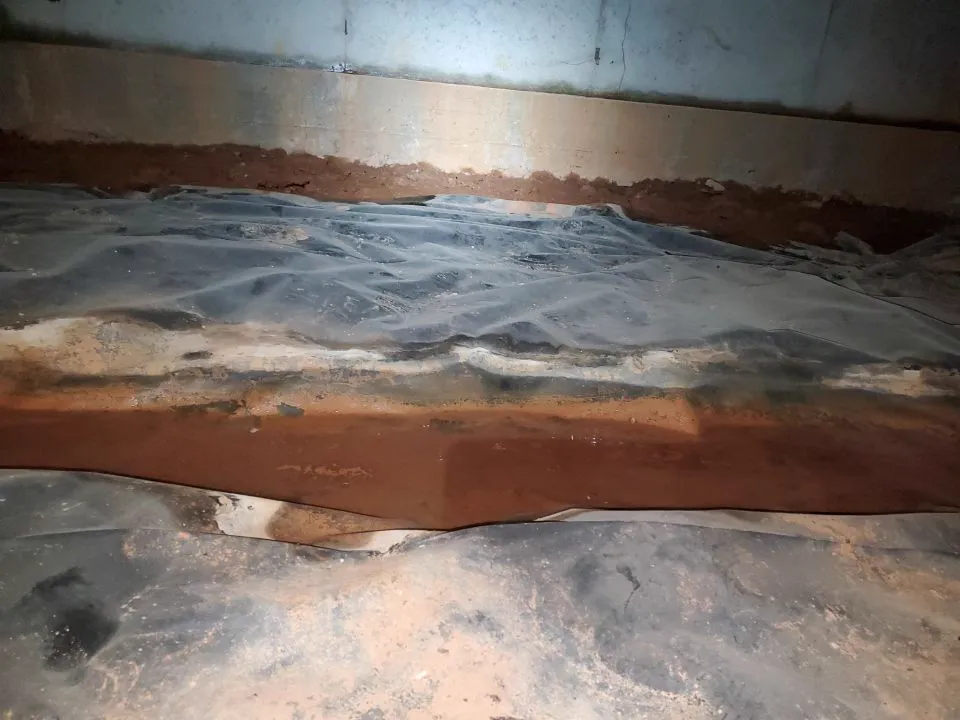
Why do Alpharetta houses see this so often?
Two reasons, and neither is anybody’s fault. First, the soil: red clay over weathered granite drains slowly and holds water against a foundation for days. Second, the age of the housing stock. Alpharetta’s boom-era subdivisions are now old enough that the original waterproofing has simply worn out, so a wet crawl space Alpharetta owners never saw coming shows up in homes that look brand new from the street.
We see it out in Windward, along the Country Club of Roswell edge, and in the newer townhome product toward the Foundry at Roswell edge, where crawl foundations are more common than full basements. Failed or undersized original sump systems show up constantly too, because a pump sized for 1998 is often just tired.
Anyone who’s sat on Old Milton Parkway during a spring downpour knows how fast water piles up here. That water has to go somewhere, and clay soil is in no hurry to take it.
What happens after the crew leaves?
Ready for the part almost nobody explains? Most articles stop at the install. But the week after is where you actually feel the difference, so let’s walk through it.
Day one, the smell drops off sharply, because the dirt is sealed and outside air isn’t pouring in. By the end of the first week, humidity upstairs settles into a comfortable range. Floors feel warmer under bare feet within a few days too.
Then the quieter changes arrive. Wood dries and stays dry, so seasonal squeaks and cupping calm down. Storage under the house becomes usable again, which sounds minor until you remember what’s living in your garage.
The goal isn’t a pretty crawl space. It’s a house where the next big storm isn’t something you have to think about.
And a year later, that’s the real payoff. You stop checking after rain, and you stop wondering what the smell was. For the efficiency angle, the U.S. Department of Energy’s guide to insulation and moisture control explains why a dry, sealed space performs so much better than a vented one.
So how does it actually get fixed?
Simpler than most people expect. The old approach was to add vents and hope outside air dried things out, which in a Georgia summer does the opposite. Encapsulation flips it: seal the space off from the ground and the outdoor air, then control what’s left inside.
- Handle the water first. Downspouts, grading, and drainage outside. Sometimes most of the fix lives in the yard.
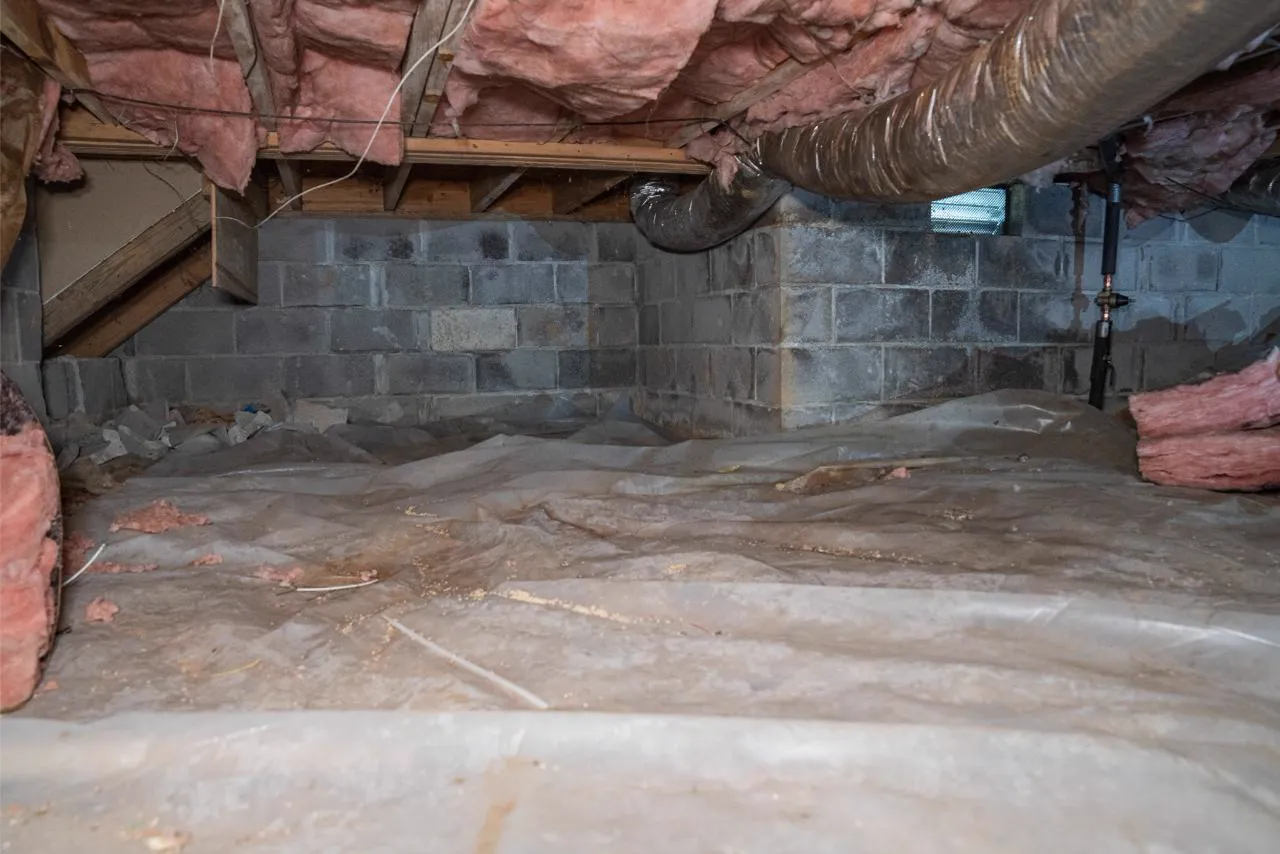
- Clear the space. Out goes the wet insulation, the debris, and that torn plastic from a previous decade.
- Add drainage if water still gets in. Perforated pipe in clean stone, routed to a properly sized sump basin.
- Install the real liner. A reinforced liner sealed to the walls and piers — not loose sheeting laid on the dirt. That distinction is the whole job.
- Seal the vents and rim joist. This is where the outside humidity was getting in.
- Set a dehumidifier. One unit, draining automatically, holding the space in a steady range year round.
Timelines run about two to four working days for most homes here, plus a day when drainage is part of the scope. Pricing follows square footage, access, and whether water management is needed, so our encapsulation cost breakdown walks through the drivers. The crawl space repair page shows exactly what we install and why.
The number that reframes the whole thing
Want the detail that changes how people think about this? Somewhere around forty to fifty percent of the air on your main floor came up from the crawl space. Not a trickle. Nearly half of every breath, on an ordinary day.
Once you know that, a wet crawl space Alpharetta homeowners live above stops being a storage problem and becomes an air problem. That’s also why encapsulation pays back in ways people don’t predict — steadier humidity, an AC that cycles less, rooms that finally feel even. We had a homeowner near Avalon who called about a smell and ended up talking mostly about how much better the upstairs felt.
Real talk: that’s why we push back when someone asks us to just throw new plastic down and call it a day. It looks better for a season, but it doesn’t change the air.
What should a good estimate include?
Four things, and any honest contractor hands them over without hesitating. First, what they found outside and whether water is arriving from the yard. Second, the liner spec and how it attaches to walls and piers. Third, what happens to the vents and existing insulation. Fourth, a warranty you can read in one sitting.
If a price arrives by phone with no crawl and no photos, that’s a guess. Busy folks around downtown Alpharetta City Center often can’t meet mid-day, so we send pictures from inside the space plus a written scope.
Some Alpharetta homes have a full basement instead, and that’s a different system entirely. In that case our flooded basement repair guide is the better read. Comparing across the metro? The Duluth wet crawl space guide covers how similar homes behave one county over.
Where we work around Alpharetta
We’re based in Lawrenceville, about twenty-five minutes east, and we’re on this side of GA-400 constantly. That includes Alpharetta, Milton, Johns Creek, Roswell, Cumming, Duluth, Sandy Springs, Suwanee and the wider Fulton area. Crawl spaces with low clearance, tight access and thirty years of history under them are normal work for us — not a surprise we charge extra to be surprised by.
Questions Alpharetta homeowners ask us
Most homes take two to four working days from start to finish. Add a day when drainage or a sump has to go in first, since that work happens before the liner. We’ll give you the timeline in writing after the inspection, so nobody is guessing about the week ahead.
Usually it helps, though the size of the change depends on your house. Drier air is easier to cool, so your system spends less time pulling moisture out and more time simply lowering the temperature. Most homeowners notice comfort first and the bill second.
If it’s wet, sagging or on the ground, it comes out — it isn’t insulating anything at that point. Once the space is sealed and conditioned, the insulation strategy changes, because we’re now insulating the walls of the crawl space rather than the floor above it. We’ll show you what we find before anything gets pulled.
Not really, and here’s the difference. Loose sheeting laid on the dirt leaves the edges, seams and piers open, so moisture just travels around it. A true encapsulation uses a reinforced liner sealed to the walls and piers, which is what actually separates your house from the ground.
Start with your nose and your floors. A musty smell upstairs, cold floors, high indoor humidity, or insulation hanging down are the usual tells. If two or more of those sound familiar, a free inspection will tell you exactly where you stand — and plenty of the time the answer is smaller than people expect.
Let’s find out what your Alpharetta crawl space really needs
We’ll go under the house, take photos of what’s down there, and explain it in plain language. Then you get a written scope you can read on your phone between meetings. The inspection is free, the estimate is free, and nobody pressures you at the end of it.
(678) 914-5112Serving Alpharetta and all of Metro Atlanta · $500 off projects over $3,500 · Live support 7am–8pm, 7 days a week