

Crawl Space Encapsulation in Suwanee: What It Costs and What to Expect
You’ve decided to hire somebody. Here’s what the work involves, what moves the number, what’s covered, and how to tell a real plan from a sales pitch.
Most people call about crawl space encapsulation Suwanee the week they finally notice the smell. Here’s the thing, though: the crawl space had been damp for about six or seven years before that week. It doesn’t announce itself. It just sits under the floor getting slowly wetter until one warm morning the hallway smells like an old cooler, and suddenly you’re reading an article like this one.
Good news? That long quiet stretch is not bad news at all. Because nothing dramatic happened, you’re catching this at the stage where the fix is straightforward and permanent.
What is encapsulation, in plain words?
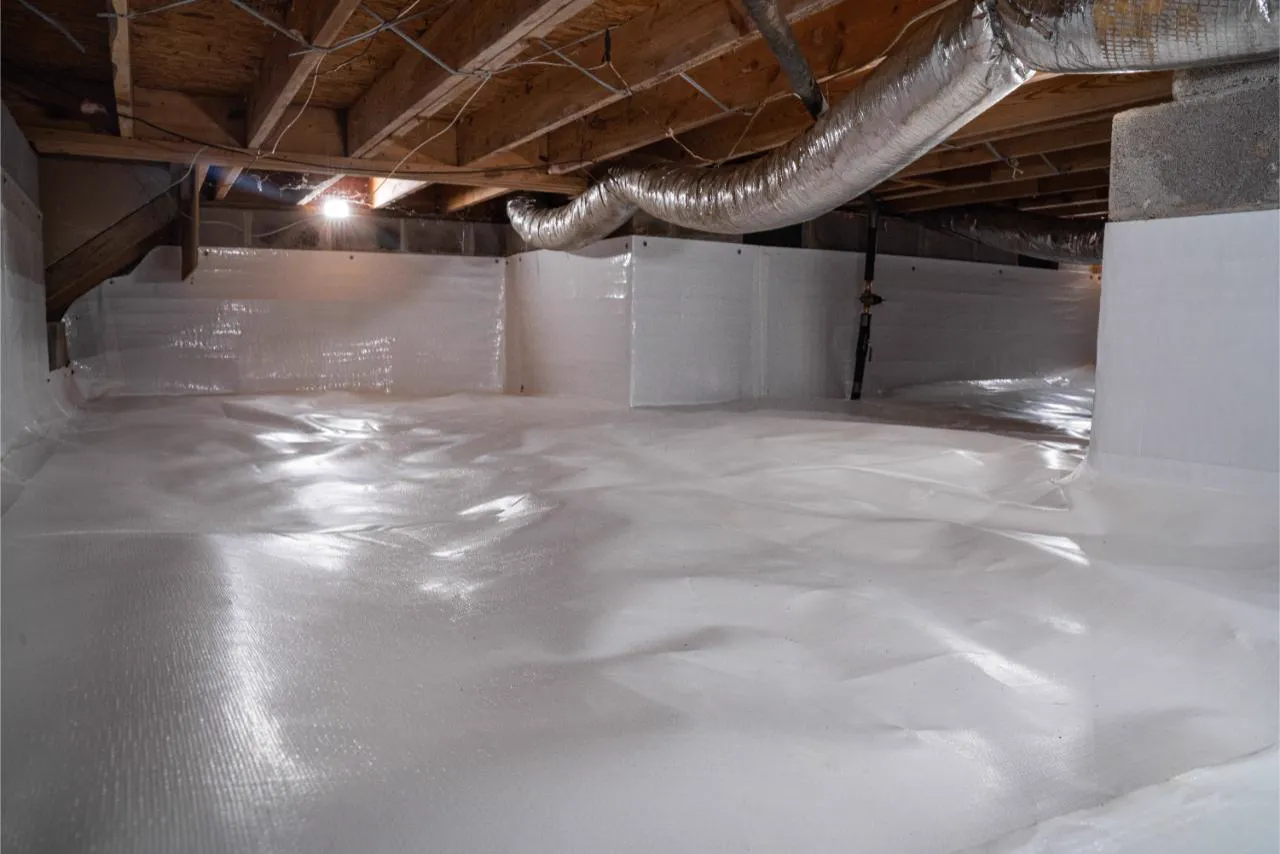
It’s sealing the crawl space so outside air and ground moisture stop coming in. A heavy reinforced liner goes down over the dirt and runs up the foundation walls and around the piers, where it gets fastened and sealed. After that the vents get closed, the gaps get sealed, and a dehumidifier holds the space at a steady, dry level.
That last part matters more than most folks expect. Wood starts supporting mold growth once its moisture content climbs to roughly twenty percent, so the whole goal is keeping your joists comfortably under that. Dry wood is boring wood, and boring is exactly what you want holding up your living room.
Here’s the piece almost nobody explains at the kitchen table. Air moves upward through a house — building scientists call it the stack effect — which means a big share of the air you breathe on your main floor started its trip in the crawl space. So a damp crawl space isn’t really a basement problem. It’s an upstairs problem wearing a disguise.
What does a real job look like?
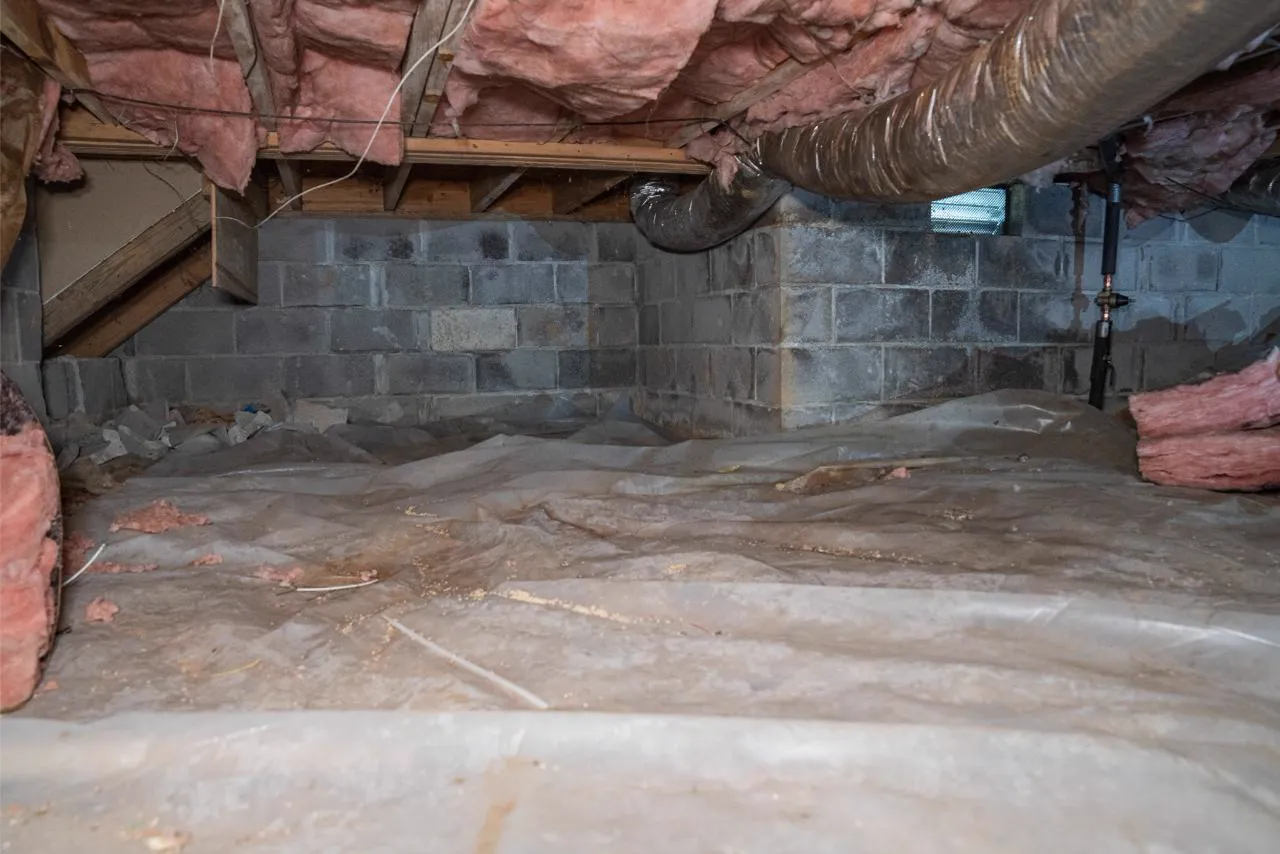
Day zero is the inspection, and it’s free. We go under the house with lights and a moisture meter, then read the joists, the rim, the piers and the ground. Outside matters too, since grading and downspouts often explain half of what we just found.
Next comes cleanout. Old fallen insulation comes out, debris comes out, and any standing water gets handled before a single foot of liner goes down. Sealing over a wet mess would just make a very expensive terrarium, so we don’t.
Then the water plan. Some Suwanee crawl spaces need a perimeter drain and a sump before anything else, especially the ones on Suwanee Creek tributary lots that hold seasonal water every spring. Others just need the grade outside corrected and the downspouts carried away from the wall.
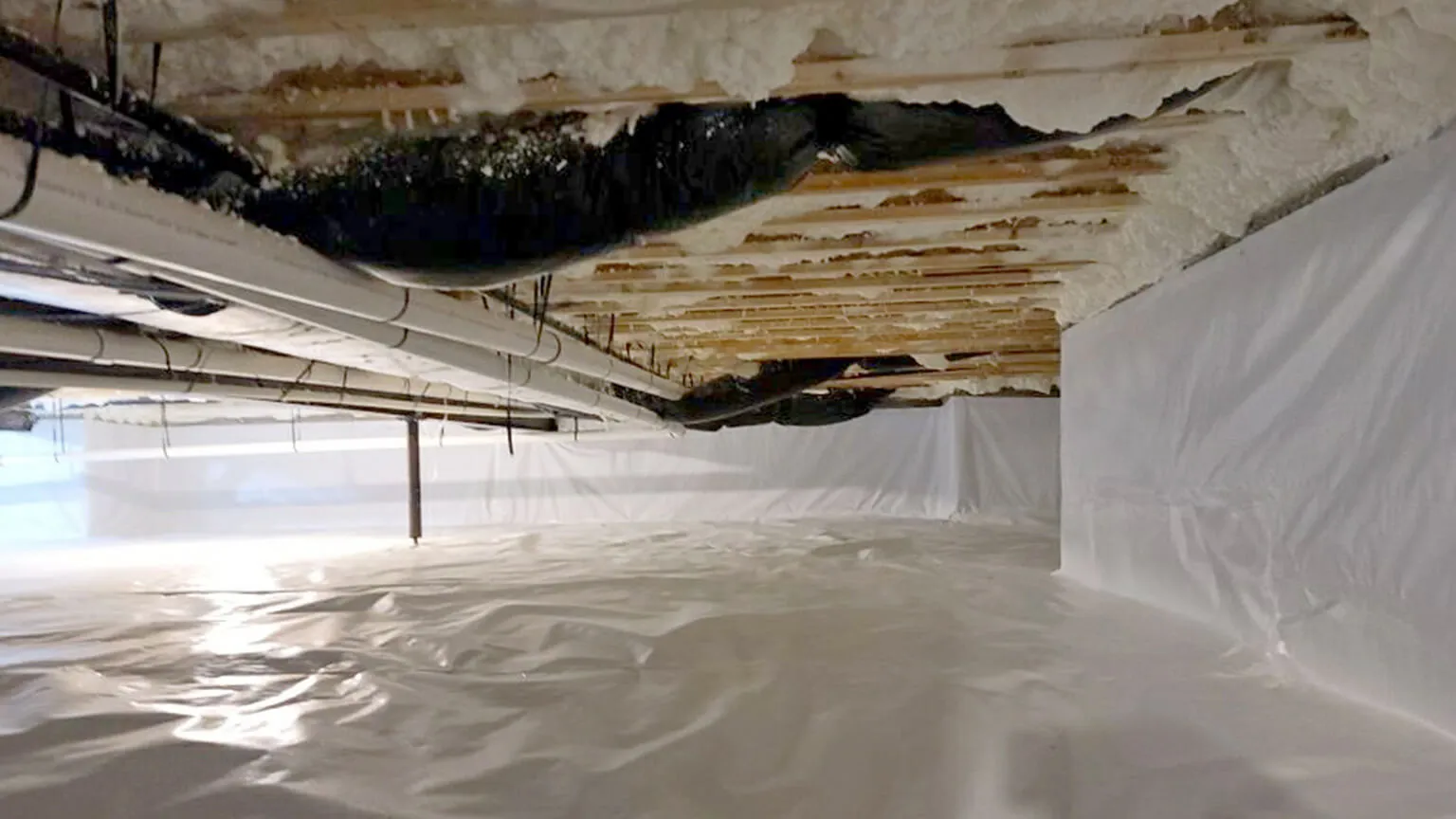
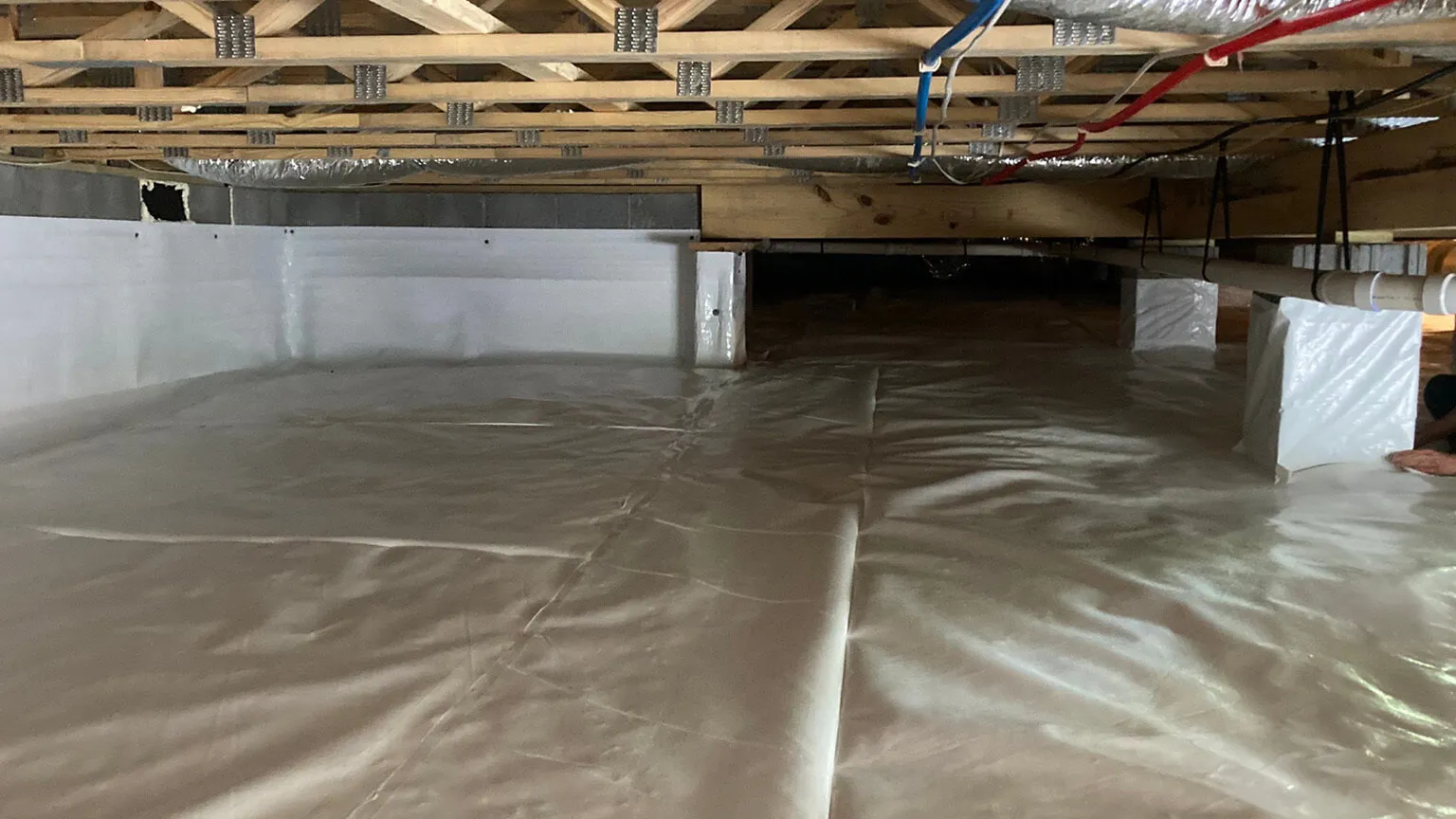
After that, the liner. Floor first, then up the stem walls, then wrapped and sealed at every pier, with seams taped and edges mechanically fastened. Vents get sealed, the dehumidifier gets set and drained, and the crew hauls the old material out in their truck instead of leaving it in your driveway.
Can we back up for a second?
Let’s back up, because there’s a question underneath the question you’re asking. You came here wondering what encapsulation costs. The better question is where is the moisture coming from, and how does anybody know?
That distinction decides your whole invoice. Moisture rising out of bare soil is one job. Groundwater running in from a sloped lot is a different job, and humid summer air pouring through open vents and condensing on cool ductwork is a third. All three smell about the same from your hallway.
So ask anyone who quotes you: which of those is happening here, and what did you see that tells you? A real answer sounds like evidence. It sounds like this rim joist is wet on the north side, the grade behind that wall slopes back toward the house, and the insulation is falling only where the duct runs. A weak answer sounds like a product brochure.
We had a homeowner over in Suwanee Station whose crawl space stayed damp all summer and dried out every winter. That timing was the giveaway. Warm outdoor air was sneaking through open vents and condensing on cold duct lines, which meant liner alone wouldn’t have solved it — sealing the vents and adding a dehumidifier did.
Health is worth a plain word here too. Damp spaces grow mold, and mold can bother breathing and allergies, which is why the EPA’s guidance on mold and health keeps coming back to one idea: control the moisture and you control the mold. The CDC says much the same thing. That’s encouraging, honestly, because moisture is the part we can absolutely fix.
Worth knowing
Loose plastic laid on the dirt is not encapsulation. Real encapsulation seals to the walls and around every pier, so ground moisture has nowhere left to sneak past. We’ll show you the difference under your own house before money comes up.
What actually moves the price?
Mostly square footage, headroom and whether water has to be managed first. We won’t publish a flat number, since a flat number for a 1,200-square-foot crawl and a sprawling one under a Harvest Park home would be wrong somewhere. Still, you deserve to see the scale we weigh, so here it is in order.
Price drivers, biggest first
- Square footage. More ground and more wall means more liner, tape and fasteners. This is the largest swing by far.
- Water management. A drain and sump add real cost, but skipping one where it’s needed costs more later.
- Headroom and access. An eighteen-inch crawl takes far longer than a four-foot one. That’s honest labor, not a surcharge.
- Cleanout and removal. Fallen insulation, debris and old torn plastic all have to leave before the good stuff goes in.
- Dehumidifier. Sizing depends on the space, and a drain line has to go somewhere sensible.
- Outside corrections. Regrading and buried downspouts sometimes handle most of the problem on their own, and we’ll happily say so.
Small, dry, easy-access crawl spaces land at the low end. A large one needing cleanout, drainage, a sump and a dehumidifier sits at the top. Most land in between, and after we walk it you get one written number with the scope beside it. If you’re still figuring out what’s happening down there, our guide to a wet crawl space covers the symptoms, and the crawl space repair page shows the systems we install.

What’s included, what isn’t, and what’s the warranty?
Included: the inspection, the estimate, the diagnosis, cleanout, the liner on floor and walls, sealing at the piers and rim, closing the vents, the dehumidifier where it’s called for, and photos of the whole space before and after. Ask for those photos from anyone you hire. Any honest crew already takes them.
Not included, usually: replacing rotted framing, major plumbing repairs, duct replacement, and full mold remediation when a space has gone a long time untreated. However, we flag every one of those during the walkthrough, so nothing arrives as a surprise halfway through. Nobody enjoys a mid-project plot twist.
The warranty is written in plain English and short enough to read in one sitting. It transfers with the house too, which matters here — buyers touring homes in the North Gwinnett High School cluster ask about crawl spaces now, and having paperwork is a genuinely nice card to hold.
What should you do every year once it’s done?
Here’s the part nobody sends you home with. The system runs for decades on its own, but four small habits keep it quiet — and quiet is the whole point.
Your yearly checklist
- Read the humidity each spring. A cheap gauge inside the crawl tells you everything. Under sixty percent and you’re in good shape.
- Rinse the dehumidifier filter. Twice a year, five minutes, and check that its drain line still runs freely.
- Walk the outside after big storms. Soil settles over time, so pull the grade back if it starts sloping toward the wall again.
- Peek at the liner once a year. Look for pulled tape at seams or a corner a plumber lifted and forgot to reseal.
Tie the whole list to something you already do. One homeowner near Suwanee Town Center Park runs hers the same weekend she swaps the HVAC filter, and after that she stops thinking about it entirely. That’s the feeling we’re going for: you understand your own house now, and it isn’t a mystery under the floor anymore.
Why does hiring a local company matter?
Because Suwanee grew up in one fast wave in the late nineties and early two-thousands, and those homes are all hitting their first real waterproofing failure at the same time. We’ve been under a lot of them. Twenty-plus years around Metro Atlanta means the same crews, the same trucks, and no subcontractor roulette on your job.
Being close helps too. We’re about fifteen minutes up from Lawrenceville, so a quick hop on I-85 puts us in the Town Center district before your coffee cools. If your home has a full basement taking on water instead, that’s a flooded basement repair conversation, and folks comparing options across the metro can read our Peachtree Corners crawl encapsulation guide as well.
Where we work around Suwanee
We’re based in Lawrenceville, roughly fifteen minutes south, and we’re up in this part of Gwinnett constantly. That covers Suwanee, Duluth, Buford, Sugar Hill, Johns Creek, Lawrenceville, Cumming, Norcross, Dacula and Grayson, plus the wider Gwinnett area. Whether your home sits on a creek-side lot or a flat cul-de-sac, we already know how these crawl spaces behave — and there’s usually a truck nearby.
Questions Suwanee homeowners ask us
Most homes take two to four working days. Tight headroom or a large footprint adds time, and drainage work can add another day. You get the schedule in writing first, so you can plan around pets and parking.
Usually it helps, because your HVAC stops fighting damp air pulled up from under the house. We won’t promise a percentage, since every home runs differently. Most folks notice steadier floors and a less stuffy summer before they notice the bill.
If it’s wet, sagging or falling, it comes out. Damp batts hold moisture against the wood, so leaving them would work against the whole plan. Once the space is sealed, we can add the right insulation back where it belongs.
Not really, though it’s better than bare dirt. Thin sheeting laid loose leaves the walls, piers and seams open, so moisture simply routes around it. A real liner is heavy and reinforced, and it gets sealed to every surface so there’s no way past.
Trust your nose and your floors. A musty hallway, cupping hardwood, cold rooms over the crawl, or sagging insulation are all signs worth checking. Either way, the inspection is free, and sometimes we go under and tell you it’s fine.
Let’s find out what your Suwanee crawl space actually needs
We’ll go under the house, show you photos of what’s happening down there, and explain the fix in plain language. The inspection is free, the estimate is free, and nobody pressures you at the end of it.
(678) 914-5112Serving Suwanee and all of Metro Atlanta · $500 off projects over $3,500 · Live support 7am–8pm, 7 days a week