

Waterproofing Cost in Norcross: A Step-by-Step Breakdown for Every Kind of House
Why the range here is so wide, what moves it, how long the work takes, and how to tell it was done right.
It usually starts with one line on an inspection report: evidence of moisture intrusion at the foundation wall. That’s the moment most people go looking for waterproofing cost Norcross answers, and it’s also the moment the internet gets unhelpful fast. So let’s fix that here, in plain language.
Good news first: a flagged basement is one of the most fixable things on any inspection list. Water has a source, the source can be found, and once it’s handled you get paperwork that turns a worrying bullet point into a solved problem.
Why is the price range in Norcross so wide?
Because this city has houses from three different centuries, and they’re genuinely different jobs. An 1800s stone foundation near Historic Downtown Norcross is not the same animal as a 1970s block basement. Each one needs a different answer, which is exactly why a real inspection beats a phone quote every time.
Hand-laid stone takes patient work and hours a poured wall simply doesn’t need. Block basements from the sixties and seventies, on the other hand, often went in with no meaningful waterproofing at all, so the fix is more standard but usually covers more wall. Newer poured foundations toward the Medlock Bridge edge tend to be the tidiest of the three.

Then there’s the ground. Red clay swells when it soaks up water, and swollen clay pushes hard — a basement wall can face thousands of pounds of force. That push has a name, hydrostatic pressure, and it moves water through solid masonry without any crack at all. On the west side, where lots drop toward the Chattahoochee River, seasonal groundwater adds to the load. The National Weather Service office in Peachtree City tracks the storms behind most of our spring calls.
One more local culprit shows up constantly: old drain and sewer lines that leak and soak the soil at the footing. Nobody sees it happen. Still, the wall knows.
Worth knowing
Seepage and structural trouble are two separate conversations. Plenty of old foundations here seep while staying perfectly sound, so we’ll tell you which one you have first.
What does the work actually look like?
Houses differ, but the sequence rarely does.
- Find the source. We walk the outside first — downspouts, grade, and whether an old line is soaking the soil at the footing. Sometimes the whole fix lives in the yard.
- Read the foundation. Stone, block and poured concrete each get inspected differently, since mortar joints and dirt floors change the plan.
- Write the scope. You get it on paper: what’s going in, where, and why it’s right for your house.
- Open the perimeter. A narrow strip of slab comes up along the affected walls. It’s loud and dusty for a day, then it isn’t.
- Set the drainage low. Perforated pipe in clean stone goes below floor level, so water is caught before it reaches your floor.
- Route it to a sump. The pump sends water well away from the house — not back to the flower bed for a second try.
- Close and clean. Fresh concrete, wall liner where it’s called for, and our mess in our truck.
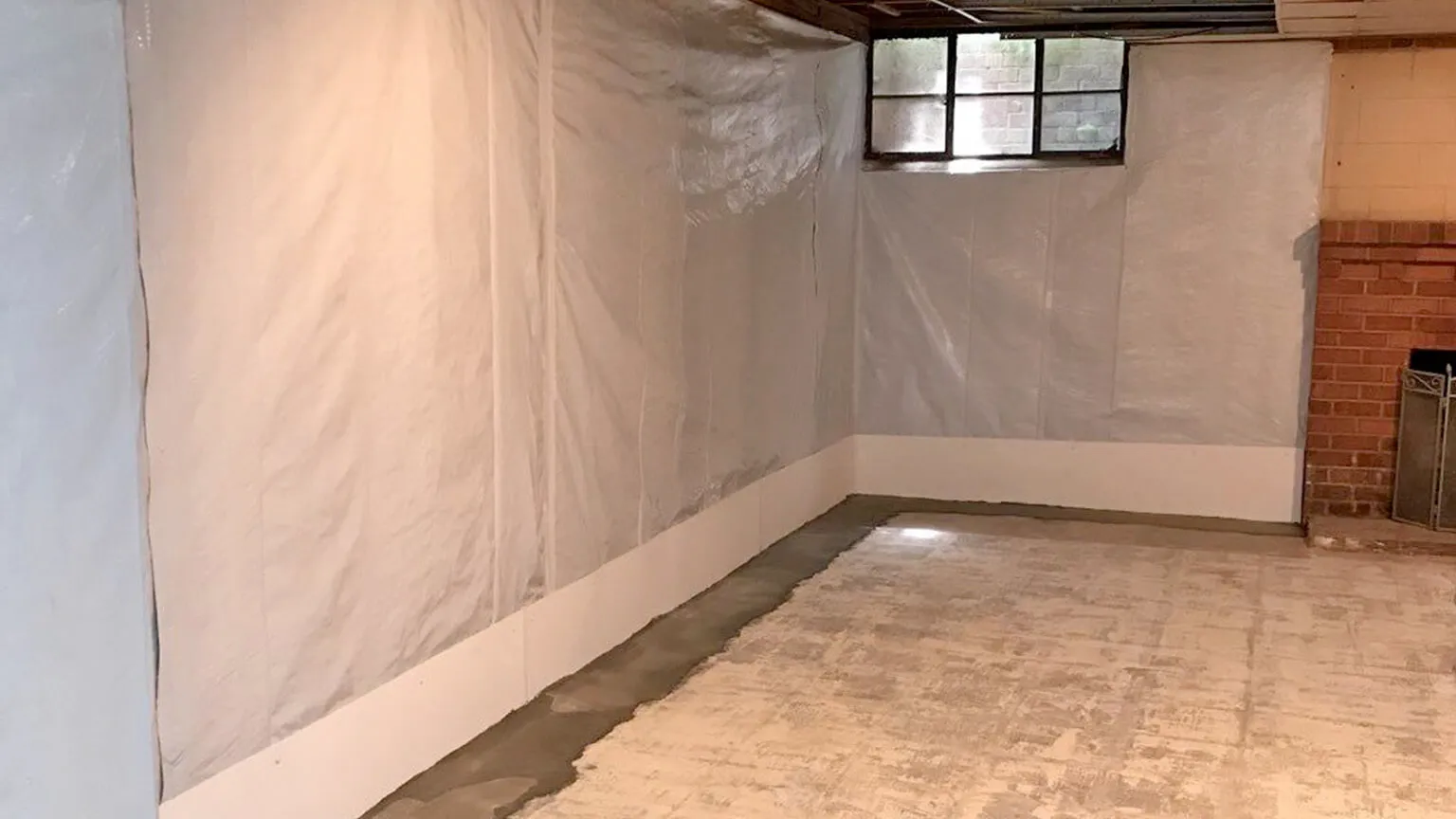
How long? Most interior systems run two to four working days. Add a day when the basement is finished, and another when a dirt floor needs capping. Exterior work depends on what’s in the way, since a mature shade tree gets protected rather than removed.
What really moves the number?
Straight answer: how much wall is involved, and how hard it is to reach. Almost every waterproofing cost Norcross estimate swings on those two things first. Here’s the full weighing.
Price drivers, in order
- Linear feet. One wall versus a full perimeter is the largest swing on any job.
- Foundation type. Stone and old brick take more care and more hours than block or poured walls. That’s real labor, not a surcharge.
- Access. Built-ins, a finished bar, or a tight side yard all mean careful work before the real work.
- Dirt floor sections. Common in older downtown cellars, and capping one changes both scope and comfort.
- Sump and discharge. Some homes have a serviceable basin already. Many have one that’s been quietly retiring since the nineties.
- Outside repairs. Regrading, a failed drain line, buried downspouts. Once in a while this is the whole fix.
Small exterior corrections land at the low end, while a full perimeter system with a new sump and a capped cellar floor sits at the top. Most jobs fall in between, and you get a written number with the scope spelled out. To compare systems first, our guide to waterproofing options puts them side by side, and the basement waterproofing page shows what we install. The Loganville waterproofing cost guide covers newer subdivisions.

What happens after the crew drives away?
Here’s the part almost nobody writes about. A waterproofing cost Norcross estimate only means something once you know what it buys over time, so let’s walk the calendar.
Week one. The new concrete cures, and the sump cycles when it rains — that’s the system working, not a warning. Once the source is cut off the musty smell fades fast, and by the weekend you’re carrying boxes back down.
Year one. You get through a spring storm season and a heavy fall leaf drop. Then something better happens: you stop checking. A homeowner near the Summerour area told us the strangest part was realizing months had passed without a thought about the basement.
Year ten. Below the slab, stone and pipe keep working silently. The pump is the one part with a service life, so plan to swap it near the ten-year mark, the same way you plan for a water heater. Meanwhile that room has been a workshop, a guest room, or where the kids get loud.
The estimate isn’t buying a channel and a pump. It’s buying a decade of not wondering what’s happening down there.
Can you do any of this yourself?
Quite a lot, actually. Some of the best outcomes we’ve seen started with a homeowner, a shovel, and a Saturday. If you like understanding your own house, here’s where the effort pays off.
Real DIY wins
- Extend the downspouts. Six to ten feet out beats a splash block every time, and it solves more basements than people expect.
- Cut the grade back. Pull soil and mulch away so the ground slopes down and away from the house.
- Clear gutters twice each fall. Under a mature canopy, a clogged gutter is basically a hose aimed at your footing.
- Keep notes. Which wall gets wet, after which kind of rain, and how fast it dries. That log beats any photo.
Now the other side, said with respect. Hydraulic cement packed into an old stone joint is where good intentions go sideways, because lime mortar is meant to breathe and shift. A rigid patch just moves the pressure to the next weak joint. Waterproof paint has the same trouble, since no coating beats pressure — it’s a raincoat on a submarine.
Sub-slab drainage and discharge routing aren’t really DIY either, and not because of the tools. It’s because a system set at the wrong depth looks identical to a correct one until the first hard spring storm. The EPA guide to moisture control covers the indoor-air side without selling you anything.
How should you get ready?
Not much, honestly. Clear about four feet along the walls we’re working on, and slide boxes toward the middle — we’ll handle the heavy pieces. Plan on flexible parking, which anyone off Holcomb Bridge Road already knows how to manage. Pets do better upstairs while the saw runs, and that’s the whole list.
What should you do every year once it’s fixed?
Here’s the piece that turns a repair into pride of ownership. A waterproofing system is low maintenance, not no maintenance, and thirty minutes a year keeps it perfect.
Your once-a-year, thirty-minute list
- Test the pump. Pour a bucket of water into the basin and watch it kick on, run, and shut off.
- Walk the discharge line. Follow it to the end and make sure nothing has buried or crushed the outlet.
- Check the backup power. Storms and outages love arriving together, so a battery backup earns its keep in that hour.
- Look at the grade again. Mulch and topsoil creep upward year after year, until they slope back toward the wall.
- Glance at the walls. Two minutes with a flashlight each spring tells you everything is still behaving.
That’s it. Do those five things and the basement stays as dry as the day we closed the floor. What’s more, when you sell, you hand a buyer a system with a record instead of a mystery. That’s a very good feeling to stand on.
How do you know it was done right?
Ask for four things, and any honest contractor hands them over. First, photos of the stone bed and pipe before the concrete goes back. Second, the discharge point, shown to you on the ground. Third, a written warranty short enough to read in one sitting. Fourth, a plain reason your walls got the treatment they got.
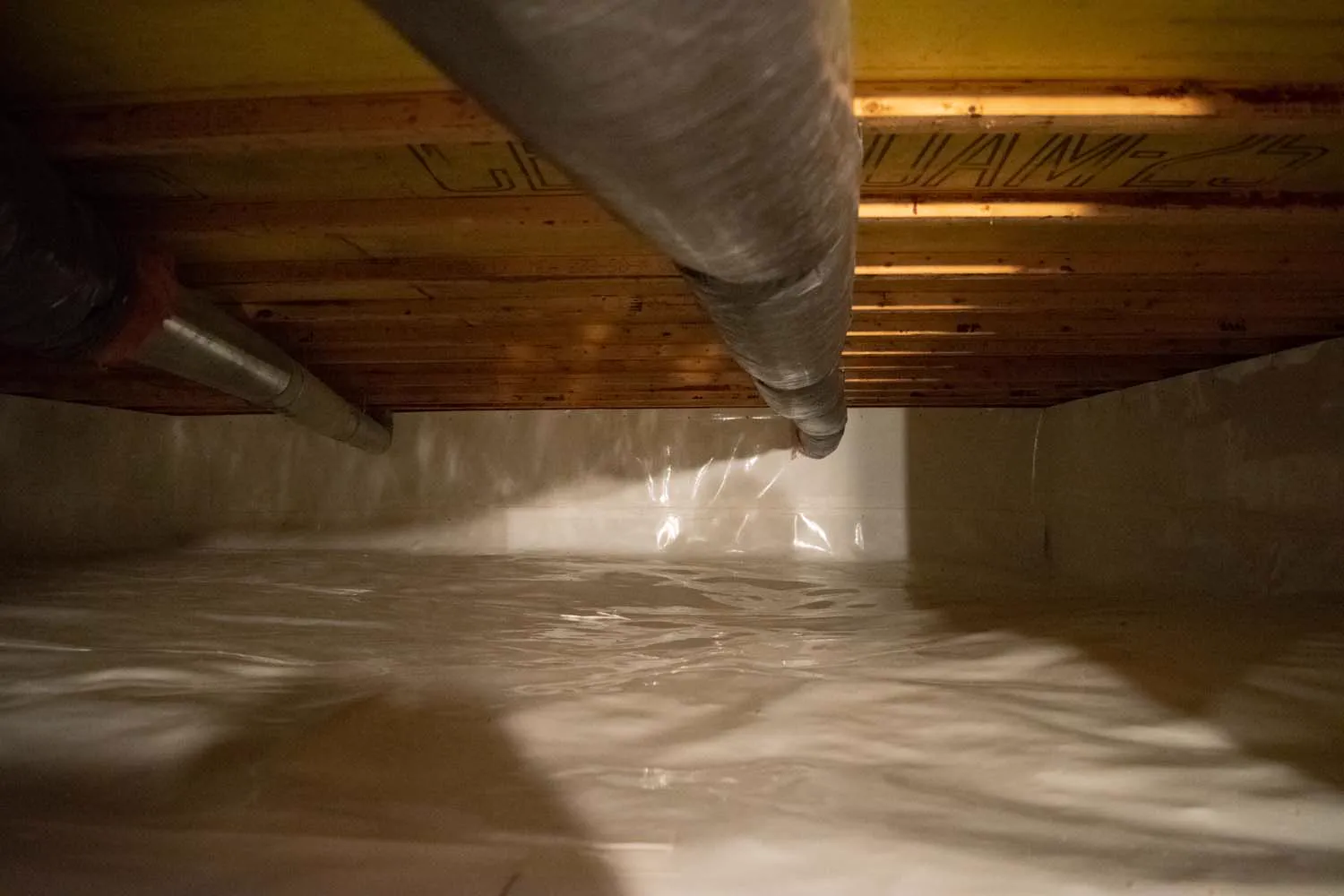
If your house sits over a crawl space instead — very common on older lots toward the Berkeley Lake edge — then crawl space encapsulation is usually the better answer. Different system, same goal: dry air, solid house, a space you trust.
Where we work around Norcross
We’re based in Lawrenceville, about twenty minutes northeast, and we’re in this part of Gwinnett constantly. That includes Norcross, Peachtree Corners, Duluth, Lilburn, Doraville, Tucker, Berkeley Lake, Suwanee, Snellville and Lawrenceville. Whether your house went up in the 1890s or the 1990s, we’ve worked on one like it a few streets over.
Questions Norcross homeowners ask us
Sometimes, but they’re two different repairs. Drainage handles the water, while a moving crack needs its own fix so it stays put. During the inspection we’ll show you which kind you have, because a hairline settling crack and an active one aren’t the same conversation.
It depends on your foundation and your yard, so there’s no single winner. Interior drainage is less disruptive and works well on block and poured walls, while exterior work makes more sense when the trouble is grading or a failed drain line. Older stone foundations often get a blend of both.
The drainage is built to last as long as the house, since stone and pipe below the slab have nothing to wear out. The pump is the part with a service life, so plan on replacing it around the ten-year mark. Everything else keeps working quietly in the background.
Yes, and you get it in writing before the work starts rather than after. Ask us to explain what’s covered and for how long. If a warranty can’t be summed up in a sentence or two, it isn’t doing you much good.
Usually, yes. We open only the bottom section of wall and floor along the affected perimeter, then put it back. Older finished spaces sometimes hide moisture behind paneling, so we check there first and show you anything we find.
Let’s find out what your Norcross basement actually needs
We’ll walk the house with you, show you where water is getting in, and explain the fix in plain language — 1800s stone or 1970s block, either way. Inspection and estimate are both free, and nobody pressures you afterward.
(678) 914-5112Serving Norcross and Metro Atlanta · $500 off projects over $3,500 · Live support 7am–8pm, 7 days a week