

Crawl Space Encapsulation Norcross: What It Costs and What You Get
You’ve already decided to hire somebody. So let’s start at the finish line — the bright, dry, sealed space — and work backward through the job, the price, and the warranty.
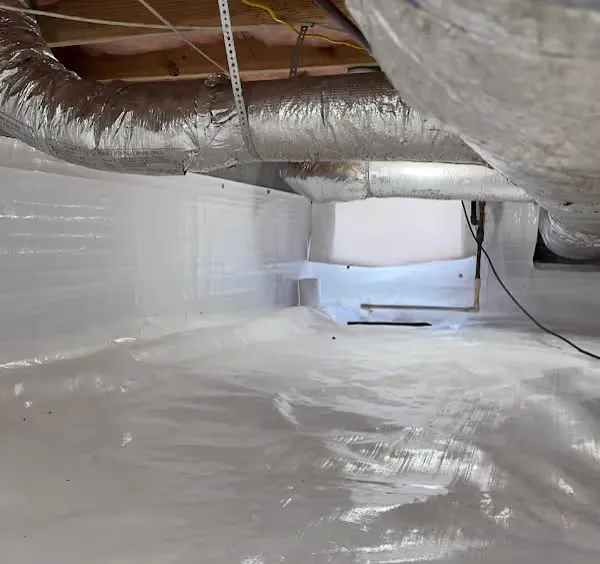
Picture the end of it first. You open the hatch and a clean white liner runs across the whole floor, up the walls, and around every pier. The air smells like nothing. That’s what crawl space encapsulation Norcross homeowners are really buying — not plastic, but a space under the house that’s finally on your side. Everything below is how you get there, what it costs, and what you’re covered for afterward.
Good news? None of this is exotic work. We do it week in and week out, and the steps are the same whether your house went up in 1968 or 1998. Your crawl space doesn’t need to be pretty. It just needs to quit acting like a swamp.
What does “finished” actually look like?
Bright, sealed, and boring. The dirt is covered. The vents are closed. A dehumidifier hums quietly in the corner with a drain line running somewhere sensible, so nobody ever empties a bucket. In other words, the space stops trading air with the outdoors and starts behaving like the rest of your house.
Here’s the thing, though. The dry floor is only the visible half. The other half is the wood overhead holding steady readings through August, and we measure that before and after so you can see it on paper.
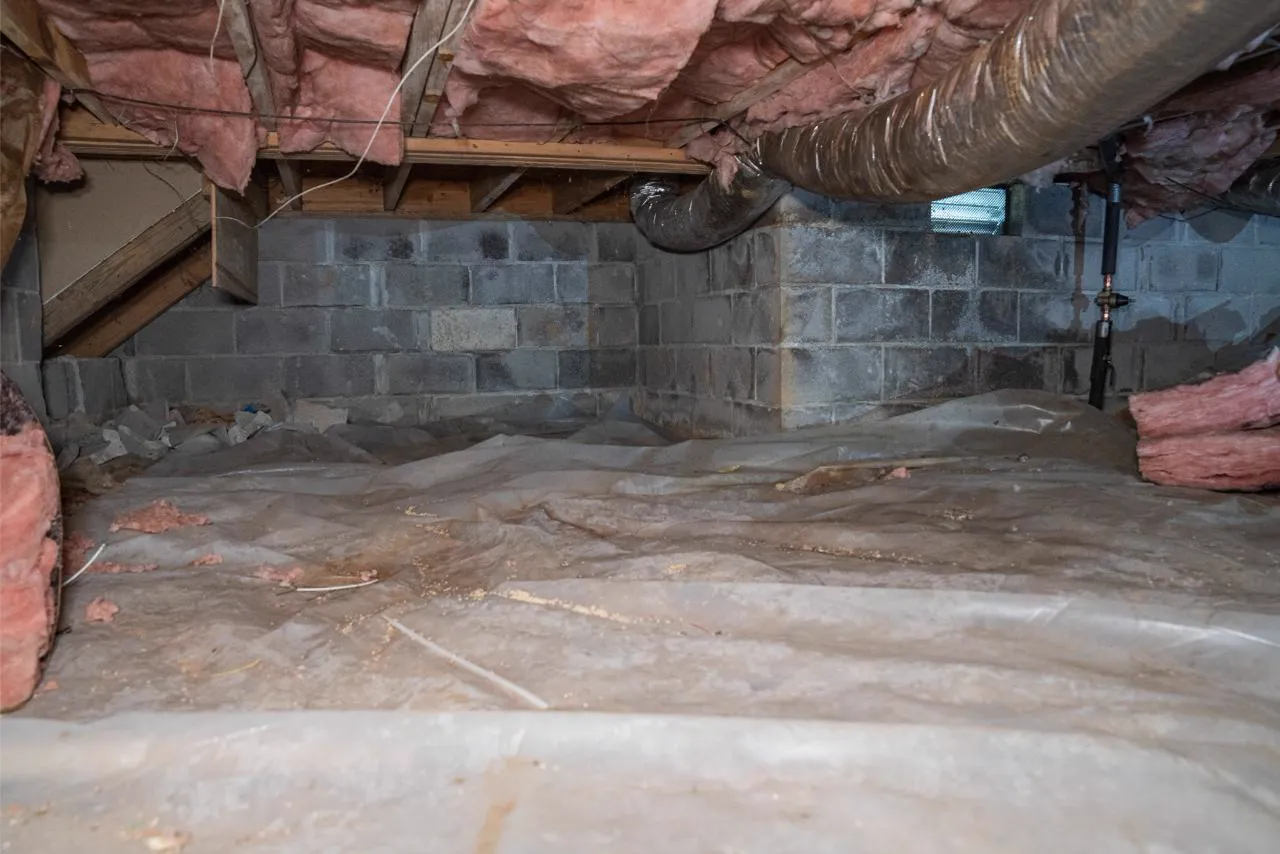
So what is encapsulation, in plain words?
A heavy white liner covers the entire crawl space floor, runs up the foundation walls, and wraps each pier. Seams get overlapped and taped. The top edge gets mechanically fastened and sealed to the wall, so damp air can’t sneak around the edges. After that we close the vents, seal the access door, and add moisture control.
Now, about those vents. Open foundation vents were required for decades on the theory that outside air dries a crawl space out. But in a humid climate, warm outside air hits cool surfaces under your floor and condenses instead — the same thing a glass of sweet tea does on a July porch. Venting doesn’t dry the space here. It feeds it.
That’s no knock on the builders who cut those vents, since they followed the code they had. It just means a 1970s house near Indian Trail is living with a rule written for a different climate. Seal it, dry it, keep it that way.
One more thing before the tape measure comes out: sealing and drainage are separate conversations. If your space has standing water rather than damp air, water gets managed first. Our guide to a wet crawl space walks through that order of operations, because covering active water just gives it a nicer place to sit.
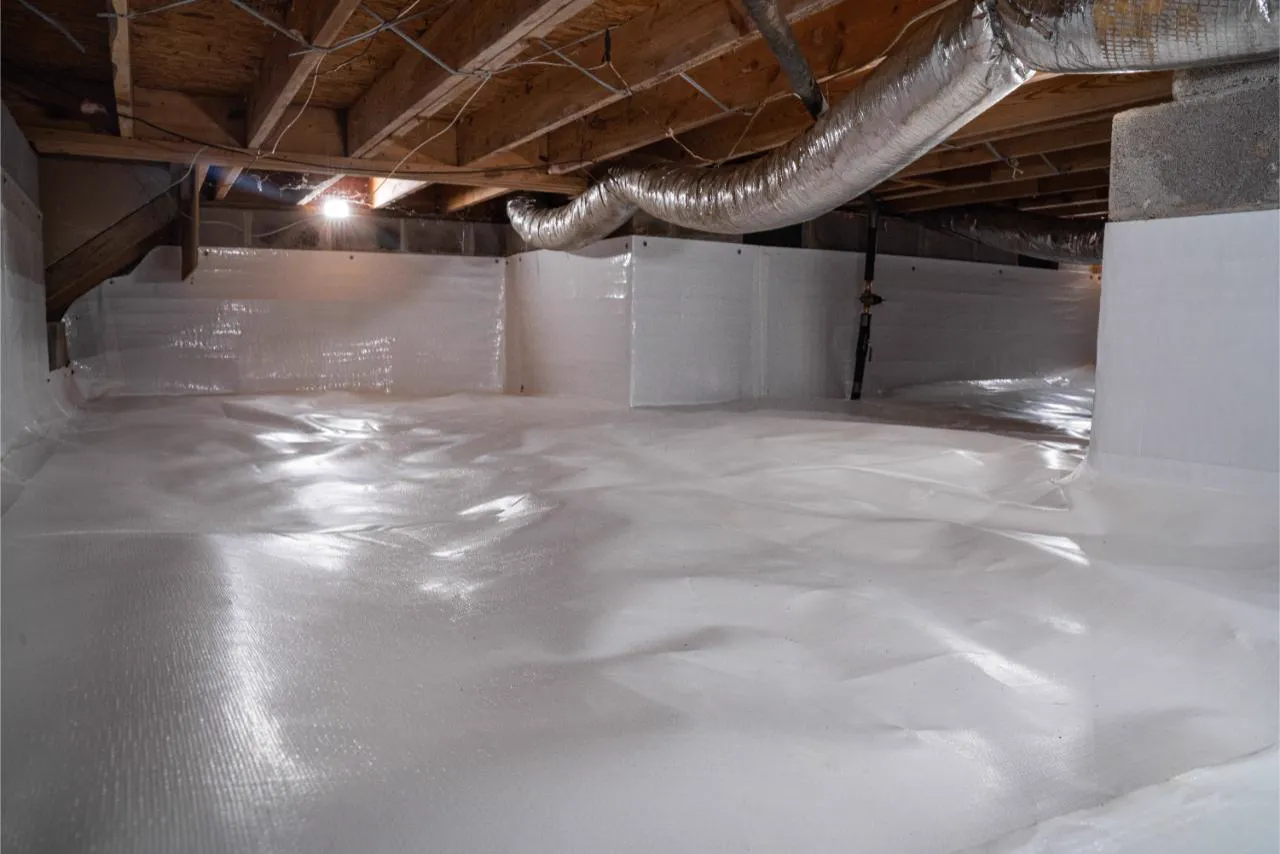
What does a real job look like, day by day?
Every crawl space encapsulation Norcross job starts the same way: a free inspection. We crawl the whole space, not the first ten feet past the door, and we read the wood. Moisture readings, staining lines, rusted duct straps, sagging batts — each one tells us where water came from and roughly how long it’s been showing up.
Then comes cleanout. Old insulation gets pulled, debris and torn plastic go out to the truck, and the grade gets smoothed so the liner can lie flat. Any drainage or sump work happens at this stage, since nothing gets installed over an unsolved problem.
After that the liner goes down, up, and around, sealed as it goes. Vents get closed, the door gets sealed, and the dehumidifier gets set and drained. Most homes take two to four working days. A homeowner on the Berkeley Lake edge said the loudest part of the week was our radio.
What would we want to know if it were our own house?
Fair question, and it’s the one we’d ask. If this were our family’s home, we’d want three answers before we signed anything — and none of them are about liner thickness.
The three questions we’d ask any company
- “How do you attach the liner to the walls and piers?” A real answer names fasteners, sealant and overlap. A thick liner sealed to nothing is still sealed to nothing.
- “Did you find water, or just humidity?” Those call for different scopes. If nobody checked, you’ll find out the hard way in April.
- “Who’s actually doing the work?” Same crews, or subcontractor roulette. It decides the finish quality and who answers the phone in year three.
We’d want the moisture readings written down too, before and after. That’s how you prove a job worked instead of hoping it did. The U.S. Department of Energy’s guidance on insulation and moisture control explains the science without selling you anything.
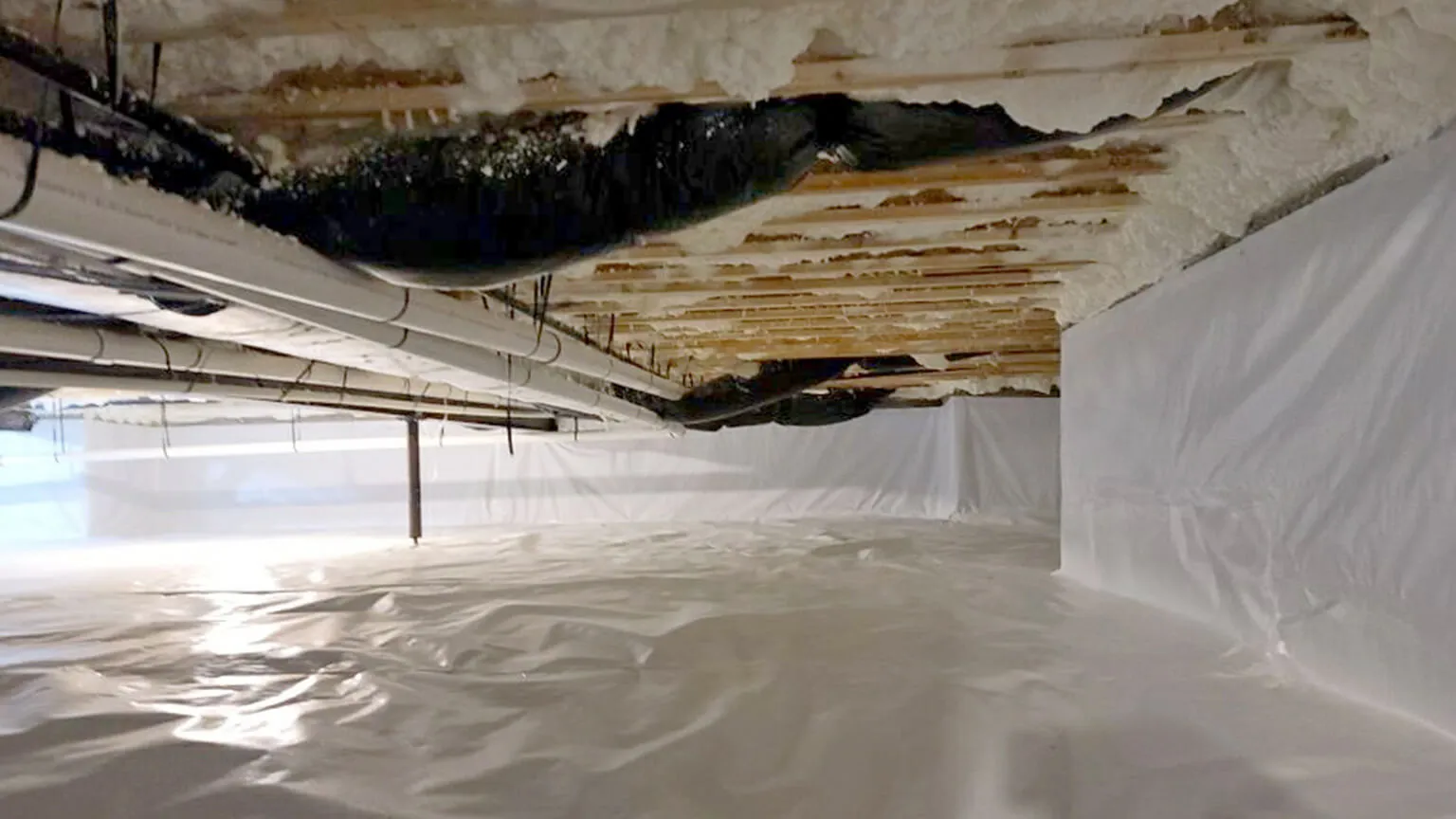
What actually moves the price?
Mostly square footage, headroom, and how much has to come out first. We won’t publish one flat number, because a price that fits a tight 900-square-foot space would be plain wrong on a tall 2,400-square-foot one. Still, you deserve to see the levers.
Cost drivers, biggest first
- Square footage. Liner, labor and crawling hours all scale with floor area. Biggest swing by a mile.
- Headroom and access. A duck-walk space costs less to work in than an eighteen-inch belly crawl. That’s real labor, not a surcharge.
- Cleanout. Fallen insulation, old plastic and debris all have to leave first.
- Drainage. If groundwater shows up, a drain and pump go in under the liner.
- Dehumidifier size. Bigger spaces need bigger units, plus a condensate line with somewhere to go.
- Extras. Subfloor insulation, duct sealing, a new access door. Common, never automatic.
Small sealed spaces land at the low end. A large space with drainage, a pump and a commercial dehumidifier sits at the top, and most homes fall somewhere in the middle. Either way, a crawl space encapsulation Norcross estimate from us is one written number with the scope spelled out beside it — plus $500 off projects over $3,500. If you’re comparing across the county, our Loganville crawl space encapsulation guide runs the same math.
What’s included, and what’s the warranty?
Included: the inspection, the estimate, the liner and all sealing, vent and door closure, the dehumidifier and its drain, haul-off, and photos of every corner before we close up. That’s the whole system, not a partial one.
Not included, usually: mold remediation, structural work on damaged joists, HVAC replacement, and plumbing repairs we happen to find. We flag those during the walkthrough instead of mid-project, because surprises belong at birthday parties. Sagging framing or rotted supports become a crawl space repair conversation of their own.
The warranty is plain English, short enough to read in one sitting, and it transfers with the house. That last part matters more than people expect. A family selling near the Medlock Bridge edge handed ours to a buyer’s agent and went back to packing boxes.
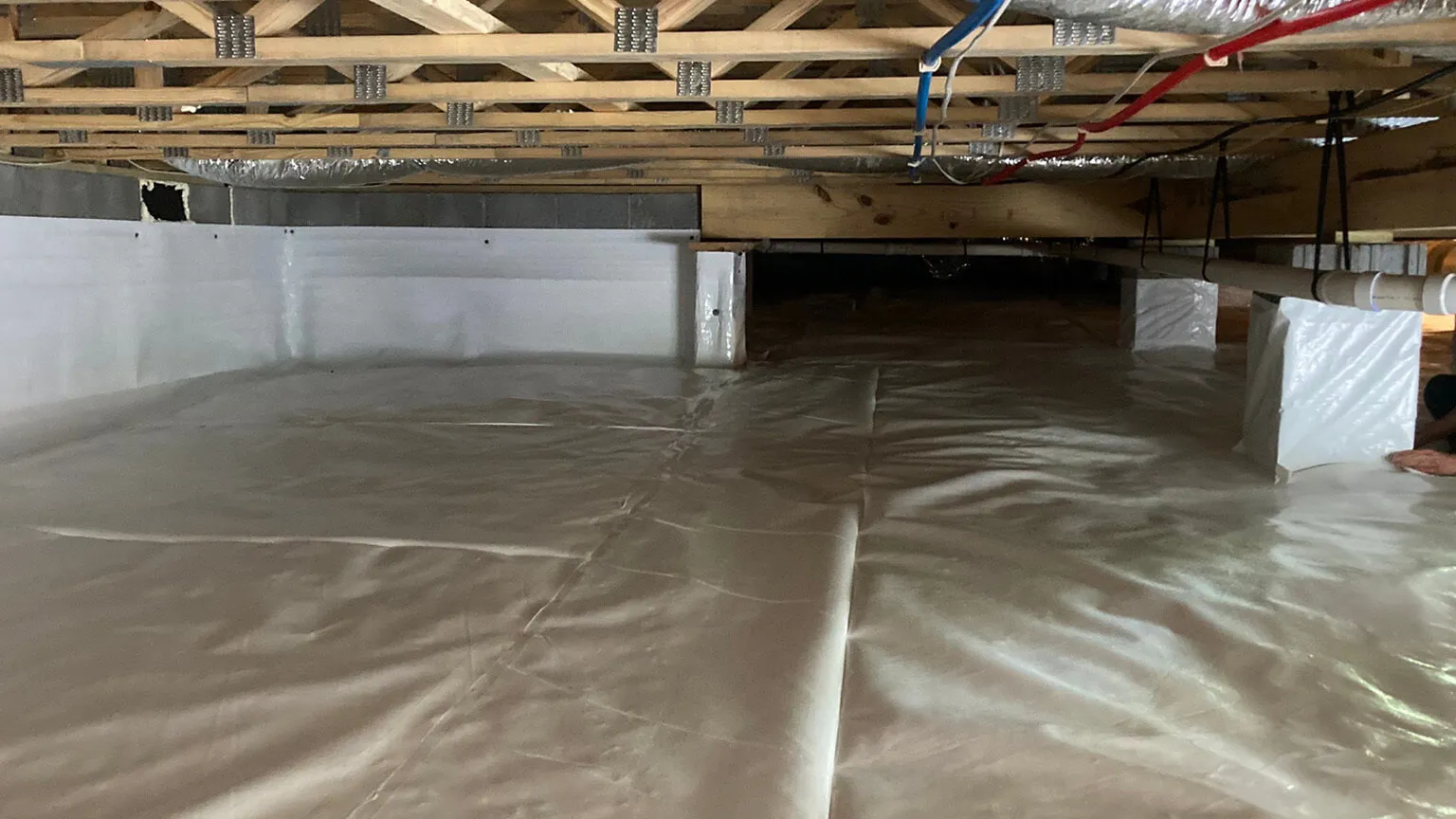
What should you do every year once it’s fixed?
Almost nothing, which is the point. Still, “almost nothing” isn’t the same as nothing. Here’s the yearly list we hand every homeowner: five minutes and a flashlight, and a sealed space stays sealed for decades.
Your once-a-year crawl space checkup
- Open the hatch and look. Loose corners or a small tear are quick fixes if you catch them early.
- Check the dehumidifier. The drain should run clear and the unit should read a steady humidity level.
- Walk your gutters. Fall leaf drop is heavy on the older tree-canopy streets here, and clogged gutters dump water at the footing.
- Look at the grade. Soil should slope away from the house. Mulch beds settle and quietly reverse that.
- Sniff the hallway. Really. A musty smell coming back is the earliest signal something changed below.
Why does the smell test work? Because air travels upward through a house, so part of what you breathe in the living room started under the floor. The EPA’s page on mold and health covers that in plain language.
Picture the after: floors that feel warmer in February, a hallway that smells like nothing, and a space you’d actually store holiday bins in. More importantly, a house that’s looked after. That’s what people describe a year later — not “dry,” but protected.
Why does hiring local matter in this town?
Because Norcross has houses from three different centuries. Stone and brick foundations in Historic Downtown Norcross, block basements from the sixties and seventies, crawl spaces of every height, and newer poured walls out toward the edges. Each one needs a different answer, which is exactly why a real inspection beats a phone quote every time.
Terrain matters too. The land rolls and drops toward the Chattahoochee River on the west side, and lots along that corridor see seasonal high groundwater. A crawl space that’s bone dry in September can take on water in March, so we plan for the wet month.
Then there’s the old-house side of it. Homes around the Lillian Webb district get handled carefully, because preservation-minded owners don’t want a crew improvising on 1800s masonry. And if water shows up lower in the house instead, our flooded basement repair guide covers that.
Where we work around Norcross
We’re based in Lawrenceville, about twenty minutes northeast, and we’re in this part of Gwinnett constantly. That covers Norcross, Peachtree Corners, Duluth, Lilburn, Doraville, Tucker, Berkeley Lake and Snellville, plus the wider Gwinnett area. Ridge lot or river-bottom lot, we’ve probably worked on one just like yours a few streets over.
Questions Norcross homeowners ask us
The usual tells are a musty smell upstairs, insulation sagging out of the joists, cupping floors, or visible damp on the dirt. None of those are emergencies, but they all point the same direction. A free inspection with real moisture readings settles it in about an hour.
It’s a heavy white liner sealed across the floor, up the walls and around every pier, with the vents and access door closed and moisture controlled afterward. The idea is simple: stop the dirt and the outside air from feeding damp into the space. After that, the crawl space behaves like part of the house.
It depends mostly on square footage, headroom, cleanout and whether drainage is needed, so a flat price would be wrong for half the homes here. Small sealed spaces land at the low end, and large spaces with drainage and a pump sit at the top. You get one written number with the scope beside it, plus $500 off projects over $3,500.
Almost always, yes. Sealing stops new moisture from coming in, and the dehumidifier is what holds the space steady through a humid Georgia summer. We size it to the space and run a drain line, so you never have to empty anything.
In our climate, closed. Open vents were required for decades on the theory that outside air dries a crawl space, but warm humid air condenses on cool surfaces instead. Once the space is sealed and the humidity is controlled, closed vents are the entire point.
Let’s find out what your Norcross crawl space actually needs
We’ll crawl the whole space, take real moisture readings, show you photos of what’s down there, and explain the fix in plain language. The inspection is free, the estimate is free, and nobody pressures you at the end of it.
(678) 914-5112Serving Norcross and all of Metro Atlanta · $500 off projects over $3,500 · Live support 7am–8pm, 7 days a week