

Waterproofing Options Norcross Homeowners Compare: Inside or Outside?
A fair look at interior drainage and exterior digging on a town with houses from three different centuries — plus a straight recommendation.
Water in a basement isn’t really leaking in. It’s being pushed in, because wet soil around your foundation gets heavy and presses on the wall until moisture finds the easiest path through. That one sentence explains almost every symptom down there, and it’s also why waterproofing options Norcross homeowners hear about fall into just two families.
Good news right away: this is fixable, and we handle it every week. So let’s walk through both approaches fairly, then we’ll tell you which one we’d recommend for your house.
Option A: how does an interior drainage system work?
An interior system doesn’t fight the wall. Instead, it collects water underneath your floor and moves it out before it ever reaches your stuff. Picture a gutter, except it lives below the slab where nobody sees it.
Our crew opens a narrow channel in the concrete along the walls giving you trouble. Perforated pipe goes in, wrapped in clean stone and set below floor level. Everything drains toward a sump, the pump carries water away from the house, and fresh concrete closes the channel back up.
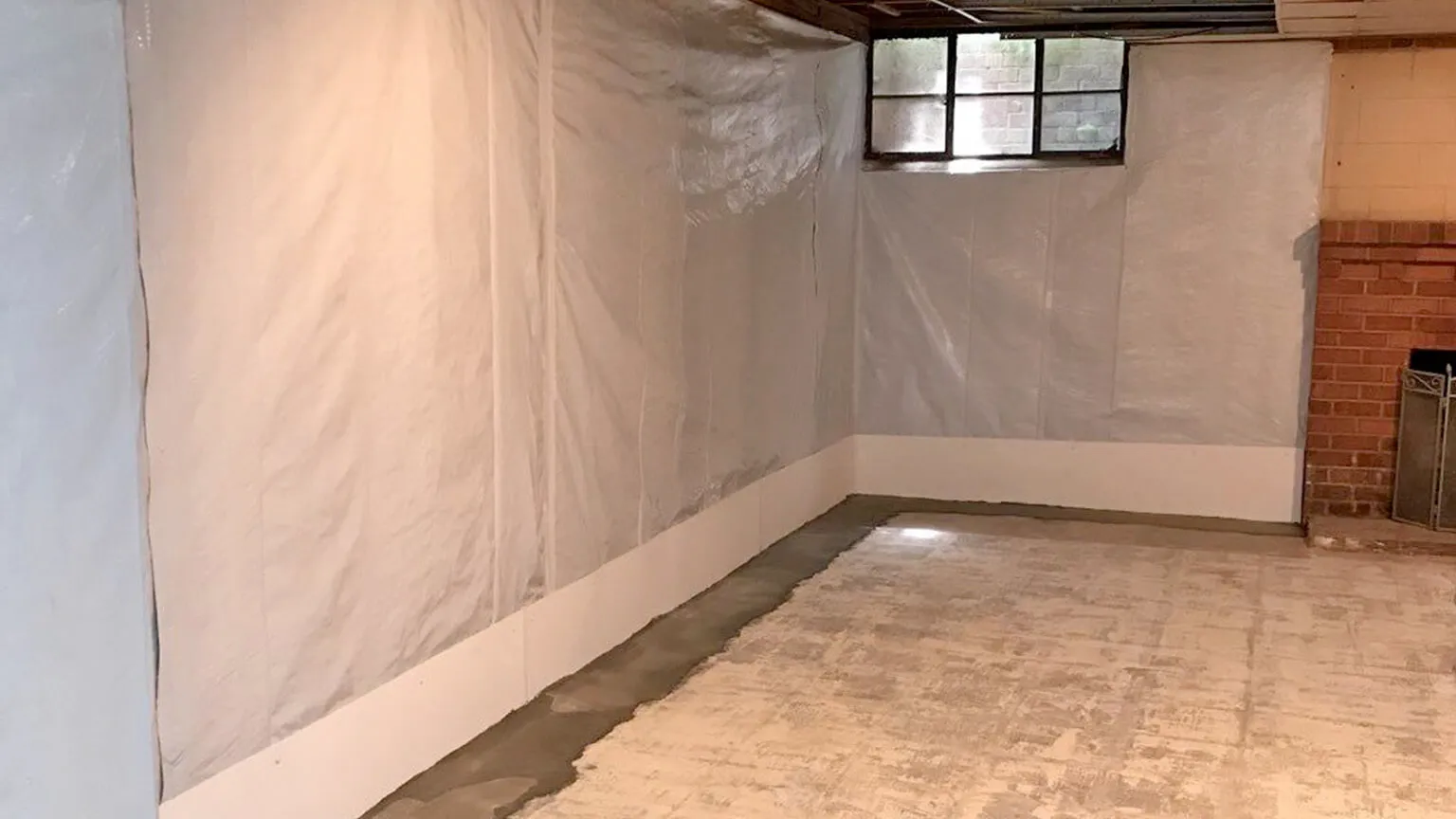
Why does this approach fit so many houses here? Because the drainage sits below the foundation, so it doesn’t care what the foundation is made of. Stone, hand-laid brick, 1960s block, later poured walls — all of them behave the same once the water has a path out. That flexibility matters a lot in a town where one street can hold four eras of building.
Worth knowing
Concrete is porous. Water moves through solid, uncracked concrete by capillary action, which is why a wall can be damp without a single visible crack. If you’ve been hunting for the crack and can’t find one, you haven’t missed anything.
Option B: what does exterior waterproofing involve?
Exterior work meets water earlier, out in the soil. Dirt gets excavated to the footing, the wall face is cleaned and coated with a membrane, and a footing drain goes in at the bottom. After that, the trench gets backfilled and the grading is corrected.
On paper it’s the more complete answer, and we’ll say that plainly. Water never reaches the wall, so the wall never has to hold anything back. For a foundation with soft mortar joints, that can be worth doing.
But digging is also the disruptive choice, and around here the disruption is very real on some lots. Historic downtown Norcross sits on tight parcels with huge old trees pressed right up against the houses. A machine has to physically fit between the wall and the property line, and sometimes there’s simply no path in — no amount of wanting it changes the geometry.

What twenty years changed about how we answer this
Early on, we believed what most people believe: blocking water at the wall is the superior fix, and interior drainage is the budget version. That’s the framing in half the articles online, so it’s fair that you arrived with it too.
Here’s the thing, though. Those two systems aren’t chasing the same job. Exterior work manages water out in the soil, while interior work manages water that has already arrived at the foundation. One prevents, the other collects — and a house can absolutely need collection without anyone having done anything wrong.
We stopped trying to block water and started trying to route it. Blocking is a fight that never ends, because the pressure never stops and every coating ages underground where nobody can inspect it.
A membrane is a solid product, but it sits buried under several feet of red clay. Stone and pipe, on the other hand, have nothing to wear out. That’s the shift twenty years of Gwinnett basements produced in us.
So no, interior drainage isn’t the discount answer. On an older foundation it’s very often the smarter one, and price has almost nothing to do with why.
Side by side, no spin
Enough theory. Here’s how they compare when we’re standing in your basement with a flashlight.
Interior drainage
- Work happens indoors, so rain never stops the schedule
- Trees, patios and landscaping stay exactly where they are
- Usually finished in one to three days
- Works the same on stone, brick, block or poured walls
- Includes a pump, which needs occasional service
- Handles water at the footing plus rising groundwater
Exterior waterproofing
- Stops water in the soil before it touches the wall
- Requires digging to the footing around the affected side
- Takes longer, and weather pauses it
- Costs more, mostly for excavation and putting the yard back
- Often impossible where roots or tight setbacks block access
- Also lets us repair the mortar face and fix grading
Notice that neither column says “better.” That’s on purpose, because the honest answer depends on your lot far more than on your preference.
What actually decides it on a Norcross lot?
Norcross has houses from three different centuries. Each one needs a different answer, which is exactly why a real inspection beats a phone quote every time. Four things usually settle it.
The deciding factors
- Can equipment reach the wall? Near Thrasher Park and the old blocks around it, mature canopy and narrow side yards often answer this before we do.
- Where is water showing up? Seepage across the wall face points outward, while water at the floor seam points to below-slab drainage.
- How is the masonry holding up? Crumbling joints on an 1800s stone wall may need attention on the outside face no matter what else we do.
- What’s already been patched? Decades of small fixes finally stacking up is the single most common story we hear here.
Now compare that to the other Norcross. Out in the Summerour area, along the Indian Trail corridor, and toward Rockbridge, you’ll find 1970s subdivision lots with real side yards and block basements that got almost no original waterproofing. Access is easy there, so exterior work is genuinely on the table in a way it isn’t downtown.

So which one do we recommend?
For most of the waterproofing options Norcross homes qualify for, we’d start with interior drainage, paired with the outside corrections that don’t require a machine: downspout extensions, regrading the first few feet, and clearing the drains that heavy fall leaf drop buries every year.
Full exterior work earns its keep in two situations: when the lot has clean access and the wall itself is deteriorating, or when you’re already digging for another reason. Otherwise you’d be paying a premium mostly to remove trees, and that’s hard to feel good about.
Sometimes we tell folks they don’t need either one. If water only appears during heavy storms and your gutters are packed solid, start there — a morning of gutter work has rescued more basements than any of us likes to admit. Curious how the same conversation goes across the county? Our breakdown of Loganville waterproofing options covers newer construction, where the math shifts again.
The house that wasn’t what they thought
Want the story that changes how people think about this? A homeowner off Buford Highway called us sure they needed the full exterior job. Water showed up along one wall every spring, a previous contractor had quoted excavation, and they’d already made peace with losing two dogwoods.
We walked it, and the wall was dry above the stain line. Moisture readings climbed as we got closer to the floor, not the grade. Then we found the real culprit outside: an old clay drain line, cracked and quietly soaking the soil right at the footing for years. It wasn’t groundwater at all.
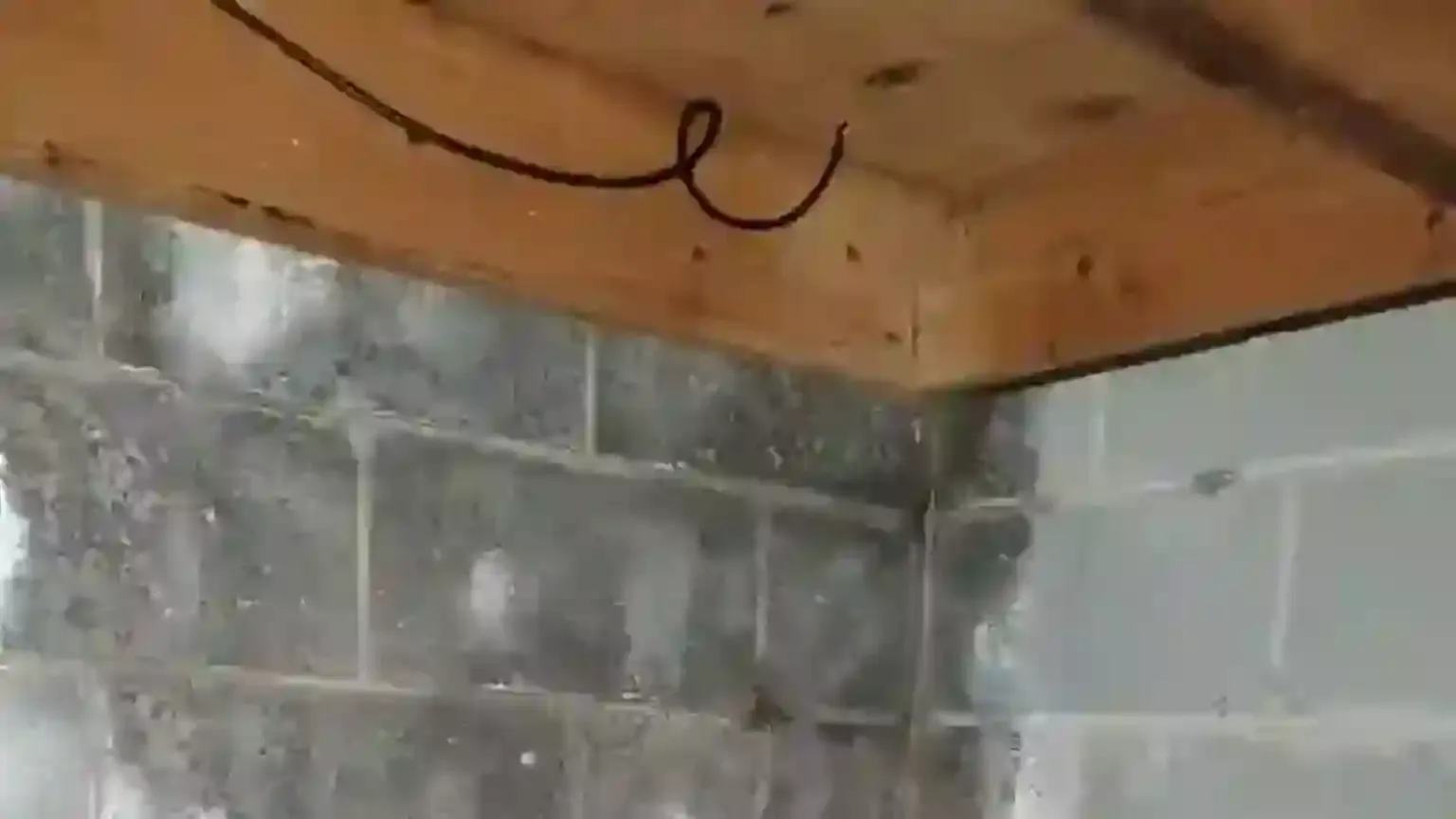
Fixing that line plus a short run of interior drainage solved it, and the trees stayed. Relief is the right word for how the call ended. That’s the argument for a real diagnosis: the biggest option isn’t automatically the right one, and finding out costs nothing.
The rooms nobody connects to a wet basement
Here’s a part that surprises people. Damp air rises, because warm air escaping your attic pulls replacement air up from the lowest point in the house. So the air upstairs began its trip down by that stained wall.
Moisture travels along for the ride. Hardwood cups at the seams, closet doors stick in July and fit fine in October, and a musty smell shows up two floors from any water. Homeowners chase those separately for years, yet they usually share one source. If you like the science, the EPA’s guide to moisture in the home explains it well, and the USGS groundwater primer covers what’s happening in the soil.
Now picture the after. The floor stays dry through a hard spring storm, that smell at the bottom of the stairs disappears, and the level you’ve been using for boxes turns into a room you’d actually invite people into. Better yet, you stop thinking about it at all when it rains.

Why hire people who know all three Norcrosses?
Because an 1800s stone foundation asks different questions than a 1972 block wall, and the answers aren’t in a script. We work around original masonry when a house deserves that care, and we’ll tell you honestly when something is fine as-is. Same crews, same trucks, written warranty.
Want to go deeper? Our service page on basement waterproofing explains the systems in detail, our guide to the best basement waterproofing approaches goes further on older foundations, and if your house sits on a crawl space instead, crawl space encapsulation is probably the right conversation.
Where we work around Norcross
We’re based in Lawrenceville, about twenty minutes northeast, so we’re in this part of Gwinnett constantly. That includes Norcross, Peachtree Corners, Duluth, Lilburn, Doraville, Tucker, Berkeley Lake, Suwanee, Snellville and the surrounding Gwinnett area. Odds are we’ve already been inside a house near yours.
Questions Norcross homeowners ask
The drainage itself is stone and pipe below your slab, so there’s nothing in it that wears out. The sump pump is the one part with moving pieces, and it gets replaced eventually like any appliance. Keep the discharge line clear and the system just keeps working.
Yes, and you get it in writing before we start, not after. The terms depend on which system your house needs, so we walk through the exact coverage during the estimate. We’re also licensed and insured, and the same crews handle the callbacks.
Usually, yes. We need roughly four feet of clear perimeter along the walls we’re treating, so most built-ins and finishes come back the way they were. Where something has to be opened, you’ll know which sections before work begins.
It helps in two ways. A dry lower level is space buyers will actually count, and a transferable warranty answers a question that otherwise turns up in every inspection report. On older houses especially, documented waterproofing makes the sale smoother.
Often within a few days, and faster if water is coming in right now. Live support runs 7 a.m. to 8 p.m., seven days a week, so you’re not leaving a message into thin air. Both the inspection and the estimate are free.
Let’s find out what your Norcross basement is really doing
The inspection is free, the estimate is free, and nobody pressures you at the end. We’ll show you where water is getting in, compare both approaches on your actual house, and tell you straight if the smaller fix is the right one.
(678) 914-5112Serving Norcross and all of Metro Atlanta · $500 off projects over $3,500 · Live support 7am–8pm, 7 days a week