

Wet Crawl Space in Dunwoody: What’s Causing It, and What a Fair Fix Looks Like
Somebody made a choice about your house in 1972. You’re living with it now — and it’s a much easier fix than it sounds.
When your house went up, a builder stood in the dirt and made a decision: leave the ground bare, cut some vents in the block, and let the outside air handle the rest. That was standard practice, and nobody was cutting corners. Fifty years later, though, that one choice is why so many people end up searching for help with a wet crawl space Dunwoody builders vented and walked away from.
Good news right up front: this is one of the most common things we look at, and it’s very fixable. Even better, the fix is about sealing and drying — not tearing your house apart.
So what did they actually decide?
They decided the crawl space was outdoors. That’s the whole idea behind vents. Open air moves through, the theory went, and anything damp dries out on its own.
In a dry climate that works fine. Here in Georgia, though, warm summer air rolls in through those vents, hits a cool subfloor and cool pipes, and drops its moisture right there. In other words, the vents built to dry the space are quietly watering it all July.
Dunwoody’s split-levels and ranches were built when “waterproofing” meant a spray coat of asphalt on the outside of a block wall. Fifty years of Georgia clay later, those walls are telling on themselves. That’s not a knock on your house. It’s just the story of when it was built.
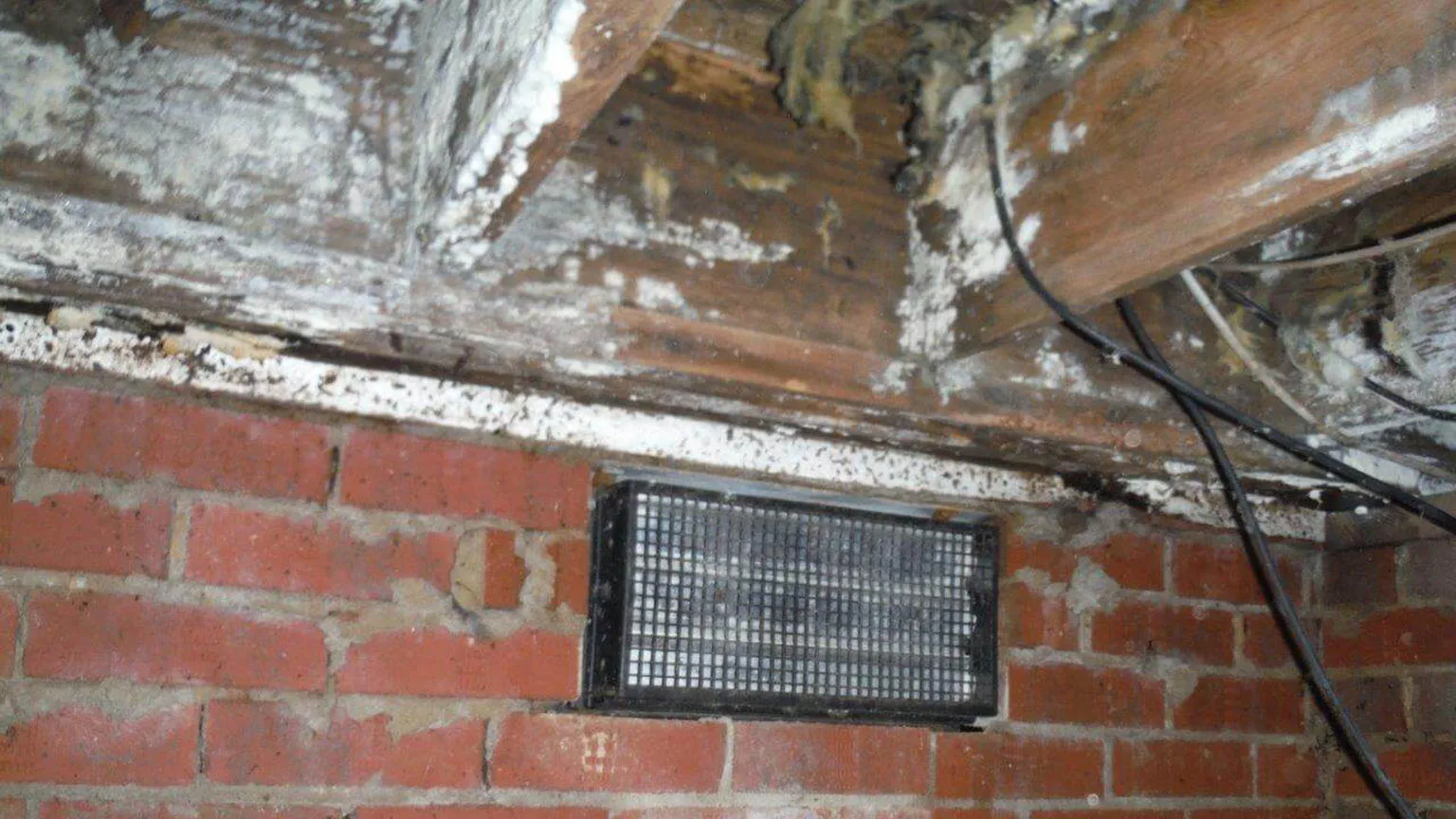
Wood is the honest witness down there. Framing starts supporting growth once its moisture content climbs to roughly twenty percent, and in a vented crawl space in August, joists hit that number regularly. So we bring a meter and show you the reading, which beats taking anybody’s word for it.
Why is the dirt still damp two weeks after rain?
Because red clay holds water like a sponge and lets it go slowly. Bare ground gives off vapor all day long, and a crawl space with no barrier is basically a lid on a wet field. Then the humid air upstairs starts to make sense.
Around here there’s a second driver, and it’s a big one: trees. Dunwoody’s hardwood canopy is beautiful, and those same sixty-year-old oaks and poplars send massive roots under walls, slabs and drainage lines. Roots crush old footing drains, lift piers, and open little paths for water to follow. Your yard is gorgeous and slightly aggressive at the same time.
Worth knowing
Old torn plastic laid loose on the dirt is not a vapor barrier. It’s a suggestion. A true encapsulation uses a reinforced liner sealed to the walls and piers — not loose sheeting resting on the ground.
Grade matters too. A lot of homes here sit below street level, cut into a slope, so groundwater arrives with a running start. That said, a house on a hill isn’t a problem house. It just needs its water managed on purpose.
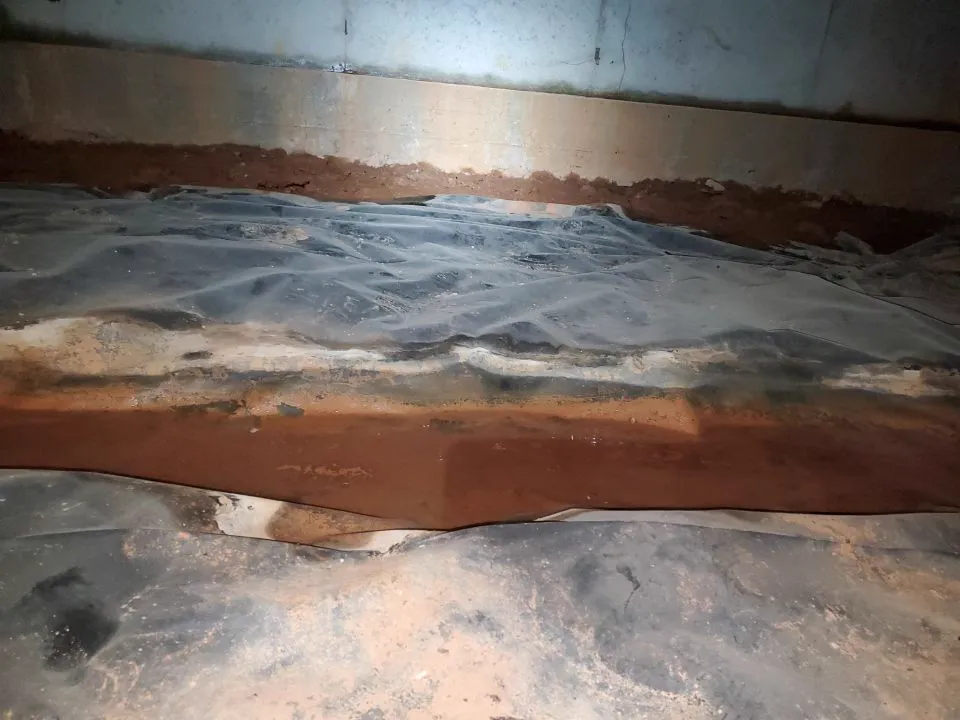
Is yours mild, or is it more than that?
Fair question, and you can get most of the way to an answer from your kitchen. None of this is bad news. It simply shows where you land on the scale, and knowing that is what makes an estimate easy to judge.
Reading the signs
- Musty smell, nothing visible. Moisture is arriving as vapor. Mild, and the least expensive version to solve.
- Indoor humidity stuck in the mid-sixties. Your air conditioner is fighting the ground and losing.
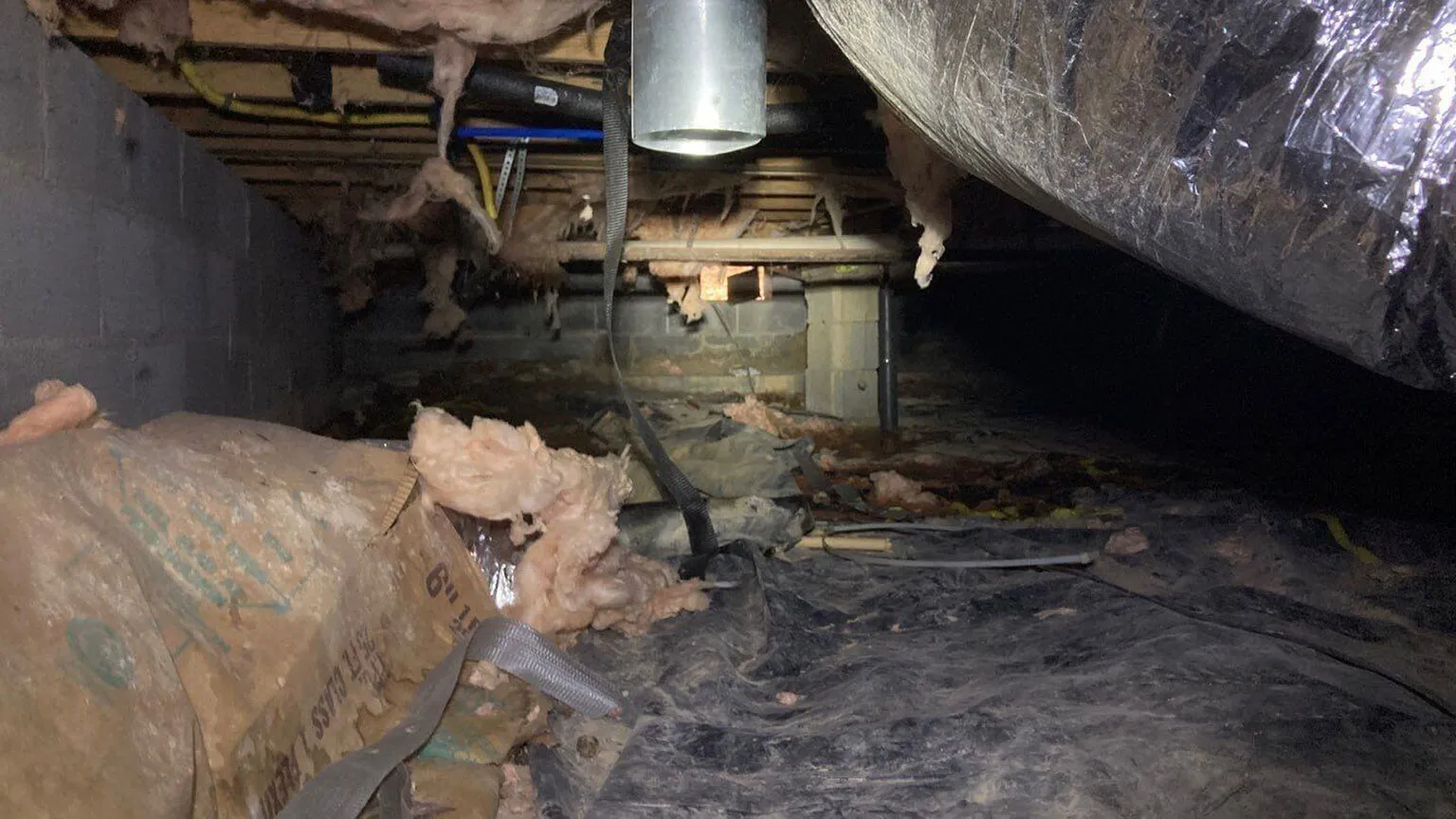
- Batt insulation hanging between the joists. Fiberglass soaks up moisture, gets heavy, then lets go.
- White fuzzy bloom on the rim joist. Surface growth on damp wood. Still very fixable at this stage.
- Standing water or mud after a storm. Time for a look. Bigger scope, same basic idea.
If you’d rather hear the health side from somebody who isn’t selling anything, the EPA’s page on mold and health is short and level-headed. We’d honestly rather you read a neutral source than trust a pitch.
What changed our thinking after twenty years?
Here’s the thing: for a long stretch, our industry treated this as a plastic problem. Put down better sheeting, tape the seams, call it done. We did plenty of jobs that way, and most of them held up okay.
Then we started going back to houses five and eight years later. The liner was fine. The humidity wasn’t. That taught us something we now build every job around — sealing the ground is only half the work. If nothing controls the air afterward, damp air still finds its way in around rim joists, pipes and the access door.
Which means we changed the order of operations. Water first, then the liner, then the air. Skip step one and you’ve wrapped a wet problem in nice white plastic, which looks great in photos and solves nothing.
The second thing that changed: we stopped insulating crawl space ceilings. Insulation belongs on the stem walls now, so the space stays near house temperature and condensation never gets a cold surface to land on. That one shift fixed more repeat calls than anything else we’ve done.
Most of the time the house is fine. Something is simply delivering more water than the ground can carry away — and that’s a much friendlier problem to solve.
What happens if you just leave it?
Nothing dramatic, honestly. A damp crawl space widens slowly and quietly. Insulation keeps dropping, humidity upstairs stays high, and your cooling system works a little harder every summer.
Over more years, damp framing can soften, and a sealing job turns into a carpentry job. So the reason to handle it sooner is cost, not fear. Nobody needs to rush you, and if anyone does, that tells you something about them.
How does the fix actually work?
Simpler than most people expect. Solving a wet crawl space in Dunwoody means treating that space as part of the house instead of as the backyard. Here’s the sequence, in order, so you can hold any estimate up against it.
- Handle the water first. Downspouts, grading, and an interior drain with a sump if groundwater is coming in.
- Clear it out. Old plastic, debris and soaked insulation come out. Wood gets cleaned and treated where it needs it.
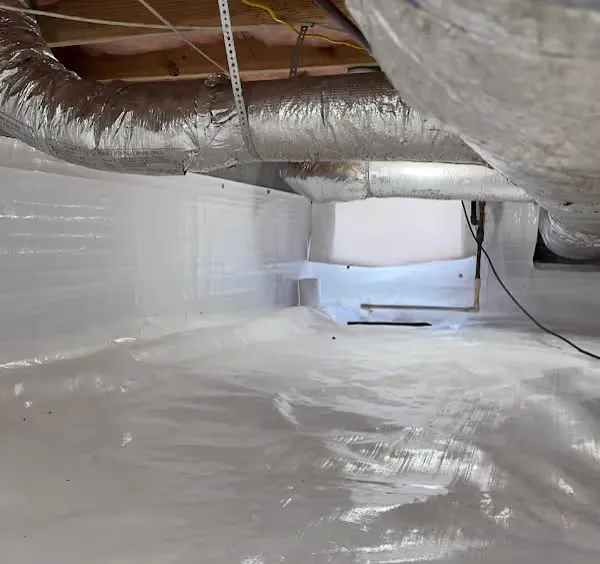
- Line everything. Reinforced liner across the dirt and up the stem walls, seams sealed, every pier wrapped.
- Close the vents. Once the ground is sealed, outside air has no drying job left — only a wetting one.
- Insulate the walls, not the ceiling. Foam on the stem walls holds the space at house temperature.
- Control what’s left. A dehumidifier steadies humidity, plus a gauge you can read without crawling anywhere.
Most jobs run two to four working days. Pricing follows square footage, ceiling height, and whether water has to be moved, so our encapsulation cost breakdown walks through the drivers before you ever call us. The crawl space repair page shows exactly what we install and why.
We put the scope in writing too, with proof of insurance and a warranty you can read in one sitting. Homeowners here compare proposals line by line, and we genuinely like that. It’s easier to earn a job than to talk somebody into one.
What did this look like on a real house?
We got a call from a homeowner in Dunwoody Club Forest, a mid-seventies ranch a few turns off Chamblee-Dunwoody Road. Second owners, in the house about nine years. Their complaint was simple: the guest bedroom smelled like a tent, and one hallway floor felt cold enough to wear socks in May.
Underneath, the story was the usual one. Bare clay, torn builder plastic, and a footing drain that had lost an argument with an oak root years earlier. Water was pooling at one corner and sitting there. Nothing alarming, just untended.
So we ran a drain to a sump, pulled the old sheeting and wet insulation, lined the floor and stem walls with reinforced material sealed to every pier, closed the vents, foamed the walls, and set a dehumidifier with a gauge by the access door. Four days, start to clean.
The smell was gone in under two weeks. What stuck with us, though, was the call a month later — they’d started storing holiday bins down there, because for the first time it felt like part of the house. That’s the whole point.

Why do so many Dunwoody homes hit this together?
Because the city was largely built between 1965 and 1985, so a whole town’s worth of original moisture systems is aging out on roughly the same schedule. Neighbors compare notes at Brook Run Park and realize three of them heard the same thing that spring.
We see it by street. The older ranches near Brook Run still have thin builder plastic that gave up a decade ago. Meanwhile the Dunwoody Village infill homes and the teardown rebuilds throughout town are built much tighter, so when moisture does get in, it has fewer ways back out. Different houses, same physics.
Then there’s the Perimeter Mall side of town, where plenty of homes sit below street grade with block basements instead of crawl spaces. If that’s your setup, our flooded basement repair guide covers that half of the story. For a look at how similar homes behave north of the river, the Roswell wet crawl space guide is worth a skim. And if you want the plain health rundown, the CDC’s page on mold and your home keeps it calm and short.
Where we work around Dunwoody
We’re based in Lawrenceville, about thirty minutes northeast, and we’re in this part of DeKalb County constantly. That includes Dunwoody, Sandy Springs, Brookhaven, Peachtree Corners, Chamblee, Doraville, Norcross, Tucker, Duluth and the surrounding DeKalb area. We’ll work around your schedule, and we’ll coordinate anything exterior with your HOA, since around here that’s just part of doing the job right.
Questions Dunwoody homeowners ask us
Trust your nose and your floors first. A musty smell upstairs, indoor humidity stuck above sixty percent, or insulation sagging between the joists all point to moisture below. If you see standing water or white bloom on the wood, it’s worth a free look — and it’s still very fixable at that stage.
It means sealing the crawl space so it becomes part of your house instead of part of the outdoors. A reinforced liner covers the dirt and runs up the walls, sealed to every pier, and the vents get closed. After that a dehumidifier holds the air steady year round.
It depends on square footage, ceiling height, how much debris comes out, and whether drainage is part of the job. A straightforward liner-and-dehumidifier project sits well below one that needs an interior drain and sump. We give you a written number after we’ve actually been under the house, never before.
In our climate, almost always yes. Sealing the ground stops most of the moisture, but damp air still slips in around rim joists, pipes and the access door. A properly sized unit holds humidity in the fifties, which is where wood and stored belongings stay happy.
Closed, once the space is properly sealed and conditioned. Open vents let humid Georgia air condense on cool surfaces under your floor, which adds water instead of removing it. Closing vents before the ground is sealed, though, is the wrong order — the liner and drainage come first.
Let’s find out what your Dunwoody crawl space really needs
We’ll go under the house, take real moisture readings and photos you can see for yourself, then explain the fix in plain language. The inspection is free, the estimate is free, and nobody pressures you. If you only need a small thing, we’ll say so.
(678) 914-5112Serving Dunwoody and all of Metro Atlanta · $500 off projects over $3,500 · Live support 7am–8pm, 7 days a week