

Waterproofing Options in Roswell: Which One Is Right for Your Home?
Interior drainage or exterior waterproofing? Here’s an honest side-by-side, plus the recommendation we’d actually give you.
Two houses, same hill, same damp corner. One owner handles it this spring, and the other waits three years. When homeowners start sorting through the waterproofing options Roswell companies quote, that timing question usually matters more than the brand of pipe anybody puts in the floor.
So let’s do the math calmly, with no drama attached. Water that’s already finding a way in doesn’t stay the same size — it widens the path a little every wet season. In year one you’re often looking at drainage along one wall. By year three that same house may need a longer run, plus new flooring, plus the drywall that wicked it up. Good news, though: nothing here is an emergency, and both of the real fixes work. You just want to pick the right one on purpose instead of by accident.
What does waiting really change?
Honestly? Not the foundation. That’s the part people brace for, and it’s usually not the story. What waiting changes is scope — how much of the house ends up inside the job.
Here’s the thing about the seam where your basement wall meets the floor slab. That seam is called the cove joint, and it’s the single most common water entry point in a Georgia home. Water reaches it, sits there, and slowly makes itself comfortable. Fix it early and you’re working on concrete. Wait, and you’re also working on carpet, baseboard and whatever was stored in the corner.
Good news? This is very fixable at any stage, and we handle both versions constantly. The early one is just cheaper and quieter. Think of it like a roof — same repair, better price, before the ceiling gets involved.
Option A: interior drainage — how does it work?
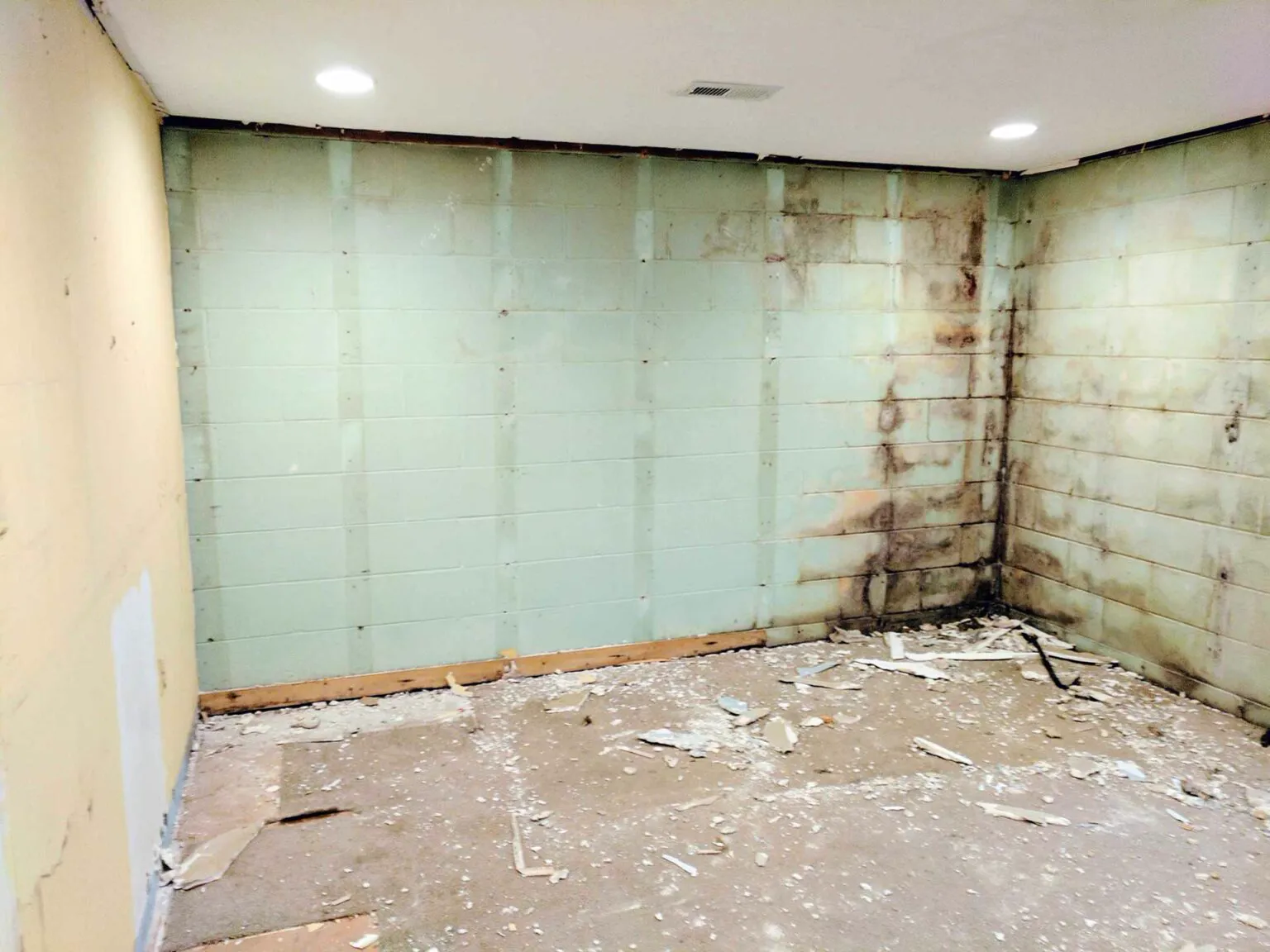
Interior drainage assumes water is going to arrive and gives it a better place to go. We open a narrow channel in the slab around the affected walls, set perforated pipe in clean stone below floor level, and route everything to a sump. The pump then sends that water well away from the house.
Because the work happens inside, your yard stays a yard. No excavator, no trenching past the azaleas, no waiting on a dry week. Most jobs run one to three days, and the price sits at the friendlier end of the range.
When does it win? On finished basements, on tight lots, on homes with a deck or patio hugging the foundation, and on any house where the water is showing up at that wall-floor seam. That covers a very large share of the homes we see off Alpharetta Highway (GA-9). It’s also the answer we give most often in the 1970s and 1980s subdivisions around Willow Springs, where the original drainage did its job for decades and simply got tired.
Good news
Interior drainage doesn’t mean giving up on the outside. If your grading, gutters or downspouts are feeding the problem, we’ll fix those too — sometimes that alone changes the whole quote.
Option B: exterior waterproofing — what’s different?
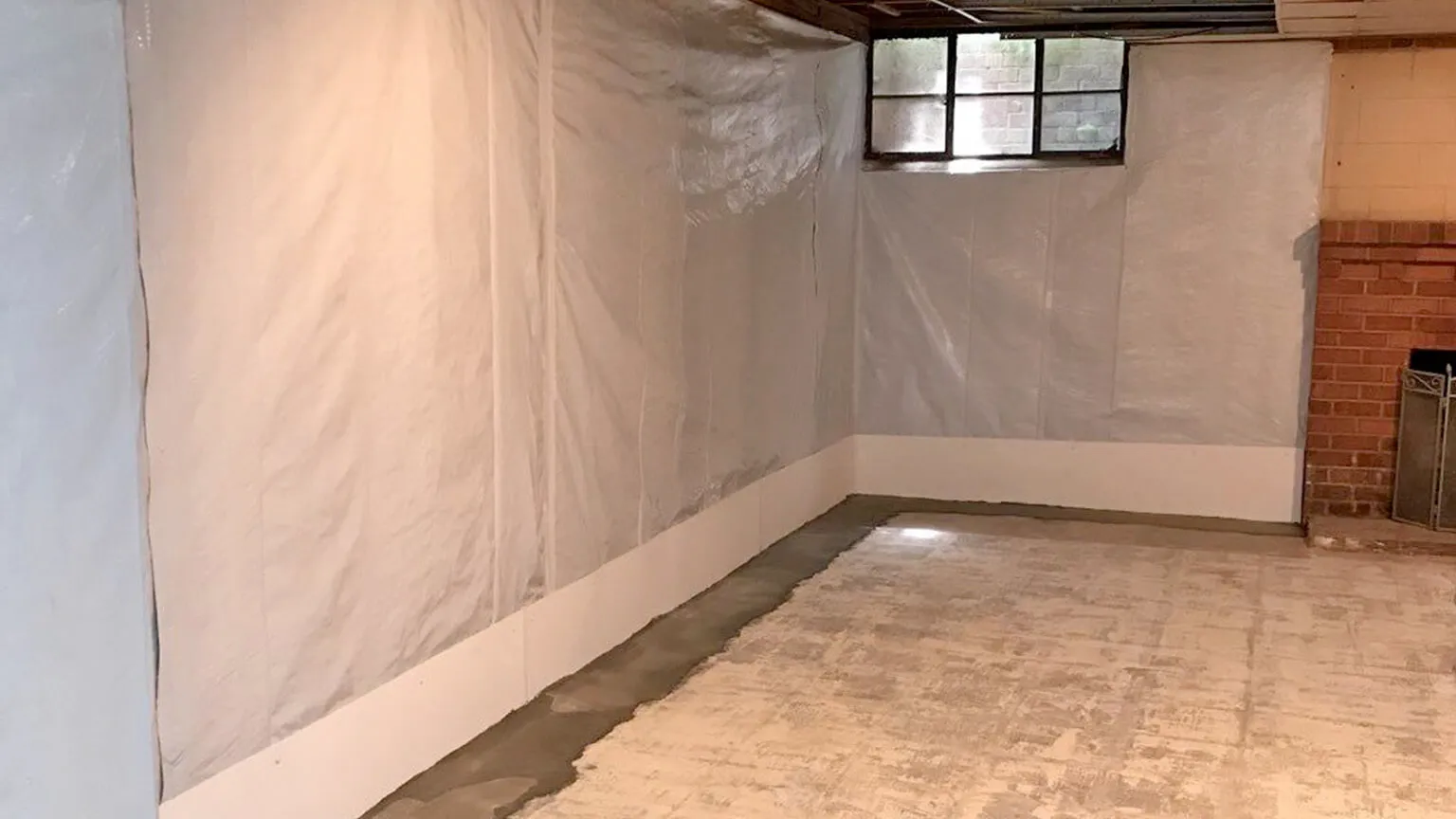
Exterior work stops water before it ever touches the wall. We excavate down to the footing, clean the foundation, apply a waterproof membrane, and install a footing drain in stone so groundwater gets carried off. In other words, Option A manages water; Option B blocks it.
That sounds better on paper, and sometimes it genuinely is. But it’s a bigger day. Digging costs more, weather can push the schedule, and landscaping usually needs some love afterward. Add a driveway, a retaining wall or mature trees near the foundation and the math shifts fast.
So when does it win? When the water enters high on the wall rather than at the floor. If there’s real hydrostatic pressure against one uphill side. Or when the foundation itself needs attention — parging, damaged block, or a historic stone wall near Canton Street that never had waterproofing to begin with. On those homes, treating the outside is the honest answer, and we’ll say so.
The side-by-side, no spin
Interior drainage
- Works from inside — no digging
- Usually one to three days
- Lower cost, easier to schedule
- Great on finished basements and tight lots
- Best when water arrives at the cove joint
- Needs a sump and a working pump
Exterior waterproofing
- Stops water before it reaches the wall
- Longer job, weather dependent
- Higher cost, plus landscape repair
- Lets us treat the wall itself
- Best for high wall entry and heavy pressure
- No pump required in many cases
Notice that neither column is the winner. Anyone who tells you one method always beats the other is selling the method they own equipment for. What actually decides it is your house, your slope and where the water shows up.
If it were our own house, here’s what we’d want to know
Real talk: when we walk our own family’s basements, we don’t start with products. We start with four questions, and you can ask them of any company that gives you a quote.
- Where exactly does it come in? Floor seam, mid-wall, window well, or all three? That single answer points to Option A or Option B faster than anything else.
- What’s uphill of me? A neighbor’s downspout, a driveway, a tired retaining wall — uphill runoff is the whole ballgame on a slope.
- What happens on the worst day? Not the average storm. The one that dumps two inches in an hour while the power flickers.
- Who fixes it in year seven? A warranty is only worth the company standing behind it.
That last one isn’t a sales line, either. We’ve been doing this for over twenty years with the same crews and the same trucks, so the person who answers in year seven remembers your basement. Plus, we’ve probably already worked a few streets over.
What decides it on a Roswell hill?
Roswell is built on hills. Water always wins on a hill unless somebody gives it somewhere better to go — and that’s the whole job. Because of that, this city changes the comparison in ways that flat neighborhoods simply don’t.
Start with the ground. Red clay sits over granite here, often shallow, so rain doesn’t soak straight down. Instead it hits rock and travels sideways along the bedrock until it meets something — frequently the uphill wall of your basement. That’s why a walkout in Horseshoe Bend can stay bone dry on three sides and weep on the fourth. If you want the plain-English version of how groundwater moves underground, the U.S. Geological Survey’s groundwater basics explains it well.
Then there are retaining walls. Half the hillside lots around Country Club of Roswell have one, and when a wall loses its drainage it quietly becomes a bathtub aimed at your foundation. That’s a very fixable problem, but it changes the recommendation: fixing the wall’s drainage first sometimes shrinks the basement job dramatically. We’d rather find that on a free inspection than after you’ve paid for a full system.
Season matters too. Spring storms move fast downhill here, so the water arrives with force rather than seeping. You can watch the pattern yourself through the National Weather Service office in Peachtree City, which forecasts our whole area.
So what would we actually recommend?
For most Roswell homes with a walkout or daylight basement and water at the floor seam, we recommend interior drainage plus outside corrections. That combination handles the water you can’t stop and removes the water you can, and it does it without turning your yard into a job site. It’s the right call a large majority of the time, and we’ll put that in writing.
We’d flip to exterior waterproofing in three situations. First, when water enters high on the wall under real pressure from an uphill side. Second, when the foundation itself needs treatment — including the stone and rubble walls under some of the older homes near the historic district. Third, when you’re already excavating for other reasons, since the trench is the expensive part and it’s a shame to dig twice.
When we’d tell you that you don’t need the bigger option
Sometimes the answer is neither. If your only symptom is a musty smell after a storm and your gutters are dumping right at the corner, extending downspouts and regrading may be the entire fix. We’ve walked out of houses near Roswell Area Park having recommended about two hundred dollars of gutter work, and that’s a good day.
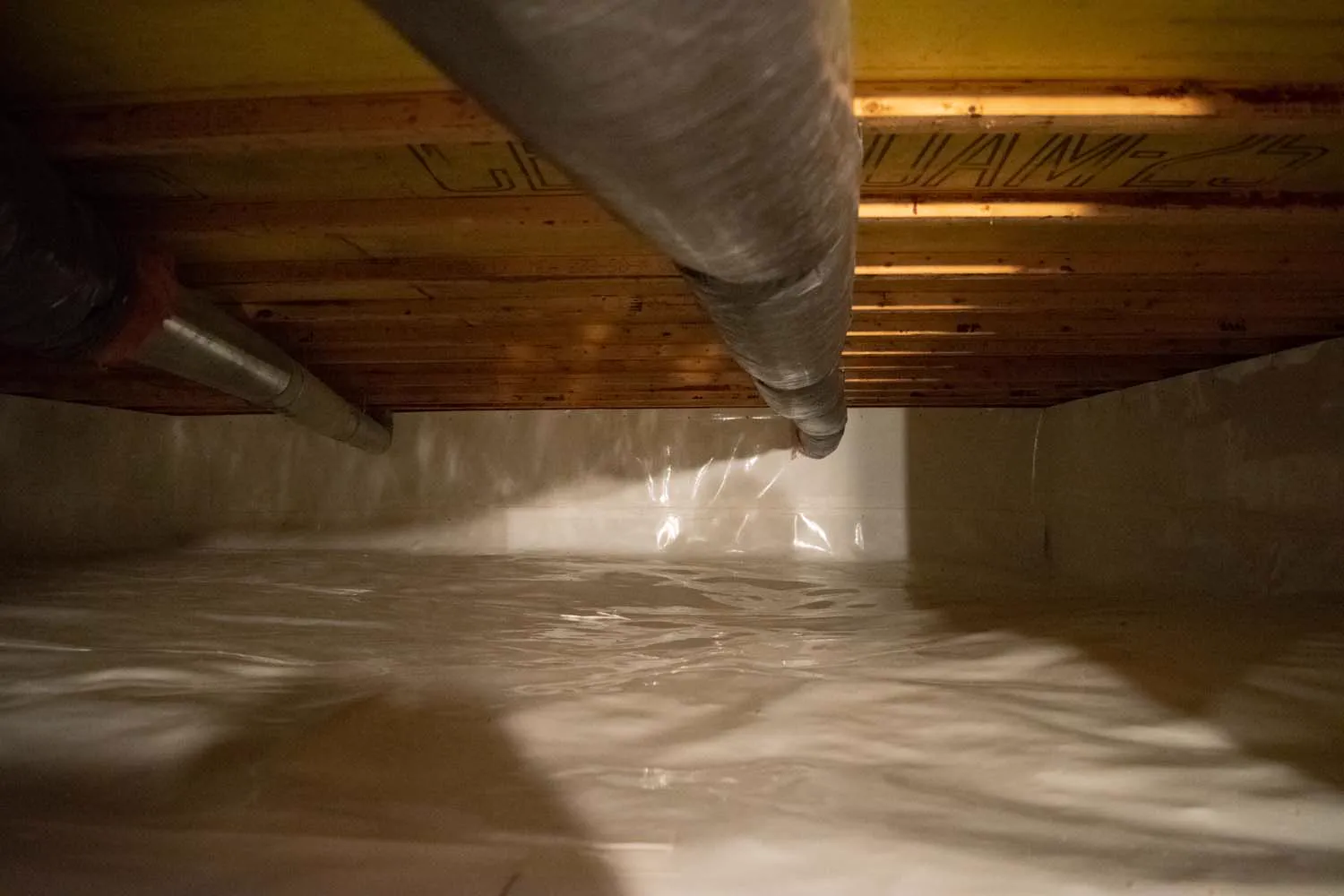
Same story if your issue is really under the house rather than in it. Damp air rising from a dirt crawl space feels exactly like a wet basement, but the fix is different — crawl space encapsulation is usually the answer there. And if you’d like the full menu of systems we install, our basement waterproofing page lays them out.
Week one, year one, year ten: what the fix feels like
Here’s the part nobody quotes, and it’s the part you’re actually buying.
Week one is loud and then over. Day one we move things away from the perimeter and open the channel. By the end, the concrete is back down, the liner is up, and the space looks better than it did. Dust settles for a few days, so we’d plan the family movie night somewhere else that week.
Year one is the quiet test. The first hard spring storm rolls through, you hear the pump cycle once or twice, and the floor stays dry. After that, the smell at the bottom of the stairs goes away for good, and you start storing things down there that you’d never have risked before.
Year ten is the one that surprises people. The drainage itself is stone and pipe below the slab, so there’s nothing to wear out — it’s built to last the life of the house. The pump is the maintenance item, roughly on the same schedule as a water heater. Everything else just keeps working while you forget it exists.

That’s the real feeling we’re after: protected. Your family, your house, your stuff — looked after, so the forecast becomes something you scroll past. If you’re still comparing approaches, our guide to the best basement waterproofing methods goes deeper, and neighbors one town north can read the same breakdown for Milton waterproofing options.
Where we work around Roswell
We’re about thirty minutes east of you in Lawrenceville, and we’re on this side of town constantly. Along with Roswell, we work throughout Alpharetta, Milton, Sandy Springs, Johns Creek, Marietta, Dunwoody, Cumming, Duluth and Norcross, plus the wider Fulton County area. If you’re near Canton Street, out along the river, or up in one of the hillside subdivisions, we’ve very likely already worked a street or two away.
Questions Roswell homeowners ask us
It depends on where the water comes in. If it shows up at the seam where the wall meets the floor, interior drainage is usually the better value. If it enters high on the wall under pressure, or the foundation itself needs treatment, exterior work is the honest call. We’ll tell you which one your house is during the inspection.
The drainage is designed to last the life of the house, because it’s stone and pipe below the slab with no moving parts. The sump pump is the one item with a service life, and most get replaced somewhere around the ten-year mark. Plan for it the same way you plan for a water heater.
Yes, and you get it in writing before we start rather than after. Ask us to explain exactly what’s covered and for how long. A warranty nobody can summarize in a sentence isn’t doing you much good.
Usually, yes. We open only the bottom section of wall and floor along the affected run, then close it back up neatly. Built-ins and bathrooms add careful work, so they add cost, but a finished basement is a normal job for us and not a reason to start over.
It protects value more than it adds it, which matters just as much. A dry, documented basement removes a common inspection issue and makes the lower level usable square footage. Buyers on hillside lots ask about water, so having the paperwork ready is a real advantage.
Let’s figure out which option your Roswell home actually needs
The inspection is free, the estimate is free, and nobody pressures you at the end. We’ll show you where the water is getting in, explain both approaches for your house, and tell you plainly if the smaller fix is enough.
(678) 914-5112Serving Roswell and all of Metro Atlanta · $500 off projects over $3,500 · Live support 7am–8pm, 7 days a week