

How to Choose the Best Basement Waterproofing in Roswell, GA
What hillside homes here really need, how to read an estimate, and the questions that tell you who knows this town.
Is this normal? That’s the question almost nobody wants to say out loud, and it’s the one that starts most best basement waterproofing Roswell searches at eleven at night. A little water in the corner after a storm. A smell that shows up in March. So you wonder if every house does this, or just yours.
Real talk: it’s common here, but common isn’t the same as normal. Good news, though — it’s also one of the more fixable things a house can do. Nothing about a damp basement means your home is in trouble, and most of the houses we walk through need one afternoon of honest looking, not a rescue. So let’s talk about how to pick the right company for it.
What makes Roswell homes different?
Ever notice how many driveways here tilt? That’s the whole story in one detail. Roswell is built on hills — river bluffs above the Chattahoochee, deep cuts around Vickery Creek, and whole subdivisions carved into slopes. Water always wins on a hill unless somebody gives it somewhere better to go, and that, honestly, is the entire job.
Underneath, you’ve got red clay sitting on granite. Because that rock is often shallow, water can’t soak straight down, so it runs sideways along the top of the bedrock instead. Then it travels downhill until it hits the first solid thing in its way, which is frequently the back wall of a basement.
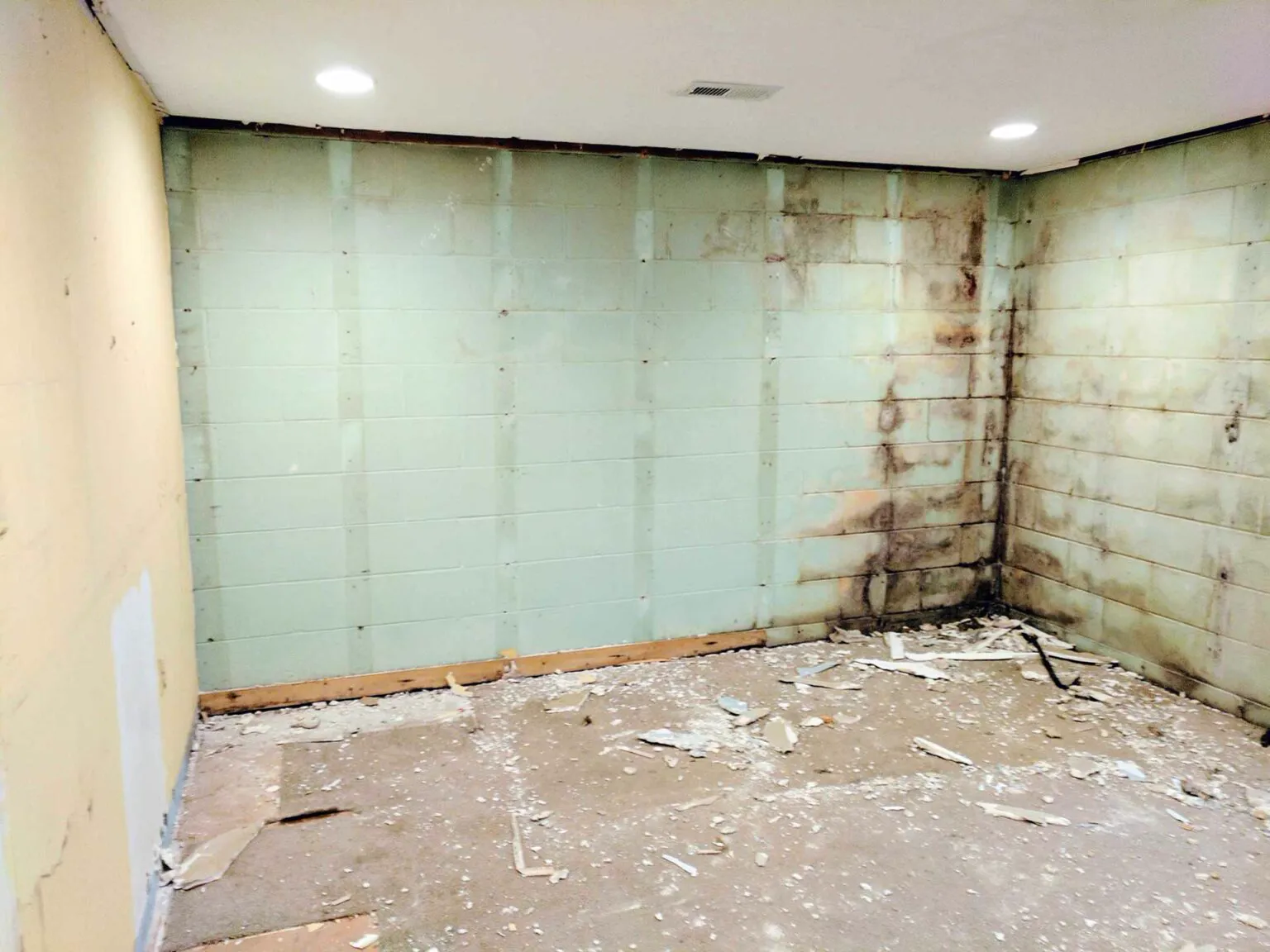
Add the housing mix and it gets interesting. Out near Country Club of Roswell and along the Chattahoochee Plantation edge, plenty of homes went up in the 1970s and 1980s with walkout basements and original drainage that has simply aged out. Martins Landing sits low and close to the river, which is a different puzzle. Downtown near Canton Street, some foundations are stone and rubble with dirt-floor cellars, and those need a gentle hand.
Good news
A wet basement and a failing foundation are two separate conversations. Most homes we look at are only having the first one, and we’ll say so plainly instead of letting you wonder.
What should a good company do differently here?
Ask them where the water starts. That single question sorts the field fast. On a flat lot you can get away with treating the wall you can see, but on a Roswell slope the source is often uphill of the house, sometimes well uphill, and a company that never walks the yard is guessing at the fix.
Here’s what a proper look includes. Grading first, because dirt that slopes toward the house undoes everything else. Downspouts next, since a single one dumping at the corner can produce a puddle that looks like a foundation problem. After that comes the retaining wall, if you have one, because a wall holding back a saturated hillside is really a dam nobody signed up for.
We stopped trying to block water and started routing it. On a hill, that shift is the difference between a fix and a rerun.
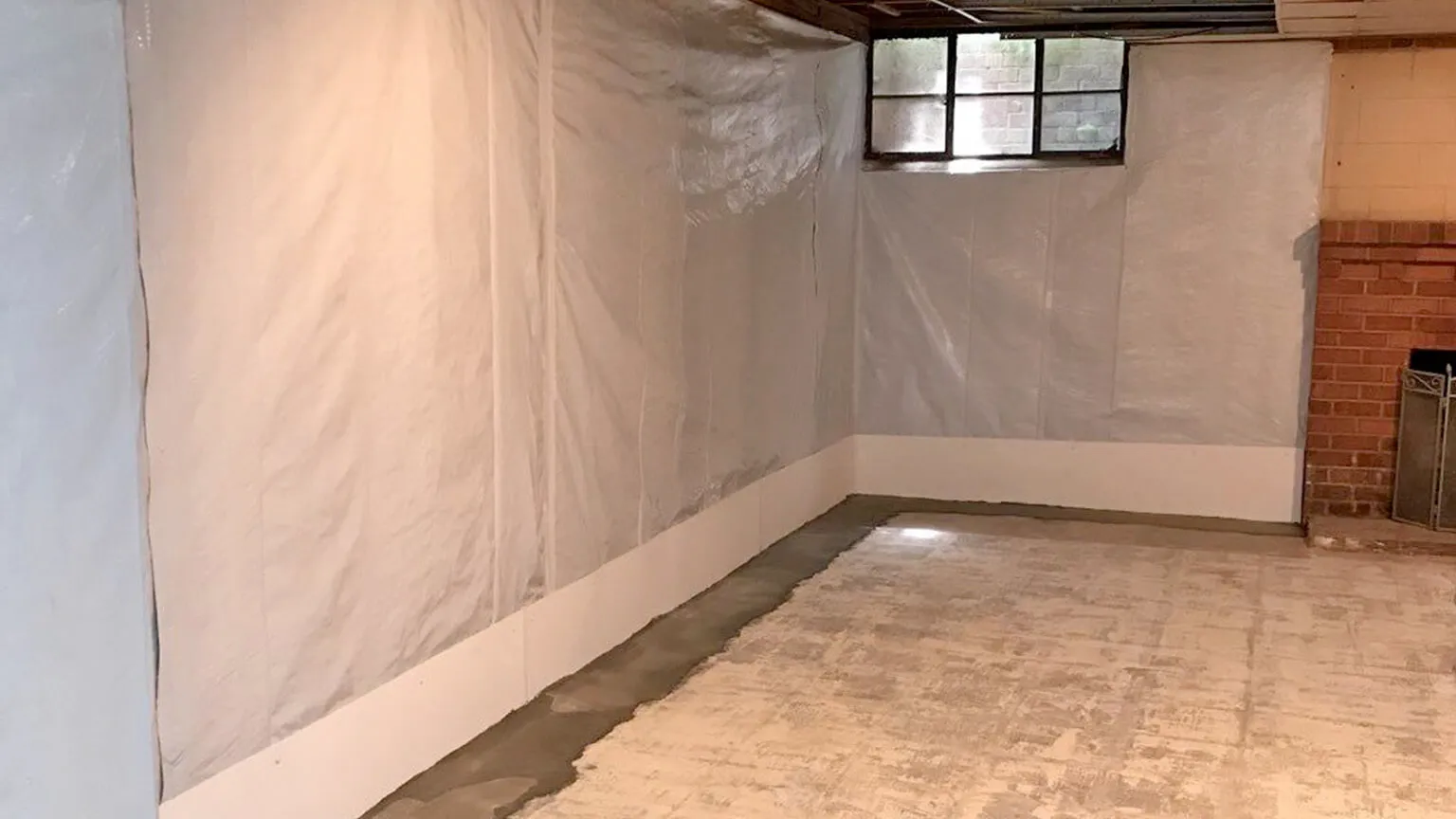
Now the technical part, in plain words. Interior drainage systems collect water below the slab and send it to a sump before it ever reaches your floor, instead of trying to hold it back at the wall. That matters more on a slope, because slope means pressure, and pressure beats coatings every time. A raincoat is great in a drizzle, but nobody wears one underwater.
So when you’re comparing bids for best basement waterproofing work in this town, listen for the word “route.” Companies that talk only about sealing are selling you a patch with a nice name. If you want the long version of how the system goes together, we lay out the basement waterproofing systems we install step by step.
Did you know you can start smaller?
Most people think the first step is picking a contractor. It isn’t. The first step is watching your own house during one good rain, and it costs nothing but a raincoat and ten minutes of mild curiosity.
Go outside while it’s actually pouring. Look at where water lands off the roof, where it pools, and whether it runs toward the house or away from it. Then head down and note which corner darkens first. That’s it. Homeowners who do this walk into estimates with real information, and they get much better answers — because now they can ask specific questions instead of general ones.
Better yet, this little exercise sometimes solves the problem outright. We had a homeowner up the hill from Riverside Road convinced they needed a full system. During the walk-through we found a buried downspout crushed flat, dumping every gallon straight against the wall it emptied into. Fixing that was a fraction of what they’d braced for, and we told them so before quoting anything bigger.
That’s the part worth knowing. A company confident in its work will happily hand you the cheaper answer, because the goal is a dry house, not a big invoice. Roughly a third of the time, what looks alarming inside starts with something simple outside.
How do you read an estimate?
Line by line, and slowly. A good estimate names the walls it covers, the linear feet, the depth of the drainage, the sump and pump model, and what gets restored when the crew leaves. Vague estimates aren’t always dishonest, but they are always hard to compare, and you can’t hold anybody to a paragraph.
Questions to ask before you hire
- Where does the water start on my lot? If nobody walked the yard, that answer will be thin.
- Below the slab or against the wall? Below-slab collection is what handles pressure on a hillside.
- Where does the pump discharge? It should end well away from the house, not four feet from the wall you just paid to protect.
- Who does the work? Own crews or subcontractors changes your warranty experience in year six.
- What exactly does the warranty cover? Ask for it in writing, before work starts.
- What happens if it still gets wet? Listen for a clear process, not a shrug.
Red flags are easier to spot than people expect. A firm price quoted over the phone, sight unseen, is a guess you’d be paying for. Same-day-only discounts belong in a car lot. Anyone who leads with mold testing before they’ve looked at where the water enters has the order backwards, and the EPA’s guidance on moisture control makes the same point: fix the moisture, and the rest follows.
Cost, since you’re wondering. Small drainage corrections sit at the low end, and a full perimeter system with a new sump and battery backup in a finished walkout sits at the top. Access, linear feet, and what’s outside move the number most. After we walk it, you get a written scope with a real number attached — not a “starting at.”
Which rooms feel it that you’d never blame?
Here’s the part that surprises people. A damp basement doesn’t stay in the basement, because air moves upward through a house all day long. Warm air rises and leaves, cool damp air gets pulled up behind it, and now the lowest level is quietly conditioning your whole home.
So the sticky-feeling bedroom on the main floor may not be a thermostat issue. Upstairs closets that smell faintly of a campground, hardwood that cups near an interior wall, allergy season that never quite ends — those often trace back downstairs. Your HVAC feels it too, since pulling humidity out of the air is work, and work costs money every month.
The good part is that this cuts both ways. Once the water is routed and the space dries out, those upstairs symptoms tend to fade on their own without anybody touching them. Homeowners tell us the smell went first, then the stuffiness, and then one day they noticed the house just felt lighter. Nobody expected a drainage channel to improve a guest room, and yet here we are.

Picture the after for a second. Spring storms roll through hard here, since water moves fast downhill, and the forecast turns dramatic every few weeks. You hear the rain on the roof, and then you go back to your show. No trip down the stairs with a flashlight, no towels, no wondering.
That calm is the actual product. Not pipe, not concrete — a storm you get to ignore. If you want to see how much rain we really get, the National Weather Service office in Peachtree City keeps the local record, and it’s more than most people guess.
Why we’re a fit for this town
Twenty-plus years in Metro Atlanta means we’ve almost certainly worked a street near yours. We know how the 1970s hillside subdivisions drain, and we know the older foundations near the Roswell Mill and Vickery Creek Falls need care rather than muscle. Historic homes get treated like historic homes, which matters if you own one.

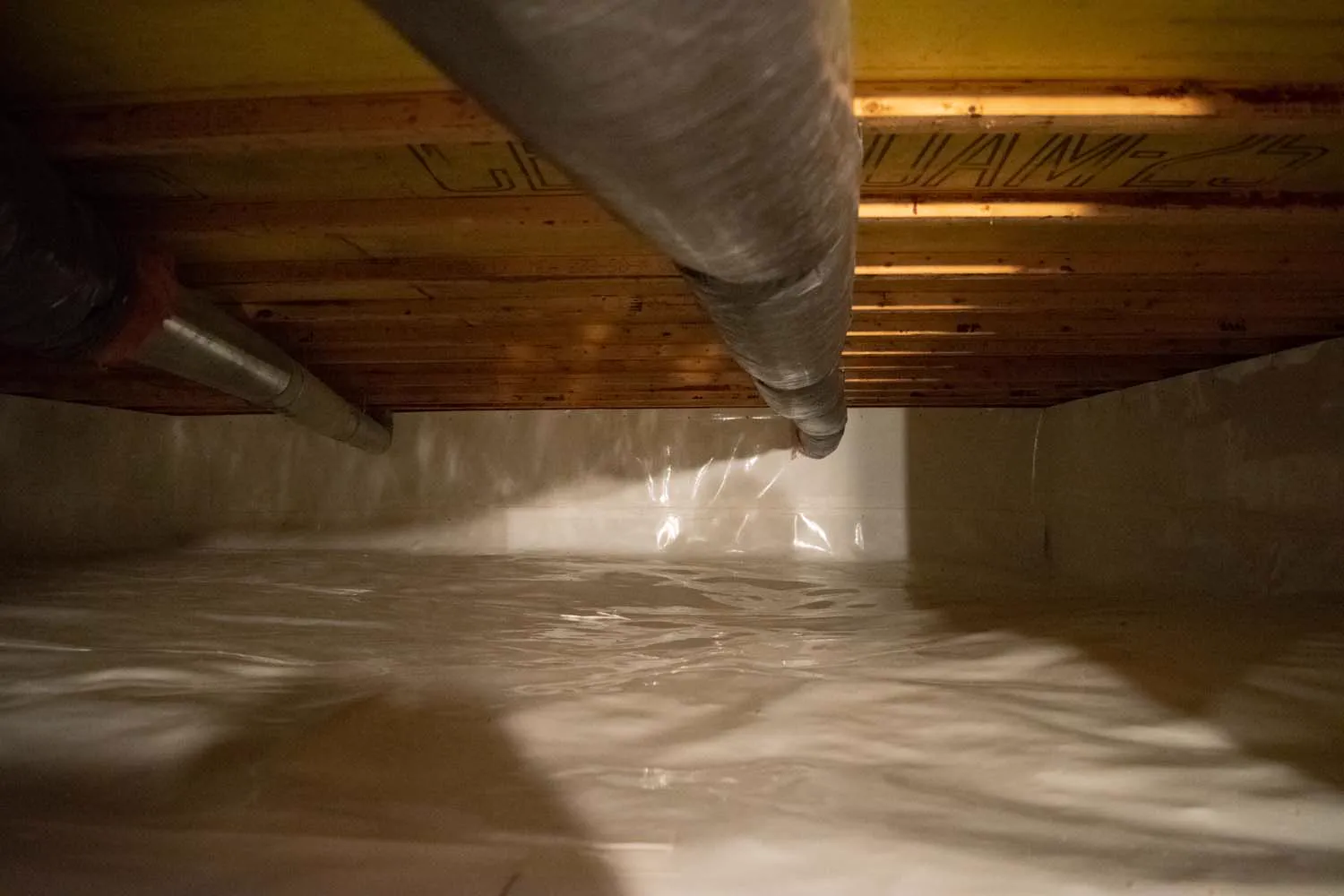
Still sorting out what you’re seeing? Our overview of basement waterproofing here covers the symptoms in more detail, and if your home sits over a vented crawl space instead, crawl space encapsulation is usually the better answer. Comparing notes with family one town over? We cover the same ground for Milton best basement waterproofing too.
Where we work around Roswell
We’re based in Lawrenceville, about thirty minutes east, so Roswell is a regular stop for our trucks. We also work throughout Alpharetta, Milton, Sandy Springs, Johns Creek, Marietta, Dunwoody, Woodstock and Cumming, plus Duluth, Suwanee and the wider Fulton County area. If you’re near Canton Street or out toward the river, there’s a good chance we’ve got a crew nearby already.
Questions Roswell homeowners ask us
Yes, and you get it in writing before the first tool comes out of the truck. Ask us to explain what’s covered in one plain sentence, because a warranty you can’t repeat back isn’t much of a warranty. Since our own crews do the work, you’re calling us in year six, not a call center.
Usually, yes. We open a narrow strip along the affected walls, which means removing a section of baseboard and drywall at the bottom rather than gutting the room. It does add labor, so the estimate reflects that, and we put the space back before we leave.
It helps in two ways. A documented system with a transferable warranty answers the question buyers and inspectors always ask about a lower level. Plus a dry basement is finishable square footage, and finished space counts for a lot more than storage space does.
Often within a few days, and sooner when there’s active water. Our phones are answered by real people from 7 a.m. to 8 p.m., seven days a week. The inspection and the estimate are both free, so there’s no cost to just finding out.
It depends on how much wall is involved and how hard it is to reach, so anyone quoting a flat number by phone is guessing. Small drainage corrections land low, while a full perimeter system with a sump and backup power in a finished walkout lands high. We walk the house, then hand you a written scope with a real number.
Let’s find out what’s really happening down there, Roswell
The inspection is free, the estimate is free, and nobody leaves you with a decision to make on the spot. We’ll show you where water is getting in, what it would take to route it away, and whether the simple fix is enough.
(678) 914-5112Serving Roswell and all of Metro Atlanta · $500 off projects over $3,500 · Live support 7am–8pm, 7 days a week