

Waterproofing Options in Milton: Which One Is Right for Your Home?
Two real choices, laid out side by side — how each one works, what pushes the price, and which one we’d actually pick for your house.
The box on the floor gave it away. It was fine last month, and now the bottom is soft and the flap peels apart in your hand. That’s usually the moment homeowners start reading about waterproofing options Milton companies offer — and then get stuck, because everyone seems to sell a different answer.
Good news? There are really only two grown-up approaches, and you can understand both of them in about ten minutes. So let’s put them next to each other honestly, and then we’ll tell you which one we’d choose for your house. No shrug at the end. A real recommendation.
Option A: what is interior drainage?
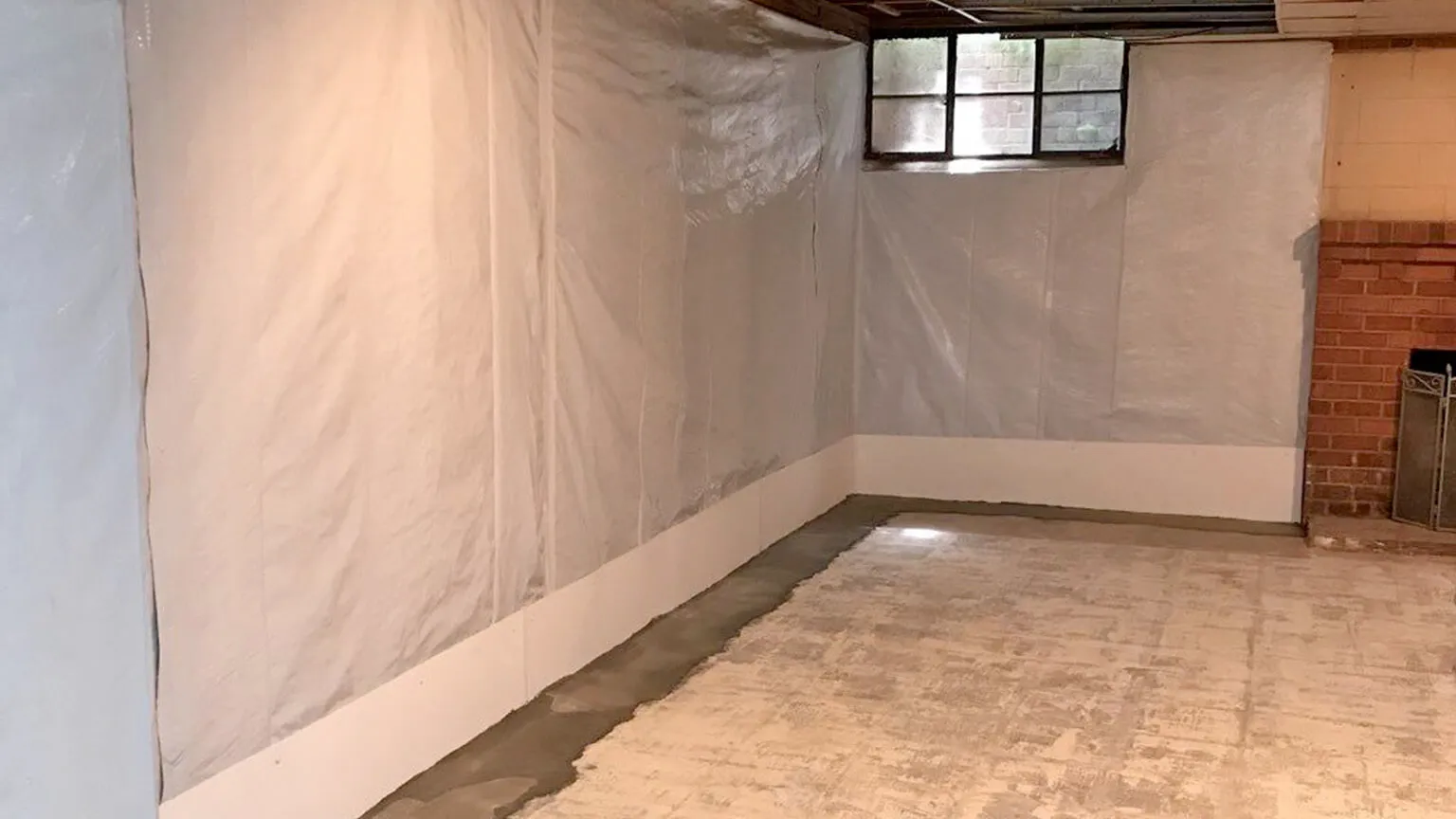
Interior drainage works from inside the basement. We open a narrow channel in the slab along the walls where water shows up, set perforated pipe in clean stone below floor level, and route everything to a sump basin. Then the pump sends that water well away from the house.
Here’s the part that makes it click. Interior drainage systems collect water below the slab and send it to a sump before it ever reaches the floor, instead of trying to block it at the wall. In other words, we stop arguing with the water and start giving it a better exit. Water is lazy, and it takes the easy path every single time.
What does it cost? Less than most people brace for, because the price mostly follows linear feet of wall and how hard the work area is to reach. One wall is a small job. A full perimeter with a new sump and battery backup sits much higher. Still, nobody is digging up your lawn, so the landscaping bill stays at zero.
When does it win? It wins when water is already getting in, when the basement is finished, and when the outside of the house is crowded with a patio, a deck, mature plantings or a long paved approach. We put this system in a Blue Valley home last spring where the flower beds had been in place for fifteen years, and the owner was not eager to lose them. Neither were we, honestly.
Option B: what is exterior waterproofing?
Exterior work goes after the same problem from the other side. Crews excavate down alongside the foundation, clean the wall, apply a waterproof membrane, and install a footing drain in stone. After that, the soil goes back and the grade gets corrected so water runs away from the house instead of toward it.
It’s the more thorough approach, and we’ll say that plainly. Water gets stopped before it ever touches the foundation, so the wall itself stays dry rather than shedding moisture into a channel. For a very large finished basement, that difference matters more than it sounds.
But it costs more, and the reason is simple: dirt is heavy and access is everything. Excavation along a walk-out elevation with equipment room to work is one number. The same job squeezed between the house and a pool deck is another number entirely. Plus you have restoration afterward — sod, beds, irrigation lines, sometimes hardscape.
Good news
Neither option means your foundation is in trouble. A wet basement and a structural problem are two separate conversations, and most homes we look at only need the first one. We’ll tell you straight which one you’re in.
So how do they actually compare?
Interior drainage
- Work happens inside; landscaping stays untouched
- Usually one to three days on site
- Lower cost per foot of wall
- Works fine in winter and in wet weather
- Needs a sump pump, so it needs power
- The wall itself still gets wet; water is managed, not blocked
Exterior waterproofing
- Stops water before it reaches the foundation
- Fixes grading and footing drainage at the same time
- Keeps the wall dry, which suits big finished spaces
- Higher cost, plus restoration after backfill
- Access decides everything — decks and patios complicate it
- Weather can push the schedule
Read that twice and a pattern shows up. Interior drainage buys you speed, lower cost and zero disruption outside. Exterior work buys you a dry wall and a corrected grade, at a higher price and with a longer week. Both are real fixes. Neither one is a gimmick.
But here’s the part most companies skip when they explain this
The choice isn’t only about the basement. It’s about where the water is coming from in the first place — and on a Milton property, that answer is often sitting a hundred feet from the house.
Big lots collect a lot of rain. Metro Atlanta picks up around fifty inches a year, which is more than Seattle gets, and you can look up our local records through the National Weather Service office in Peachtree City. On a half-acre suburban lot that water has somewhere to go. On three rolling acres of red clay with a long drive and a pasture behind the house, it sheets downhill and finds the lowest wall — which is usually yours.

That’s why we walk the whole property before we quote anything. Sometimes the fix is a swale, a regrade, or a buried downspout line carrying roof water two hundred feet away. As a result, a homeowner off Freemanville Road who expected a full system ended up spending far less, because the real problem was surface runoff off a paddock. We told him so, and we still sleep fine.
Detached buildings deserve the same look. Barns, guest houses and pool houses have their own low spots and their own runoff, and water pooling around one of them often ends up traveling toward the main house. Since we’re already on site, we check them too.
What decides it on a Milton home?
Milton houses are their own category, so the usual internet advice fits them badly. Most were built between 1995 and 2015, sit on acreage, and have very large full basements. Many of those basements are finished — theaters, gyms, wine rooms, in-law suites.
In Milton the basement isn’t storage. It’s a finished floor of the house — and a small amount of water down there causes a very large amount of damage.
That one line changes the math. If the wet wall backs a wine room or a media wall, the value of keeping that wall bone dry goes way up, and exterior work starts making sense even at the higher price. On the other hand, if the water shows up in an unfinished mechanical room, interior drainage handles it beautifully for a fraction of the cost.
Age matters too. Homes under twenty years old often have poured walls in good shape with a footing drain that was installed correctly and then quietly clogged with clay silt. Those are great candidates for interior drainage, since the wall isn’t the problem. Older block walls near Six Hills tend to tell a different story, and we read them differently.

So which one would we pick?
Here’s our real answer, not a hedge. For most Milton homes with an active leak in a finished basement, we recommend interior drainage plus outside drainage corrections. That pairing solves the water you have today and reduces the water arriving tomorrow, and it does it without tearing up a landscape somebody spent years building.
We go exterior when three things line up: the wall shows real moisture across a wide area, the grade outside is genuinely wrong, and there’s room to dig. A walk-out elevation with open lawn behind it is close to ideal. That’s the setup we had at a White Columns property where the yard fell toward the house, and the membrane plus a corrected grade ended it for good.
When would we tell you that you don’t need the bigger option? More often than you’d guess. If the only water arrives during heavy storms, the gutters are overflowing, and the downspouts dump three feet from the wall, then start there. Fix the gutters, extend the discharge, correct the grade, and watch it through one wet season. Plenty of homeowners never call us back, which is a fine outcome. A quiet spring beats an invoice.

Once it’s fixed, what should you do every year?
Nobody hands you this list, so here it is. A waterproofing system is a lot like a roof — it does its job quietly for decades, as long as somebody glances at it once a year. Better yet, all of this takes about an hour on a Saturday morning.
Your once-a-year walkthrough
- Test the sump pump. Pour a bucket of water into the basin and make sure it kicks on, pumps out, and shuts off.
- Check the discharge line. Walk to where it ends. It should be clear, unfrozen, and pointed away from the house.
- Clean the gutters twice. Once after the leaves drop, once in spring. Overflowing gutters undo good drainage fast.
- Look at the grade. Soil should fall away from the foundation. Mulch settles over time, so top it back up.
- Test the backup battery. Batteries fade after a few years, and the storm that floods a basement is the one that also drops the power.
- Watch the humidity. Keep the basement in a comfortable range; the EPA’s moisture control guide explains why that number matters.
Do that and the system outlives your interest in it. Meanwhile the basement stays a real floor of the house — the theater still works, the guest suite still smells like nothing at all, and the cardboard box on the floor stays boring. That’s the whole point.
Comparing notes before you call anyone
You should be able to read an estimate and know exactly what you’re buying. Ask for linear feet, pump specs, warranty terms, and what happens to the water once it leaves the house. If a proposal can’t answer those, it isn’t a proposal yet.
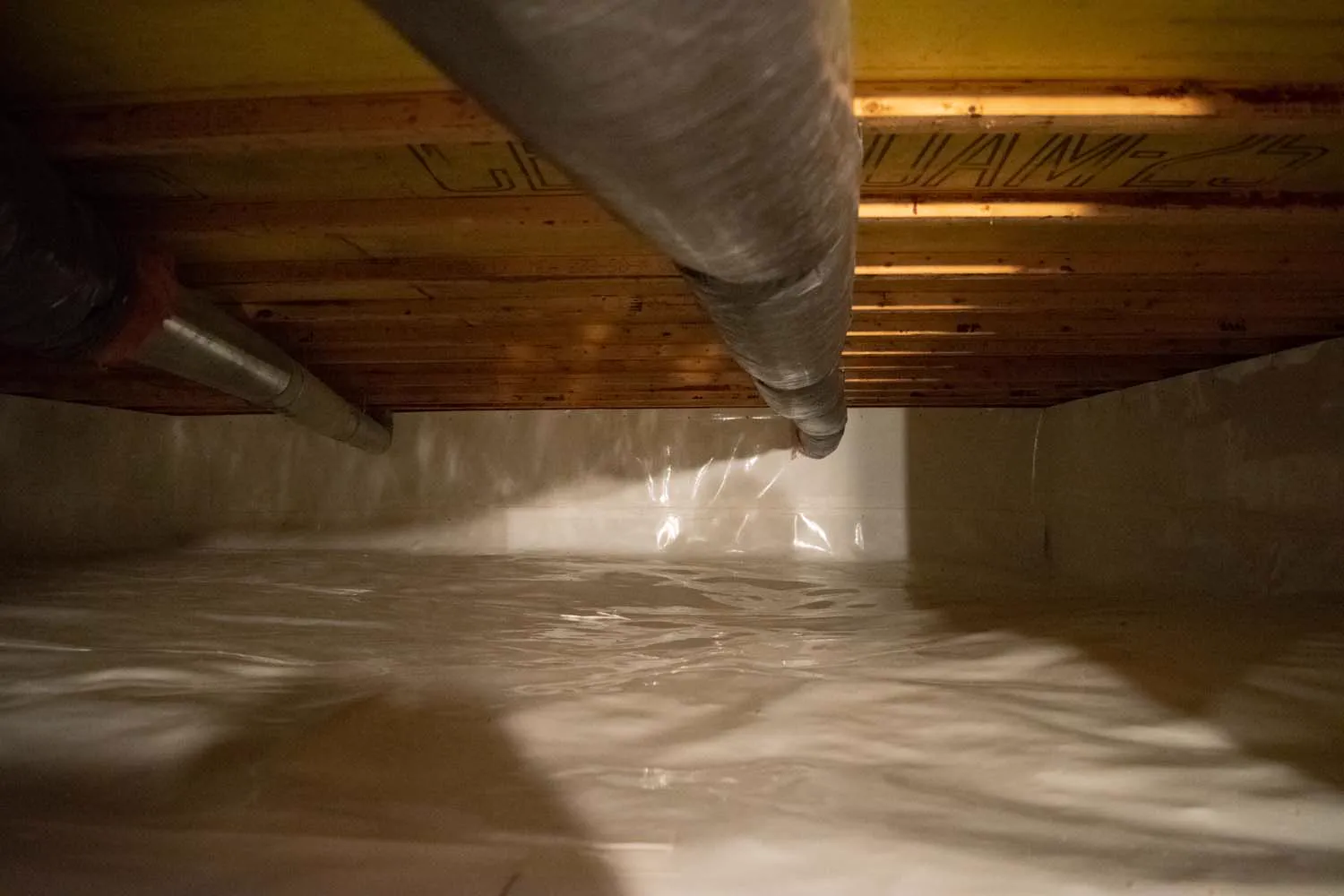
Want to keep reading? Our guide to the best basement waterproofing approaches covers how we rank systems, and the systems we install are laid out in full. If your moisture problem is under the house rather than in it, crawl space encapsulation is likely the better path. Family shopping one county over can compare Cumming waterproofing options too.
Where we work around Milton
We’re on the road up here constantly — from the shops at Crabapple Market out toward Birmingham Falls, and across the neighborhoods in between. That includes Alpharetta, Roswell, Cumming, Johns Creek, Woodstock, Canton, Sandy Springs and Dunwoody, plus Cherokee County and the wider Fulton area. If you’re anywhere in that circle, there’s usually a truck of ours nearby already.
Questions Milton homeowners ask
The drainage itself is built to last the life of the house, because it’s stone and pipe below the slab with nothing to wear out. The pump is the part with a service life, so plan on replacing one around the ten-year mark. Think of it the way you think about a water heater.
Yes, and you get it in writing before we start, not after. Ask us to explain exactly what’s covered and for how long. A warranty you can’t say out loud in one sentence isn’t doing you much good.
Usually, yes. We open the finished wall only along the section we’re working on, then close it back up. It takes more care and a little more time, which is why finished spaces price higher, but you’re not losing the room.
It protects value more than it adds value, and that’s the honest framing. A dry, documented basement with a transferable warranty removes a question buyers and inspectors always ask. On top of that, finished square footage only counts if it stays dry.
Usually within a few days, and often sooner if you’re flexible. Live support runs 7am to 8pm, seven days a week, so you can reach a person tonight. The inspection and the estimate are both free.
Let’s figure out which option your Milton home actually needs
We’ll walk the property, walk the basement, and show you what the water is doing — then give you a written scope you can hold up next to anyone else’s. No pressure, and no push toward the bigger job if the smaller one solves it.
(678) 914-5112Serving Milton and all of Metro Atlanta · $500 off projects over $3,500 · Live support 7am–8pm, 7 days a week