

Standing Water Basement Grayson Homeowners Keep Patching — and the Fix That Finally Holds
Why the sealer didn’t work, where the water is really coming in, and what a calm, permanent repair looks like.
Somebody already tried to fix this. Maybe a tube of hydraulic cement pressed into a corner, or a bucket of waterproof paint rolled onto the block. It looked great for a season. Then spring rain came and the puddle came back — which is the whole story of a standing water basement Grayson homeowners keep chasing every year.
Good news? The patch didn’t fail because you picked the wrong product. It failed because the water was never coming through the spot you patched. Once you know where it really enters, the repair stops being a guessing game and starts being ordinary work.
Why didn’t the patch hold?
Short answer: sealers are made to stop moisture, not pressure. A coating on the inside face of a wall is a raincoat on a submarine. Water pushing from the soil side doesn’t care what color the wall is — it just needs one seam, and it has all season to find it.
Here’s the difference that matters. Damp walls and a musty smell mean vapor. Actual puddles mean bulk water arriving under pressure. Those are two different problems, so a product built for the first one was never going to touch the second.
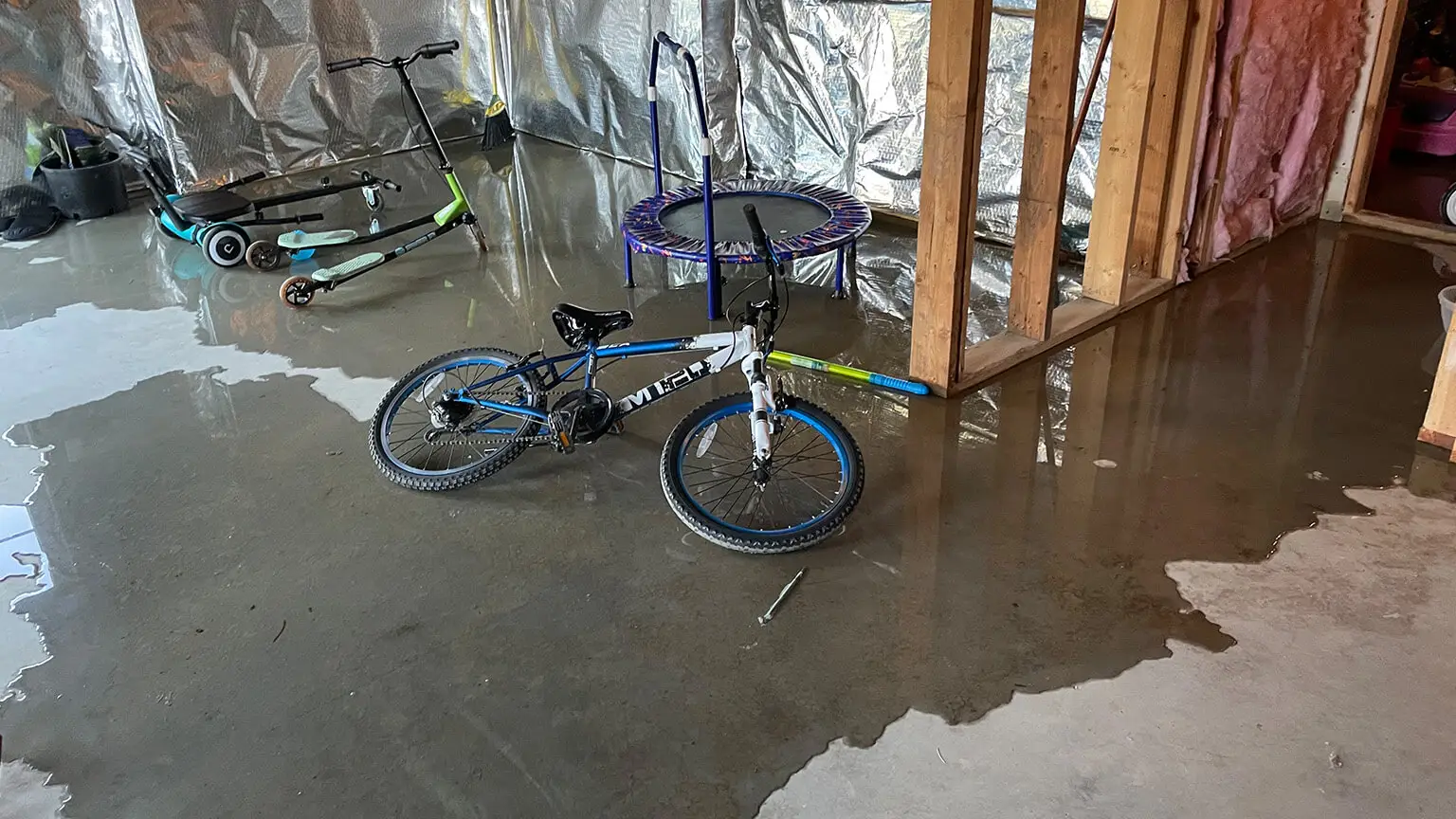
So the fix isn’t a stronger patch. It’s giving that water somewhere better to go than your floor — and that’s the part that actually ends the cycle.
Where is the water actually coming in?
Usually one of four places, and none of them are dramatic. The most common by far is the cove joint — that seam where the wall meets the floor slab. Those two pieces of concrete were poured at different times, so they never truly bonded. As a result, that line is a hairline door running your whole perimeter, and water always takes the easy door.
Next up is the sump pump. Pumps don’t die creatively — they fail the same handful of ways. Power drops mid-storm, a float sticks against the wall, the pump is undersized, there’s no check valve so water runs back down, or the outside discharge line is packed with silt and roots.
After that come the boring ones: a buried drain line that silted shut years ago, or a window well whose drain quit. A window well without a working drain is just a bucket set against your glass.
Read the puddle
Where water sits tells you a lot. A puddle in one corner points to a single local entry — a window well, a pipe penetration, one bad section of joint. Water spread evenly across the whole slab points to pressure under the floor itself. That’s the first thing we look at.
What do most companies skip?
Here’s the part that usually gets left out of the explanation: the soil around your house is doing most of the work. Georgia red clay doesn’t drain — it holds. After a long rain, clay stays saturated against your foundation wall for days while the surface looks perfectly dry.
That saturated clay creates hydrostatic pressure — a fancy way of saying water leaning on your wall. If your walls are hollow block, water fills those cores like a stack of cups, then finds the bottom. The bottom is your cove joint. Your wall isn’t failing; it’s outnumbered.
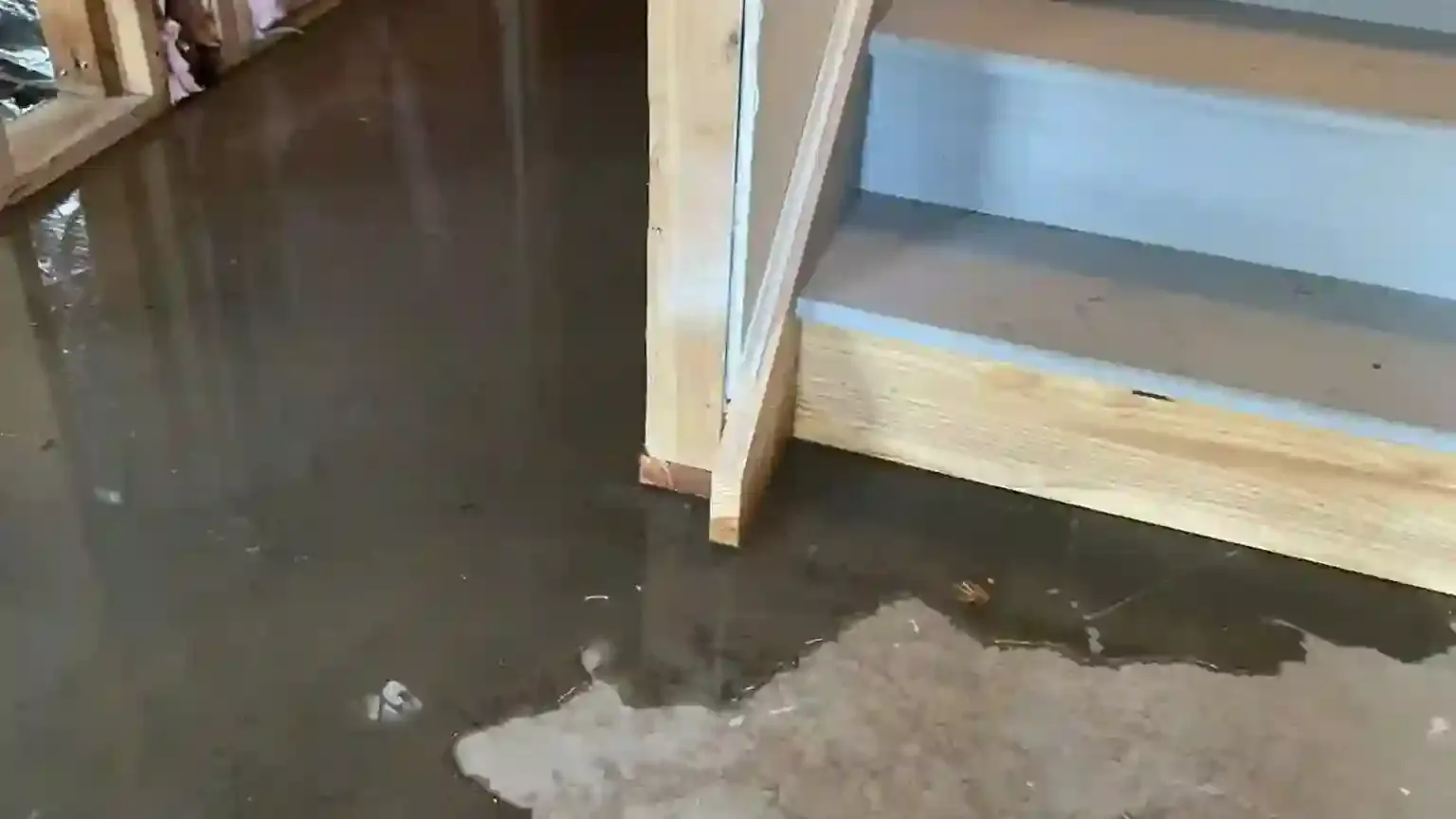
Now add Grayson specifically. Bigger yards out here are great — until a heavy rain, when all that water has to go somewhere and your foundation sits downhill of it. Over near Bay Creek and out toward Bay Creek Park, we get called for “yard drainage” constantly, and plenty of those turn into basement conversations once we walk the low side of the house.
Timing plays a part too. Much of the housing around the Grayson High School cluster went up between the late nineties and about 2012, so those original systems are all hitting their second decade together. You’re not unlucky. Your system is just asking for a turn.
How bad is it, really?
Fair question, and you deserve a straight answer instead of a pitch. Standing water sounds worse than it usually is, since water on a slab is a drainage problem and not automatically a structural one. Still, a few things are worth sorting out calmly.
First, safety. Never step into standing water while power is on down there. Kill the circuit at the panel before you go in, and if the panel itself is in the wet area, call your utility. That’s the one paragraph in this article with no jokes in it.
Second, time. Mold can begin growing on wet organic material — drywall paper, cardboard boxes, carpet pad — in roughly 24 to 48 hours. Which means drying quickly matters more than drying perfectly. The CDC’s guidance on mold cleanup after flooding walks through it in plain terms.
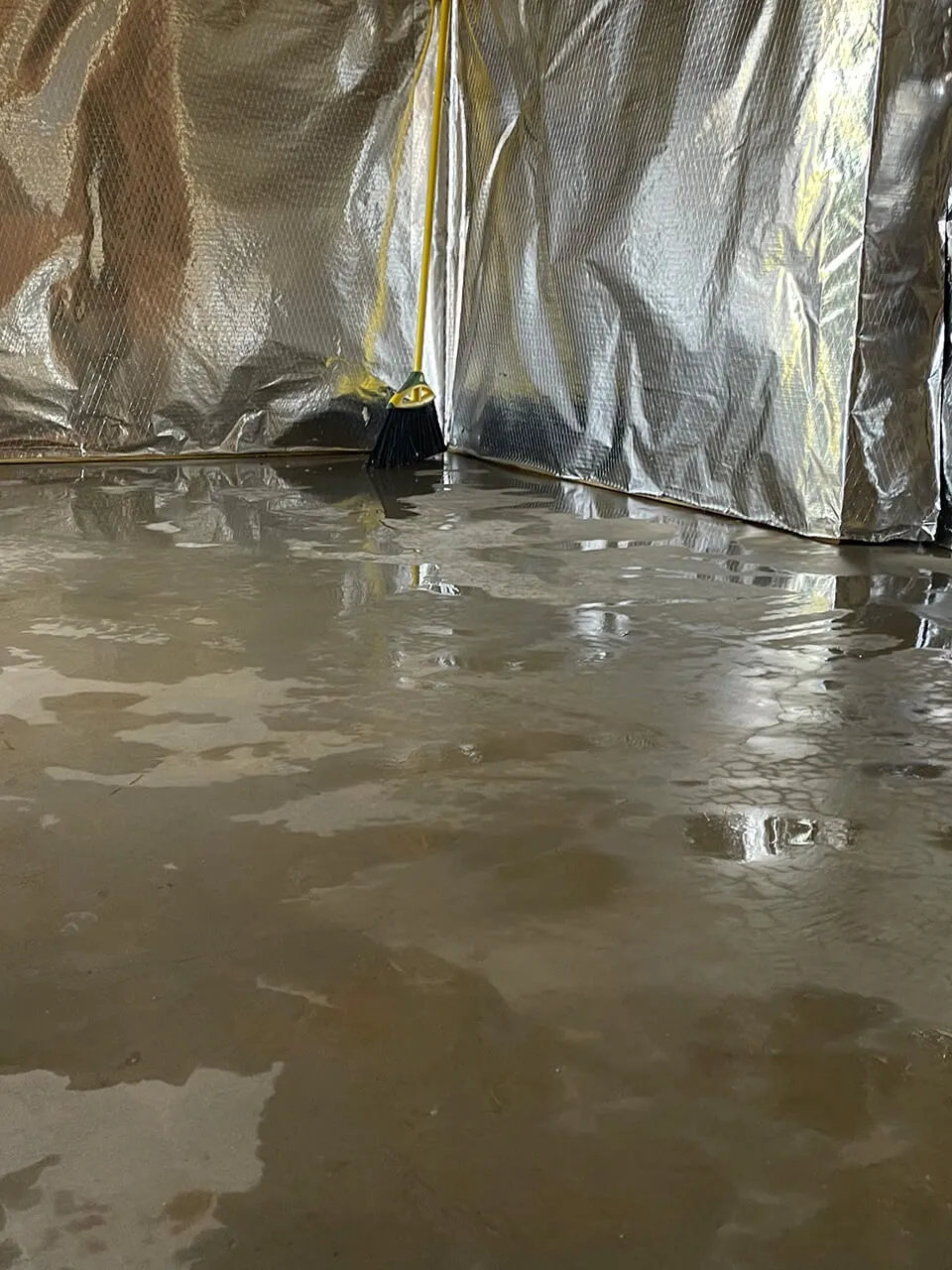
What happens if it’s left alone? Generally it holds steady, then slowly widens its welcome, because clay keeps swelling and seams keep opening. The cost rarely lands on the concrete. It lands on flooring, drywall and whatever you stored down there.
One more thing worth knowing before a claim surprises you: standard homeowners insurance typically excludes groundwater seepage, and sump pump failure coverage is usually a separate rider you add on purpose. Worth a five-minute call to your agent. The FEMA building science library is a good neutral read on protecting a home from flooding.
What does the real fix look like?
Nearly every standing water basement Grayson repair we do follows the same six steps, so nothing feels like a surprise on the day. The idea behind all of it is simple: stop trying to block water, and start giving it an easier path than the one it’s using now.
- Find the source outside first. Grading, gutters, downspouts, where the yard sheds water. Sometimes the answer is cheaper than expected, and we’ll say so.
- Open a channel at the perimeter. A narrow strip of slab comes up along the affected walls. Loud and dusty for a day, then done.
- Set drainage below the floor. Perforated pipe in clean stone, under the slab, so water gets collected before it reaches your floor.
- Relieve the block cores. Where hollow block is holding water, we give those cores a controlled way to drain into the new system.
- Build a sump that won’t quit. Right-sized pump, real check valve, sealed lid, battery backup, and a discharge line routed well away from the house.
- Close it up clean. Fresh concrete over the channel, wall liner where it’s called for, and our mess hauled off.
Wondering what it runs? It depends mostly on how much wall is involved, whether the basement is finished, and how tough the access is — which is why we walk it before we quote it. Our breakdown of basement flooding cost covers every factor that moves the number, and the systems themselves are explained on our basement waterproofing page.
We quit trying to hold water out years ago. Now we assume it’s coming, and we build it a better way out.
Can I tell you about a house off New Hope Road?
A homeowner over in Alcovy Station called us in March, right after the second big storm of the year. Two inches of water across most of the slab, a sump pump that hummed but moved nothing, and a corner someone had patched with hydraulic cement about four years earlier. Sound familiar?

The patched corner turned out to be innocent. The discharge line had packed solid with silt about nine feet out, so the pump was pushing into a dead end and the water was simply running back down. Meanwhile the back yard sloped gently toward the walkout, the way a lot of the bigger lots around Ozora Lake do.
The fix took two days. Interior drainage along two walls, a new sump with a check valve and a backup battery, a fresh discharge run to daylight, and a regrade to move surface water past that corner. Nothing exotic — just water going where it should have gone all along.
That basement has stayed dry through every storm since. Better yet, the homeowner said the real win was that she stopped checking the weather app at 11 p.m. That’s the actual product here: not a dry floor, but a quiet mind on a loud night.

Why does hiring somebody local matter here?
Because we’ve spent twenty-plus years on these exact houses, on these exact soils. Most of the homes we visit for a standing water basement Grayson inspection sit within a few miles of each other, so the crew that does the work is the same crew that answers the phone in year six. Referrals travel fast out here, and we’d like ours to keep traveling.
We also keep the boring promises: written scope, proof of insurance, a warranty you can read in one sitting, and a clean job site. If the water is moving your foundation rather than just wetting the floor, we’ll say so and point you to foundation repair instead of selling drainage you don’t need. Neighbors one town over see the same pattern, so we cover the Dacula standing water basement crowd too.
Where we work around Grayson
Grayson is a short hop from our Lawrenceville shop, so we’re out this way most weeks. We also cover Snellville, Loganville, Dacula, Lawrenceville, Bethlehem, Auburn, Lilburn, Duluth and Suwanee, plus the wider Gwinnett County area. If you’re along Grayson Highway, Rosebud Road or out past New Hope Road, odds are we already have a truck nearby.
Questions Grayson homeowners ask us
Once or twice a year still means the path exists — it just needs a big enough storm to open. That’s actually good news, because occasional entry usually means a smaller, simpler repair than a basement that’s wet every month. We’d rather look at it in a dry season than after the next one.
For today, yes — get the water out fast and move air across the floor. But a shop vac treats the puddle, not the reason it showed up, so it’ll be back on the next heavy rain. Think of it as first aid rather than the repair.
Mold can begin on wet organic material like drywall paper, cardboard and carpet pad in roughly 24 to 48 hours. So speed matters more than perfection. Pull soaked cardboard and padding out first, then run fans and a dehumidifier until surfaces feel dry to the touch.
Cut power to the basement at the panel before you step into standing water. After that, take photos for your records, move stored items up and out, and start removing water. Then note where the water sat deepest, because that tells us a lot before we even arrive.
Because red clay holds water against your foundation instead of draining it away. A light rain soaks in and moves on, but a long one saturates the soil until it presses against the wall and pushes through the weakest seam. Relieve that pressure with drainage and the heavy storms stop mattering.
Let’s find out where that water is really getting in
We’ll walk your Grayson home inside and out, show you the entry point, and explain the fix in plain English. The inspection is free, the estimate is free, and nobody pressures you at the end — even if the answer is simpler than you expected.
(678) 914-5112Serving Grayson and all of Metro Atlanta · $500 off projects over $3,500 · Live support 7am–8pm, 7 days a week