

Basement Flooding Cost Grayson Homeowners Can Actually Plan For
Two separate jobs hide inside one invoice. Here’s what each covers, what moves the number, and how long it takes.
Pull up a map of this city and our service calls land in a pattern. Alcovy Station. The Rosebud corridor. Newer streets in the Grayson Village district. Those neighborhoods look nothing alike, but they share one thing — open yard sloping toward a full basement. So if you’re pricing out the basement flooding cost Grayson homeowners really face, that shared trait is where the answer starts.
Good news up front: water is honest. It goes where the ground sends it, so once you can see the path, the fix stops feeling mysterious.
Why these streets?
Bigger yards here are a real perk — until a heavy rain, when all that water has to go somewhere and your foundation sits downhill of it. Georgia red clay barely drinks anything, so rain sheets across the surface, finds the low spot, and parks against your wall.
Add the tributary lots feeding toward the Alcovy River, plus grading that quietly settled over twenty-some years. Most of these homes went up between the mid-nineties and the early 2010s, so first-generation waterproofing across the Grayson High School cluster is aging out on the same schedule.
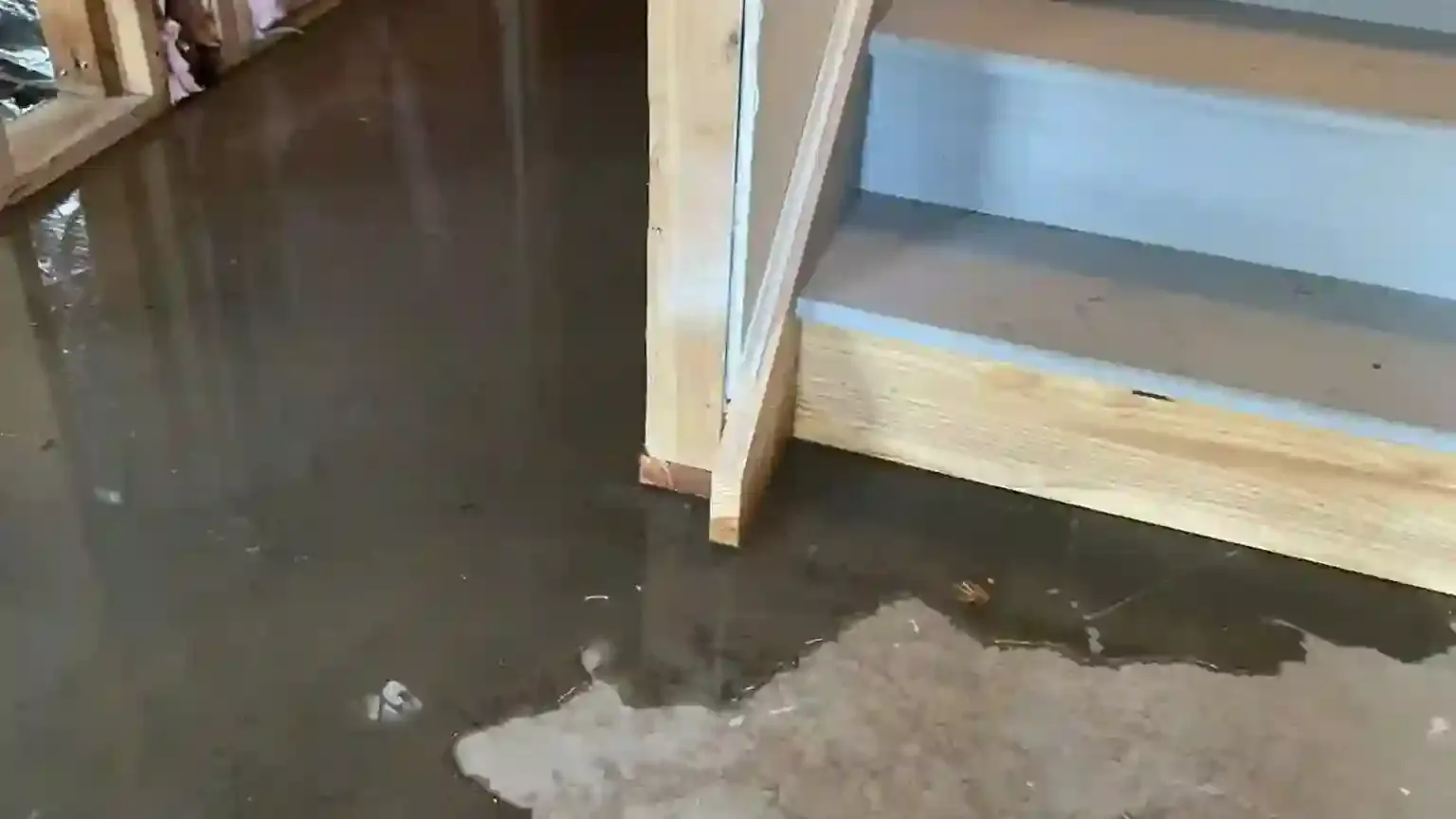
Here’s the part that surprises folks. Water rarely comes through a dramatic crack. It comes in at the cove joint — the seam where wall meets floor — because saturated clay presses inward, and pressure always finds seams.
Worth knowing
Seepage at the cove joint is a drainage problem, not automatically a structural one. Plenty of Grayson basements need water managed and nothing more, and we’ll say so instead of turning a wet seam into a bigger project.
What are you actually paying for?
Two jobs get mashed into one worry, so let’s separate them.
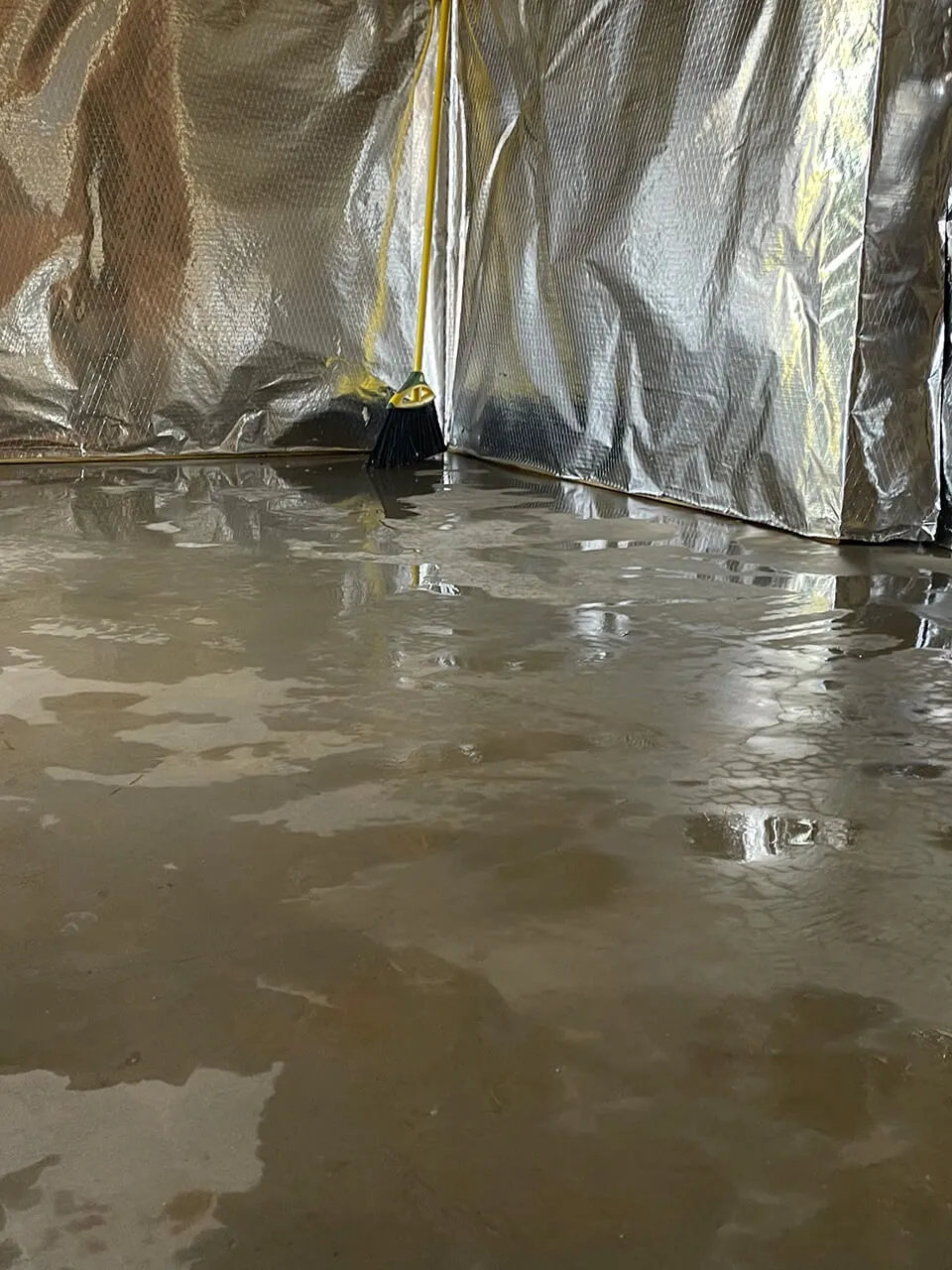
Job one — recovery. Extraction, hauling off anything soaked that can’t be saved, then drying equipment until materials read dry on a meter. Carpet pad, cardboard boxes and the bottom edge of drywall usually go.
Job two — prevention. Interior drainage below the slab, wall liner, a sump basin and pump, a discharge line carrying water well away, plus whatever grading the outside needs.
Together, those two halves are the basement flooding cost Grayson homeowners end up quoting to a neighbor. Recovery is usually the smaller number, while prevention is the larger one — and it’s the only half that changes next year’s forecast. Skipping it is like mopping under a running faucet: impressive cardio, poor strategy.
Let’s back up, because there’s a question underneath the question
People ask what a flooded basement costs. The question underneath is usually different: how do I make sure I only pay for this once?
That’s fair, and it reframes how you read any estimate. A proposal covering only extraction and drying is a rental, not a repair. One that names linear feet, sump location and discharge point is buying you a system.
Drying a basement fixes today. Routing the water fixes every spring after that. Most folks want both, priced separately.
So you’ll get the two halves broken out on paper. Some homeowners handle recovery themselves and hire us for prevention, while others want one crew and one call. Either way, you can see exactly what each dollar is doing.
What happens, in order?
Nobody enjoys surprises when a jackhammer shows up. Here’s the sequence.
- Free inspection. We walk the yard first — slope, downspouts, where water collects — then the basement. Jobs often get smaller right here.
- Written scope. Linear feet, materials, sump location, discharge point, price. On paper, before anyone touches anything.
- Dry-out. Extraction and drying equipment come first, and soaked organic material gets removed rather than blow-dried and hoped over.
- Prep day. Floor protection, dust containment, contents moved back. In a finished basement, trim and a short strip of drywall come off carefully.
- Opening the channel. A narrow strip of slab comes up along the affected perimeter. Loudest day, shortest day.
- Drainage goes in. Perforated pipe in clean washed stone below floor level, with wall liner sending seepage down into it instead of onto your floor.
- Sump and discharge. Everything routes to a basin, and the pump pushes water well away. Dumping it beside the foundation just sends it around for another lap.
- Close up and test. Fresh concrete, cleanup, haul-off — then we run the system while you watch.
Speed matters most at step three. Mold can start on wet building materials within roughly 24 to 48 hours, so delay quietly adds to the bill. The CDC’s guidance on mold after flooding covers it plainly.
What moves the number up or down?
Straight talk: nobody can price this over the phone. Still, you deserve to know what sets the basement flooding cost Grayson homeowners see on paper.
The six things that set the price
- How much water. A damp corner and four inches across the slab are different days of work.
- How long it sat. Overnight is a dry-out. A week is a removal job, because water wicks up into drywall and framing.
- How much wet organic material leaves. Carpet, pad, drywall, insulation and stored cardboard drive the recovery half.
- Linear feet of drainage. One wall versus a full perimeter is the biggest factor on the prevention half.
- Sump situation. Some homes have a serviceable basin already. Plenty of late-nineties pumps around here retired without telling anybody.
- What’s happening outside. Sometimes regrading and extending two downspouts carries most of the load, which is a smaller invoice.
Small exterior corrections land at the low end, while a full perimeter system with a new sump and battery backup sits at the top. Most homes fall in between, and you’ll get one written number with the scope spelled out. Our breakdown of Dacula basement flooding cost uses the same math.
How long does it take, and what should you do first?
Drying typically runs three to five days with equipment on site. Most interior drainage systems take one to three days, and new concrete wants a few more before you load it up. Your prep list is short: clear about four feet along the working walls, move fragile things off nearby shelves, and make sure we can reach an exterior door. We’ll handle the heavy stuff.
One timing note. Spring storms fill our calendar fast, and when a system rolls up Grayson Parkway on a Tuesday afternoon, the phone rings Tuesday evening. Meanwhile, our guide to basement drying options covers what equipment earns its keep.

What can you honestly handle yourself?
More than you’d think, and we’d rather say so than charge you for a Saturday’s work.
Real DIY wins: extending downspouts six to ten feet out, clearing gutters twice a year, regrading soil away from the house, keeping window wells clear, and testing your sump pump with a bucket of water. Those five solve a fair share of minor moisture complaints.
What DIY can’t reach: anything below the slab. You can’t set drain tile without opening concrete, and no coating in a bucket beats saturated clay pressing on a cove joint. Rented fans also struggle with soaked framing, since surface-dry and actually-dry are different readings.
Here’s a number that reframes the whole thing
One inch of rain on a 2,500-square-foot roof sheds roughly 1,500 gallons. That’s one inch, one roof, one storm — before counting a single square foot of yard.
Once that lands, gutters stop looking like a chore and start looking like plumbing. A downspout dumping at the foundation delivers hundreds of gallons to the exact spot you least want it. Move that outlet ten feet, and you’ve changed the math before water reaches the cove joint.
It also explains why sump pumps fail in predictable ways. Power drops mid-storm, right when the pump is needed most. A float sticks. The pump is undersized. There’s no check valve, so water drains back and the pump cycles itself to death. Or the discharge line clogs. Each one has a fix, and a battery backup handles the most common.
Will insurance cover it?
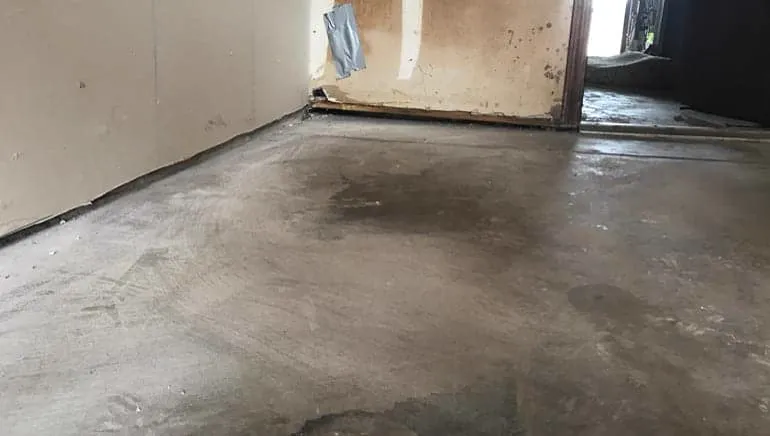
Sometimes, partly, and it depends on your policy — so let’s be straight instead of cheerful. Standard homeowners policies commonly exclude surface flooding, meaning water that came from outside. Sump pump coverage is usually a separate endorsement you add on purpose.
A sudden burst pipe, on the other hand, is often covered. Same puddle, different cause, different answer. So read your own declarations page and call your agent, because nobody else can tell you what you carry. Photograph everything before you move it, and keep receipts. The National Weather Service flood safety guide is a good neutral read.
How do you know it was done right?
Ask for four things. A written scope naming linear feet and discharge location. A warranty you can actually read. Photos of the stone and pipe before concrete goes back down. A live test while you watch the basin fill and empty.
After that, proof arrives on its own schedule. The floor stays dry through a hard spring storm, and the dehumidifier you’d been emptying daily sits quiet. Better yet, the next ugly forecast is something you simply notice — and the basement goes back to being a room.

We’ve worked this county for over twenty years, which matters in year seven when you want the same crew answering the phone. Our range of basement waterproofing systems sits on the service page, and if you’re also seeing stair-step cracking, foundation repair is a separate conversation.
Where we work around Grayson
Our shop sits about twelve minutes northwest in Lawrenceville, so we’re out this way constantly. We also cover Snellville, Loganville, Dacula, Auburn, Bethlehem, Centerville, Between and the wider Gwinnett area. Near Tribble Mill or anywhere along Grayson Highway, odds are we have a truck nearby already.
Questions we get from Grayson homeowners
Mold can begin on wet organic materials within roughly 24 to 48 hours, so drying speed matters more than almost anything else. That’s why we get equipment running fast and remove soaked carpet pad and drywall instead of drying them in place. Quick action keeps the recovery bill small.
Shut off power to the basement at the breaker before stepping into standing water, then photograph everything for your insurer. After that, lift what you can onto higher ground and call for extraction. The faster water leaves, the less material leaves with it.
Because red clay saturates and pushes water toward your foundation instead of soaking it up. That pressure finds the cove joint where wall meets floor, the weakest seam in the assembly. Once drainage gives water an easier exit below the slab, heavy rain stops being an event.
It depends on the cause and your policy. Standard homeowners policies commonly exclude surface flooding, and sump pump backup coverage is usually a separate endorsement you add on purpose. A burst pipe is often treated differently, so read your declarations page and call your agent before assuming.
Start within the first day if you can, and plan on three to five days of equipment running. Materials need to test dry on a meter, not just feel dry. Stopping early is the most common reason a basement smells musty months later.
Let’s find out what your Grayson basement actually needs
The inspection is free, the estimate is free, and nobody pressures you at the end. We’ll show you where water gets in, split cleanup and the permanent fix into two clear numbers, and say so when the answer is simpler than you expected.
(678) 914-5112Serving Grayson and all of Metro Atlanta · $500 off projects over $3,500 · Live support 7am–8pm, 7 days a week