

Standing Water Basement Dacula: Tracing the Puddle Back to Where It Started
The smell shows up first. The water shows up later. Here’s the plain-English version of what’s happening under your house.
You smelled it weeks before you saw it. That flat, earthy, back-of-the-closet smell at the bottom of the stairs — the one you blamed on old boxes. Then a storm rolled through, you went down for the Christmas tote, and your sock got wet. If you’re staring at a standing water basement Dacula storms just handed you, take a breath. This is common out here, and it is very fixable.
Here’s the thing about that smell: it was your early warning. Damp air always arrives before a puddle does, because moisture moves through concrete long before enough of it collects to pool. So you weren’t imagining things. You were just a few weeks ahead of the evidence.
Where does bulk water actually get in?
Let’s back up a second, because there’s an important difference here. Damp air is vapor. An actual puddle is bulk water, and bulk water means something is letting it through in volume. That’s a different conversation, and honestly it’s a more useful one, because bulk entry points are easy to find.
Usually it comes down to four suspects. Hydrostatic pressure pushing in at the cove joint. A sump pump that quit mid-storm. A drain line that’s blocked or crushed. Or a window well with no working drain, quietly turning into a bucket outside your glass.
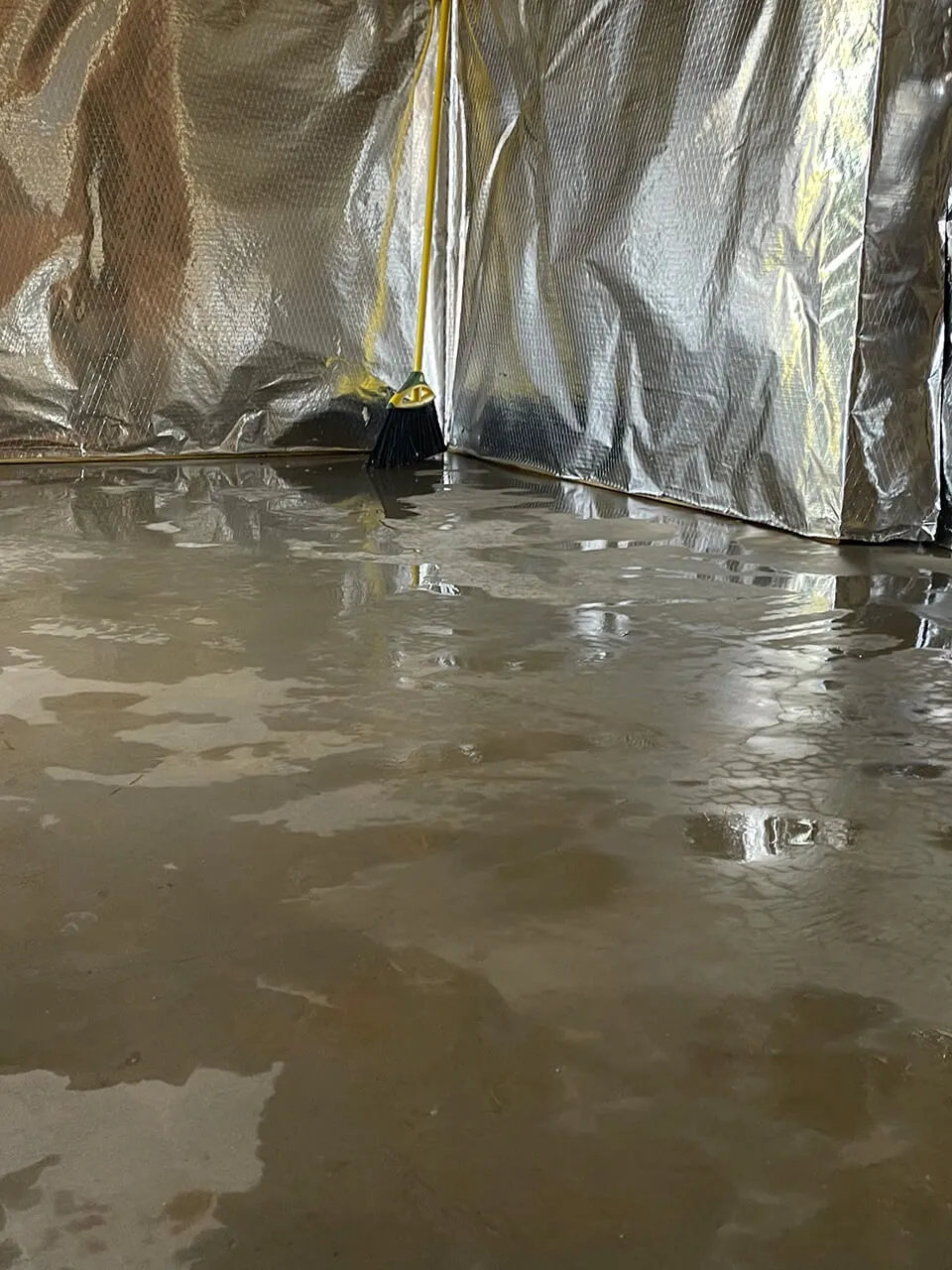
That first one deserves a proper introduction. The cove joint is the seam where your basement wall meets the floor slab. Those two pieces of concrete were poured on different days, so they never truly bonded — which means it isn’t a crack at all. It’s a seam that runs the entire perimeter of your house, and water under pressure treats it like an unlocked door.
Good news
Water at the cove joint is a drainage problem, not a structural one. Nothing is broken. The seam has been there since the day the house was poured, and there’s a standard, warrantied way to handle it.
Why now, though? Blame our dirt. Georgia red clay doesn’t drain — it holds. After a long rain it stays saturated against your foundation for days, and all that trapped water leans on the wall. If your walls are hollow block, the water fills the cores, finds the lowest exit, and comes out along the floor. Your basement isn’t failing. It’s outnumbered.
What if the sump pump is the problem?
Great question, and it’s the first thing we check. Pumps rarely die out of nowhere. They fail in about five predictable ways, and every one of them is fixable in an afternoon.
- Power loss. The storm that needed the pump is the storm that took the power out. Cruel timing, but that’s the classic one.
- Stuck float. The switch leans against the pit wall and never rises. The pump is fine — it just never got the message.
- Undersized pump. It keeps up on a normal week and falls behind on a real one.
- No check valve. Water climbs the pipe, then falls right back into the pit. So the pump runs all night moving the same gallon.
- Clogged discharge line. Silt, roots, or a crushed section outside. The pump works hard and nothing leaves.
Any of those is a small repair with a big payoff, and a battery backup covers the power-outage version for good. We had a homeowner over near Daniel Park who was certain they needed the whole system replaced. Their float switch was resting on a paint can somebody dropped in the pit. Real talk: not every visit ends in a big project.
The detail that tells you the most
Ready for something that sounds small and absolutely isn’t? Look at where the water is sitting. Not how much. Where. That single detail narrows the cause faster than anything else we do on an inspection.
A puddle in one corner, or a wet trail running from one spot, points to a local entry — a window well, a pipe penetration, a crack in one wall section. Water sitting across the whole slab, evenly, tells a different story. That means pressure underneath the floor, pushing up through the seam along the entire perimeter. Same puddle to your eye. Two completely different repairs.
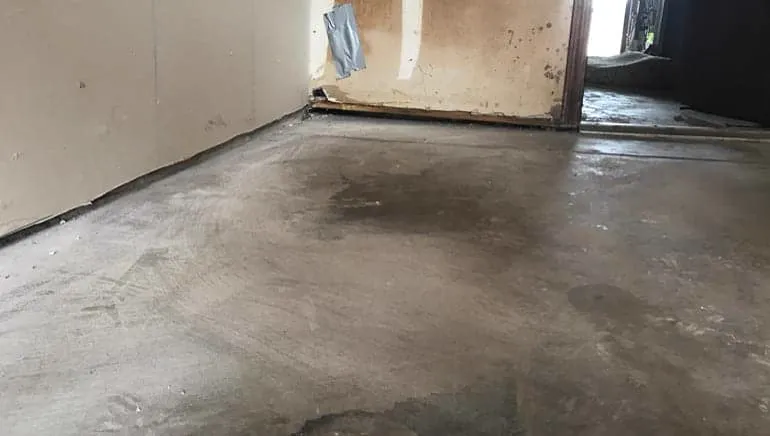
That’s why we ask you to snap a photo before you clean up. We know, nobody wants a picture of their worst morning. But the water line on the wall and the shape of the puddle disappear the moment a shop vac shows up, and those two clues save real time.
Terrain plays into it too. Out toward Dacula the lots get bigger, and so does the amount of water that has to go somewhere when a storm rolls through. On the wide lots around Chandler Walk, runoff can travel a long way before it finds a low spot, and sometimes that low spot is your foundation. Homes closer to the Apalachee River sit lower in the basin, where the water table climbs quickly after a wet week.
What should you do in the first hour?
First, safety, and this one matters. Never step into standing water while the power is on down there. Kill the circuit at the panel first, and if the panel itself is in the wet area, call your electric provider and wait. The National Weather Service flood safety guide walks through the same steps.
After that, speed is your friend. Get the water out, get air moving, and lift anything organic off the floor — cardboard, rugs, paper, upholstered furniture. Mold can start growing on wet building materials within roughly 24 to 48 hours, which is why drying fast matters more than almost anything else you’ll do that day. The CDC’s guidance on mold cleanup after flooding is a solid ten-minute read.

One more note for our neighbors on the older properties past Auburn Road. Plenty of those homes sit on crawl spaces instead of basements, and a crawl space with bare dirt underneath acts like a sponge you can’t see. You won’t find a puddle at the bottom of the stairs. You’ll just smell the house getting damper every summer.
What does the real fix look like?
Let’s walk it, so nothing surprises you. The whole idea is simple: stop trying to block water, and give it an easier path than the one it’s using now.
- Find the source first. We walk the yard — grading, gutters, downspouts, where runoff lands — then the inside. Sometimes the answer is a fifty-dollar downspout extension, and we’ll say so.
- Open a channel at the perimeter. A narrow strip of slab comes up along the affected walls. Loud and dusty for a day, then done.
- Set drainage below the floor. Perforated pipe in clean stone, under the slab, so water gets collected before it reaches your floor instead of after.
- Route it all to a proper sump. Right-sized pump, real check valve, sealed lid, and a discharge line that carries water well away from the house.
- Close it up clean. Fresh concrete over the channel, wall liner where it’s called for, and every bit of our mess hauled off.
We quit trying to hold water back years ago. Now we assume it’s coming, and we build it a better way out.
Notice what’s missing from that list? Paint. Sealers and coatings are fine products for damp air, but a coating can’t beat pressure — it’s a raincoat on a submarine. That’s why we warranty a drainage system in writing instead of a bucket of waterproof paint.
Wondering what it runs? It depends on how much wall is involved, how easy the space is to reach, and whether the pump needs replacing. So we walk it before we quote it. Our breakdown of basement flooding cost covers the factors that move the number, and the systems are laid out on our basement waterproofing page. If you’re also seeing stair-step cracks or a sticking door, that’s a foundation repair conversation, and we’ll tell you honestly which one you’re in.
Year one, year ten: what happens after
Curious what life looks like on the other side? Here’s the honest timeline, week by week and then year by year.
The first week. The floor is dry, but the room still smells like it remembers. Concrete and framing hold moisture for days, so a dehumidifier finishes the job. By about day seven, most folks notice the smell is simply gone.

The first year. You get a real test — spring storms, the kind that park over Gwinnett for two days. You’ll hear the pump cycle and then quiet down. That’s the sound of the system working, and after the second or third storm you stop going down to check.
Year ten. The stone and pipe under your slab have nothing to wear out, so they’re still doing exactly what they did on day one. The pump is the part with a service life, similar to a water heater, and swapping one is a quick visit. Meanwhile that basement has been a playroom, a gym, or the guest room your in-laws actually like.
And here’s the feeling we’re really after. When somebody asks about the basement, you don’t change the subject. You say it’s handled, there’s a warranty in the drawer, and you knew what to do. That’s a homeowner who takes care of their house — which, out here, is most people.

Why does hiring somebody local matter?
Because we’ve spent twenty-plus years on these exact houses, on this exact clay. Much of Dacula went up between 1998 and 2015, which means a whole lot of first-generation waterproofing is aging out on roughly the same schedule right now. So a homeowner in Rabbit Hill isn’t unlucky. Their system worked for two decades and is asking for its turn.
We also understand big lots. Folks out this way think about the whole property — the septic field, the outbuilding, the low corner that never dries. We’ve handled grading and drainage on acre lots minutes from Freeman’s Mill Park, and our shop sits about twelve minutes west in Lawrenceville. That means the crew doing the work is the crew answering the phone in year six. If a cousin one town over has the same puddle, we cover Sugar Hill basement flooding too.
Where we work around Dacula
Dacula is a quick run east from our shop, so we’re out this way most weeks. We also cover Lawrenceville, Grayson, Buford, Auburn, Winder, Braselton, Hamilton Mill, Snellville and Sugar Hill, plus the wider Gwinnett area. If you’re anywhere along 316 or out toward Harbins, odds are we already have a truck nearby.
Questions Dacula homeowners ask us
For cleanup, yes — get the water out fast and keep air moving. For the cause, no. A shop vac removes what already came in, but it doesn’t change the pressure that pushed it there, so the next storm brings the same puddle back. Think of it as first aid, not the repair.
Mold can begin on wet organic material in roughly 24 to 48 hours, which is why drying speed matters so much. Pull up soaked cardboard, rugs and paper right away, then run a dehumidifier and fans. If drywall or insulation got wet, plan on removing the wet portion rather than drying it in place.
Shut the power to the basement at the panel before you step in the water. After that, get the water out, lift anything organic off the floor, and take a couple of photos of the wall line and the puddle shape before you clean. Those pictures tell us where water came in.
Because our red clay holds water instead of draining it. A short shower soaks in and moves on, but a long soaking rain saturates the soil against your foundation, and that trapped water builds pressure. Once the pressure is high enough, it pushes through the seam where the wall meets the floor.
It depends on the source. Many policies help with sudden events like a burst pipe or a failed appliance, while groundwater seepage and surface flooding are usually excluded or need separate flood coverage. Call your agent, read the water section of your policy, and document everything with photos before cleanup.
Let’s find out where that water is coming from
We’ll come out to your home in Dacula, trace the source, and explain it in plain English. The inspection is free, the estimate is free, and nobody pressures you at the end — even when the answer turns out to be simpler than you expected.
(678) 914-5112Serving Dacula and all of Metro Atlanta · $500 off projects over $3,500 · Live support 7am–8pm, 7 days a week