

Flooding Cost Sugar Hill Homeowners Actually Pay, Explained
Two separate jobs, one confusing bill. Here’s how the cleanup and the permanent fix get priced, step by step.
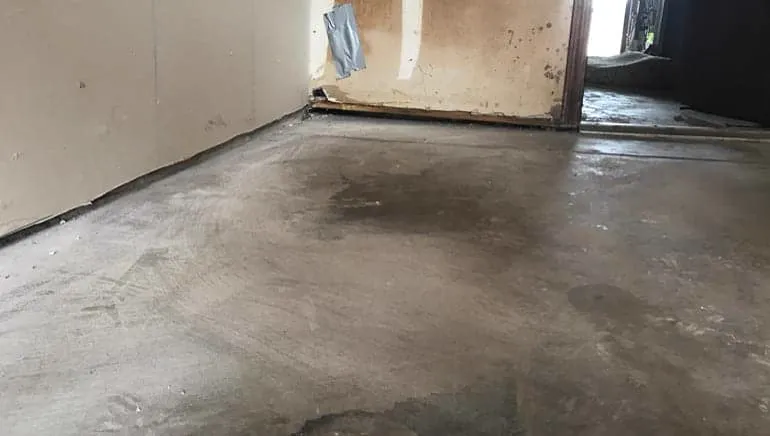
Grab a flashlight and stand in your basement for five minutes. Look where the wall meets the floor, all the way around, and run a finger along that seam. If it’s damp, chalky or darker than the concrete above it, you’ve found the answer most people pay someone else to find. So before we talk about flooding cost Sugar Hill homeowners run into, let’s start with that seam — because it explains almost everything about the price.
Good news right up front: finding it early usually makes the job smaller, not bigger. That seam is doing you a favor by telling on itself.
What is that seam, exactly?
It’s called the cove joint. Your walls went up first, then the floor slab was poured inside them, so the two never actually bond. There’s a thin gap there by design, and water under pressure finds it every time.
Why is there pressure at all? Because Georgia red clay soaks up rain and swells, and swollen clay pushes back. That push has a name — hydrostatic pressure — and the cove joint is the path of least resistance. Concrete doesn’t need a crack to leak.
Sugar Hill is named for a hill, and it earns it. Water doesn’t sit on terrain like this — it runs, and it runs toward whatever is downhill. That’s why a downhill lot here can collect groundwater plus everybody else’s runoff at the same wall.
Why does one flood turn into two separate bills?
Here’s the thing most homeowners don’t hear until the estimates arrive. A flooded basement is really two jobs, priced separately, doing completely different work.
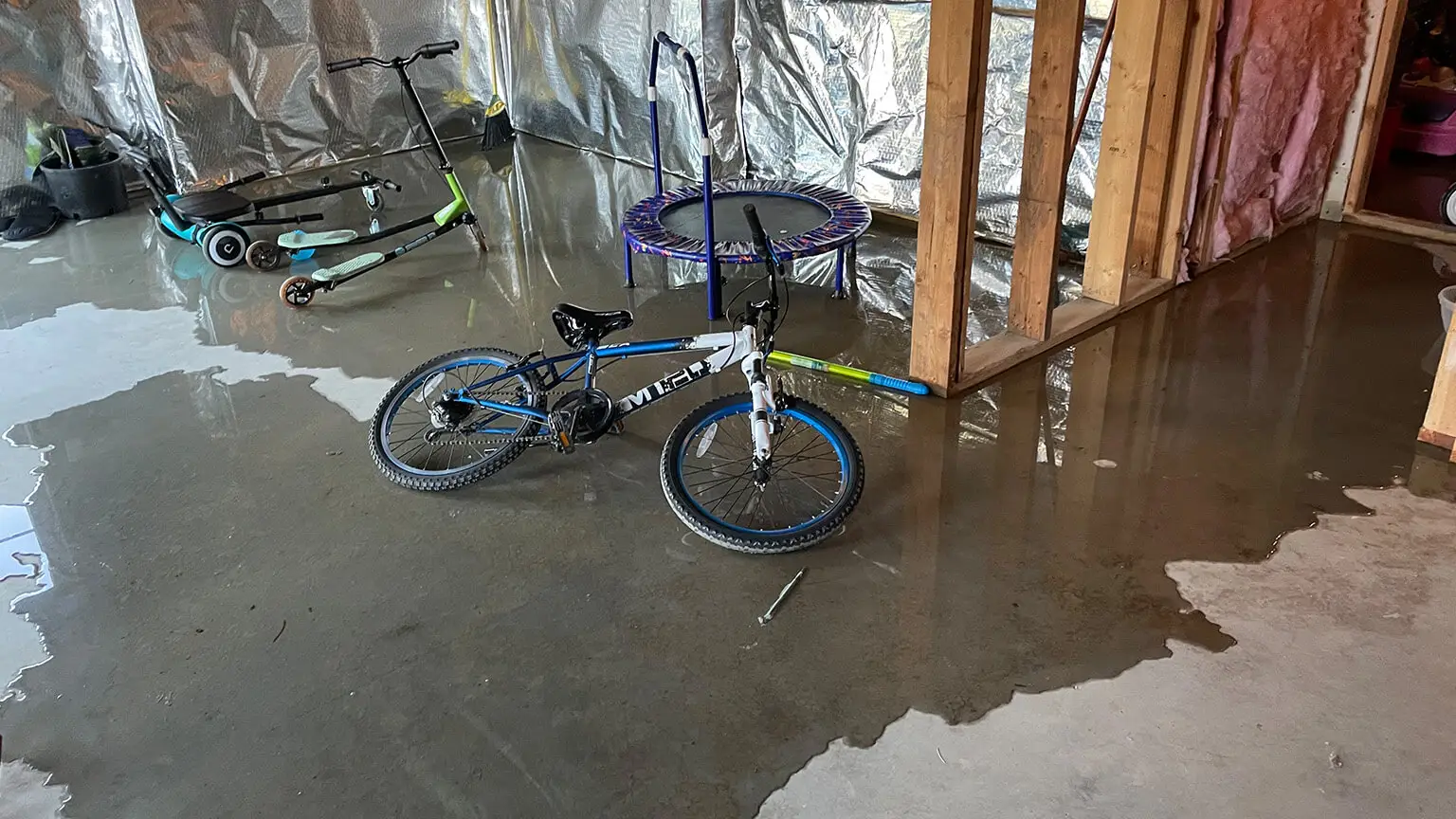
Job one is getting the water out and drying the space. Extraction, hauling out soaked carpet and pad, cutting away wet drywall, then running air movers and a dehumidifier until materials are truly dry. That job is about salvage and time.
Job two is making sure it doesn’t happen again. Drainage under the slab, a proper sump and discharge, grading and downspout work. That job is about physics, and it’s the one that carries a warranty.
Worth knowing
You can do job one and skip job two. Plenty of folks do, then pay for job one again next spring. That’s the expensive version, even though each invoice looks smaller.
So when a number lands in your inbox, ask which job it covers. Both crews hand you a price, but only one changes the outcome next April.
What moves the number up or down?
Straight answer: nobody can price this over the phone honestly. Still, you deserve to know what sets the flooding cost Sugar Hill quotes are built on.
What sets the price on a flooded basement
- How much water came in. A wet strip along one wall and four inches across the whole slab are different days entirely.
- How long it sat. Water caught in hours is a drying job. Water that sat a week has soaked into materials that now have to leave the house.
- How much wet organic material comes out. Carpet, pad, drywall and cardboard all hold moisture, and removal is real labor.
- Whether the fix needs drainage. A perimeter channel under the slab is the biggest line item, by a wide margin.
- Whether a sump is part of it. Some homes have a usable basin. Plenty of 1990s systems around here don’t.
- What’s happening outside. Sometimes regrading and moving two downspouts handles most of it.
Here’s a genuinely useful rule. A basement that floods only in heavy rain almost always has a surface water problem, not a groundwater problem — and surface water is usually the cheaper fix. Think roof runoff, a clogged gutter, or a driveway shedding toward the house. In other words, the dramatic-looking flood often has the friendlier price tag.

What happens after the crew leaves?
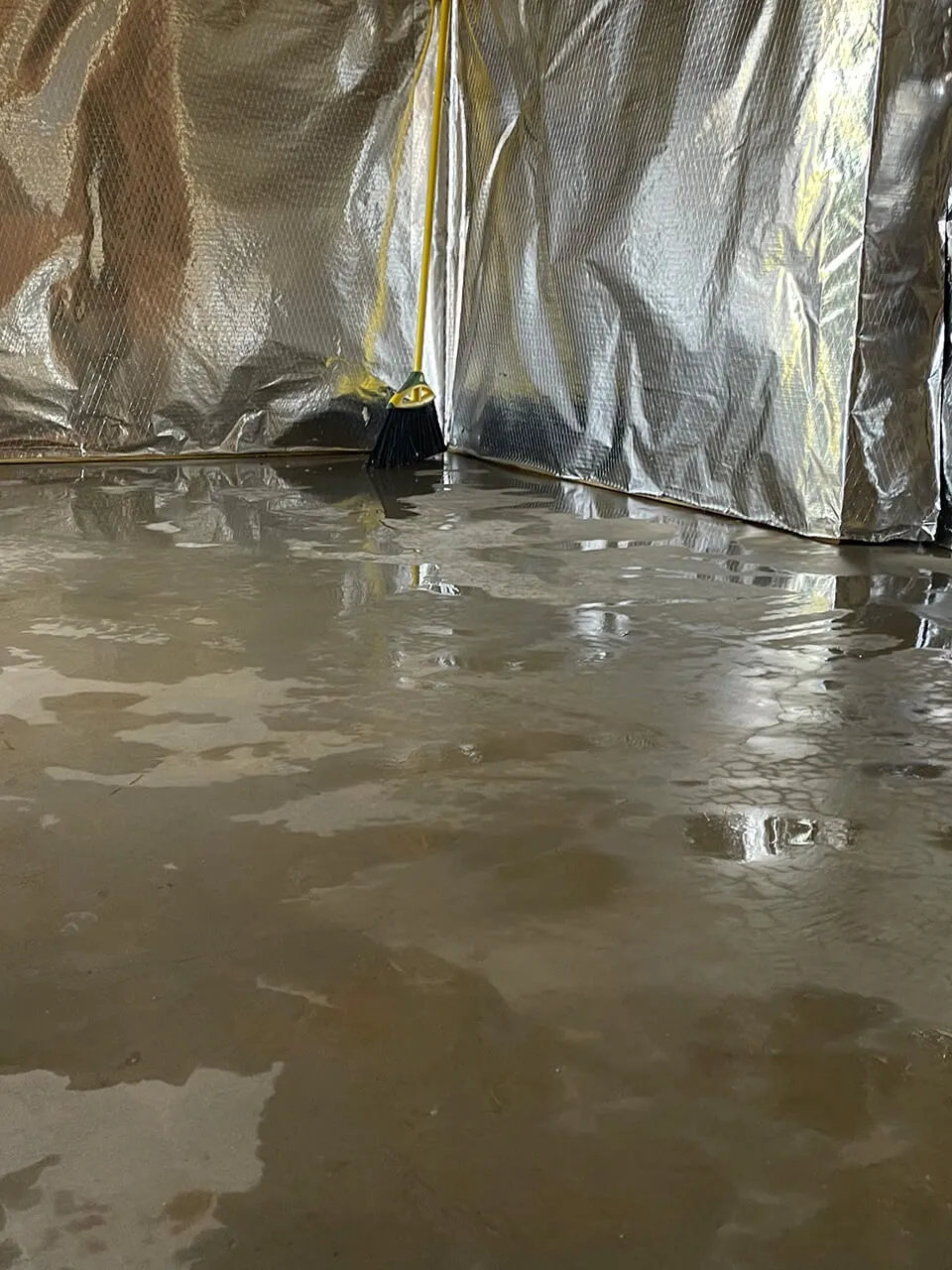
This is the half almost nobody plans for, and it’s where the flooding cost in Sugar Hill quietly grows or shrinks. Pumping out standing water takes hours, but drying a basement takes days, because concrete and framing hold moisture long after the floor looks fine.
Why does that matter to your wallet? Because mold can start on wet organic material in roughly 24 to 48 hours. Not the concrete — the paper facing on drywall, the carpet pad, the cardboard. Every day those stay wet, the removal list gets longer. The CDC’s guidance on mold after a flood lays out the same timeline plainly.
The fix is boring and it works: pull wet material fast, move air across everything, and drop the humidity until moisture readings come back down. Not until it feels dry — until it reads dry. Our guide to basement drying covers that stage in full.
Speed is the cheapest tool on the truck. Nothing else on this job saves a homeowner more money than getting there before the material gives up.
Picture the payoff. A week later you’re carrying laundry down without dodging fans, the air smells like nothing at all, and the shelves go back where they belong.
What does the permanent fix look like, step by step?
Nobody enjoys surprises when a jackhammer is in the room, so here’s the order of operations.
- The free inspection. We walk the outside first — slope, downspouts, retaining walls — then the inside. A lot of jobs get smaller right here.
- The written scope. Linear feet, materials, sump location, discharge point, price. On paper, before anybody starts.
- Prep day. Floor protection goes down, dust containment goes up, and anything still wet comes out.
- Opening the channel. A narrow strip of slab comes up along the affected walls. Loudest day, shortest day.
- Installing the drainage. Perforated pipe in clean washed stone, set below floor level, with wall liner sending seepage down into it.
- The sump and discharge. Everything routes to a basin, and the pump carries water well away. On a steep lot, where that discharge ends up matters as much as the pump.
- Closing up and testing. Fresh concrete, cleanup, haul-off, then we run the system while you watch.
Most interior systems run one to three days on site, and new concrete wants a few days before you stack boxes on it. Your prep list is short: clear about four feet along the working walls, move fragile things off nearby shelves, and leave us a path to a door. We’ll handle the heavy stuff.
What can you handle yourself?
More than you’d think, and we’d rather tell you than bill you for a Saturday. Extend downspouts six to ten feet out, clean gutters twice a year, regrade soil so it falls away from the house, clear window wells, and pour a bucket of water into your sump basin to confirm the pump kicks on.
What DIY can’t reach is anything under the slab. You can’t set drain tile without opening concrete, and no product in a bucket beats saturated clay pushing on a cove joint. That’s not about skill — the water simply isn’t where the coating goes. FEMA’s property protection resources are a good neutral read on which measures actually hold.
Why do sump pumps fail right when you need them?
They fail in the same handful of ways, every time. Power goes out during the storm — which is exactly the storm filling your basement. The float sticks against the basin wall. The pump is undersized for what the lot delivers. There’s no check valve, so water drains back and the pump cycles itself to death. Or the discharge line is clogged, and the pump runs beautifully while moving nothing.
All five are cheap to prevent and expensive to ignore. Battery backup, a clear float, the right pump for the load, a check valve, and a discharge line that exits somewhere useful. That’s the whole list.
Will insurance cover any of this?
Honest answer: often less than people hope. Standard homeowners policies commonly exclude surface flooding, and sump pump coverage is usually a separate endorsement you add on purpose. Read your own policy or call your agent, because the wording varies and yours is the only one that counts.
The diagnosis that surprised one homeowner
A family in the Sugar Mill area called after their walkout took water twice in one spring. They’d already priced a full perimeter system, because two floods in two months feels like a foundation problem — and the flooding cost Sugar Hill folks brace for tends to be the worst-case one.
But the basement was bone dry between storms, and that detail changes the diagnosis. Groundwater doesn’t take weekends off. Surface water does. Out back, an old retaining wall had shifted just enough to steer uphill runoff at the corner of the house, and a buried downspout line had collapsed years earlier.
So the fix was a rebuilt drainage path, a corrected discharge and some regrading — a fraction of what they’d braced for. They kept the money and got a dry basement, which is exactly why we walk the outside first.
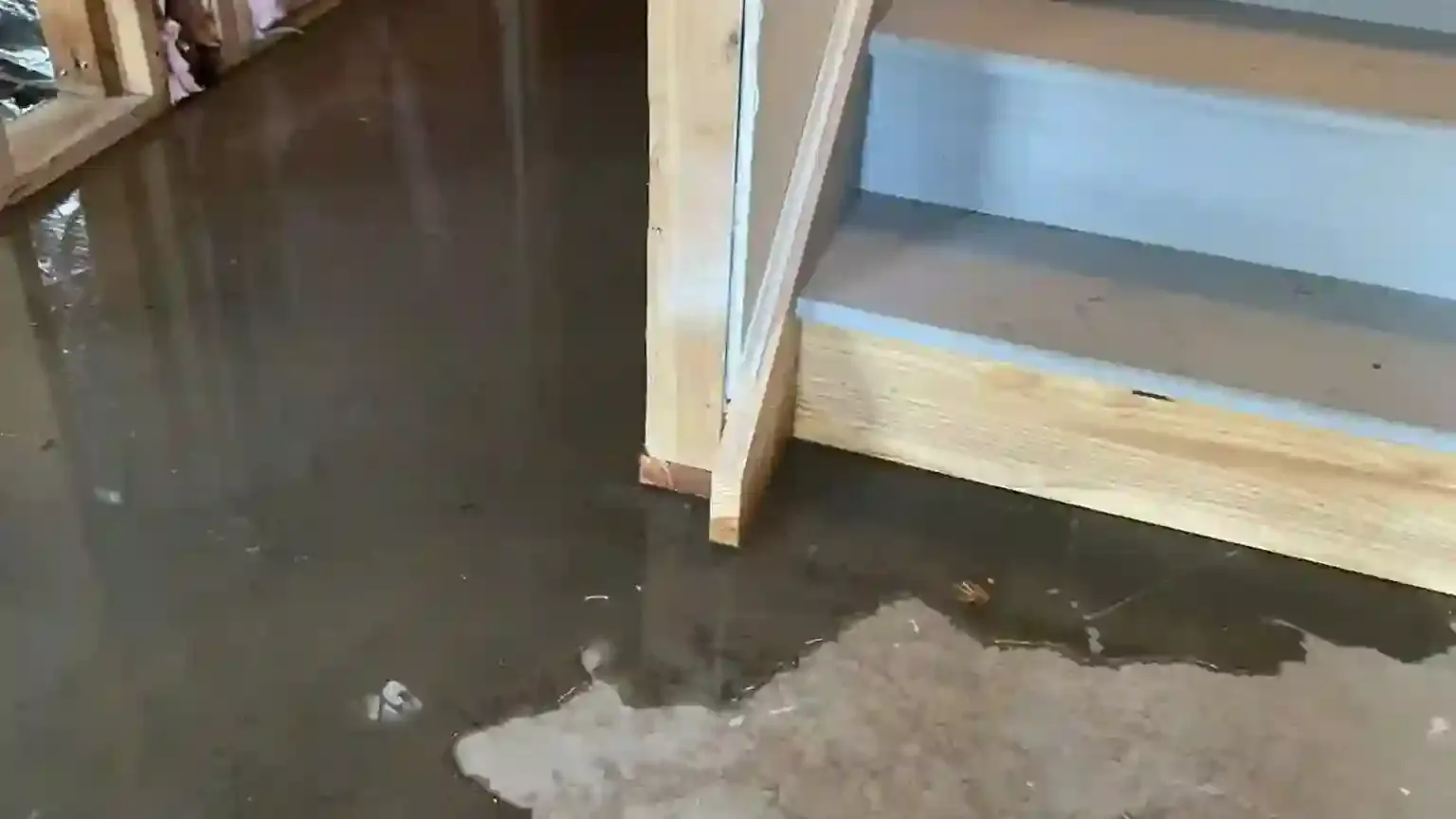
Not every job lands there, to be fair. Homes near the Suwanee Creek Greenway and lots falling toward Buford Dam sometimes do have a seasonal high water table, and those need drainage under the slab. If a bowing wall shows up, that’s a foundation repair conversation first. Either way, you’ll hear which one you have and why.
How do you know the job was done right?
Ask for four things: a written scope naming linear feet and the discharge location, a warranty you can read without a decoder ring, photos of the stone and pipe before the concrete goes back, and a live test with you standing there.
After that, proof arrives on its own schedule. The floor stays dry through a hard spring storm, the dehumidifier sits idle, and you check the radar out of curiosity instead of dread. We’ve done this for over twenty years, from the newer builds around downtown Sugar Hill infill to homes in The Bowl district, and the same local crews come back if a system needs attention. Comparing across the county? Our breakdown of Lilburn basement flooding cost uses identical math, and the full range of basement waterproofing systems sits on the service page.
Where we work around Sugar Hill
Our shop sits about twenty minutes south in Lawrenceville, so we’re up Suwanee Dam Road constantly. We also cover Buford, Suwanee, Cumming, Gainesville, Duluth, Dacula, Braselton, Flowery Branch and the wider Gwinnett County area. On the steeper lots near the lake, odds are we’ve worked a house on your street.
Questions we get from Sugar Hill homeowners
That pattern almost always points to surface water, not groundwater, because groundwater doesn’t wait for a storm. Usually it’s roof runoff, a failed downspout line, or a slope steering water at the house. Good news: surface water is normally the cheaper problem to solve.
Often not the way people expect. Standard policies commonly exclude surface flooding, and sump pump coverage is usually a separate endorsement you add. Read your own policy or call your agent, since the wording varies and yours is the one that counts.
Fast, because mold can begin on wet organic material in roughly 24 to 48 hours. Carpet pad, drywall paper and cardboard are first at risk, so those come out early. Every day of delay adds material to the removal list, and that’s what drives the bill up.
Because the wall and slab never bond, there’s a seam between them called the cove joint. Under pressure from wet clay, water takes that seam instead of pushing through concrete. It looks alarming, but it’s the most predictable entry point we see.
Yes, when the fix matches the real source instead of the symptom. Exterior corrections handle a lot of storm-only flooding, while a below-slab system with a proper sump handles the rest. After that, it keeps working without you thinking about it.
Let’s find out what your basement actually needs
The inspection is free, the estimate is free, and nobody pressures you at the end. We’ll show you where water is getting in, what stops it, and what that costs in Sugar Hill — including the times the answer is simpler than you expected.
(678) 914-5112Serving Sugar Hill and all of Metro Atlanta · $500 off projects over $3,500 · Live support 7am–8pm, 7 days a week