

Basement Drying Sugar Hill Homeowners Can Handle — and When to Hand It Over
Fans and a shop vac, or a real drying crew? Here’s how each one works, what moves the price, and which one we’d pick for your basement.
You go downstairs for the Christmas lights and the box gives a little. It was stiff last month. Now the bottom is soft, and the cardboard has that dark band around it. That soft box is usually how a basement drying Sugar Hill conversation starts — not with a flood you watched happen, but with something ordinary telling you water has been down here a while.
Good news right up front: this is very fixable, and you may not need as much help as you think. But you do need to pick the right level of help, and you need to pick it fast. So let’s lay out both paths honestly, then tell you which one we’d choose for your house.
What comes before anything else?
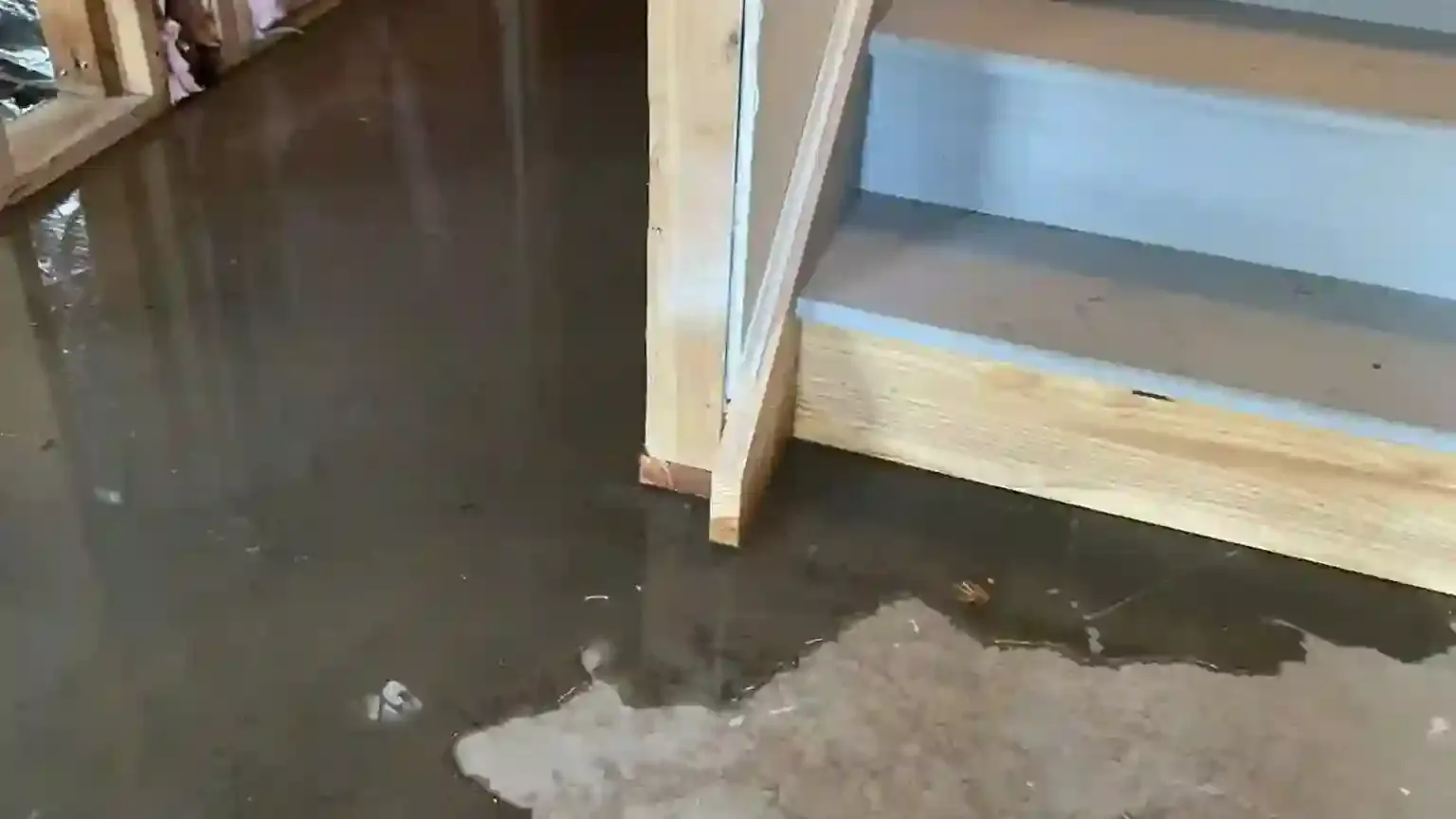
Safety, and it’s short. If there’s standing water on the floor and any outlet, cord or appliance sits in it, don’t step in. Go to the panel and kill the circuits that feed the basement first. Water and live power are the one part of this we won’t be casual about.
After that, you’re just looking. How deep is it? Is it clear rainwater, or does it smell like a drain? That second question matters more than any other, and we’ll come back to it.

The clock, plainly
Mold can start on wet organic material in roughly 24 to 48 hours. That’s not a scare line, it’s just a schedule — and it means speed beats horsepower. A shop vac tonight does more good than a great crew on Thursday.
Option A: what does drying it yourself really look like?
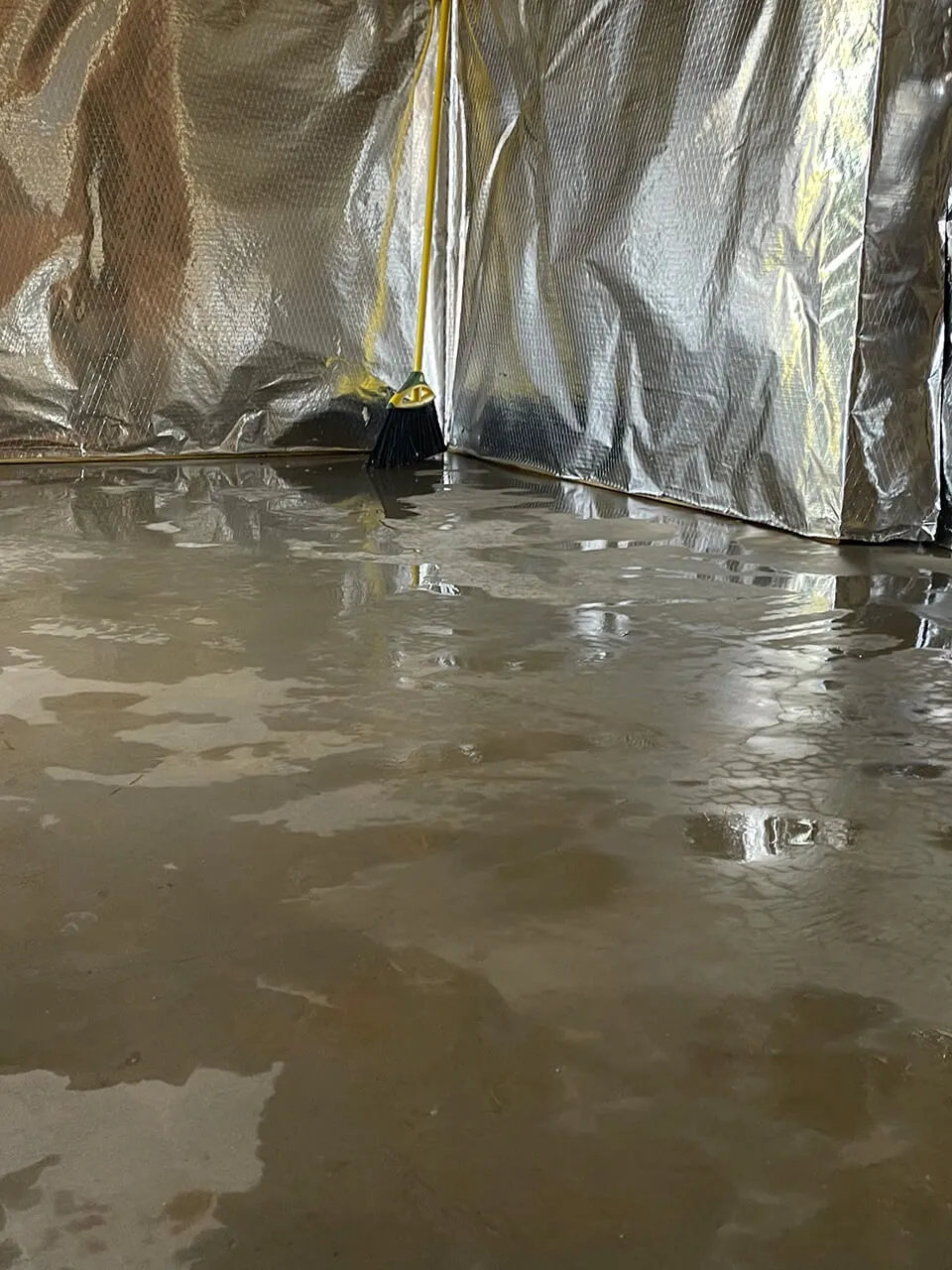
Here’s the honest version. You pull the water out with a wet/dry vac, in passes, until the floor stops giving up puddles. Then you move air — box fans aimed low and across the slab, not at the ceiling. A rental dehumidifier runs in the middle of the room with the doors shut, because an open door just invites Georgia humidity to the party.
When it wins: clean rainwater, a shallow amount, caught within a day, on a bare slab with nothing finished. Half an inch that came in under a walkout door during a storm is a Saturday. Truly.
What it costs: a rental dehumidifier for a few days, a vac you probably own, and your weekend. It’s the cheapest path by a wide margin, and we’d never talk you out of it when it fits.
The trade-off: home gear moves less air and pulls less moisture than commercial equipment, so it’s slower. You also have no way to measure whether the wall is actually dry or just dry-feeling.
Option B: what does a drying crew do differently?
Structural drying is a real trade, and the difference isn’t just bigger machines. First comes extraction with units that pull water out of the slab surface, not only off the top of it. Then air movers get placed at angles along the walls, so the air scrubs the surfaces instead of swirling around the room.
Commercial dehumidifiers do the heavy part, pulling far more moisture per day than a rental unit. Meanwhile, moisture readings get taken at the same marked spots each day. That log is the whole point — it’s how anyone can prove the wall is dry instead of guessing.
When it wins: deep water, water that sat more than a day or two, finished basements, or anything that came from a sewer line. Those four are where home equipment quietly loses.
What it costs: more, and it rides on square footage, how many days equipment runs, and how much wet material comes out first. A finished lower level sits much higher than a bare slab, because there’s demolition before the drying even starts.

How do they compare, straight across?
Doing it yourself
- Cheapest by far, and you can start tonight
- Great for clean, shallow, fresh water
- Works best on a bare slab
- Slower — plan on several days
- No moisture readings, so no proof
- Can’t reach water inside a wall cavity
A professional crew
- Extraction pulls water out of the slab itself
- Commercial dehumidifiers dry days faster
- Wet materials get removed, not covered up
- Daily documented moisture readings
- The right answer for sewer water
- Higher cost, and it should be
Notice that neither column says “better.” Most of the basement drying Sugar Hill homeowners handle alone lands in the left column, and that’s fine. Your only job is figuring out which amount of trouble you actually have.
Which four things actually decide it?
Run your basement through these
- How much water. A damp film is different from two inches. Depth drives everything after it.
- How long it sat. Caught in hours, you’re fine. Sitting since last week’s storm, call someone.
- What’s behind the walls. Carpet pad, the bottom edge of drywall and insulation in a finished wall all hold water like a sponge.
- Where it came from. Clean rain is one job. A sewer backup is a different one, with different safety rules. The CDC’s guidance on mold cleanup after flooding is worth five minutes here.
That third one causes the most trouble, so let’s sit on it. Wet organic material has to come out. Carpet pad, the lower few inches of drywall, soaked batt insulation — none of it dries in place, no matter how many fans you own.
The classic mistake follows from that. The surface looks dry, everybody relaxes, and the wall cavity stays wet behind the paint. Three weeks later there’s a musty smell nobody can find. We’ve opened plenty of walls in Whitfield Farms that told exactly that story.
Twenty years in, here’s what changed our thinking. We used to think drying was about equipment. It isn’t. It’s about removal — get the wet material out, and modest fans finish the job. Leave it in, and no machine ever wins.
Why does Sugar Hill get this call so often?
Because of the hill. Sugar Hill is named for one, and it earns it — the land drops hard toward Lake Lanier and toward the Chattahoochee below Buford Dam. On terrain like that, water doesn’t sit. It runs, and it runs toward whatever is downhill of it, which is often somebody’s basement wall.
That grade is also why so many homes here have walkout and daylight basements. Those are wonderful rooms, but a walkout door and a window well are both low spots by design. During a hard spring storm, water sheets down the slope and finds them. Homeowners over in Waterside describe the same thing every April.
Plenty of houses along the Cumming Highway (GA-20) corridor also went up between the mid-1990s and the mid-2000s, so their original drainage is simply old. That’s not a defect. That’s a birthday, and birthdays are predictable.
So what would we tell you to do?
Here’s our real recommendation. If the water is clean, under an inch, less than a day old, and the space is unfinished — dry it yourself. Vac it, move air across the slab, run a dehumidifier with the doors closed, and check the base of the walls each morning. You don’t need us for that, and we’ll say so on the phone.
Call a crew instead when any one of these is true: the water sat more than about a day, it’s more than an inch or two, it reached finished walls or carpet, or it came from a drain line. Any single one is enough — they don’t have to stack up.
And here’s the part people don’t expect a waterproofing company to write down. Drying is only half the job. Once the room is dry, the real question is why water got in — and sometimes the answer is a clogged gutter and a downspout dumping two feet from the wall. That’s an afternoon, and we’ll hand you the plan and go home.
When it’s more than that, an interior drain and a sump handle it for good. Our page on basement waterproofing walks through how those systems get built, and if you’re already past the drying stage, our guide to flood restoration picks up where this one stops.
One thing to check tonight
Standard homeowners insurance usually excludes groundwater seepage, and sump pump failure coverage is often a separate rider you have to add on purpose. So pull up your policy and look before you need it. Five minutes now saves a confusing phone call later.
What does the year after look like?
Let’s walk it forward, because knowing the timeline is most of what makes this feel manageable.
Week one. Equipment runs three to five days on most jobs. Readings come down a little each day, the musty smell fades first, and by the weekend you’re putting shelves back.
Year one. You get through a full spring storm season, which is the real test around here. Gutters get cleaned in the fall, downspouts stay extended, and the basement stays boring. Boring is the whole goal.
Year ten. If a drainage system went in, it’s still doing its quiet job. A sump pump will have been swapped somewhere along the way, since pumps have a service life like anything with a motor. The floor, though, has been dry the entire time — and most homeowners forget the whole thing happened.
Timing helps too. The National Weather Service’s flood safety pages give you a heads-up before a big system rolls through, so you can move the boxes off the floor ahead of it instead of after.
Why does local experience matter on these slopes?
Because water behaves differently on a hill than on flat ground, and reading a lot correctly is most of the skill. The basement drying Sugar Hill calls we get almost always trace back to something outside the house. We’ve worked the newer builds in the downtown Sugar Hill infill and the older walkout homes further out, so we know which questions to ask first.
Same crews, same trucks, every job. Neighbors comparing notes can read the same breakdown for Lilburn basement drying options, and if you’re also seeing cracks or a sticking door, start with foundation repair instead — that’s a different conversation, and we’ll tell you which one you’re in.

Where we work around Sugar Hill
We’re based in Lawrenceville, about twenty minutes south, so we’re up this way constantly. We also cover Buford, Suwanee, Cumming, Gainesville, Duluth, Snellville, Dacula, Braselton and Flowery Branch, plus the wider Gwinnett area.
Questions Sugar Hill homeowners ask us
Start the same day if you can. Mold can begin growing on wet organic material in roughly 24 to 48 hours, so moving air quickly matters more than having the best equipment. If the water sat over a weekend before you found it, that’s when a crew is worth the call.
Because saturated soil pushes water toward the easiest opening, and on a sloped lot that’s usually the seam where the wall meets the slab. It looks like the floor is leaking, but the water really arrived from outside and underneath.
In most cases, yes. Drying handles today, and a drainage system with a sump handles every storm after that. The honest caveat is that gutters and grading still need ten minutes twice a year, since a clogged downspout can undo a great system.
It depends on the square footage, how many days equipment runs, how much wet material comes out, and whether you add drainage afterward. A small unfinished area sits at the low end, while a finished lower level with a full drainage system sits at the high end. You get a written scope with the number, never a phone guess.
That’s still worth solving, though it doesn’t have to be urgent. Twice-a-year water usually means surface runoff during heavy storms, which is often the cheapest kind to correct. We’ll look at the grading and gutters first and tell you honestly if that’s all it needs.
Let’s figure out what your Sugar Hill basement actually needs
The inspection is free, the estimate is free, and there’s no pressure at the end. We’ll tell you where the water got in, walk you through both paths, and say plainly if the smaller fix is the right one for you.
(678) 914-5112Serving Sugar Hill and all of Metro Atlanta · $500 off projects over $3,500 · Live support 7am–8pm, 7 days a week