

The Basement Flooding Cost Lilburn Homeowners Actually Pay
Two separate jobs, one invoice. Here’s what each part covers and what moves the number.
If your basement took on water in the last big storm, yours probably wasn’t the only one on the street. So when you start pricing out the basement flooding cost Lilburn homeowners get quoted, it helps to know you’re looking at two different jobs sharing one invoice.
And that’s no coincidence. Neighbors compare notes at the mailbox here for a reason.
Why does the whole street flood at once?
Because your block was built as one project, in one decade, by one crew. Most Lilburn homes went up between the seventies and the nineties, when waterproofing meant a coat of tar on the block and a hope it would hold. Fifty years is a long time to hope.
That tar is gone now, and the footing drain beside it is usually crushed or packed with silt. So when heavy rain lands on rolling red clay, every house on the cul-de-sac hits its limit within the same hour.

We hear the same story near Rockbridge, along the Indian Trail corridor, and on the older lots around Old Town Lilburn. Different families, same 1978 block wall. Good news, though — a problem this predictable has a well-worn fix.
What are you actually paying for?
Two jobs. They get quoted together, they sound like one thing, and they aren’t.
Job one is getting the water out and drying the space. That means extraction, hauling out soaked material, then running air movers and dehumidifiers until the framing reads dry on a meter.
Job two is making sure it doesn’t happen again. That means finding where water entered, then building a path out below your floor. It’s the half that changes next spring.
Worth knowing
Plenty of folks pay for job one, skip job two, and repeat the whole afternoon next March. If a quote covers only pumping and drying, know what it buys.
What happens, in what order?
- Safety and power first. Circuits to the basement go off before anyone steps in.
- Extraction. Pumps pull the standing water, usually the quickest part of the job.
- Removing what soaked. Carpet pad, drywall, insulation, cardboard — sponges with a return address, and they stay wet long after the floor looks dry.
- Drying and monitoring. Air movers and dehumidifiers run for days, not hours, with moisture readings along the way.
- The free inspection. We walk the outside — grading, downspouts, yard drains — then the inside, until we find the entry point.
- Interior drainage. A narrow channel opens along the perimeter, perforated pipe goes into clean washed stone below the slab, and wall liner feeds seepage into it.
- Sump and discharge. Everything routes to a basin, and the pump sends water well away from the house.
- Close up and test. Fresh concrete, cleanup, haul-off, then we run the system while you watch.
Real talk — which part decides whether it lasts?
The drainage. Everything before it makes the basement usable again, while step six changes what happens during the next storm.
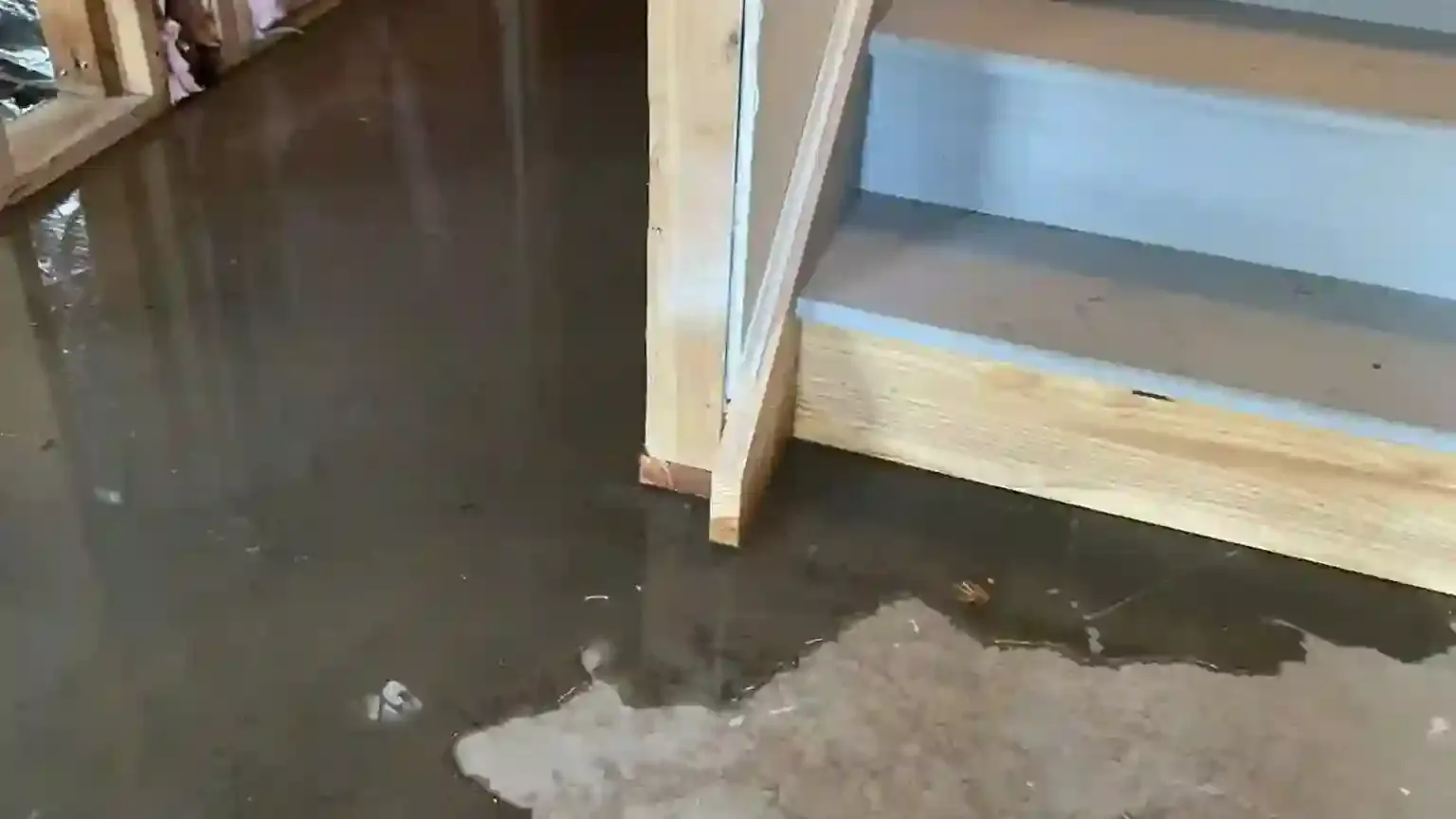
Here’s why. Look where your wall meets the floor, at that seam running around the room. Builders call it the cove joint, and it isn’t sealed — wall and slab were poured separately, so the gap is there by design. Under pressure from saturated clay, that seam is the easiest door in the room.
Most flooded basements we open up never had a crack at all. Water walked in along the floor line, because that’s where the building let it in.
So sealing the wall does very little. The pressure doesn’t quit; it shifts a few feet over. That’s why drainage works — instead of fighting water at the wall, we collect it under the slab, where it has lost most of its push.
Feel the difference? One means watching the forecast, the other means a hard rain comes and goes without your input. For the cleanup half, our rundown of basement drying options goes deeper.
What moves the number up or down?
Straight answer: nobody can price this over the phone. Still, you deserve to know what we’re adding up while we walk your basement.
Six things that set the price
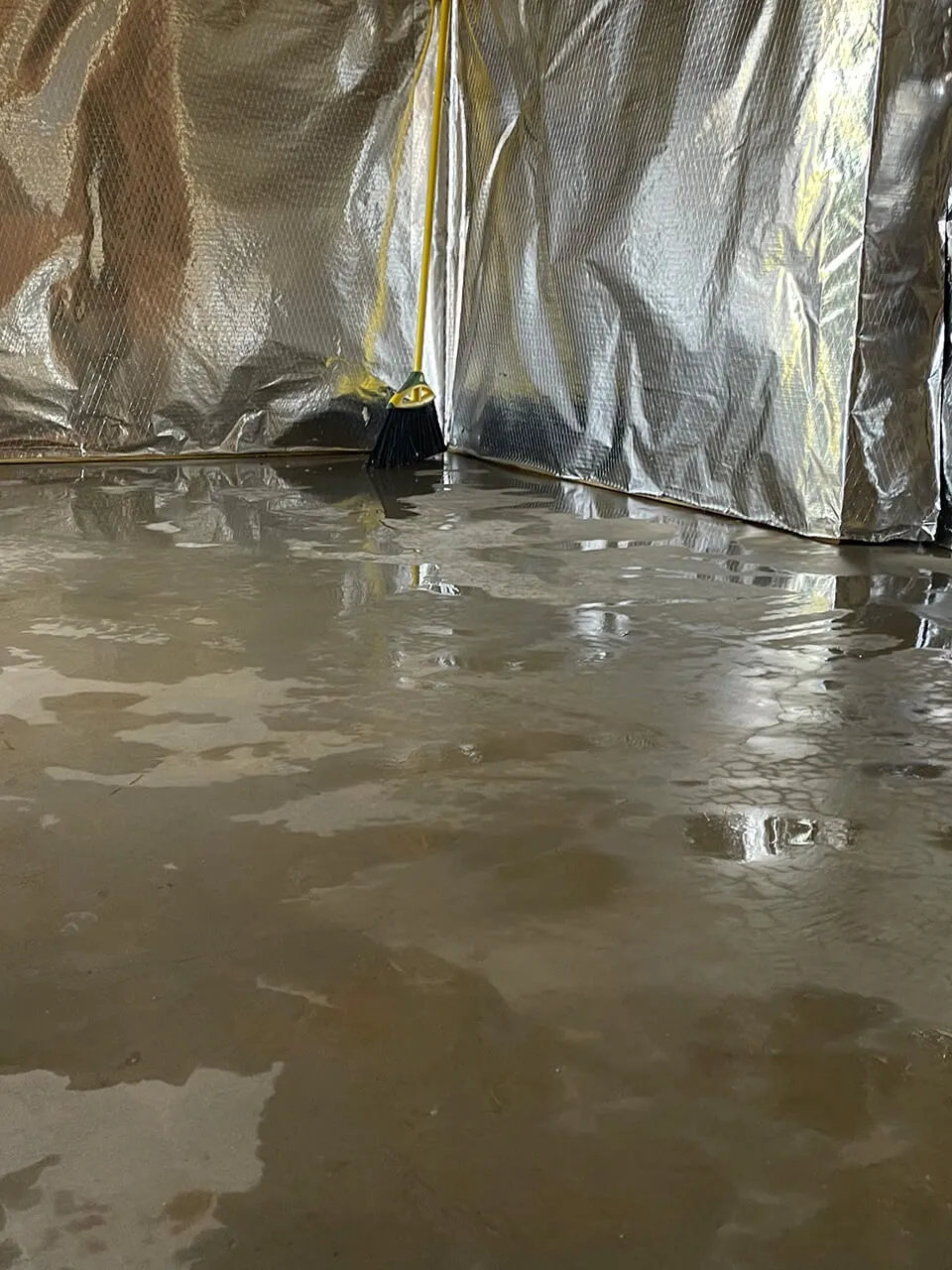
- How much water came in. A skim in one corner is a different day than eight inches wall to wall.
- How long it sat. Water caught in hours dries faster and cheaper than water that sat all weekend.
- How much soaked material leaves. Wet organic stuff — pad, drywall, insulation, boxes — drives labor and haul-off.
- Finished or unfinished. Built-ins and a bathroom mean careful demo first.
- Whether drainage is included. Linear feet of channel is the biggest line item once you move from cleanup to prevention.
- Sump and discharge. A new basin, a long discharge run or a battery backup each add cost, and each earns it in a storm.
Small exterior corrections with a quick dry-out land at the low end, while a full perimeter system with a new sump and backup power sits at the top. Either way you get one written number with the scope spelled out, never a “starting at.” For a nearby comparison, our breakdown of Norcross basement flooding cost uses the same math.
Does insurance pay for any of it?
Sometimes, partly — and we’d rather say so up front. Standard homeowners policies commonly exclude surface flooding and groundwater seepage, which is exactly the water most Lilburn basements take on. Sump pump failure coverage is usually a separate endorsement you add on purpose.
So read your own policy, or call your agent and ask those two questions. Some folks find they added the rider years ago and forgot. The National Weather Service flood safety pages explain what counts as flooding.
Why sump pumps quit at the worst moment
They fail in predictable ways, which is good news, because predictable problems are preventable. Power drops during the same storm filling the basin. A float sticks against the pit wall. The pump is undersized. There’s no check valve, so water drains right back down. Or the discharge line is clogged with leaves and silt.
That’s the whole list, more or less. A pump with no power is just a bucket with a cord, so we push battery backups hard.
How long does it take, and what should you do first?
Extraction usually happens the same day. Drying equipment then runs roughly three to five days, depending on how much stayed wet. If drainage is part of the plan, add one to three days on site, plus a few days for concrete to cure.
Your prep list is short. Clear about four feet along the walls we’re working on, carry irreplaceable things upstairs, photograph the damage first, and leave us a path to an exterior door. We’ll move the heavy stuff.
Timing matters too. Spring storms keep the calendar tight from March through May, while fall leaf drop under that Lilburn canopy clogs gutters before winter rain.
What DIY can and can’t reach
Plenty is genuinely yours, and we’d rather say so than charge you for a Saturday. Extend downspouts six to ten feet out. Clean gutters twice a year. Regrade soil so it slopes away. Test the sump with a bucket of water.
What DIY can’t reach is anything below the slab. You can’t set drain tile without opening concrete, and no bucket product outmuscles saturated clay. Bowing or cracking walls are the same story, which is where foundation repair comes first.
What does a wet basement have to do with the air upstairs?
More than most people realize. Air drifts upward through a house, and as it escapes near the roof it pulls replacement air in from the lowest point. That’s the basement. Some of what you breathe in the bedrooms started by that damp corner.
That’s also why the drying half is time-sensitive. Mold can begin growing on wet organic material in roughly 24 to 48 hours, so a basement left sitting all weekend usually costs more than one dried on day one. The CDC’s guidance on mold cleanup after flooding describes the same window.
The good news is that both halves point at one answer. Dry it fast, stop the source, and humidity settles on its own.

How do you know the job was done right?
Ask for four things and you’ll sort careful work from fast work. First, moisture readings before and after drying, in writing. Second, a scope naming linear feet, sump location and discharge point. Third, photos of the stone and pipe before the concrete goes back. Fourth, a live test while you watch.
After that, the proof shows up on its own. A hard rain rolls through, you head down the stairs out of habit, and the floor is dry. Then one day you stop checking. That’s the whole point — the next big storm goes back to being weather.
We’ve worked this side of Gwinnett for over twenty years, from the ballfields at Lions Club Park to the older homes behind Old Town Lilburn. Same crews, same trucks, same phone number in year seven. Our full range of basement waterproofing systems is on the service page.

Where we work around Lilburn
Our shop sits fifteen minutes northeast in Lawrenceville, so we’re on Lawrenceville Highway (US-29) most days. Along with Lilburn, we cover Snellville, Norcross, Tucker, Stone Mountain, Grayson, Loganville, Duluth, Peachtree Corners, Berkeley Lake and the wider Gwinnett County area.
Questions we get from Lilburn homeowners
Often not, at least not the groundwater kind. Standard policies commonly exclude surface flooding and seepage, and sump pump coverage is usually a separate endorsement. Check your own policy or call your agent, since details vary by carrier.
Fast helps, and the window is shorter than people expect. Mold can begin on wet organic material like carpet pad and drywall in roughly 24 to 48 hours, so delay adds material that has to come out. Start extraction as soon as it’s safe.
Because the wall and slab were poured separately, leaving an unsealed seam called the cove joint. Under pressure from saturated clay, that seam is the easiest opening in the room. That’s also why sealing walls rarely helps.
In most homes, yes, once water has a reliable path out. Interior drainage below the slab, a properly sized sump with a check valve, a clear discharge line and a battery backup handle most of what we see. Good gutters and grading leave the system less to do.
It depends on how much water came in, how long it sat, how much soaked material has to come out, and whether drainage and a sump are part of the permanent fix. Cleanup with small exterior corrections sits at the low end, while a full perimeter system with backup power sits at the top. We give one written number after walking the house.
Let’s find out what your basement actually needs
The inspection is free, the estimate is free, and nobody pressures you. We’ll show you where water got in, what it takes to keep it out, and what that costs here in Lilburn.
(678) 914-5112Serving Lilburn and all of Metro Atlanta · $500 off projects over $3,500 · Live support 7am–8pm, 7 days a week