

Hiring an Encapsulation Company in Peachtree Corners: What to Look For Before You Sign
Two quotes can look identical and describe two completely different jobs. Here’s how to tell them apart.
Most folks think there’s one product here and the only difference is price. That’s the belief we hear most when homeowners call around for an encapsulation company Peachtree Corners can rely on, and it isn’t right. Plastic tossed over the dirt and a sealed, finished crawl space get quoted the same way, but they aren’t the same job.
Good news, though: once you know the four or five things that separate them, comparing bids gets easy. So let’s walk through it the way we’d explain it in your driveway.
What’s the difference between a vapor barrier and encapsulation?
One covers the ground. The other seals the room.
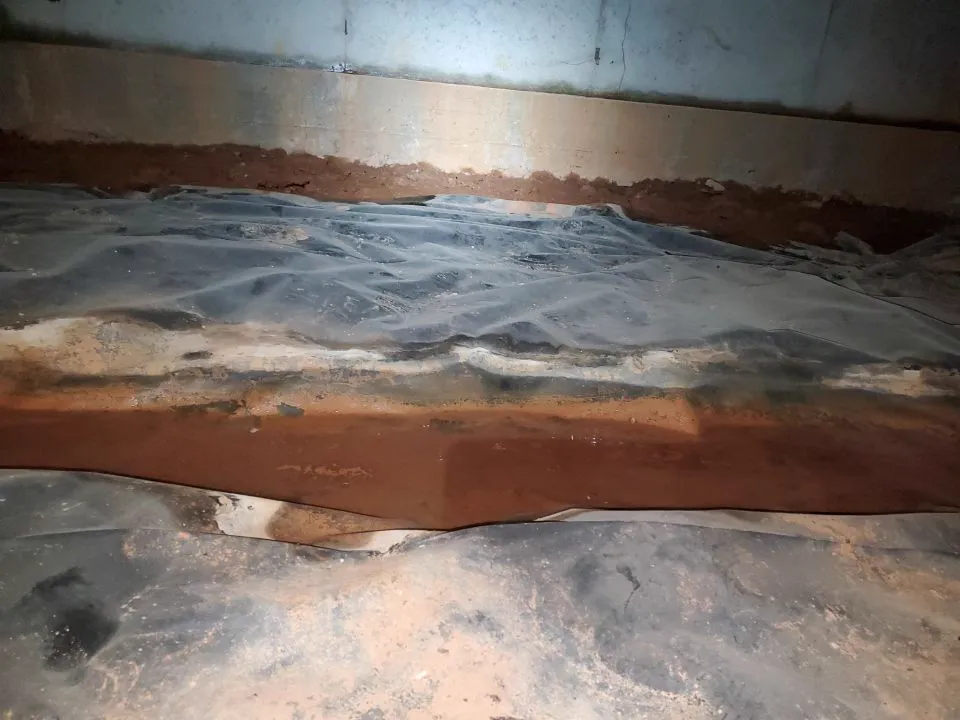
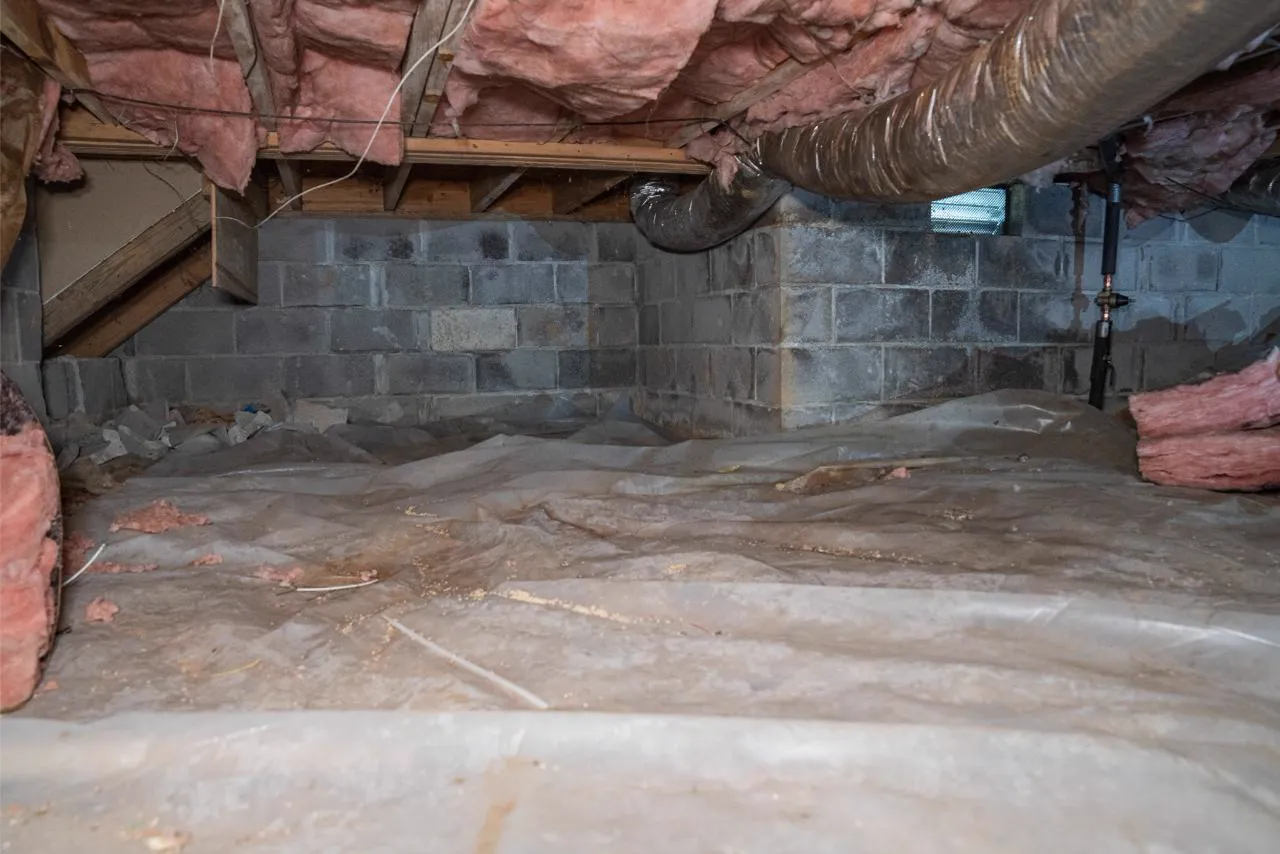
A vapor barrier is loose plastic laid over the soil, usually held down with a few bricks and hope. It slows some moisture, and it beats bare dirt. But the walls stay open, the piers stay bare, the vents stay open, and humid summer air keeps rolling in under your floor.
Encapsulation closes the whole box. The liner runs up the block walls and gets mechanically fastened and sealed, and every pier gets wrapped the same way. Then the vents get sealed, the seams get taped, and a dehumidifier sized for that square footage keeps the air dry year round. That’s a system, not a sheet.
Why are Peachtree Corners crawl spaces different?
Because of when they went up. Most of this city was built between the early 1970s and the mid 1990s, which makes it the oldest large body of really good housing stock in our northern service area. Those homes were framed well. They just weren’t built with moisture control in mind.
Many of these houses never had a real system. They had a coat of tar and good intentions.
Then there’s the ground. Red clay holds water like a sponge, and on the western side of town the land drops toward the river in real bluffs with rock close to the surface. Water hits that rock, can’t sink, and travels sideways instead — sometimes straight into a crawl space. Homes around Spalding Corners and Peachtree Station see this constantly.
Age shows up structurally too. Hand-laid block walls have been leaning on fifty years of clay pressure, so on the Dunwoody Club Forest edge we see bowing often. That matters for a simple reason: you don’t seal a wall that needs correcting.
What should a good company do differently here?
Start outside. An encapsulation company Peachtree Corners homeowners keep recommending will walk the yard before it opens the hatch, since on sloped lots the answer often sits uphill of the house.
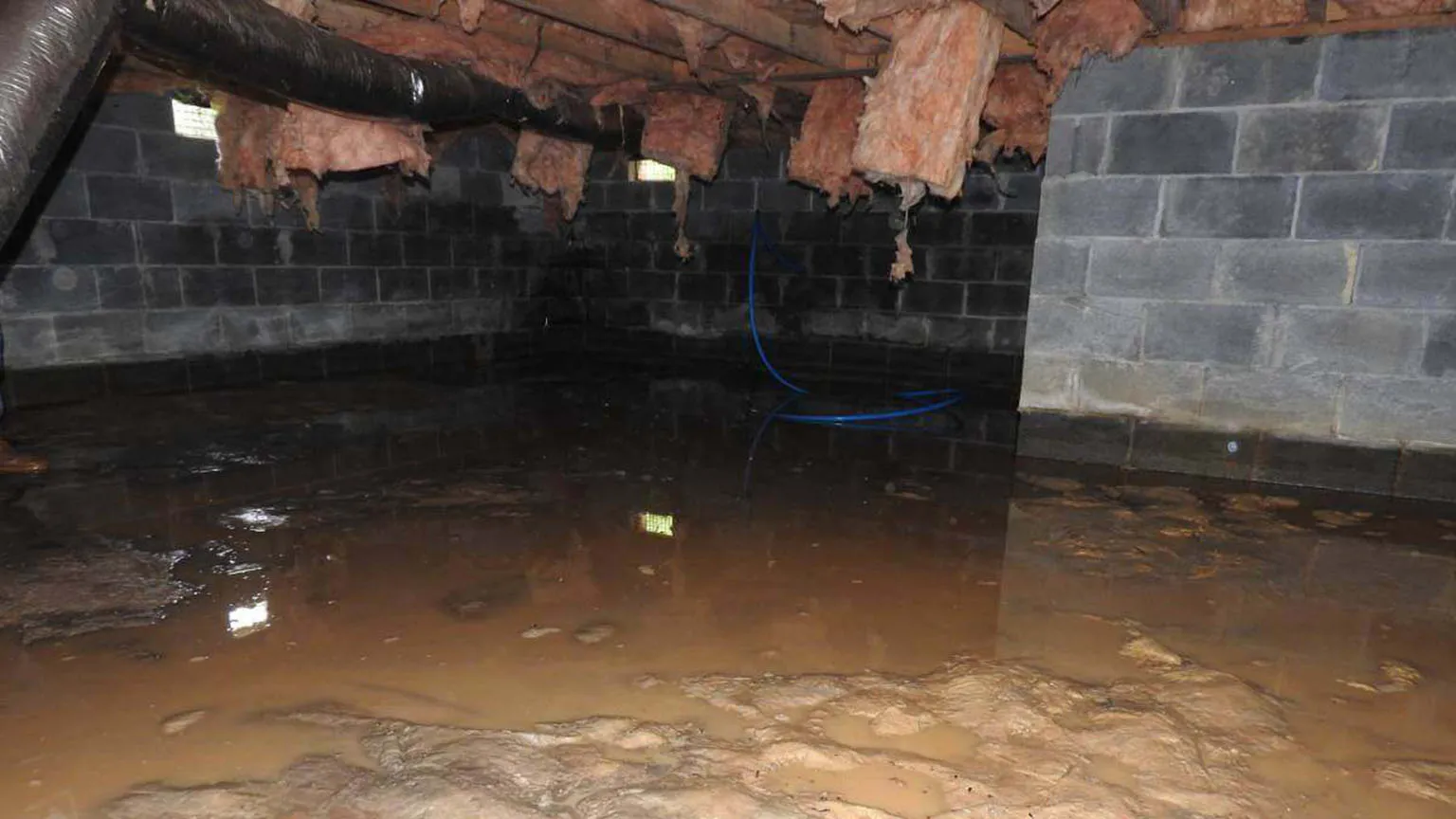
Handle the water before the plastic. If there’s standing water, a spring seeping through a footing, or a downspout dumping beside the foundation, none of that gets better under a liner. So drainage, a sump if the lot calls for one, and grading fixes come first.
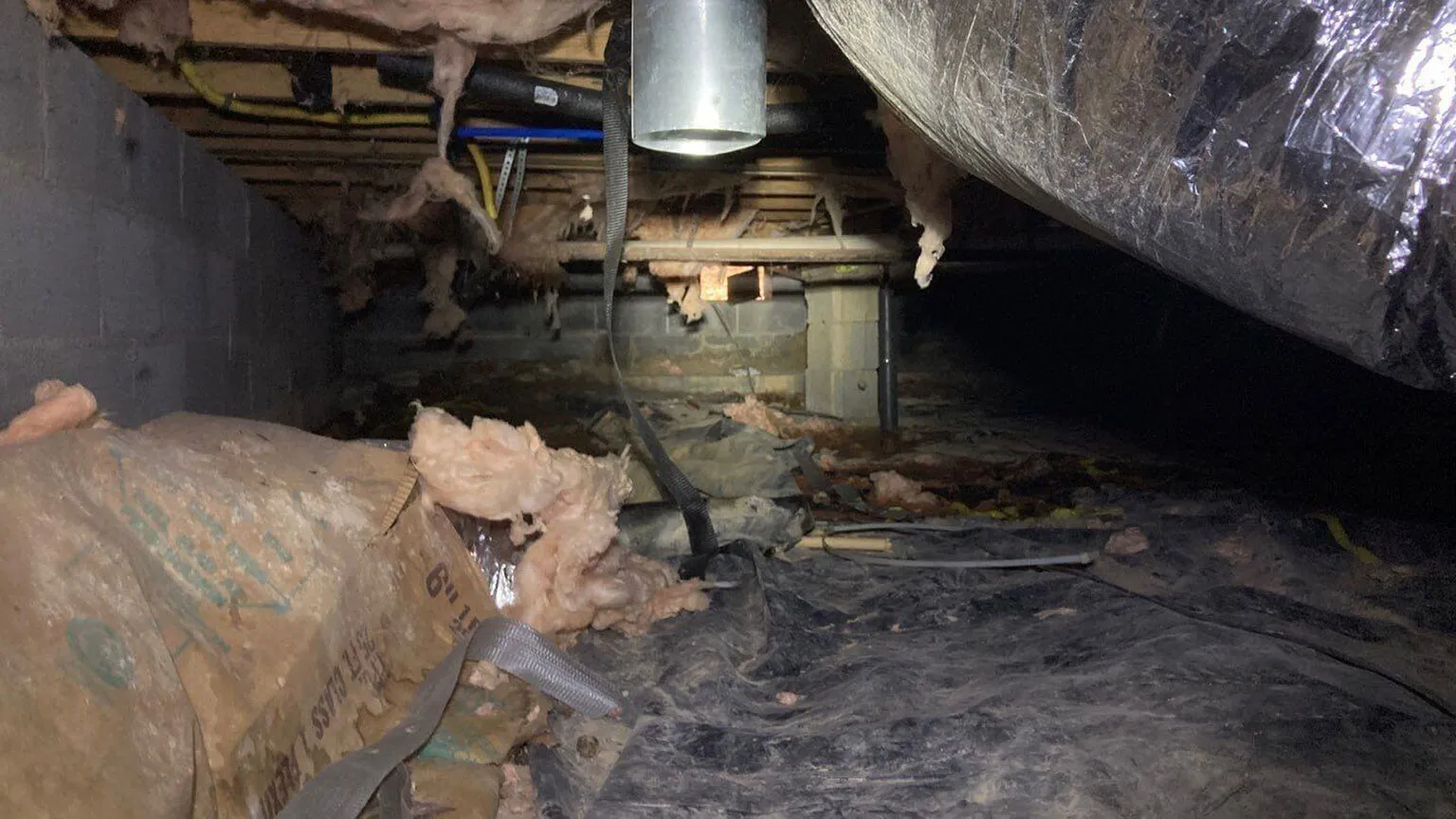
Second, they should treat the liner as a finished surface. A real one is thick, reinforced, and built to be crawled on for decades, not the flimsy roll you’d buy for a garden bed. Loose plastic just makes a crinkly sled, which is fun exactly once.
Third, they should size the dehumidifier to your space instead of grabbing whatever is on the truck. A unit that’s too small runs constantly and never wins, while an oversized one short-cycles and wastes power. In other words, the number on the box should match your square footage.
Fourth, they should say what happens to the old insulation. Wet batts hold moisture against the framing, so they come out. The sealed walls then take over that role, which the U.S. Department of Energy’s guidance on insulation and moisture control lays out clearly.
Does a crawl space need to breathe?
Here’s the myth we hear on almost every estimate: “if you seal the vents, the wood will rot.” It sounds like common sense. In Georgia, though, it’s backwards.
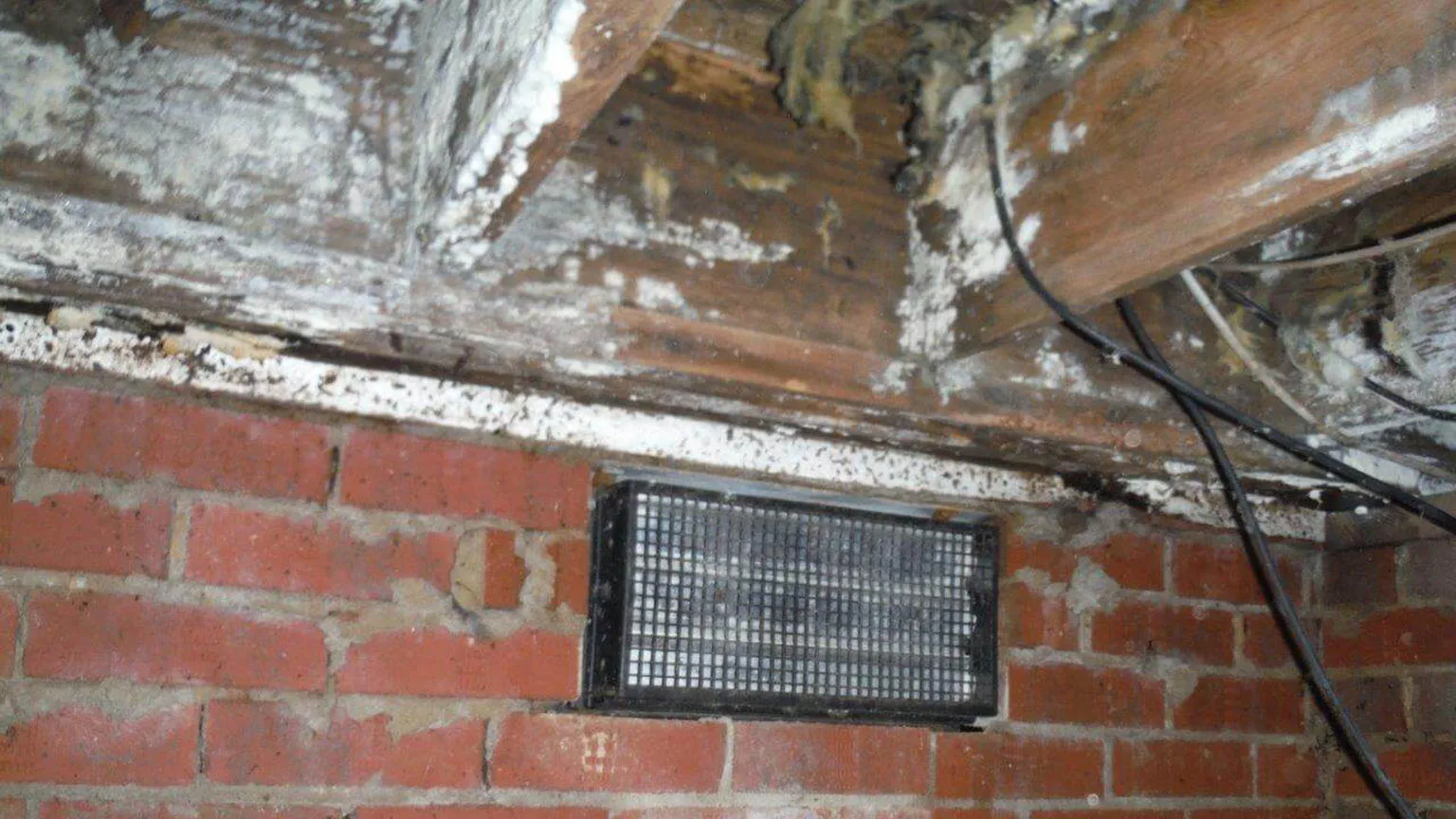
Think about a July afternoon here. Outside air is thick with humidity, while your crawl space sits much cooler. When that warm wet air pours through the vents and meets cool framing, moisture condenses right onto the wood. So the vents aren’t drying anything — they’re delivering the water.
Wood starts supporting mold growth around 20% moisture content, and in a vented Georgia crawl space in July, framing gets there regularly. That’s just physics on a humid day. And it’s why sealed crawl spaces became standard practice.
The fix is straightforward. Seal the vents, close the ground, dry the air with a properly sized unit, and the moisture in that framing drops and stays down. Then the musty smell fades and the air your family breathes gets better — which is the whole point the EPA’s overview of mold and health keeps coming back to.
How do you read an encapsulation estimate?
Slowly, with one question in mind: does this describe my crawl space? A real bid from an encapsulation company Peachtree Corners locals trust names the liner thickness, where it terminates, how many vents get sealed, and the dehumidifier model. A weak one says “encapsulation” and a number.
What should be spelled out in writing
- Liner thickness, and whether it’s reinforced. Reinforced material resists punctures, so it survives future service visits.
- Where the liner stops. Sealed up the walls and around every pier, or just laid on dirt? That’s the biggest gap between two similar-looking bids.
- Vents, in a number. How many, and sealed with what.
- Water handled first. Drainage, a sump if needed, plus grading and downspout work.
- Dehumidifier model and capacity. Also, where the condensate drains to.
- Insulation and debris removal. Who hauls it out, and is it in the price.
- The warranty, in plain words. How long it runs, and whether it transfers when you sell.
About price: anyone quoting a firm number over the phone is guessing. A small clean-and-line job in a dry crawl sits at the low end, while a wet space needing drainage, a sump and a dehumidifier lands much higher. Most homes here fall between, so ask for a written scope rather than a “starting at.”
What should you ask, and what should worry you?
Five questions do most of the work. Ask how the liner attaches to the walls and piers. Ask what they plan to do about water before anything gets covered. Then ask who performs the work, and what the dehumidifier is sized for. Finally, ask them to explain the warranty in one sentence.
Red flags are simple too. Pressure to sign today. A discount that expires when the visit ends. Also be careful with anyone who won’t crawl the whole space, because a bid from the hatch is a guess.
One more worth naming: a company that treats standing water as a liner problem. If your lot sheds toward the house, you may need drainage work alongside the crawl space repair itself. Sealing over a puddle just makes a very tidy puddle.
What does life look like after the work?
In week one, the change is mostly your nose. That damp smell in the hallway fades within a few days, because the source is now sealed and dried. Floors above the crawl space feel less clammy too.
By year one, you’ve lived through a full Georgia summer with it. That’s the real test, and it’s where homeowners tell us the house feels easier to cool, since the air conditioner isn’t fighting a swamp underneath. Plus the space becomes usable storage.
At year ten, the liner is still doing what it did on day one, because reinforced material sealed to the walls has nothing to slide or tear against. The dehumidifier is the part with a service life, so budget for one replacement in that window.
That’s the feeling we’re after — you spent money once, on the right version, and it’s still paying you back a decade later. Smart beats cheap in a crawl space.
Why we might be the right fit
We’ve been at this over twenty years, most of it in Gwinnett County, so we’ve almost certainly worked on a home built the same year as yours. Peachtree Corners sits about twenty minutes from our shop, which means we’re near Technology Park or Jones Bridge Park most weeks anyway.
That history matters for one unglamorous reason: a warranty is only as strong as the company behind it. If something needs a look in year seven, you’ll be calling the folks who did the work. We’ll also tell you when the job is smaller than you feared.
Still sorting out what you’re seeing down there? Our local guide to crawl encapsulation walks through symptoms and repair options. If water shows up on the lower level too, the piece on a flooded basement covers what to do first. And we cover the same ground for Dunwoody best crawl space work.
Where we work around Peachtree Corners
We’re based in Lawrenceville, so this side of the county is a short drive. We work throughout Peachtree Corners, Norcross, Duluth, Johns Creek, Dunwoody, Berkeley Lake, Sandy Springs, Suwanee, Lilburn and Alpharetta, plus the rest of Gwinnett County. If you’re anywhere between the Chattahoochee bluffs and Spalding Drive, odds are we have a truck nearby already.
Questions we get from this side of town
Usually yes, and faster than people expect. Air moves upward through a house, so most of that smell is crawl space air arriving in your hallway. Once the ground is sealed and the air is dried, the source goes away and the odor fades within days.
Most crawl spaces here take two to four days. Cleanout and old insulation removal fill the first day, then drainage work if the space needs it, and the liner and dehumidifier follow. Bigger or wetter spaces run longer, and we’ll tell you which one yours is before we start.
Often it helps, because dry air is much easier to cool than damp air. Your system stops working against humidity rising through the floor, so it runs less in summer. We won’t promise a percentage, since every house and thermostat setting is different.
In most older homes it comes out. Batts hanging between the joists have usually been soaking up moisture for years, and wet insulation holds water right against the wood. Once the crawl space is sealed, the walls handle the job instead, so the space stays closer to your indoor temperature.
It’s better than bare dirt, but it isn’t encapsulation. Thin plastic tears, slides on clay, and leaves the walls, piers and vents wide open, so humid air still gets in all summer. If your goal is dry framing and cleaner indoor air, the sealed version is what actually gets you there.
Let’s find out what’s really going on under your floor
The inspection is free, the estimate is free, and nobody pushes you at the end of it. We’ll crawl the whole space, show you photos, and explain what a real Peachtree Corners encapsulation would include — even if the answer turns out simpler than you expected.
(678) 914-5112Serving Peachtree Corners and all of Metro Atlanta · $500 off projects over $3,500 · Live support 7am–8pm, 7 days a week