

Crawlspace Repair Peachtree Corners Homeowners Are Weighing: Full Encapsulation or Just a Vapor Barrier?
Two real options, laid out fairly — plus an honest answer about which one your house actually needs.
Where do the calls come from? If we drew a map of every crawlspace repair Peachtree Corners job we’ve run, the pins would cluster on the same streets — Historic Peachtree Corners, Amberfield, and the older side of Spalding Corners. Those areas have one thing in common, and it isn’t bad luck.
They were built in the 1970s and early 1980s, back when a crawl space was supposed to breathe. So the vents were left open on purpose, and a sheet of thin plastic on the dirt was considered plenty. Good news: what we know now is a lot better, and the fix is very doable.
There are really only two paths here. One is full encapsulation. The other is a proper vapor barrier plus fixing whatever lets water in. Let’s walk both, then we’ll tell you which one we’d pick.
Option A: what does full encapsulation actually include?
Full encapsulation turns the crawl space into part of your house instead of part of the yard. A heavy reinforced liner covers the entire dirt floor, runs up the block stem walls, and gets sealed at every seam and every pier. Then the vents get closed and sealed for good.
After that, we control the air. Most sealed spaces get a dehumidifier set to hold humidity steady, and insulation usually moves from the floor joists to the walls. The U.S. Department of Energy’s guidance on insulation and moisture control explains why that swap matters.
What does it cost? It’s the bigger number of the two, and most of that is labor and liner square footage. Height, access, debris, and whether a dehumidifier is included all move it, so we walk it first and hand you a written scope.
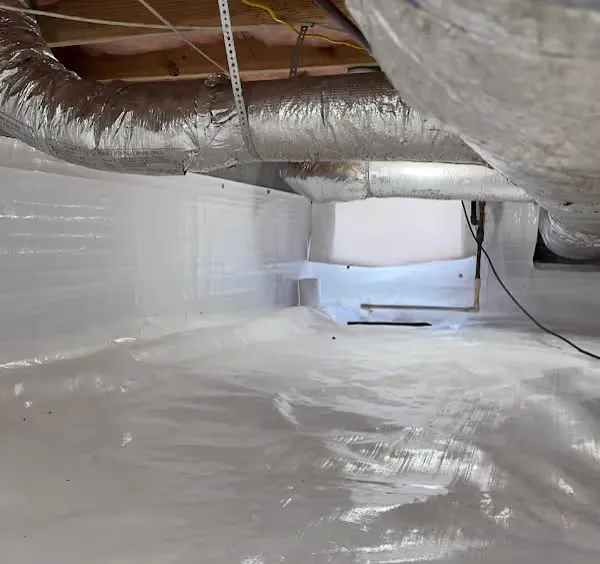
When does it clearly win? Any time the moisture comes from the air, not just the ground. Summer here is humid, so warm air pouring through open vents hits cool surfaces under your floor and condenses. Closing that loop is what stops it.
Option B: is a vapor barrier and drainage work enough?
Sometimes, yes. Really. The lighter option is a good floor vapor barrier, properly overlapped and mechanically fastened, paired with fixing whatever water source is feeding the space — gutters, downspouts, grading, or a drain line that’s been silted shut since the Reagan administration.
The logic is simple. If the moisture is liquid water coming from outside, then stopping it at the source fixes most of the trouble. A barrier keeps ground vapor down, and the vents keep doing their modest job. On a dry, high, well-drained crawl space, that combination holds up fine.
It’s faster and far less expensive too, and we’d rather say that than sell you something you don’t need. We’ve left houses recommending nothing but two downspout extensions and a barrier. Smaller invoice, happier neighbor.
Worth knowing
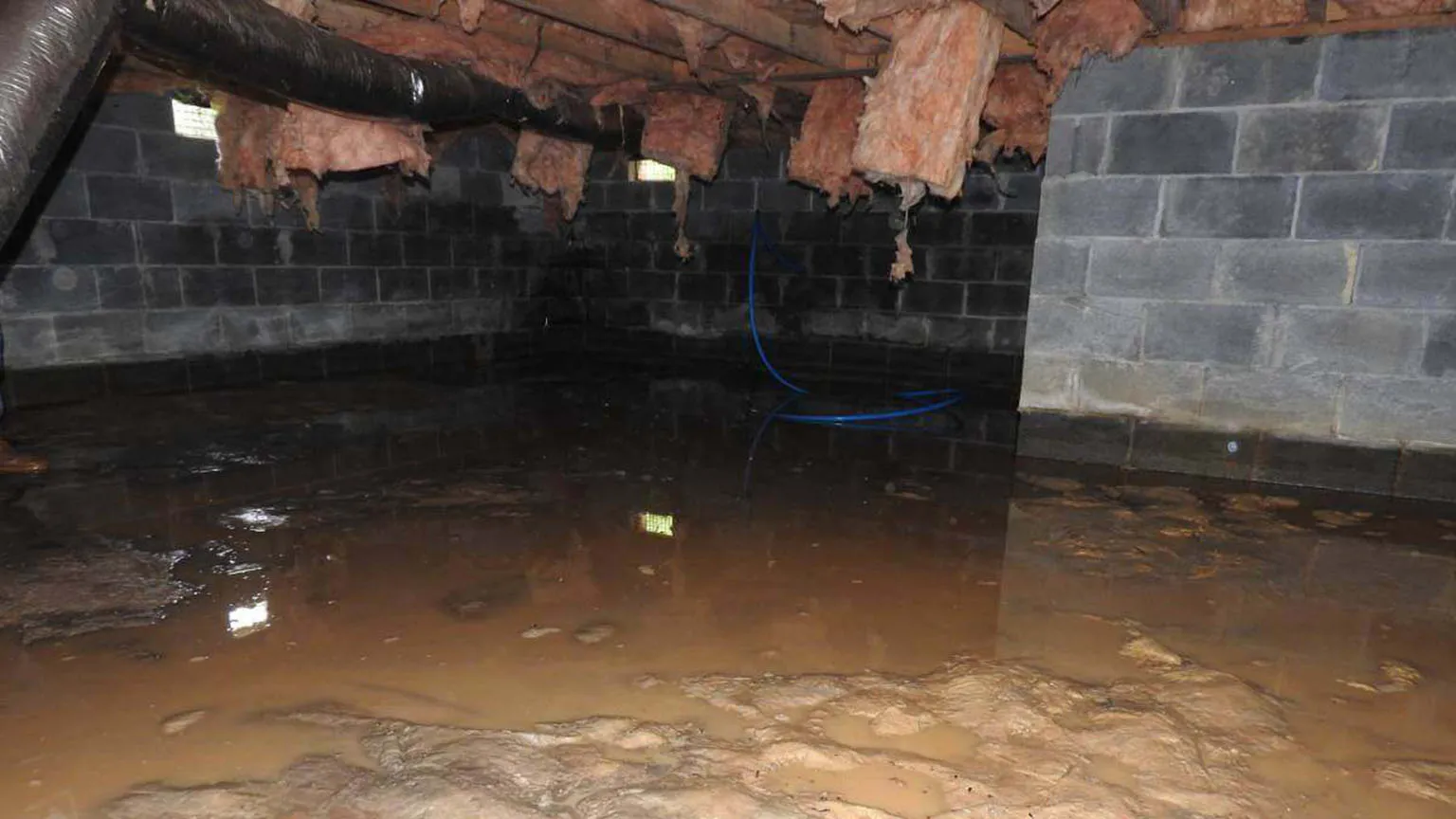
A vapor barrier is not waterproofing. It slows moisture rising out of soil, but it does nothing about air pushing in through open vents or water arriving from the yard. So the barrier is one layer of an answer, never the whole answer.
Where most advice online stops short
Read a few articles and they all end the same way: encapsulation is better, a barrier is cheaper, pick your budget. That’s where the advice stops. It shouldn’t, because it skips the question that decides everything on a house built around here.
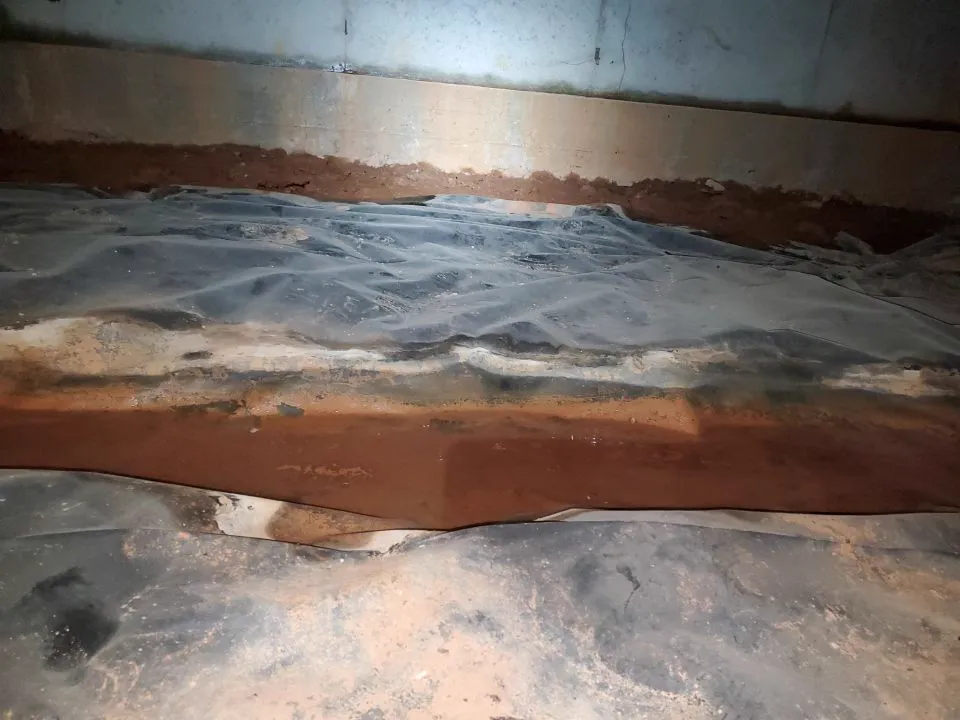
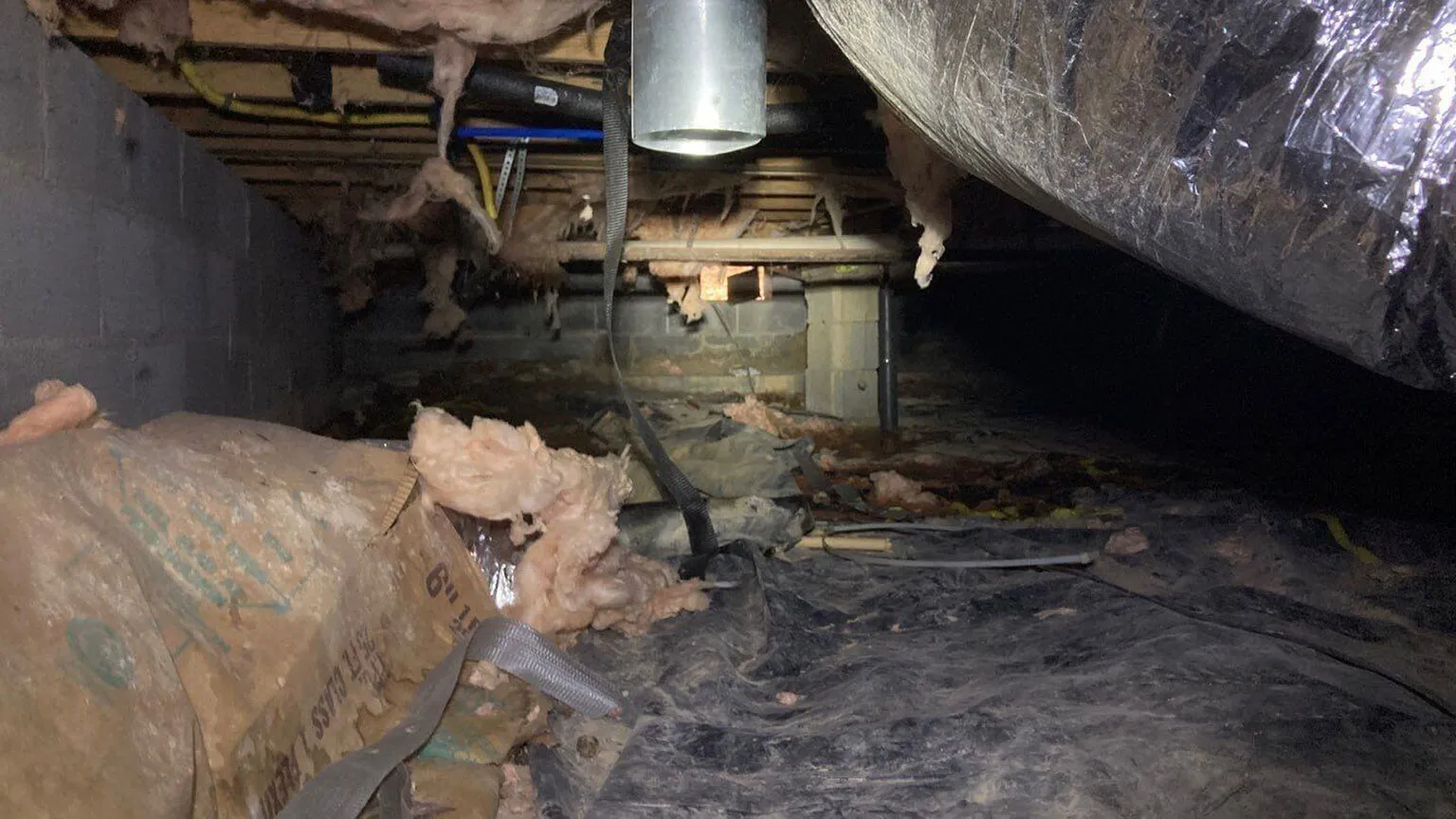
Here’s the thing. On a 1970s or 1980s Peachtree Corners home, you almost never have a working barrier to upgrade. What’s down there is a few torn strips of black plastic laid loose over red clay, never fastened, never sealed to a wall, and now half buried after fifty years of foot traffic and dirt. So you’re not choosing between “keep the old one” and “upgrade.” You’re installing a system either way.
These houses were built before crawl space moisture was treated as a real system. They got a sheet of plastic and good intentions — and good intentions have a shelf life.
That changes the math in a useful way. Since a crew is already crawling every square foot, pulling debris and prepping the ground, the labor gap between a solid barrier and full encapsulation is smaller than the price sheets suggest. In other words, the jump isn’t as big as people expect.
Side by side, honestly
Enough theory. Here’s how the two stack up when we’re on our backs under your floor with a flashlight and a moisture meter.
Full encapsulation
- Heavy reinforced liner on floor and walls, seams sealed
- Vents closed, so humid summer air stays out
- Usually paired with a dehumidifier you can monitor
- Controls both ground moisture and airborne moisture
- Costs more up front and takes a few days
- Makes the space clean enough for storage and easy service calls
Vapor barrier and moisture control
- Floor-only barrier, overlapped and fastened down
- Vents stay open, so outside air still comes and goes
- Pairs with gutters, downspouts, grading and drain repair
- Handles ground moisture well, humidity only partly
- Lower cost, often finished in a day or two
- Best on dry, high crawl spaces with no standing water history
Notice that neither column says “the cheap one.” On a given house, one of these is usually obvious within twenty minutes — and the other is a conversation we can skip.
What decides it on a Peachtree Corners crawl space?
Four things, mostly. They shape every crawlspace repair Peachtree Corners estimate we write, from the streets near Jones Bridge Park to the tech corridor.
The deciding factors
- Has water ever stood down there? Silt lines on piers and a low spot in the clay tell us before you do.
- What’s the summer humidity reading? Sustained high humidity points straight at encapsulation.
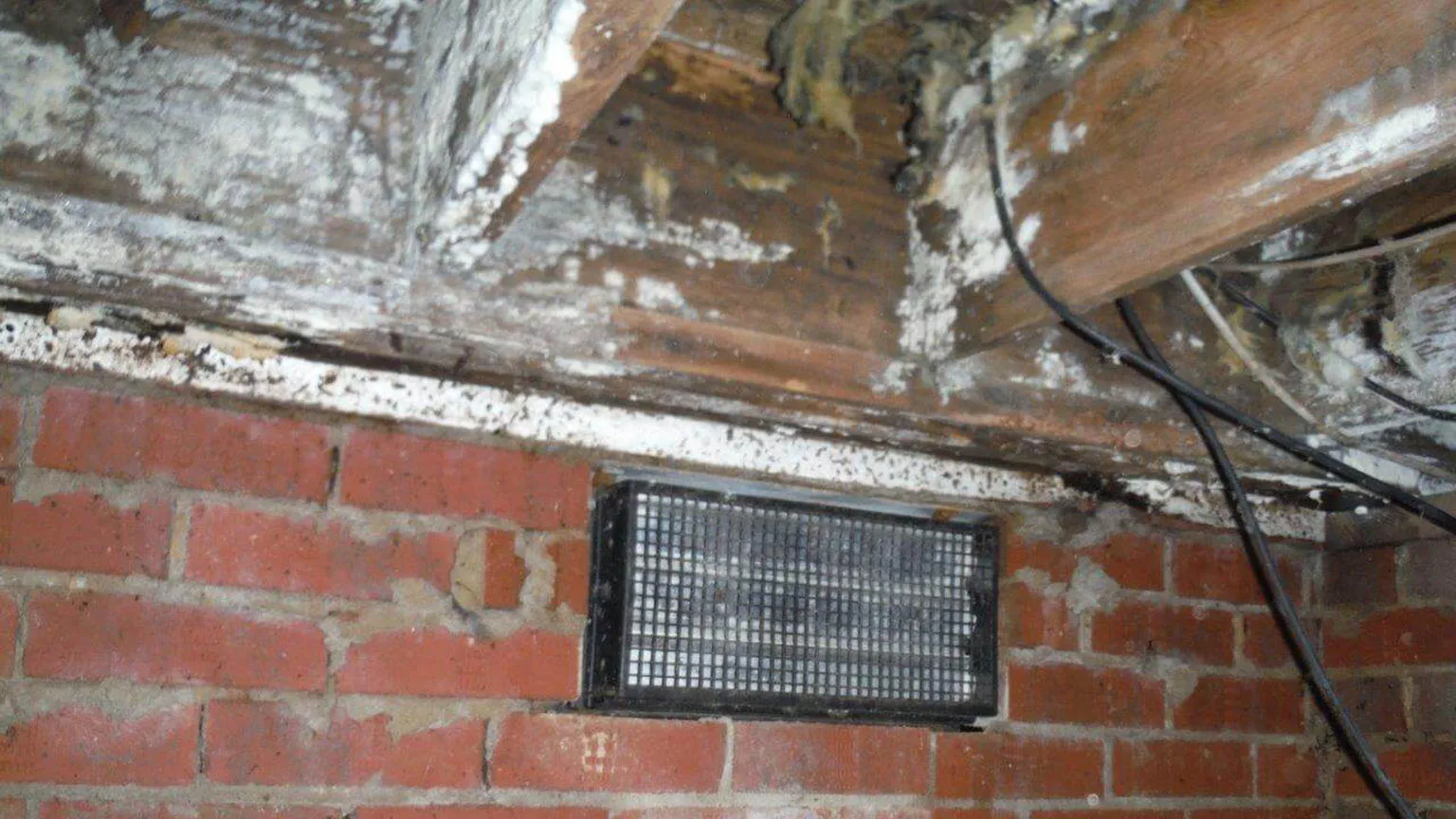
- What shape is the wood in? Damp rim joists, sagging insulation, or white bloom on the subfloor change the plan fast.
- Where does your yard drain? A downhill lot toward the Chattahoochee bluffs behaves very differently than a flat one.
That last one matters more than people think. Homes sloping toward the river get real water pressure during spring storms, while flatter streets near Peachtree Industrial Boulevard fight humidity instead. Same city, two problems, two answers.
So which one do we recommend?
For most crawlspace repair Peachtree Corners jobs, we recommend full encapsulation with a dehumidifier — but only after the water source is handled. Sealing a space that still takes on water just gives the water a nicer place to sit. Stop the source first, then protect the structure.
We recommend the lighter option when three things are true: the space has never held standing water, summer humidity stays reasonable, and the wood is dry and sound. Given that, a barrier plus drainage corrections is the right call, and we’ll say so even though it’s the smaller job.
Sometimes we tell people to hold off entirely. If your gutters are packed with fall leaf drop and a downspout dumps beside the foundation, start there and call us back in a season. Curious how the same decision plays out one town over? Our breakdown of Dunwoody crawl space repair covers a newer housing mix.
The day the diagnosis surprised everybody
Want the story that changes how people think about this? A homeowner in Amberfield called us about a musty smell in an upstairs hallway. Not the crawl space — upstairs. They had already replaced carpet and run an air purifier for months.
Air in a house moves upward, and that’s the whole explanation. Warm air escapes through the attic, which pulls new air in from the lowest opening it can find. Building science research shows a large share of the air you breathe on the main floor started in the crawl space. So the hallway wasn’t the problem. It was the exhaust pipe.
Down below, the barrier was long gone and the rim joists had a light white bloom. The CDC’s page on mold and your home explains why controlling moisture, not scrubbing surfaces, is what settles it. We sealed the space, closed the vents, and set a dehumidifier. The smell upstairs was gone inside a couple of weeks.
Picture your own house a month after. Floors feel warmer in January, because the space under them is no longer a wind tunnel. That smell at the top of the basement stairs is just gone. Better yet, when someone asks what’s under your floor, you actually know the answer.
Why hire folks who work on these houses every week?
Because a fifty-year-old block crawl space asks different questions than a 2015 build. We’ve been at this over twenty years, and we’re in this city constantly — close enough to Curiosity Lab that we know which streets slope which way.
You get the same crews, the same trucks, a written scope before anything starts, and a warranty you can hand to a future buyer. For the technical detail, our crawl space repair page lays out the systems, our guide to picking an encapsulation company covers what to ask on an estimate, and if water is also showing up downstairs, our post on a flooded basement is the better starting point.
Where we work around Peachtree Corners
We’re based in Lawrenceville, roughly twenty minutes northeast, so we’re down this way most weeks. That includes Peachtree Corners, Norcross, Duluth, Johns Creek, Dunwoody, Berkeley Lake, Sandy Springs, Suwanee, Alpharetta and the wider Gwinnett area. Odds are we’ve already been under a house near yours.
Questions Peachtree Corners homeowners ask us
With a full encapsulation, almost always yes. Once the vents are sealed, the space needs a way to shed the moisture that’s already in it, and a dehumidifier does that quietly in the background. If you’re only installing a floor barrier and leaving vents open, you usually skip it.
It depends on which system you have. Open vents made sense when the plan was to air the space out, but in a Georgia summer they let humid air in faster than it dries anything. Once a space is fully encapsulated, the vents get sealed permanently and the dehumidifier takes over.
Usually it does, because that smell is riding air that came up from below. After the space is sealed and humidity is held steady, most homeowners notice a difference within a few weeks. If a smell hangs on, that tells us there’s a second source worth chasing.
Most crawl spaces run two to four days, start to finish. Cleanout and any drainage work take the first stretch, then the liner goes in and gets sealed. Tight access or heavy debris adds time, and we tell you that up front rather than on day three.
Often a little, though we’re careful not to oversell it. Drier air is easier for your system to cool, and ducts running through a sealed space work less hard than ducts in a hot, humid one. Think modest savings plus a much more comfortable floor, not a dramatic drop.
Let’s find out what your Peachtree Corners crawl space is really doing
The inspection is free, the estimate is free, and nobody pressures you. We’ll take readings, show you photos of what’s under there, and tell you honestly if the smaller fix is the right one.
(678) 914-5112Serving Peachtree Corners and all of Metro Atlanta · $500 off projects over $3,500 · Live support 7am–8pm, 7 days a week