

Crawl Space Repair Dunwoody Homeowners Weigh Every July: Full Encapsulation or Just a Vapor Barrier?
Both options laid out fairly, the factors that actually decide it on a Dunwoody house, and a real recommendation — including when we’d tell you to skip the big one.
Why does the phone ring hardest in July? Because that’s when a Georgia summer walks into a cool crawl space and puts its moisture down. Most crawl space repair Dunwoody calls we take land between late June and early September, after weeks of sticky air, an afternoon storm pattern, and a smell that finally got loud enough to notice.
Good news, though: summer is a great time to find this. The problem is showing off, which means we can actually measure it. So let’s put the two real choices side by side, then we’ll tell you which one we’d pick standing under your floor.
Option A: what does full encapsulation really do?
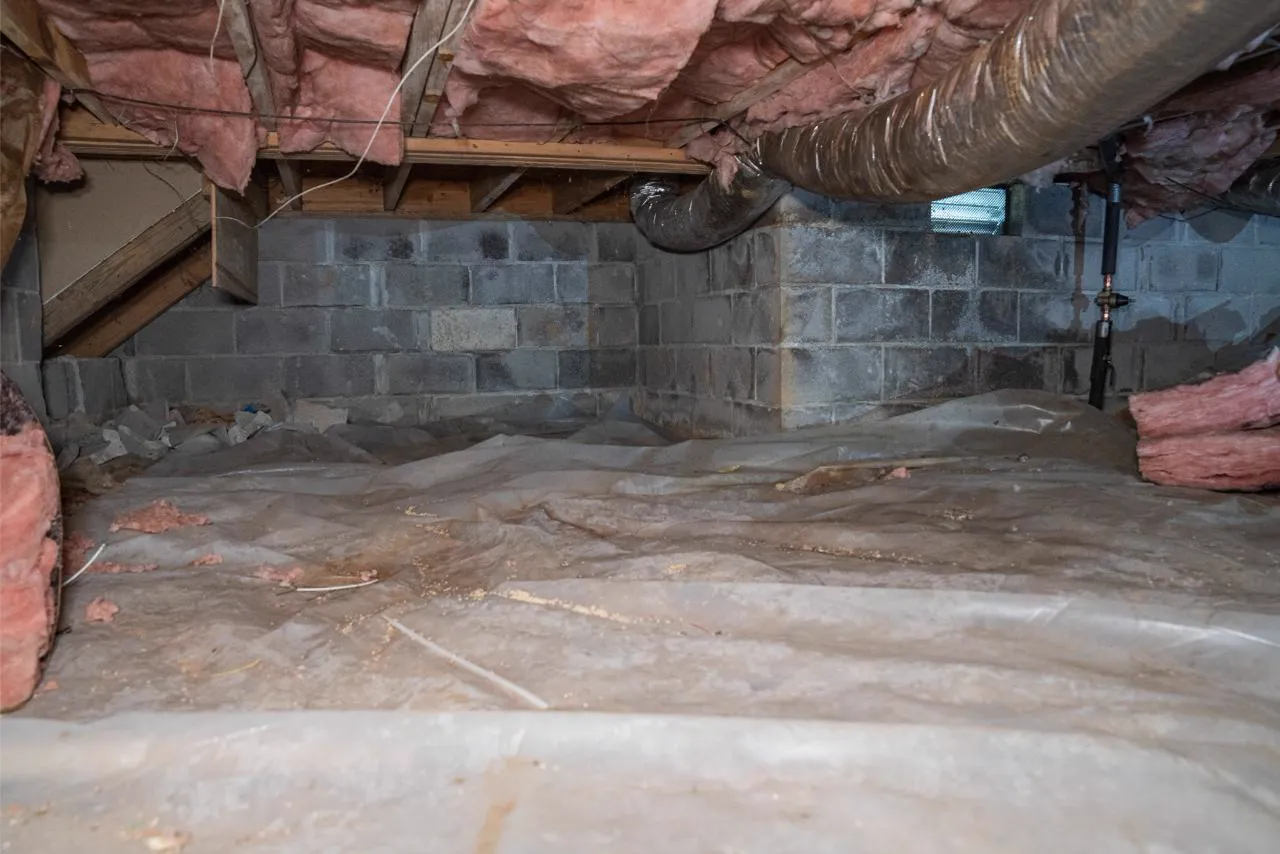
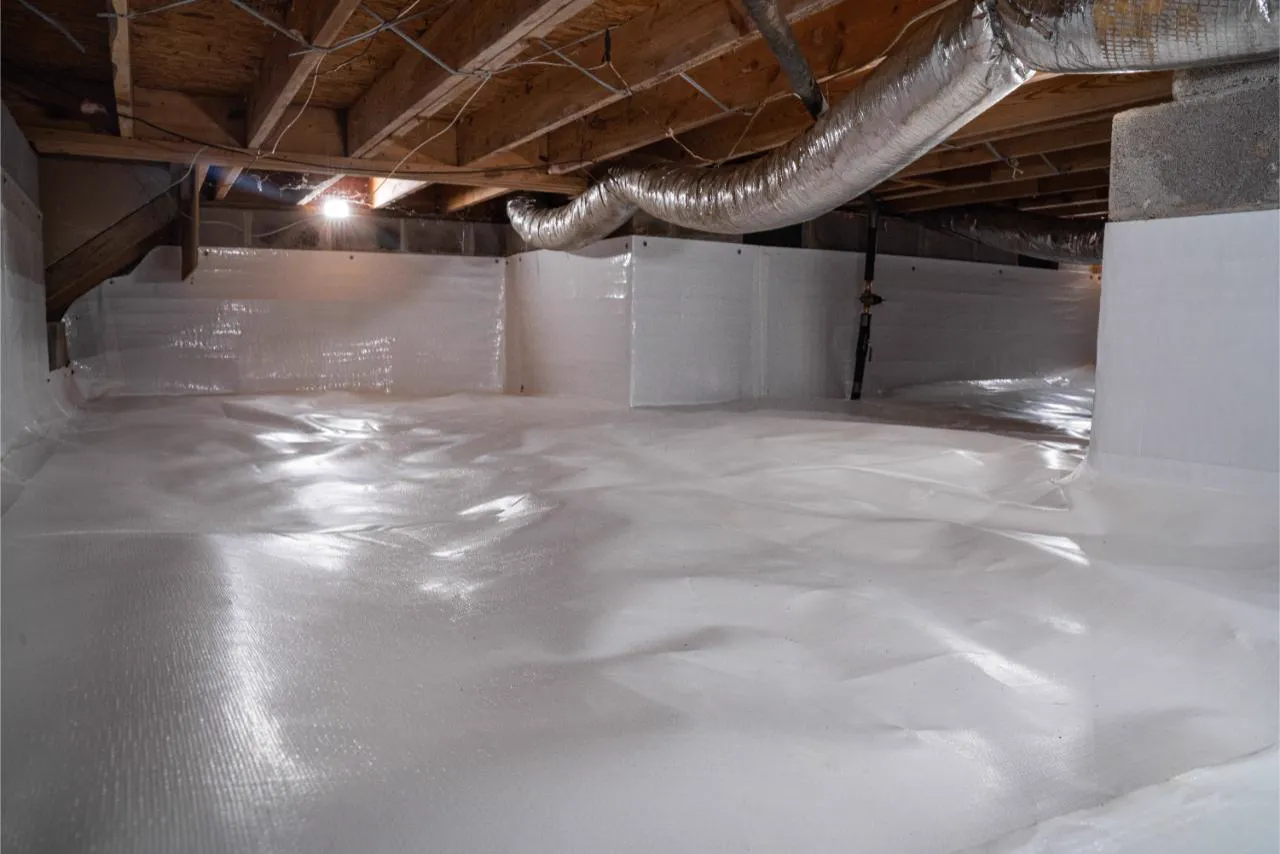
Think of it as moving the crawl space inside the house. A heavy reinforced liner covers the dirt and runs up the block walls, where it’s sealed and fastened. Seams get taped, piers get wrapped, and the vents get closed for good.
After that, a dehumidifier usually goes in to hold humidity steady. It drains outside or to a pump, so nobody has to crawl 30 inches on their belly to empty a bucket. Nobody signs up for that job, including us.
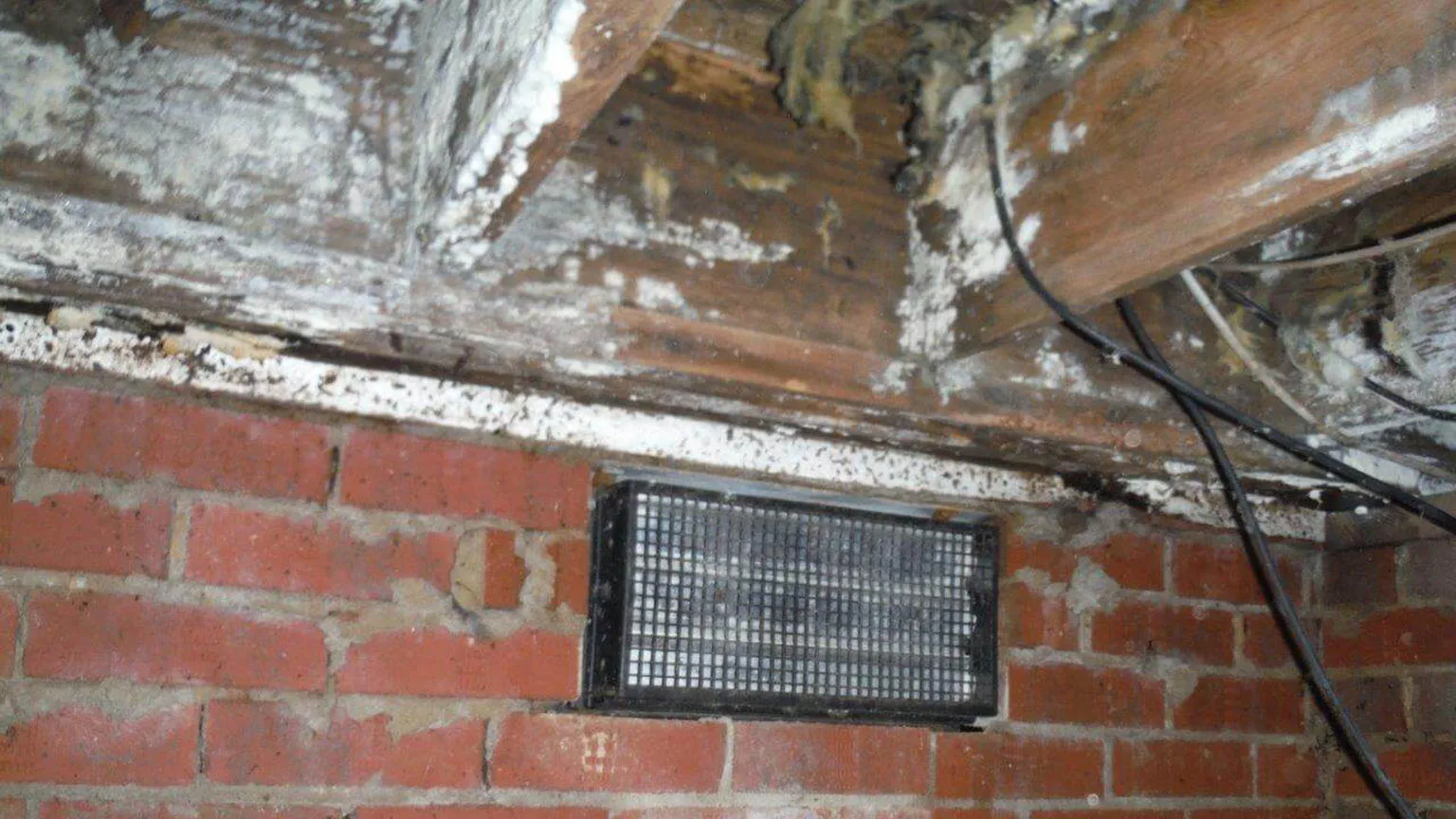
Why close the vents? Open vents were code for decades on the theory that outside air dries things out. In Dunwoody in July, that warm air hits cool crawl space surfaces and lets go of its water right there. That’s condensation, not drying — which is why a vented crawl space can feel damp during a dry spell.
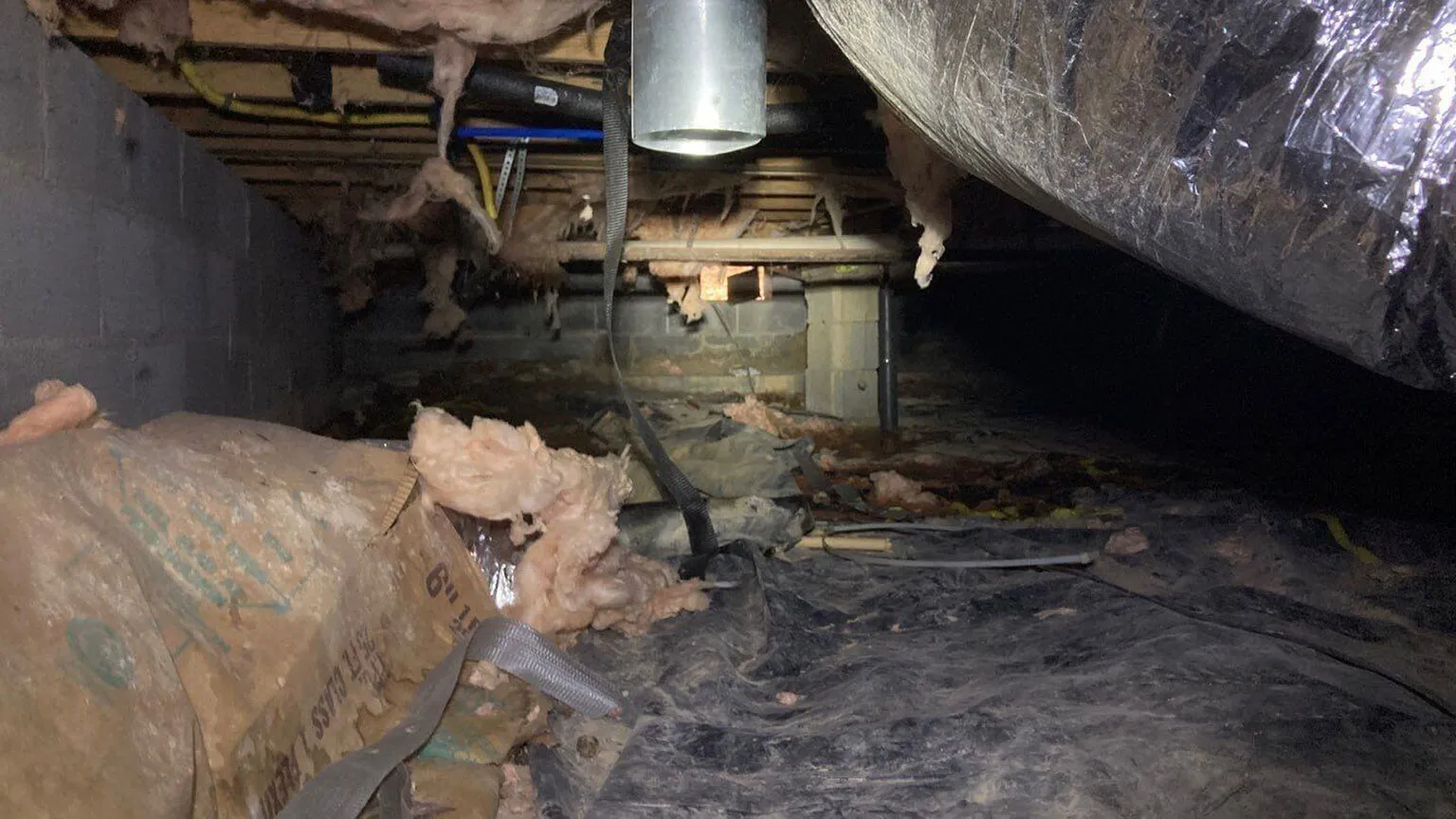
The finish is a space you’d walk through in clean socks. A homeowner over in Wynterhall told us the hallway above hers stopped smelling within about a week, and she’d stopped believing that was possible.
Worth knowing
Encapsulation is a moisture system, not a drainage system. If water actually runs into the space during a storm, that source gets fixed first — otherwise you’ve bought a very nice pond liner.
Option B: is a vapor barrier alone ever enough?
Yes, sometimes it genuinely is. We’d rather say that out loud than sell you something bigger than your house needs. The lighter path is a proper floor barrier plus fixing whatever lets water in, and it works on more crawl spaces than the internet admits.
Here’s the practical version. A real barrier goes over the dirt — not the thin builder sheeting somebody tossed down in 1974 — overlapped, sealed at the seams, and run up to the walls. Then we chase the water: gutters, downspouts, grading that tips toward the house, or a foundation vent sitting below grade.
Drainage handles the rest. If groundwater rises into the space, a perimeter drain and sump take care of it. Our page on crawl space repair walks through those parts piece by piece.
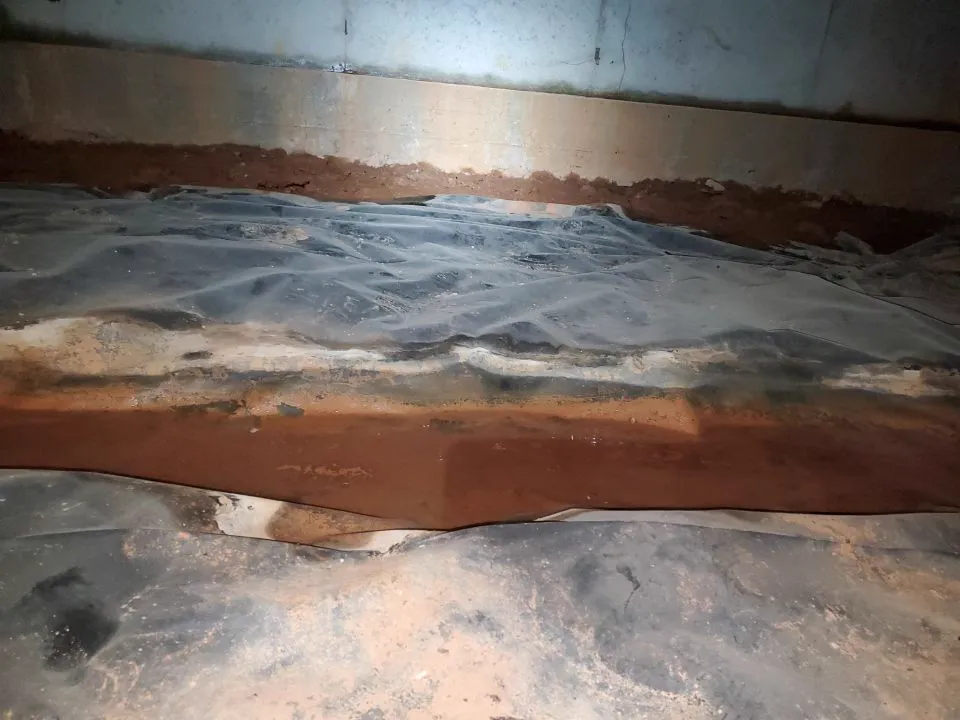
So why doesn’t every house stop there? A floor barrier blocks moisture rising from the dirt, but it does nothing about humid air pouring through open vents. Under the hardwood canopy around the Dunwoody Nature Center, the ground stays cool, the air stays wet, and the numbers never settle. That’s exactly when the bigger option earns its keep.
What would we want to know if it were our own house?
Fair question, and it’s the one we’d ask a contractor too. We’d want three numbers and one photo before anyone talked price.
First, the humidity reading, taken on a muggy afternoon rather than a cool morning. Second, the moisture content of the wood itself. Wood starts supporting mold growth around 20 percent moisture content, and in a vented Georgia crawl space in July, framing gets there regularly.
Third, we’d want to know where the water comes from — roof runoff, grading, groundwater, or just summer air. Then a photo of the worst corner, since that’s where the story is.
We don’t sell systems. We read numbers, then match the smallest fix that actually holds.
That’s also why we don’t quote by phone. Two houses a block apart off Chamblee-Dunwoody Road can need completely different work, because one sits high and dry and the other catches its neighbor’s runoff.
Side by side, honestly
Enough theory. Here’s how the two options stack up when we’re down there with a flashlight and a meter.
Full encapsulation
- Heavy reinforced liner on the floor and up the walls
- Vents sealed, so humid summer air stays outside
- Usually includes a dehumidifier you can check from your phone
- Holds humidity steady all year, not just after rain
- Costs more up front, and the dehumidifier draws some power
- Leaves a space clean enough for real storage
Vapor barrier and drainage
- Sealed floor barrier over the dirt, walls left open
- Water source handled: gutters, grading, downspouts
- Often finished in a day, sometimes two
- Costs noticeably less, with no equipment to run
- Won’t control humid air coming through open vents
- Plenty for sunny, high, well-drained lots
Notice that neither column says “better.” Once we’ve walked your lot and read the humidity, one of these is usually obvious — and the other becomes a conversation we can skip entirely.
What decides it on a Dunwoody house?
Four things, mostly. They show up on nearly every inspection we run between Dunwoody Village and the Perimeter.
The deciding factors
- How shaded is the lot? Sixty-year-old oaks and poplars keep the ground cool and damp far longer than an open yard does.
- Water, or just humidity? Standing water is a drainage problem. A steady 70-percent reading is an air problem.
- Where does the ductwork run? An air handler or ducts down there makes sealed-and-conditioned the smarter call.
- How old is the original work? Homes built between 1965 and 1985 are on their first everything, and first everythings wear out together.
That last factor carries extra weight here. Dunwoody’s split-levels and ranches were built when “waterproofing” meant a spray coat of asphalt on the outside of a block wall. Fifty years of Georgia clay later, those walls are telling on themselves — and bowing or cracked block is the signature problem in this town, so we check for it on every visit.
Terrain matters just as much. This is hilly ground, and plenty of homes sit below street grade with the foundation cut into a slope. A house in Branches may quietly handle water shed by two lots uphill, which is also the pattern behind a flooded basement repair a street over. If your crawl space stays wet after storms instead of during them, that’s the tell.

So which one do we recommend?
For most crawl space repair Dunwoody homes need, we recommend full encapsulation — but only after the water source is handled. Shaded lots, clay that holds water, ductwork underfoot, and finished rooms overhead all point the same way. On a 1970s ranch in Village Mill with the air handler down there, it isn’t a close call.
We recommend the lighter route when the space is dry, the lot drains well, and humidity stays reasonable through a muggy stretch. Then a good barrier plus gutter and grading work does the job, and we’ll say so even though the invoice is smaller. That call is building science, not sales, and the U.S. Department of Energy’s guidance on insulation and moisture control lines up with how we approach it.
Sometimes we recommend nothing at all today. If a downspout is dumping right against the foundation, we’ll extend it and ask you to call after the next real storm. An afternoon of gutter work has rescued more crawl spaces than any of us admit. Our guide to the best crawl space systems compares materials and warranties, and our Roswell crawl space repair breakdown covers a slightly different mix of lots and soils.
What does this have to do with the air upstairs?
More than most people expect, and this is the part that changes the decision. Your crawl space isn’t a separate room. It’s the bottom of a chimney, and the chimney is your house.
Air moves upward through a home — building folks call it the stack effect. Warm air leaks out near the roof, so replacement air gets pulled in from the lowest opening available. A meaningful share of the air you breathe in the kitchen started its trip down in the dirt.
That explains a few household mysteries. Hardwood cups in August, doors stick in summer and fit fine by Thanksgiving, and one upstairs closet smells like a campsite. The EPA’s plain-language page on mold and health is a good read if anyone in the house has allergies or asthma.
Here’s the relief, though: this is very fixable, and we handle it every single week. Dry the space, and the air riding upstairs is dry too. People tell us the difference shows up first in how the house smells when they walk in the door.
Week one, year one, year ten
Week one: the smell goes first. Humidity drops within a day or two, and by the weekend that hallway smells like nothing at all. Nothing is the goal.
Year one: the seasons stop showing up indoors. Floors hold their shape through August, doors latch the same in July as in January, and the HVAC quits fighting damp air.
Year ten: the liner is still doing what it did on day one, since there’s nothing in it to wear out. When you sell, a documented system and a transferable warranty quietly delete a question from the inspection report.
Why homeowners here hire us
Because you’ll get a written scope, proof of insurance, a warranty document, and photos of what we found before anything gets ordered. Folks here ask sharp questions and dislike being rushed, so we build proposals that hold up to a second reading. Same crews, same trucks, every visit — and technical questions are the best part of our day.
Where we work around Dunwoody
We’re based in Lawrenceville, about thirty minutes northeast, and we’re in this part of DeKalb County constantly. That includes Dunwoody, Sandy Springs, Brookhaven, Peachtree Corners, Chamblee, Doraville, Norcross, Tucker, Duluth and Atlanta’s northern perimeter. Odds are we’ve already been under a house near yours.
Questions Dunwoody homeowners ask
In our climate, closed almost always wins — but only once the space is sealed and has a way to shed moisture. Open vents let humid summer air in, and that air condenses on cool surfaces instead of drying them. If your crawl space is still vented and bare, leave things as they are until the barrier and dehumidifier are in place.
Usually yes, and faster than people expect. Because air travels upward from the crawl space into the living area, drying the source dries what you smell. Most homeowners notice a clear difference within the first week or two.
Most jobs run one to three days, depending on square footage and headroom. If drainage work is needed first, add a day or two for the trench and sump. We give you the timeline in writing before we start, so nobody is guessing.
Often a little, though we won’t promise a number. Dry air is easier to cool than damp air, so the system cycles less in summer. The dehumidifier uses some power of its own, which is why we treat savings as a nice bonus rather than the reason to do it.
If it’s sagging, wet, or falling off the joists, it comes out and gets hauled away. Wet batts hold moisture against the wood, so leaving them is the wrong call. In a sealed crawl space the walls get insulated instead of the floor above, which is what keeps the whole space stable.
Let’s see what’s really under your Dunwoody home
The inspection is free, the estimate is free, and nobody pressures you afterward. We’ll take photos, show you the humidity and moisture readings, and tell you honestly if the smaller fix is the right one.
(678) 914-5112Serving Dunwoody and all of Metro Atlanta · $500 off projects over $3,500 · Live support 7am–8pm, 7 days a week