

How to Find the Best Foundation Repair Duluth Homeowners Trust
What a real diagnosis looks like, which questions separate a plan from a pitch, and when the honest answer is “watch it.”
Somebody already tried to fix it. Maybe it was a bead of caulk pushed into a basement wall crack, or hydraulic cement smoothed on with a putty knife on a Saturday. Then, about a season later, the line came back a little wider. If you’re shopping for the best foundation repair Duluth has to offer, that failed patch is usually where the search actually begins.
Here’s the thing — the patch didn’t fail because the product was cheap. It failed because nobody asked why the crack was there in the first place. A crack is a symptom, so filling it just gives the house fresh caulk to move around. Good news, though: figuring out the “why” is very doable, and it’s the part that makes everything after it simple.
So why did that patch let go?
Because cracks are specific, and they don’t all say the same thing. A hairline vertical crack in a poured concrete wall is usually shrinkage from curing. Concrete gives off water as it hardens and pulls in on itself a little while it does, which means plenty of those lines show up early and never move again.
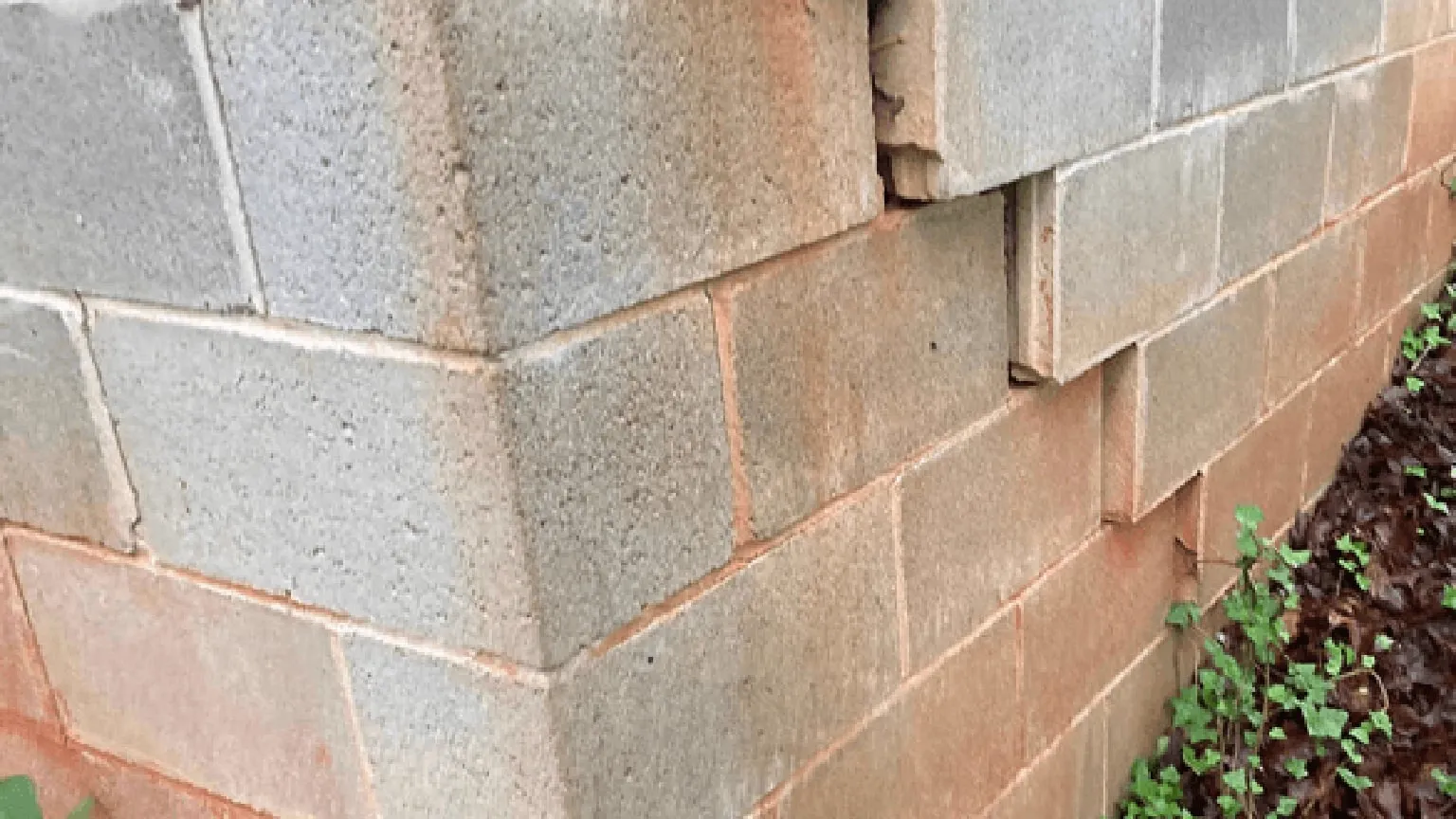
Stair-step cracks are a different conversation. When the line zigzags along the mortar joints in block or brick, that pattern points to differential settlement — one part of the footing has dropped more than the part beside it. In other words, the wall isn’t failing on its own. The dirt under one section moved.
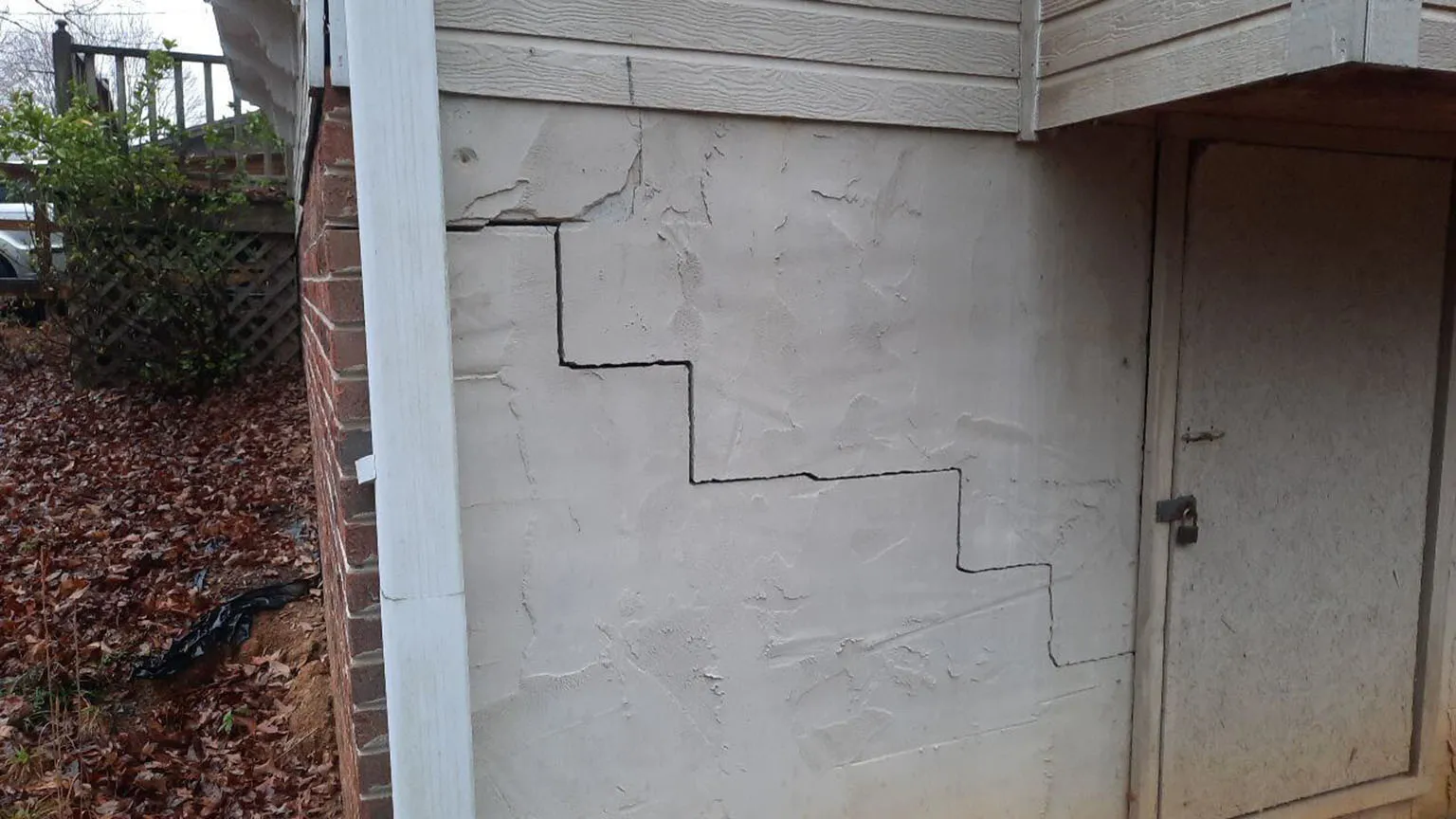
Then there’s the horizontal crack that runs side to side across a block wall. That one usually comes from lateral pressure — soaked soil leaning in from outside — so it calls for a completely different repair, because the load is sideways instead of down. All three are things we look at regularly, and each has a known fix. But a company that treats those three cracks the same way is guessing, and a guess tends to get paid for twice.
What makes Duluth homes move?
Start with the ground under them. Georgia red clay swells when it soaks up water and shrinks back when it dries out, so it’s more or less breathing under your footings all year. That slow swell-and-shrink cycle causes most of the settlement we see around Gwinnett. If you like the science behind it, the University of Georgia Extension’s soil resources explain our clay in plain language.

Then add the terrain. The Chattahoochee wraps the north and west side of town, and the golf-course neighborhoods roll hard, so homes in Sugarloaf Country Club, St. Marlo Country Club and The River Club often sit on cut-and-fill lots with walkout basements. Part of that foundation rests on original ground while part rests on fill — and those two halves don’t always settle on the same schedule.
Age matters too. Much of the city went up between 1985 and 2005, which means the original drainage in a lot of subdivisions has had thirty years to silt up quietly. Meanwhile, the older homes near downtown and Parsons Alley are their own animal: crawl spaces, often with no vapor barrier, where bare damp soil sits open under the floor and keeps the framing humid all year.
Drive Duluth Highway (GA-120) from the historic core out toward the Gas South District and you’ll pass three different eras of building in about ten minutes. That’s why a single stock recommendation doesn’t fit this city. What’s under a 1994 walkout basement and what’s under a 1930s crawl space are not the same problem wearing different siding.
Can we clear up the myth we hear on almost every estimate?
Homeowners say it to us constantly: “We heard that once a foundation cracks, you need piers.” It’s a tidy idea. It’s also wrong often enough to cost people real money.
Piers exist to carry a footing that is still sinking down to soil that won’t move. So if your footing isn’t sinking, piers solve a problem you don’t have. Plenty of cracks are dormant — they moved once, years ago, and then stopped. The honest first step is to measure the width, write it down with the date, and look again in a few months. If nothing changed, sealing it against water is the entire job.
Worth saying out loud
Sometimes the right answer is monitor and seal, not underpin. A company willing to tell you that — knowing it’s the smaller ticket — is usually the one worth hiring.
We’d rather leave an estimate having talked you into patience than into piers you didn’t need. Either way you get the truth in writing, and you get to decide from there.
What does a real diagnosis look like?
It looks like measuring things before anyone says a price. A proper visit includes elevation readings taken across the floor, so we can see how far a slab has dropped and exactly where. Crack widths get measured and recorded rather than eyeballed. After that, the inspection heads outside to look at grading, downspout discharge, gutters, irrigation lines and where the lot sheds water after a hard storm.
Then comes the part most homeowners never get handed: a stated theory. Not “you need eleven piers,” but “here’s why we believe this corner dropped, and here’s what we’d do about the water that caused it.” A pier count without a theory is just arithmetic. What’s more, if a plan never mentions the water, it’s treating the symptom — because red clay doesn’t move on its own. It moves when it gets soaked, then baked, then soaked again.
A pier count is an answer. A diagnosis explains the question.
How do you read a foundation estimate?
Slowly, and with a pen. The best foundation repair Duluth homeowners can hire will hand over a scope you can actually read: what’s installed, how many of them, where they go, how deep, and what happens to the water afterward. A weak proposal says “foundation stabilization” and a total.
Fair questions to ask before you sign anything
- How many piers, and why that number? The answer should tie back to the elevation readings, not to a hunch.
- How deep do you expect to go? Ask what happens to the price if load-bearing soil turns out deeper than estimated.
- Are you stabilizing the house or attempting to lift it? Those are two different goals with two different results.
- What does the warranty actually cover? And does it transfer to the next owner when you sell?
- Will an engineer be involved? Also ask how they feel about you hiring your own.
- What’s the plan for drainage? Since water started this, water should show up in the fix.
Red flags get easy to spot once you’ve asked those. Be careful with a pier count quoted before anyone measured a single thing, or a price that only holds if you sign today, since honest numbers don’t expire at dinnertime. Watch for a scope with no written detail, a refusal to even discuss monitoring a crack that may be dormant, and any visit where every crack in the house is treated as urgent.
On a larger job, an independent structural engineer’s stamped report is worth considering. It costs you a little up front, but it gives you a scope written by somebody with nothing to sell. Any good contractor will be fine with that — we certainly are, and we’ve built plenty of jobs off an engineer’s drawings. If you want background on how homes are supposed to be built and inspected, the International Code Council’s building safety resources are a solid place to start.
Cost-wise, we’ll be straight with you. A single crack that turns out dormant sits at the very low end, while a run of piers along a settled corner with drainage corrections lands much higher. What moves the number is pier count, depth to solid soil, access around the house, whether interior finishes have to come out, and how much of the drainage needs rebuilding. You’ll get one written figure after we walk it — never a mystery total.
Ever wonder why the upstairs door stopped latching?
Here’s the part nobody connects to the basement. Doors and windows that suddenly stick, plus cracks radiating out from door frame corners upstairs, are often the very first symptoms a homeowner actually notices. The foundation crack came first. The bedroom door is simply louder about it.
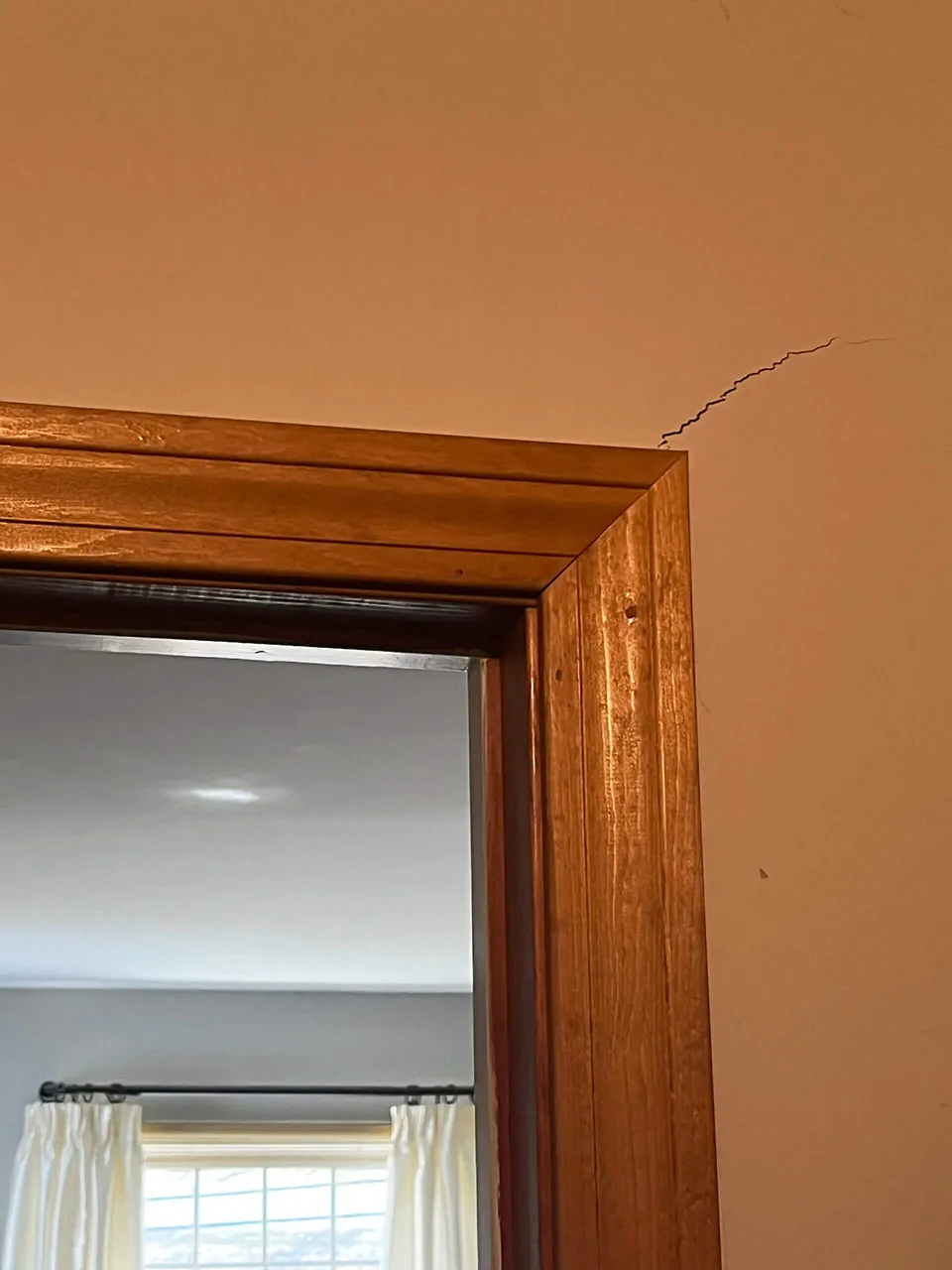
A house is one connected frame, so a footing that drops a fraction of an inch shows up two floors away as an opening that’s no longer square. That’s why you’ll also see grout lines cracking in a tile floor, nail pops down a hallway, or a small gap opening where crown molding meets the ceiling. None of it is dramatic. It’s just the house passing a message upstairs.
Crawl space homes send a different message. Once damp soil sits uncovered underneath, that moisture rises into the floor system, and suddenly the living room feels sticky in July no matter what the thermostat says. Sealing the ground and fixing the drainage usually calms all of it down at once.
Now picture the after, because this is the whole point. Duluth basements are working basements — in-law suites, home offices, kids’ rooms. When one gets damp here, it isn’t storage getting wet. It’s somebody’s bedroom. Once the movement is stopped and the water has somewhere else to go, that room goes back to being a room. The next big storm rolls through, and you don’t think about it. You just listen to the rain.
Why we might be the right fit
We’re about fifteen minutes away in Lawrenceville, and we’ve been doing this for over twenty years. That means we already know how a 1990s walkout in a golf-course neighborhood behaves, and how a downtown crawl space behaves, and why those two houses need different plans. Familiar housing stock makes for faster, more honest diagnoses.
Word travels fast in these neighborhoods, which honestly keeps us sharp. Picking the best foundation repair Duluth has available comes down to who explains the most and sells the least — so we’d rather earn the next three calls on your street than oversell the first one.
Want to dig deeper first? Our fuller guide covers what foundation repair actually involves step by step, while the foundation repair methods we use are laid out in detail. If a single crack is your whole concern, start with foundation crack repair. And if family up the road is comparing options too, we cover the same ground for Suwanee best foundation repair.
Where we work around Duluth
We’re on these roads constantly, from the streets off Pleasant Hill to the river side of town near Rogers Bridge. Beyond Duluth, we work in Johns Creek, Suwanee, Berkeley Lake, Peachtree Corners, Norcross, Lawrenceville, Buford, Sugar Hill and Dacula, plus the wider Gwinnett area. There’s a good chance we’ve already been on a street near yours.
Questions Duluth homeowners ask us
Sometimes, though not always. Humidity swells wood doors seasonally, so a door that sticks in July and behaves in January is usually just wood being wood. But if several doors or windows start binding around the same time, and you’re also seeing diagonal cracks at frame corners, that pattern points to movement and is worth an inspection.
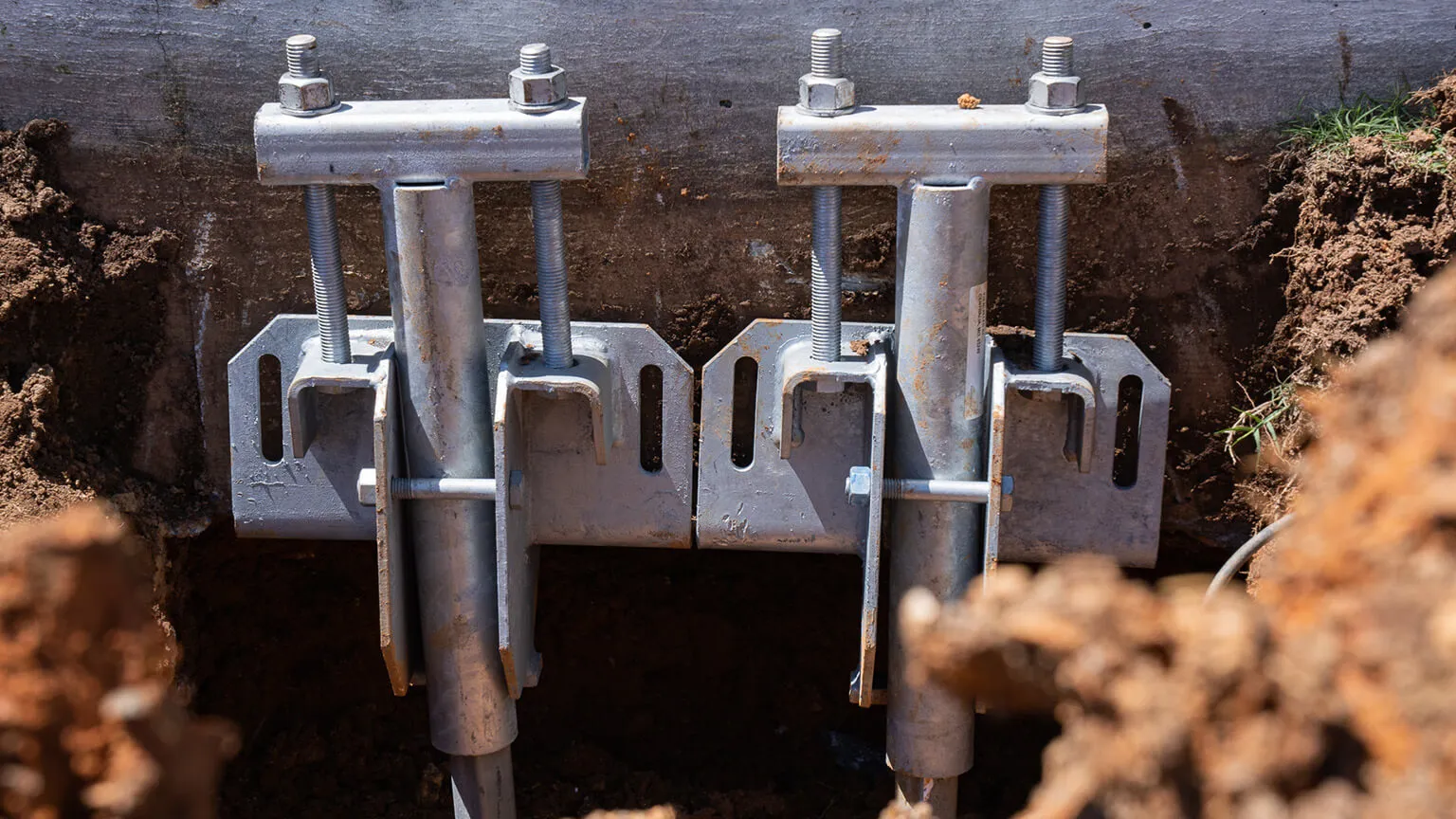
A helical pier is a steel shaft with plates welded on like screw threads. We turn it into the ground beside the footing until it reaches soil dense enough to carry weight, then a bracket ties your footing to that shaft. After that, the load rests on stable ground instead of on clay that keeps changing size.
Documented, completed repair usually helps rather than hurts. Buyers get nervous about unexplained cracks, so a written scope, photos and a transferable warranty answer the question before an inspector raises it. Ask whether the warranty follows the house, because that paperwork is what buyers and agents actually want to see.
Most residential jobs run one to four days. Crack sealing is often a single visit, while a row of piers along one corner typically takes two or three days including cleanup. Adding drainage work or restoring finished space stretches the schedule a bit, and we’ll tell you the honest timeline before you commit.
Often yes, as long as the staging follows the diagnosis instead of the budget. Drainage corrections usually come first, since water is what starts the movement. Structural work on the actively settling section comes next, and cosmetic repairs wait until everything has stopped moving, which saves you from patching the same wall twice.
Let’s find out what your Duluth foundation is actually doing
The inspection is free, the estimate is free, and nobody pressures you at the end. We’ll take the readings, measure the cracks, walk the outside of your home, and tell you plainly what we think is happening — including the times the right answer is to watch it and seal it.
(678) 914-5112Serving Duluth and all of Metro Atlanta · $500 off projects over $3,500 · Live support 7am–8pm, 7 days a week