

How to Hire the Best Foundation Repair Suwanee Homeowners Can Count On
What a real diagnosis looks like, how to judge a pier count, and when the right answer is simply to watch it.
You smelled it before you saw it. That faint, earthy, cool-dirt smell near the bottom of the basement stairs showed up weeks ago, and then one Saturday you slid a storage bin over and found a thin line stepping down the block wall. So now you’re hunting for the best foundation repair Suwanee has on offer, and every company’s website promises the same four things. Good news? There’s a far better way to sort them out than price.
Here’s the thing: foundation companies don’t really compete on cost. They compete on diagnosis. Two crews can stand at that same crack and walk away with completely different theories — and only one of those theories keeps the wall still five years from now.
Why do Suwanee houses move at all?
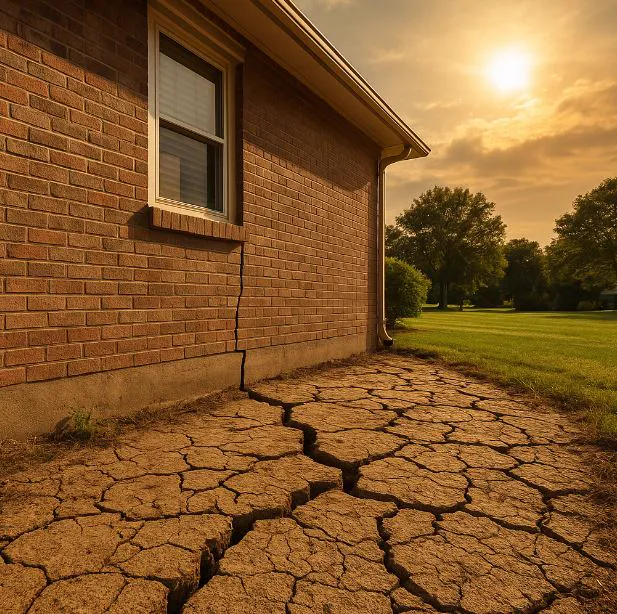
Start with the dirt under your feet. Georgia’s red clay is what soil scientists call expansive, which means it swells when it takes on water and shrinks back down when it dries out. That slow seasonal push and pull is the single biggest driver of foundation movement in our region, and the University of Georgia Extension has plenty of plain-English reading on how our soils behave. Clay basically has two moods, and your footing feels both of them.
Then add our terrain. Suwanee sits on rolling hills that feed Suwanee Creek, so daylight and walkout basements are everywhere. Low, shady lots like the ones near Sims Lake Park and George Pierce Park hold moisture long after a storm, while a ridge lot up off Moore Road sheds water fast and dries hard in August. Same city, two very different soil stories.
Now add timing, because this part explains your whole street. Suwanee grew up in one fast wave in the late nineties and early two-thousands, so a huge share of homes here are hitting the twenty-to-thirty-year mark at the same moment. Your neighbor’s crack in Laurel Springs isn’t a sign anybody neglected anything. It’s a birthday.
One more local quirk deserves a mention. Plenty of original sump pumps in these houses have no battery backup, so they quit during the exact storm that knocks the power out. Water then sits against a footing for hours, and saturated clay is heavy clay. Luckily that’s one of the cheapest things on this page to fix, and a backup unit goes in during a single visit.
What should a good company do differently here?
Ask yourself one simple question after each estimate: did anybody actually measure anything? A real foundation diagnosis starts with elevation readings taken across your floor, corner to corner, written down as numbers. Those readings show whether your house is level, tilted, or dished in the middle, and they become the baseline everything else gets judged against.
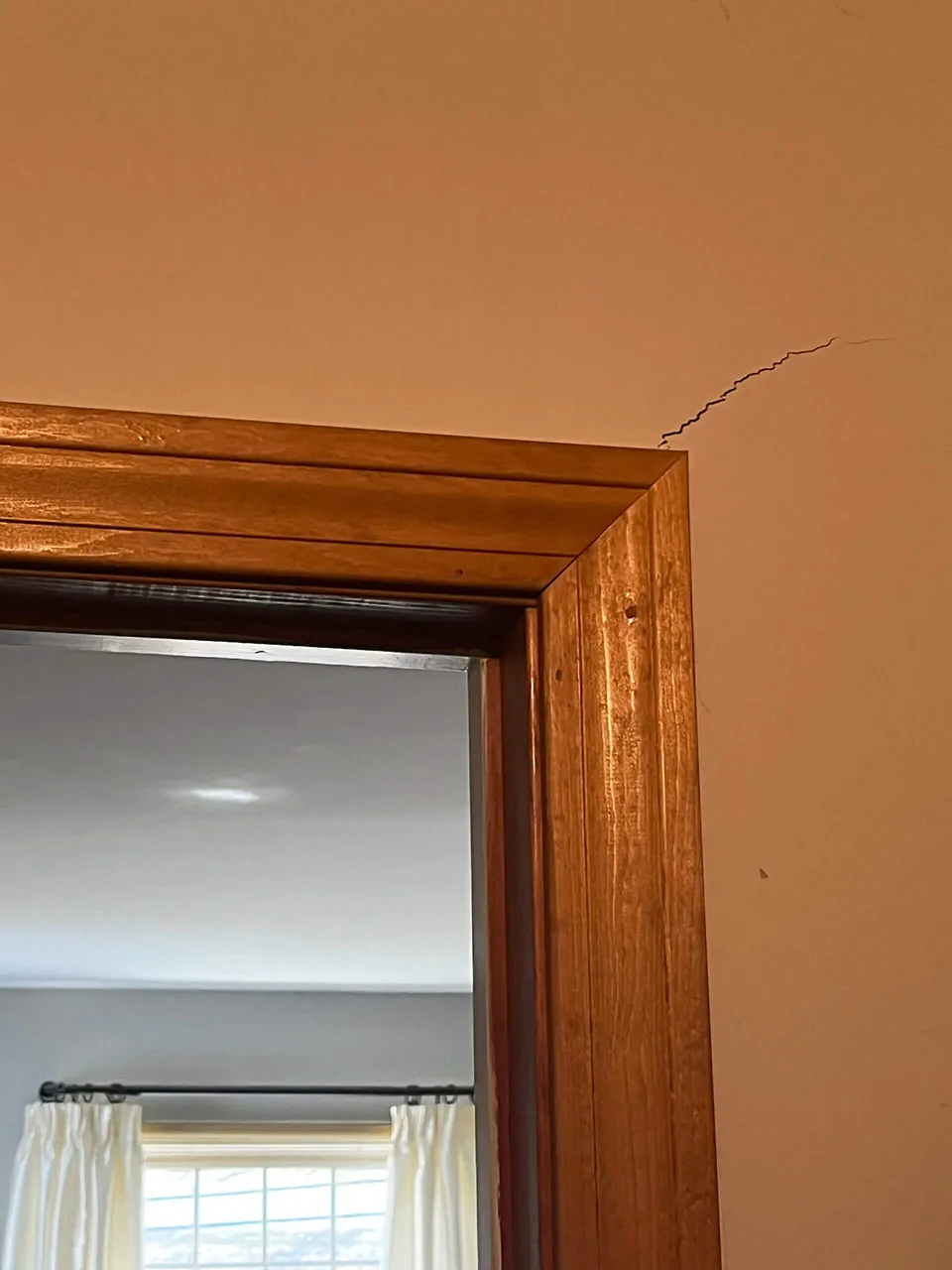
Next comes the crack itself. It should be measured at its widest point, recorded in writing, and dated. A crack with a number and a date attached is evidence, while a crack that only got pointed at is a conversation piece.
After that, the inspection needs to go outside. We look at how the ground slopes in the first ten feet, where downspouts let go, whether the buried lines still carry, and whether an irrigation zone has been quietly soaking one corner for years. Since water drives the clay and the clay drives the movement, skipping the yard means treating a symptom.
Good news
Most homes we inspect are not failing. They’re responding to water they can’t drain. Once we say why we think the movement happened, you get to judge whether the reasoning holds up — which is the whole point.
Finally, they owe you a theory. Not a pier count — a reason. Something like “this corner is dropping because the downspout above it has been feeding that soil for a decade.” A number without a cause is just a price tag with a story missing.
Not every crack means the same thing
This part is worth ten minutes of your life, because it changes how you hear every bid. A thin vertical hairline in a poured concrete wall is usually shrinkage from curing, and those are extremely common in houses of this era. Stair-step cracking through block or brick points somewhere else entirely — that pattern suggests one part of the house has settled more than another.
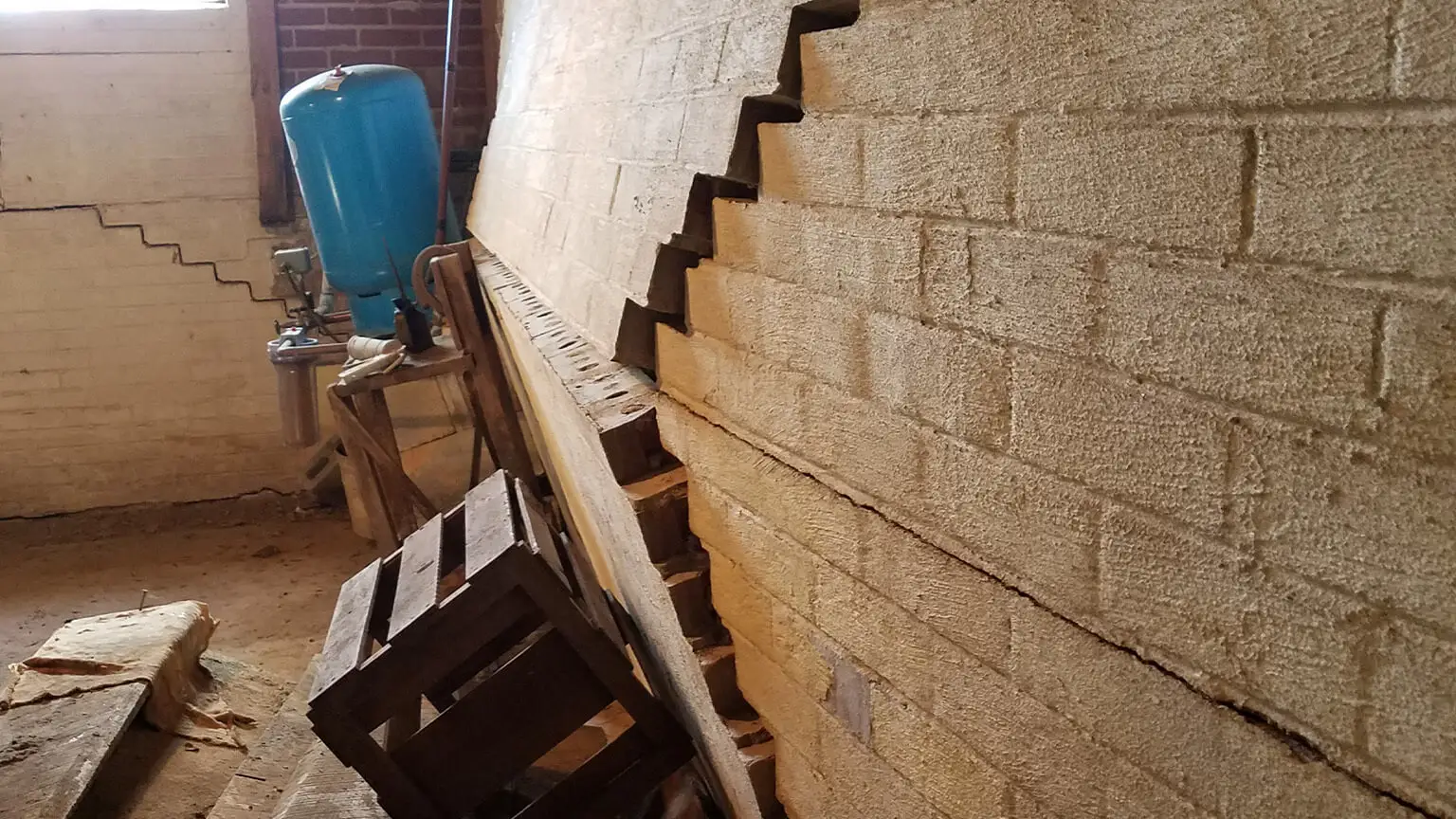
Horizontal cracking is its own category. When a wall cracks straight across and bows inward, wet clay is pushing sideways against it, so the repair is bracing and drainage rather than piers underneath. Three patterns, three causes, three plans. A contractor who treats all of them as the same job is guessing, and guessing is expensive.
What’s the easier first step nobody mentions?
Ready for the option most homeowners never hear? You can monitor it. Draw a light pencil line across each end of the crack, write today’s date beside it, measure the width, then take one photo a month with a coin held next to it for scale. That’s it. Total cost: a pencil.
Six months of nothing is real information. A crack that hasn’t grown through a wet spring and a dry August is behaving like a dormant one, which changes the conversation from underpinning to sealing. On the other hand, a crack that visibly widens between March and June has told you something urgent-free but genuine, and you’ll walk into every estimate holding the proof.
While you’re at it, look up your own lot. The USDA Web Soil Survey lets you draw a box around your property and read what’s under it, including how shrink-swell prone it is. Homeowners around here love this, because folks in Suwanee neighborhood groups tend to arrive at estimates already well informed.
On larger jobs, one more move is worth considering: hire an independent structural engineer for a stamped report before anyone bids. You pay for it yourself, so the recommendation isn’t tied to selling a product. Any contractor worth hiring welcomes that report instead of bristling at it. We’ve handed engineers our elevation readings plenty of times, and honestly it makes our job easier.
The recommendation we give most often isn’t piers. It’s “fix the water, seal it, and keep an eye on it for a season.”
How do you read a pier estimate?
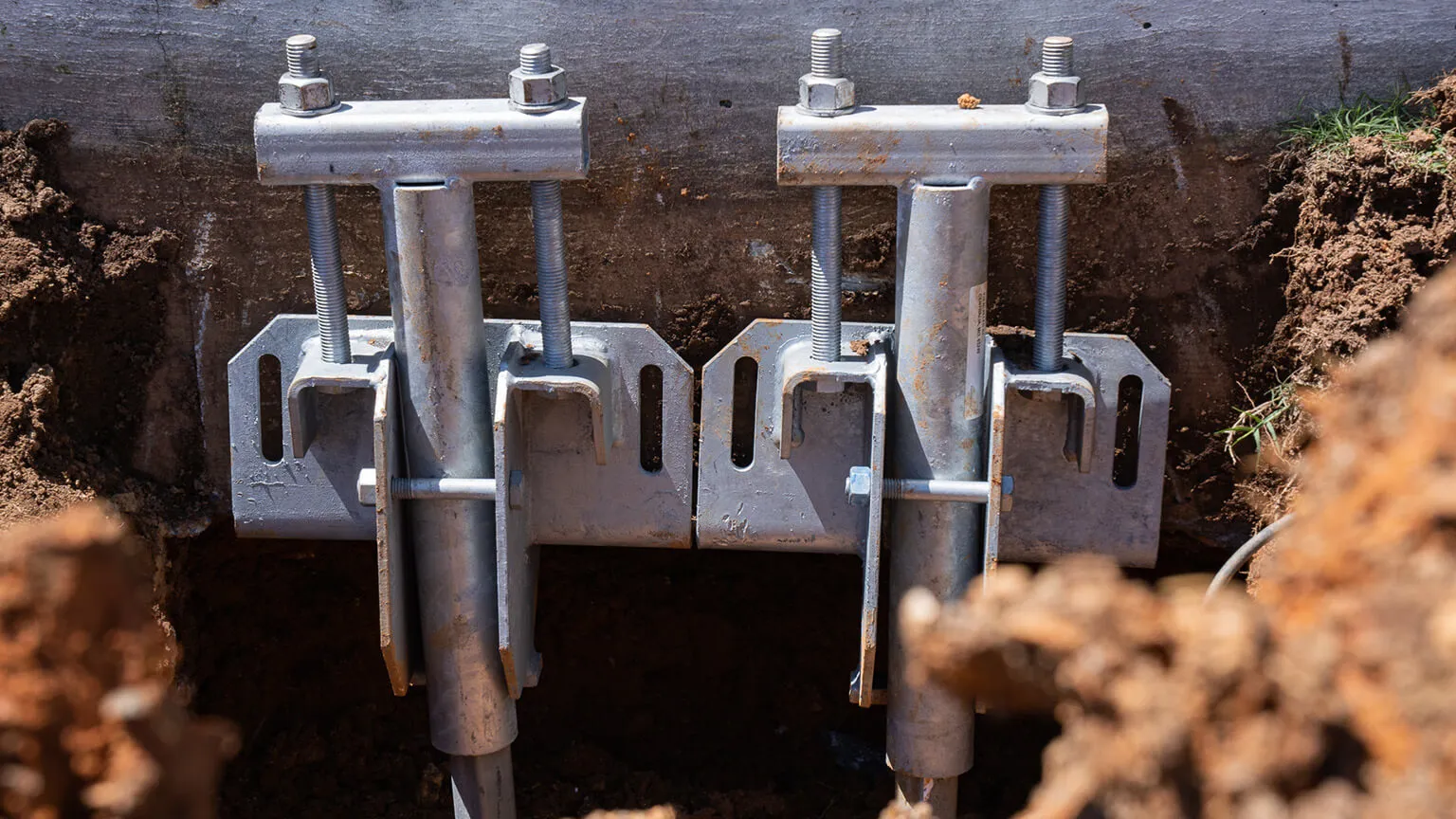
Slowly, and out loud if it helps. A solid proposal names how many piers, where each one goes, how deep the crew expects to drive them, and what the plan is if competent soil turns out to be deeper than the estimate assumed. Depth drives cost more than almost anything else, so that answer should exist in writing before work starts, not after.
Fair questions to ask before you sign anything
- How many piers, and why that many? The reasoning should tie back to your elevation readings.
- How deep do you expect to go? And what happens to the price if you hit competent soil deeper than planned?
- Are we stabilizing or lifting? Holding a house still and pulling it back up are two different goals with two different outcomes.
- What is the plan for the water? If drainage isn’t addressed, the clay keeps cycling.
- What exactly does the warranty cover, and does it transfer when I sell? Ask for it on paper, not out loud.
- Will an engineer be involved? Either answer can be fine, so long as it’s a clear one.
- Who is on the crew? Your own people, or whoever’s free that week?
Red flags get easy once you’ve asked those. Be careful with a pier count quoted before anyone measured a single elevation, because that number came from a price sheet rather than your house. Watch for pressure to sign the same day, a scope with no written measurements, or a flat refusal to discuss monitoring a crack that might well be dormant. Treating every crack as an emergency is a sales posture, not an assessment.
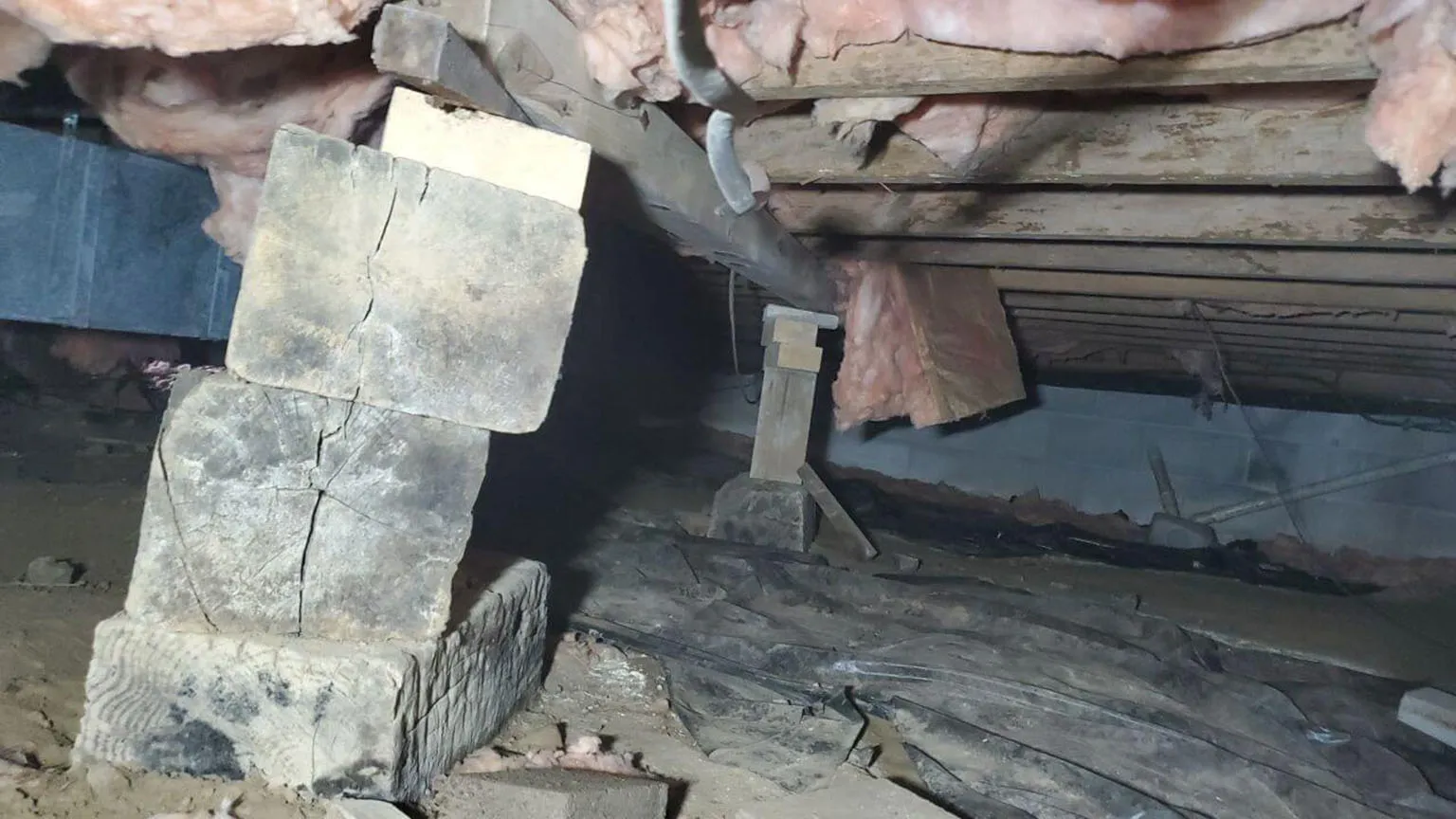
About money, we’ll be straight with you. Sealing a dormant crack and correcting drainage lands at the very low end of the range, while a corner of the house on helical piers sits much higher, and a full wall higher still. What moves the number is pier count, depth to competent soil, access for equipment, and whether landscaping or a patio has to come apart and go back. You’ll get one written figure with the scope spelled out — never a “starting at.”
The house that wasn’t what anyone thought
Want the inspection that surprised everybody? A homeowner over near Olde Atlanta Club called us about stair-step cracking on the garage side of the house. Two previous bids had come in for a dozen-plus piers, and understandably nobody was sleeping great.
Then we ran elevations. The floor came back within a normal range across the whole footprint, with one modest dip at that corner and nothing else out of line. Meanwhile the crack itself had painted edges from a repaint years earlier, and the paint was still intact inside the crack — which tells you it hadn’t moved much since the brush went by.
Outside, the picture finally made sense. A big water oak sat right at that corner, pulling moisture out of the clay all summer, while an irrigation head on the other side of the walk soaked the same footing three mornings a week. Wet clay on one side, thirsty clay on the other, year after year. Not a failing foundation — a moisture seesaw.
So the plan came in far smaller than the pier bids: move the irrigation head, extend two downspout lines well past the corner, correct about fifteen feet of grade, seal the crack, and re-measure in six months. No underpinning at all. That homeowner didn’t need rescuing, and telling them so cost us a big invoice we were happy to lose.
Picture where that leaves you. You know what your house is doing, you have numbers in a folder, and the crack you kept staring at is now a solved thing instead of an open question. That’s the real feeling people describe afterward — not relief so much as pride. My house is solid, and I take care of it.
Why we might be the right fit
We’re in Lawrenceville, about fifteen minutes south of Town Center, and we’ve been doing this for more than twenty years. Because of that, we’ve walked plenty of the same floor plans you’d find in The River Club and along the older streets nearby, and familiar housing stock makes for faster, better diagnoses. If we warranty something, you’re calling us — not a call center three states away.
Still figuring out what’s happening down there? Our deeper guide to foundation repair costs and methods here in town walks through the whole process, and you can see the foundation repair services we offer in full detail. If it turns out the crack is the whole story, foundation crack repair covers that smaller job. Comparing notes with family south of here? We do the same work as a Peachtree Corners foundation contractor.
Where we work around Suwanee
We’re in and out of this area constantly, from the walkout basements along the creek corridor to the ridge lots up above it. Beyond Suwanee, we work in Duluth, Buford, Sugar Hill, Johns Creek, Lawrenceville, Cumming, Dacula, Norcross and Peachtree Corners, plus the wider Gwinnett and south Forsyth area. Odds are we already have a truck near your street.
Questions Suwanee homeowners ask us
Think of a giant steel screw turned into the ground until it reaches soil that doesn’t swell and shrink with the seasons. A bracket then connects your footing to that steel, so the house rests on stable ground instead of moving clay. Because they’re screwed in rather than hammered, we can measure the torque as we go and know when we’ve reached solid support.
Usually the opposite, as long as you keep the paperwork. Buyers in this market get nervous about cracks with no explanation, so a documented repair with a transferable warranty answers the question before it’s asked. What actually costs people money at closing is an unexplained crack and no records to go with it.
Most pier jobs run one to three days on site. A single corner can be done in a day, while a longer wall with more piers takes two or three, plus a little time to put landscaping back. Drainage corrections and crack sealing are usually a single morning.
Often yes, and we’ll tell you honestly when staging makes sense. Drainage and grading generally come first, since fixing the water sometimes settles the whole question. Then we re-measure, and if piers are still the answer, we start with the area showing the most movement.
Yes, and you should read it before you sign. Ask what it covers, what would void it, and whether it transfers to the next owner, because those three answers vary a lot between companies. Ours comes to you in writing with the scope attached, so nothing depends on remembering a conversation.
Let’s find out what your Suwanee foundation is really doing
The inspection is free, the estimate is free, and nobody pushes you at the end. We’ll take elevation readings, measure the crack, walk the yard, and tell you plainly what we think caused it — including the times the honest answer is to seal it and watch it.
(678) 914-5112Serving Suwanee and all of Metro Atlanta · $500 off projects over $3,500 · Live support 7am–8pm, 7 days a week