

How to Judge the Best Foundation Repair Alpharetta Homeowners Keep Recommending
What a real diagnosis includes, how to compare pier counts, and when the honest answer is to watch and wait.
Who does the best foundation repair Alpharetta homeowners can actually count on? Short version: the company that shows up with a level, a crack gauge and a pen, then prices your house after it measures. Everything below is simply how you spot that company in a driveway full of bids.
Because two crews can stand in the same basement, study the same crack, and hand you proposals that differ by a factor of four. Neither one is lying, exactly. They diagnosed different problems, and only one diagnosis came from measurements.
Why do Alpharetta houses move?
Let’s talk about the dirt first, since it’s doing most of the work. This part of Fulton County sits on red clay over weathered granite, and clay is a moody neighbor — it swells when soaked, then shrinks back when it dries. That cycling under your footings causes most of the settlement we see around here.
Add the terrain, because rolling lots and the Big Creek floodplain gave Alpharetta plenty of graded, walkout basements. Then add timing, which explains your street better than anything else: most of the core housing stock went up between 1985 and 2005.
So the original drainage and waterproofing are all wearing out on roughly the same schedule. Alpharetta’s boom-era subdivisions are now old enough that those systems have simply given up, even on homes that look brand new from the curb.
You see it in Windward, in Haynes Manor, and out along the Country Club of Roswell edge, where the sump pump is still the one the builder dropped in the basin. Plenty were undersized to begin with, and thirty years is a long shift for one small motor. Good news, though — that’s a cheap thing to fix.
Curious what’s under your own lot? The USDA Web Soil Survey maps soil types by address for free, and ten minutes there makes you a much sharper estimate reader.
What does a real diagnosis include?
Four things, and you can check for all of them without knowing anything about piers. First, elevation readings taken across the floor, so there’s a map of where the house sits high and where it dropped. “The northeast corner is an inch and a quarter low” is a finding. “It looks settled” is an impression.
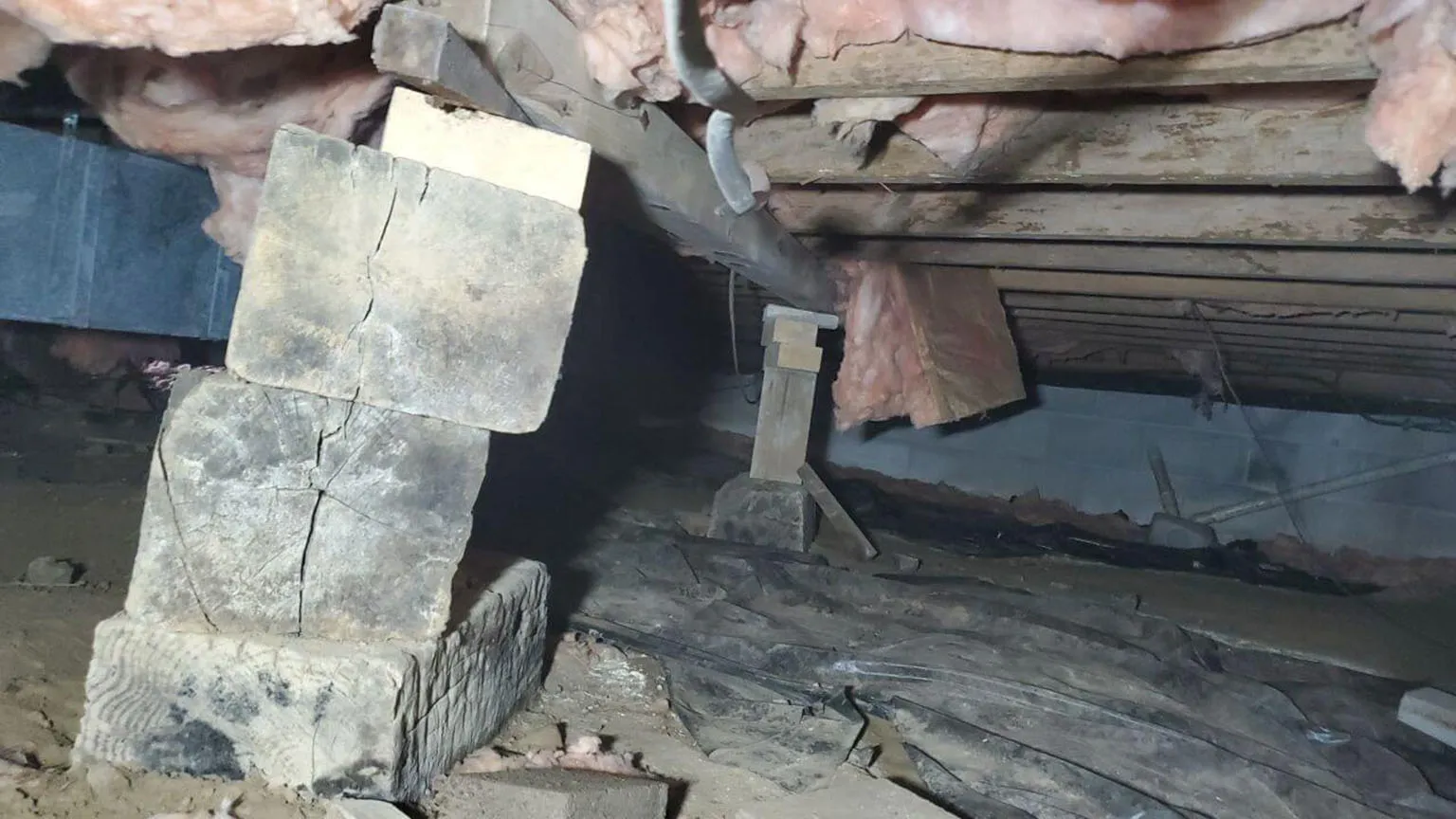
Second, crack widths measured with a gauge and written down. Third, a walk outside — grading, downspouts, and where the roof water actually lands. Fourth, the part most estimates skip: a plain-English theory of why the movement happened.
A pier count with no cause behind it is really just a shopping list. So ask what changed under the house. If the answer is confident and specific, you’re talking with someone who inspects.
Here’s a detail that sounds small and absolutely isn’t
That crack measurement should have a date beside it. Not “3/16 of an inch,” but “3/16 inch, measured August 12, at the midpoint.” One little scribble separates knowing your foundation is moving from assuming it.
Why does that matter? Because a crack that has been 3/16 of an inch for a decade is dormant, and dormant cracks usually get sealed and monitored instead of underpinned. Without a dated baseline, nobody can tell you which kind you own.
Good news
You can start that record yourself. Photograph the crack with a tape beside it, note the day, then repeat in ninety days. Free, easy, and it changes the tone of every estimate you get.
Can you read your own cracks?
Roughly, yes, and it helps a lot. Direction is the tell. A horizontal crack across a block wall is a different problem than a vertical one: horizontal usually means lateral pressure from wet soil, while vertical usually means settlement below or curing shrinkage.
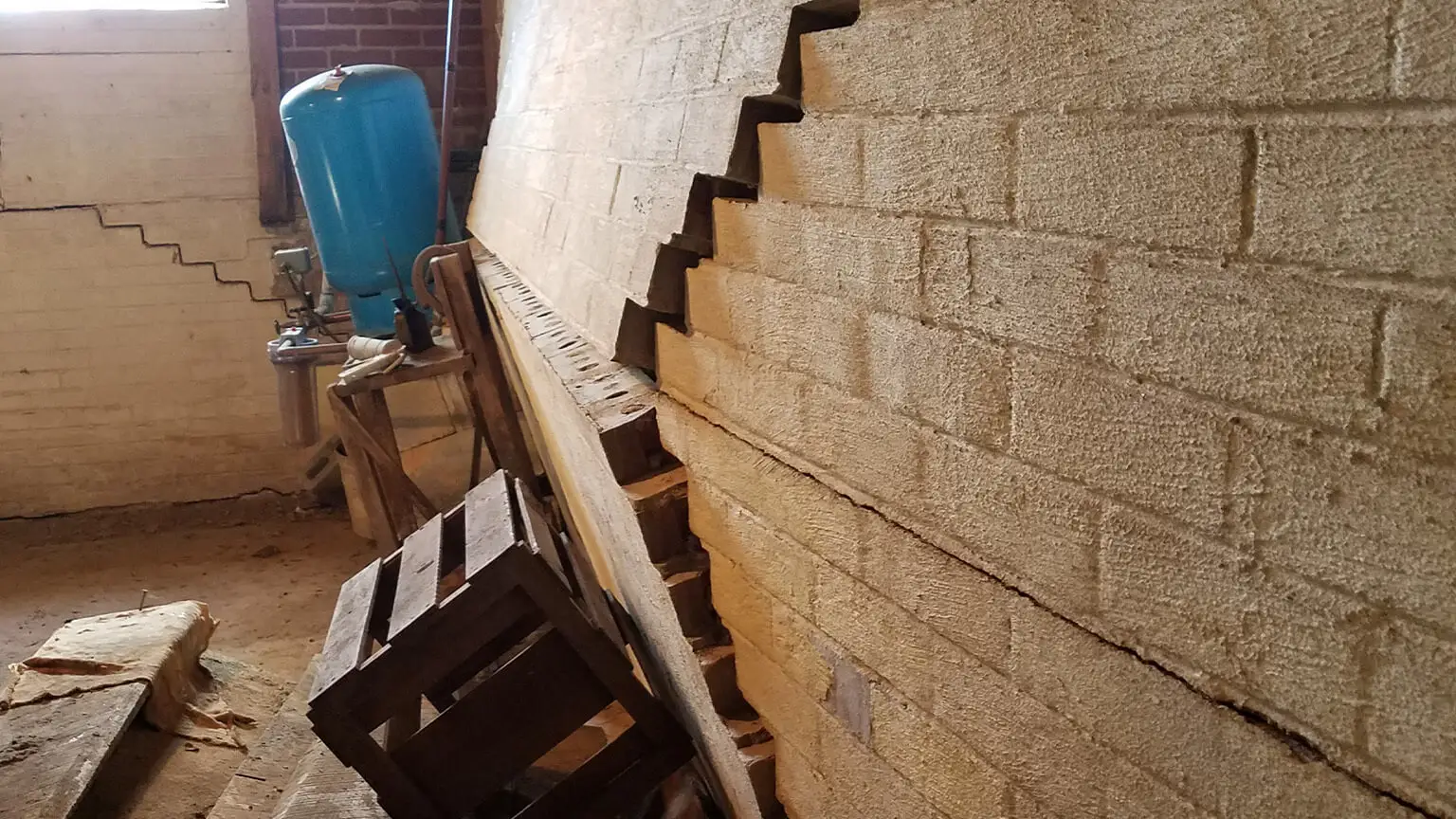
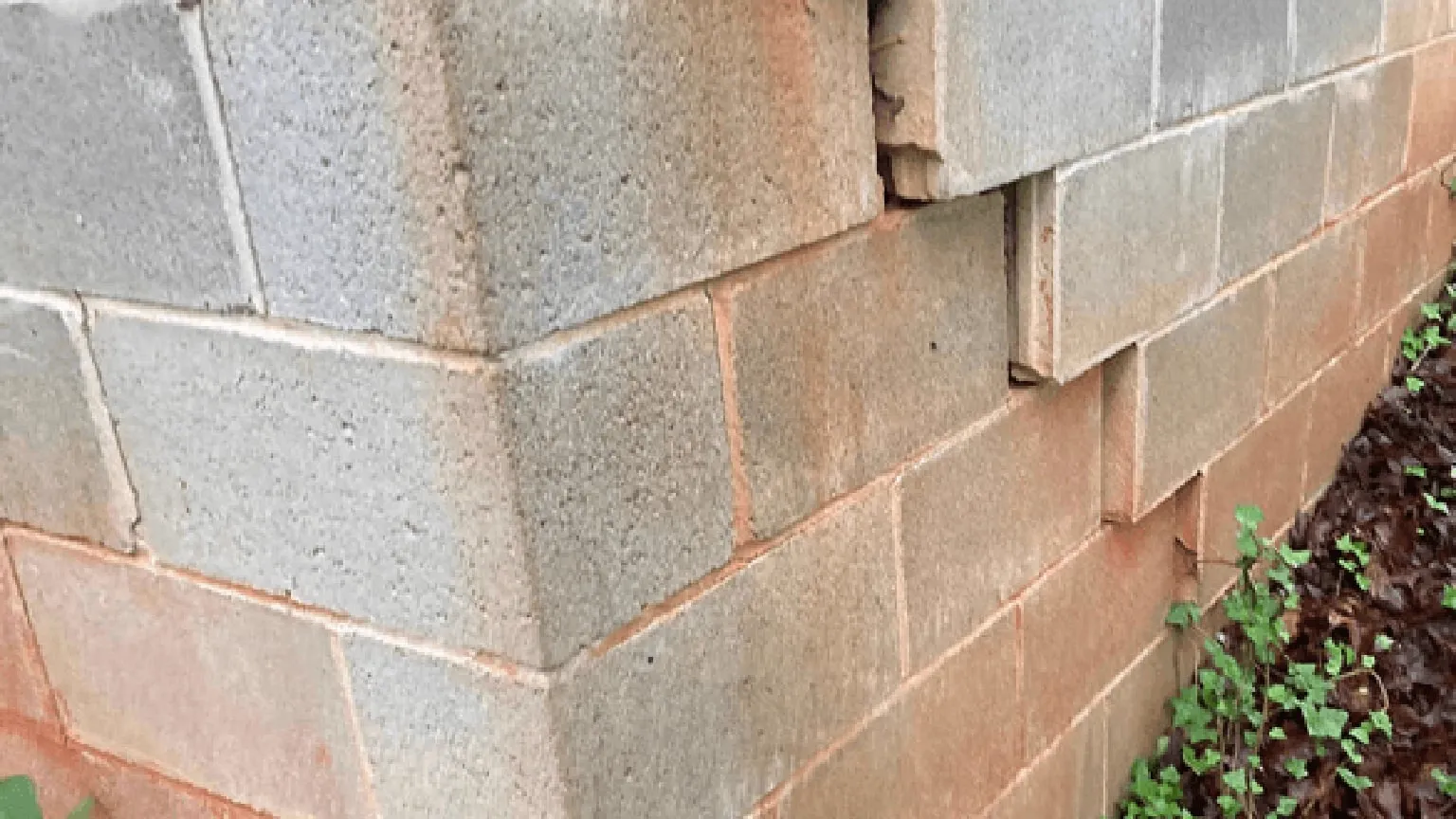
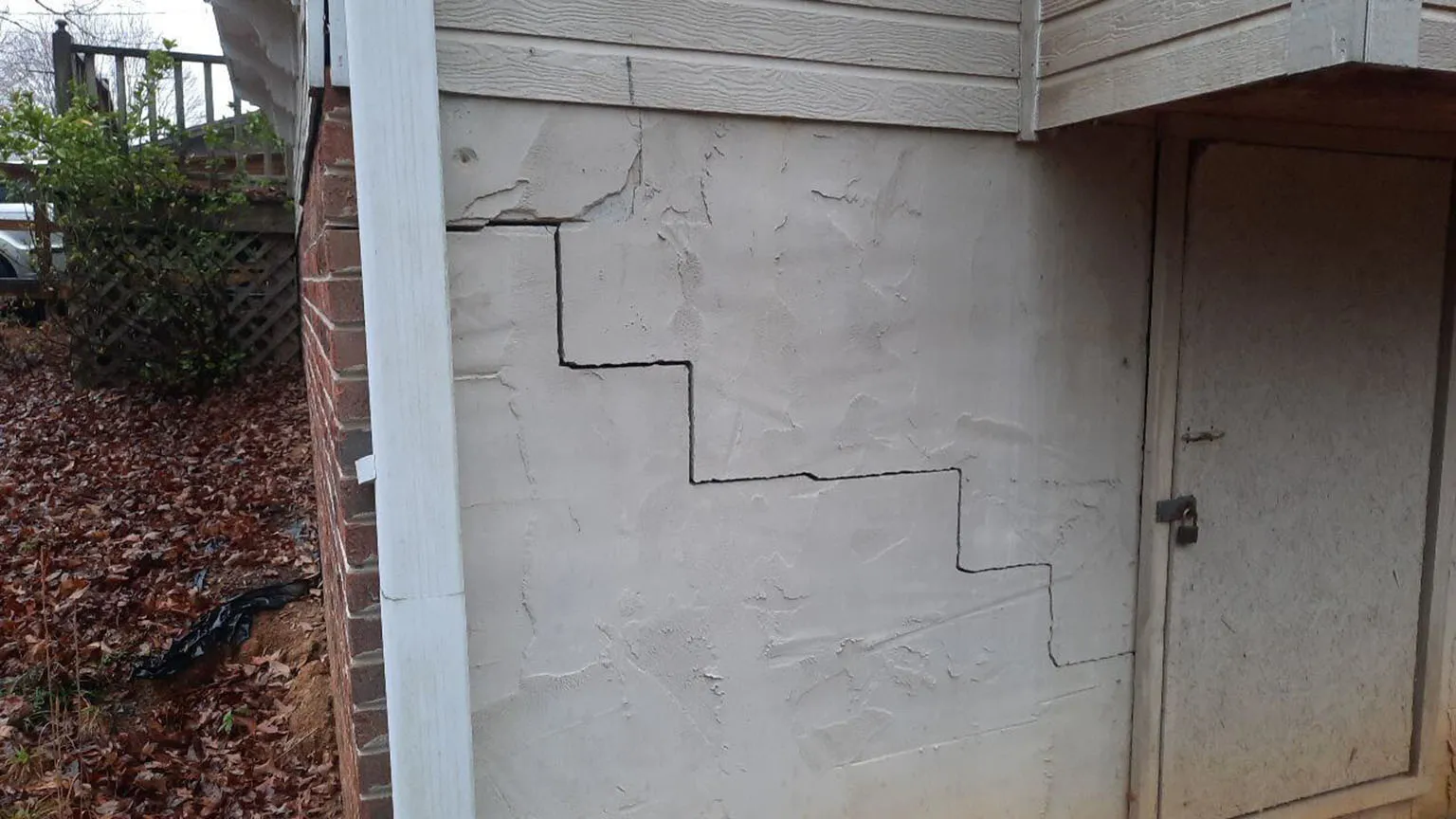
Break it down a step further. Thin vertical cracks in poured walls are usually shrinkage from the day the concrete cured, and they’re very common in homes this age. Stair-step cracks that follow mortar joints in block or brick point instead toward differential settlement.
Horizontal cracks call for a different repair entirely — bracing, anchors, and relieving whatever loads the soil outside. Piers under a footing don’t help a wall that’s being pushed, which is exactly why the distinction shows up in the price.
So here’s your quiet test. Ask which type you have and what that type means. A company treating all three the same way isn’t diagnosing — it’s guessing with a clipboard.
How do you compare two pier estimates?
Read the reasoning, not the total. A strong proposal says how many piers, where each goes, how deep the crew expects to drive them, and what happens if firm soil sits deeper than estimated. Since depth is the biggest cost variable in this work, silence about it means a surprise later.
Next, look for the word “lift.” Stabilizing means stopping further movement, while lifting means bringing the house back toward level. Both are legitimate. Being unclear about which one you bought is not.
Fair questions to ask before you sign
- How many piers, and why that number? The answer should point back to the elevation readings.
- How deep do you expect to go? Ask how extra depth gets priced before the machine is running.
- Are we stabilizing, or attempting a lift? Get the goal in writing, plus what success looks like.
- What does the warranty cover, and does it transfer at resale? A transferable warranty is worth real money later.
- Will a structural engineer be involved? On a larger job, an independent stamped report is worth considering.
- What’s the plan for the water? If drainage isn’t in the scope, the soil keeps doing what it did.
About that engineer question: a good contractor won’t flinch. Homeowners near Downtown Alpharetta City Center have brought their own engineer onto our jobs, and honestly it made things smoother, because everyone worked from the same drawing.
Structural work is also permitted work in most places, and permits exist to protect you. The International Code Council’s building safety resources explain what codes are for in plain language. Ask who pulls yours; the answer should arrive fast.
The measurements should exist before the price does. If the number came first, the number is a guess.
Ask around your neighborhood and you’ll notice a pattern. The best foundation repair Alpharetta homeowners recommend to each other usually came with the smaller scope, clearer paperwork, and an explanation of why half the original plan wasn’t necessary.
What are the red flags?
Start with a pier count quoted before anyone measured a thing. When a number arrives over the phone, or five minutes after someone walks in the door, it wasn’t calculated. It was guessed from your square footage.
Watch for pressure to sign while the rep is still standing in your kitchen, too. Foundations move over decades, so nothing here needs a decision tonight. A discount tied to a signature at the table is managing you, not your house.
A few more: no written scope, just a total. Refusing to discuss monitoring a crack that may well be dormant. Treating every crack as urgent, including the hairline over the guest room door. Plus skipping the yard entirely, which brings us to one number.
The number that changes the conversation
One inch of rain on a 2,000-square-foot roof sheds about 1,247 gallons of water. That’s a single storm, on an average house, in a metro that sees roughly fifty inches a year. All of it lands within a few feet of your foundation unless something carries it away.
Your gutters and downspouts are the largest soil-moisture control system your house owns. In these subdivisions, though, they were aimed back when the landscaping was six inches tall. Thirty years of mulch beds and settled grade later, plenty of them now empty right beside the footing.
So pricing piers while ignoring drainage treats the symptom. The good news is that the drainage half is usually the affordable half, and it’s what keeps the expensive half from repeating. Extended discharge lines, corrected grade, a properly sized sump — unglamorous, and it works.
Sometimes the right answer is “watch it”
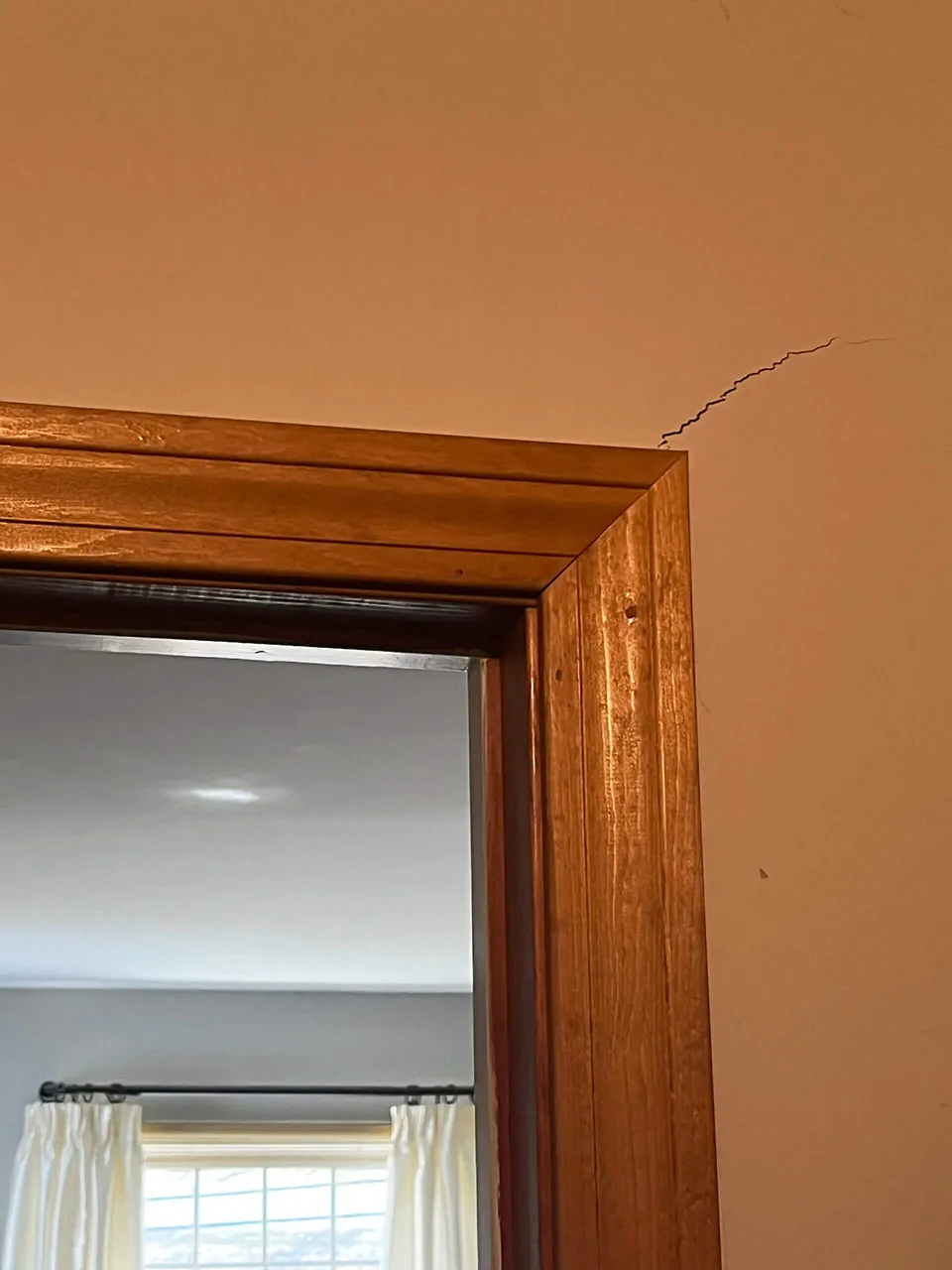
We’ll say the unpopular part out loud. Plenty of the houses we inspect don’t need underpinning at all. They need a crack sealed, a width recorded, two downspouts extended, and another look in six months.
A homeowner off Windward Parkway called last spring after a storm blew through during a show at Ameris Bank Amphitheatre — water in a basement corner, plus a crack she’d been staring at for two years. Her elevation readings came back nearly flat. A tired builder-era sump and pooling roof water were doing all of it.
So the fix was a new pump, a rerouted discharge, corrected grade, and a sealed crack with the width on the invoice. Picture the after: a dry floor through a hard spring, a basement office that smells like a room, and real numbers on file if anything ever shifts.
Why we might be the right fit
We’re about twenty-five minutes east of you in Lawrenceville, and we’ve been at this over twenty years. If you’re weighing who does the best foundation repair Alpharetta homes need, our approach is simple: measure first, explain the cause in words you can repeat to your spouse, then recommend the smallest thing that truly solves it.
You get the same licensed, insured crews each visit, with the scope written before anyone starts. The inspection and estimate are free, and projects over $3,500 get $500 off — applied to an honest scope, not a padded one.
Want to read further first? Our full guide to foundation repair covers methods and timelines, while our foundation repair services lay out the systems we install. If you’re chasing a single crack, foundation crack repair is the closer read. For family a few exits down GA-400, we cover the same ground on Duluth best foundation repair.
Where we work around Alpharetta
We’re in these neighborhoods constantly, from the walkout basements along the Windward corridor to the older brick homes near the city center. Beyond Alpharetta, we work in Milton, Johns Creek, Roswell, Cumming, Duluth, Sandy Springs, Suwanee and Peachtree Corners, plus the wider Fulton County area. Odds are we already have a truck near your street.
Questions Alpharetta homeowners ask us
It ranges widely, since the price is built from pier count, how deep those piers must go to reach firm soil, and how tough the work area is to reach. A sealed crack with drainage corrections sits at the low end, while a multi-pier stabilization along a full wall sits at the high end. We measure first, then give you one written number with the scope spelled out.
Sometimes, but not always. Georgia humidity swells wood doors every summer, so a door that sticks in July and behaves in January is usually just seasonal. If the sticking runs year-round, or it shows up alongside a diagonal crack off the door corner, elevation readings will sort it out quickly.
They’re steel shafts with plates welded on, screwed down through soft clay until they reach soil firm enough to carry weight. A bracket then ties each pier to your footing, so that section of house bypasses the moving ground above it. Because the install tracks torque as it goes, the crew knows when a pier has reached capacity.
Documented repair generally helps more than it hurts, because the alternative is an unexplained crack a buyer’s inspector finds anyway. Keep the scope, the measurements and the warranty together, and ask whether that warranty transfers to the next owner. Buyers relax when a problem comes with a paper trail.
Most homes run two to five days on site. A small crack repair with drainage work can wrap in a day, while a longer run of piers takes the upper end of that range. Add lead time if an engineer’s report or a permit is part of the plan, since those get scheduled before the crew arrives.
Let’s measure your Alpharetta foundation before anyone prices it
Free inspection, free estimate, and a straight explanation of what’s moving and why. If the honest answer is to seal it, watch it, and fix the drainage, that’s exactly what we’ll tell you — in writing.
(678) 914-5112Serving Alpharetta and all of Metro Atlanta · $500 off projects over $3,500 · Live support 7am–8pm, 7 days a week