

How to Pick the Best Basement Waterproofing Duluth Has to Offer
What good work looks like on a Duluth home, how to read an estimate line by line, and the questions that tell you everything.
You went downstairs for the holiday bin and the box was soft on the bottom. It was fine last month. Nothing dripped, nothing flooded, and yet that cardboard soaked up something — which is usually the moment a homeowner starts searching for the best basement waterproofing Duluth can send over. Good news: a soft box is an early signal, and early is a great place to be.
So this isn’t a sales pitch. It’s the guide we’d hand a neighbor who’s about to collect three estimates and doesn’t want to get talked in circles. By the end you’ll know exactly what to ask for.
What makes a Duluth basement different?
Three things, and they stack. First, the ground. Most of the city sits on Georgia red clay, but the closer you get to the Chattahoochee wrapping the north and west edge, the more you run into sandy river-bottom pockets that hold and move water in their own way. Clay swells and pushes. Sand lets water travel. A crew that only knows one of those will only solve half your problem.
Second, the age. A big share of Duluth housing went up between 1985 and 2005, which means the original footing drains out there have had thirty-some years to silt up quietly. Nothing failed dramatically. The pipe just filled with fines a little at a time until it stopped draining, and the water started looking for a new exit. That’s a service life, not a defect.
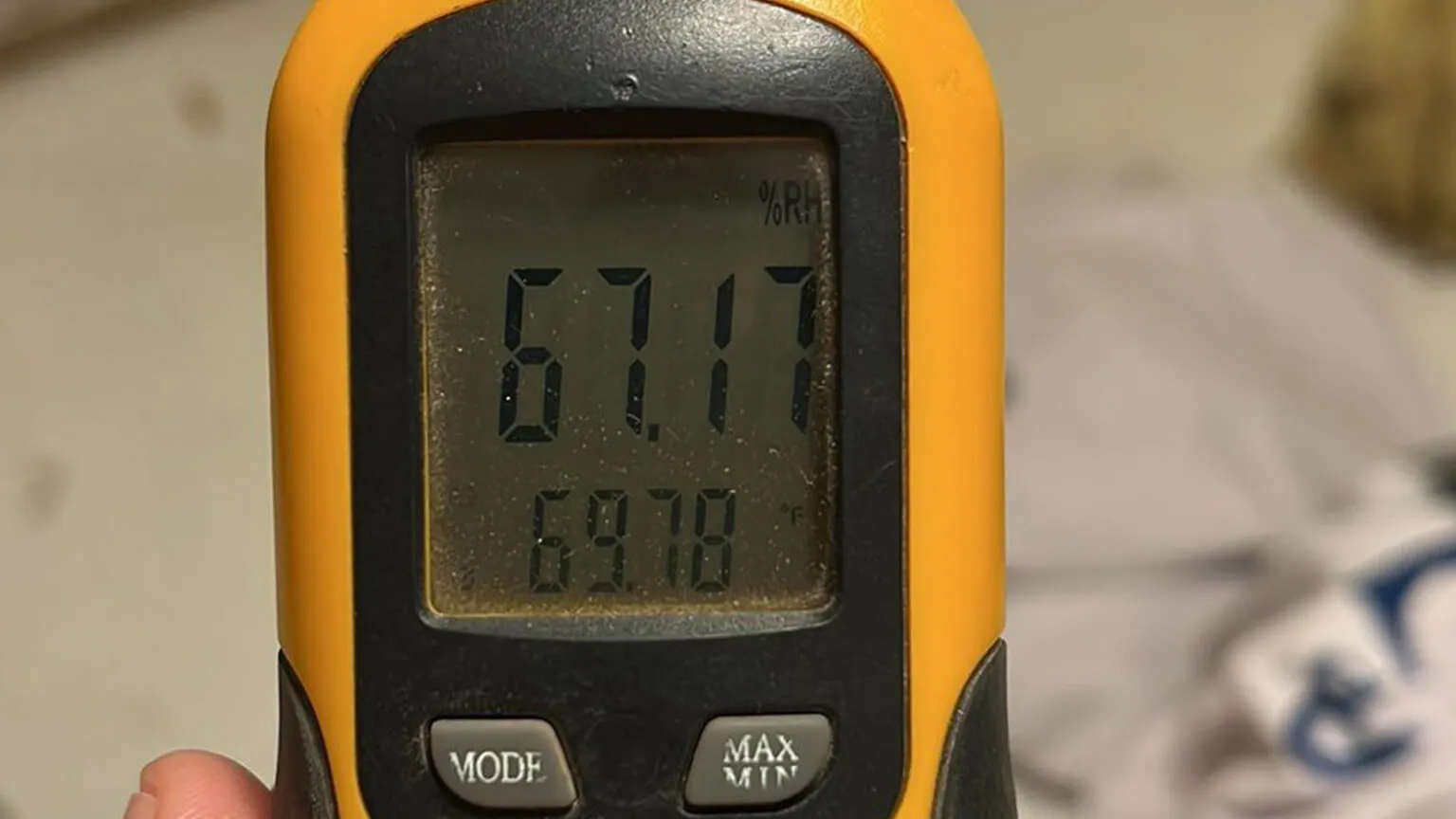
Third, and this is the one out-of-town crews miss: Duluth basements are working basements. Down in The River Club and up around Rivermoore Park, these are in-law suites, home offices and kids’ hangouts. When one gets damp here, it isn’t storage getting wet. It’s somebody’s bedroom, so the standard is higher and the timeline matters more.
Good news
A damp basement and a failing foundation are two different conversations. Most homes we walk only need the first one. We’ll tell you plainly which one you’re in, even when that answer is smaller than you expected.
What should a good company do differently here?
Start outside. Honestly, that’s the fastest way to sort a real company from a fast one. Grading, downspout runs, where the driveway sheds, whether the catch basin took on leaves last fall — all of it changes the answer inside. Fall leaf drop is why our phones light up in November, and plenty of those calls end with a gutter fix instead of a system.
Next, they should be talking about routing water, not blocking it. Here’s the part worth memorizing: interior drainage systems collect water below the slab and send it to a sump before it ever reaches the floor, instead of trying to hold it back at the wall. That distinction is the whole ballgame. Blocking fights pressure forever, while routing simply gives water an easier way out.
Waterproof paint, by contrast, is only a coating. It’s a fine product for what it is, but it can’t beat pressure — it’s a raincoat on a submarine.
They should also ask about groundwater, especially on river-adjacent lots. Seasonal high groundwater is a real pattern along the Chattahoochee side of town, and it behaves nothing like a leaky window well. If you want the plain-English version of how that works, the U.S. Geological Survey’s groundwater primer explains it better than most contractors will.
Twenty years in, the habit that serves homeowners best is boring: find the source before you price the fix.
Here’s what we’d want to know if it were our own house
Say you handed us three estimates and asked which one to sign. We wouldn’t look at the total first. We’d look at whether the three quotes are even describing the same job, because that’s where most confusion starts.
A good estimate tells you six things without you having to ask.
What a clear estimate spells out
- Linear feet, by wall. One wall or a full perimeter? This is the single biggest price driver, so it should never be vague.
- Depth of the drainage. Below the slab, or a channel sitting on top of it? Below is the one that works.
- Where the water goes. Sump location, discharge point, and how far from the house it lets out. Dumping beside the foundation just sends it back around.
- Pump details. Model, basin, lid, check valve, and whether a battery backup is included or extra.
- Restoration. Who pours the concrete back and who hauls the debris away.
- The warranty language. What’s covered, for how long, and whether it transfers if you sell.
Now the money question. We won’t publish a flat price, because a number given over the phone without seeing your house is a guess, and you’d be the one paying for it. Small drainage corrections land at the low end. A full perimeter system with a new sump and backup power in a finished basement sits at the top. Most jobs land between, and after we walk it you get a written scope, not a “starting at.”
One more tip that saves people real money: compare the scopes before the totals. A cheaper bid covering two walls isn’t cheaper than a full perimeter — it’s a different job wearing the same word.
What should you ask before you hire anyone?
Five questions. They’re short, and the answers tell you almost everything.
- “What did you find outside?” If nobody walked the perimeter, they priced a guess.
- “Where exactly does the discharge end up?” A good answer includes a distance and a direction.
- “Is this crew yours?” Same local crews mean the person who installs it is the person you call in year six.
- “Can I read the warranty before I sign?” The answer should be yes, immediately, on paper.
- “What happens if it’s simpler than you thought?” Honest companies will price down, and they’ll say so out loud.
Red flags are pretty consistent too. A price quoted over the phone. Discount pressure that expires today. Sealer proposed for an active leak. Also, anyone who won’t put the discharge point in writing, because that detail is where a lot of “fixed” basements quietly come back.
Plus, if a company can’t tell you whether your house sits on clay or river-bottom soil, they haven’t worked this side of Gwinnett much.

What does this look like on a real Duluth house?
We had a homeowner over in Howell Farms with almost exactly the soft-box problem. Late nineties build, finished basement, one wall along the low side of the lot. Her father had moved into that space the year before, so a musty smell wasn’t a storage annoyance — it was the room he slept in. That’s the part that made it urgent for her.
Outside, the story showed up fast. Two downspouts let out about a foot from the wall, and the original footing drain had silted in years earlier. Nothing about it was mysterious, which is the good news: predictable problems have predictable fixes.
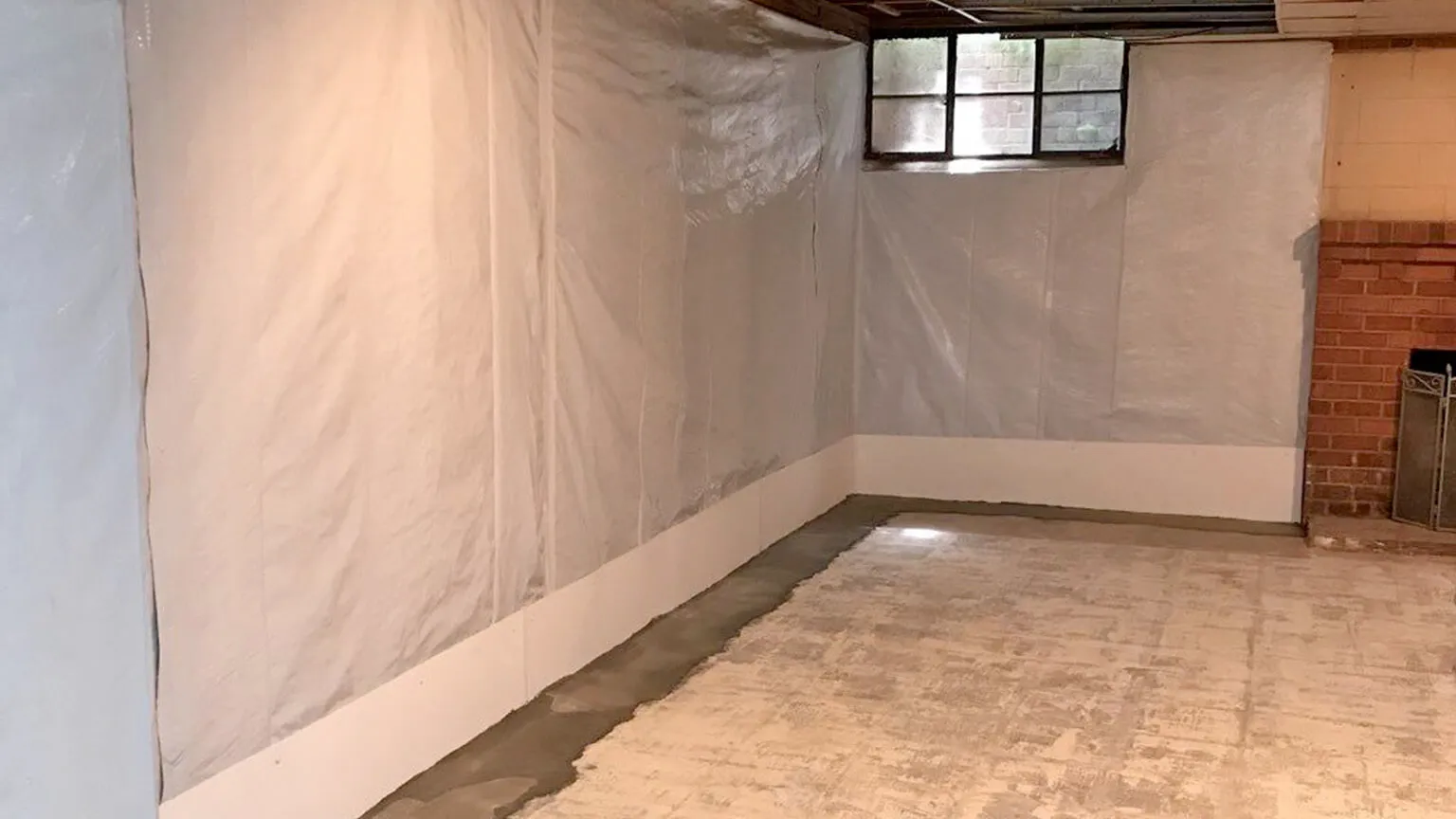
The plan was straightforward. Extend the downspouts well out into the yard, open a channel along the affected walls, set perforated pipe in clean stone below slab level, and route everything to a new sump with a battery backup. Concrete went back over the channel, white liner went on the wall, and the crew hauled the mess out. Four days, start to finish.
Then came spring, and the storms that show up every year around here. Her floor stayed dry. The smell was gone within a couple of weeks once the dehumidifier caught up, and her dad’s room stopped feeling like a basement and started feeling like a room. That’s the outcome we’re actually selling — not pipe, but a forecast you get to ignore.

Why hire somebody who works this city every week?
We’re about fifteen minutes down the road in Lawrenceville, so Duluth isn’t a service area on a map for us — it’s a Tuesday. We’ve worked the older homes near Parsons Alley and downtown, the newer subdivisions off Buford Highway (US-23), and plenty of houses within earshot of a concert letting out at the Gas South District. Referrals travel fast here, which keeps us honest in the best way.
Honestly, the best basement waterproofing Duluth homeowners can hire is usually the crew still around in year seven, because a warranty is only as strong as the company behind it. Storms here run on a schedule too — spring systems and late-summer tropical remnants — and the National Weather Service office in Peachtree City tracks that pattern.
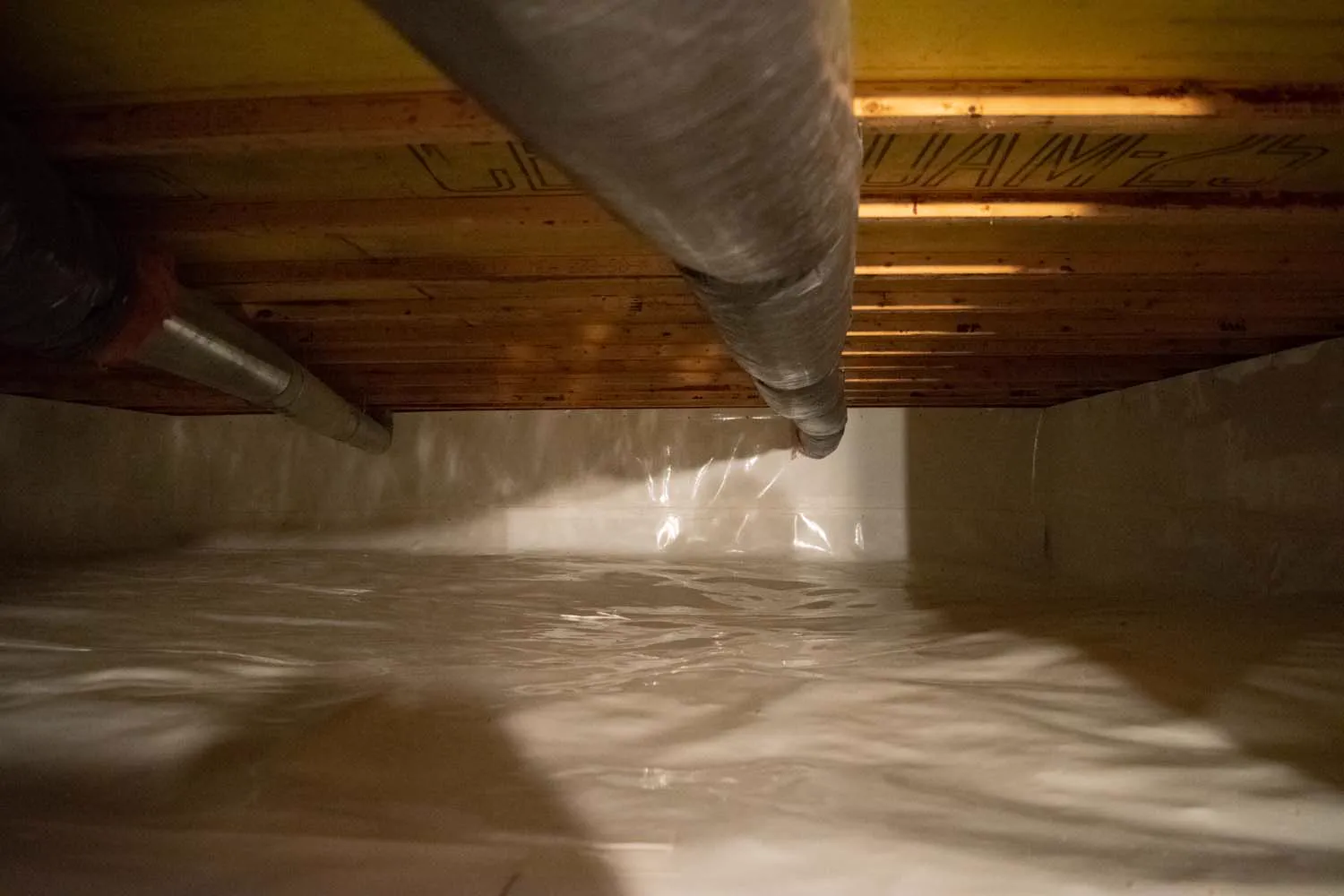
Want more detail before you call anyone? Our overview of basement waterproofing covers the symptoms in plain language, and the systems we install are laid out step by step. If your home has a crawl space instead of a basement, which is common on older downtown properties, crawl space encapsulation is usually the better answer. Comparing notes with family up the road? We cover the same ground for Suwanee best basement waterproofing.
Where we work around Duluth
We’re based in Lawrenceville, about fifteen minutes away, so most of our Duluth work happens on a short drive. We also cover Johns Creek, Suwanee, Berkeley Lake, Peachtree Corners, Norcross, Buford, Sugar Hill, Snellville and Lilburn, plus the rest of Gwinnett County. If you’re near the Town Green or out toward the river, odds are we already have a truck close by.
Questions Duluth homeowners ask us
Just the perimeter. We need about four feet of clear space along the walls we’re working on, so boxes and shelving get slid toward the middle of the room. You don’t have to empty the space, and we’ll help with the heavy pieces.
Sometimes, but they’re two different jobs. Drainage handles the water, while a crack that’s still moving needs its own repair first. Sealing a wall that hasn’t settled only buys you a season, so we’ll tell you during the inspection which situation your home is in.
It depends on where water gets in and what’s sitting on the soil outside. Exterior work stops water before it reaches the foundation, but it means digging, and a patio or deck changes the math quickly. Interior drainage is less disruptive and fits most Duluth homes, especially finished basements.
The drainage itself is built to last the life of the house, since it’s stone and pipe below the slab with nothing to wear out. The pump is the part with a service life. Plan on replacing one somewhere around the ten-year mark, the same way you’d plan for a water heater.
Yes, and you get it in writing before the work starts rather than after. Ask any company to explain the coverage in one sentence. If they can’t, the paperwork isn’t doing much for you.
Let’s take a look at your Duluth basement
The inspection is free, the estimate is free, and nobody pressures you at the end of it. We’ll show you where the water is getting in, what it would take to stop it, and what a fair scope looks like — even if the honest answer is smaller than you expected.
(678) 914-5112Serving Duluth and all of Metro Atlanta · $500 off projects over $3,500 · Live support 7am–8pm, 7 days a week