

Basement Drying Options Grayson Homeowners Have After a Wet Weekend
Pro structural drying or a shop vac and some fans? Here’s how each one works, what decides it, and which one we’d point you toward.
Most folks believe a wet basement is a water problem, so the goal is getting the water out. That part isn’t quite right. Water leaves on its own eventually — the trouble is the moisture soaked into materials after the puddle is gone. Once you see it that way, the basement drying options Grayson homeowners are weighing make a lot more sense.
Here’s the thing. A floor can look dry, feel dry, and still sit on a carpet pad holding water like a sponge. So the real question is how to get moisture out of everything the puddle touched, and how fast. Good news, though: you’ve only got two paths, and by the end of this you’ll know which one is yours.
What comes before anything else?
The power. If there is standing water on that floor, do not step into it while the circuits are live. Go to the panel and shut off power to the basement first. If the panel is down there, or you can’t reach it without walking through water, call the utility or an electrician and wait. That’s the one rule with no exceptions here.
After that, it gets a lot friendlier. The National Weather Service flood safety guide covers the rest in plain language, and it takes about four minutes to read.
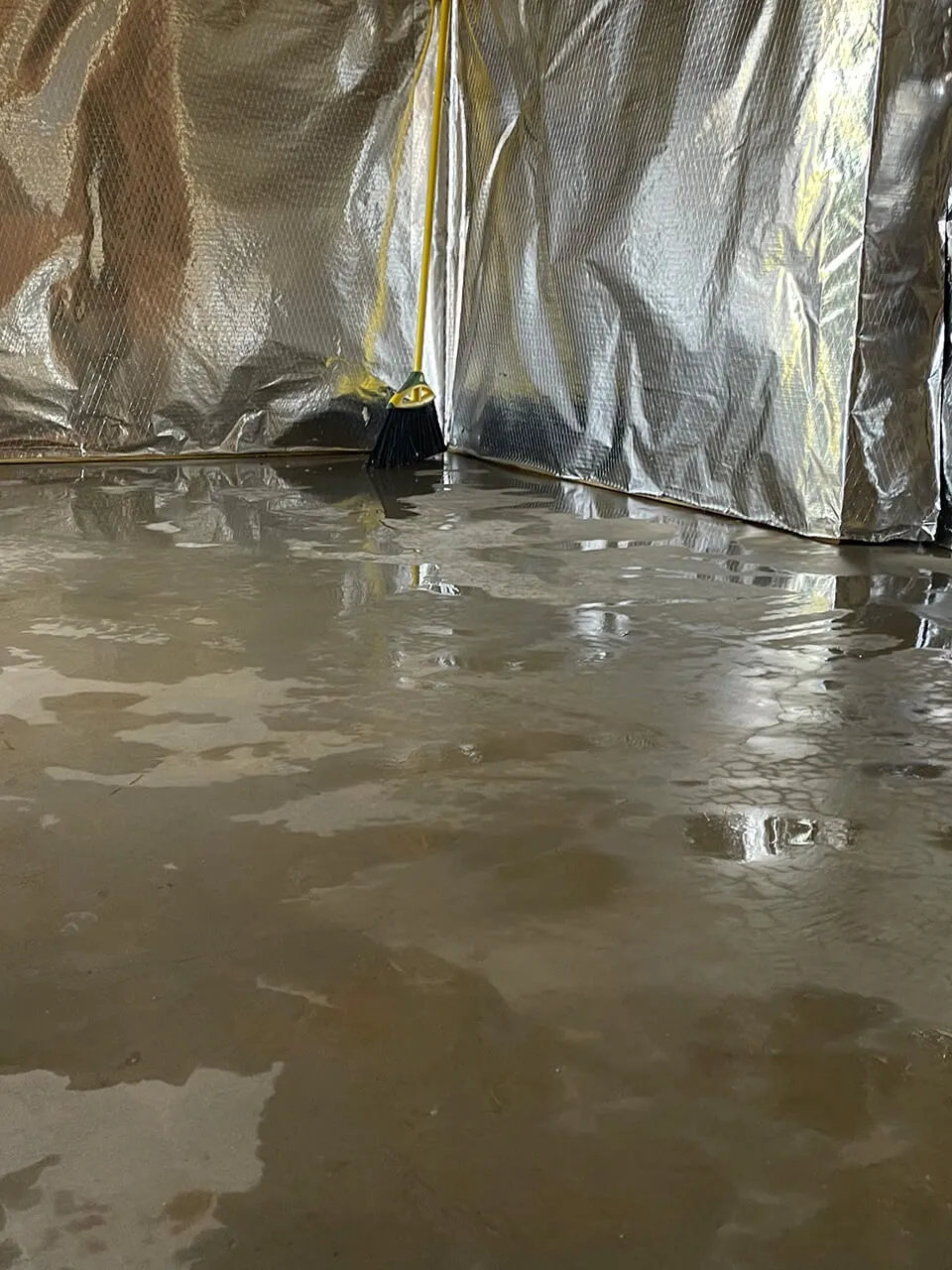
Good news
Most basements we walk into after a storm are dryable, and very few need anything dramatic. We’ll tell you plainly which one you’re in, even when the answer is that you’ve already got this.
What does professional structural drying actually involve?
It’s a process, not a machine. First comes extraction — units that pull standing water fast, including what’s sitting inside carpet and pad. Then wet organic material comes out. Carpet pad, the bottom edge of drywall and any insulation trapped in a finished wall get removed, because those hold moisture long after the slab feels dry.
Next comes air movement, and this is where the craft is. Air movers get aimed along surfaces at low angles to lift moisture off them, instead of just blowing the room around. At the same time, commercial dehumidifiers pull that moisture out of the air and send it down a drain, so it can’t resettle on the far wall.
Then we measure. Meters read the framing, slab and drywall, and those numbers get written down daily until materials return to a normal dry standard. That paper trail matters if an adjuster ever asks what happened.
When it wins: a lot of water, water that sat overnight or longer, water behind finished walls, or anything that came from a sewer backup rather than clean rain.
What it costs: the number rides on square footage, how many days the equipment runs, and how much finished material has to come out. One unfinished room is the low end; a finished basement with wet walls and a dirty source sits much higher.
Can you really just do it yourself?
Sometimes, yes. Let’s be fair to the DIY route, because it gets dismissed more than it deserves. A shop vac with a wet filter moves real water, box fans move real air, and a rental dehumidifier pulls real moisture in a closed room.
The playbook is simple. Vacuum until nothing more comes up, pull out anything soft that got soaked, aim fans across the floor rather than down at it, and run the dehumidifier with the door shut. A cheap moisture meter costs about what dinner does, and using one beats guessing by a mile.
When it wins: a small area, clean rainwater, caught the same day, on a bare slab with nothing soft in the way. That describes a real share of our calls, and we say so.
The trade-off: capacity and reach. One inch of water across a 1,000-square-foot basement is more than 600 gallons. A five-gallon shop vac would need well over a hundred trips to the drain, which is why the job feels hopeless around trip nine. A household dehumidifier also pulls a fraction of what a commercial unit does per day.

How do they compare, straight across?
Professional structural drying
- Removes hundreds of gallons in hours
- Opens walls to reach trapped wet material
- Commercial dehumidifiers, drained continuously
- Daily written moisture readings
- Documentation an adjuster will accept
- Higher cost, scheduled around a crew
Doing it yourself
- You can start in the next ten minutes
- Low cost — mostly a rental and your Saturday
- Great on small, clean, same-day spills
- Limited capacity on volume
- Can’t see inside a finished wall
- No record if you file a claim later
Notice that neither column says “better,” and that’s on purpose. The two basement drying options Grayson homeowners weigh are built for different amounts of water, so the right pick depends on what happened in your basement — not on how handy you are.
What separates a patch from a real fix?
This is the part that decides everything, and it comes down to four questions. Answer them honestly and the basement drying options Grayson homeowners face sort themselves out fast.
The four deciding factors
- How much water? A damp corner and two inches across the floor are different jobs entirely.
- How long did it sit? Caught in an hour is a different animal from found on Sunday after a Friday storm.
- Is anything wet behind a finished wall? Carpet pad, insulation and the bottom few inches of drywall are the usual suspects.
- Where did the water come from? Clean rain is one conversation. A sewer backup is a health cleanup, and that one is never DIY.
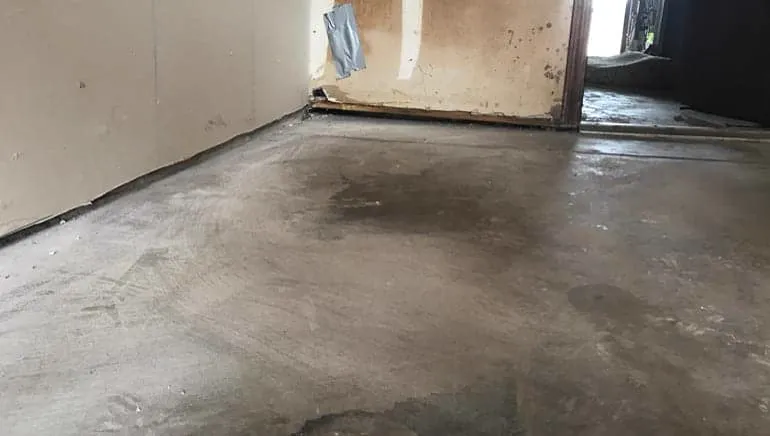
Here’s the mistake we see most: the surface dries beautifully while the cavity behind the wall stays soaked. Fans come down, everybody moves on, and three weeks later there’s a smell nobody can find. That’s still very fixable — it just costs more, because now the drywall comes off anyway.
Speed matters more than horsepower. Mold can begin on wet organic material in roughly 24 to 48 hours, so a modest fan running Friday night beats a giant one showing up Tuesday. FEMA’s building science guidance makes the same point about acting quickly rather than perfectly.
So which one would we pick for your house?
You asked for a recommendation, not a shrug. If the water is clean rain, under about an inch, sitting on a bare slab, and you caught it the same day, dry it yourself. Rent the dehumidifier, borrow the fans, and put that money toward the actual cause. We say that on the phone and hang up without selling anything.
Call us instead when any one of these is true: the water sat overnight, it’s spread across a finished basement, there’s carpet with pad under it, or the source wasn’t clean. One of those is enough. You don’t need all four.
Now the Grayson-specific part. Bigger yards out here are great — until a heavy rain, when all that water has to go somewhere and your foundation sits downhill of it. Homes in Hidden Falls and Herrington Trace mostly went up in the late 1990s and 2000s, so a lot of first-generation waterproofing is aging out on the same schedule. That’s not bad luck. That’s a birthday.
Same pattern on lots draining toward the Alcovy River, and on older streets behind Historic Grayson downtown where the original grading has settled. Newer homes in the Grayson Village district aren’t immune either, since fresh backfill keeps compacting for years.
Which brings up the honest follow-up: drying is cleanup, not a cure. If a storm off Grayson Highway puts water in your basement twice a year, the real answer is fixing how water moves around the house. Our guide to the best basement drainage setups covers that, and the systems are explained on our basement waterproofing page.
Twenty years in, here’s what changed how we talk to people: the fastest drying job in the world still loses to a downspout dumping four feet from the wall. Dry it, then fix why it got wet.
What does a wet basement have to do with your air?
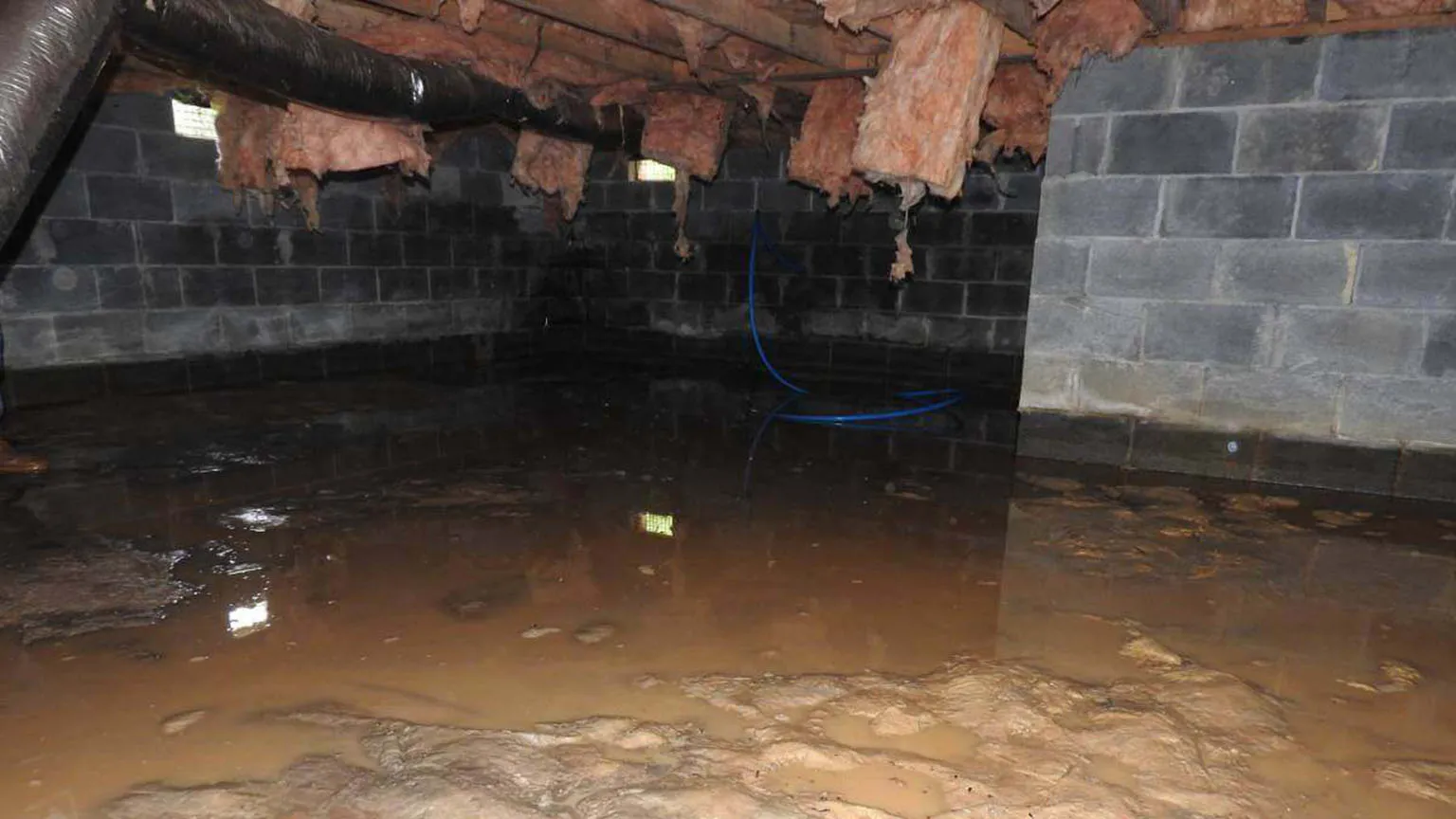
More than most people expect, and this is the piece nobody mentions until later. Air in a house doesn’t stay put — it rises from the lowest level upward, so basement air becomes living-room air, then bedroom air. That’s why a damp lower level shows up first as a smell on the stairs.
So when material stays wet down there, the whole house carries a humidity problem. Good news? It works in reverse too. Get the basement genuinely dry and hold it there, and the rest of the house feels different within a week — less musty, easier to cool. That’s the real payoff: not a fan in the corner, but a lower level you’d let the kids sleep in.
Why does hiring local matter here?
Because response time is the whole game with drying, and we’re twelve minutes away in Lawrenceville. Referrals travel fast in this town, so we’d rather give you the honest answer than sell you equipment you don’t need. Neighbors one town over can read the same breakdown for Dacula basement drying options. And if you’re seeing cracks or doors that stick along with the water, start with foundation repair instead — that one comes first.

Where we work around Grayson
We’re based in Lawrenceville, roughly twelve minutes northwest, so we’re in Grayson most weeks. We also cover Snellville, Loganville, Dacula, Duluth, Suwanee, Buford and Sugar Hill, plus Lilburn, Bethlehem and the wider Gwinnett area.
Questions Grayson homeowners ask us
Because the soil around your foundation can only absorb so much before it saturates. Once it does, the extra water has nowhere to go but against your walls, and it pushes through the easiest opening it can find. Light rain never reaches that tipping point, which is why the basement stays dry for months and then surprises you.
It depends on the source. Sudden failures like a burst pipe or a water heater are often covered, while groundwater seeping in from outside usually is not without separate flood coverage. Sewer backup is frequently an add-on rider. Call your agent early and take photos before anything moves.
Start the same day if you can. Mold can begin growing on wet organic material in roughly 24 to 48 hours, so speed matters more than how big your equipment is. A couple of household fans running tonight beat a truckload of gear arriving next week.
That’s usually the cove joint, the seam where the wall meets the slab. It isn’t sealed, so when the water table rises under the floor it takes the easiest path up. Water through the middle of a slab points to pressure underneath, and that one is worth an inspection.
It can be managed permanently, which in practice looks the same to you. A drainage system routes water to a sump and out away from the house, and correcting grading and downspouts handles the rest. The goal isn’t blocking water — it’s giving it an easier way out than through your wall.
Let’s figure out what your Grayson basement actually needs
The inspection is free, the estimate is free, and there’s no pressure at the end. We’ll check what’s still wet, show you where the water came in, and tell you honestly if this is one you can handle yourself.
(678) 914-5112Serving Grayson and all of Metro Atlanta · $500 off projects over $3,500 · Live support 7am–8pm, 7 days a week