

Basement Flooding Cost Decatur: What Really Sets the Number
The two jobs people mix up, the steps in order, how long it takes, and what you can honestly handle yourself.
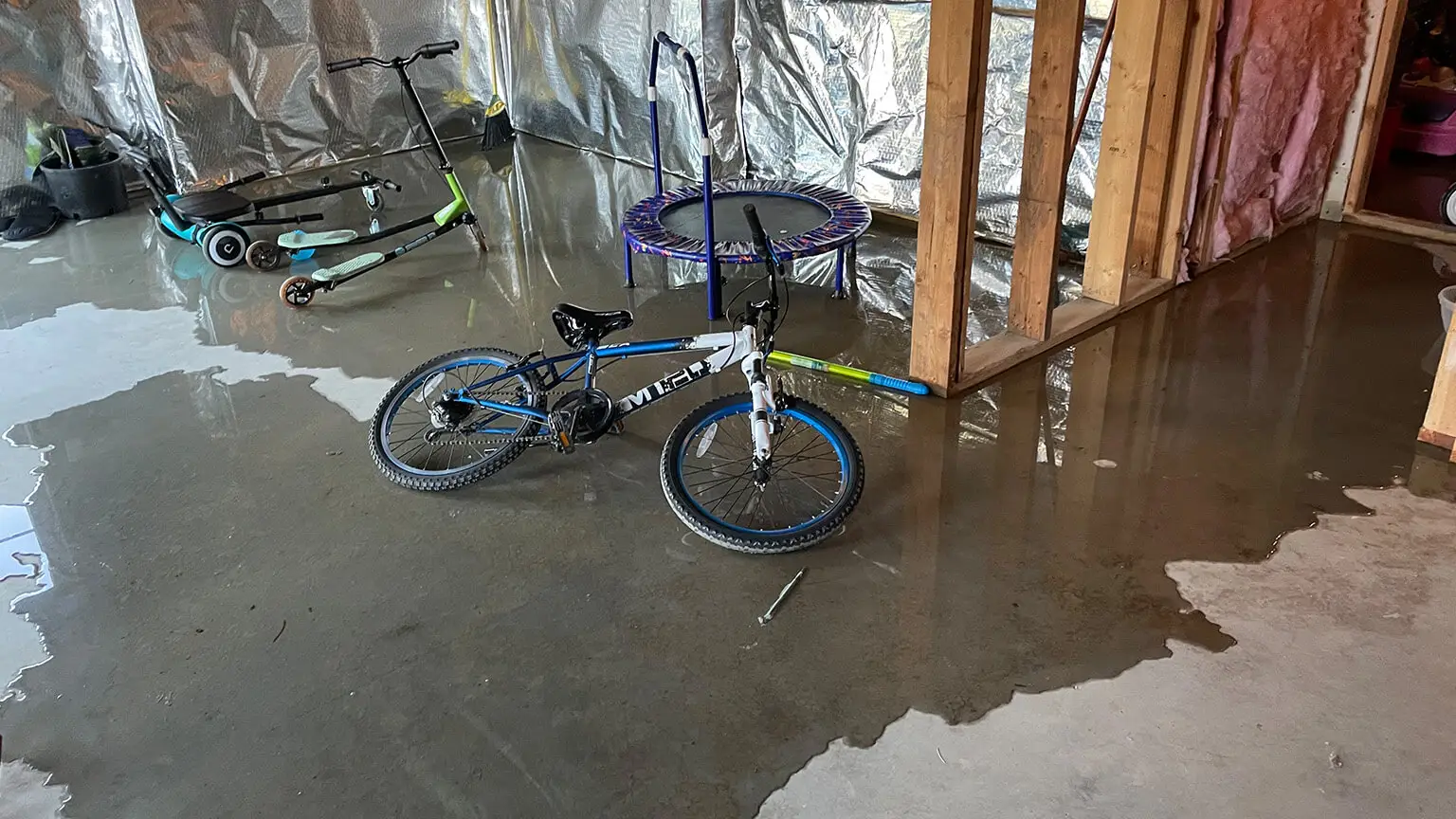
You smelled it before you saw it. Weeks back there was a faint earthy smell at the bottom of the stairs — the kind you blame on an old box of books. Then one rainy Tuesday there was water on the slab, and now you’re pricing out basement flooding cost Decatur homeowners actually pay. So let’s start with what that smell was telling you, because it changes the whole money conversation.
Good news right up front: a smell that early is a gift. It means water has been arriving in small amounts, and small amounts are cheaper to solve.
What was the smell, really?
That musty note is damp material breaking down. It shows up long before a puddle does, because moisture moves through block, stone and mortar as vapor first. In other words, your nose beats your eyes by weeks.
Here’s the thing about Decatur houses. So much of the stock went up between the 1920s and the 1950s, on stone, brick and hand-laid block. A Decatur bungalow was built before basement waterproofing existed as a trade, so the fix has to respect that, not fight it.
Century-old mortar gets soft, and soft mortar lets water walk through the joints. That’s very fixable, though. We do this work all over Oakhurst and Medlock Park, and the goal never changes — keep the original wall, stop the water.
Why do two quotes look so different?
Because two separate jobs hide inside “fix my flooded basement,” and mixing them up is where sticker shock comes from.
Job one is cleanup and drying. Get the water out, pull the wet material out, dry the space with commercial fans and a dehumidifier. Measured in days, and mostly about speed.
Job two is stopping it from happening again. That’s drainage, a sump, grading, sometimes mortar work on an old wall. Measured in years, because it keeps job one from repeating every spring.
A quote that only covers drying looks cheap, and honestly it is. It just doesn’t come with a next-time. Sorting those two halves apart is the fastest way to read any basement flooding cost Decatur estimate you’re handed.
Worth knowing
The most common entry point isn’t a crack in the middle of a wall. It’s the cove joint — the seam where wall meets floor. Pressure in saturated clay pushes water up and in right there, which is why wetness shows along the base of the walls instead of running down them.
What happens, step by step?
Nobody enjoys surprises when concrete is involved, so here’s the order.
- Free inspection. Outside first — grading, downspouts, where a century of added soil buried the original slope — then the basement.
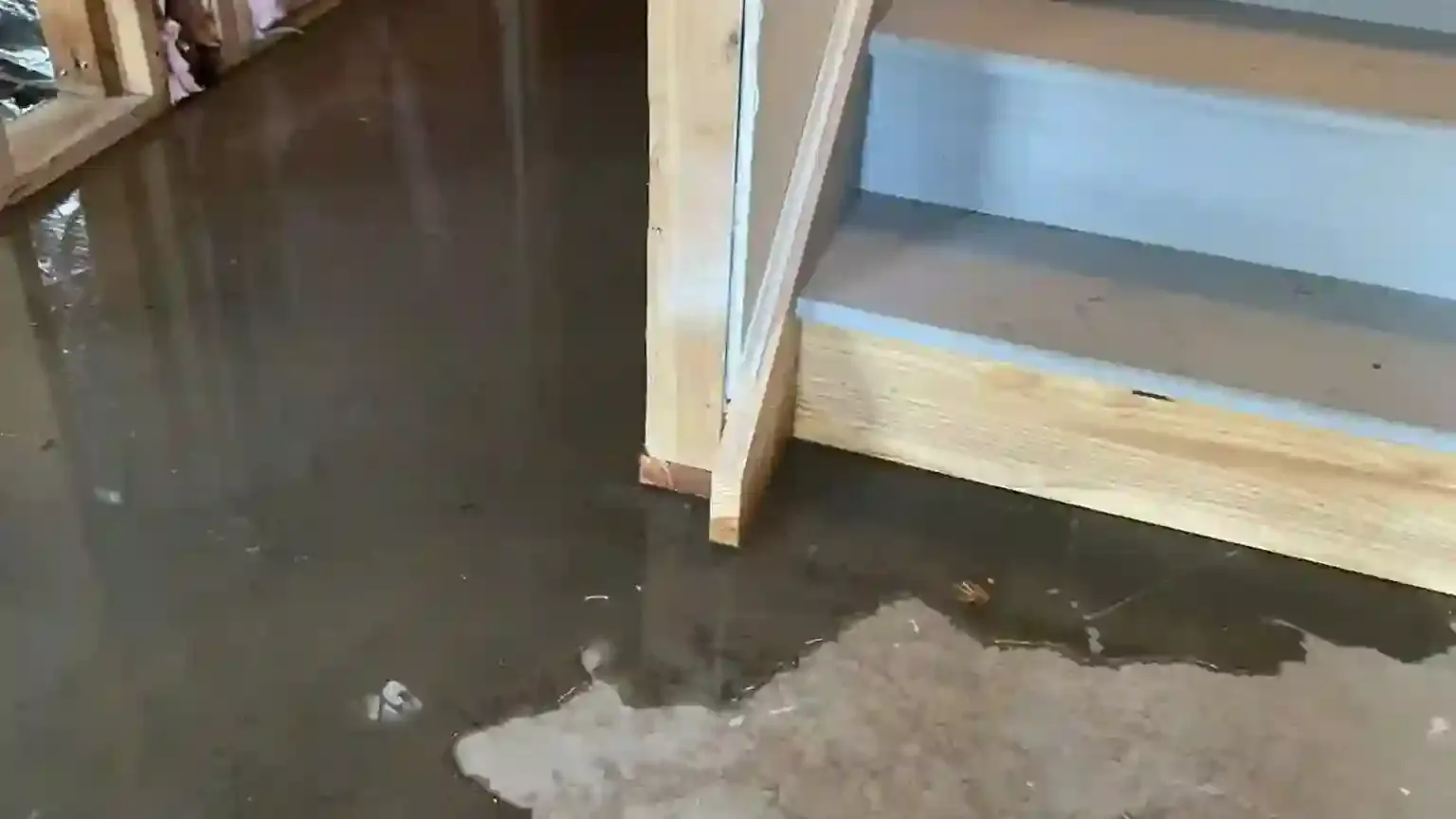
- Water removal. Standing water comes out with a trash pump or extractor, not a household vac.
- Removing wet material. Soaked pad, cardboard and the bottom few inches of drywall go, since organic material holds moisture longest.
- Structural drying. Air movers plus a dehumidifier, monitored until readings return to normal.
- The written scope. Linear feet, materials, sump location, discharge point, price. Decatur homeowners read every line, and we like that.
- The permanent fix. A narrow channel of slab comes up at the perimeter, perforated pipe goes into clean washed stone below floor level, and wall liner sends seepage into it.
- Sump and discharge. Everything routes to a basin, and the pump sends water well away. Dumping it beside the foundation just puts it back in line.
- Close up and test. Fresh concrete, cleanup, then we run the system with you watching.
But here’s the part most companies skip
Ready for the piece that quietly decides your invoice? It isn’t how much water came in. It’s how long it sat.
Mold can start growing on wet organic material within about 24 to 48 hours. That’s simply a clock, and it’s why drying speed matters more than almost anything else.
Water doesn’t get more expensive because it’s deeper. It gets more expensive because it’s older.
So when we say call while it’s still wet, that’s not a sales push. Fast drying often saves the drywall and the trim, which skips a whole line item. The CDC’s guidance on mold after a flood makes the same point plainly.
What moves the number up or down?
Straight talk: nobody can price this over the phone. Still, you deserve to know what shapes the basement flooding cost Decatur homeowners see on a written estimate.
The six things that set the price
- How much water. A damp strip on one wall and four inches across a slab are different days of work.
- How long it sat. The biggest swing factor, since it decides how much material comes out.
- How much wet organic material. Carpet, pad, cardboard, insulation, drywall. Unfinished basements are cheaper for this reason.
- Whether drainage is part of the fix. Perimeter drainage is priced by linear feet, so one wall and a full loop sit far apart.
- Whether a sump is needed. Some homes have a serviceable basin. Many century-old Decatur basements never had one.
- Wall condition. Crumbling mortar comes first, since waterproofing over bad joints is money spent twice.
Small exterior corrections land at the low end. A full perimeter system with a new sump, battery backup and mortar repair sits at the top, and most jobs settle between. Either way you get one written number, never a “starting at.” Our breakdown of Lawrenceville basement flooding cost uses the same math, and our page on basement drying options compares the drying side.
What about the sump pump you already have?
Sump pumps fail in boring, predictable ways, which is good news. Power drops during the storm, right when the pump is needed. The float sticks. The pump is undersized. There’s no check valve, so water drains back down. Or the discharge line packs with leaves, which under Decatur’s canopy happens every fall.
All five have simple fixes. A battery backup handles the outage, and a properly sized pump with a clean basin handles the rest. Test it with a bucket twice a year and you’ll catch most of it.

How long does it take, and what should you do first?
Drying usually runs three to five days with equipment on site. The permanent system is typically one to three days, and fresh concrete wants a few more before you load it up.
Your prep list is short. Clear about four feet along the affected walls, lift anything paper or fabric off the floor, and make sure we can reach an exterior door. Leave the heavy lifting to us — nobody should wreck their back to save a truck trip.
One note on timing. Spring storms fill our calendar fast, and fall leaf drop under that Decatur canopy buries drains on whole blocks at once. Homeowners near Legacy Park see it every November, so booking between seasons gets a faster date.
What can you honestly handle yourself?
More than most companies admit, and we’d rather tell you than charge you for a Saturday.
Real DIY wins: extending downspouts six to ten feet out, clearing gutters twice a year, cutting back soil that’s crept above the foundation line, and testing the pump. Those solve a surprising share of minor water complaints.
What DIY can’t reach: anything below the slab. You can’t set drain tile without opening concrete, and no bucket of sealer beats saturated clay pushing at the cove joint. Structural drying is the other one, since box fans move air but don’t pull water back out of framing. FEMA’s building science library covers the same ground.
On insurance, be straight with yourself before you count on it. Standard homeowners policies commonly exclude surface flooding, and sump pump coverage is usually a separate endorsement you add on purpose. So pull your policy and read the water section, or ask your agent directly.
What does a wet basement have to do with the air upstairs?
Here’s the connection almost nobody makes. Air in a house rises — warm air escapes near the roof, which pulls replacement air in from the lowest point. That’s your basement. So a share of what you breathe upstairs started its trip by that damp corner.
The smell that tipped you off was never staying put. Damp air carries humidity and odor through the whole house, which is why a musty bungalow in Clairemont smells musty on the second floor too. Handle the water and the rest clears up on its own.
That’s the part homeowners tell us months later. Laundry doesn’t smell like the basement, August feels less sticky, and the dehumidifier sits idle. Your house is a hundred years old and it’s solid — now it breathes like it.
How do you know the job was done right?
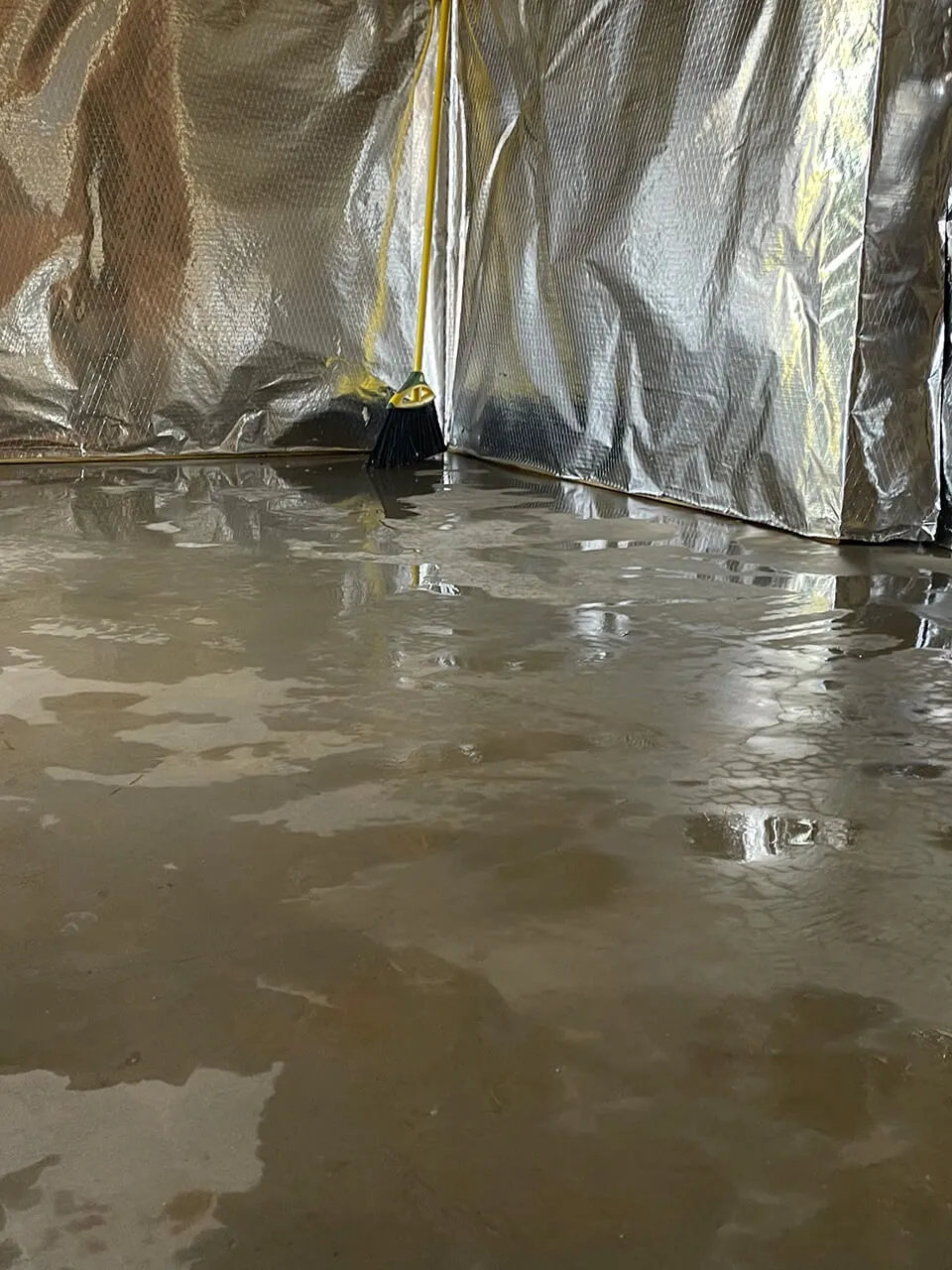
Ask for four things and you’ll sort careful work from fast work in a minute. Moisture readings before and after drying, written down. Photos of the stone and pipe before concrete goes back over it. A warranty you can read out loud. And a live test of the sump while you watch.
After that, proof arrives on its own schedule — the next hard rain rolls through and the floor stays dry. We’ve worked this side of DeKalb for over twenty years, from bungalows off Ponce de Leon Avenue to homes near Your DeKalb Farmers Market, so if a system needs attention in year eight, the same crew answers. Our basement waterproofing systems are on the service page, and if walls are moving too, our guide to foundation repair covers that.

Where we work around Decatur
Our shop sits about thirty-five minutes northeast in Lawrenceville, so we’re down here constantly. We also cover Avondale Estates, Tucker, Brookhaven, Atlanta, Stone Mountain, Clarkston, Chamblee, Scottdale and the wider DeKalb County area. If you’re between the Square and Emory, odds are we have a truck nearby already.
Questions we get from Decatur homeowners
In most homes, yes. Once water has a path to a sump below the slab, it takes that path instead of your floor. The system needs a yearly look, but the fix itself is built to last.
It depends on how much water came in, how long it sat, how much wet material comes out, and whether drainage or a sump is part of the permanent fix. Small exterior corrections sit at the low end, and a full perimeter system with a new sump sits at the top. We give one written number after walking the house.
Still worth solving, because material down there stays damp between events. Twice a year usually points to storm volume rather than a constant water table, which often means a smaller, cheaper scope.
For a small puddle caught right away, sometimes yes. For anything soaked into pad, drywall or framing, a household fan moves air but doesn’t pull water back out. That’s the gap commercial dehumidifiers close.
Roughly 24 to 48 hours on wet organic material like cardboard, pad and drywall. That’s why we start drying the same day when we can. Fast action often saves materials that would otherwise be a line item.
Let’s find out what your basement actually needs
The inspection is free, the estimate is free, and nobody pressures you at the end. We’ll show you where water gets in, what it takes to stop it, and what that costs here in Decatur — even when the answer is simpler than you expected.
(678) 914-5112Serving Decatur and all of Metro Atlanta · $500 off projects over $3,500 · Live support 7am–8pm, 7 days a week