

Basement Drying Options Decatur Homeowners Have — Bigger Fix or Smaller One?
Professional structural drying or a shop vac and a couple of fans? Here’s how each one works, and how to tell which one your house needs.
Every March our phone starts ringing from the same zip code. Spring storms park over DeKalb County, drop two inches in an afternoon, and by evening somebody in an old bungalow is standing on the bottom stair looking at water. So the basement drying options Decatur homeowners ask about are almost always the same two: a shop vac and fans, or real drying equipment. Both are legitimate, and one is right for your house.
Why spring, though? Because the ground here is already full by then. Winter rain saturates that red clay, the huge tree canopy keeps soil shaded and slow to dry, and a century of added landscaping has buried the original grading around most of these houses. So a March storm has nowhere to put its water, and it borrows your basement.
Good news right up front: this is fixable, and it’s usually a smaller day than it looks like while you’re standing in it.
What should you do in the first ten minutes?
Before anything else, kill the power. Never step into standing water while circuits down there are live. Shut off the basement circuits at the panel, and if the panel itself is in the wet area, stop and call your utility. That’s the one part of this article we’d ask you not to improvise on.
After that, take photos before you move a box, because adjusters want to see the water where it sat. Then find the source if you safely can — a window well, a backing-up floor drain, a failed sump. The National Weather Service flood safety guidance covers what’s worth entering and what isn’t.
Option A: can you just do it yourself?
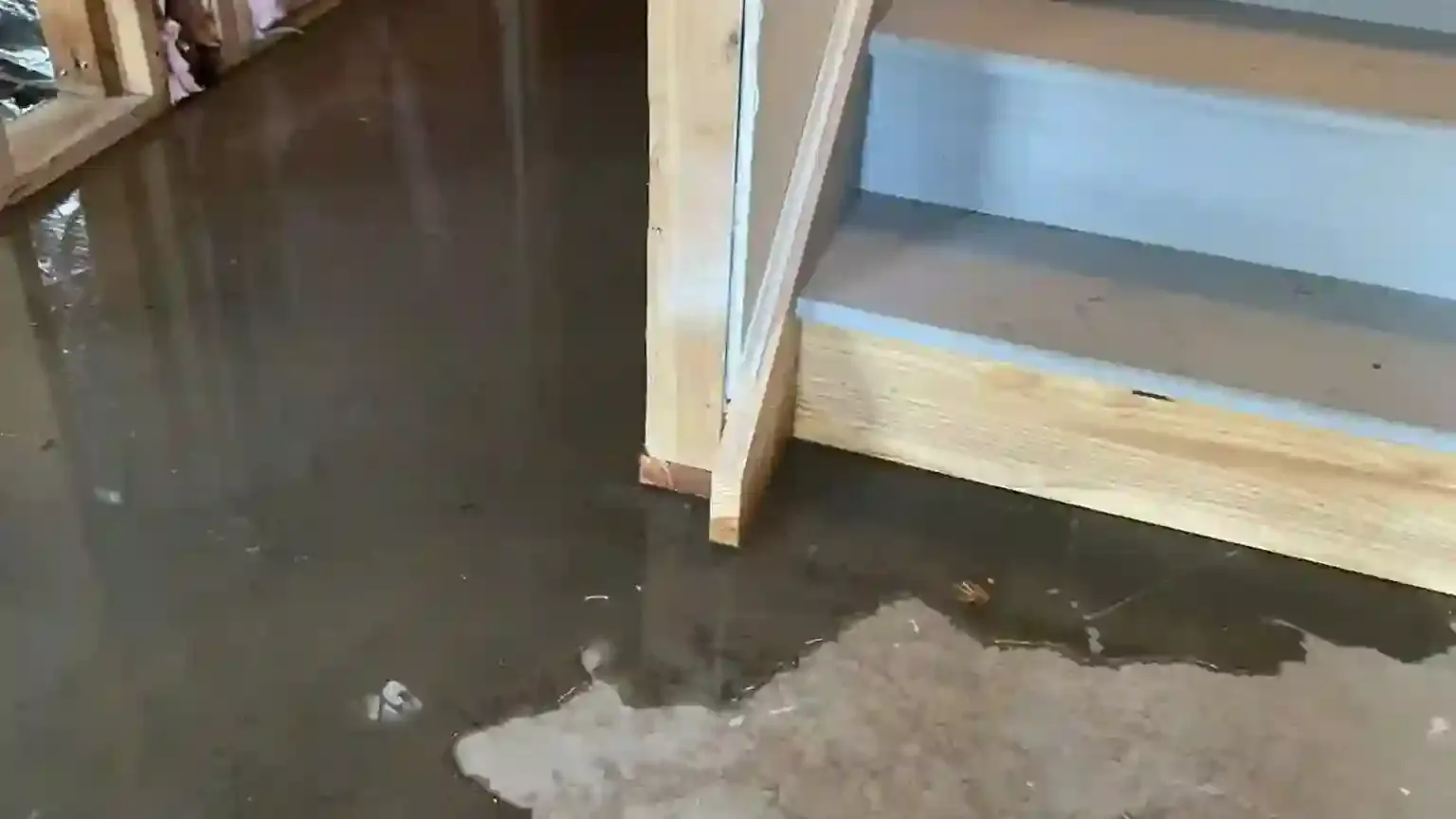
Sometimes, yes — and we’d rather say so than sell you something. The DIY version is a wet/dry shop vac, a few box fans, and a rental dehumidifier. You pull the standing water, move air across the slab, pull humidity out of the room, and check daily until surfaces feel dry and the musty smell fades.
When it wins: clean rainwater, a shallow amount, caught within hours, on a bare slab with nothing organic sitting in it. An unfinished half-basement with block walls and a few plastic bins? That’s a Saturday, not a project.
What it costs: a dehumidifier rents by the day, you probably own the fans, and the shop vac is a one-time buy. It’s the low end of every number here by a wide margin.
The trade-off: volume and reach. One inch of water across a 1,000-square-foot basement is more than 600 gallons, which is exactly why a shop vac starts to feel like emptying a lake with a coffee mug. Home fans also push air across surfaces, not into wall cavities.
Option B: what does professional drying actually involve?
Structural drying is a different animal, and less dramatic than it sounds. First comes extraction with a unit that moves water in minutes instead of hours. Then wet organic material comes out — carpet pad, the bottom edge of drywall, insulation in finished walls. After that, air movers aim at the wall-floor seam and into open cavities, not just around the room.
Commercial dehumidifiers do the real work. They pull far more moisture per day than a rental, so materials release water instead of just feeling dry. Meanwhile we take meter readings daily, which gives drying a finish line.
When it wins: a lot of water, water that sat overnight or longer, any finished basement, or anything that came from a sewer line rather than the sky. Clean rainwater and a sewer backup are two different jobs with two different safety plans.
What it costs: more, and it rides on square footage, how many days equipment stays, and how much finished material comes out first. A small unfinished area sits at the low end, while a finished basement with carpet and drywall sits well above that.
Good news
Drying and waterproofing are two separate conversations. Plenty of Decatur homeowners only need the first one, and we’ll tell you plainly which one you’re in.
How do the two compare, straight across?
Shop vac, fans and a rental
- Cheapest path by a wide margin
- You can start within the hour
- Great on clean water caught fast
- Fine on bare slab and block walls
- Dries surfaces, not wall cavities
- No moisture readings, so no proof
Professional structural drying
- Extraction measured in minutes
- Wet organic material gets removed
- Air aimed into cavities, not just the room
- Documented readings each day
- Handles sewer water safely
- Higher cost, and equipment stays for days
Notice neither column says “better.” The two basement drying options Decatur homeowners weigh are built for different amounts of water, so the honest answer depends on what your basement is made of.
So what’s the question under the question?
Let’s back up a second, because “which drying method” isn’t really what you’re deciding. You’re deciding whether anything wet is trapped where you can’t see it. That’s the whole ballgame.
Here’s why. A slab and a block wall don’t hold much water, so they release it fast. Carpet pad, the paper face of drywall, and insulation inside a finished wall hold water for days and hide it while they do. Point a fan at that wall and the surface dries beautifully, but the cavity stays soaked — and that’s the classic mistake we get called in to correct.
Mold can begin on wet organic material in roughly 24 to 48 hours, so speed matters more than the size of your equipment. The CDC’s guidance on mold after flooding says the same thing we do: get it dry fast, and get soaked porous material out rather than trying to save it.
Which brings us to the local part. A Decatur bungalow was built before basement waterproofing existed as a trade — these houses have stood a hundred years, and the fix has to respect that, not fight it. Original half-basements and dirt-floor cellars are mostly stone, brick and dirt, so there’s little organic material and they dry easily. The trouble shows up in renovated ones, where a finished basement got built into an old cellar and moisture got covered up instead of solved.
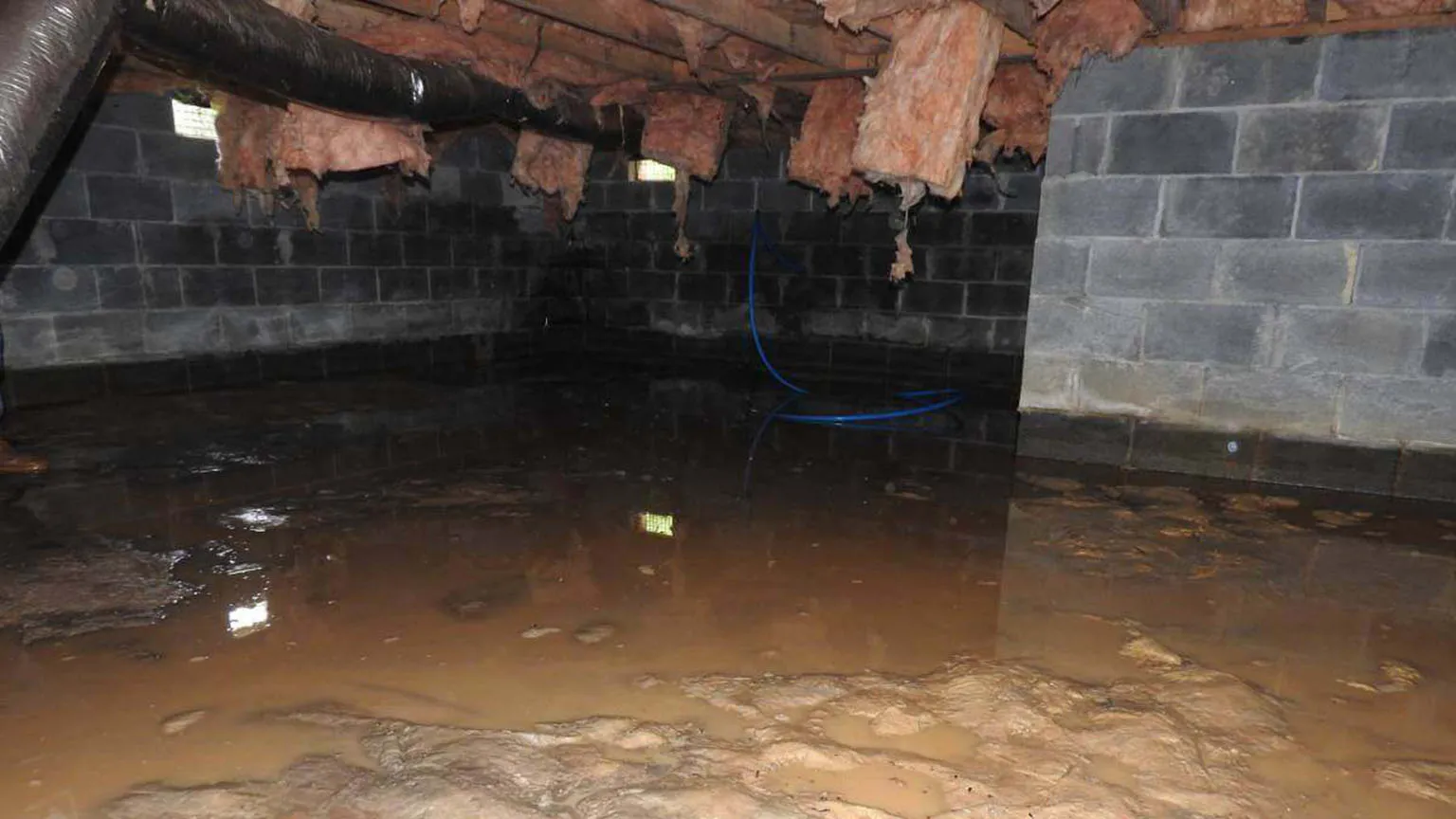
We see it constantly around Clairemont, and in Glenwood Estates where partial basements sit close to grade. Out toward the Druid Hills edge, it’s usually a dirt-floor crawl space quietly feeding moisture into the whole house, which is why the floor above it never feels right in April.
Twenty years in, here’s what changed how we work: we stopped asking how much water came in, and started asking how long it sat and what it sat on. Those two answers pick the method every time.
Which one would we pick for your house?
You wanted a recommendation, not a shrug. Of the basement drying options Decatur homeowners weigh, we’d point plenty of people at the smaller one. If the water was clean rain, you caught it the same day, it’s on a bare slab, and there’s no carpet or finished wall in the wet zone — do it yourself. Shop vac, fans, rented dehumidifier, done.
Call us instead when any one of these is true: it sat overnight or you don’t know how long, it reached finished walls or carpet, it covered most of the floor, or it came up through a drain instead of down from the sky. Sewer water isn’t a DIY project at any volume.
There’s a middle case too, and it’s the most common one. A homeowner near Glenlake Park had half an inch across a finished room. We pulled the carpet pad, cut eight inches of drywall, ran equipment three days, and left the framing alone. Smaller than she expected, and the room came back.
Real talk: if the honest answer is “you’ve got this,” that’s what you’ll hear from us.

What should you do every year once it’s dry?
Now the part nobody hands you at the end of a job: the yearly list. Drying solves today, while this keeps next March uneventful.
- Clean gutters twice, and mean it in November. That canopy drops enough leaves to bury every drain on the block, and clogged gutters put roof water right at the foundation.
- Walk the downspouts in February. Each should carry water at least six feet out. Extensions get bumped by mowers all summer.
- Test the sump pump before storm season. Pour a bucket in the basin and watch it start, while nothing’s at stake.
- Check the grade against the wall. Soil should fall away from the house. Clay settles, so add dirt where it dishes — not mulch.
- Look at the mortar joints once a year. On stone and hand-laid block, soft mortar is worth a photo now and a look later.
- Keep a cheap humidity gauge downstairs. Anything holding above 60 percent for weeks is telling you something while it’s still small.
That’s the list. Ten minutes twice a year, and your basement goes back to being where the holiday bins live.
What if it keeps happening?
Drying twice a year isn’t a plan, it’s a chore. If the same storm makes the same puddle, the source is worth solving once. Our page on basement waterproofing walks through the systems we install, and our local guide to the best basement drainage setups covers what fits an older house. If cracks or settling came with the water, start with foundation repair instead, since a moving wall gets handled before anything is sealed. Neighbors up the road can read the same breakdown of Lawrenceville basement drying options.
We work these streets constantly, from the ballfields near Legacy Park down along College Avenue toward the Square. Same crews, same trucks, and a warranty backed by people still twenty minutes away in year eight.
Where we work around Decatur
We’re based in Lawrenceville, about thirty-five minutes northeast, and in Decatur most weeks. We also cover Avondale Estates, Tucker, Brookhaven, Stone Mountain, Clarkston, Atlanta, Chamblee and Scottdale, plus the wider DeKalb County area.
Questions Decatur homeowners ask us
Twice a year still counts as a pattern, so it’s worth finding the source even if the cleanup is easy. Often it’s surface water from a buried grade or a downspout, which is a small fix. We’ll look for the cheap answer first and tell you if that’s all it is.
For a small amount of clean rainwater on a bare slab, caught the same day, yes. It stops being enough when water reaches carpet, pad or drywall, because fans dry the surface while the wall cavity stays wet. Volume matters too, since one inch across a 1,000-square-foot basement is over 600 gallons.
Roughly 24 to 48 hours on wet organic material like carpet pad, drywall paper and insulation. That’s why speed beats equipment size every time. Concrete and stone are far more forgiving, so an unfinished old basement gives you more room to work.
Shut off power to the basement at the panel before you step into standing water, and call your utility if the panel itself is in the wet area. Then photograph everything for insurance before you move anything. After that you can start removing water and finding the source.
Because the soil around older Decatur homes is already holding water, so a fast storm has nowhere to send the extra. Add a century of added landscaping burying the original grade and it drains toward the house instead of away. The fix is usually giving that water a path out, not sealing the wall harder.
Let’s figure out what your Decatur basement actually needs
The inspection is free, the estimate is free, and there’s no pressure at the end. We’ll show you where the water came in, say honestly whether this is a shop-vac day or a drying job, and hand you a plan either way.
(678) 914-5112Serving Decatur and all of Metro Atlanta · $500 off projects over $3,500 · Live support 7am–8pm, 7 days a week